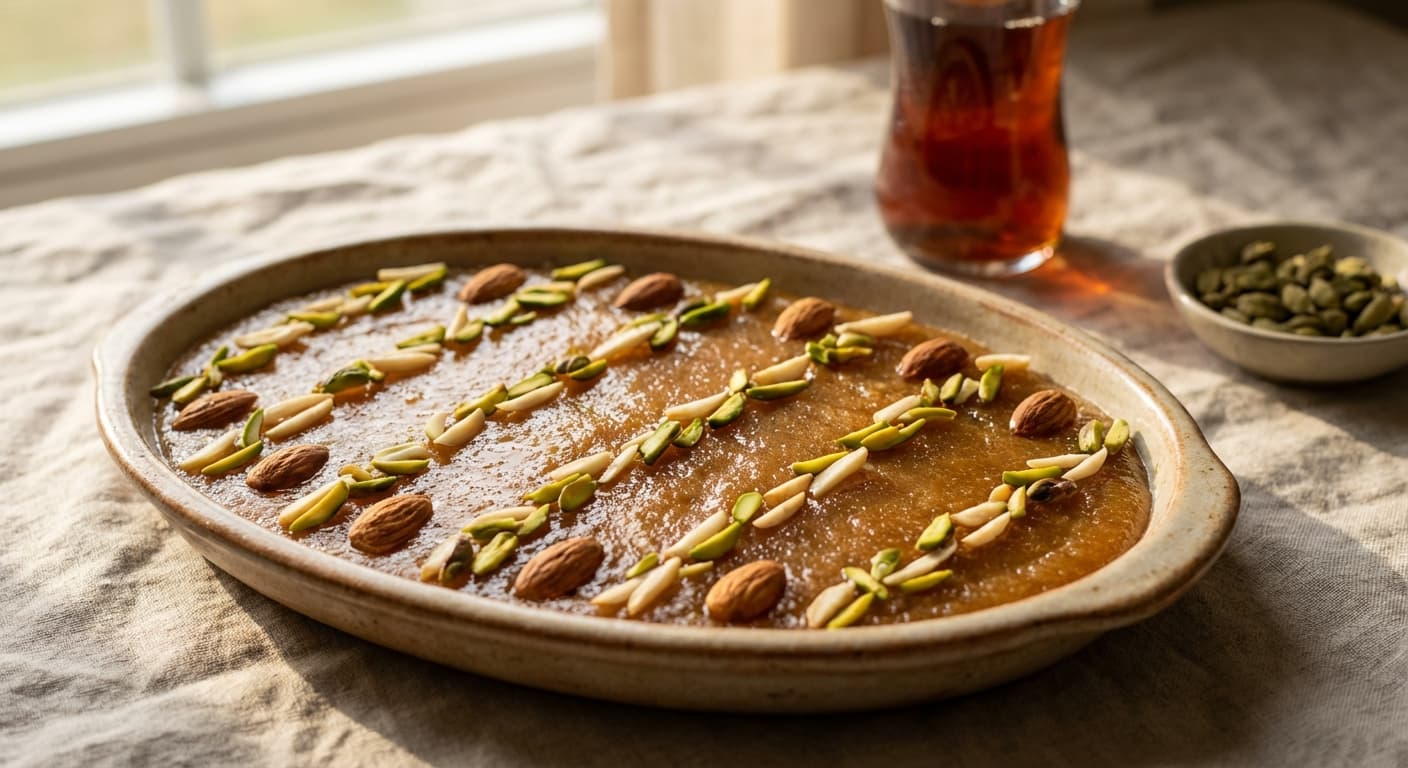
Halwa-e Aurd-e Sujee (حلوای آرد و سوجی) — Afghan Semolina Halwa with Cardamom
A comforting Afghan halwa made by toasting semolina and flour in ghee, then enriching it with a cardamom-scented syrup. It’s commonly served with tea and offered to guests during family gatherings and religious occasions.
Printable Recipe Card
Servings: 8 · Total: 40 min · Difficulty: medium
Ingredients (quick list)
- 250 g Granulated sugar
- 360 ml Water
- 6 pod Green cardamom pods, lightly crushed (Crush to expose seeds for better infusion.)
- 10 ml Rose water (Optional but traditional; measure as 2 tsp.)
- 0.1 g Saffron threads (Steep in 15 ml warm water taken from the measured water.)
- 140 g Ghee (Use 10 tbsp melted weight equivalent.)
- 160 g Semolina (fine) (Also called suji/sooji.)
- 60 g All-purpose flour (Adds a deeper, bakery-like toast flavor.)
- 1.5 tsp Ground cardamom
- 20 g Pistachios, slivered
- 20 g Almonds, slivered
Steps (summary)
- Make the syrup first so it is ready when the toasted grains need liquid. In a small saucepan, combine the sugar, water, crushed…
- Simmer the syrup for 6 minutes, stirring until the sugar fully dissolves and the aroma of cardamom is noticeable. Turn off the…
- In a wide, heavy pan, melt the ghee over medium-low heat until it looks clear and shimmers. Add the semolina and flour, then im…
- Toast the semolina-flour mixture for 12–15 minutes, stirring constantly and scraping the bottom to prevent scorching. The color…
- Lower the heat to low and stir in the ground cardamom so it blooms in the warm fat without burning. Keep stirring for 30 second…
- Carefully pour in the hot syrup in a steady stream while stirring continuously. The mixture will bubble and thicken quickly, so…
+ 2 more steps in the full instructions section below.
Cultural Background
In Afghan homes, halwa is a symbol of hospitality and remembrance, often prepared for guests and shared at communal gatherings. Cardamom and saffron reflect the region’s love of perfumed sweets served alongside tea.
Equipment
💡 Tips
- Use a wide pan and keep the heat medium-low during toasting; a larger surface area helps the semolina brown evenly in 12–15 minutes.
- Keep the syrup hot when adding it; adding cool syrup can make the halwa seize and turn grainy, requiring longer stirring to smooth out.
- For a firmer, sliceable halwa, cook 1–2 minutes longer after adding syrup; for a softer spoonable halwa, stop as soon as it pulls from the sides.
⚠️ Common Mistakes
❌ Under-toasting the semolina and flour, resulting in a pale, raw-tasting halwa.
✅ Fix: Toast 12–15 minutes on medium-low, stirring constantly, until deep golden and nutty before adding syrup.
❌ Adding cool syrup, which can make the halwa clump and turn grainy.
✅ Fix: Keep the syrup hot and covered; pour it in slowly while stirring continuously.
❌ Cooking on high heat after adding syrup, causing scorching and oily separation.
✅ Fix: Switch to low heat and stir steadily until the halwa turns glossy and releases from the pan.
🧊 How to Store
Cool completely, then cover tightly and refrigerate for up to 5 days. Reheat in a saucepan over low heat with 30 ml water per 300 g halwa, stirring until glossy, or microwave in 20-second bursts covered to prevent drying.
📅 Make Ahead
Prepare the syrup up to 24 hours ahead and refrigerate it, then reheat to steaming-hot before using. Nuts can be sliced and stored airtight for 3 days to speed up assembly.
🍽️ Pairs Well With
- Green tea
- black tea with cardamom
- fresh fruit
- clotted cream (qaymaq).
Regional Variations
- Kabul-style: slightly lighter color with more saffron and a softer, spoonable finish.
- Northern Afghanistan: garnished more heavily with nuts and sometimes enriched with extra ghee for a richer mouthfeel.
- Flour-forward version: increase flour to 80 g and reduce semolina to 140 g for a deeper toasted, bread-like aroma.
Ingredients
- 250 gGranulated sugar
- 360 mlWater
- 6 podGreen cardamom pods, lightly crushed (Crush to expose seeds for better infusion.)
- 10 mlRose water (Optional but traditional; measure as 2 tsp.)
- 0.1 gSaffron threads (Steep in 15 ml warm water taken from the measured water.)
- 140 gGhee (Use 10 tbsp melted weight equivalent.)
- 160 gSemolina (fine) (Also called suji/sooji.)
- 60 gAll-purpose flour (Adds a deeper, bakery-like toast flavor.)
- 1.5 tspGround cardamom
- 20 gPistachios, slivered
- 20 gAlmonds, slivered
🔄 Substitutions
- Ghee→ Unsalted butter
- Rose water→ Orange blossom water
- Pistachios and almonds→ Chopped walnuts
Instructions
- 1
Make the syrup first so it is ready when the toasted grains need liquid. In a small saucepan, combine the sugar, water, crushed cardamom pods, and saffron infusion, then bring to a gentle boil over medium heat.
- 2
Simmer the syrup for 6 minutes, stirring until the sugar fully dissolves and the aroma of cardamom is noticeable. Turn off the heat, stir in the rose water, and keep the syrup hot with a lid on so it does not cool too much.
- 3
In a wide, heavy pan, melt the ghee over medium-low heat until it looks clear and shimmers. Add the semolina and flour, then immediately begin stirring with a wooden spoon to coat every grain evenly.
- 4
Toast the semolina-flour mixture for 12–15 minutes, stirring constantly and scraping the bottom to prevent scorching. The color should shift to a deep golden tan and the smell should become nutty and biscuit-like, which is the signature of good halwa.
- 5
Lower the heat to low and stir in the ground cardamom so it blooms in the warm fat without burning. Keep stirring for 30 seconds, and make sure the mixture stays evenly colored with no dark spots.
- 6
Carefully pour in the hot syrup in a steady stream while stirring continuously. The mixture will bubble and thicken quickly, so keep your face and hands back and stir from the center outward to avoid splashes.
- 7
Cook the halwa for 4–6 minutes, stirring until it becomes glossy and pulls away from the sides of the pan as one mass. If it looks oily and separated, keep stirring on low heat until the texture re-emulsifies and turns smooth.
- 8
Spread the halwa into a shallow serving dish and smooth the top with the back of a spoon. Garnish with pistachios and almonds, then let it rest for 10 minutes so it sets and slices cleanly.
🪪 Recipe Passport
Cultural Background
In Afghan homes, halwa is a symbol of hospitality and remembrance, often prepared for guests and shared at communal gatherings. Cardamom and saffron reflect the region’s love of perfumed sweets served alongside tea.
Regional Variations
Researched from multiple sources and validated by the Zaffaron editorial team. Every recipe is tested for accuracy, measurements, and cultural authenticity.
Nutrition per serving
Pairs well with
If you enjoyed this recipe, here are a few related Zaffaron recipes to try next.
Does your family make this differently?
Every family has their own version. Maybe your grandmother adds a secret ingredient, or your aunt has a completely different technique. Preserve your family's version — with their name on it, forever.
You Might Also Like
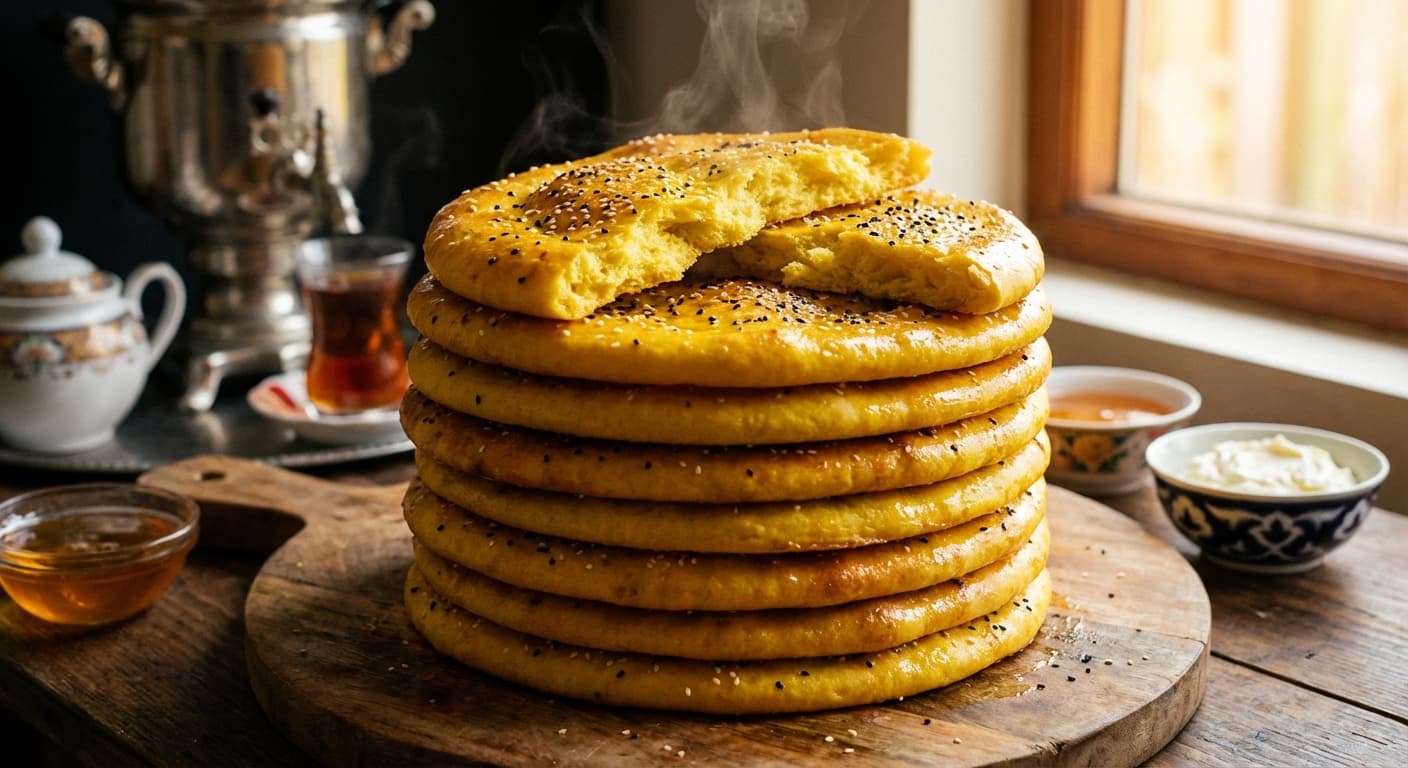
Sheermal (شیرمال) — Afghan slightly sweet saffron-tinged soft bread
Afghan · Breads · 43 min
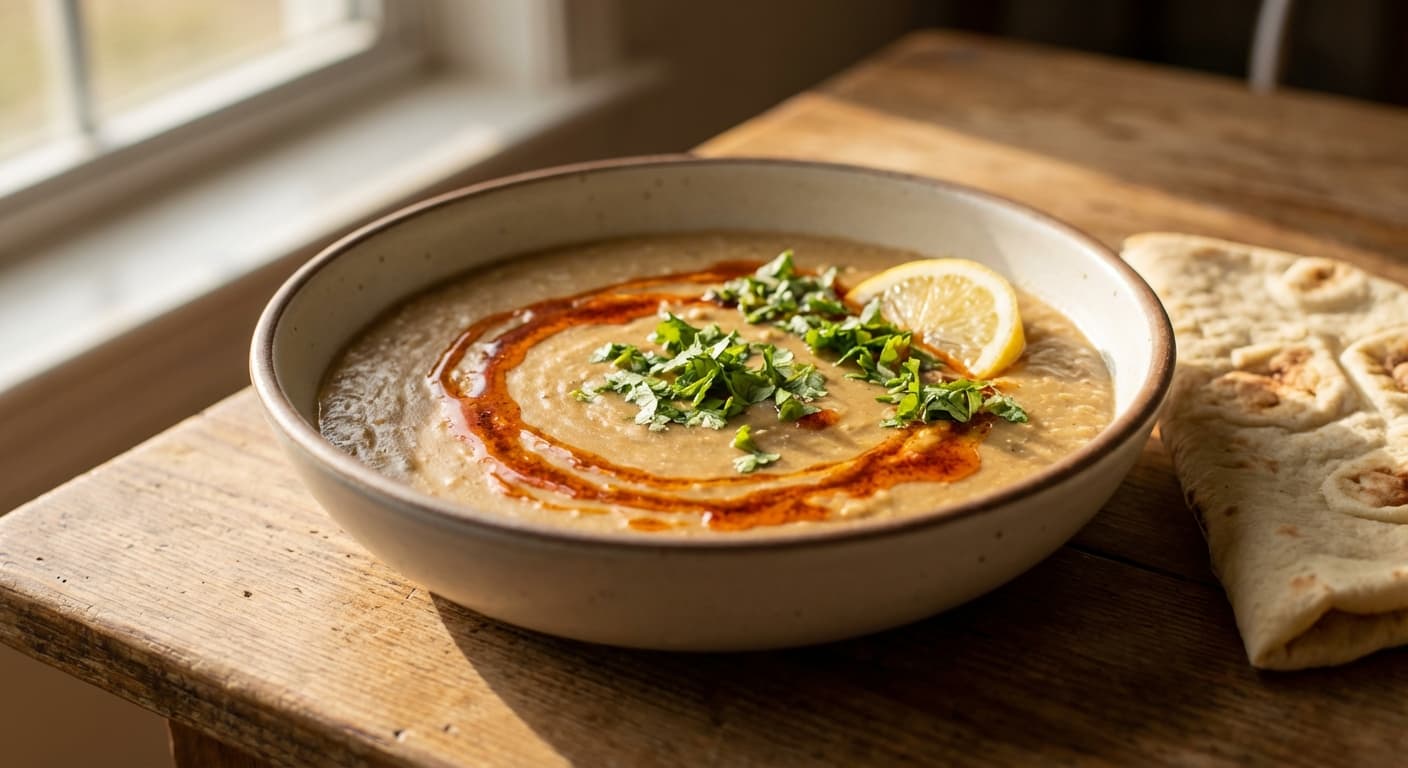
Haleem (حلیم) — Afghan Slow-cooked wheat and meat, silky and rich
Afghan · Main Courses · 240 min
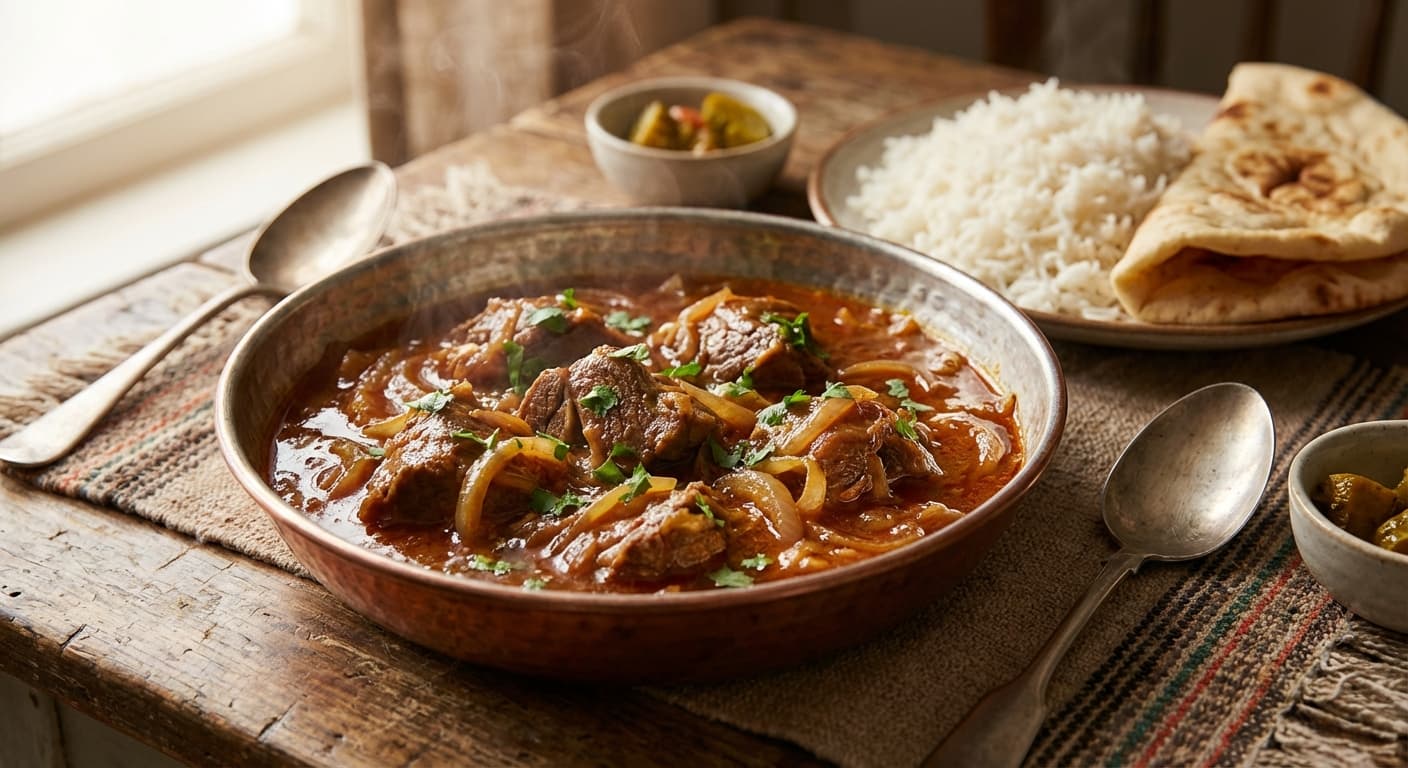
Dopiaza (دو پیازہ) — Afghan Onion-rich Meat Stew with Warm Spices
Afghan · Stews · 110 min
Tufahije (Tufahije) — Bosnian Walnut-Stuffed Poached Apples
Bosnian · Desserts · 50 min
Key Lime Pie (Key Lime Pie) — Florida Keys Citrus Custard Pie
American · Desserts · 50 min
Persian Kachi (کاچی) — Saffron Rosewater Pudding
Persian · Desserts · 45 min
Shorshe Ilish (শরষে ইলিশ) — Hilsa in Mustard-Grreen Chili Gravy
Indian · Main Courses · 38 min
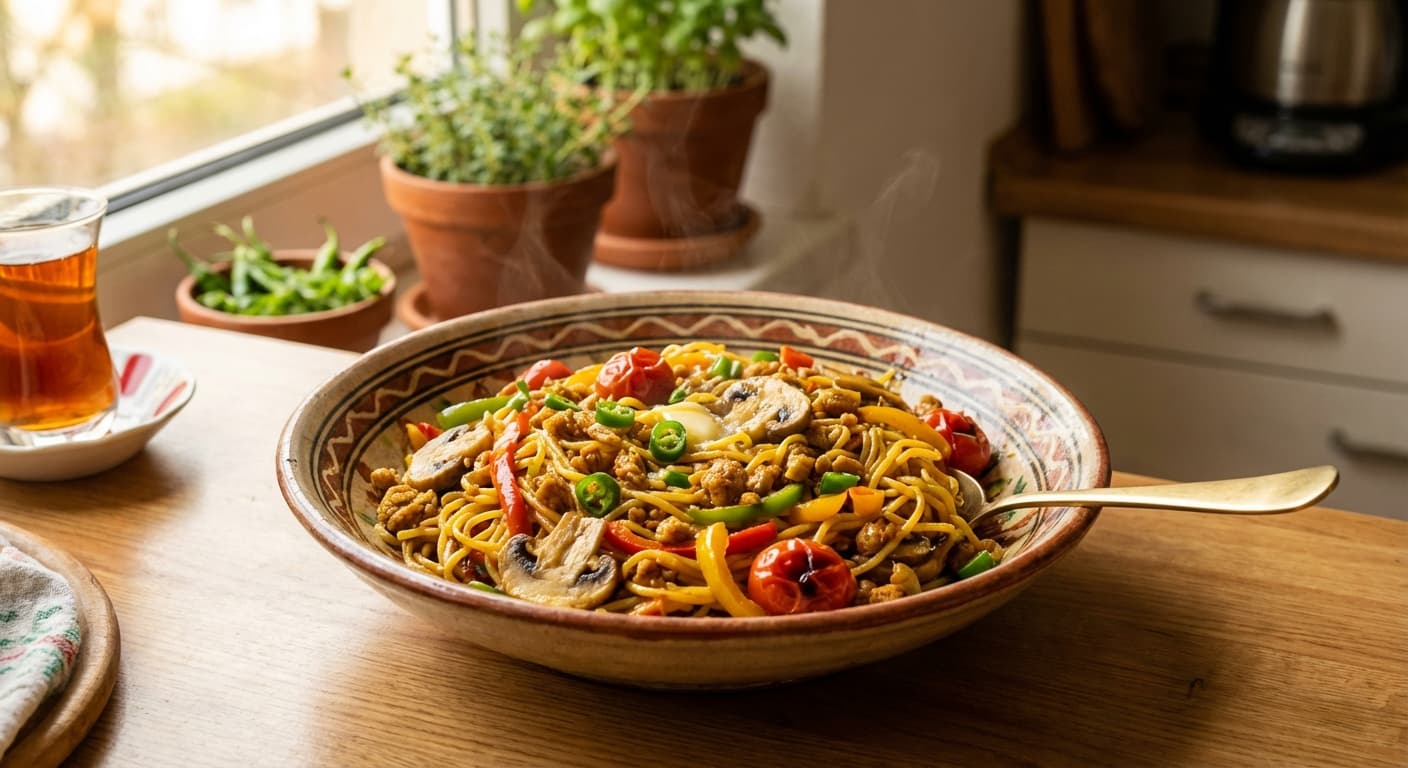
Noodle ba Soy va Felfel (نودل با سویا و فلفل) — Persian-Style Noodles with Soy and Peppers
Persian · Main Courses · 43 min
Reviews
Cooked this recipe?
Tap the stars to rate it — that's all it takes. A few words are welcome but optional.
No ratings yet. Cooked this one? Be the first to rate it — it takes one tap.