Laal Maas (लाल मांस) — Indian Fiery Rajasthani mutton curry with red chilies
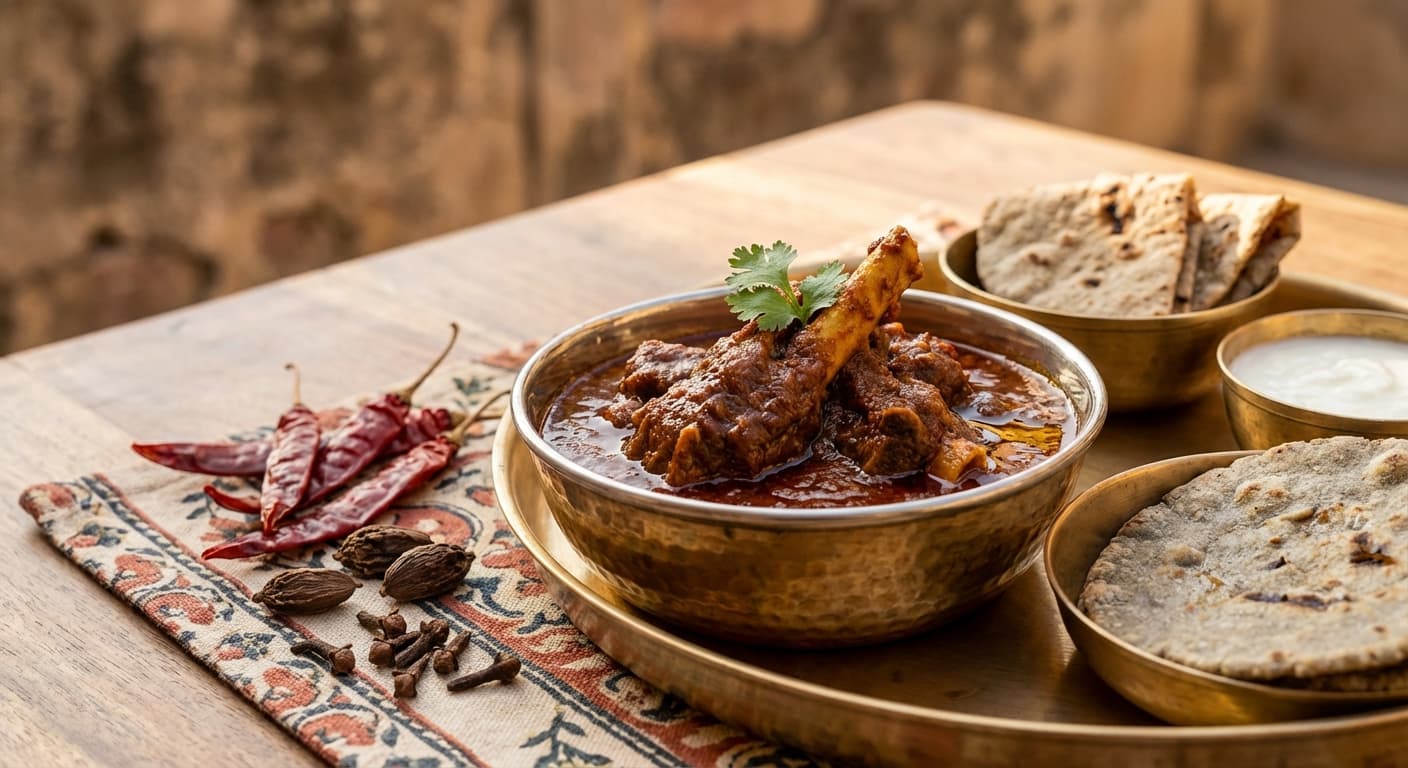
Laal Maas is a celebrated Rajasthani mutton curry known for its deep red color and bold heat from dried red chilies. Traditionally cooked slow with yogurt and whole spices, it reflects Rajasthan’s robust desert cuisine and hunting-era flavors.
Printable Recipe Card
Servings: 4 · Total: 110 min · Difficulty: medium
Ingredients (quick list)
- 900 g bone-in mutton (goat or lamb), cut into 4 cm pieces (shoulder/leg mix preferred)
- 250 g plain full-fat yogurt, whisked smooth (do not use sweetened yogurt)
- 18 g garlic, finely crushed
- 15 g ginger, finely grated
- 10 g salt
- 18 g Kashmiri dried red chilies, stemmed and seeded (about 12–14 chilies)
- 6 g hot dried red chilies (Rajasthani/Byadgi-style), stemmed (about 4–6 chilies; adjust only by swapping variety, not by vague amounts)
- 180 ml hot water (for soaking chilies)
- 8 g coriander seeds
- 4 g cumin seeds
- 2 g black peppercorns
- 1 g cloves (about 6 cloves)
+ 11 more in the full ingredients section below.
Steps (summary)
- Marinate the mutton by mixing it with yogurt, crushed garlic, grated ginger, and salt until every piece is coated. Cover and re…
- Make the chili paste by soaking the Kashmiri and hot dried chilies in 180 ml hot water for 20 minutes until fully softened. Ble…
- Toast the dry spices by heating a small skillet over medium heat and adding coriander seeds, cumin seeds, peppercorns, cloves,…
- Heat mustard oil in a heavy pot over medium-high heat until it just begins to smoke, then lower the heat and add ghee. This ste…
- Add sliced onions and cook over medium heat for 12–15 minutes, stirring often, until they turn deep golden-brown. Proper browni…
- Add the marinated mutton and sauté for 8–10 minutes, turning pieces so they sear lightly and the yogurt begins to reduce. Keep…
+ 4 more steps in the full instructions section below.
Cultural Background
Laal Maas is an iconic dish of Rajasthan, historically linked to royal hunting kitchens where game was cooked with abundant chilies and robust spices. Today it remains a signature celebratory curry, often paired with bajra roti to match the region’s millet-forward traditions.
Equipment
💡 Tips
- For a brighter red color without extra heat, keep most chilies Kashmiri and limit the hot variety to 6 g as written.
- If yogurt tends to split, bring it to room temperature for 20 minutes before marinating and keep the sauté heat at medium while stirring constantly.
- Slow simmering is key: keep the curry at a gentle bubble so the meat turns tender while the gravy reduces into a rich, clingy sauce.
⚠️ Common Mistakes
❌ Adding chili paste and not cooking it long enough, leaving a raw harsh heat.
✅ Fix: Cook the paste 3–4 minutes until oil separates at the edges and the aroma turns deeper and slightly sweet.
❌ High heat after adding yogurt, causing the masala to split.
✅ Fix: Keep heat at medium and stir continuously during the first 8–10 minutes; use room-temperature yogurt for stability.
❌ Rushing the onions so the gravy tastes thin and overly sharp.
✅ Fix: Brown onions to deep golden-brown (12–15 minutes) to build sweetness and body before adding the meat.
🧊 How to Store
Cool within 90 minutes, then refrigerate in an airtight container for up to 3 days. Reheat covered on low with 60 ml water, stirring occasionally, until steaming hot; the chili flavor intensifies overnight, so serve with extra yogurt on the side if desired.
📅 Make Ahead
Blend the chili paste and toast/grind the spice mix up to 2 days ahead and refrigerate airtight. You can also marinate the mutton overnight for deeper flavor and faster cooking the next day.
🍽️ Pairs Well With
- Bajra roti
- steamed basmati rice
- onion salad with lemon
- plain yogurt
- pickled red chilies.
Regional Variations
- Jodhpur-style versions often emphasize mustard oil and a darker roast on the onions for a more rustic, smoky finish.
- Some home cooks add 1 tsp smoked paprika for color and aroma when Kashmiri chilies are mild or unavailable.
- In a few households, a small amount of garlic is used and ginger is minimized, keeping the chili-forward profile dominant.
Ingredients
- 900 gbone-in mutton (goat or lamb), cut into 4 cm pieces (shoulder/leg mix preferred)
- 250 gplain full-fat yogurt, whisked smooth (do not use sweetened yogurt)
- 18 ggarlic, finely crushed
- 15 gginger, finely grated
- 10 gsalt
- 18 gKashmiri dried red chilies, stemmed and seeded (about 12–14 chilies)
- 6 ghot dried red chilies (Rajasthani/Byadgi-style), stemmed (about 4–6 chilies; adjust only by swapping variety, not by vague amounts)
- 180 mlhot water (for soaking chilies)
- 8 gcoriander seeds
- 4 gcumin seeds
- 2 gblack peppercorns
- 1 gcloves (about 6 cloves)
- 1 ggreen cardamom pods (about 4 pods)
- 1 podblack cardamom pod
- 1 stickcinnamon stick (about 5 cm)
- 1 leafbay leaf
- 60 mlmustard oil (traditional; heat until just smoking to mellow pungency)
- 15 gghee (adds roundness; can be replaced with more mustard oil)
- 250 gonions, thinly sliced
- 450 mlwater (add in two additions for better control)
- 2 tspdried fenugreek leaves (kasuri methi), crushed
- 1 tspgaram masala (optional but common in home versions)
- 10 gfresh cilantro leaves, chopped (optional garnish)
🔄 Substitutions
- mustard oil→ neutral oil (sunflower) + ghee
- bone-in mutton→ bone-in lamb shoulder
- kasuri methi→ fresh fenugreek leaves (methi), finely chopped
Instructions
- 1
Marinate the mutton by mixing it with yogurt, crushed garlic, grated ginger, and salt until every piece is coated. Cover and refrigerate for 60 minutes so the yogurt tenderizes the meat and carries flavor into the fibers.
- 2
Make the chili paste by soaking the Kashmiri and hot dried chilies in 180 ml hot water for 20 minutes until fully softened. Blend the soaked chilies with 60 ml of the soaking liquid into a smooth paste, then set it aside to keep the heat and color controlled.
- 3
Toast the dry spices by heating a small skillet over medium heat and adding coriander seeds, cumin seeds, peppercorns, cloves, green cardamom, black cardamom, cinnamon, and bay leaf. Stir for 60–90 seconds until fragrant, then grind to a coarse powder so the curry tastes bold without becoming gritty.
- 4
Heat mustard oil in a heavy pot over medium-high heat until it just begins to smoke, then lower the heat and add ghee. This step is essential because it removes the raw sharpness of mustard oil while keeping its signature Rajasthani character.
- 5
Add sliced onions and cook over medium heat for 12–15 minutes, stirring often, until they turn deep golden-brown. Proper browning builds the curry’s body and balances the chili heat with sweetness, so do not rush this stage.
- 6
Add the marinated mutton and sauté for 8–10 minutes, turning pieces so they sear lightly and the yogurt begins to reduce. Keep the heat medium and stir continuously to prevent the yogurt from splitting while it thickens into the masala.
- 7
Stir in the ground toasted spice mix and cook for 60 seconds to bloom the aromatics in the fat. Add the prepared chili paste and cook for 3–4 minutes until the oil starts to separate at the edges and the raw chili smell mellows.
- 8
Pour in 250 ml water, scrape the bottom to release any browned bits, and bring to a steady simmer. Cover and cook on low heat for 55 minutes, stirring every 10 minutes to prevent sticking and to ensure even tenderizing.
- 9
Add the remaining 200 ml water and continue cooking uncovered for 15–20 minutes until the mutton is tender and the gravy is thick, glossy, and brick-red. The curry is ready when the meat yields easily and a light sheen of oil appears on top, indicating the masala has cooked through.
- 10
Finish by stirring in crushed kasuri methi and garam masala, then simmer for 2 minutes to integrate the aromas. Rest the pot off heat for 10 minutes before serving, because the flavors deepen and the chili heat becomes rounder and more balanced.
🪪 Recipe Passport
Cultural Background
Laal Maas is an iconic dish of Rajasthan, historically linked to royal hunting kitchens where game was cooked with abundant chilies and robust spices. Today it remains a signature celebratory curry, often paired with bajra roti to match the region’s millet-forward traditions.
Regional Variations
Researched from multiple sources and validated by the Zaffaron editorial team. Every recipe is tested for accuracy, measurements, and cultural authenticity.
Nutrition per serving
Pairs well with
If you enjoyed this recipe, here are a few related Zaffaron recipes to try next.
Does your family make this differently?
Every family has their own version. Maybe your grandmother adds a secret ingredient, or your aunt has a completely different technique. Preserve your family's version — with their name on it, forever.
You Might Also Like
Chettinad Chicken (செட்டிநாடு கோழி குழம்பு) — Peppery roasted-spice chicken curry from Tamil Nadu
Indian · Main Courses · 65 min
Avial (അവിയൽ) — Kerala mixed vegetables in coconut-yogurt gravy
Indian · Main Courses · 50 min
Modak (मोदक) — Steamed coconut-jaggery sweet dumplings for Ganesh Chaturthi
Indian · Desserts · 60 min
Cuban Ropa Vieja (Ropa Vieja) — Shredded Beef in Tomato-Pepper Sauce
Cuban · Stews · 190 min
Yemeni Saltah (سلتة) — Bubbling Fenugreek Lamb Stew
Yemeni · Stews · 130 min
Ash-e Sak (آش ساک) — Gorgani Spinach and Lamb Ash
Persian · Soups · 175 min
Lawang (لاونگ) — Afghan Stuffed Chicken with Raisins, Nuts, and Warm Spices
Afghan · Main Courses · 120 min
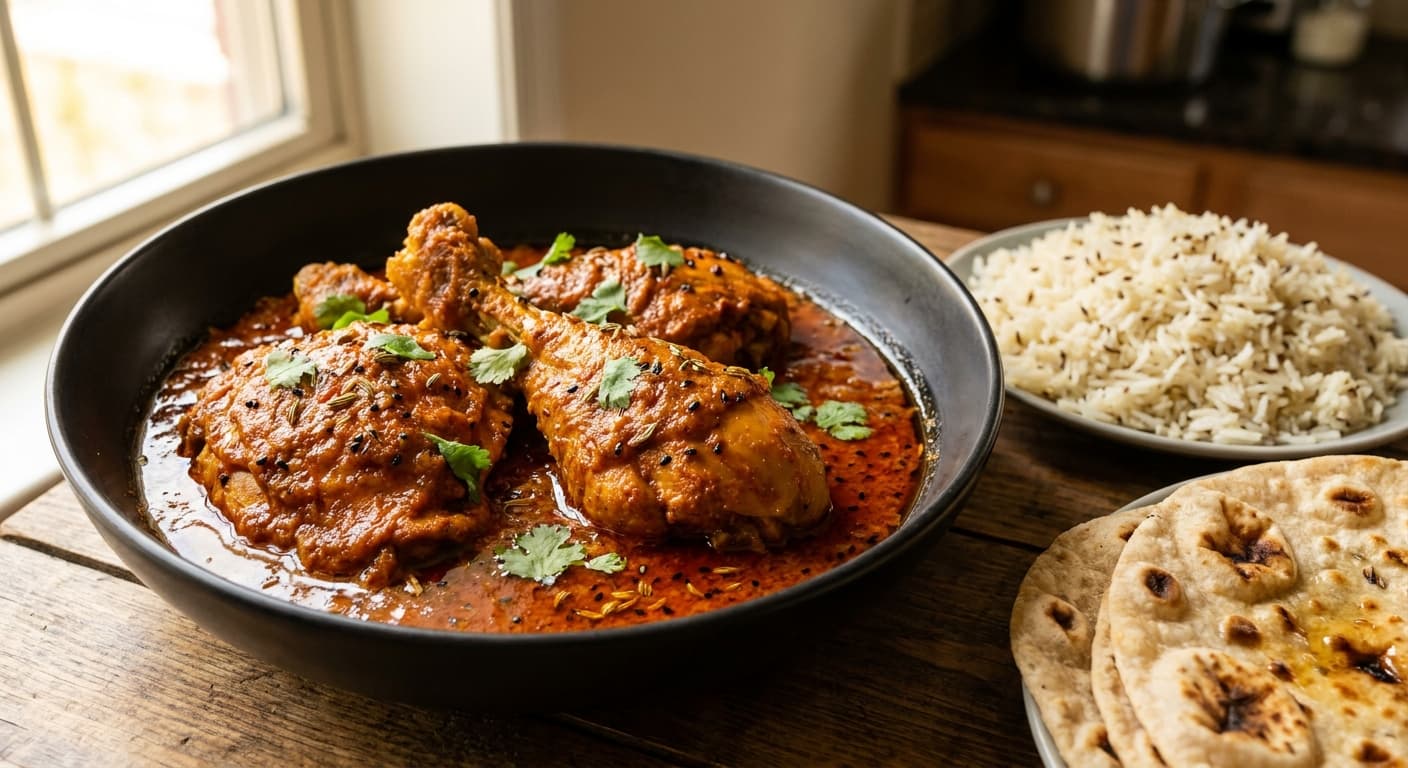
Indian Achari Murgh (अचारी मुर्ग) — Pickle-Spiced Punjabi Chicken Curry with Whole Spices
Indian · Stews · 80 min
Reviews
Cooked this recipe?
Tap the stars to rate it — that's all it takes. A few words are welcome but optional.
No ratings yet. Cooked this one? Be the first to rate it — it takes one tap.