Khoresht-e Morgh-o Bademjan ba Ghooreh (خورش مرغ و بادمجان با غوره)
Khoresht-e Morgh-o Bademjan ba Ghooreh is a combination of tender chicken, fried eggplant, and the bright tang of unripe grapes (ghooreh). Fried onions and tomato paste add depth, and cherry tomatoes added at the end give the stew a summery flavor and vibrant color.
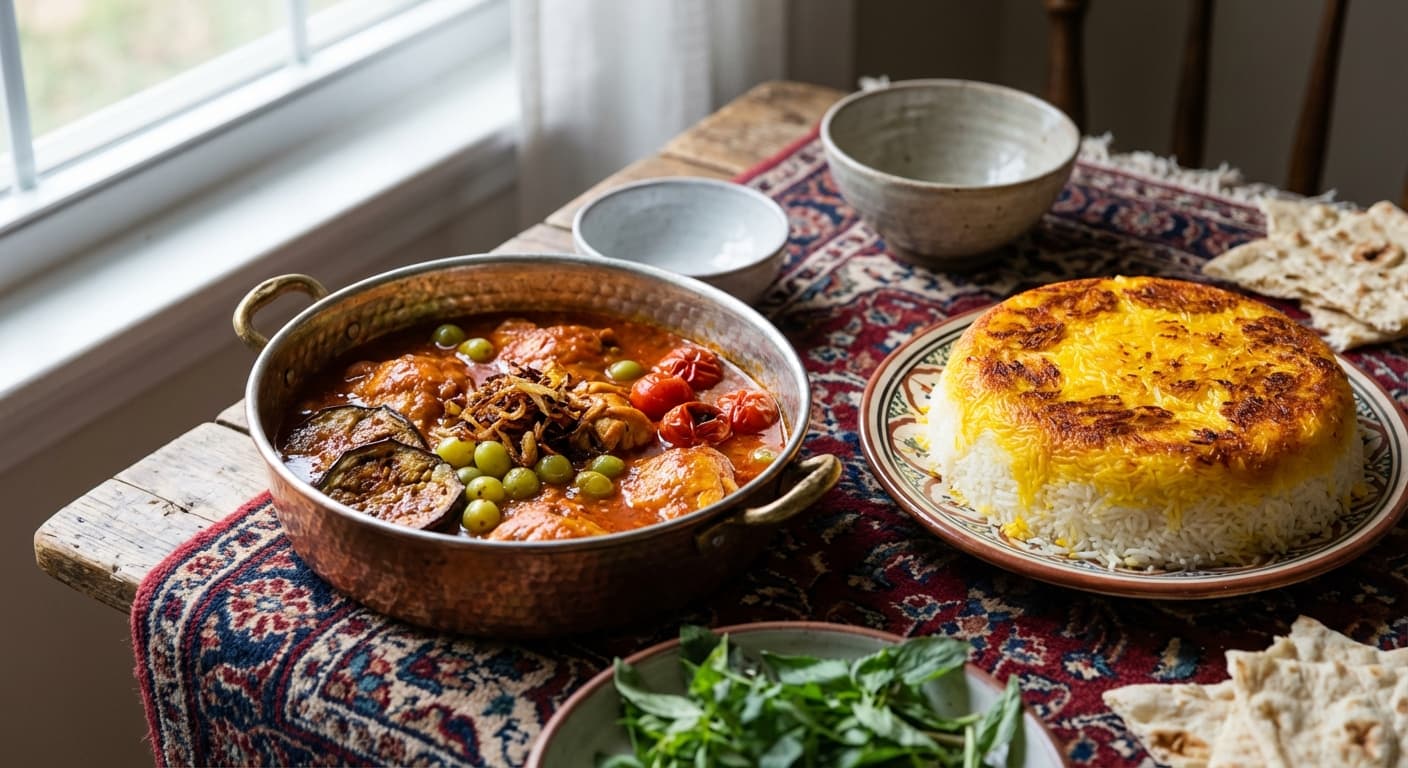
Printable Recipe Card
Servings: 4 · Total: 150 min · Difficulty: medium
Ingredients (quick list)
- 900 g Chicken pieces (bone-in thighs/drumsticks) (4–5 pieces, skin removed for cleaner stew)
- 300 g Yellow onions (thinly sliced for piaz dagh)
- 90 g Neutral frying oil (sunflower/canola) (divided: onions, chicken, eggplant)
- 4 g Turmeric powder (about 1 1/2 tsp)
- 10 g Fine sea salt (about 1 3/4 tsp, adjust to taste)
- 1 g Black pepper (about 1/2 tsp)
- 45 g Tomato paste (3 tbsp)
- 900 ml Water (plus more if needed during simmer)
- 900 g Eggplants (3 medium, peeled in stripes, cut lengthwise into 2–3 cm slices)
- 12 g Salt (for eggplant pre-salting) (2 tsp, to draw bitterness; will be rinsed off)
- 160 g Unripe grapes (Ghooreh) (rinsed well; remove stems)
- 250 g Cherry tomatoes (left whole or halved)
+ 1 more in the full ingredients section below.
Steps (summary)
- Prepare the eggplant: peel in zebra stripes, slice lengthwise into 2–3 cm planks, then sprinkle evenly with 12 g salt. Rest 30…
- Make piaz dagh: heat 30 g oil in a heavy pot over medium heat (about 170–180°C surface heat). Add 300 g sliced onions and cook…
- Brown the chicken: raise heat to medium-high, add 15 g oil to the pot, then add 900 g chicken pieces. Sear 3–4 minutes per side…
- Cook the tomato paste: push chicken aside, add 45 g tomato paste to the center with 15 g oil, and fry 2–3 minutes, stirring con…
- Slow-simmer the stew: cover and simmer on low heat 45 minutes, turning chicken once halfway. Keep the stew at a lazy bubble (ab…
- Fry the eggplant: while the chicken simmers, heat 30 g oil in a wide skillet over medium-high. Fry eggplant slices in batches 3…
+ 2 more steps in the full instructions section below.
Cultural Background
Khoresht-e Morgh-o Bademjan ba Ghooreh is a beloved Iranian summer stew that brings together the natural tartness of ghooreh (unripe grapes) with fried eggplant and fried onions. It is typically served alongside chelow (steamed rice) and is a classic example of the sweet-and-sour balance in Iranian cuisine.
Equipment
💡 Tips
- For cleaner flavor, remove chicken skin and trim excess fat before searing.
- If your ghooreh is extremely sour, add it in two stages: half at 20 minutes, half at the end, tasting between.
- Frying tomato paste in oil until brick-red is key for the classic khoresht color and depth.
- Use a wide pot so eggplants sit in a single layer; stacking increases breakage when stirring.
⚠️ Common Mistakes
❌ Adding ghooreh at the very beginning
💡 Why: Long boiling can dull the bright acidity and can also tighten chicken texture.
✅ Fix: Add ghooreh after the chicken is mostly tender (last 25–35 minutes), then adjust sourness at the end.
❌ Skipping eggplant salting and drying
💡 Why: Wet eggplant absorbs excess oil and can turn greasy or fall apart.
✅ Fix: Salt 30 minutes, rinse, and pat very dry; fry in batches over medium-high heat.
❌ Not frying tomato paste
💡 Why: Raw paste tastes metallic and the stew stays pale and flat.
✅ Fix: Fry paste 2–3 minutes in oil until brick-red before adding water.
❌ Boiling the stew hard
💡 Why: High heat breaks eggplant, toughens chicken, and reduces sauce too fast.
✅ Fix: Maintain a gentle simmer (90–95°C) and add hot water in small amounts if needed.
🧊 How to Store
Cool to room temperature within 2 hours, then refrigerate in an airtight container up to 3 days. Reheat gently on low with 60–120 ml water to loosen sauce. Freeze up to 2 months; thaw overnight in the fridge and reheat slowly to keep eggplant intact.
📅 Make Ahead
Fry the onions and eggplants up to 24 hours ahead; refrigerate separately. Simmer the chicken base and refrigerate overnight—flavor improves. Reheat gently, then add eggplant, ghooreh, and cherry tomatoes to finish fresh in 40–45 minutes.
🍽️ Pairs Well With
- Persian steamed rice (Chelow) with saffron tahdig
- Fresh herbs (Sabzi khordan): basil
- mint
- tarragon
- radish
- Torshi (pickles) or plain yogurt on the side
Regional Variations
- TehranOften made with slightly more tomato paste for a deeper red sauce, and finished with extra piaz dagh on top for richness.
- Gilan & Mazandaran (Caspian region)Tends to be more tart; cooks may increase ghooreh and add a touch of local sour agents, keeping the stew brighter and lighter.
Ingredients
- 900 gChicken pieces (bone-in thighs/drumsticks) (4–5 pieces, skin removed for cleaner stew)
- 300 gYellow onions (thinly sliced for piaz dagh)
- 90 gNeutral frying oil (sunflower/canola) (divided: onions, chicken, eggplant)
- 4 gTurmeric powder (about 1 1/2 tsp)
- 10 gFine sea salt (about 1 3/4 tsp, adjust to taste)
- 1 gBlack pepper (about 1/2 tsp)
- 45 gTomato paste (3 tbsp)
- 900 mlWater (plus more if needed during simmer)
- 900 gEggplants (3 medium, peeled in stripes, cut lengthwise into 2–3 cm slices)
- 12 gSalt (for eggplant pre-salting) (2 tsp, to draw bitterness; will be rinsed off)
- 160 gUnripe grapes (Ghooreh) (rinsed well; remove stems)
- 250 gCherry tomatoes (left whole or halved)
- 30 mlBrewed saffron water (from 0.2 g saffron steeped in 30 ml hot water)
🔄 Substitutions
- Unripe grapes (ghooreh) 160 g→ Ghooreh paste 25 g diluted in 60 ml water
- Cherry tomatoes 250 g→ Roma tomatoes 300 g, chopped
- Neutral frying oil 90 g→ Ghee 45 g + neutral oil 45 g
Instructions
- 1
Prepare the eggplant: peel in zebra stripes, slice lengthwise into 2–3 cm planks, then sprinkle evenly with 12 g salt. Rest 30 minutes on a rack or tray to draw moisture and reduce bitterness. Rinse thoroughly, then pat very dry with towels; dryness prevents oil splatter and keeps slices from collapsing.
- 2
Make piaz dagh: heat 30 g oil in a heavy pot over medium heat (about 170–180°C surface heat). Add 300 g sliced onions and cook 18–22 minutes, stirring often, until deep golden and sweet. Lower heat if edges darken too fast. Remove 1/3 of the fried onions to garnish later; keep the rest in the pot.
- 3
Brown the chicken: raise heat to medium-high, add 15 g oil to the pot, then add 900 g chicken pieces. Sear 3–4 minutes per side until lightly golden. Add turmeric (4 g), black pepper (1 g), and 6 g of the fine salt; stir 60 seconds to bloom spices without burning.
- 4
Cook the tomato paste: push chicken aside, add 45 g tomato paste to the center with 15 g oil, and fry 2–3 minutes, stirring constantly, until brick-red and fragrant. This step removes raw paste taste and deepens color. Pour in 900 ml water, scrape the bottom, bring to a boil, then reduce to a gentle simmer.
- 5
Slow-simmer the stew: cover and simmer on low heat 45 minutes, turning chicken once halfway. Keep the stew at a lazy bubble (about 90–95°C) so the chicken stays tender and the broth clarifies. If liquid drops below the chicken, add 100–150 ml hot water as needed.
- 6
Fry the eggplant: while the chicken simmers, heat 30 g oil in a wide skillet over medium-high. Fry eggplant slices in batches 3–4 minutes per side until golden and velvety. Add the remaining 15 g oil only if the pan becomes dry. Drain on a rack or paper; avoid over-browning which turns them bitter.
- 7
Add eggplant and ghooreh: after 45 minutes of simmering, gently nestle fried eggplants into the pot. Add 160 g ghooreh and the remaining 4 g fine salt. Simmer uncovered 25–30 minutes, spooning broth over eggplants so they absorb flavor without breaking. The sauce should thicken and lightly coat a spoon.
- 8
Finish with tomatoes and saffron: add 250 g cherry tomatoes and 30 ml brewed saffron water. Simmer 10–12 minutes until tomatoes soften but hold shape. Taste for sour-salt balance; if too sharp, add 50–100 ml hot water and simmer 5 minutes. Rest covered 10 minutes before serving for a cohesive, glossy sauce.
🪪 Recipe Passport
Cultural Background
Khoresht-e Morgh-o Bademjan ba Ghooreh is a beloved Iranian summer stew that brings together the natural tartness of ghooreh (unripe grapes) with fried eggplant and fried onions. It is typically served alongside chelow (steamed rice) and is a classic example of the sweet-and-sour balance in Iranian cuisine.
Regional Variations
Researched from multiple sources and validated by the Zaffaron editorial team. Every recipe is tested for accuracy, measurements, and cultural authenticity.
Nutrition per serving
Pairs well with
If you enjoyed this recipe, here are a few related Zaffaron recipes to try next.
- Kookoo Khaviar Mahi Sefid (کوکو خاویار ماهی سفید) — Persian Whitefish Caviar Kuku
- Khoresht Sib o Albaloo (خورش سیب و آلبالو) — Persian Sweet-and-Sour Apple & Sour Cherry Stew
- Kofteh Rizeh Morgh (کوفته ریزه مرغ) — Persian Spiced Chicken Meatballs in Light Saffron-Tomato Broth
- Kookoo Baamieh (کوکو بامیه) — Persian Okra Frittata
Does your family make this differently?
Every family has their own version. Maybe your grandmother adds a secret ingredient, or your aunt has a completely different technique. Preserve your family's version — with their name on it, forever.
You Might Also Like
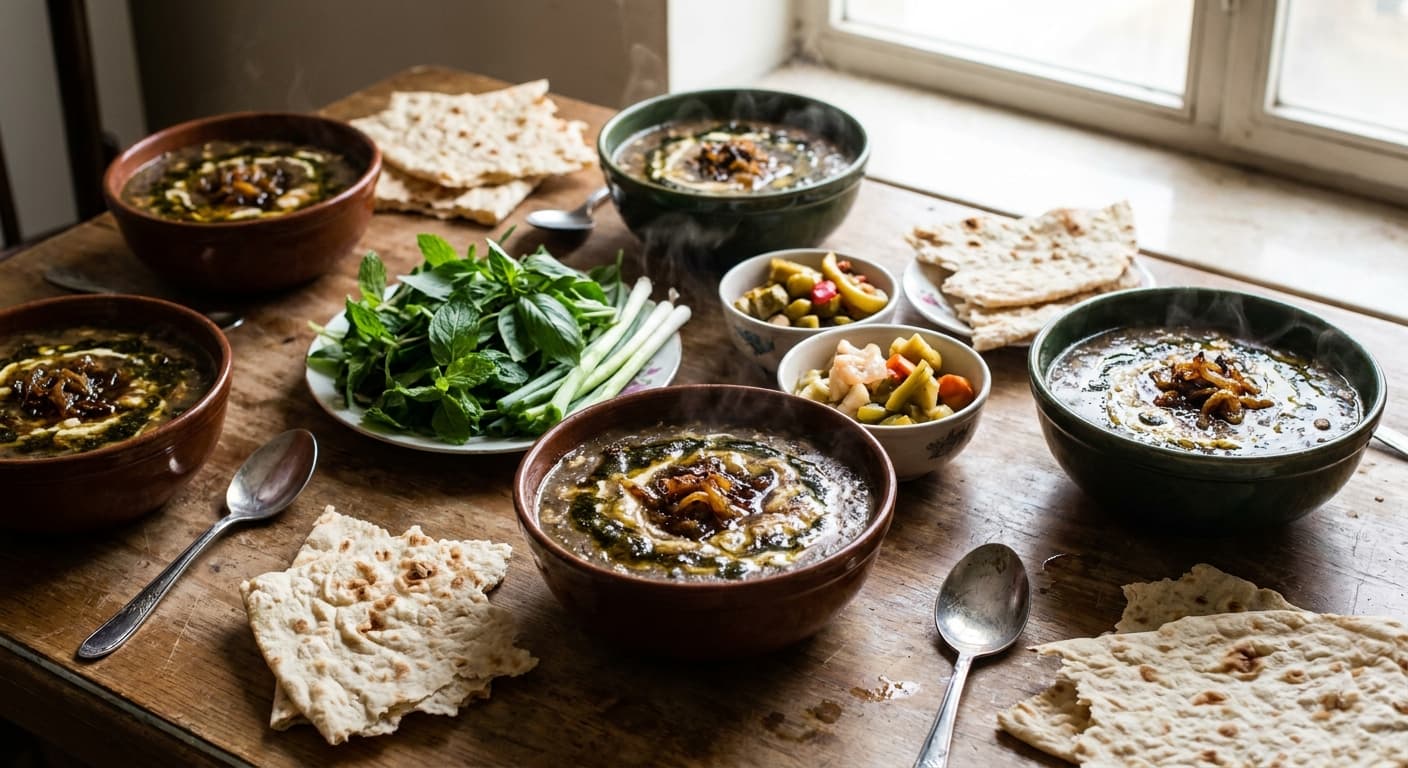
Ash-e Torsh (آش ترش) — Sour Herb and Legume Soup
Persian · Soups · 145 min
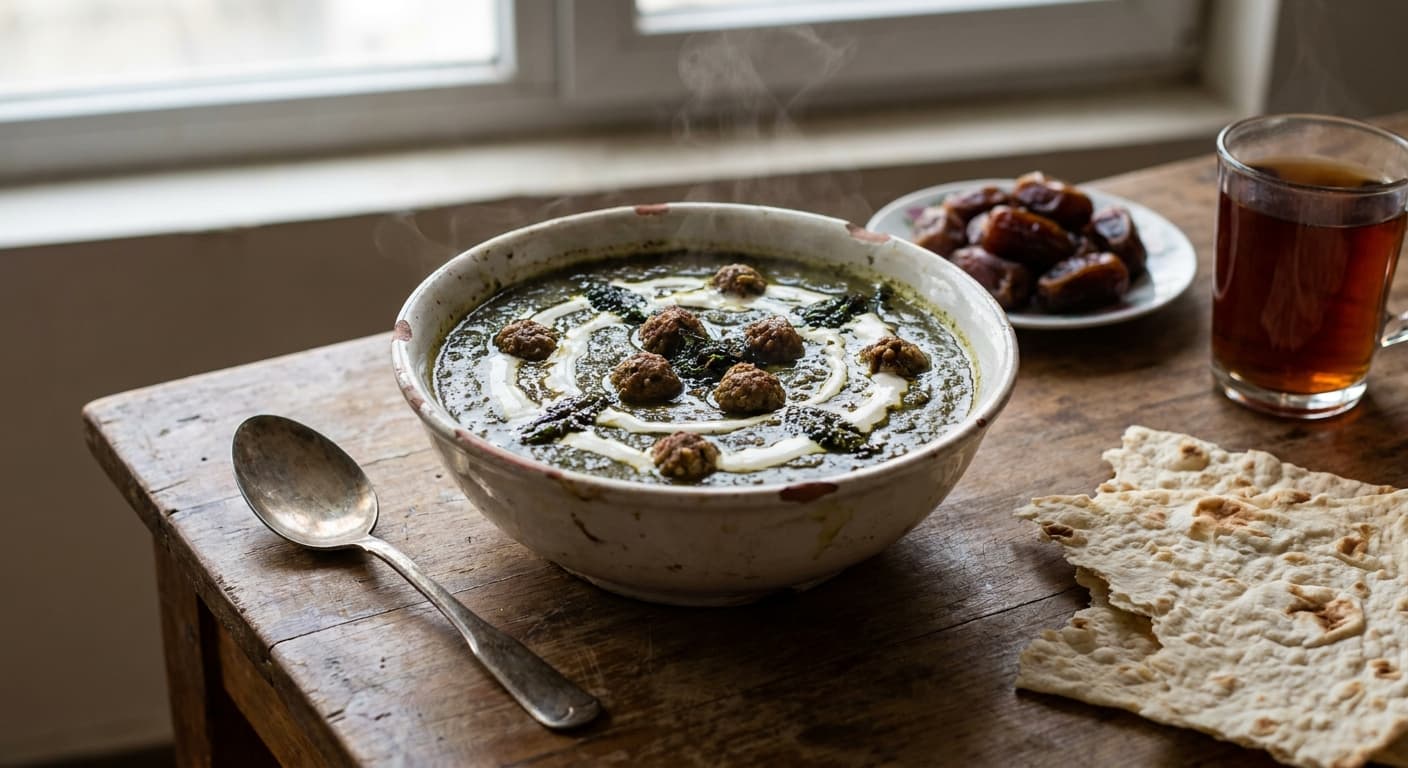
Ash-e Sak (آش ساک) — Golestani Spinach, Legume, and Meatball Soup
Persian · Soups · 175 min
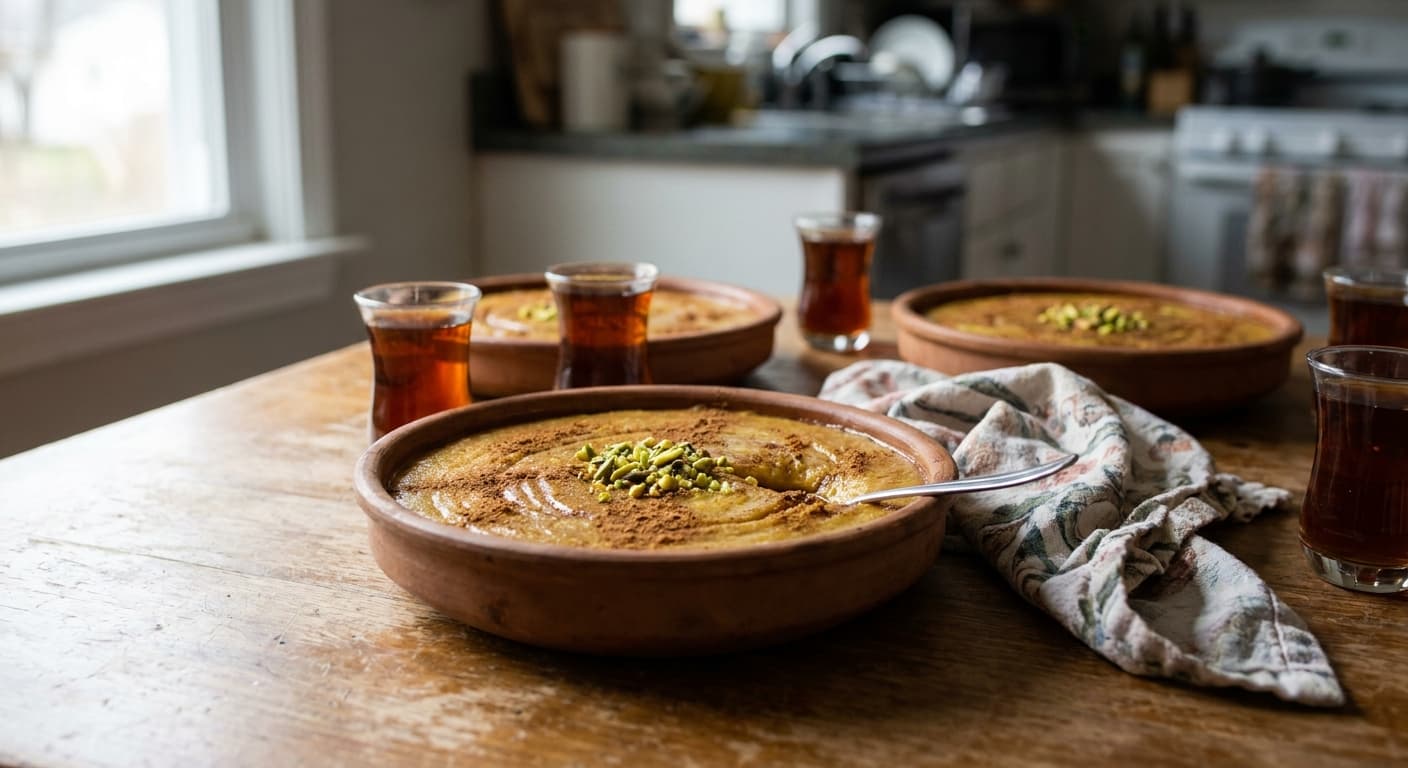
Persian Kachi (کاچی) — Saffron Rosewater Pudding
Persian · Desserts · 45 min
Fahsa (فحسة) — Bubbling Yemeni Shredded Lamb Stew
Yemeni · Stews · 140 min
Norwegian Lamb and Cabbage Stew (Fårikål) — Peppery Autumn National Dish
Norwegian · Stews · 170 min
Smoky Eggplant Salad (Patlıcan Salatası) — Turkish charred eggplant with garlic and olive oil
Turkish · Salads · 40 min
Cacık (Yoğurtlu Salatalık Mezesi) — Chilled Turkish Yogurt, Cucumber & Mint Dip
Turkish · Appetizers · 15 min
Bulgar Kabab (کباب بلغار) — Persian Rolled Saffron Fillets
Persian · Kebabs · 37 min
Reviews
Cooked this recipe?
Tap the stars to rate it — that's all it takes. A few words are welcome but optional.
No ratings yet. Cooked this one? Be the first to rate it — it takes one tap.