Fahsa (فحسة) — Bubbling Yemeni Shredded Lamb Stew
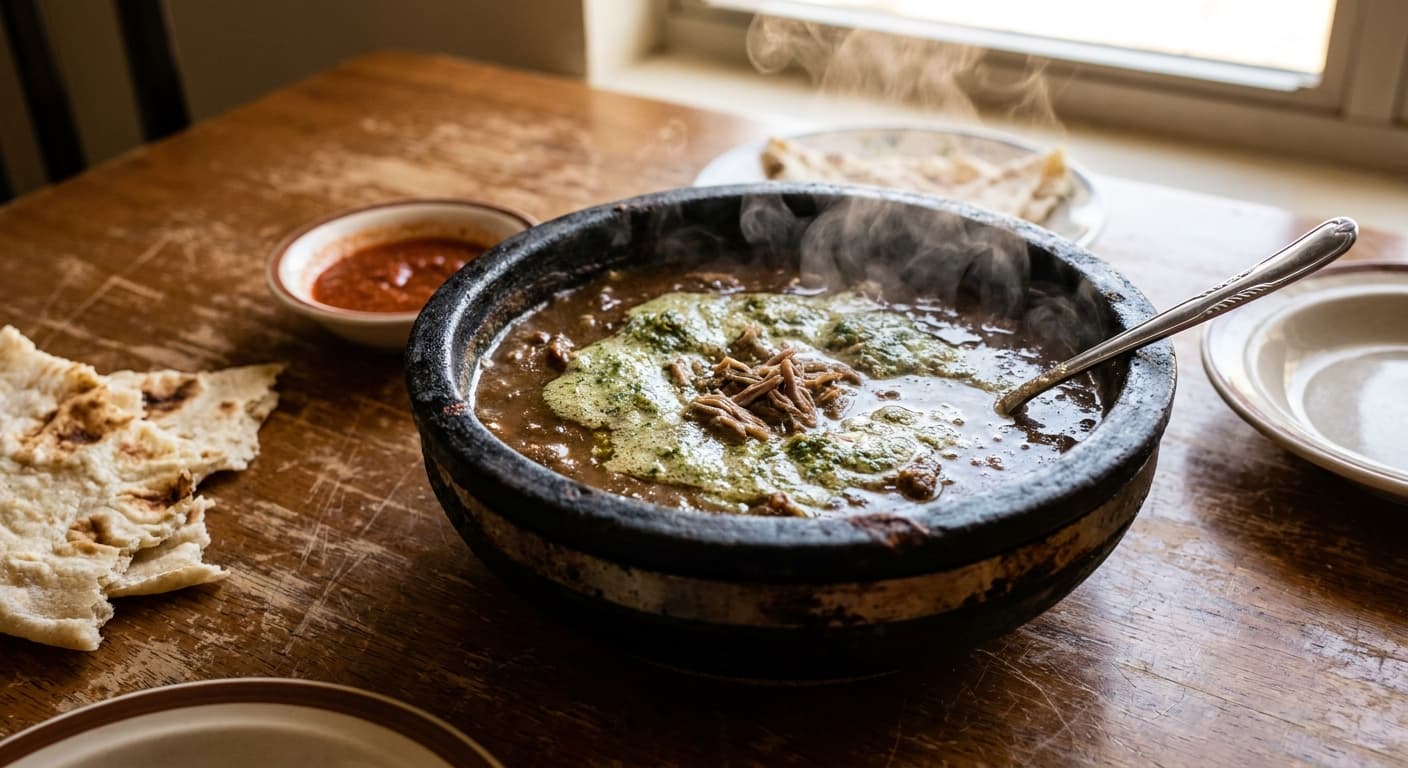
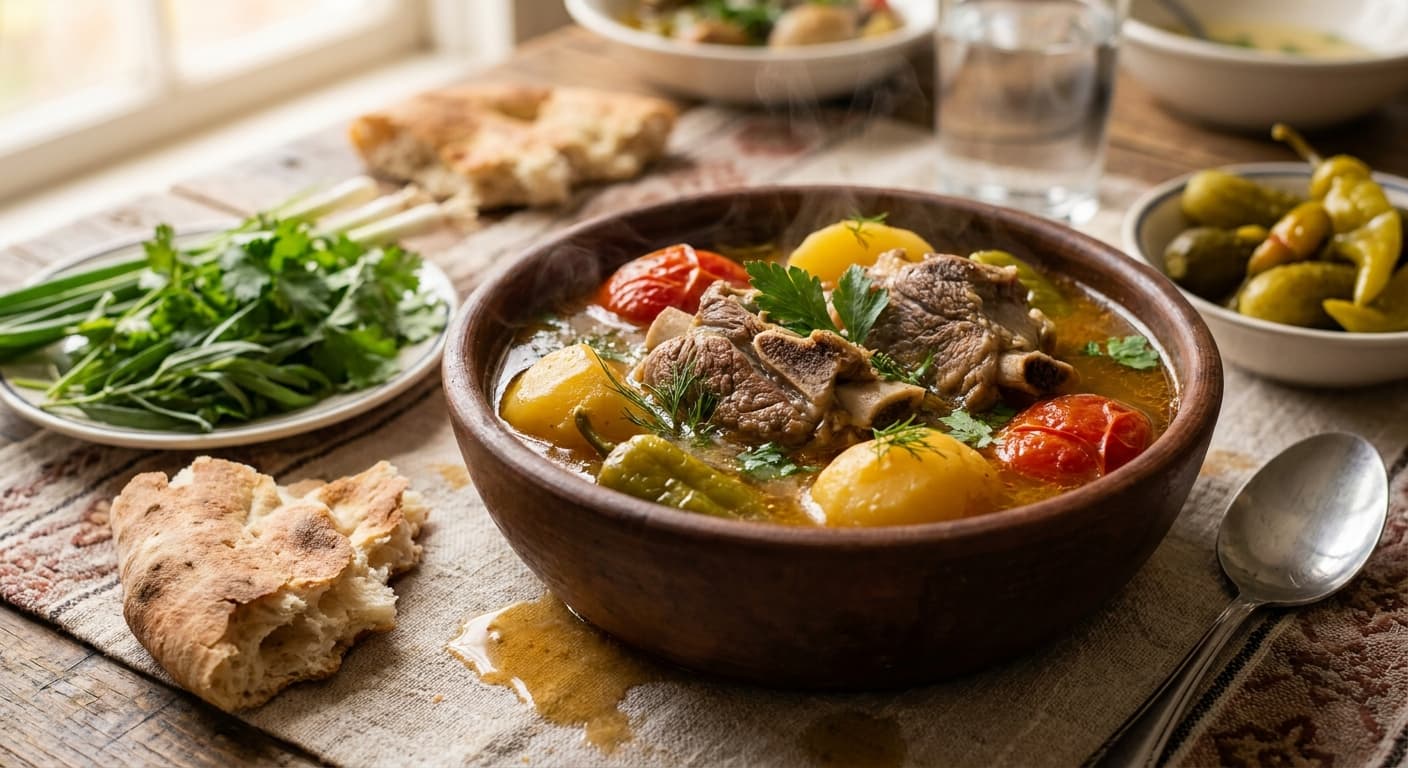
Fahsa is a beloved Yemeni lamb stew served bubbling hot, often in a stone pot. The meat is shredded into its broth with hawaij, then finished with foamy hulba and bright sahawiq for a distinctly Yemeni table.
Printable Recipe Card
Servings: 4 · Total: 140 min · Difficulty: medium
Ingredients (quick list)
- 900 g boneless lamb shoulder (trimmed of excess surface fat and cut into 5 cm chunks)
- 1 tbsp ghee
- 1 medium yellow onion (finely chopped)
- 4 clove garlic (minced)
- 2 tsp ground Yemeni hawaij
- 1 tsp ground cumin
- 0.5 tsp ground turmeric
- 1.5 tsp fine sea salt
- 0.5 tsp black pepper (freshly ground)
- 1 tbsp tomato paste
- 1.2 l water
- 20 g ground fenugreek
+ 5 more in the full ingredients section below.
Steps (summary)
- Place the ground fenugreek for the hulba in a small bowl and cover it with 240 ml cold water. Let it soak for 60 minutes while…
- Heat the ghee in a heavy pot or pressure cooker over medium-high heat. Add the lamb chunks in one layer and brown them for 8 mi…
- Add the chopped onion and cook for 6 minutes, scraping the base of the pot as the onion softens. Stir in the garlic, hawaij, cu…
- Pour in 1.2 l water and bring the pot to a boil, skimming off any gray foam from the surface. Cover and simmer gently for 90 mi…
- Make the sahawiq while the lamb cooks. Pulse the tomatoes, green chiles, garlic, cilantro, salt, cumin, and lemon juice in a fo…
- Finish the hulba by whisking the drained fenugreek with 90 ml cold water for 4 to 6 minutes until it becomes pale, stretchy, an…
+ 3 more steps in the full instructions section below.
Cultural Background
Fahsa belongs to the Yemeni family of bubbling meat stews related to saltah, served communally with bread for scooping. As Anissa Helou notes in her writing on Islamic foodways, Yemeni tables prize hulba and sharp relishes as defining accents.
Equipment
💡 Tips
- Use lamb shoulder rather than leg; its connective tissue gives fahsa the soft, shreddable texture Yemeni cooks prize.
- Do not skip soaking the fenugreek, because unsoaked hulba can taste harsh and overly bitter.
- If you do not have a stone pot, preheat a small cast-iron casserole so the stew still arrives bubbling at the table.
⚠️ Common Mistakes
❌ Serving the lamb in large chunks
✅ Fix: Shred or lightly pound the cooked meat so it merges with the broth in the recognizable fahsa style.
❌ Adding hulba directly to the boiling stew
✅ Fix: Spoon hulba on top just before serving so it stays foamy and contrasts with the hot lamb.
❌ Using too much tomato paste
✅ Fix: Keep tomato paste to 1 tbsp so the stew remains meat-forward rather than becoming a tomato sauce.
🧊 How to Store
Store the lamb stew, hulba, and sahawiq in separate airtight containers for up to 3 days in the refrigerator. Reheat the stew gently with 60 ml water, and whisk the hulba again before serving because it deflates as it sits.
📅 Make Ahead
Cook and shred the lamb up to 2 days ahead, then refrigerate it in its reduced broth. Prepare sahawiq 1 day ahead, but whip the hulba within 2 hours of serving for the best foam.
🍽️ Pairs Well With
- Malooga bread
- lahoh
- extra sahawiq
- sliced cucumber
- hot black tea.
Regional Variations
- In Sanaa-style service, fahsa is often brought to the table in a very hot stone pot with hulba spread over the surface.
- Some Adeni cooks make a brighter, chile-forward sahawiq and serve more of it alongside the stew.
- Beef fahsa is common when lamb is unavailable, especially with chuck cooked until it collapses into the broth.
Ingredients
- 900 gboneless lamb shoulder (trimmed of excess surface fat and cut into 5 cm chunks)
- 1 tbspghee
- 1medium yellow onion (finely chopped)
- 4 clovegarlic (minced)
- 2 tspground Yemeni hawaij
- 1 tspground cumin
- 0.5 tspground turmeric
- 1.5 tspfine sea salt
- 0.5 tspblack pepper (freshly ground)
- 1 tbsptomato paste
- 1.2 lwater
- 20 gground fenugreek
- 240 mlcold water (for soaking)
- 15 mlfresh lemon juice
- 2medium ripe tomatoes (cored and chopped)
- 2fresh green chiles (stemmed)
- 0.5 bunchcilantro (tender stems included)
🔄 Substitutions
- boneless lamb shoulder→ beef chuck
- ghee→ neutral vegetable oil
- ground Yemeni hawaij→ 1 tsp ground cumin, 0.5 tsp ground coriander, 0.25 tsp turmeric, 0.25 tsp black pepper
Instructions
- 1
Place the ground fenugreek for the hulba in a small bowl and cover it with 240 ml cold water. Let it soak for 60 minutes while you cook the meat, then pour off and discard the dark, bitter water that rises to the top.
- 2
Heat the ghee in a heavy pot or pressure cooker over medium-high heat. Add the lamb chunks in one layer and brown them for 8 minutes, turning until the surfaces are well colored and the pot has flavorful browned bits.
- 3
Add the chopped onion and cook for 6 minutes, scraping the base of the pot as the onion softens. Stir in the garlic, hawaij, cumin, turmeric, salt, black pepper, and tomato paste, then cook for 2 minutes until the spices smell toasted.
- 4
Pour in 1.2 l water and bring the pot to a boil, skimming off any gray foam from the surface. Cover and simmer gently for 90 minutes, or pressure-cook on high pressure for 45 minutes followed by a natural release, until the lamb shreds easily.
- 5
Make the sahawiq while the lamb cooks. Pulse the tomatoes, green chiles, garlic, cilantro, salt, cumin, and lemon juice in a food processor until finely chopped but still slightly textured, then refrigerate until needed.
- 6
Finish the hulba by whisking the drained fenugreek with 90 ml cold water for 4 to 6 minutes until it becomes pale, stretchy, and foamy. Whisk in 15 ml lemon juice and 2 tbsp of the prepared sahawiq to season it without making the foam too loose.
- 7
Lift the tender lamb from the broth and shred it with two forks or pound it lightly with a wooden spoon for the traditional fahsa texture. Boil the remaining broth uncovered for 10 to 15 minutes until it reduces to about 500 ml and tastes full-bodied.
- 8
Return the shredded lamb to the reduced broth and simmer for 5 minutes so the meat absorbs the spices. For the classic presentation, transfer it to a preheated stone pot or heavy small casserole and let it bubble vigorously for 2 minutes.
- 9
Spoon a generous cap of hulba over the hot fahsa and serve extra sahawiq alongside. Bring it to the table immediately with malooga or lahoh, because the contrast between bubbling lamb, cool fenugreek foam, and sharp chile relish is essential.
🪪 Recipe Passport
Cultural Background
Fahsa belongs to the Yemeni family of bubbling meat stews related to saltah, served communally with bread for scooping. As Anissa Helou notes in her writing on Islamic foodways, Yemeni tables prize hulba and sharp relishes as defining accents.
Regional Variations
Researched from multiple sources and validated by the Zaffaron editorial team. Every recipe is tested for accuracy, measurements, and cultural authenticity.
📚 Sources & Cultural References
- Anissa Helou — Feast: Food of the Islamic World — (2018)
Sources cited by the Zaffaron editorial team during recipe research. Cultural and culinary references supporting authenticity claims.
Nutrition per serving
Pairs well with
If you enjoyed this recipe, here are a few related Zaffaron recipes to try next.
Does your family make this differently?
Every family has their own version. Maybe your grandmother adds a secret ingredient, or your aunt has a completely different technique. Preserve your family's version — with their name on it, forever.
You Might Also Like
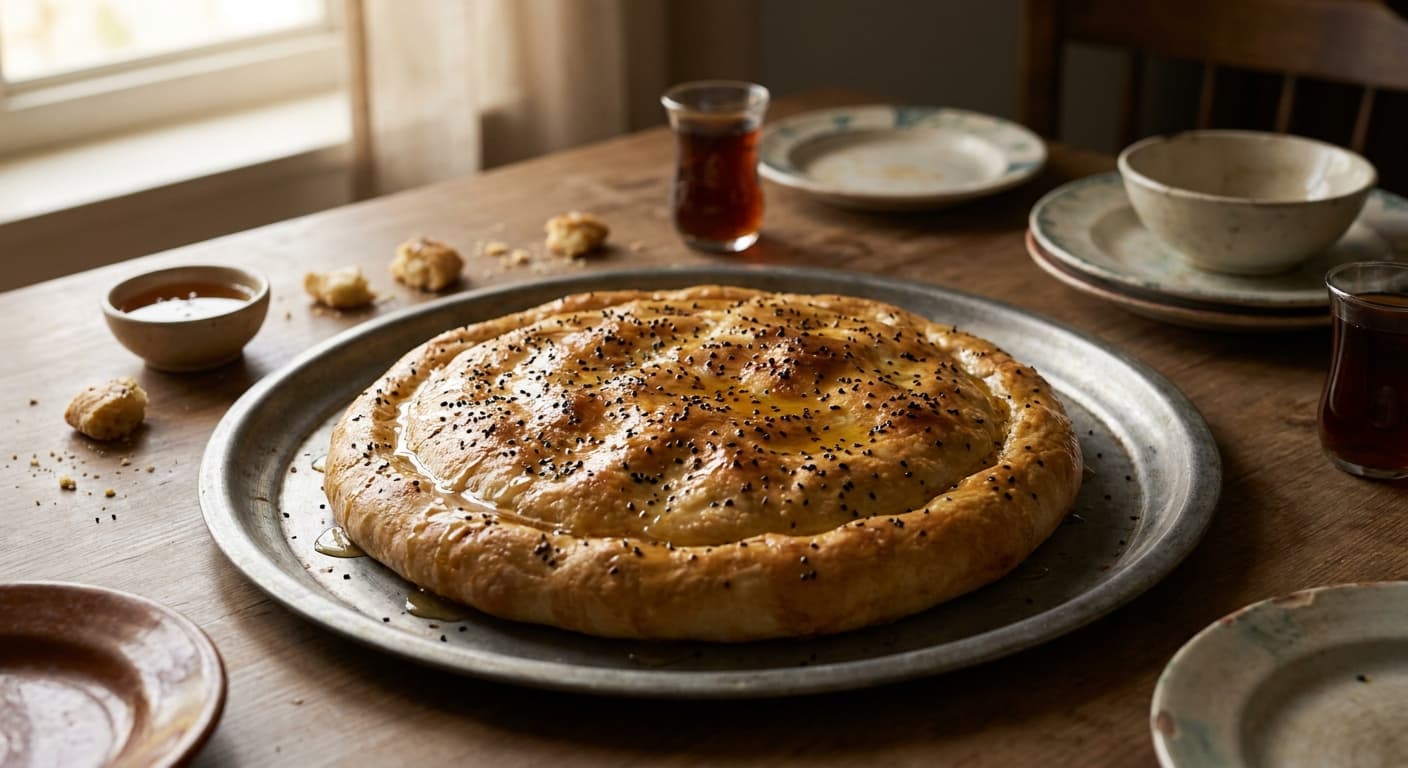
Bint al-Sahn (بنت الصحن) — Yemeni Honey Layer Bread
Yemeni · Desserts · 70 min
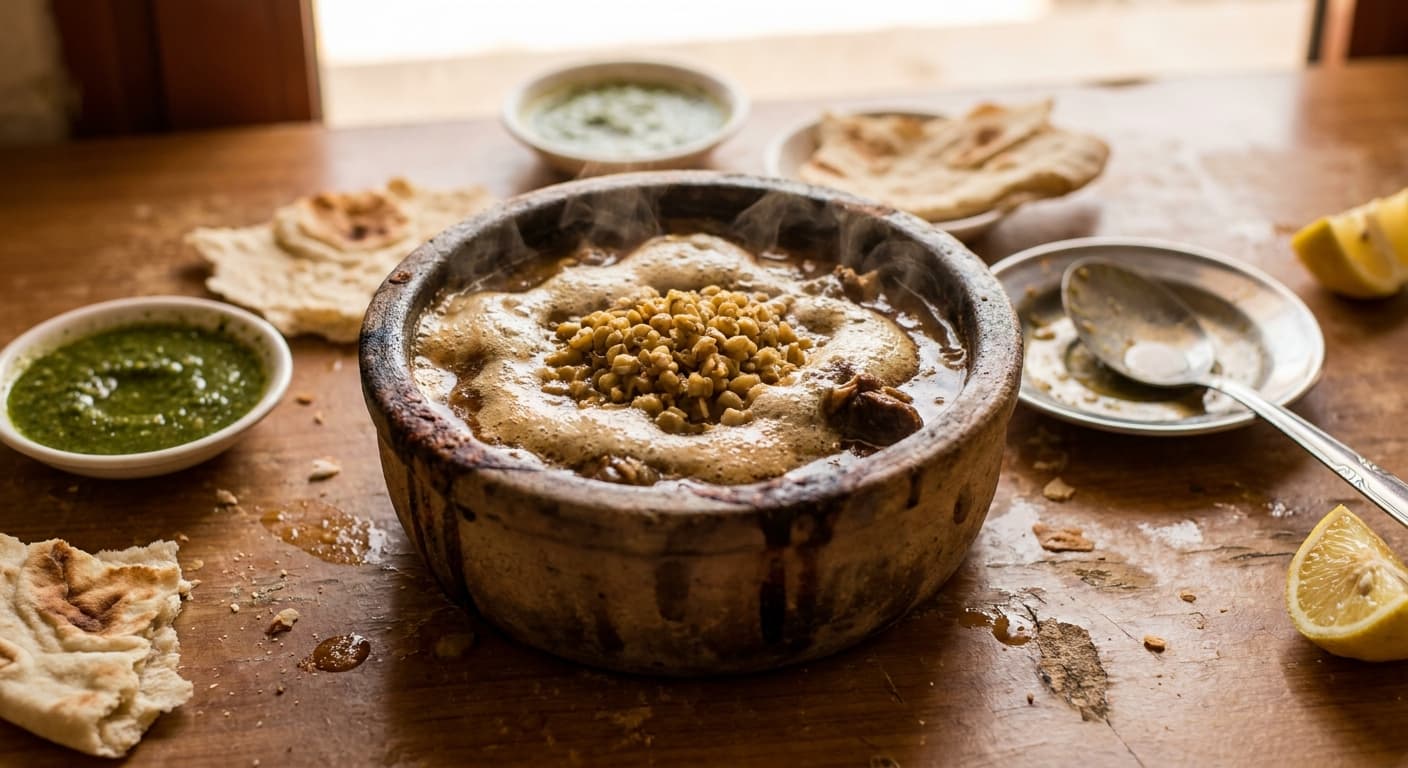
Yemeni Saltah (سلتة) — Bubbling Fenugreek Lamb Stew
Yemeni · Stews · 130 min
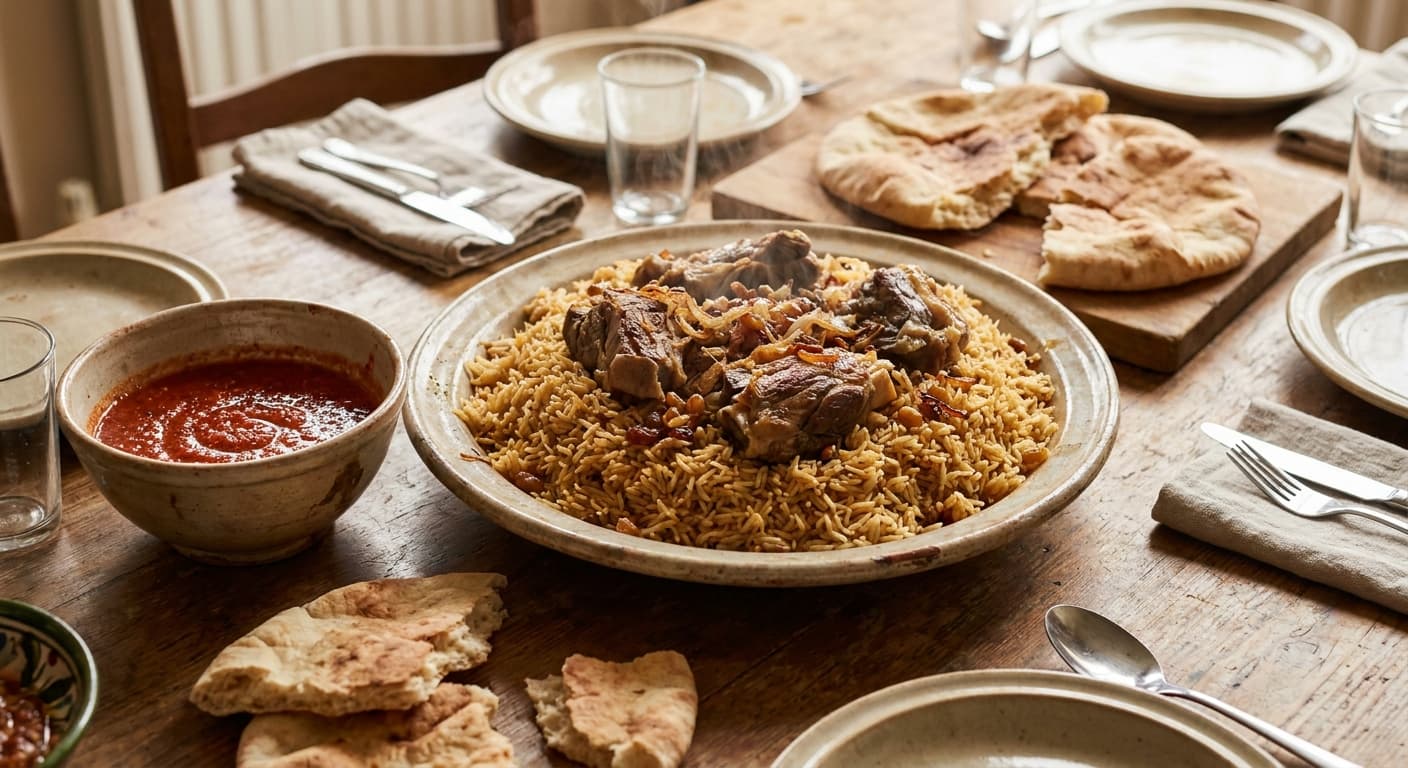
Yemeni Mandi (مندي) — Smoke-Scented Spiced Rice and Lamb
Yemeni · Main Courses · 170 min
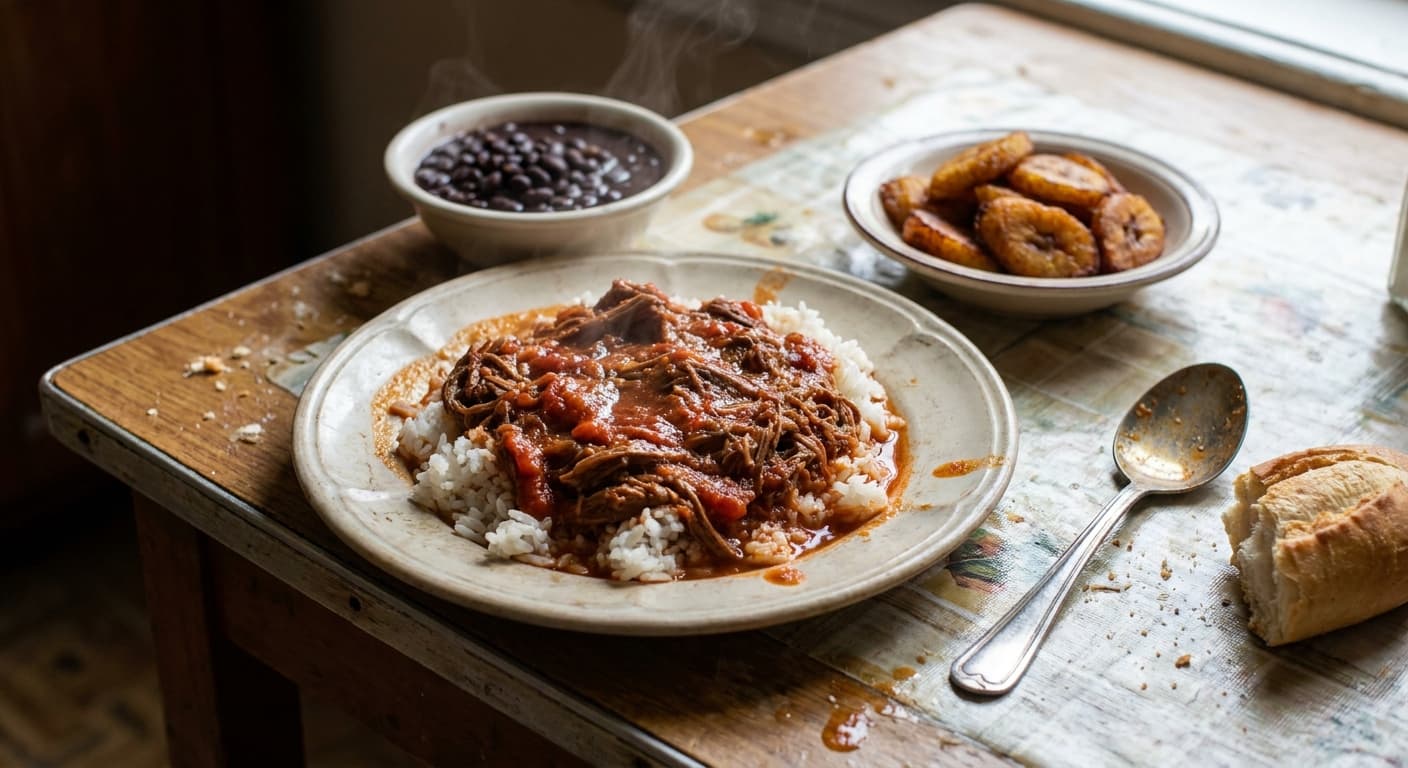
Cuban Ropa Vieja (Ropa Vieja) — Shredded Beef in Tomato-Pepper Sauce
Cuban · Stews · 190 min
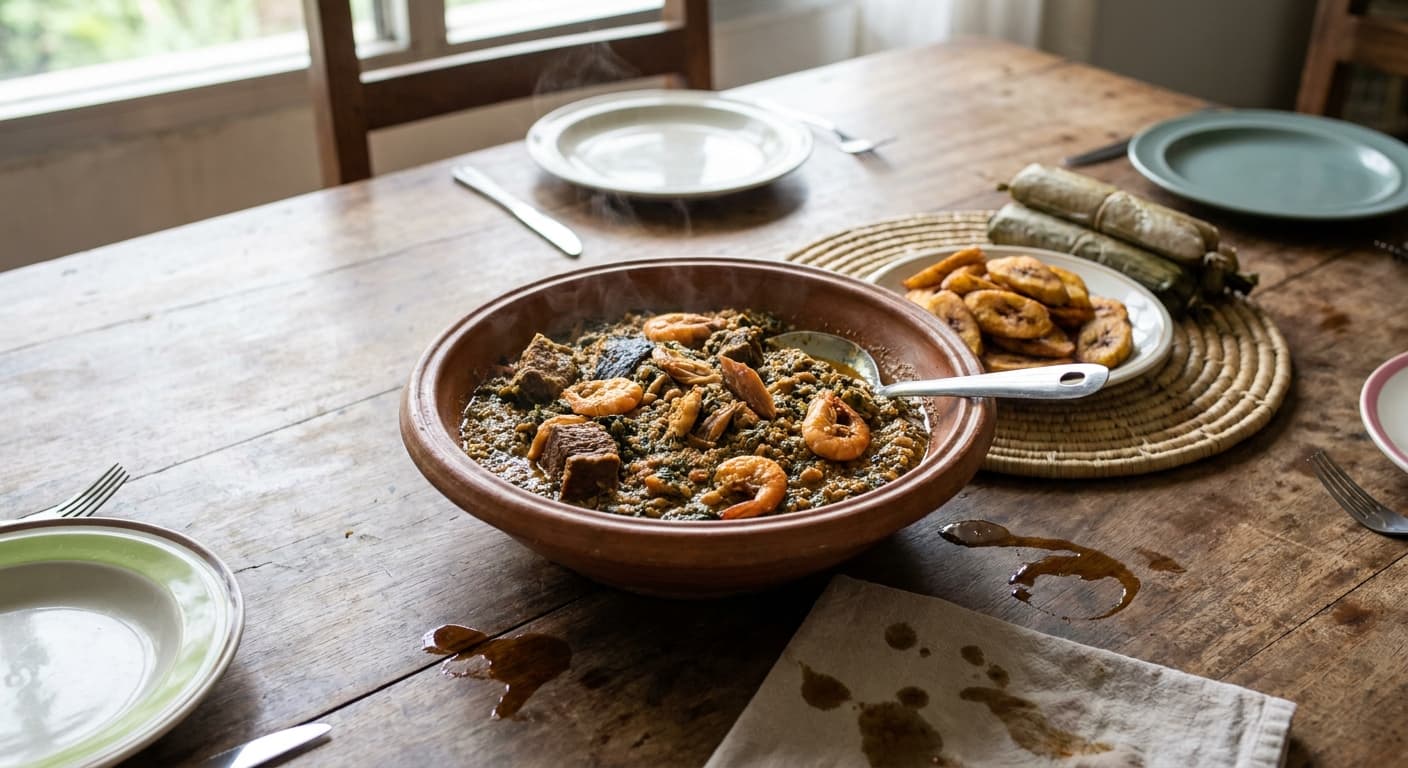
Cameroonian Ndolé (Ndolé) — Bitterleaf Peanut Stew with Beef and Seafood
West african · Stews · 140 min
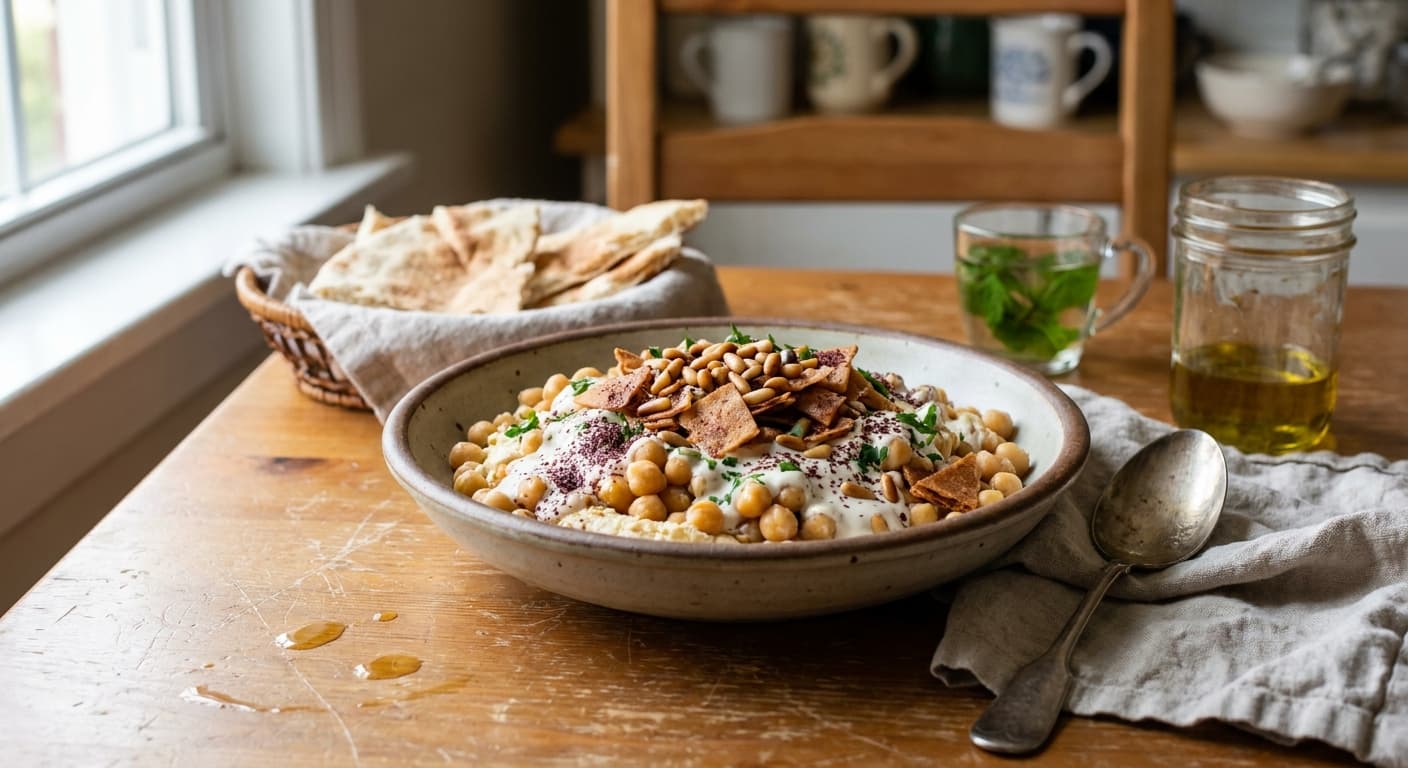
Fattet Hummus (فتة حمص) — Chickpeas with Yogurt and Crisp Bread
Lebanese · Main Courses · 30 min
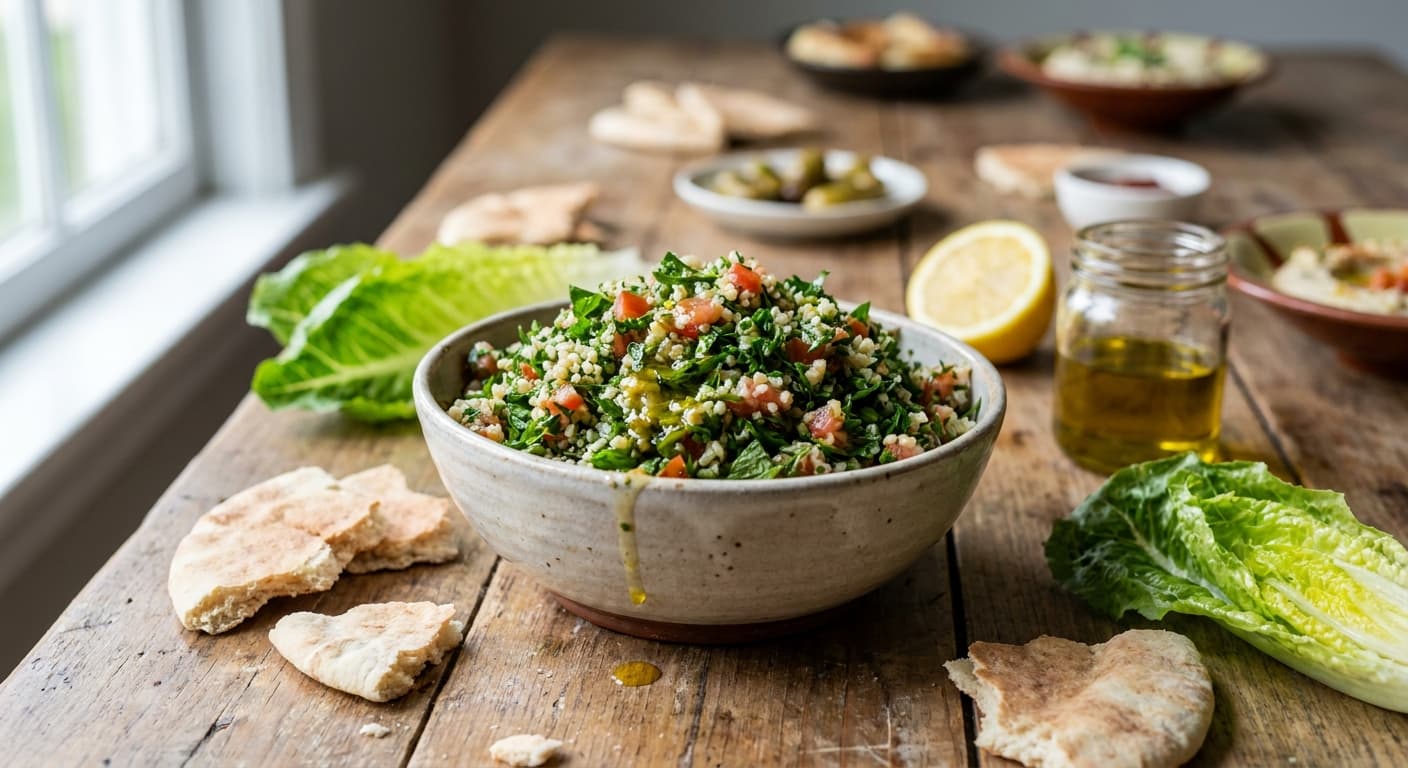
Lebanese Tabbouleh (تبولة لبنانية) — Parsley Bulgur Herb Salad
Lebanese · Salads · 35 min
Khashlama (Խաշլամա) — Armenian Lamb and Vegetable Stew
Armenian · Stews · 160 min
Reviews
Cooked this recipe?
Tap the stars to rate it — that's all it takes. A few words are welcome but optional.
No ratings yet. Cooked this one? Be the first to rate it — it takes one tap.