Khorkhog (Хорхог) — Mongolian Hot-Stone Lamb Stew
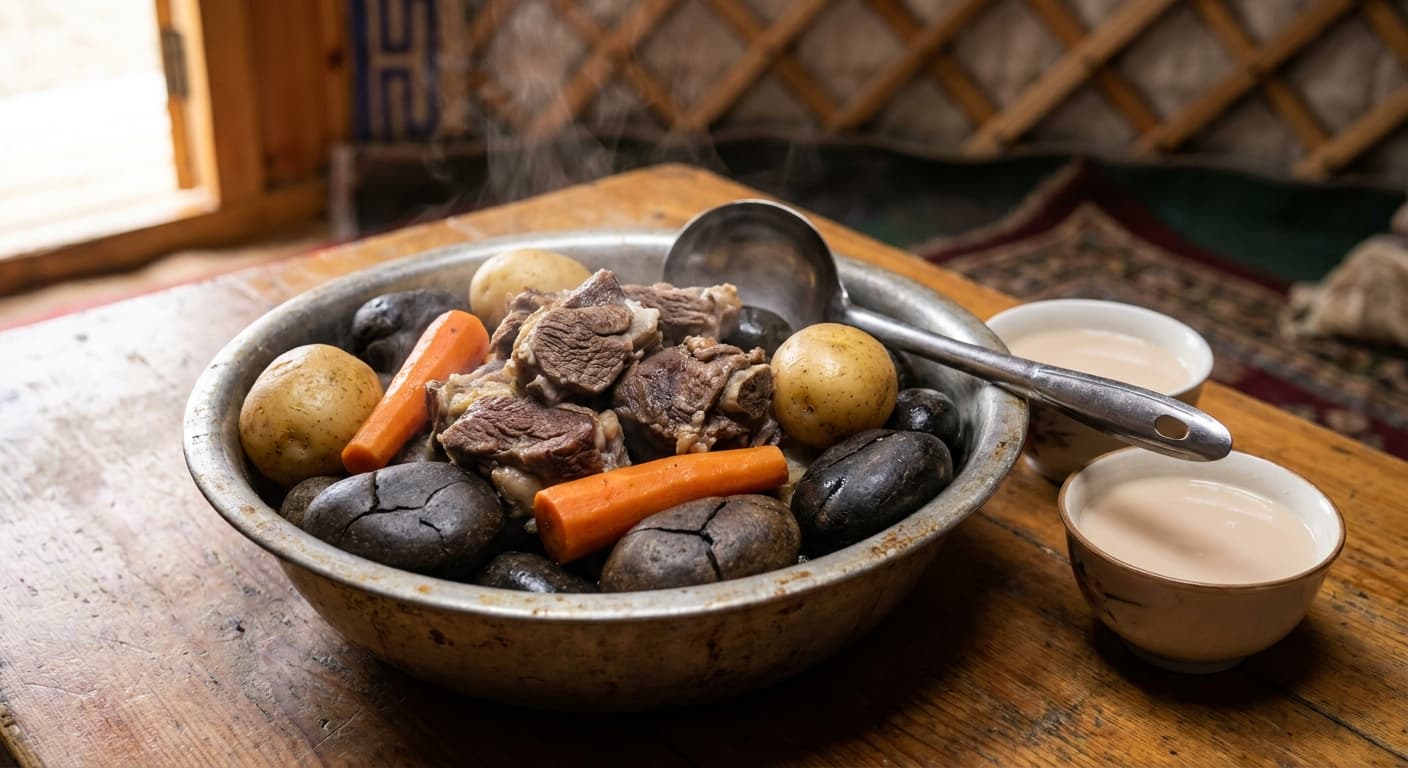
Khorkhog is a Mongolian countryside feast of lamb or mutton sealed with fire-heated stones so the meat steams in its own juices. Unlike boodog, the stones go inside the pot, not the animal, and the meal is often followed by salty suutei tsai.
Printable Recipe Card
Servings: 6 · Total: 130 min · Difficulty: medium
Ingredients (quick list)
- 1.8 kg bone-in lamb shoulder (cut into 6 to 8 cm chunks, with some fat left on)
- 800 g waxy potatoes (peeled and halved)
- 300 g carrots (cut into 5 cm pieces)
- 300 g yellow onions (quartered)
- 4 clove garlic (lightly crushed)
- 500 ml water
- 15 g fine sea salt
- 1 tsp black pepper (freshly ground)
Steps (summary)
- Prepare 6 smooth, dry, nonporous basalt cooking stones, each about 5 to 7 cm across. Scrub them well, boil them for 10 minutes…
- Heat the stones in a campfire, covered charcoal grill, or 260 C oven for 45 minutes until thoroughly hot. Use long metal tongs…
- Put the lamb chunks in a large bowl and sprinkle them evenly with the fine sea salt and black pepper. Turn the meat several tim…
- Place 2 hot stones in the bottom of a heavy stainless-steel stockpot or a food-safe metal milk can, then add one third of the l…
- Pour in 500 ml water, immediately cover the pot with a tight-fitting lid, and set it over medium-low heat. Cook for 75 to 90 mi…
- Open the pot carefully away from your face because a strong burst of steam will escape. The lamb is ready when it is very tende…
+ 2 more steps in the full instructions section below.
Cultural Background
As Boldoo Bayar records in Mongolian Cooking, khorkhog reflects nomadic hospitality: meat, stones, fire, and a sealed vessel turn simple herder provisions into a shared feast for camp gatherings, Naadam outings, and honored guests.
Equipment
💡 Tips
- Choose lamb with bone and visible fat, because very lean meat can become dry before the potatoes are fully tender.
- Keep the lid closed during cooking; the trapped steam is the main cooking medium in khorkhog.
- For the safest home version, buy food-safe basalt cooking stones rather than collecting stones from rivers or roadsides.
⚠️ Common Mistakes
❌ Using damp or porous stones
✅ Fix: Use only dry, nonporous, heat-safe basalt stones and dry them completely before heating.
❌ Adding too much water
✅ Fix: Use 500 ml water for 6 servings because the vegetables and meat release additional juices while sealed.
❌ Opening the pot repeatedly
✅ Fix: Keep the lid closed and shake the pot gently instead, so the steam pressure and stone heat stay inside.
🧊 How to Store
Cool leftovers within 2 hours and refrigerate meat, vegetables, and broth together in an airtight container for up to 3 days. Reheat gently in a covered pot with 60 ml water until the lamb is steaming hot.
📅 Make Ahead
Cut the lamb and vegetables up to 1 day ahead and refrigerate them separately. Wash and fully dry the stones in advance, but heat them only when you are ready to cook.
🍽️ Pairs Well With
- Suutei tsai
- flatbread
- sliced cucumbers
- fermented dairy such as byaslag
- simple salted cabbage.
Regional Variations
- In rural camps, khorkhog is often made in a metal milk can set near the fire instead of a kitchen stockpot.
- Goat or mature mutton may replace lamb, especially where a stronger pastoral flavor is preferred.
- Some families add cabbage wedges during the final 30 minutes for a sweeter, softer vegetable layer.
Ingredients
- 1.8 kgbone-in lamb shoulder (cut into 6 to 8 cm chunks, with some fat left on)
- 800 gwaxy potatoes (peeled and halved)
- 300 gcarrots (cut into 5 cm pieces)
- 300 gyellow onions (quartered)
- 4 clovegarlic (lightly crushed)
- 500 mlwater
- 15 gfine sea salt
- 1 tspblack pepper (freshly ground)
🔄 Substitutions
- bone-in lamb shoulder→ bone-in mutton shoulder or goat shoulder
- waxy potatoes→ small firm all-purpose potatoes
- basalt cooking stones→ preheated cast-iron grill weights
Instructions
- 1
Prepare 6 smooth, dry, nonporous basalt cooking stones, each about 5 to 7 cm across. Scrub them well, boil them for 10 minutes to sanitize, then dry them completely because damp stones can crack or burst when heated.
- 2
Heat the stones in a campfire, covered charcoal grill, or 260 C oven for 45 minutes until thoroughly hot. Use long metal tongs and heavy oven mitts, and never use glass, ceramic, enamel-coated pots, limestone, slate, or unknown wet river stones for khorkhog.
- 3
Put the lamb chunks in a large bowl and sprinkle them evenly with the fine sea salt and black pepper. Turn the meat several times so the seasoning coats the fatty edges and bone surfaces, which will season the broth as the pot steams.
- 4
Place 2 hot stones in the bottom of a heavy stainless-steel stockpot or a food-safe metal milk can, then add one third of the lamb. Layer in one third of the potatoes, carrots, onions, and garlic, then repeat with the remaining stones, meat, and vegetables so the heat is distributed through the pot.
- 5
Pour in 500 ml water, immediately cover the pot with a tight-fitting lid, and set it over medium-low heat. Cook for 75 to 90 minutes, shaking the closed pot gently every 15 minutes so the hot stones move slightly and the khorkhog steams evenly.
- 6
Open the pot carefully away from your face because a strong burst of steam will escape. The lamb is ready when it is very tender, the potatoes are soft, and the thickest meat pieces register at least 88 C near the bone.
- 7
Remove the stones with tongs and place them in a heatproof metal bowl before serving. In Mongolian custom, the cooled stones may be passed briefly from palm to palm for warmth, but at home they should be handled only once they are safe to touch.
- 8
Serve the khorkhog in deep bowls with lamb, vegetables, and a ladleful of the savory broth. Offer the meat simply, without heavy sauces, so the clean flavor of lamb, steam, and hot-stone cooking remains central.
🪪 Recipe Passport
Cultural Background
As Boldoo Bayar records in Mongolian Cooking, khorkhog reflects nomadic hospitality: meat, stones, fire, and a sealed vessel turn simple herder provisions into a shared feast for camp gatherings, Naadam outings, and honored guests.
Regional Variations
Researched from multiple sources and validated by the Zaffaron editorial team. Every recipe is tested for accuracy, measurements, and cultural authenticity.
📚 Sources & Cultural References
- Boldoo Bayar — Mongolian Cooking
Sources cited by the Zaffaron editorial team during recipe research. Cultural and culinary references supporting authenticity claims.
Nutrition per serving
Pairs well with
If you enjoyed this recipe, here are a few related Zaffaron recipes to try next.
Does your family make this differently?
Every family has their own version. Maybe your grandmother adds a secret ingredient, or your aunt has a completely different technique. Preserve your family's version — with their name on it, forever.
You Might Also Like
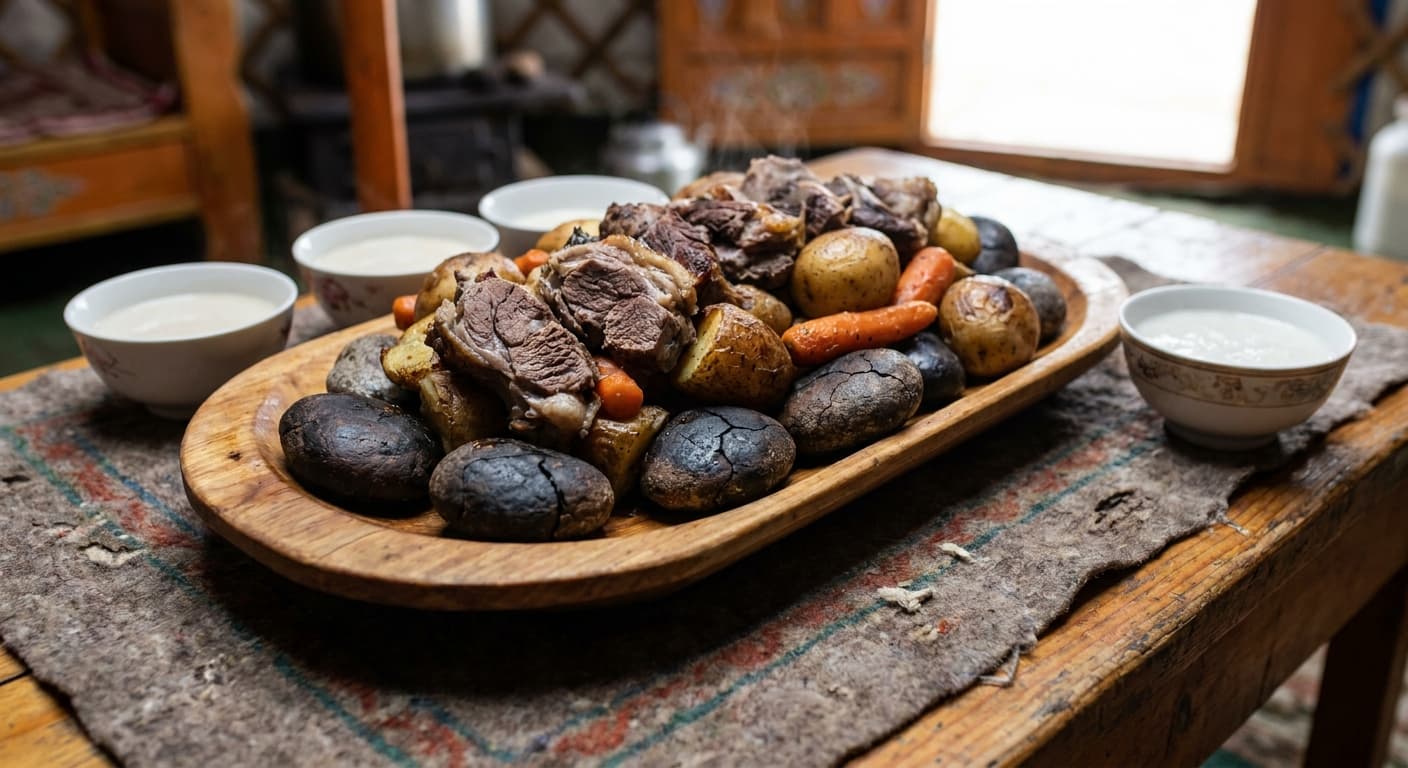
Boodog (Боодог) — Mongolian Hot-Stone Goat Roast
Mongolian · Main Courses · 180 min
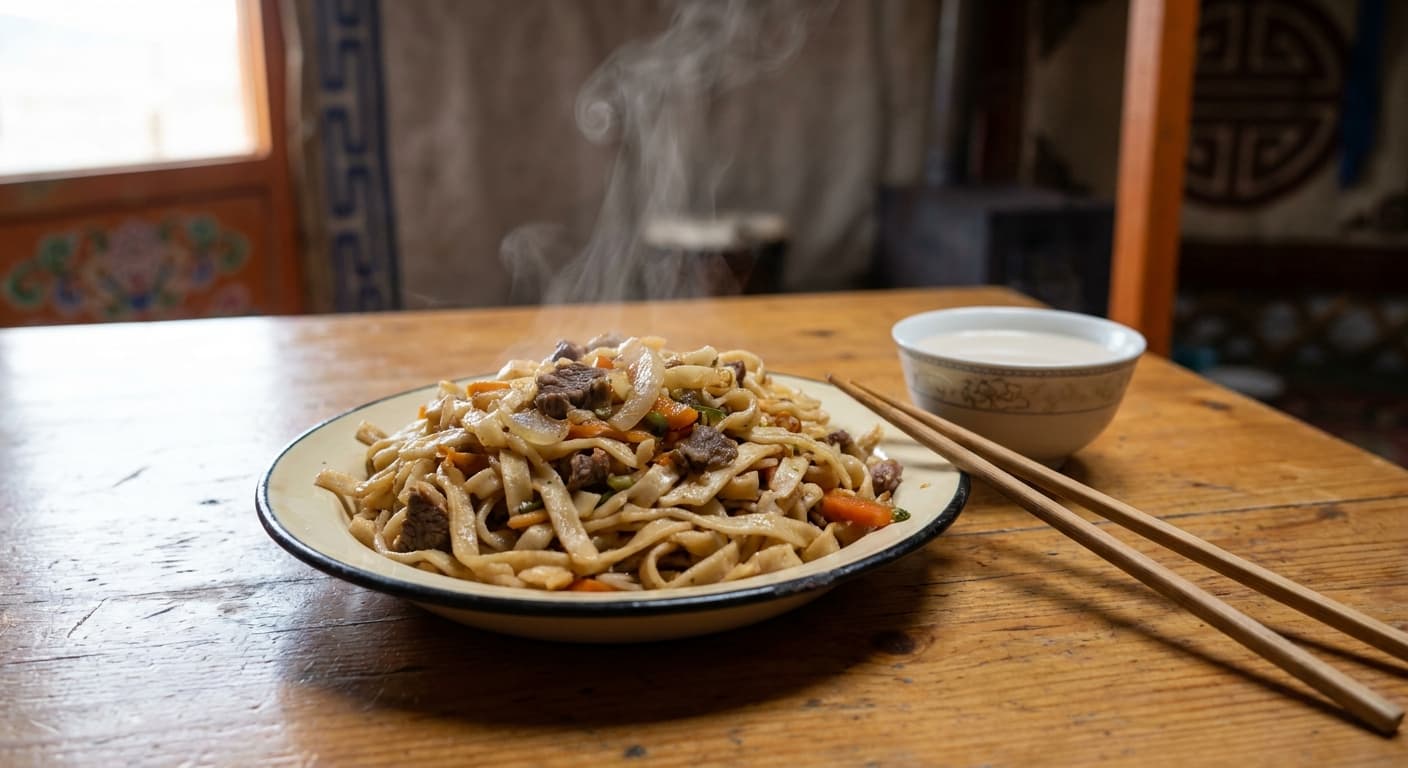
Tsuivan (Цуйван) — Mongolian Steamed Noodles with Meat and Vegetables
Mongolian · Main Courses · 80 min
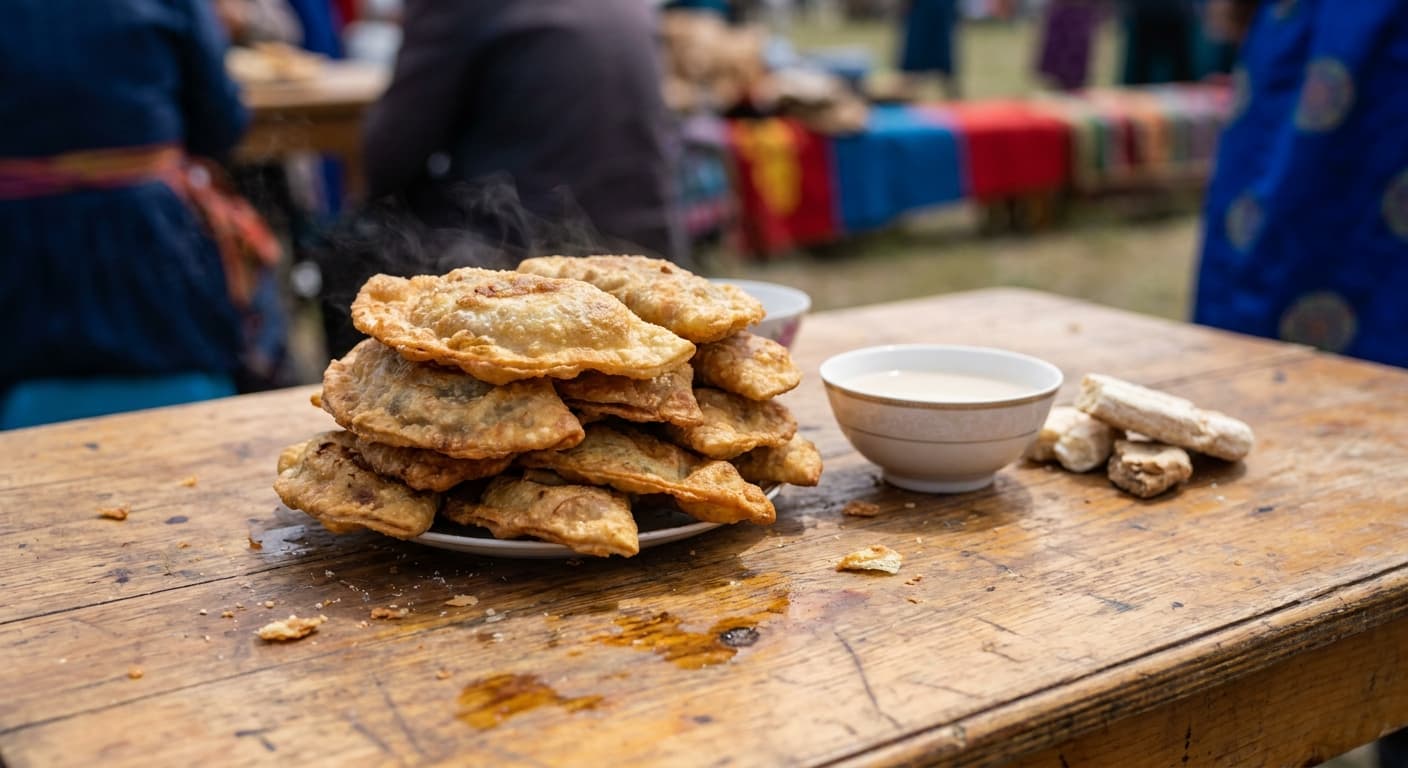
Khuushuur (Хуушуур) — Crisp Mongolian Fried Meat Pockets
Mongolian · Main Courses · 70 min
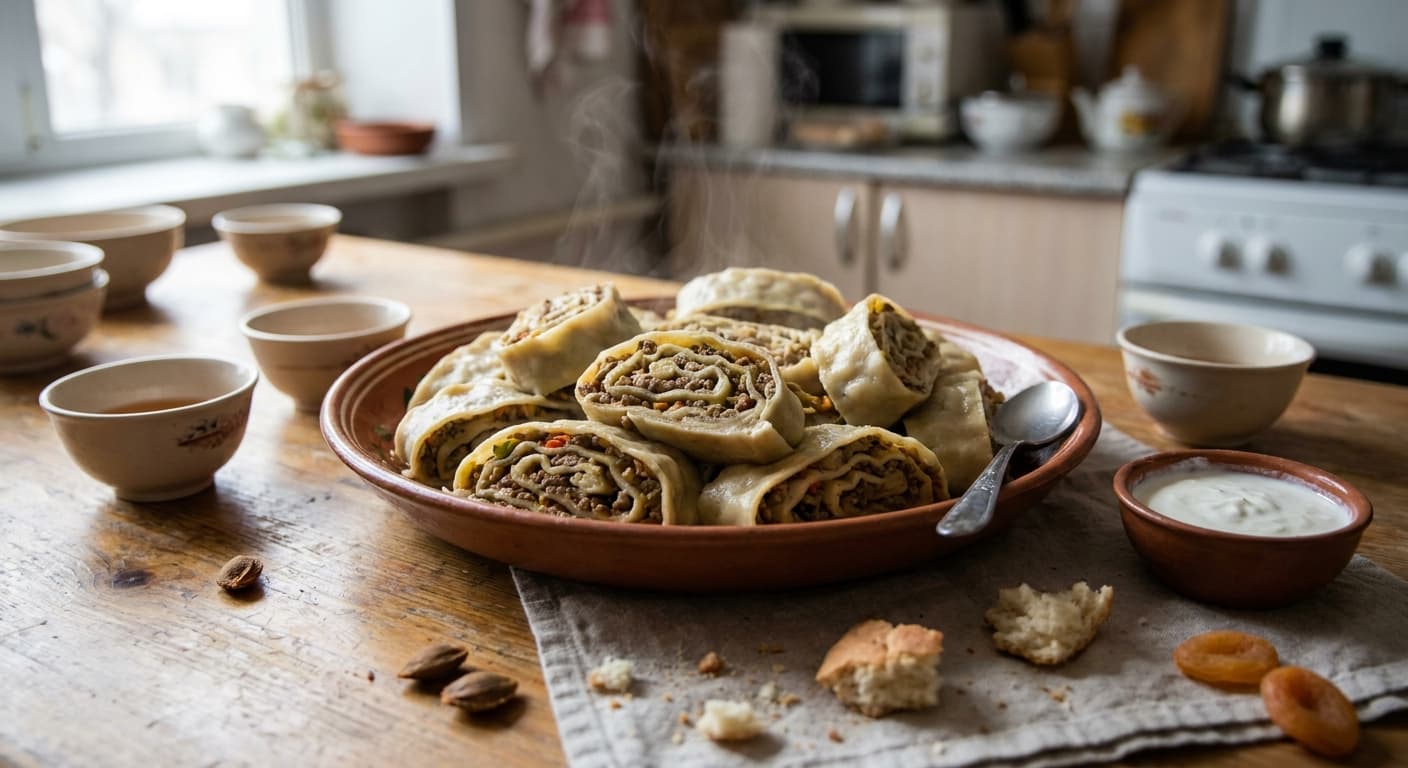
Orromo (Оромо) — Kyrgyz Steamed Rolled Dumpling with Lamb and Pumpkin
Kyrgyz · Main Courses · 105 min
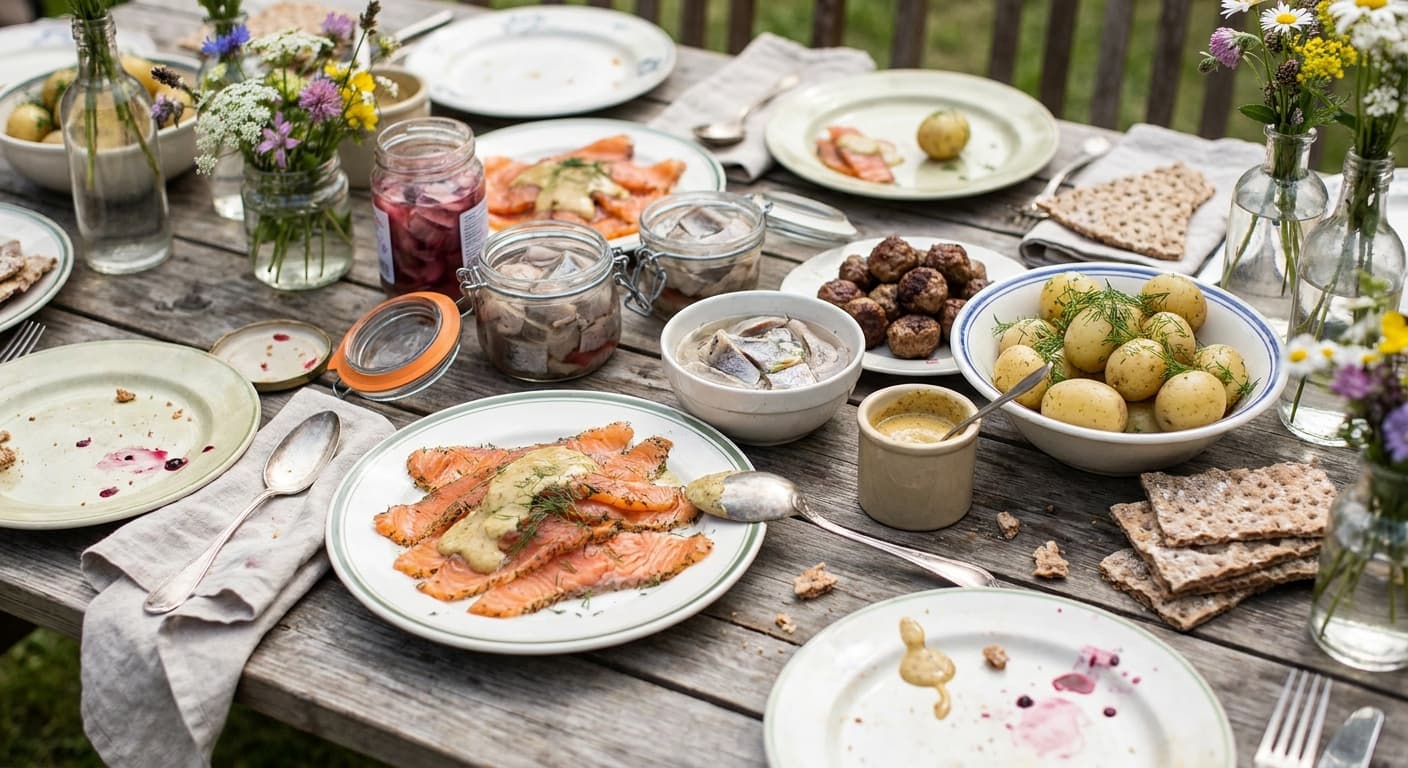
Swedish Smörgåsbord (Smörgåsbord) — Classic Buffet with Gravlax, Sill, and Köttbullar
Swedish · Main Courses · 115 min
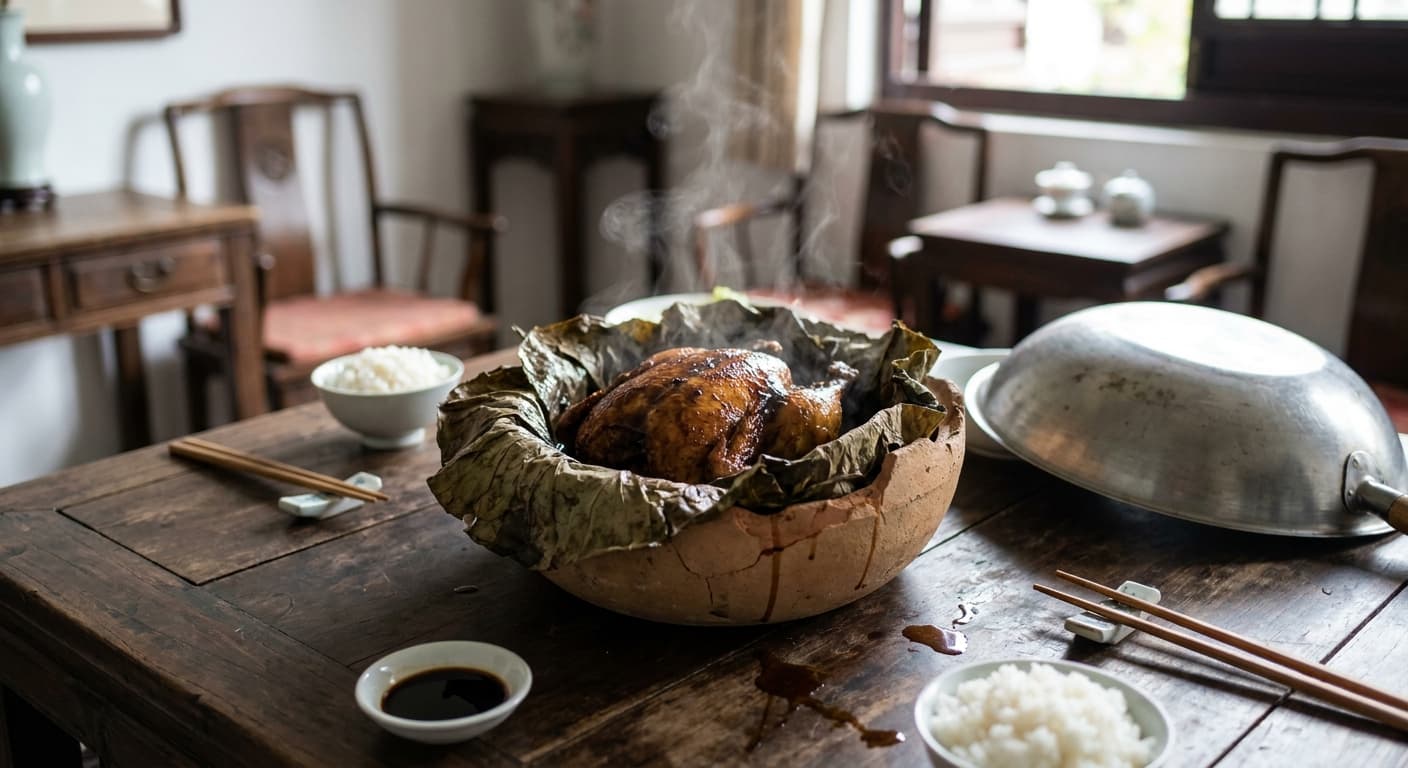
Beggar's Chicken (叫化鸡) — Lotus-Wrapped Clay-Baked Jiangnan Chicken
Chinese · Main Courses · 240 min
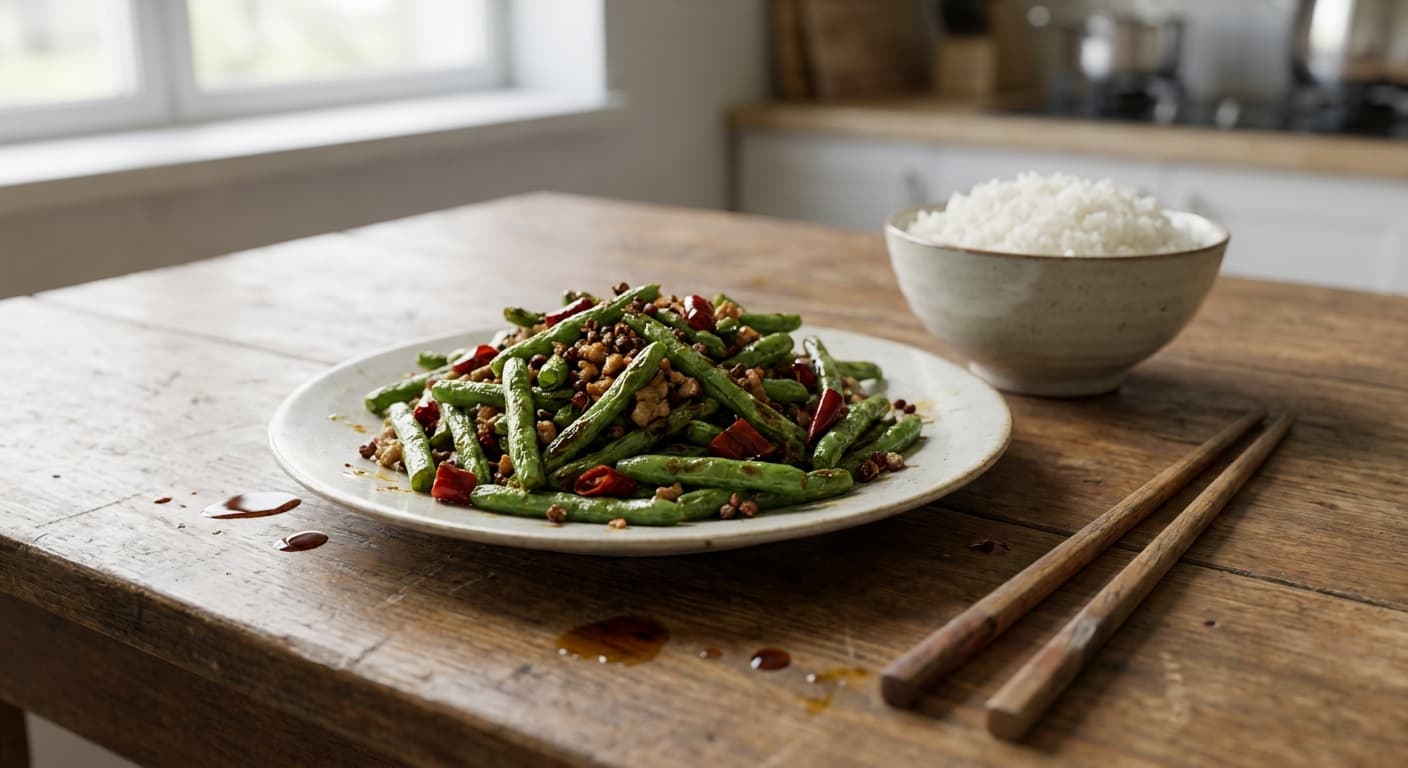
Dry-Fried Green Beans (干煸四季豆) — Sichuan Wok-Blistered Beans with Pork
Chinese · Side Dishes · 27 min
Mongolian Buuz (Бууз) — Steamed Meat Dumplings
Mongolian · Main Courses · 77 min
Reviews
Cooked this recipe?
Tap the stars to rate it — that's all it takes. A few words are welcome but optional.
No ratings yet. Cooked this one? Be the first to rate it — it takes one tap.