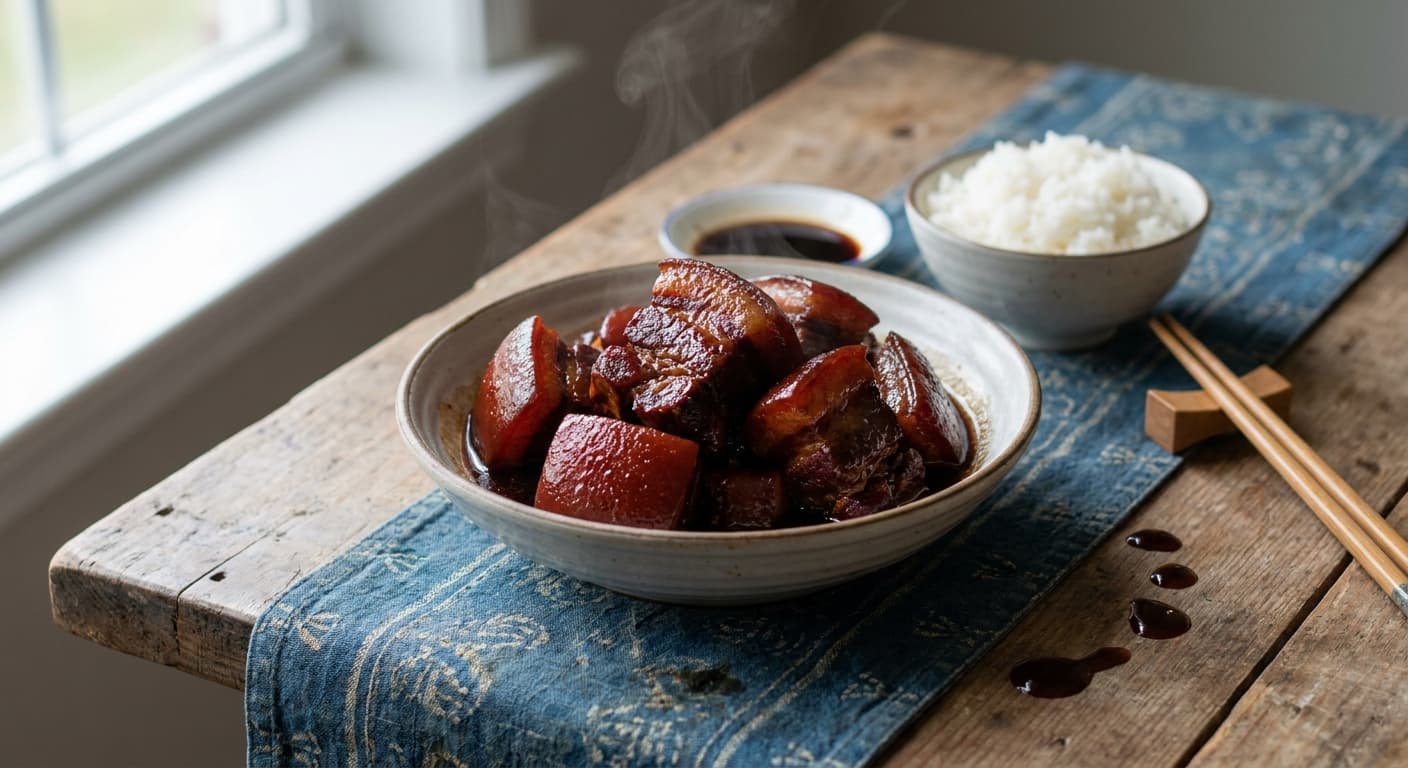
Dongpo Pork (东坡肉) — Hangzhou Red-Braised Pork Belly
Dongpo pork is a Hangzhou classic of skin-on pork belly slowly red-braised with Shaoxing wine, soy sauce, ginger, and scallion. The result is lacquered, tender meat with a sweet-savory sauce rooted in Jiangnan banquet cooking.
Printable Recipe Card
Servings: 6 · Total: 205 min · Difficulty: medium
Ingredients (quick list)
- 1200 g skin-on pork belly slab (choose an even, square-cut slab with distinct lean and fat layers)
- 8 large scallions (cut into 10 cm lengths)
- 3 inch fresh ginger (sliced into thick coins)
- 500 ml Shaoxing wine
- 90 ml light soy sauce
- 30 ml dark soy sauce
- 90 g yellow rock sugar (lightly crushed)
- 250 ml water
- 2 pod star anise (optional but common in many home versions)
Steps (summary)
- Cut the pork belly into 6 equal square blocks, each about 200 g, keeping the skin attached. Put the pork in a wok or deep pot,…
- Tie each pork block once around the sides with kitchen twine so the layers hold their shape during the long braise. Lay the sca…
- Set the pork blocks skin-side down on the scallion and ginger bed. Add the Shaoxing wine, light soy sauce, dark soy sauce, yell…
- Cover the pot, reduce the heat to very low, and braise for 2 hours, keeping the liquid at a quiet tremble rather than a rolling…
- Lift the pork into a heatproof bowl, keeping the pieces skin-side up, and strain the braising liquid into a small saucepan. Boi…
- Steam the bowl of pork over medium heat for 35 minutes to make the skin especially tender and gelatinous. Rest the pork for 10…
Cultural Background
Associated with poet-official Su Dongpo and Hangzhou, this dish celebrates Jiangnan red-braising: patient heat, wine, sugar, and soy. Fuchsia Dunlop places such cooking in the region's refined tradition of balanced sweetness and savor.
Equipment
💡 Tips
- Use a heavy, tight-lidded pot so the Shaoxing wine and soy sauce braise gently without evaporating too fast.
- Do not skip blanching, because it cleans the skin and gives the final sauce a clearer, more polished flavor.
- The pork should barely simmer; hard boiling toughens the lean layers before the fat and skin become silky.
⚠️ Common Mistakes
❌ Boiling the pork hard throughout the braise.
✅ Fix: Keep the pot at a very low simmer so the fat renders slowly and the lean meat stays tender.
❌ Using sliced pork belly instead of a thick skin-on slab.
✅ Fix: Start with a single slab and cut large blocks, because the dish depends on tall layers of skin, fat, and lean meat.
❌ Reducing the sauce before the pork is fully tender.
✅ Fix: Braise first until a chopstick passes through easily, then reduce the strained liquid for shine and concentration.
🧊 How to Store
Refrigerate pork and sauce together in an airtight container for up to 3 days. Chill until the fat firms, remove any excess surface fat if desired, then reheat covered over low steam for 15 minutes or in a small pot with 30 ml water.
📅 Make Ahead
Braise the pork 1 day ahead and refrigerate it in its sauce. The flavor deepens overnight, and the firm chilled pieces are easier to steam gently without breaking.
🍽️ Pairs Well With
- Steamed rice
- stir-fried bok choy
- blanched greens with sesame oil
- pickled cucumbers.
Regional Variations
- Hangzhou versions emphasize Shaoxing wine, rock sugar, and a very soft, glossy finish.
- Some Jiangnan home cooks add star anise or a small cinnamon stick, while more restrained versions use only ginger and scallion.
- Restaurant versions often finish the pork by steaming individual portions in small lidded bowls for an especially polished texture.
Ingredients
- 1200 gskin-on pork belly slab (choose an even, square-cut slab with distinct lean and fat layers)
- 8large scallions (cut into 10 cm lengths)
- 3 inchfresh ginger (sliced into thick coins)
- 500 mlShaoxing wine
- 90 mllight soy sauce
- 30 mldark soy sauce
- 90 gyellow rock sugar (lightly crushed)
- 250 mlwater
- 2 podstar anise (optional but common in many home versions)
🔄 Substitutions
- Shaoxing wine→ dry amontillado sherry
- yellow rock sugar→ 90 g granulated sugar
- dark soy sauce→ 30 ml light soy sauce mixed with 5 ml molasses
Instructions
- 1
Cut the pork belly into 6 equal square blocks, each about 200 g, keeping the skin attached. Put the pork in a wok or deep pot, cover with boiling water, blanch for 5 minutes, then rinse under warm water and scrape away any impurities from the skin.
- 2
Tie each pork block once around the sides with kitchen twine so the layers hold their shape during the long braise. Lay the scallion lengths and ginger slices in a tight bed across the bottom of a heavy clay pot, sand pot, or Dutch oven.
- 3
Set the pork blocks skin-side down on the scallion and ginger bed. Add the Shaoxing wine, light soy sauce, dark soy sauce, yellow rock sugar, water, and star anise, then bring the liquid just to a simmer over medium heat.
- 4
Cover the pot, reduce the heat to very low, and braise for 2 hours, keeping the liquid at a quiet tremble rather than a rolling boil. After 1 hour, carefully turn the pork skin-side up with a spoon and continue cooking until a chopstick slides through the lean meat with little resistance.
- 5
Lift the pork into a heatproof bowl, keeping the pieces skin-side up, and strain the braising liquid into a small saucepan. Boil the liquid for 8 to 10 minutes until glossy and lightly syrupy, then pour 180 ml of the reduced sauce over the pork.
- 6
Steam the bowl of pork over medium heat for 35 minutes to make the skin especially tender and gelatinous. Rest the pork for 10 minutes, remove the twine, spoon over more sauce, and serve hot with rice and a green vegetable.
🪪 Recipe Passport
Cultural Background
Associated with poet-official Su Dongpo and Hangzhou, this dish celebrates Jiangnan red-braising: patient heat, wine, sugar, and soy. Fuchsia Dunlop places such cooking in the region's refined tradition of balanced sweetness and savor.
Regional Variations
Researched from multiple sources and validated by the Zaffaron editorial team. Every recipe is tested for accuracy, measurements, and cultural authenticity.
📚 Sources & Cultural References
- Fuchsia Dunlop — Land of Fish and Rice: Recipes from the Culinary Heart of China — (2016)
Sources cited by the Zaffaron editorial team during recipe research. Cultural and culinary references supporting authenticity claims.
Nutrition per serving
Pairs well with
If you enjoyed this recipe, here are a few related Zaffaron recipes to try next.
Does your family make this differently?
Every family has their own version. Maybe your grandmother adds a secret ingredient, or your aunt has a completely different technique. Preserve your family's version — with their name on it, forever.
You Might Also Like
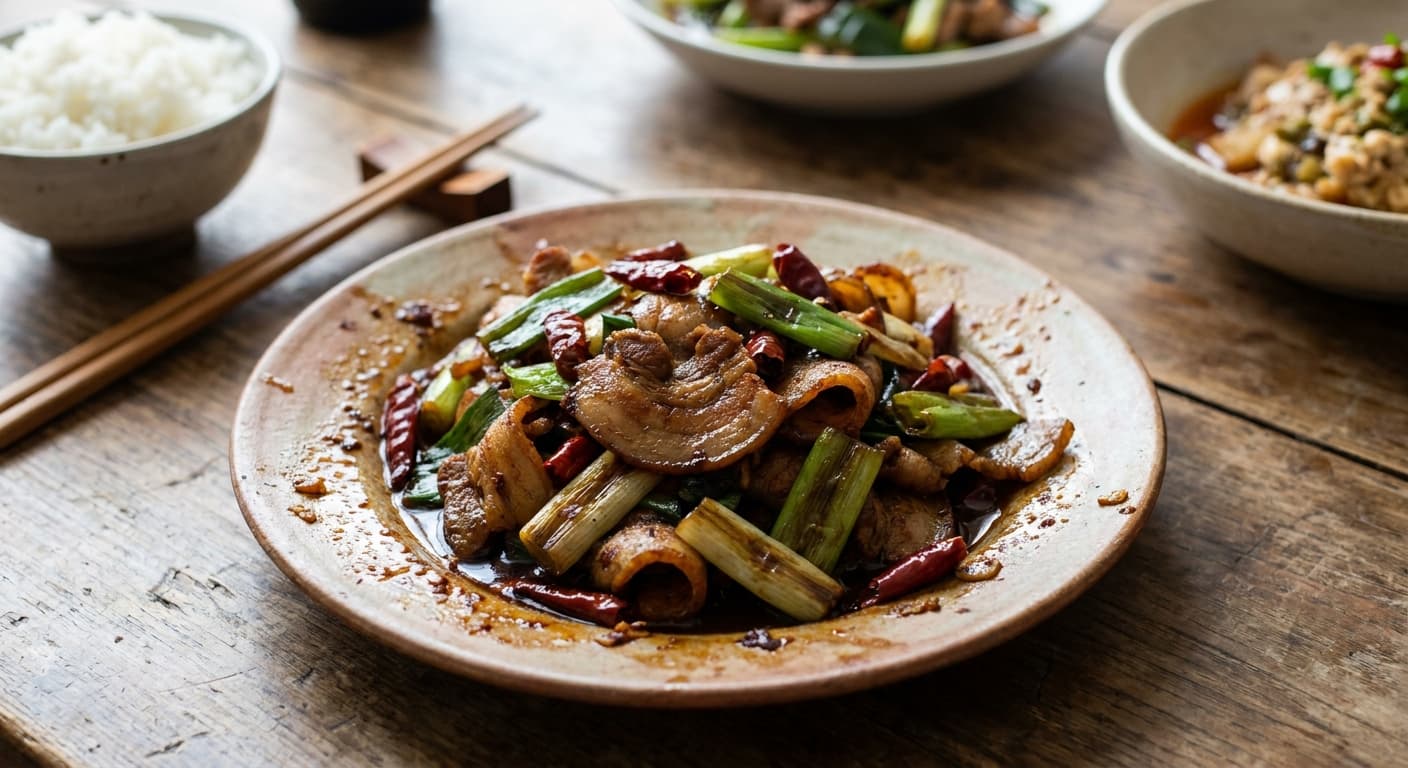
Twice-Cooked Pork (回锅肉) — Sichuan Pork Belly with Leeks and Chili Bean Paste
Chinese · Main Courses · 60 min
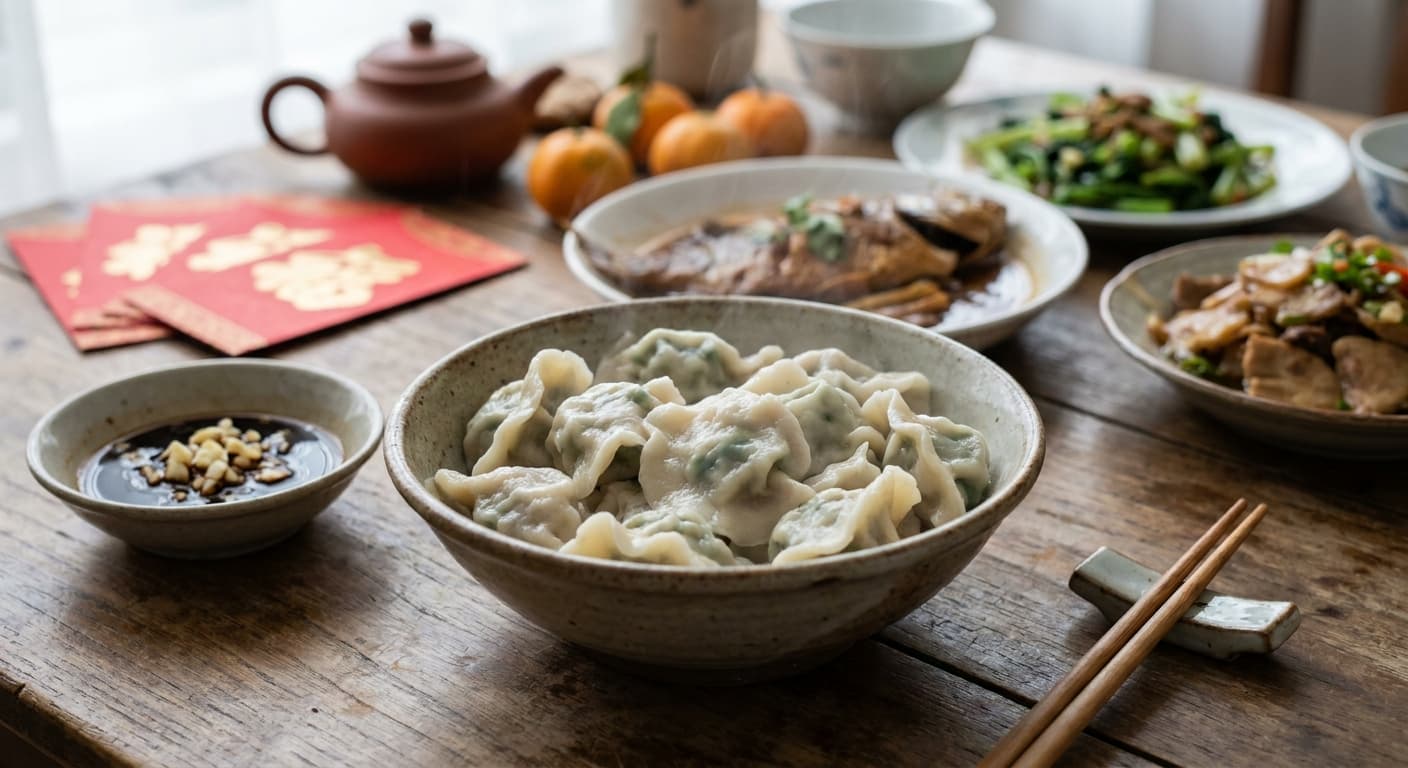
Pork and Chive Dumplings (猪肉韭菜饺子) — Boiled Jiaozi with Juicy Pork and Garlic Chives
Chinese · Main Courses · 87 min
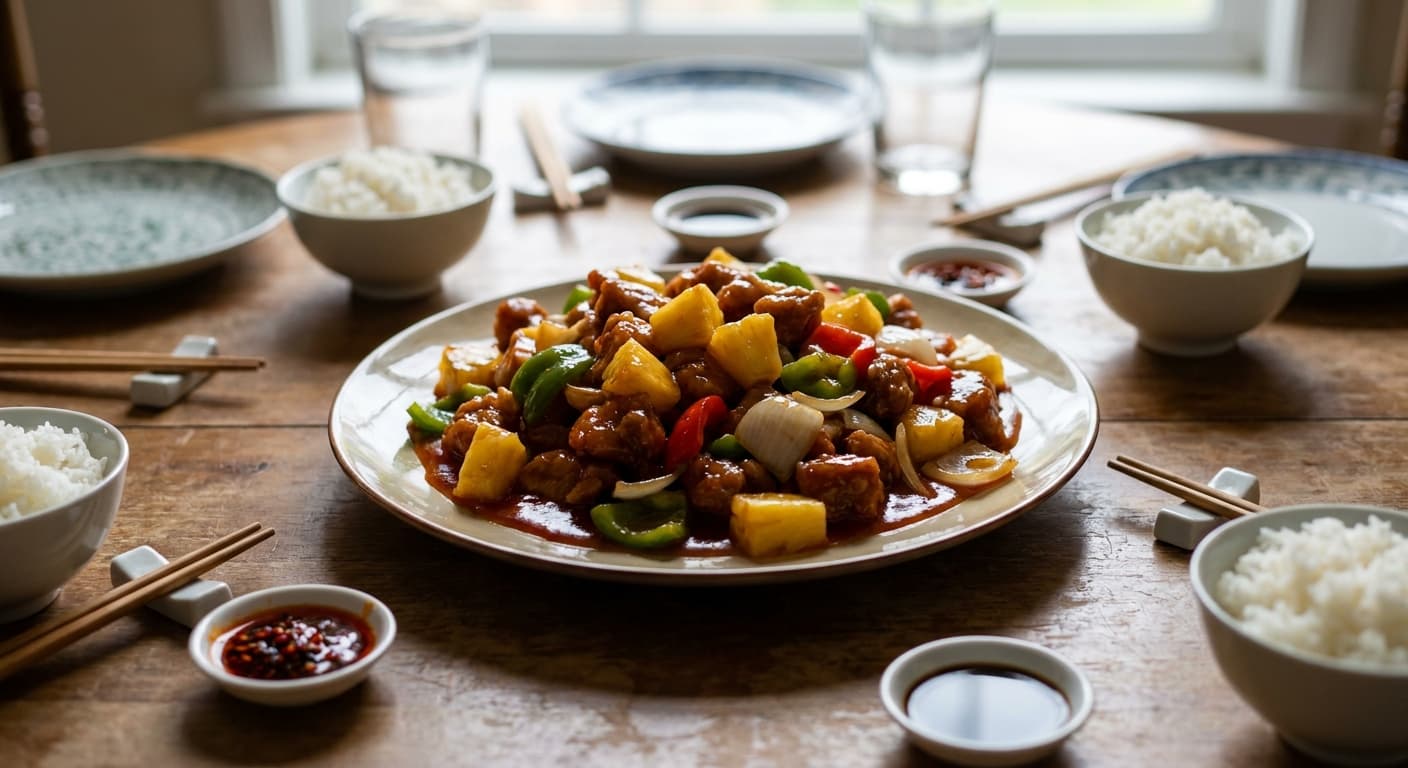
Sweet and Sour Pork (咕噜肉) — Cantonese Pork with Pineapple and Peppers
Chinese · Main Courses · 55 min
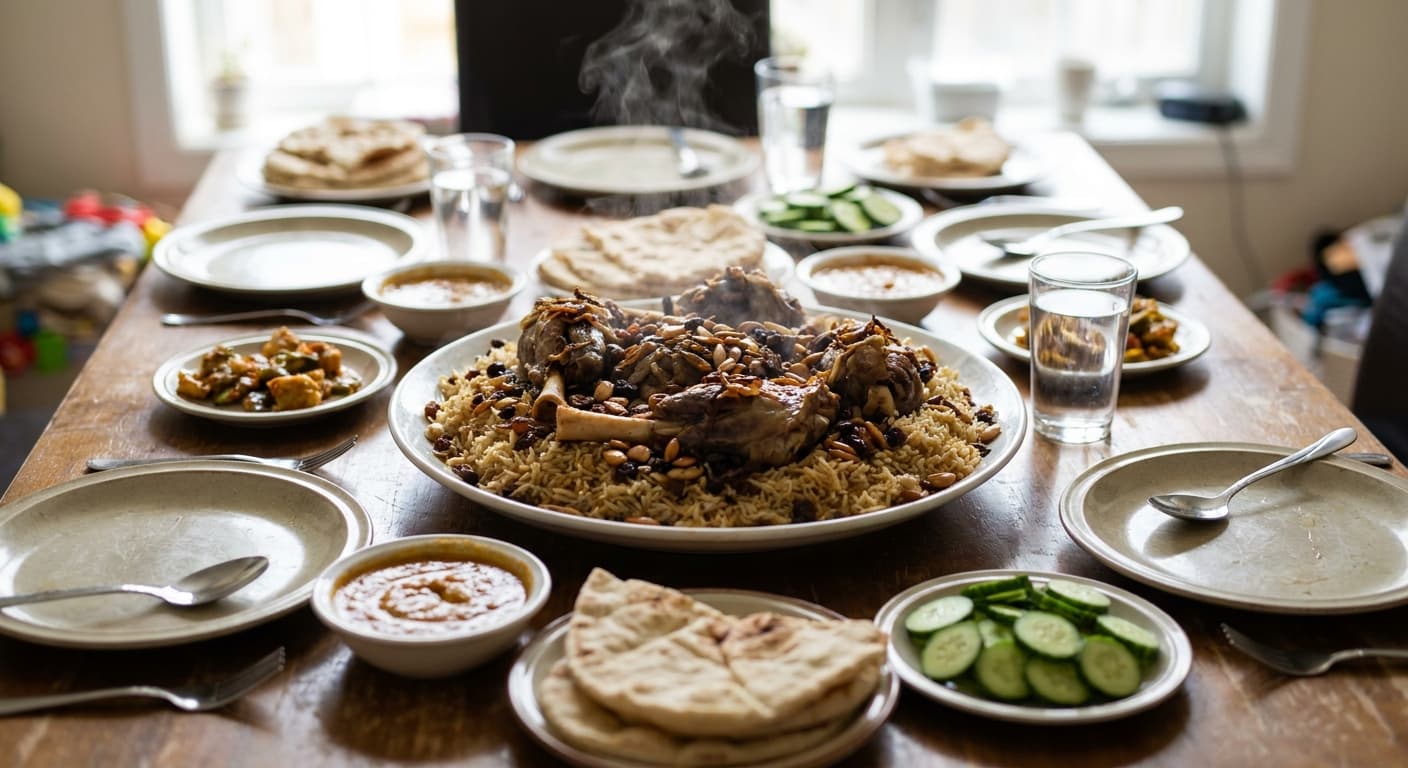
Iraqi Quzi (قوزي) — Spiced Lamb Over Timman Rice
Iraqi · Main Courses · 200 min
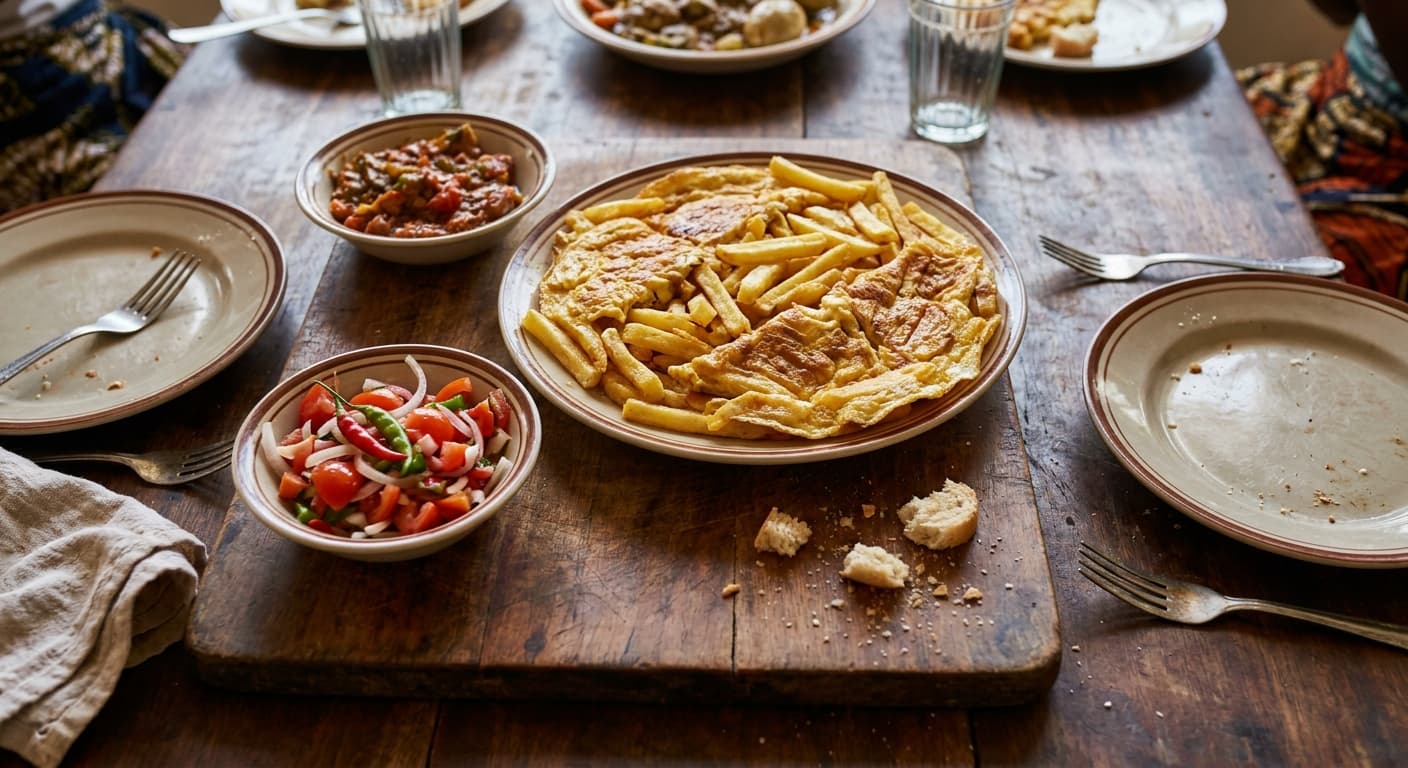
Chips and Egg Omelet (Chipsi Mayai) — Tanzanian Street-Food Classic
Tanzanian · Main Courses · 50 min
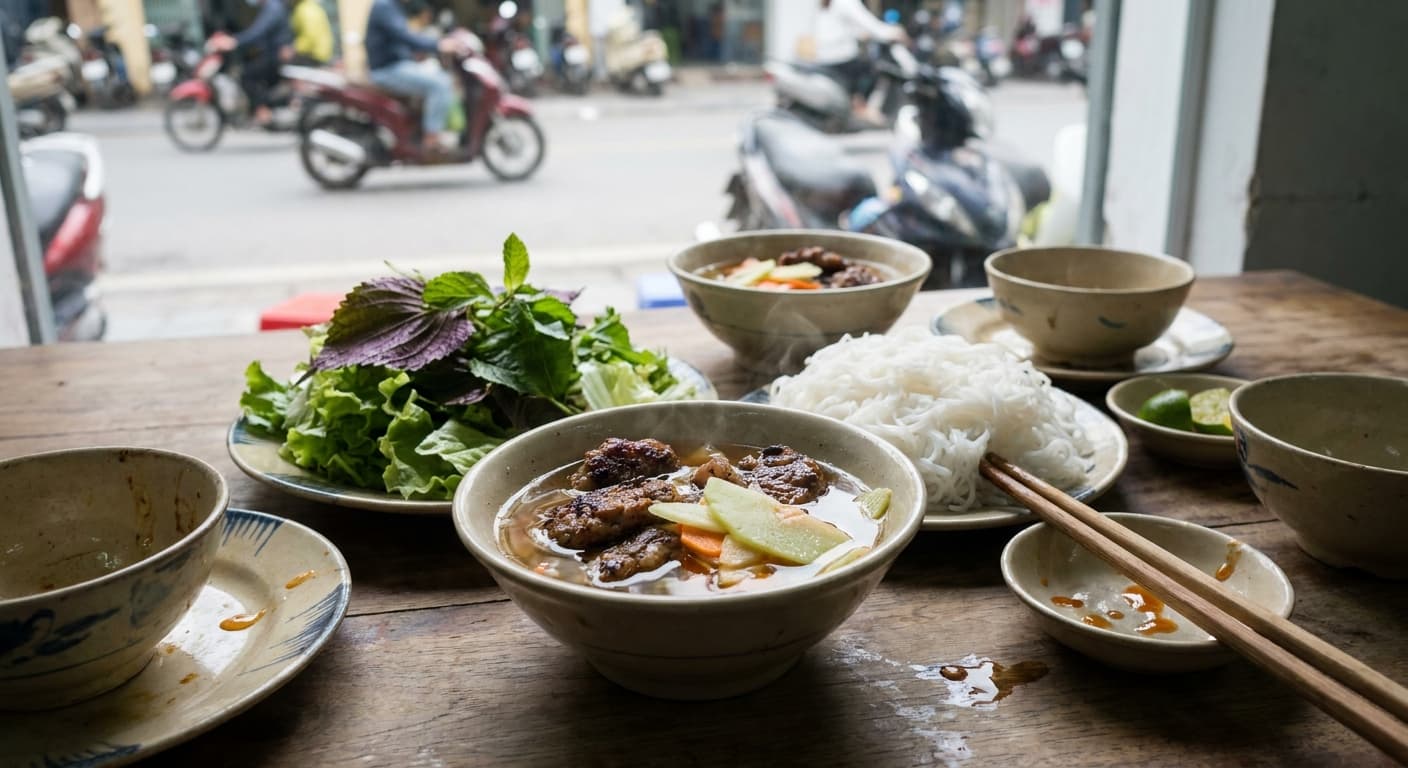
Vietnamese Grilled Pork with Rice Noodles (Bún Chả) — Hanoi-Style Charcoal Pork and Vermicelli
Vietnamese · Main Courses · 65 min

Kitsune Udon (きつねうどん) — Udon Noodles with Sweet Fried Tofu
Japanese · Main Courses · 40 min
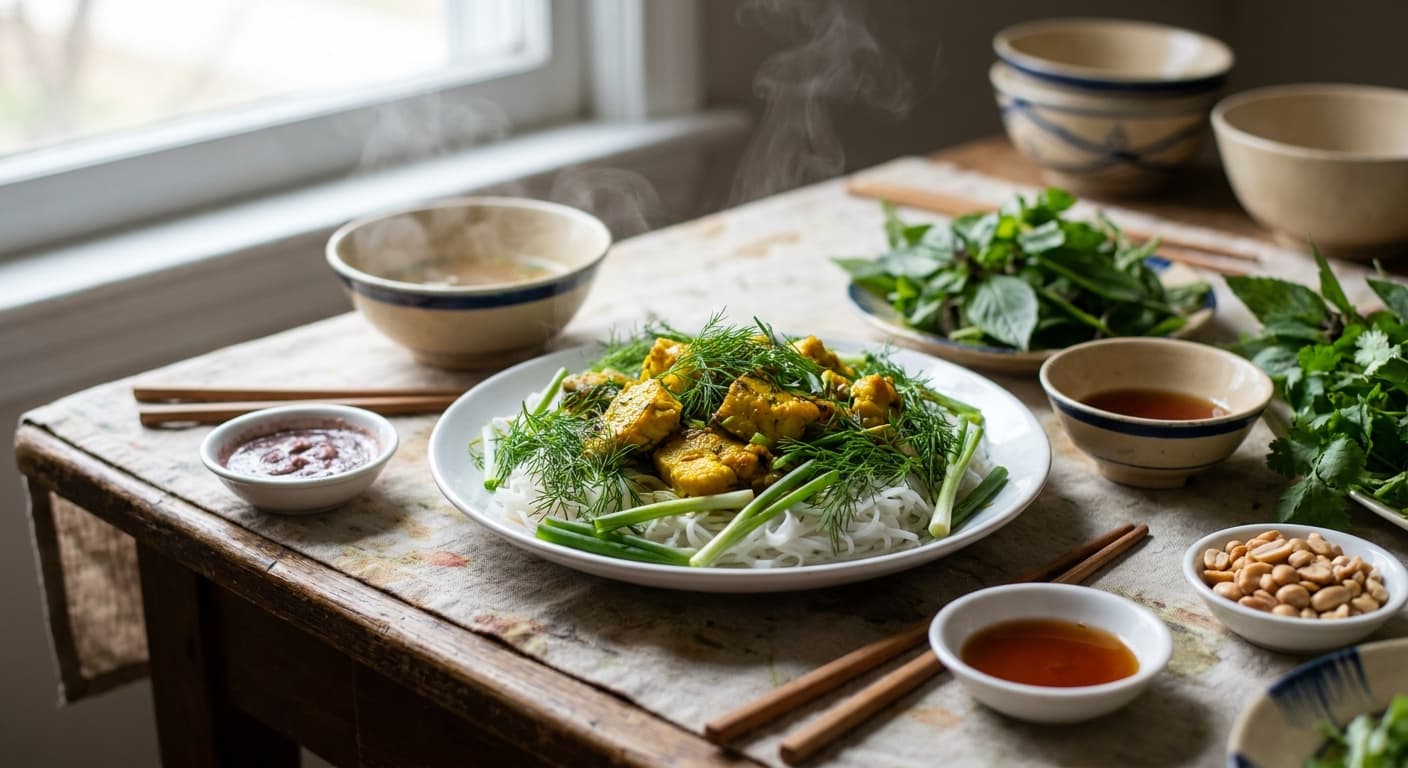
Hanoi Turmeric Fish with Dill (Chả Cá Lã Vọng) — Sizzling Fish with Rice Noodles
Vietnamese · Main Courses · 47 min
Reviews
Cooked this recipe?
Tap the stars to rate it — that's all it takes. A few words are welcome but optional.
No ratings yet. Cooked this one? Be the first to rate it — it takes one tap.