Boodog (Боодог) — Mongolian Hot-Stone Goat Roast
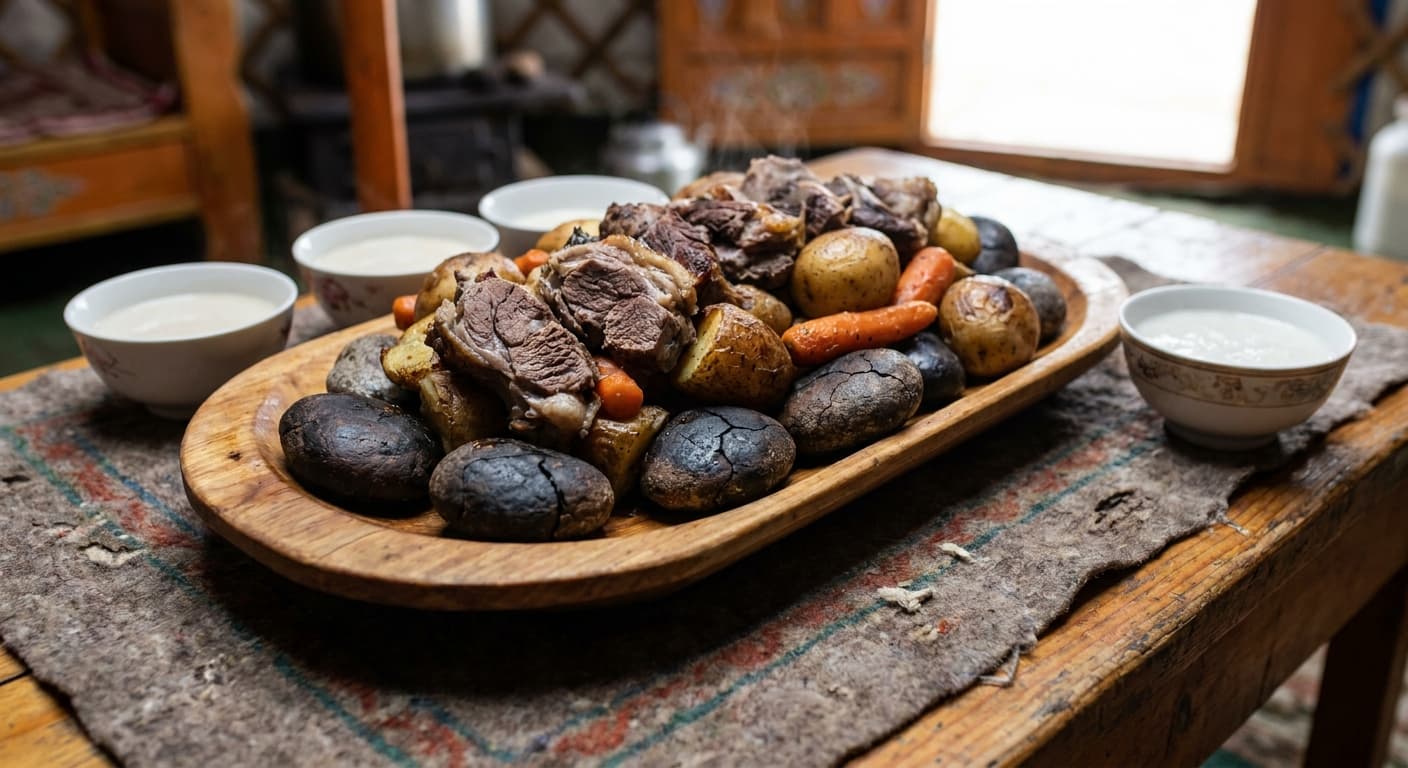
Boodog is a dramatic Mongolian pastoral roast in which hot stones cook meat from inside the animal’s skin. Unlike khorkhog, which cooks in a pot, boodog is an outdoor herder technique, often shared with airag or suutei tsai.
Printable Recipe Card
Servings: 12 · Total: 180 min · Difficulty: expert
Ingredients (quick list)
- 1 whole young goat (about 7 kg dressed weight, head and hooves removed, skin intact, deboned through the main cavity by a skilled butcher)
- 42 g fine sea salt
- 10 g black pepper (freshly ground)
- 1 head garlic (cloves separated, peeled, and lightly crushed)
- 4 yellow onions (each cut into 6 wedges)
- 6 carrots (cut into 5 cm lengths)
- 8 waxy potatoes (peeled and halved)
- 500 ml water
- 18 smooth dense stones (6 to 8 cm wide, scrubbed, fully dried for 24 hours, and selected from non-porous rock)
- 16 chunk hardwood charcoal
- 4 kg dry hardwood
- 2 m butcher's twine
+ 1 more in the full ingredients section below.
Steps (summary)
- Choose stones that are dense, smooth, and completely dry, because wet or porous stones can crack dangerously in the fire. Scrub…
- Inspect the prepared goat and make sure the hide is clean, the interior cavity is free of bone splinters, and the main openings…
- Place a layer of hot stones into the cavity with long metal tongs, then add some goat meat folds, onions, carrots, and potatoes…
- Pour the measured water into the cavity to create steam, then close the opening with metal skewers and tie it firmly with butch…
- Set the filled goat over moderate fire heat and scorch the outside evenly, turning it every 5 minutes so the skin tightens and…
- Cook for 75 to 90 minutes, checking the thickest meat with an instant-read thermometer inserted through a small slit near the l…
+ 2 more steps in the full instructions section below.
Cultural Background
Boodog reflects Mongolia’s mobile herding culture, where meat, fire, stones, and animal skin become the cooking vessel. Boldoo Bayar’s Mongolian Cooking helps frame this kind of direct, communal pastoral food tradition.
Equipment
💡 Tips
- Ask a qualified butcher to prepare the goat with the skin intact and bones removed; this is the hardest technical part of authentic boodog.
- Do not use wet river stones, limestone, shale, or cracked stones, because they can fracture when heated.
- Keep the fire at a steady roasting heat after the stones are loaded, as fierce flames can split the skin before the center finishes cooking.
⚠️ Common Mistakes
❌ Using damp or layered stones
✅ Fix: Use only dense, dry, non-porous stones and heat them gradually in the fire.
❌ Packing all stones in the center
✅ Fix: Alternate stones with meat and vegetables so heat spreads evenly through the boodog.
❌ Burning the outside before the meat cooks
✅ Fix: Turn the goat frequently and maintain moderate flames after the initial searing.
🧊 How to Store
Remove all meat from the skin and bones before storing. Refrigerate leftovers in airtight containers for up to 3 days, or freeze for 2 months. Reheat covered with 30 ml water per serving until the meat reaches 74°C.
📅 Make Ahead
The butchered goat can be cleaned and seasoned up to 12 hours ahead, then refrigerated. Stones can be scrubbed and dried the day before, but they must be heated only just before cooking.
🍽️ Pairs Well With
- Suutei tsai
- airag
- simple cucumber salad
- boiled potatoes
- fresh flatbread.
Regional Variations
- Marmot boodog is associated with some countryside hunting traditions, but it carries legal and health risks and is not recommended for most home cooks.
- Goat boodog is common for larger gatherings because the animal gives more meat and a sturdier cooking skin.
- Some cooks season only with salt, while others add onion, garlic, and black pepper for a modern family-style version.
Ingredients
- 1 wholeyoung goat (about 7 kg dressed weight, head and hooves removed, skin intact, deboned through the main cavity by a skilled butcher)
- 42 gfine sea salt
- 10 gblack pepper (freshly ground)
- 1 headgarlic (cloves separated, peeled, and lightly crushed)
- 4yellow onions (each cut into 6 wedges)
- 6carrots (cut into 5 cm lengths)
- 8waxy potatoes (peeled and halved)
- 500 mlwater
- 18smooth dense stones (6 to 8 cm wide, scrubbed, fully dried for 24 hours, and selected from non-porous rock)
- 16 chunkhardwood charcoal
- 4 kgdry hardwood
- 2 mbutcher's twine
- 4metal skewers (for pinning openings before tying)
🔄 Substitutions
- young goat→ young lamb
- whole-animal skin cooking method→ large covered roasting pan with heated stones
- marmot→ young goat
Instructions
- 1
Choose stones that are dense, smooth, and completely dry, because wet or porous stones can crack dangerously in the fire. Scrub them without soap, dry them for 24 hours, then heat them in a strong hardwood fire for 60 minutes until they are glowing hot.
- 2
Inspect the prepared goat and make sure the hide is clean, the interior cavity is free of bone splinters, and the main openings can be closed tightly. Rub the inside meat evenly with the salt, black pepper, and crushed garlic, working the seasoning into the leg and shoulder areas.
- 3
Place a layer of hot stones into the cavity with long metal tongs, then add some goat meat folds, onions, carrots, and potatoes. Continue alternating hot stones and food so the stones are distributed through the whole boodog rather than piled in one spot.
- 4
Pour the measured water into the cavity to create steam, then close the opening with metal skewers and tie it firmly with butcher's twine. The skin should be sealed enough to hold steam, but it must not be stretched so tightly that pressure cannot escape.
- 5
Set the filled goat over moderate fire heat and scorch the outside evenly, turning it every 5 minutes so the skin tightens and the interior cooks from both the stones and the outer flame. This outside-roasting step is what separates boodog from pot-cooked khorkhog, so keep the heat steady rather than letting flames burn one side black.
- 6
Cook for 75 to 90 minutes, checking the thickest meat with an instant-read thermometer inserted through a small slit near the leg. The goat is ready when the thickest pieces reach 74°C and the potatoes are tender when pierced through the skin.
- 7
Rest the boodog for 15 minutes before opening so the steam settles and the juices redistribute. Cut the twine carefully, remove the stones with tongs, and transfer the meat and vegetables to a large platter.
- 8
Serve the meat in generous pieces with the roasted vegetables and a small amount of the collected juices. In Mongolian herder custom, the cleaned hot stones may be passed briefly from hand to hand for warmth before the meal, while suutei tsai or airag is served alongside.
🪪 Recipe Passport
Cultural Background
Boodog reflects Mongolia’s mobile herding culture, where meat, fire, stones, and animal skin become the cooking vessel. Boldoo Bayar’s Mongolian Cooking helps frame this kind of direct, communal pastoral food tradition.
Regional Variations
Researched from multiple sources and validated by the Zaffaron editorial team. Every recipe is tested for accuracy, measurements, and cultural authenticity.
📚 Sources & Cultural References
- Boldoo Bayar — Mongolian Cooking
Sources cited by the Zaffaron editorial team during recipe research. Cultural and culinary references supporting authenticity claims.
Nutrition per serving
Pairs well with
If you enjoyed this recipe, here are a few related Zaffaron recipes to try next.
Does your family make this differently?
Every family has their own version. Maybe your grandmother adds a secret ingredient, or your aunt has a completely different technique. Preserve your family's version — with their name on it, forever.
You Might Also Like
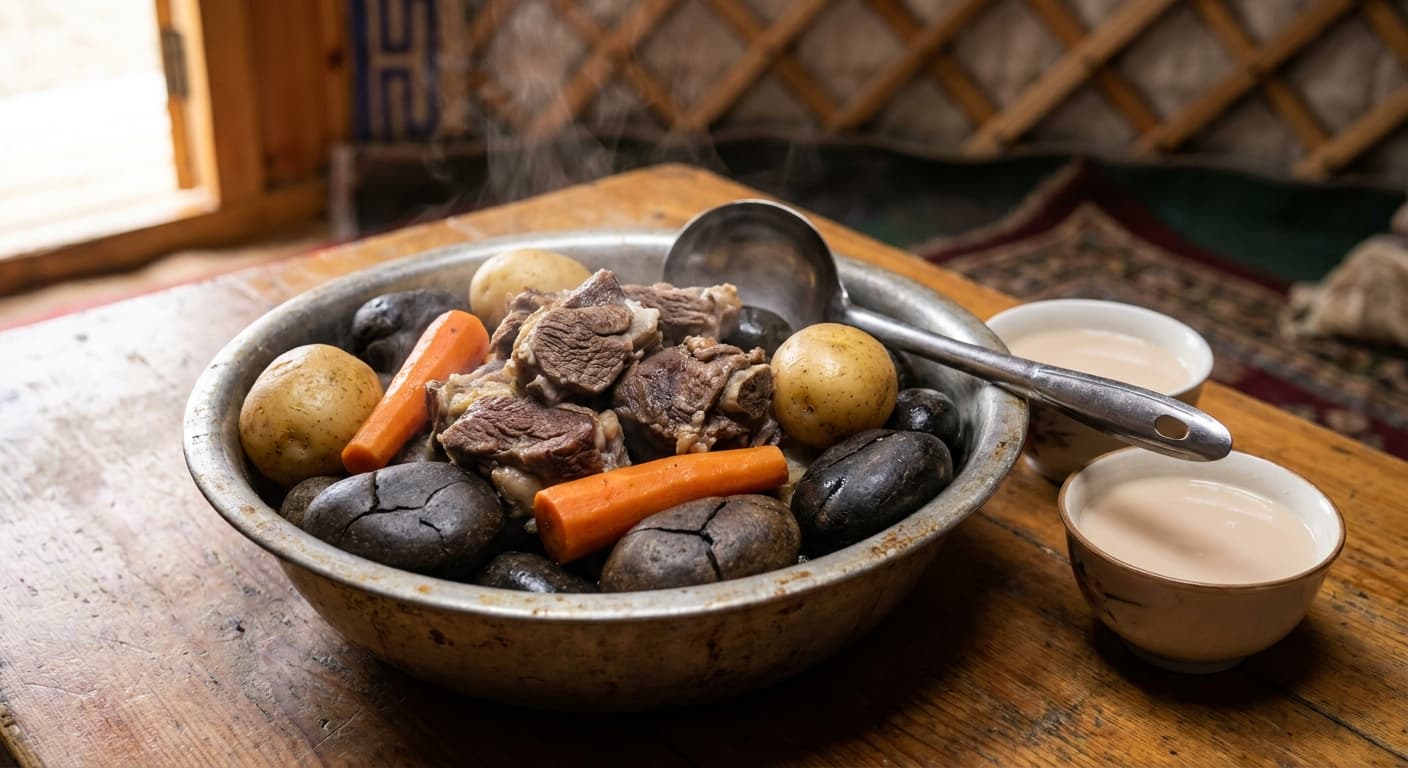
Khorkhog (Хорхог) — Mongolian Hot-Stone Lamb Stew
Mongolian · Main Courses · 130 min
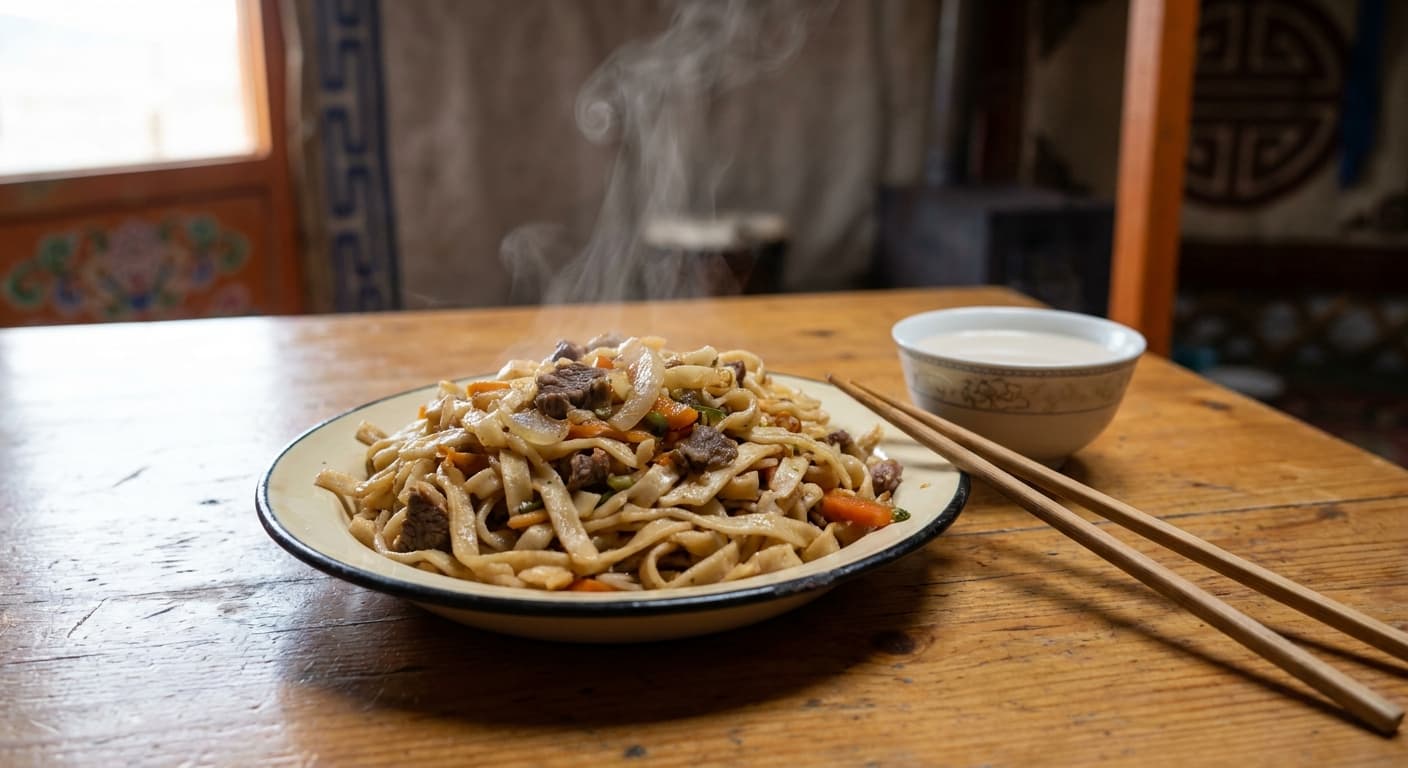
Tsuivan (Цуйван) — Mongolian Steamed Noodles with Meat and Vegetables
Mongolian · Main Courses · 80 min
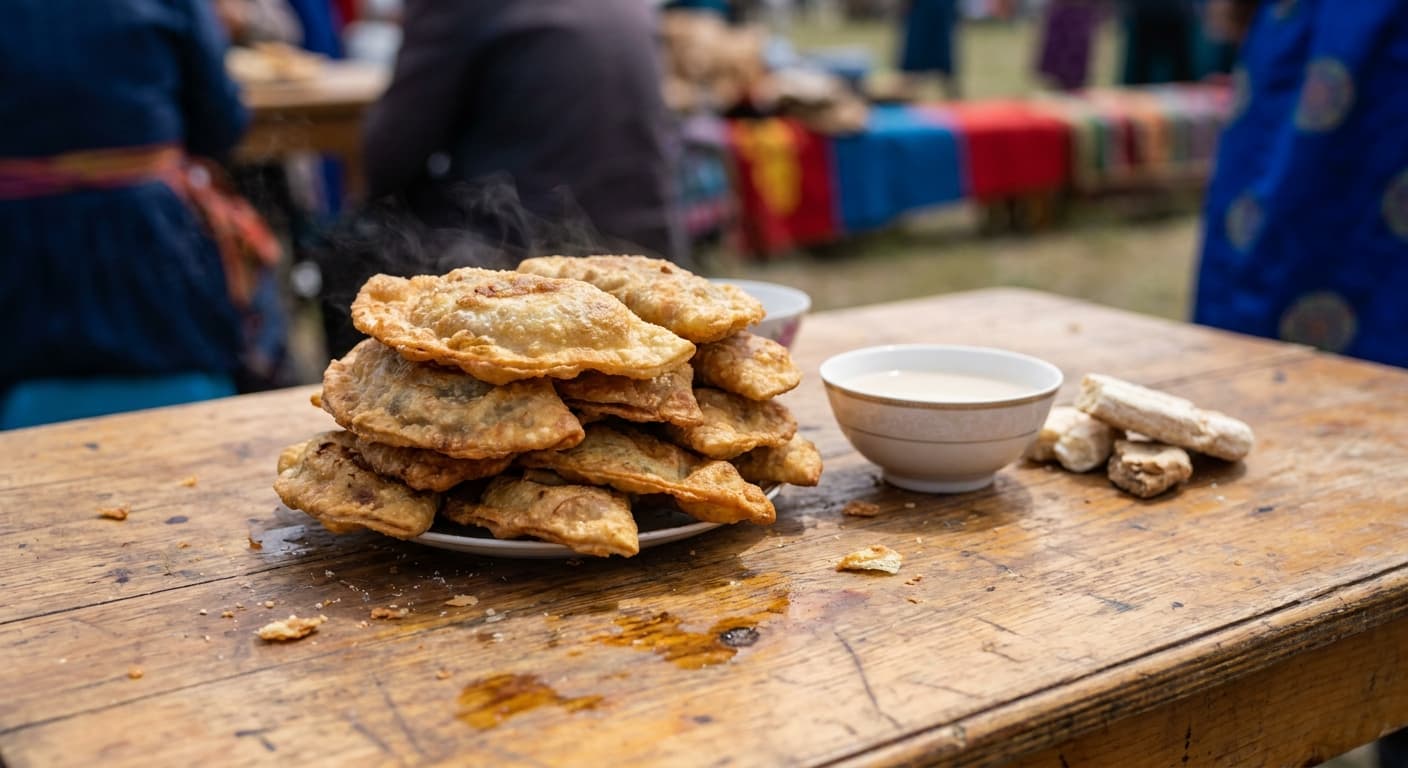
Khuushuur (Хуушуур) — Crisp Mongolian Fried Meat Pockets
Mongolian · Main Courses · 70 min
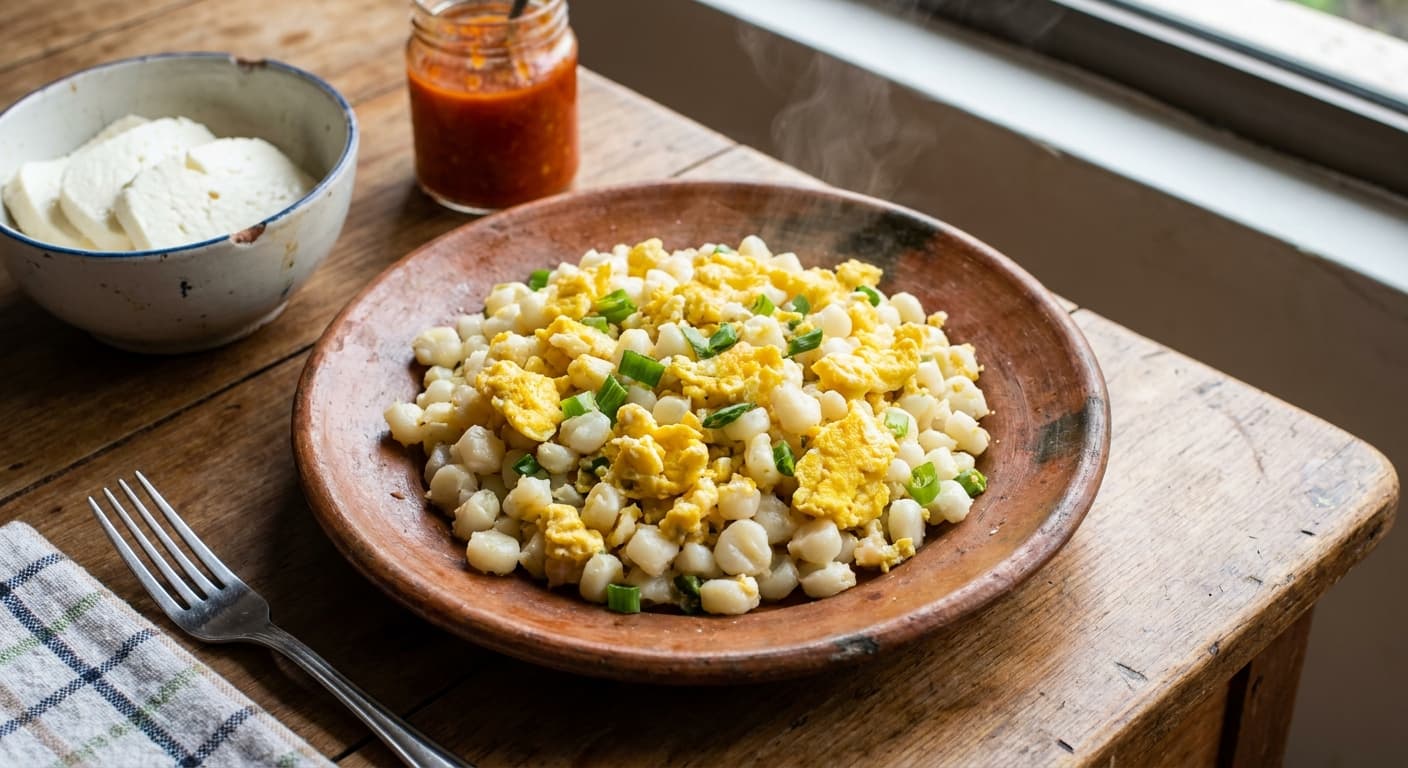
Scrambled Hominy and Eggs (Mote pillo) — Ecuadorian Highland Breakfast
Ecuadorian · Main Courses · 25 min
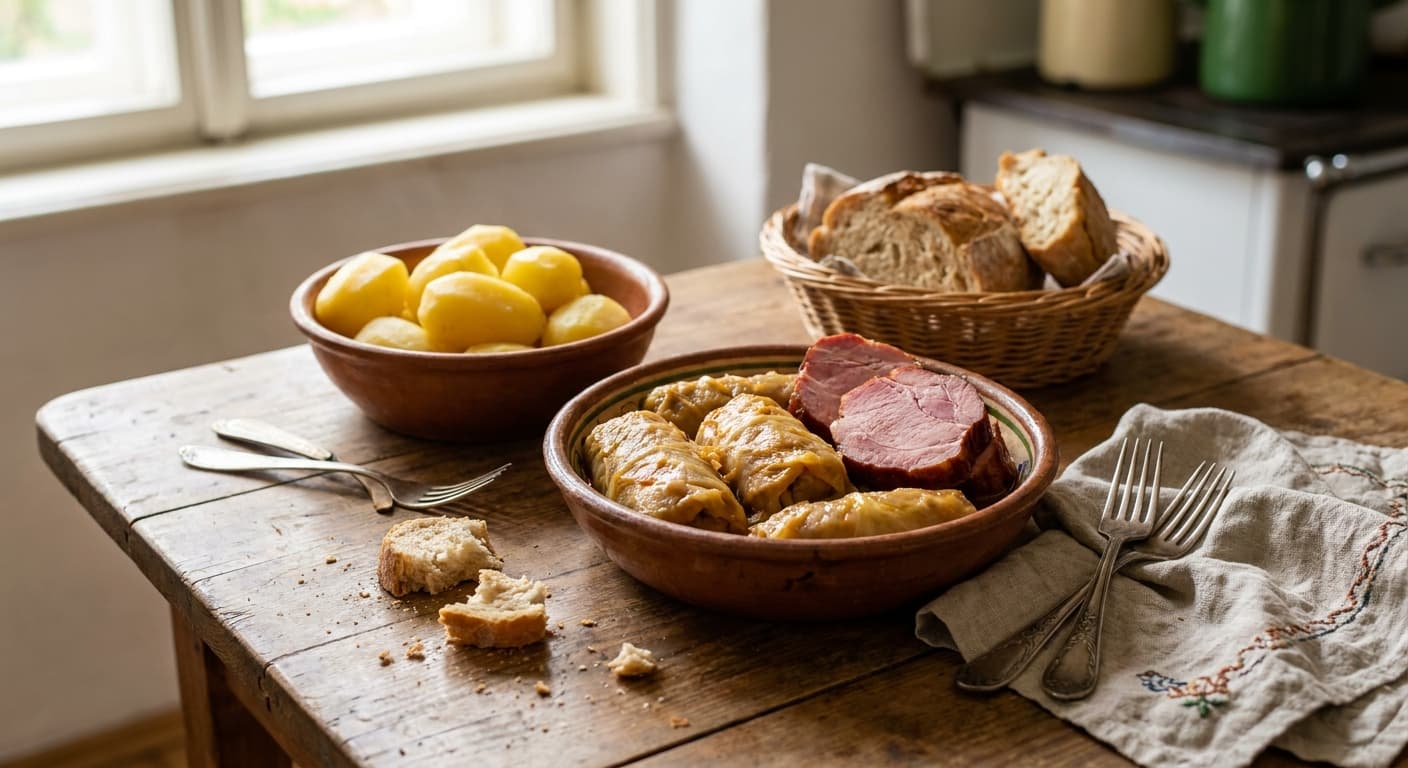
Sinj Stuffed Cabbage Rolls (Sinjski arambaši) — Hand-Chopped Meat in Sour Cabbage
Croatian · Main Courses · 245 min
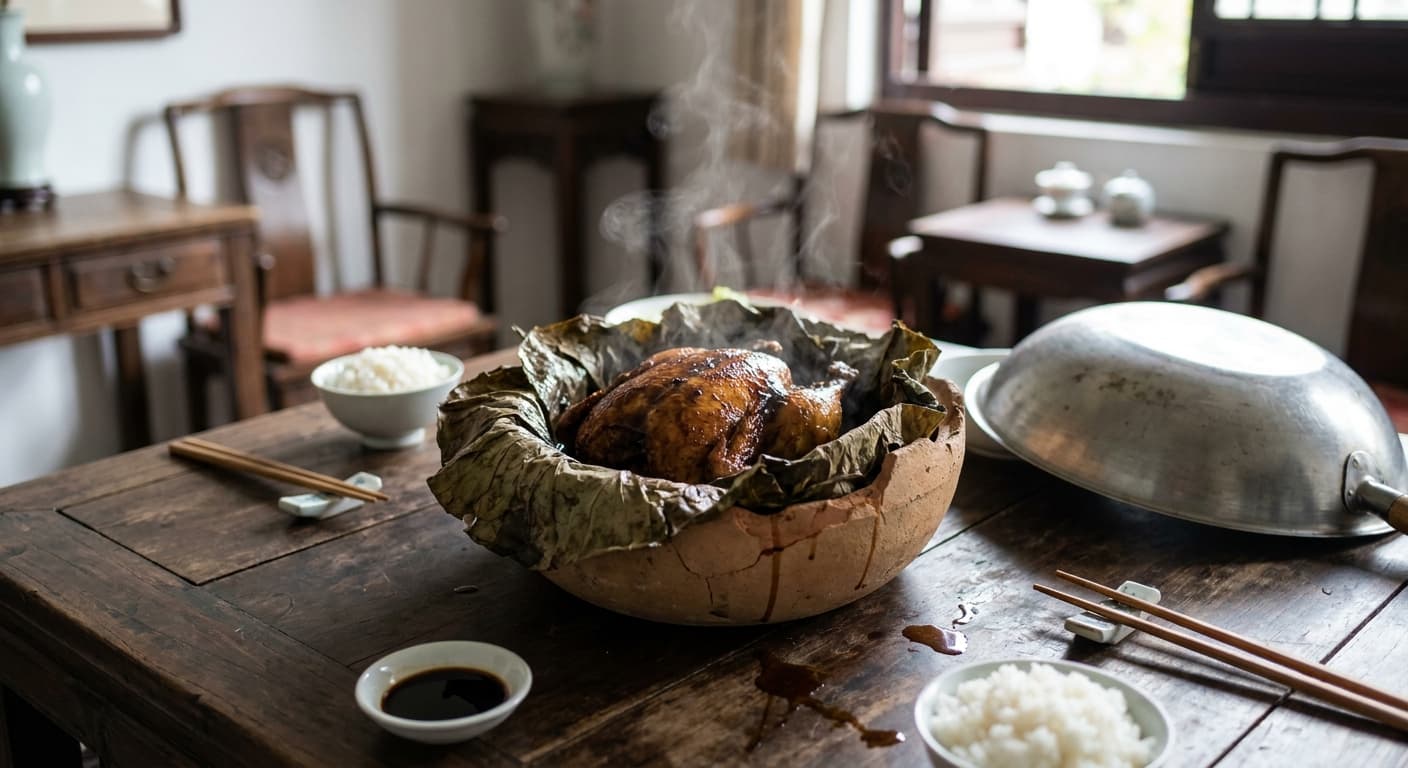
Beggar's Chicken (叫化鸡) — Lotus-Wrapped Clay-Baked Jiangnan Chicken
Chinese · Main Courses · 240 min
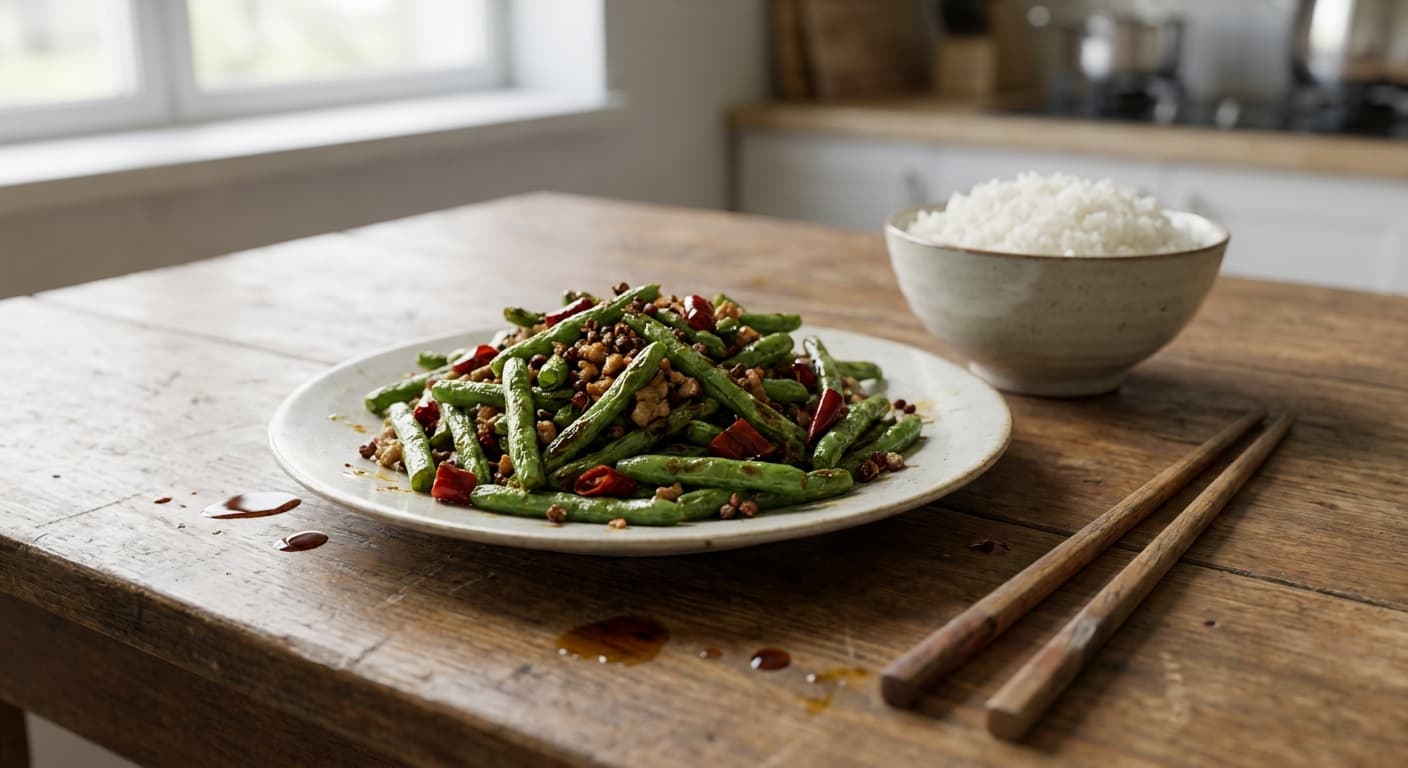
Dry-Fried Green Beans (干煸四季豆) — Sichuan Wok-Blistered Beans with Pork
Chinese · Side Dishes · 27 min
Bosnian Popara (Попара) — Bread Porridge with Kaymak
Bosnian · Main Courses · 22 min
Reviews
Cooked this recipe?
Tap the stars to rate it — that's all it takes. A few words are welcome but optional.
No ratings yet. Cooked this one? Be the first to rate it — it takes one tap.