Kookoo-ye Piaz va Sib Zamini (کوکو پیاز و سیب زمینی) — Persian Onion & Potato Skillet Cakes
Crispy-edged Persian skillet cakes made with grated onion and potato, bound with egg, flour, and milk, then pan-fried in butter until golden. Comforting, quick, and perfect with herbs, yogurt, or salad.
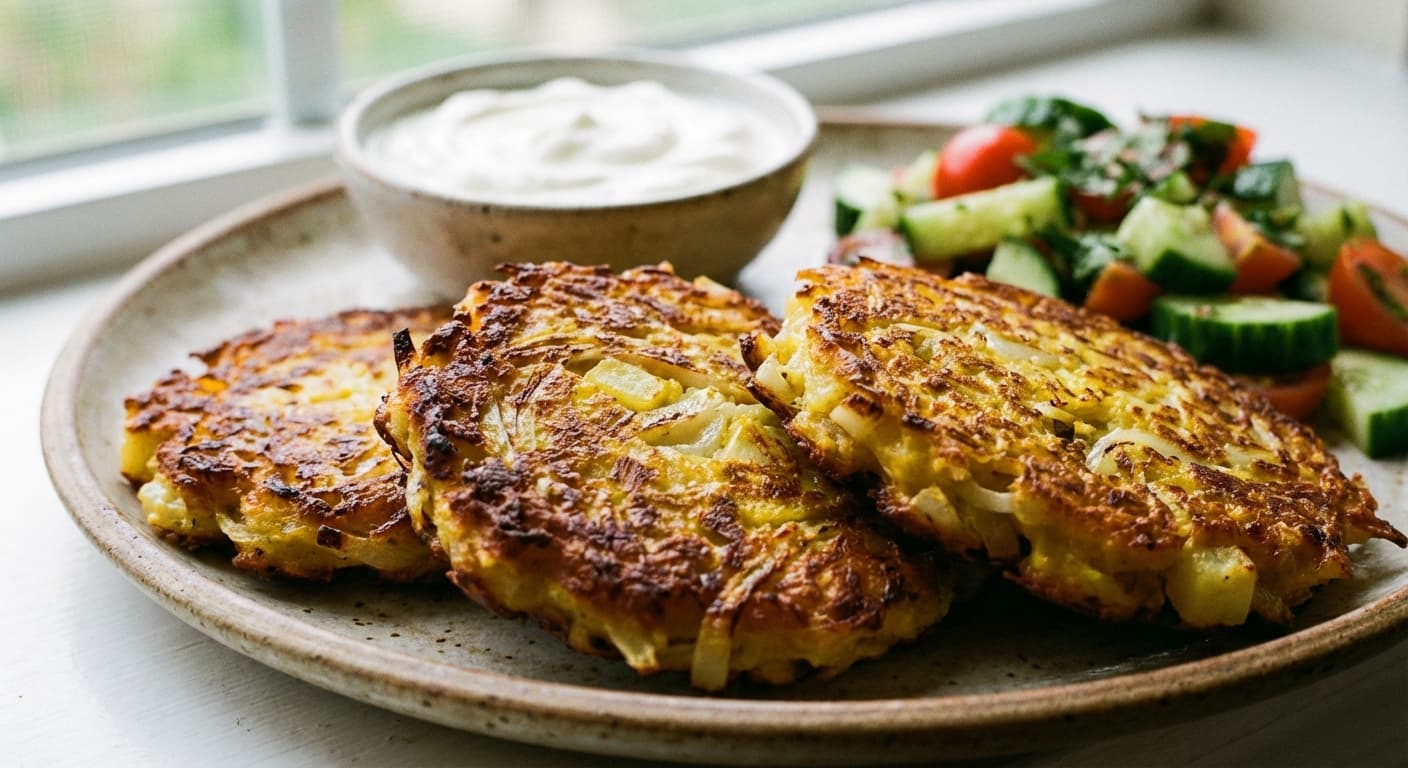
Printable Recipe Card
Servings: 4 · Total: 45 min · Difficulty: easy
Ingredients (quick list)
- 600 g Russet potatoes, peeled (about 3 medium; grate on large holes)
- 250 g Yellow onion, peeled (about 1 large; grate on large holes)
- 6 g Fine salt (about 1 tsp, plus more to taste)
- 1 g Ground black pepper (about 1/2 tsp)
- 2 g Ground turmeric (about 1 tsp)
- 2 large Eggs (room temperature)
- 60 ml Whole milk (about 1/4 cup)
- 40 g All-purpose flour (about 1/3 cup, spooned and leveled)
- 45 g Unsalted butter (divided; for pan-frying (add more if pan looks dry))
Steps (summary)
- Grate the potatoes and onion on the large holes of a box grater. Transfer to a clean kitchen towel, sprinkle with the salt, and…
- Add black pepper and turmeric to the bowl and toss well so the color is evenly distributed. In a separate small bowl, whisk the…
- Heat a large nonstick or well-seasoned cast-iron skillet over medium heat for 2 minutes. Add 20 g butter and let it melt and fo…
- Pan-fry for 3–4 minutes per side, adjusting heat to medium-low if browning too fast. Add a little more butter as needed so the…
- Transfer cooked cakes to a plate lined with paper towel or a rack. Repeat with remaining batter, adding the remaining 25 g butt…
Cultural Background
Potato-and-onion skillet cakes are a common home-style dish in Persian cooking, valued for turning basic pantry ingredients into a satisfying meal. They are often served as a light supper or side, especially when quick, economical cooking is needed.
Equipment
💡 Tips
- Squeezing out moisture is the key to crisp cakes; if the mixture looks wet after mixing, add 10–15 g more flour and mix again.
- For even cooking, keep cakes around 1–1.5 cm thick; thicker cakes brown before the center sets.
- If you prefer extra-crisp edges, fry in a slightly larger amount of butter and keep the heat at steady medium rather than high.
- A nonstick skillet is easiest, but a well-seasoned cast-iron pan gives excellent browning.
⚠️ Common Mistakes
❌ Skipping the squeeze step for grated onion and potato
💡 Why: Excess liquid steams the cakes, making them soggy and prone to falling apart.
✅ Fix: Salt the shreds, then squeeze hard in a towel until very dry; if still wet, add 10–15 g more flour.
❌ Cooking on high heat to “get them crispy faster”
💡 Why: The outside browns before the inside sets, leading to raw centers.
✅ Fix: Use steady medium heat; if browning too fast, lower to medium-low and extend cooking by 1–2 minutes per side.
❌ Making cakes too large or too thick
💡 Why: Thick cakes cook unevenly and can break when flipping.
✅ Fix: Portion 60–70 g batter per cake and flatten to 1–1.5 cm thick; flip only when the first side is well browned.
🧊 How to Store
Cool completely, then refrigerate in an airtight container for up to 3 days. Reheat in a dry skillet over medium-low for 2–3 minutes per side, or bake at 190°C / 375°F for 8–10 minutes until hot and crisp. Freeze (with parchment between) up to 2 months; thaw overnight in the fridge before reheating.
📅 Make Ahead
You can grate and squeeze the onion and potato up to 6 hours ahead; store tightly covered in the refrigerator. Mix in eggs, milk, and flour just before frying for the best texture. Cooked cakes can be reheated in a skillet to restore crispness.
🍽️ Pairs Well With
- Plain yogurt or strained yogurt with chopped cucumber
- Fresh herbs and radishes
- Tomato and cucumber salad with lemon
- Pickles or mixed pickled vegetables
Regional Variations
- Tehran and other large citiesOften kept simple with turmeric and black pepper, then served with yogurt and a crisp salad for a quick weeknight meal.
- Northern Iran (Caspian-influenced home cooking)Frequently paired with abundant fresh herbs on the side and sometimes made thinner for extra-crisp edges in the pan.
Ingredients
- 600 gRusset potatoes, peeled (about 3 medium; grate on large holes)
- 250 gYellow onion, peeled (about 1 large; grate on large holes)
- 6 gFine salt (about 1 tsp, plus more to taste)
- 1 gGround black pepper (about 1/2 tsp)
- 2 gGround turmeric (about 1 tsp)
- 2 largeEggs (room temperature)
- 60 mlWhole milk (about 1/4 cup)
- 40 gAll-purpose flour (about 1/3 cup, spooned and leveled)
- 45 gUnsalted butter (divided; for pan-frying (add more if pan looks dry))
🔄 Substitutions
- Whole milk→ Low-fat milk or unsweetened soy milk
- Unsalted butter→ Ghee or neutral oil (sunflower/canola)
- All-purpose flour→ Gluten-free all-purpose flour blend
Instructions
- 1
Grate the potatoes and onion on the large holes of a box grater. Transfer to a clean kitchen towel, sprinkle with the salt, and squeeze firmly over the sink for 1–2 minutes to remove as much liquid as possible. Put the squeezed mixture in a bowl and break up any clumps.
- 2
Add black pepper and turmeric to the bowl and toss well so the color is evenly distributed. In a separate small bowl, whisk the eggs with the milk for 20–30 seconds, then pour over the potato-onion mixture. Sprinkle in the flour and mix until a thick, scoopable batter forms.
- 3
Heat a large nonstick or well-seasoned cast-iron skillet over medium heat for 2 minutes. Add 20 g butter and let it melt and foam; swirl to coat. Scoop about 60–70 g batter per cake (roughly 1/4 cup), flatten to 1–1.5 cm thick, and leave space between cakes.
- 4
Pan-fry for 3–4 minutes per side, adjusting heat to medium-low if browning too fast. Add a little more butter as needed so the pan stays lightly coated. The cakes are ready when deeply golden on both sides and the centers feel set when gently pressed, about 7–9 minutes total per batch.
- 5
Transfer cooked cakes to a plate lined with paper towel or a rack. Repeat with remaining batter, adding the remaining 25 g butter in small pieces between batches. Rest the cakes for 3–5 minutes before serving so the interior finishes steaming and the crust stays crisp.
🪪 Recipe Passport
Cultural Background
Potato-and-onion skillet cakes are a common home-style dish in Persian cooking, valued for turning basic pantry ingredients into a satisfying meal. They are often served as a light supper or side, especially when quick, economical cooking is needed.
Regional Variations
Researched from multiple sources and validated by the Zaffaron editorial team. Every recipe is tested for accuracy, measurements, and cultural authenticity.
Nutrition per serving
Pairs well with
If you enjoyed this recipe, here are a few related Zaffaron recipes to try next.
Does your family make this differently?
Every family has their own version. Maybe your grandmother adds a secret ingredient, or your aunt has a completely different technique. Preserve your family's version — with their name on it, forever.
You Might Also Like
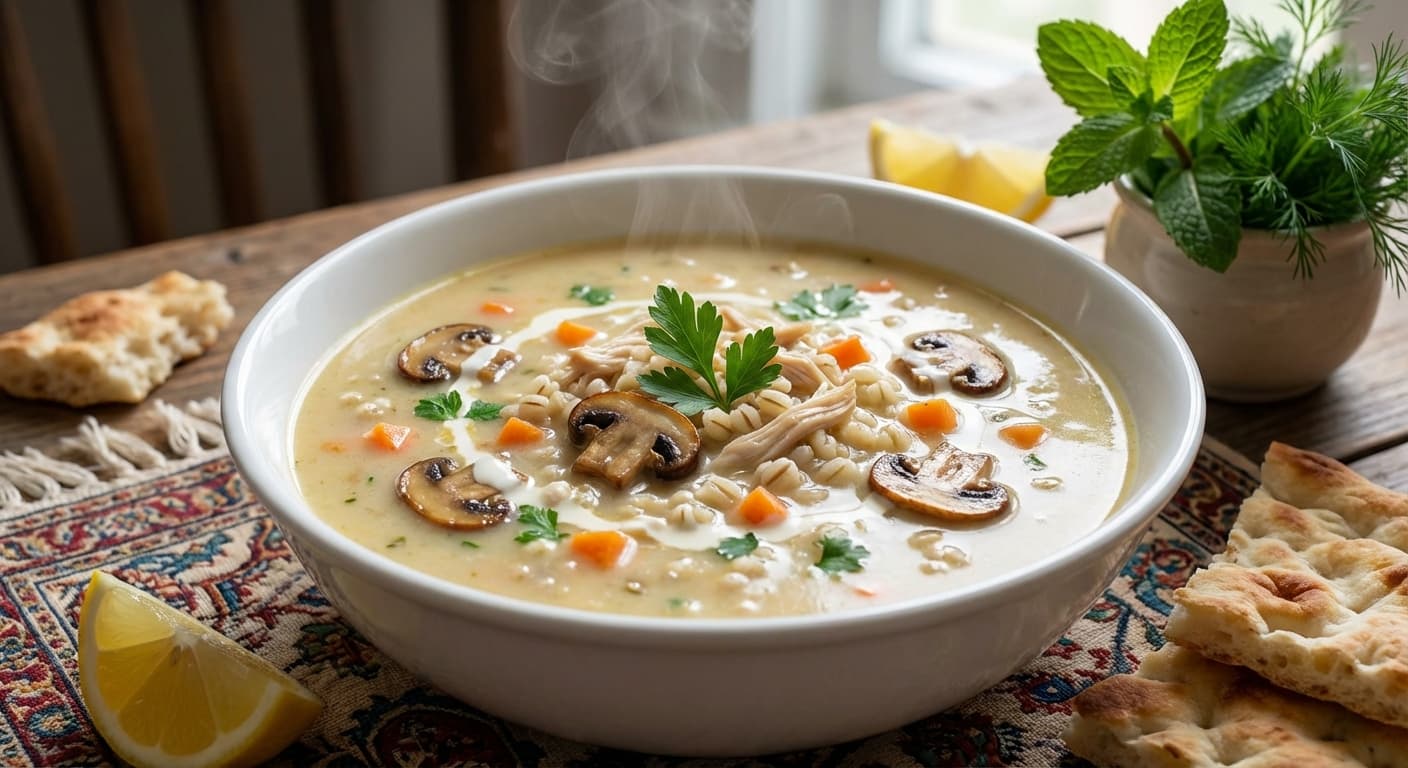
Soup-e Jo (سوپ جو) — Persian Creamy Barley Soup
Persian · Soups · 90 min
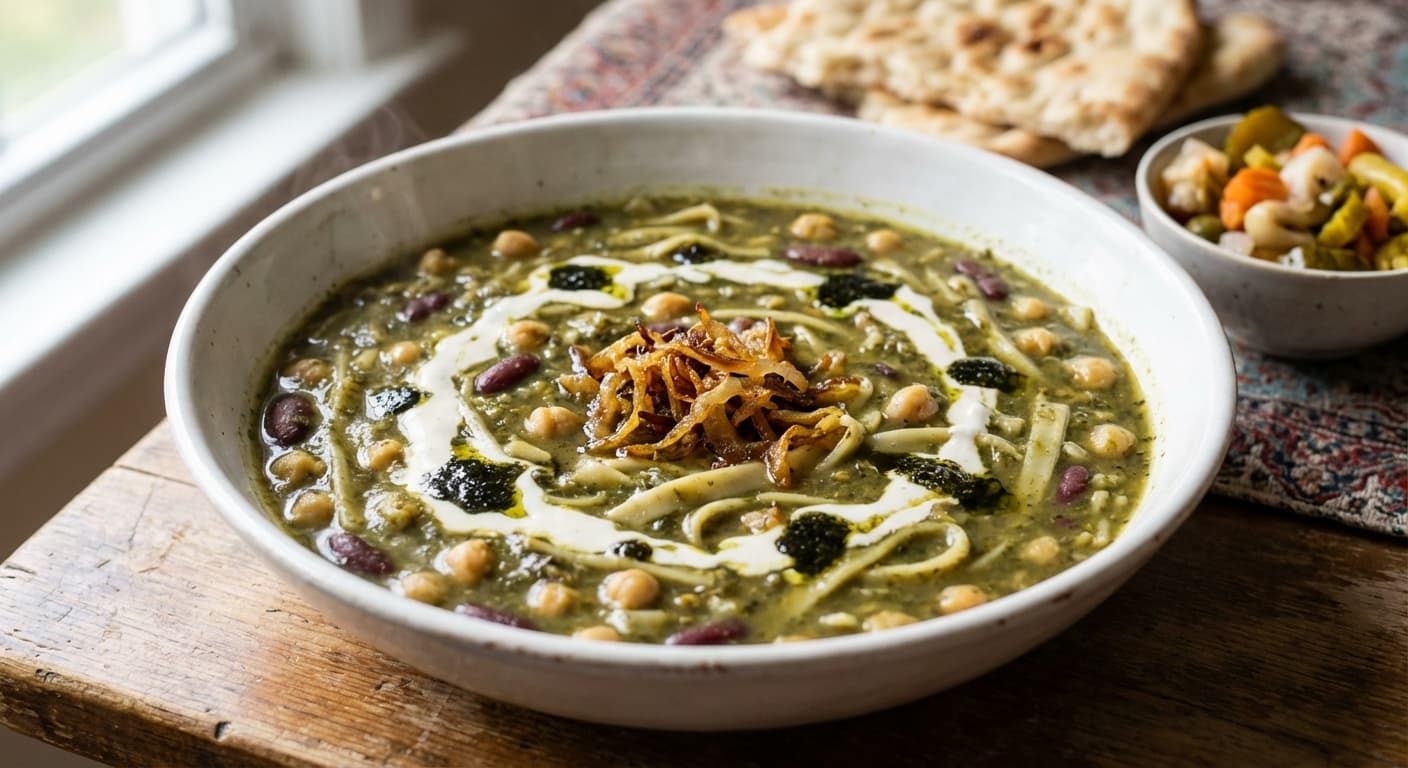
Ash Reshteh (آش رشته) — Persian Herb, Bean, and Noodle Soup
Persian · Soups · 145 min
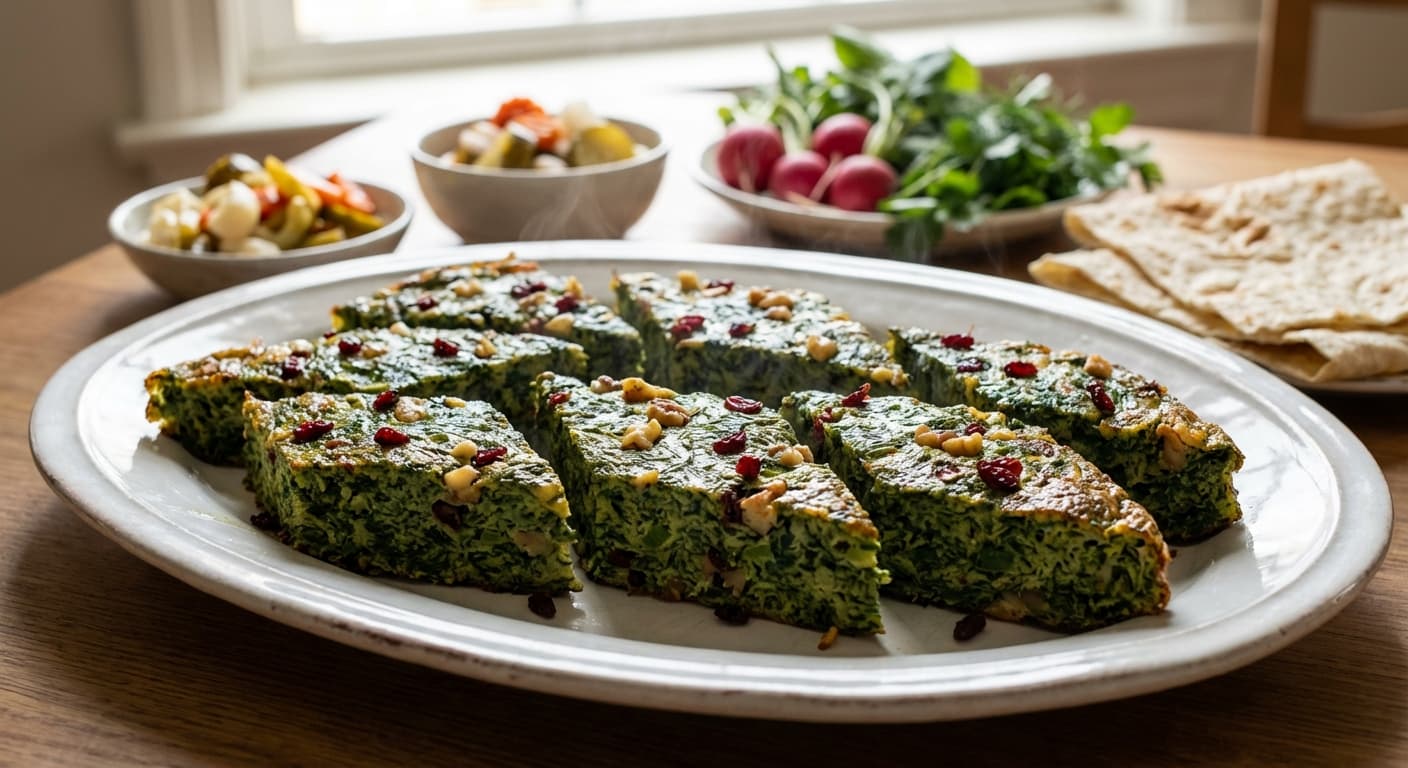
Kuku Sabzi (کوکو سبزی) — Emerald Persian Herb Frittata
Persian · Main Courses · 38 min
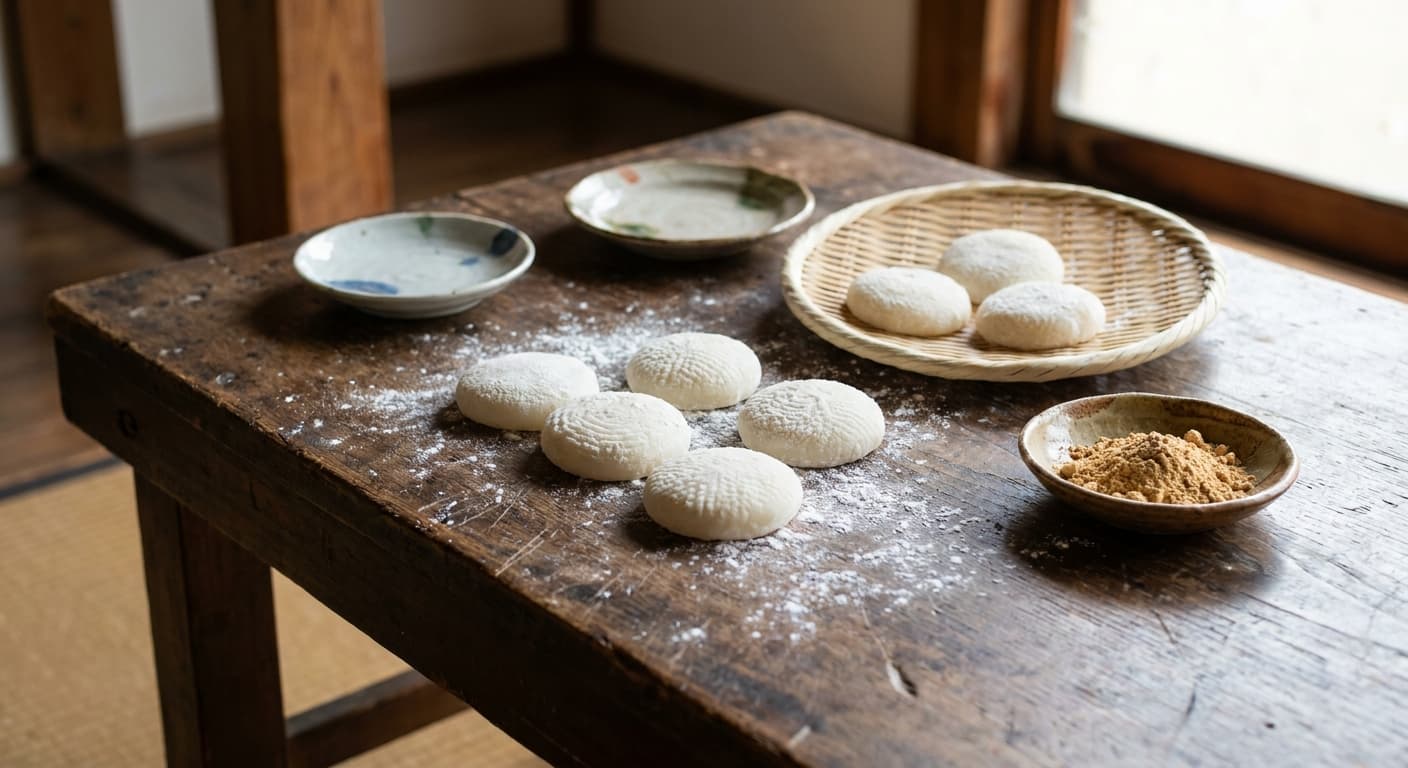
Mochi (餅) — Traditional Pounded Glutinous Rice Cakes
Japanese · Side Dishes · 100 min
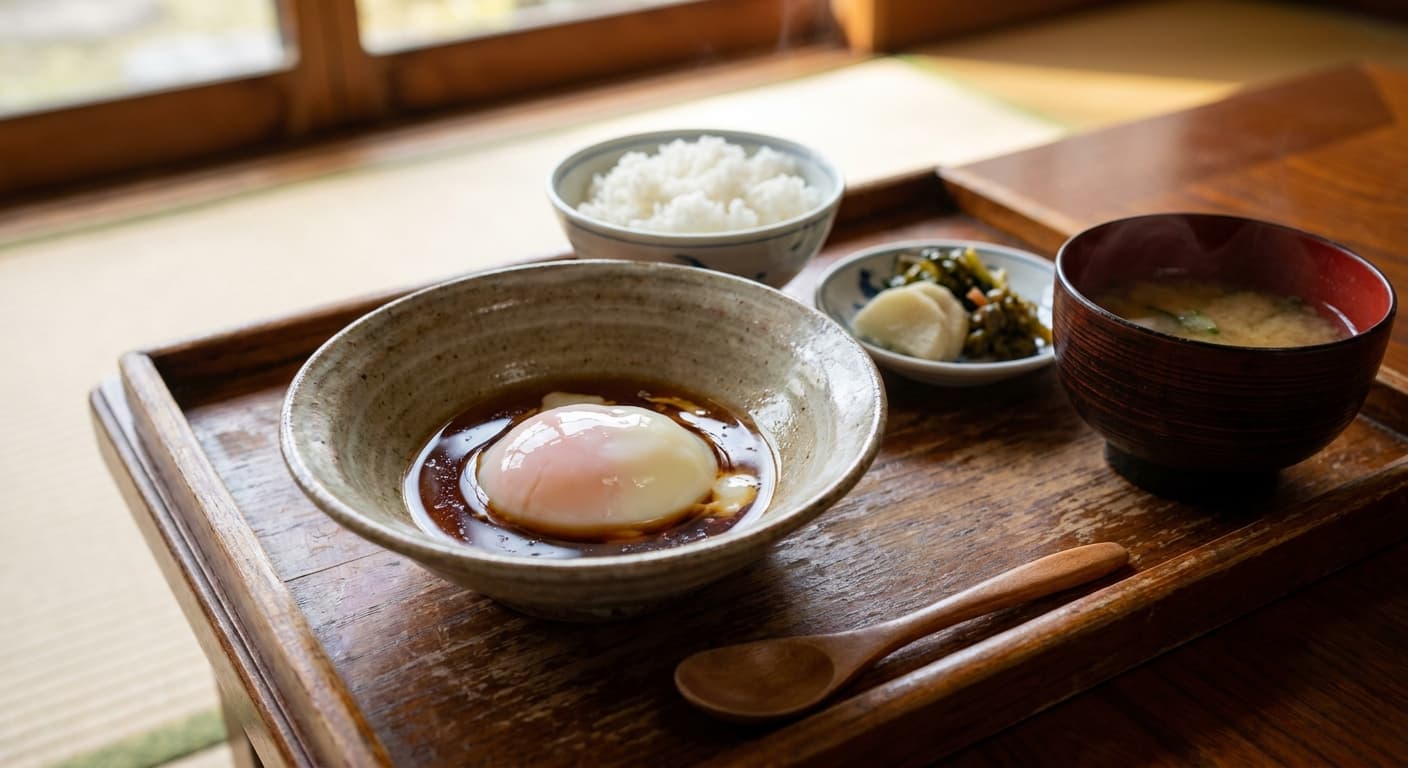
Onsen Tamago (温泉卵) — Silky Japanese Hot-Spring Egg
Japanese · Side Dishes · 40 min
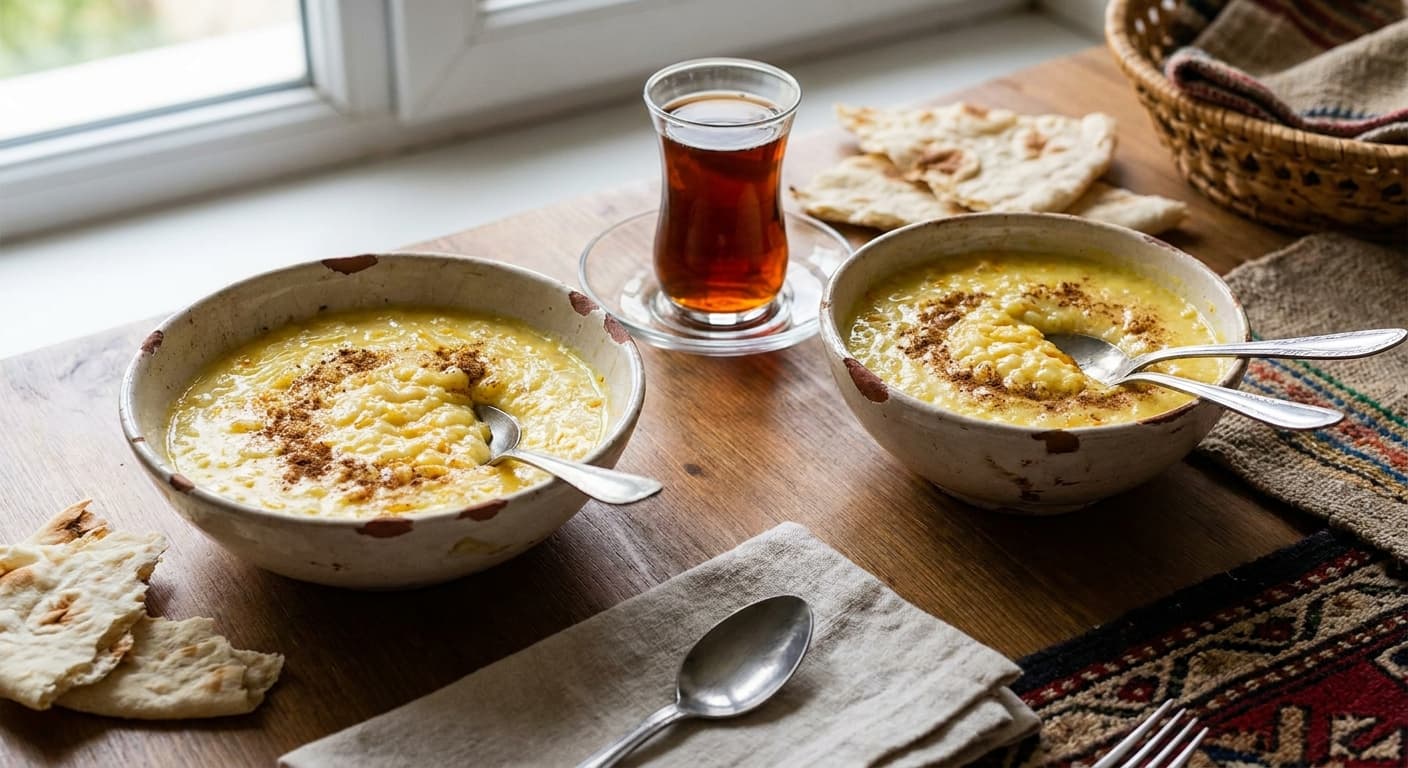
Azerbaijani Milk-Rice Porridge (Südlü Sıyıq) — Creamy Breakfast Rice with Saffron
Azerbaijani · Rice Dishes · 50 min
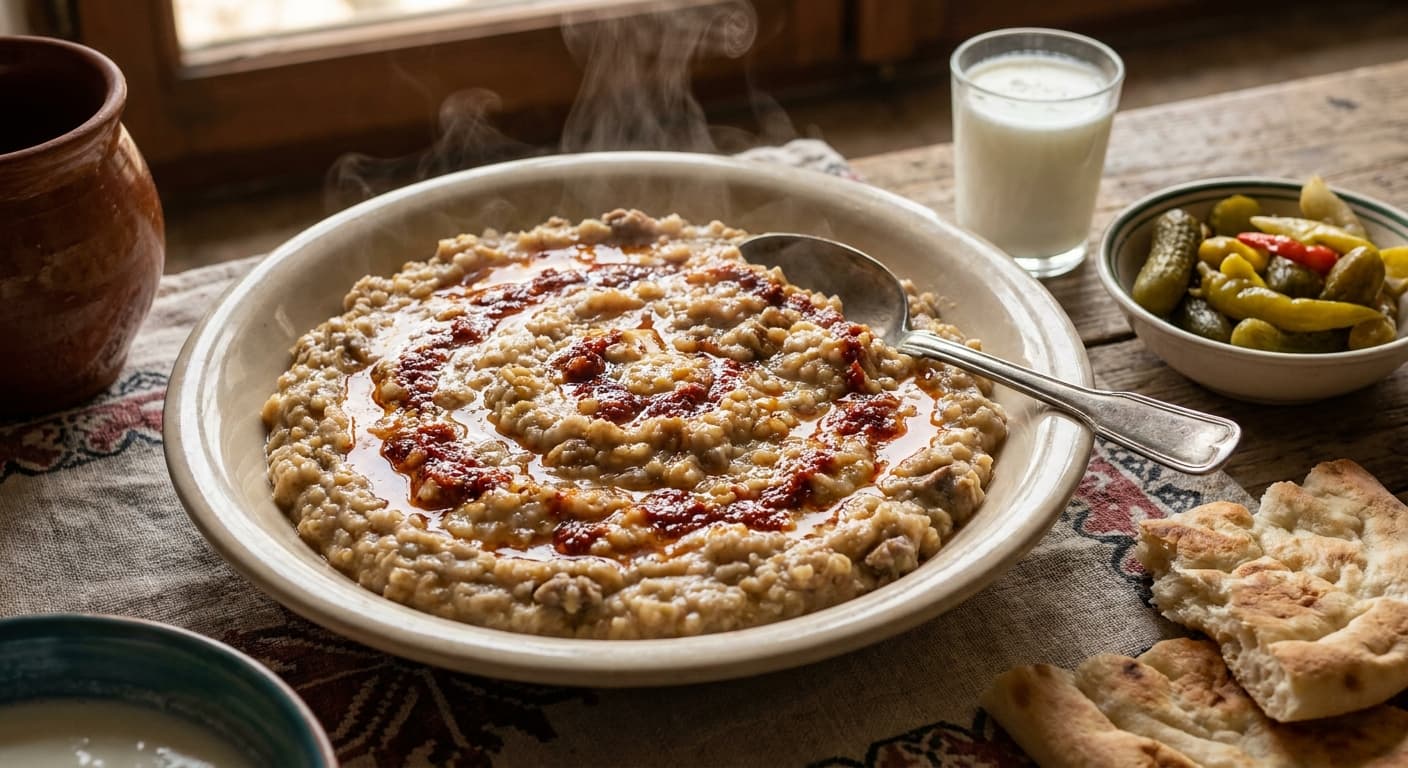
Keshkek (Keşkek) — Creamy Ceremonial Wheat and Lamb Stew
Turkish · Stews · 240 min
Khuushuur (Хуушуур) — Crisp Mongolian Fried Meat Pockets
Mongolian · Main Courses · 70 min
Reviews
Cooked this recipe?
Tap the stars to rate it — that's all it takes. A few words are welcome but optional.
No ratings yet. Cooked this one? Be the first to rate it — it takes one tap.