Kuku-ye Adas (کوکو عدس) — Persian Lentil Frittata
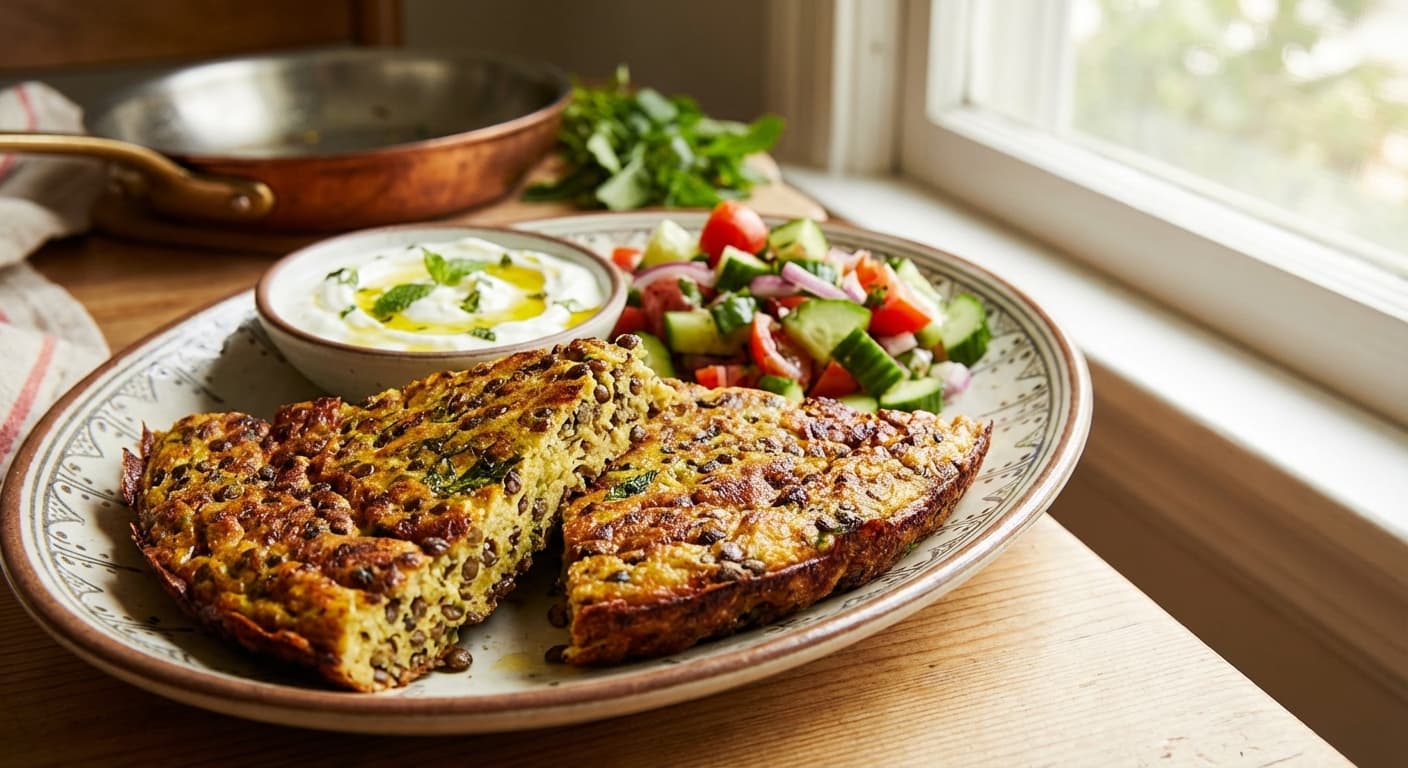
Kuku-ye Adas is a Persian lentil frittata scented with herbs and turmeric, crisped in a skillet and served warm or at room temperature. It’s hearty yet light, ideal for lunch, picnics, or as a side with yogurt and salad.
Printable Recipe Card
Servings: 6 · Total: 75 min · Difficulty: easy
Ingredients (quick list)
- 170 g Brown lentils, dry (rinsed well)
- 720 ml Water (for simmering lentils)
- 6 g Sea salt (divided)
- 5 each Large eggs (room temperature)
- 30 g Wheat flour (about 1/4 cup, leveled)
- 2 tsp Turmeric powder
- 0.5 tsp Black pepper, ground
- 30 g Fresh parsley (finely chopped (about 1 cup loosely packed))
- 20 g Fresh cilantro (finely chopped (about 3/4 cup loosely packed))
- 15 g Fresh chives (finely sliced (about 1/2 cup loosely packed))
- 45 ml Vegetable oil (about 3 tbsp, plus more if needed for the pan)
Steps (summary)
- Cook the lentils: Place rinsed lentils and 720 ml water in a saucepan. Bring to a boil over high heat, then reduce to a gentle…
- Mix the batter: In a large bowl whisk the eggs for 30–45 seconds until uniform. Whisk in flour, turmeric, black pepper, and 4 g…
- Preheat the pan: Heat a 24–26 cm (10-inch) nonstick or well-seasoned cast-iron skillet over medium heat for 2 minutes. Add 30 m…
- Cook the first side: Reduce heat to medium-low, cover with a lid, and cook for 10–12 minutes. Rotate the pan once or twice for…
- Flip and finish: Slide the kuku onto a plate. Add the remaining 15 ml oil to the skillet, then carefully invert the kuku back i…
- Rest and serve: Transfer to a cutting board and rest for 5 minutes so slices hold together. Cut into 6 wedges. Serve warm or at…
Cultural Background
Kuku is a common category of Persian egg-based dishes often enriched with herbs, vegetables, or legumes and served as a light meal or side. Lentil kuku is valued in home cooking for being filling, economical, and suitable warm or at room temperature for lunches and gatherings.
Equipment
💡 Tips
- Drain lentils extremely well; excess moisture makes the kuku steam instead of crisp.
- Chop herbs finely so the slices hold together and the flavor distributes evenly.
- If your skillet tends to stick, use a nonstick pan or line the base with a fitted round of parchment paper.
- For a thicker kuku, use a smaller pan (20–22 cm) and add 2–3 minutes per side on low heat.
⚠️ Common Mistakes
❌ Using wet lentils straight from the pot
💡 Why: Extra water thins the egg mixture and prevents browning, leading to a soft, fragile kuku.
✅ Fix: Drain thoroughly and steam-dry on a tray for 10 minutes; if needed, blot with paper towels before mixing.
❌ Cooking on heat that is too high
💡 Why: The outside browns before the center sets, causing a burnt crust and undercooked middle.
✅ Fix: Use medium-low heat with a lid for the first side; extend cooking time rather than increasing heat.
❌ Flipping too early or without enough oil
💡 Why: The kuku can tear or stick, breaking the cake and losing the crisp surface.
✅ Fix: Wait until edges are set and the top looks mostly firm; slide onto a plate, add oil, then invert back into the pan.
🧊 How to Store
Cool completely, then refrigerate in an airtight container for up to 4 days. Reheat in a skillet with 1–2 tsp oil over medium-low for 2–3 minutes per side, or warm in a 180°C/350°F oven for 8–10 minutes. Freeze wedges (wrapped) up to 2 months; thaw overnight in the fridge.
📅 Make Ahead
Cook the lentils up to 2 days ahead and refrigerate well-drained. You can also mix the batter (without oiling the pan) up to 12 hours ahead; cover and refrigerate, then stir well before cooking. Cooked kuku keeps well and is commonly served at room temperature.
🍽️ Pairs Well With
- Plain yogurt or strained yogurt
- Cucumber and tomato salad with lemon
- Pickles and fresh herbs
- Flatbread or steamed rice
Regional Variations
- Tehran-style home cookingOften made thicker and cut into small squares for serving with pickles and salad; some households increase herbs for a greener, more aromatic slice.
- Northern Iran (Caspian influence)May feature a heavier herb ratio and a slightly more browned crust from generous oil, reflecting a preference for crisp-edged kuku served alongside fresh greens.
Ingredients
- 170 gBrown lentils, dry (rinsed well)
- 720 mlWater (for simmering lentils)
- 6 gSea salt (divided)
- 5 eachLarge eggs (room temperature)
- 30 gWheat flour (about 1/4 cup, leveled)
- 2 tspTurmeric powder
- 0.5 tspBlack pepper, ground
- 30 gFresh parsley (finely chopped (about 1 cup loosely packed))
- 20 gFresh cilantro (finely chopped (about 3/4 cup loosely packed))
- 15 gFresh chives (finely sliced (about 1/2 cup loosely packed))
- 45 mlVegetable oil (about 3 tbsp, plus more if needed for the pan)
🔄 Substitutions
- Brown lentils→ Green lentils
- Wheat flour→ Chickpea flour
- Vegetable oil→ Olive oil
Instructions
- 1
Cook the lentils: Place rinsed lentils and 720 ml water in a saucepan. Bring to a boil over high heat, then reduce to a gentle simmer. Cook uncovered for 18–22 minutes until tender but not mushy. Drain very well, then spread on a tray for 10 minutes to steam-dry.
- 2
Mix the batter: In a large bowl whisk the eggs for 30–45 seconds until uniform. Whisk in flour, turmeric, black pepper, and 4 g of the salt until no dry pockets remain. Fold in parsley, cilantro, and chives, then fold in the drained lentils until evenly coated.
- 3
Preheat the pan: Heat a 24–26 cm (10-inch) nonstick or well-seasoned cast-iron skillet over medium heat for 2 minutes. Add 30 ml oil and swirl to coat. When the oil shimmers, pour in the mixture and spread it into an even layer, gently pressing to level the surface.
- 4
Cook the first side: Reduce heat to medium-low, cover with a lid, and cook for 10–12 minutes. Rotate the pan once or twice for even browning. The edges should look set and pull slightly from the pan. Sprinkle the remaining 2 g salt evenly over the top.
- 5
Flip and finish: Slide the kuku onto a plate. Add the remaining 15 ml oil to the skillet, then carefully invert the kuku back into the pan. Cook uncovered for 6–8 minutes until the second side is golden and the center reaches 71°C/160°F.
- 6
Rest and serve: Transfer to a cutting board and rest for 5 minutes so slices hold together. Cut into 6 wedges. Serve warm or at room temperature. If you want extra crisp edges, return wedges to the pan for 1 minute per side over medium heat.
🪪 Recipe Passport
Cultural Background
Kuku is a common category of Persian egg-based dishes often enriched with herbs, vegetables, or legumes and served as a light meal or side. Lentil kuku is valued in home cooking for being filling, economical, and suitable warm or at room temperature for lunches and gatherings.
Regional Variations
Researched from multiple sources and validated by the Zaffaron editorial team. Every recipe is tested for accuracy, measurements, and cultural authenticity.
Nutrition per serving
Pairs well with
If you enjoyed this recipe, here are a few related Zaffaron recipes to try next.
- Lobia Polo ba Sabzi (لوبیا پلو با سبزی) — Saffron Herb Rice with Green Beans and Chicken
- Lubia Chashm Bolboli Polo (لوبیا چشم بلبلی پلو) — Persian Black-Eyed Pea Rice with Savory Soy Kofta
- Makaroni ba Mast va Seer (ماکارونی با ماست و سیر) — Persian Macaroni with Garlic Yogurt
- Makaroni o Panir (ماکارونی و پنیر) – Persian-Style Macaroni and Cheese
Does your family make this differently?
Every family has their own version. Maybe your grandmother adds a secret ingredient, or your aunt has a completely different technique. Preserve your family's version — with their name on it, forever.
You Might Also Like
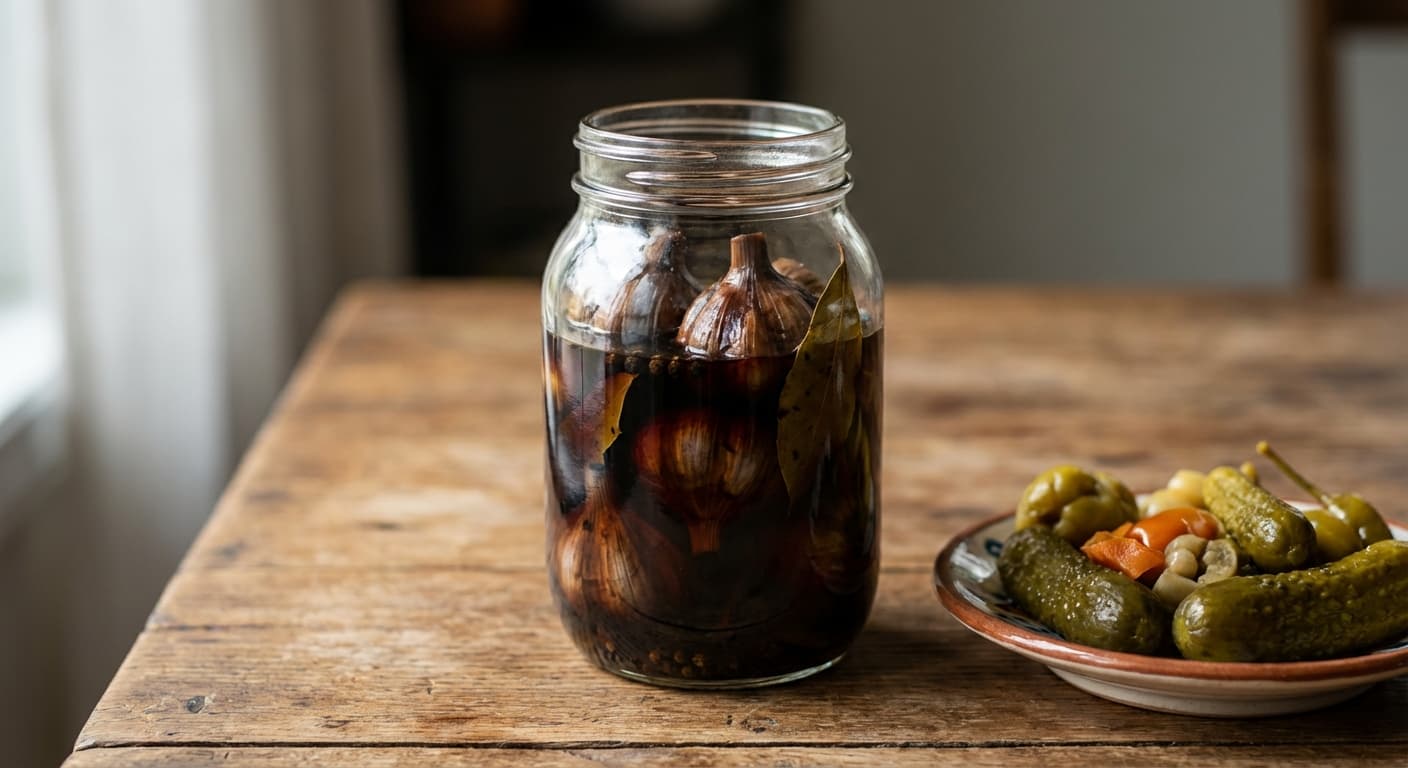
Aged Garlic Pickle (سیر ترشی) — Gilan’s seven-year-style black garlic torshi
Persian · Side Dishes · 45 min
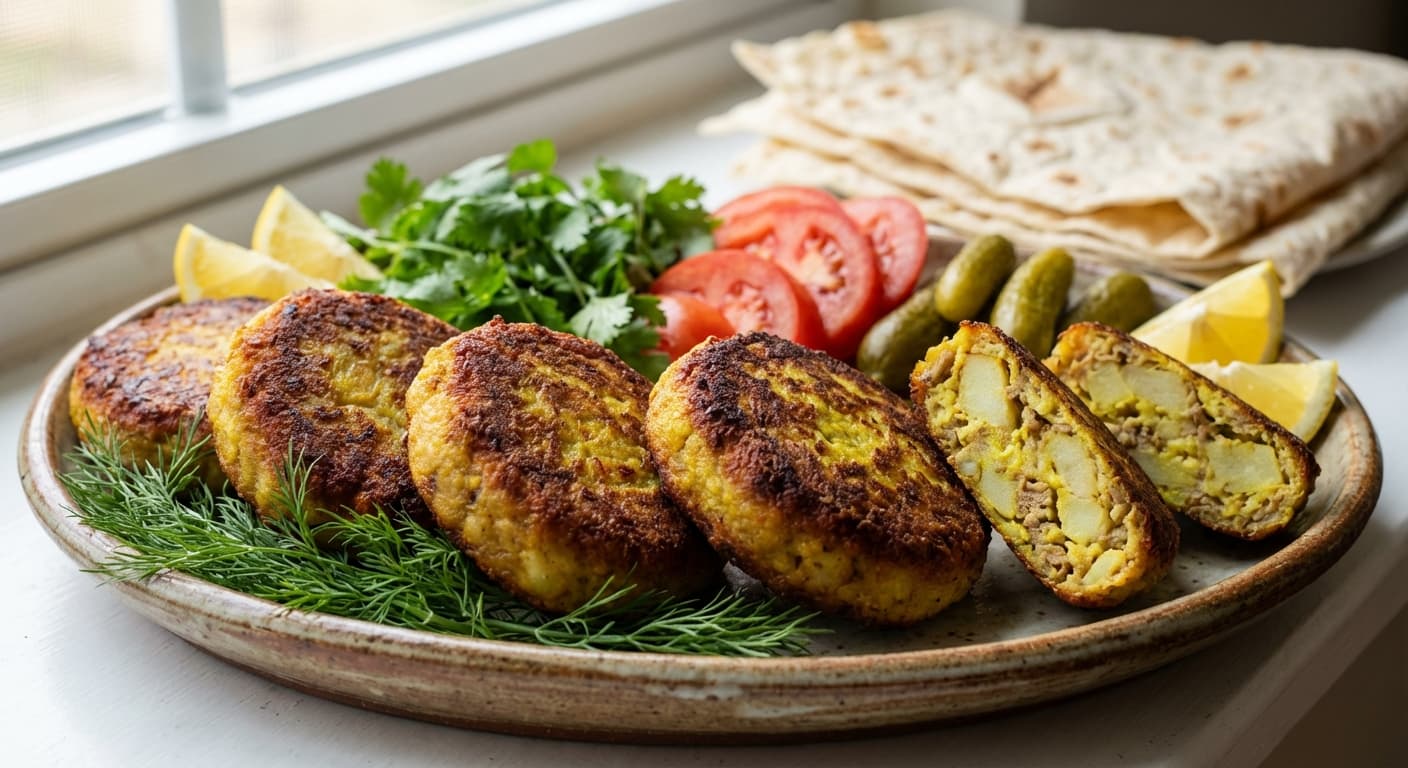
Persian Kotlet (کتلت) — Saffron-Infused Meat & Potato Patties
Persian · Main Courses · 55 min
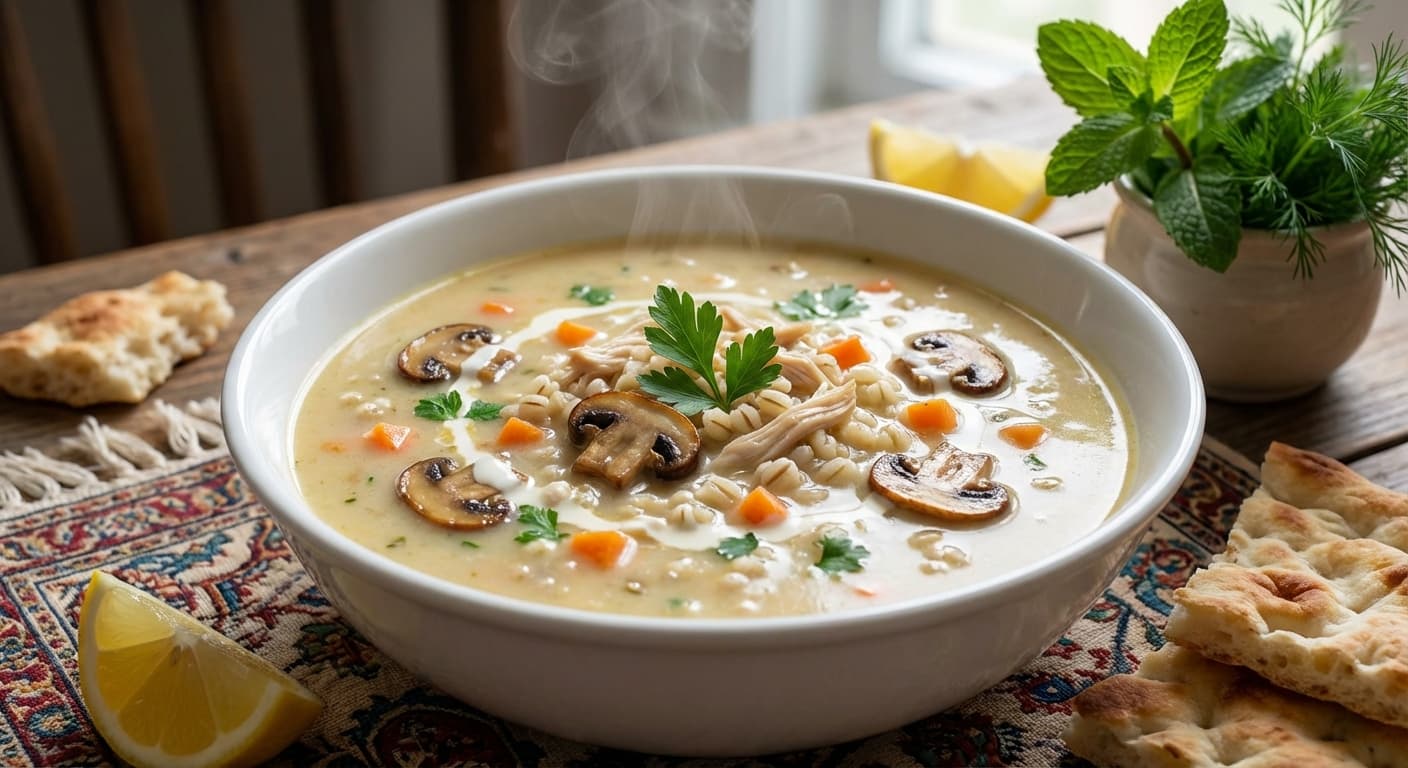
Soup-e Jo (سوپ جو) — Persian Creamy Barley Soup
Persian · Soups · 90 min
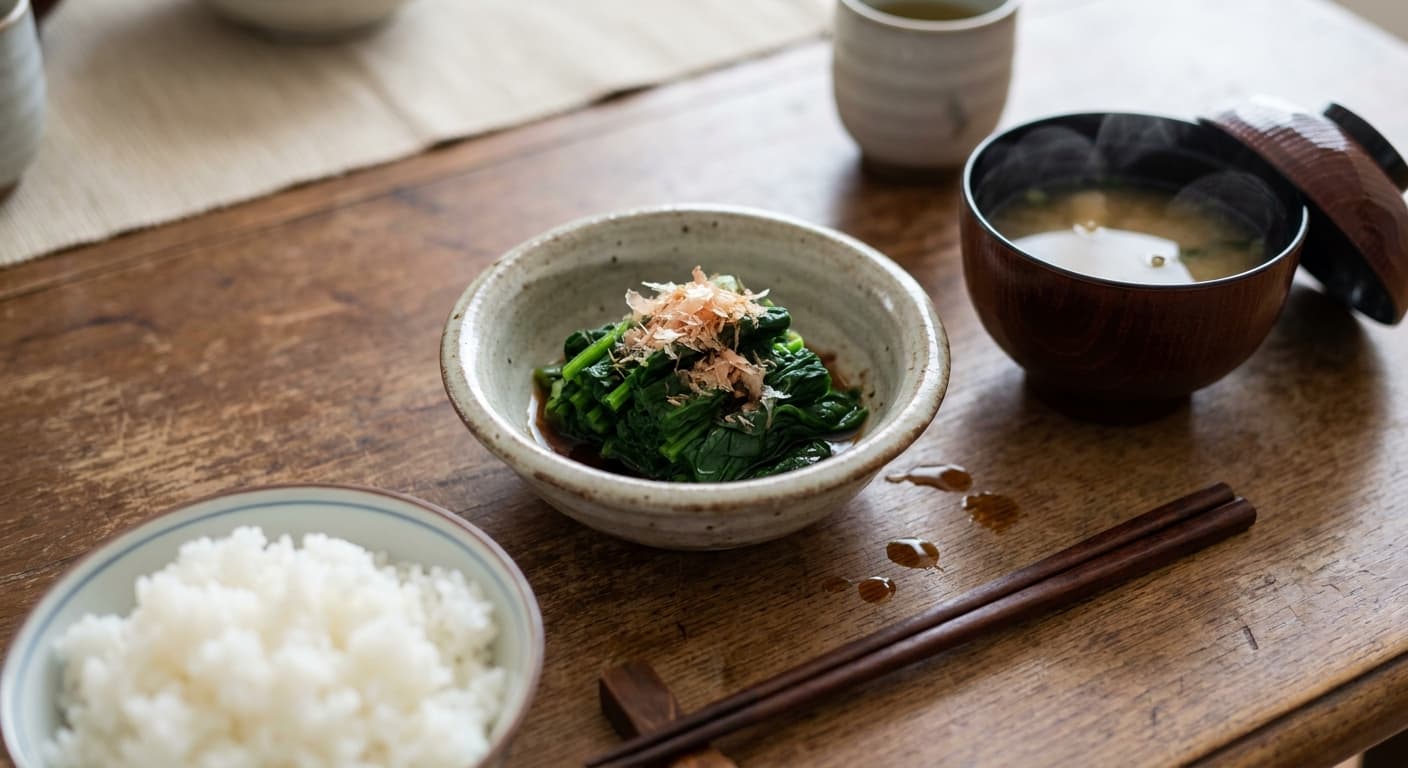
Ohitashi (お浸し) — Japanese Blanched Spinach with Bonito Dashi and Soy
Japanese · Side Dishes · 20 min
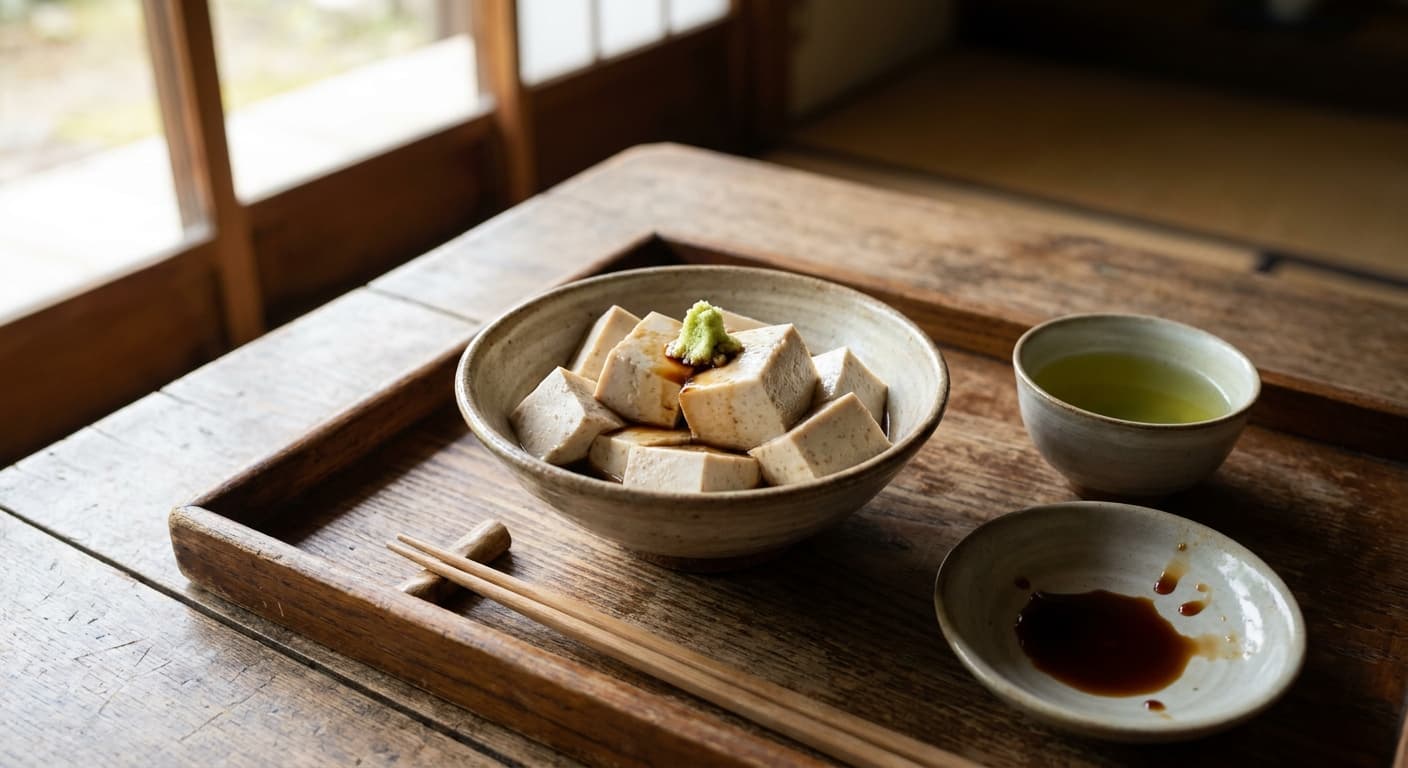
Goma-dofu (胡麻豆腐) — Shojin Sesame Kuzu Tofu
Japanese · Side Dishes · 28 min
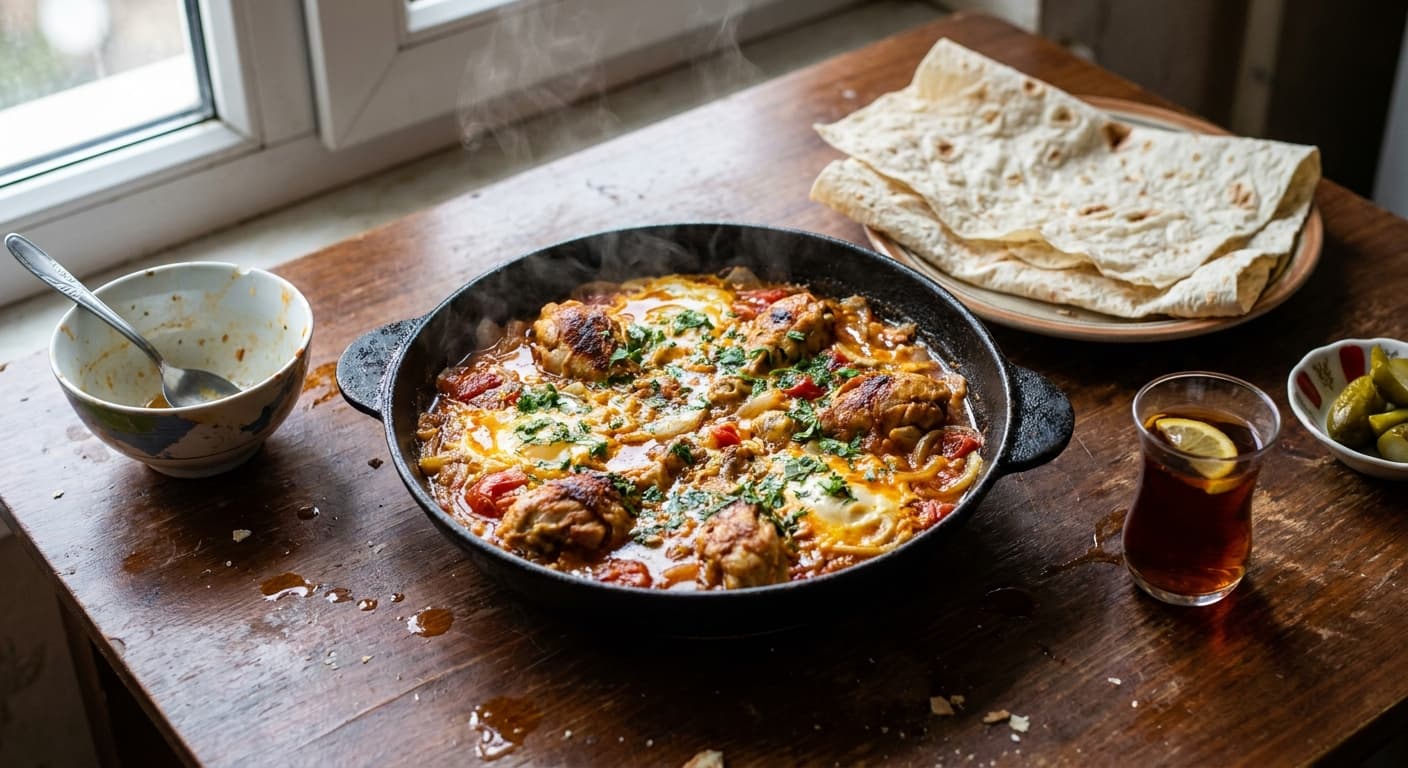
Chicken Chygyrtma (Toyuq Çığırtması) — Azerbaijani Chicken with Eggs and Tomatoes
Azerbaijani · Main Courses · 65 min
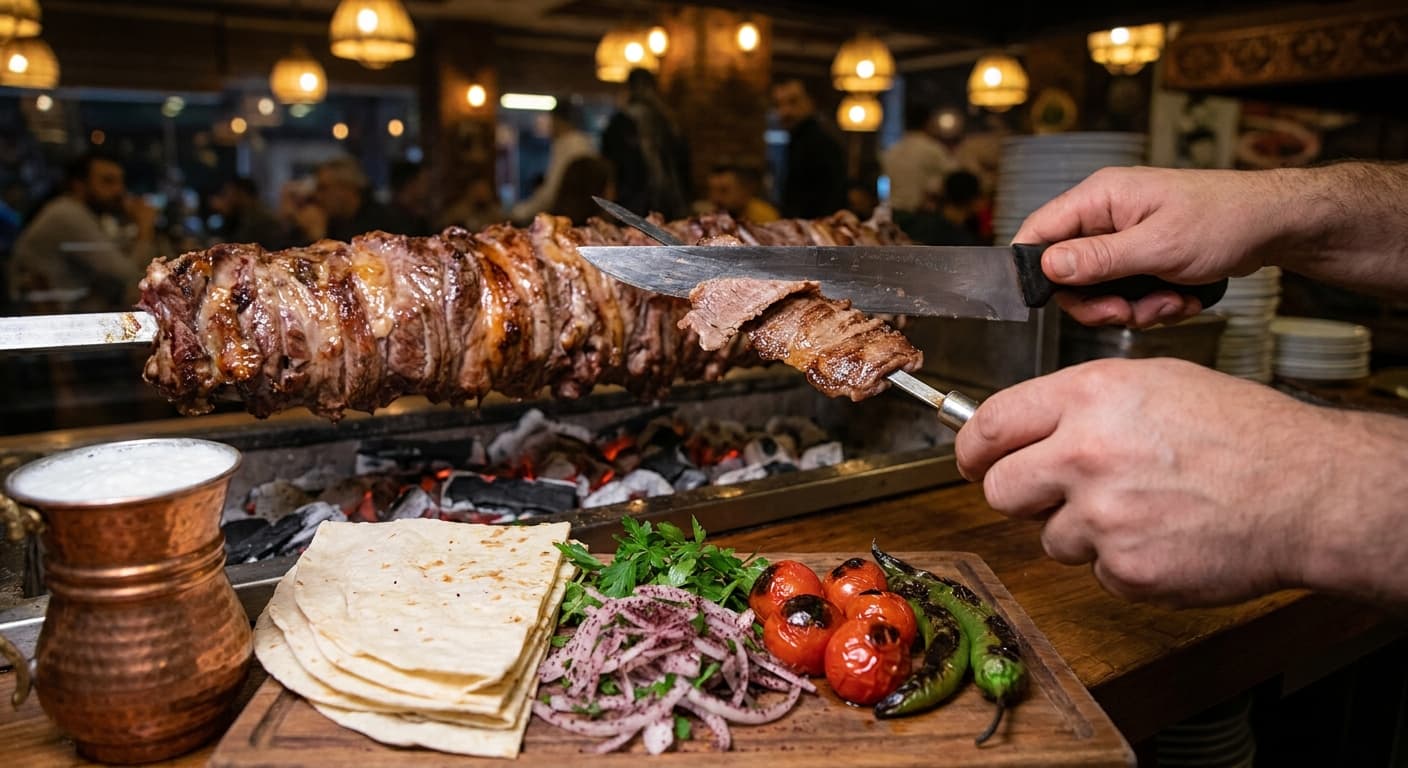
Turkish Cağ Kebab (Cağ Kebabı) — Erzurum Slow-Roasted Charcoal Lamb Skewer
Turkish · Kebabs · 160 min
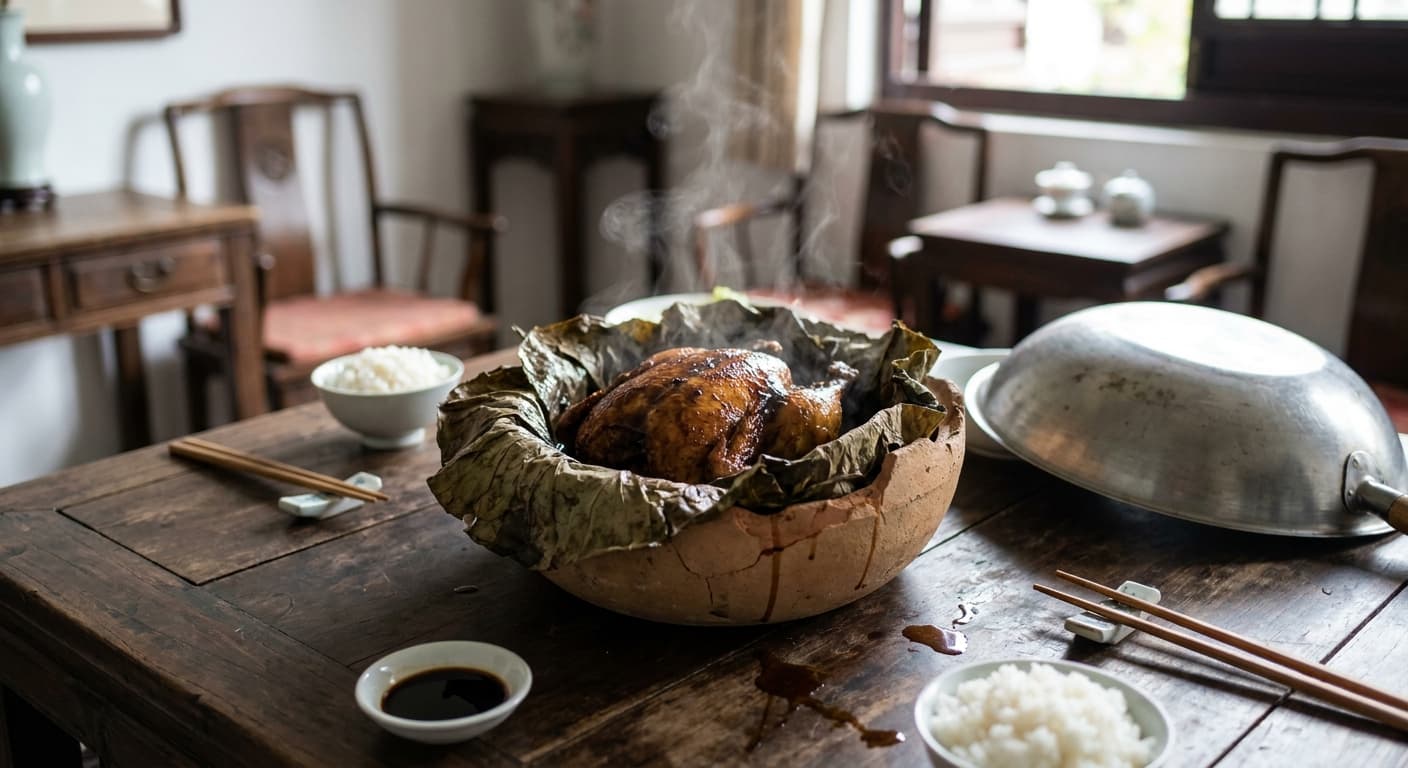
Beggar's Chicken (叫化鸡) — Lotus-Wrapped Clay-Baked Jiangnan Chicken
Chinese · Main Courses · 240 min
Reviews
Cooked this recipe?
Tap the stars to rate it — that's all it takes. A few words are welcome but optional.
No ratings yet. Cooked this one? Be the first to rate it — it takes one tap.