Tanzanian Ugali (Ugali) — Firm Cornmeal Porridge
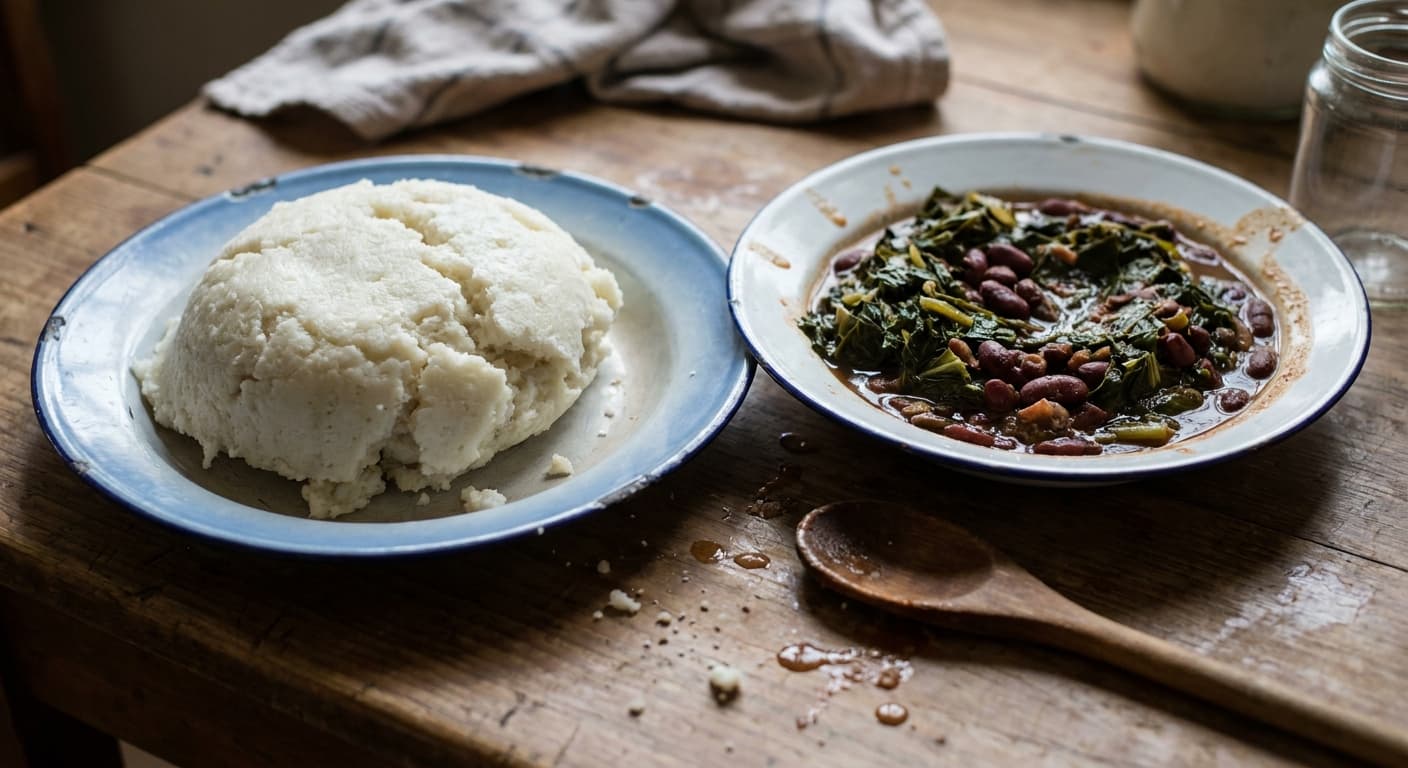
Ugali is Tanzania’s everyday staple, a firm maize porridge served with stews, greens, beans, or grilled fish. It is cooked until dense enough to pinch by hand and use as a scoop for saucy dishes.
Printable Recipe Card
Servings: 4 · Total: 23 min · Difficulty: easy
Ingredients (quick list)
- 900 ml water
- 300 g fine white maize flour (also sold as cornmeal flour or unga wa mahindi; use fine grind, not coarse polenta)
- 3 g fine sea salt
Steps (summary)
- Bring 850 ml of the water to a strong boil in a heavy 2.5 l saucepan over medium-high heat, then stir in the salt. Keep the rem…
- Reduce the heat to medium and sprinkle in about 75 g of the maize flour while stirring constantly with a sturdy wooden spoon. T…
- Add the remaining maize flour in 3 additions of about 75 g each, stirring hard after every addition until no dry streaks remain…
- Lower the heat to medium-low once the mixture becomes very thick, then continue pressing, folding, and turning it for 8 to 10 m…
- If the ugali feels grainy or cracks before the flour is cooked, sprinkle in 15 ml of the reserved water, cover the pan for 1 mi…
- Turn the ugali onto a warm plate or shallow serving dish and shape it into a rounded mound with a damp wooden spoon. Serve imme…
Cultural Background
In Tanzania, ugali is a daily anchor food rather than a side in the Western sense. Its neutral flavor and firm texture make it a practical companion to vegetable relishes, beans, meat stews, and fish across home tables.
Equipment
💡 Tips
- Use fine maize flour for the smooth, compact Tanzanian texture; coarse polenta gives a looser, grainier result.
- Stir with a strong wooden spoon and keep the pot stable, because properly cooked ugali becomes very stiff.
- Serve ugali as soon as it is cooked, since it firms further as it cools and is best when hot and pliable.
⚠️ Common Mistakes
❌ Adding all the flour at once creates dry lumps.
✅ Fix: Start with a thin porridge base, then add the remaining flour gradually while stirring firmly.
❌ Stopping too early leaves the ugali raw-tasting and gritty.
✅ Fix: Cook and fold for 8 to 10 minutes after thickening, until the mound pulls away from the pan.
❌ Using coarse cornmeal makes the texture loose and sandy.
✅ Fix: Choose fine maize flour labeled for ugali, pap, or cornmeal porridge.
🧊 How to Store
Cool leftovers within 1 hour, wrap tightly, and refrigerate for up to 3 days. Reheat covered with 15 ml water per portion in a saucepan or microwave until steaming, then knead or stir to soften.
📅 Make Ahead
Ugali is best freshly cooked, but the maize flour can be weighed ahead and the serving dishes warmed before cooking. Leftovers can be sliced and reheated, though the texture will be firmer.
🍽️ Pairs Well With
- Mchuzi wa nyama
- sukuma wiki
- maharage ya nazi
- grilled tilapia
- kachumbari.
Regional Variations
- In coastal Tanzanian homes, ugali is often served with fish stew, coconut-based beans, or mchicha greens.
- Some inland households prepare a stiffer ugali for eating with meat stews and leafy vegetables.
- Millet or sorghum versions appear in parts of East Africa, producing a darker color and more earthy flavor.
Ingredients
- 900 mlwater
- 300 gfine white maize flour (also sold as cornmeal flour or unga wa mahindi; use fine grind, not coarse polenta)
- 3 gfine sea salt
🔄 Substitutions
- fine white maize flour→ fine yellow maize flour
- fine white maize flour→ fine millet flour
Instructions
- 1
Bring 850 ml of the water to a strong boil in a heavy 2.5 l saucepan over medium-high heat, then stir in the salt. Keep the remaining 50 ml water nearby in case the ugali becomes too stiff before the flour is fully hydrated.
- 2
Reduce the heat to medium and sprinkle in about 75 g of the maize flour while stirring constantly with a sturdy wooden spoon. This first addition makes a thin porridge that helps prevent dry lumps from forming when the rest of the flour is added.
- 3
Add the remaining maize flour in 3 additions of about 75 g each, stirring hard after every addition until no dry streaks remain. Scrape the sides and bottom of the pan as you work, because ugali thickens quickly and can scorch if it sits still against the hot metal.
- 4
Lower the heat to medium-low once the mixture becomes very thick, then continue pressing, folding, and turning it for 8 to 10 minutes. The ugali is ready when it pulls cleanly from the sides of the pan, looks smooth and matte, and holds together as one dense mound.
- 5
If the ugali feels grainy or cracks before the flour is cooked, sprinkle in 15 ml of the reserved water, cover the pan for 1 minute, and beat the mixture again. If it seems too soft, cook uncovered for 2 to 3 minutes longer while folding until it becomes firm enough to shape.
- 6
Turn the ugali onto a warm plate or shallow serving dish and shape it into a rounded mound with a damp wooden spoon. Serve immediately while hot, portioning it by hand or with a spoon alongside a saucy relish, stew, greens, beans, or fish.
🪪 Recipe Passport
Cultural Background
In Tanzania, ugali is a daily anchor food rather than a side in the Western sense. Its neutral flavor and firm texture make it a practical companion to vegetable relishes, beans, meat stews, and fish across home tables.
Regional Variations
Researched from multiple sources and validated by the Zaffaron editorial team. Every recipe is tested for accuracy, measurements, and cultural authenticity.
📚 Sources & Cultural References
- Fran Osseo-Asare — Food Culture in Sub-Saharan Africa — (2005)
- Alan Davidson — The Oxford Companion to Food — (1999)
Sources cited by the Zaffaron editorial team during recipe research. Cultural and culinary references supporting authenticity claims.
Nutrition per serving
Pairs well with
If you enjoyed this recipe, here are a few related Zaffaron recipes to try next.
Does your family make this differently?
Every family has their own version. Maybe your grandmother adds a secret ingredient, or your aunt has a completely different technique. Preserve your family's version — with their name on it, forever.
You Might Also Like
Mtori (Mtori) — Tanzanian Banana-Beef Soup
Tanzanian · Soups · 175 min
Matoke (Matoke) — Tanzanian Green Banana and Beef Stew
Tanzanian · Stews · 135 min
Chips and Egg Omelet (Chipsi Mayai) — Tanzanian Street-Food Classic
Tanzanian · Main Courses · 50 min
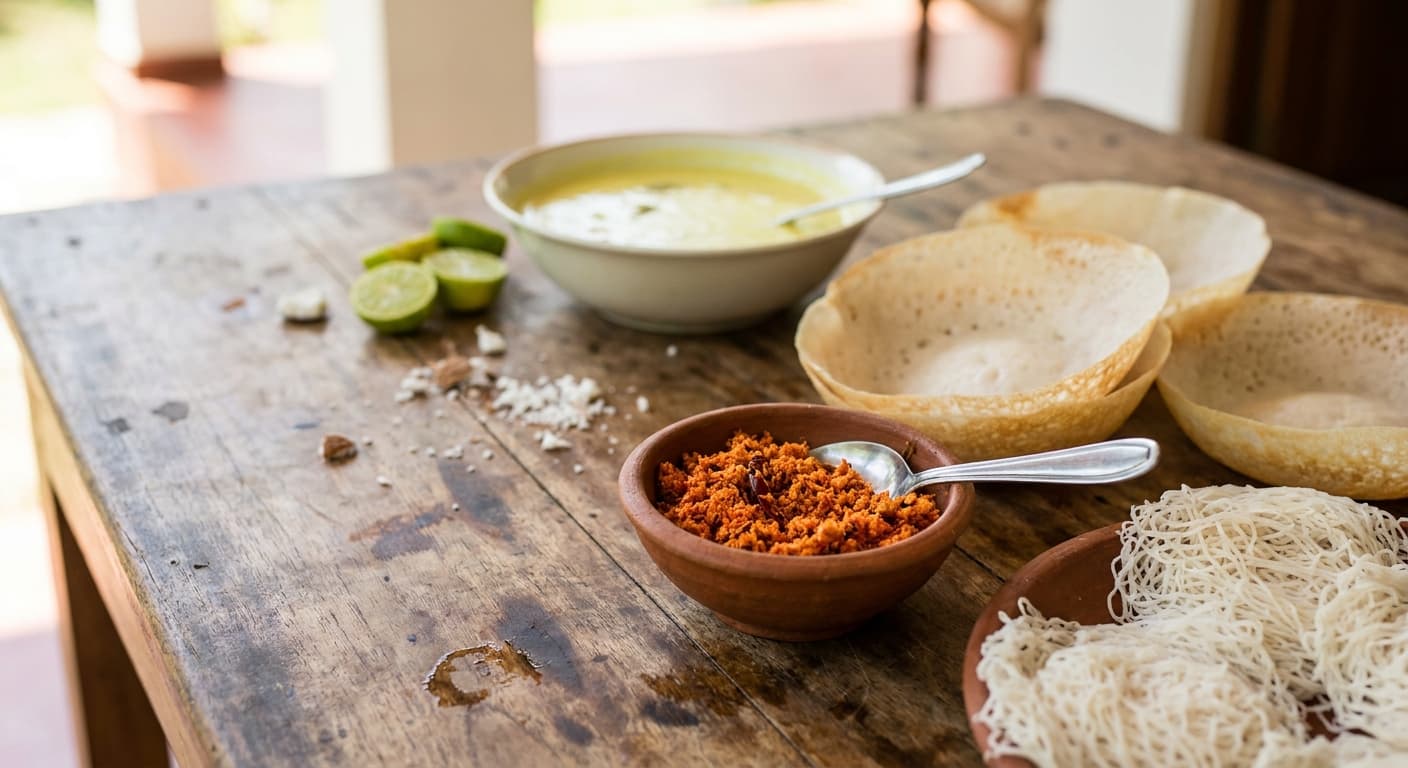
Pol Sambol (පොල් සම්බෝල) — Sri Lankan Coconut Chili Relish
Sri lankan · Side Dishes · 15 min
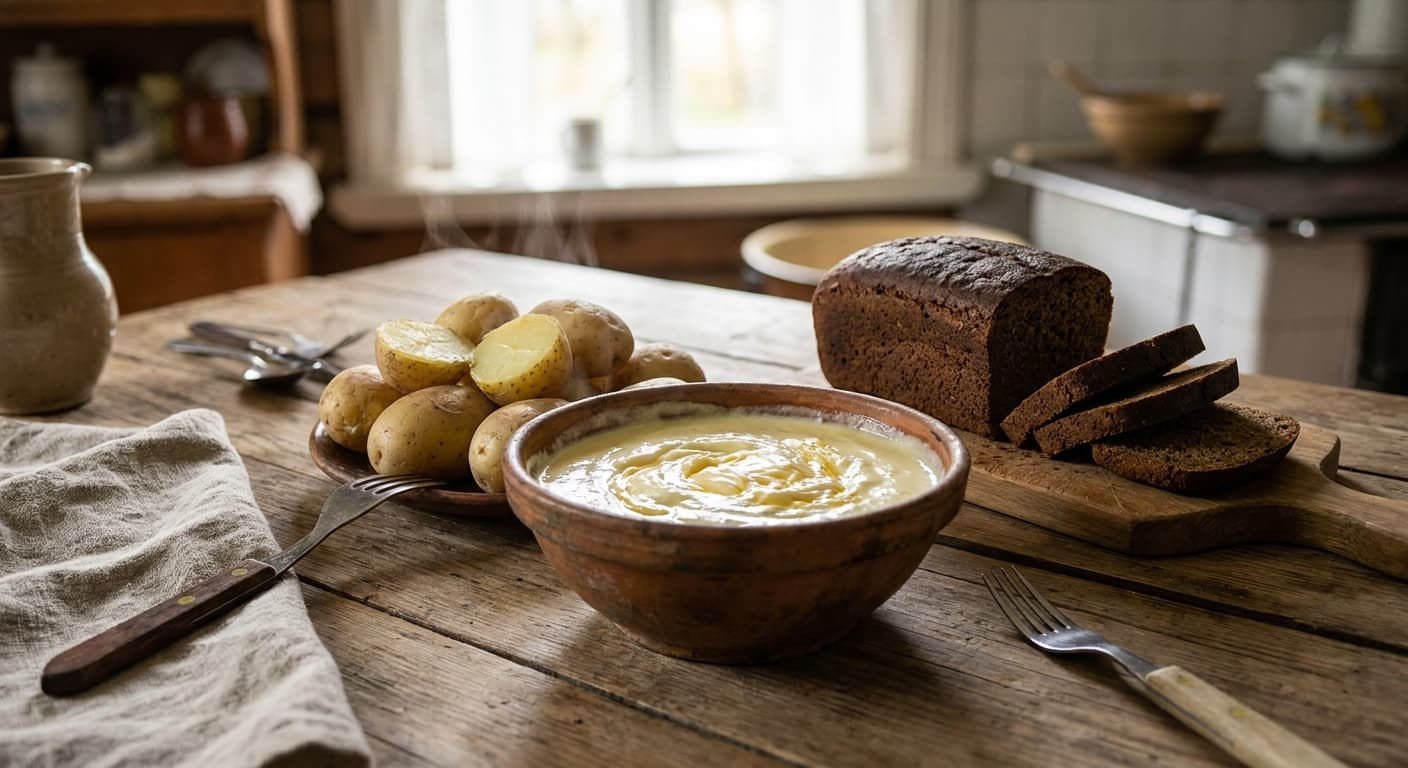
Samogitian Kastinys (Žemaičių kastinys) — Warm Cultured Cream Spread
Lithuanian · Side Dishes · 45 min
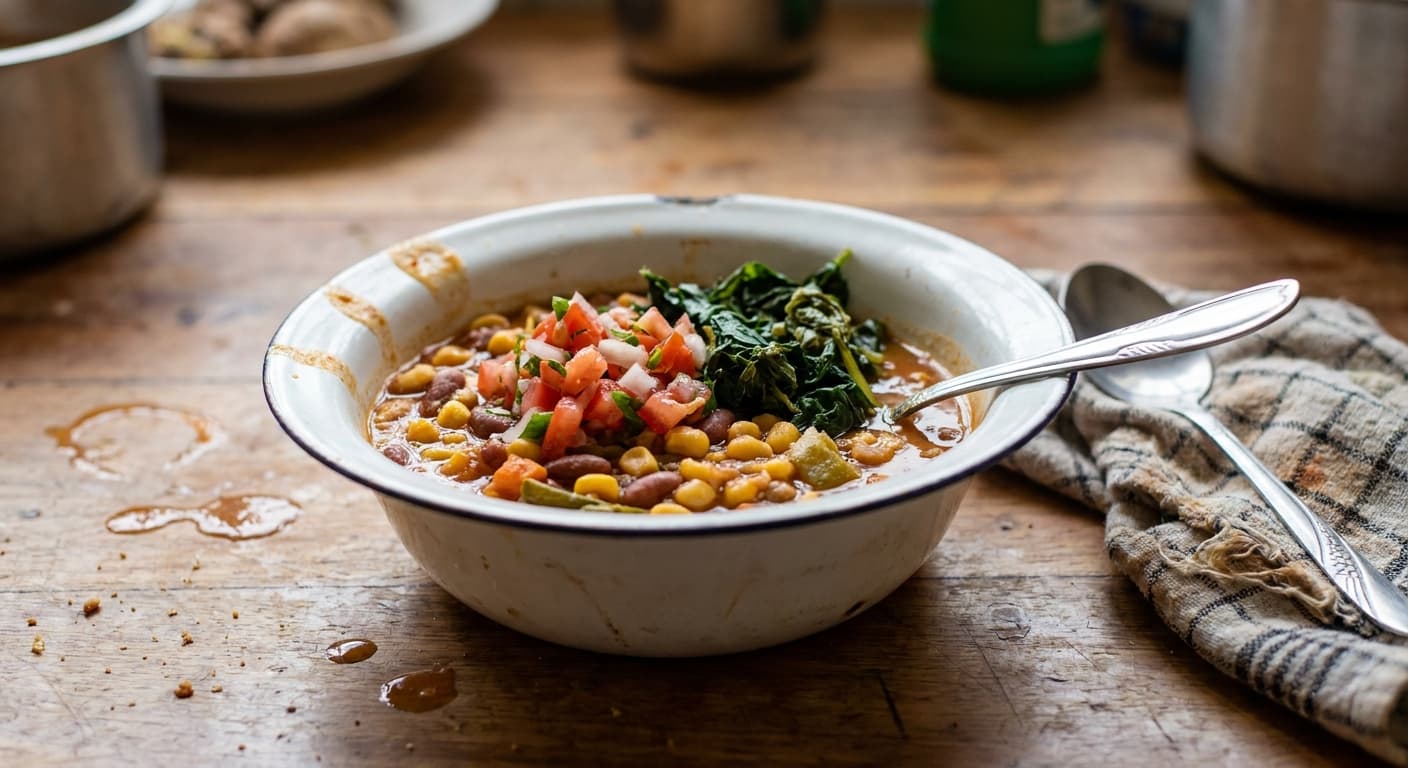
Githeri (Gĩtheri) — Kenyan Maize and Bean Stew
Kenyan · Main Courses · 185 min
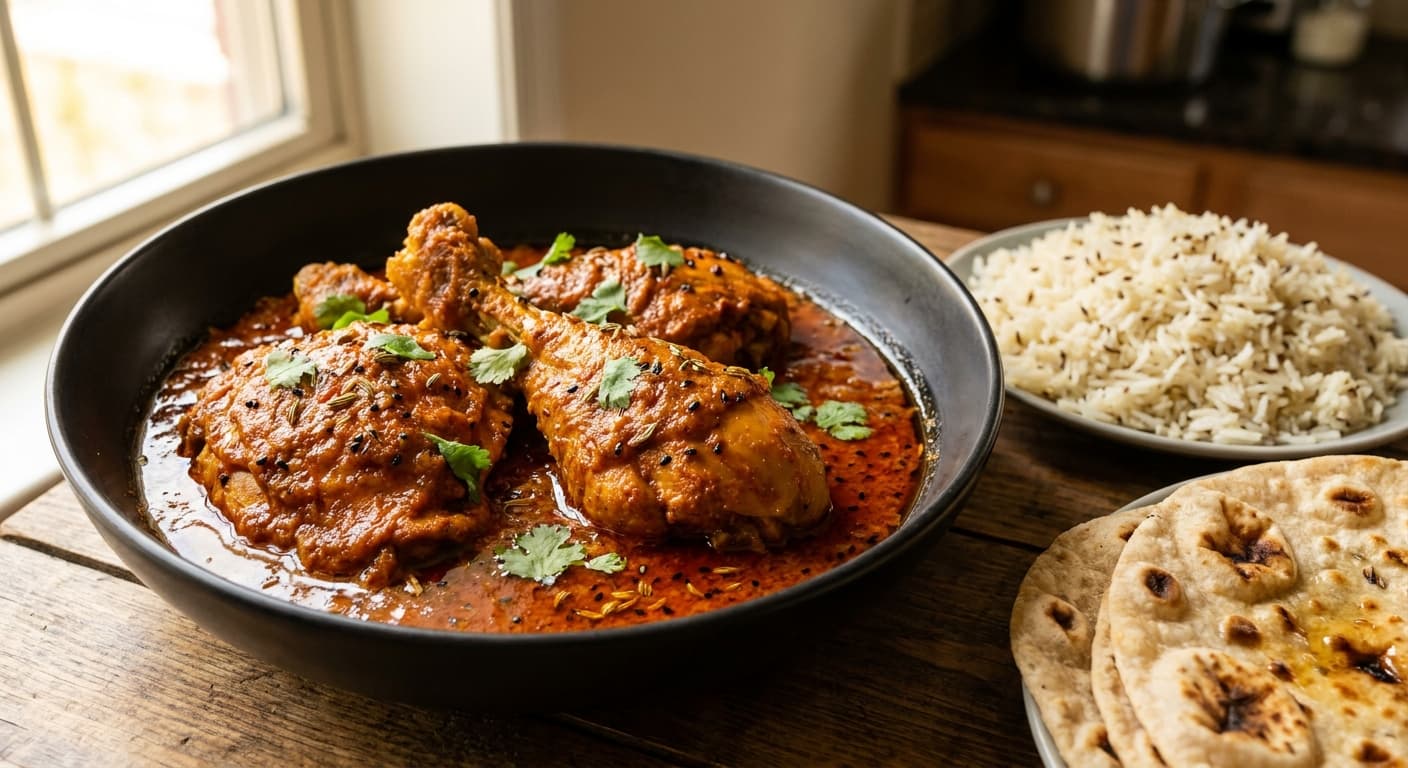
Indian Achari Murgh (अचारी मुर्ग) — Pickle-Spiced Punjabi Chicken Curry with Whole Spices
Indian · Stews · 80 min
Chicken and Andouille Gumbo (English) — Louisiana Roux Stew
American · Stews · 120 min
Reviews
Cooked this recipe?
Tap the stars to rate it — that's all it takes. A few words are welcome but optional.
No ratings yet. Cooked this one? Be the first to rate it — it takes one tap.