Spaetzle (Spätzle) — Tender German Egg Noodles
Spaetzle are soft, irregular German egg noodles especially associated with Swabia, Baden-Wuerttemberg, and Alpine home cooking. They are pressed or scraped into boiling water, then finished with butter for a tender, lightly chewy side dish.
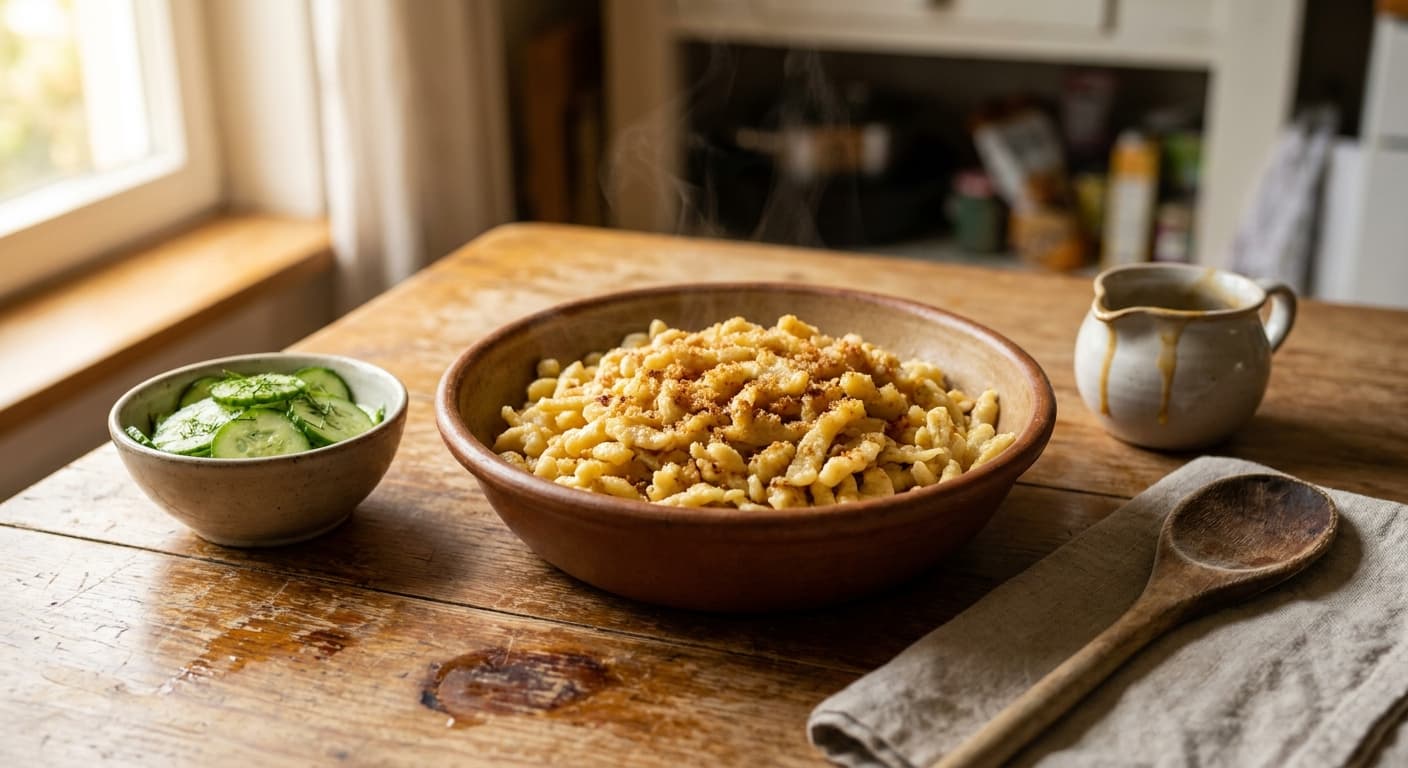
Printable Recipe Card
Servings: 4 · Total: 30 min · Difficulty: medium
Ingredients (quick list)
- 300 g German Type 405 flour (all-purpose flour may be used if Type 405 is unavailable)
- 4 large eggs
- 140 ml cold water
- 5 g fine sea salt
- 0.5 tsp freshly grated nutmeg
- 3 l water
- 30 g unsalted butter
- 4 sprig flat-leaf parsley (finely chopped, optional traditional garnish)
Steps (summary)
- Put the flour, 5 g salt, and nutmeg in a large mixing bowl and whisk them together evenly. Make a well in the center so the egg…
- Add the eggs and 100 ml of the cold water to the well, then stir with a sturdy wooden spoon until a thick batter forms. Beat th…
- Cover the bowl and let the batter rest at room temperature for 10 minutes. This short rest hydrates the flour and gives the fin…
- Bring 3 l water to a steady boil in a wide pot and add 18 g salt. Reduce the heat slightly so the water stays at a lively simme…
- Set a spaetzle press or spaetzle maker over the pot and work in 3 batches, pressing the batter directly into the simmering wate…
- Cook each batch for 2 to 3 minutes, or until the spaetzle float and look set in the center. Lift them out with a slotted spoon,…
+ 2 more steps in the full instructions section below.
Cultural Background
Spaetzle are a signature noodle of Swabian and southern German cooking, often served with roasts, gravies, or cheese. Their handmade shape reflects practical home kitchens where batter was scraped straight into the pot.
Equipment
💡 Tips
- Beat the batter until it stretches from the spoon rather than pouring like pancake batter; this texture makes plump, tender spaetzle.
- Cook in small batches so the water temperature stays steady and the noodles do not clump together.
- Rinse the spaetzle maker under cold water between batches if batter begins to stick in the holes.
⚠️ Common Mistakes
❌ Making the batter too thin
✅ Fix: Keep it thick and elastic so it falls in short strands rather than dissolving into the water.
❌ Skipping the vigorous beating
✅ Fix: Beat for several minutes until bubbles appear, which develops the structure needed for springy noodles.
❌ Overcrowding the pot
✅ Fix: Press the batter in batches and skim each batch out before adding the next one.
🧊 How to Store
Cool leftovers quickly and refrigerate in an airtight container for up to 3 days. Reheat in a skillet with 10 g butter or 15 ml water per serving until hot, separating any clumps gently with a spoon.
📅 Make Ahead
The batter can rest for up to 30 minutes before cooking. Cooked spaetzle can be boiled 1 day ahead, chilled, and reheated in butter just before serving.
🍽️ Pairs Well With
- Sauerbraten
- beef goulash
- mushroom gravy
- roast pork
- cucumber salad
- braised red cabbage.
Regional Variations
- Swabian hand-scraped spaetzle are often longer and more irregular than press-made versions.
- Kaesespaetzle layers the cooked noodles with mountain cheese and browned onions.
- Spinach spaetzle adds finely chopped or pureed spinach to the batter for a green Alpine variation.
Ingredients
- 300 gGerman Type 405 flour (all-purpose flour may be used if Type 405 is unavailable)
- 4large eggs
- 140 mlcold water
- 5 gfine sea salt
- 0.5 tspfreshly grated nutmeg
- 3 lwater
- 30 gunsalted butter
- 4 sprigflat-leaf parsley (finely chopped, optional traditional garnish)
🔄 Substitutions
- German Type 405 flour→ all-purpose flour
- cold water→ whole milk
- unsalted butter→ clarified butter
Instructions
- 1
Put the flour, 5 g salt, and nutmeg in a large mixing bowl and whisk them together evenly. Make a well in the center so the eggs and water can be incorporated without forming dry pockets.
- 2
Add the eggs and 100 ml of the cold water to the well, then stir with a sturdy wooden spoon until a thick batter forms. Beat the batter vigorously for 4 to 5 minutes, adding the remaining 40 ml water gradually, until it becomes glossy, elastic, and begins to form bubbles.
- 3
Cover the bowl and let the batter rest at room temperature for 10 minutes. This short rest hydrates the flour and gives the finished spaetzle their characteristic tender but slightly chewy texture.
- 4
Bring 3 l water to a steady boil in a wide pot and add 18 g salt. Reduce the heat slightly so the water stays at a lively simmer, because a violent boil can break the noodles into ragged fragments.
- 5
Set a spaetzle press or spaetzle maker over the pot and work in 3 batches, pressing the batter directly into the simmering water. If using the traditional board method, spread a thin layer of batter on a damp wooden board and scrape narrow strips into the water with a bench scraper or knife.
- 6
Cook each batch for 2 to 3 minutes, or until the spaetzle float and look set in the center. Lift them out with a slotted spoon, drain well, and transfer them to a warm bowl while you cook the remaining batter.
- 7
Melt the butter in a large skillet over medium heat and add the drained spaetzle. Toss for 2 to 3 minutes until the noodles are coated, lightly glossy, and hot throughout, then fold in the parsley if using.
- 8
Serve immediately while the spaetzle are soft and buttery. For a more rustic finish, let a few edges turn pale golden in the skillet, but avoid frying them until crisp unless making a deliberate leftover-style preparation.
🪪 Recipe Passport
Cultural Background
Spaetzle are a signature noodle of Swabian and southern German cooking, often served with roasts, gravies, or cheese. Their handmade shape reflects practical home kitchens where batter was scraped straight into the pot.
Regional Variations
Researched from multiple sources and validated by the Zaffaron editorial team. Every recipe is tested for accuracy, measurements, and cultural authenticity.
📚 Sources & Cultural References
- Mimi Sheraton — The German Cookbook — (1965)
- Alan Davidson — The Oxford Companion to Food — (2014)
Sources cited by the Zaffaron editorial team during recipe research. Cultural and culinary references supporting authenticity claims.
Nutrition per serving
Pairs well with
If you enjoyed this recipe, here are a few related Zaffaron recipes to try next.
Does your family make this differently?
Every family has their own version. Maybe your grandmother adds a secret ingredient, or your aunt has a completely different technique. Preserve your family's version — with their name on it, forever.
You Might Also Like
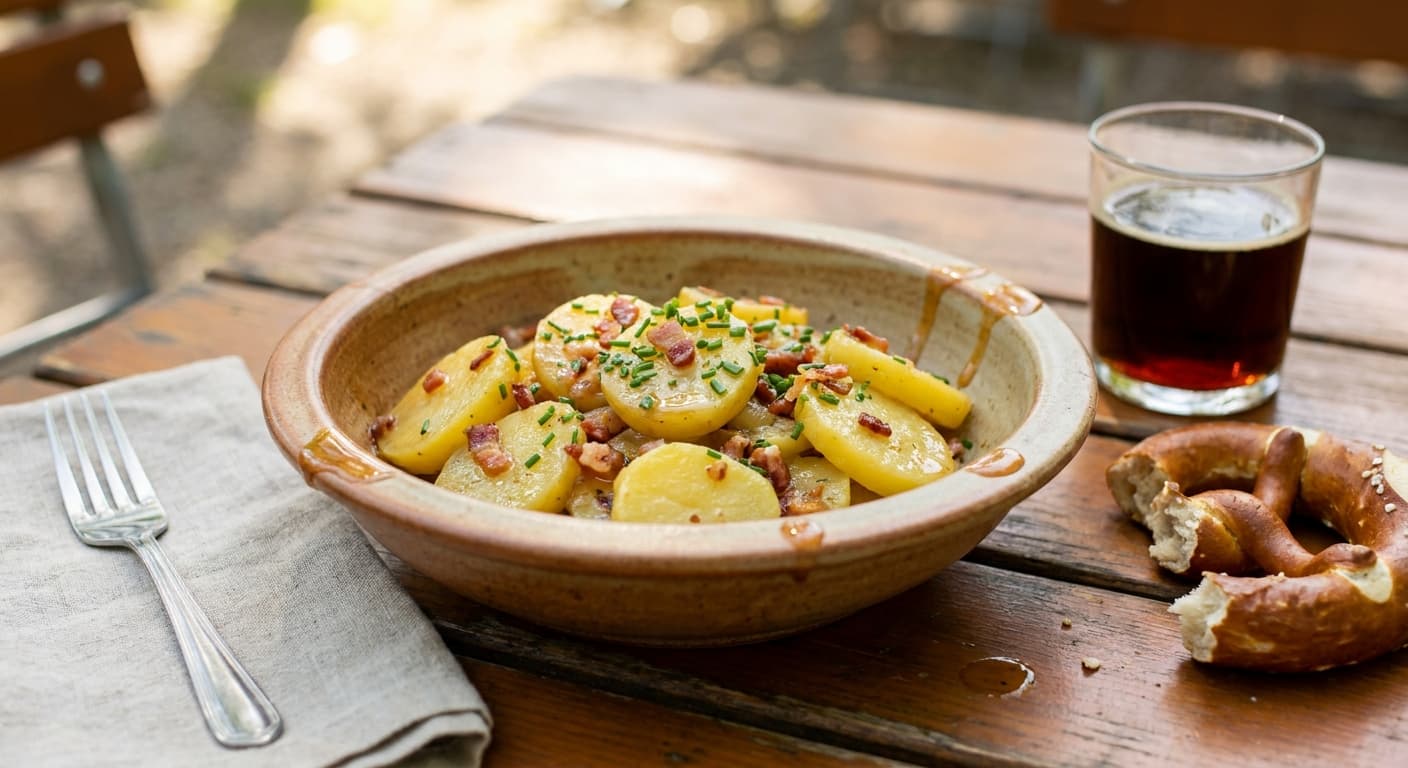
German Potato Salad (Kartoffelsalat) — Warm Vinegar-Broth Potato Salad
German · Salads · 50 min
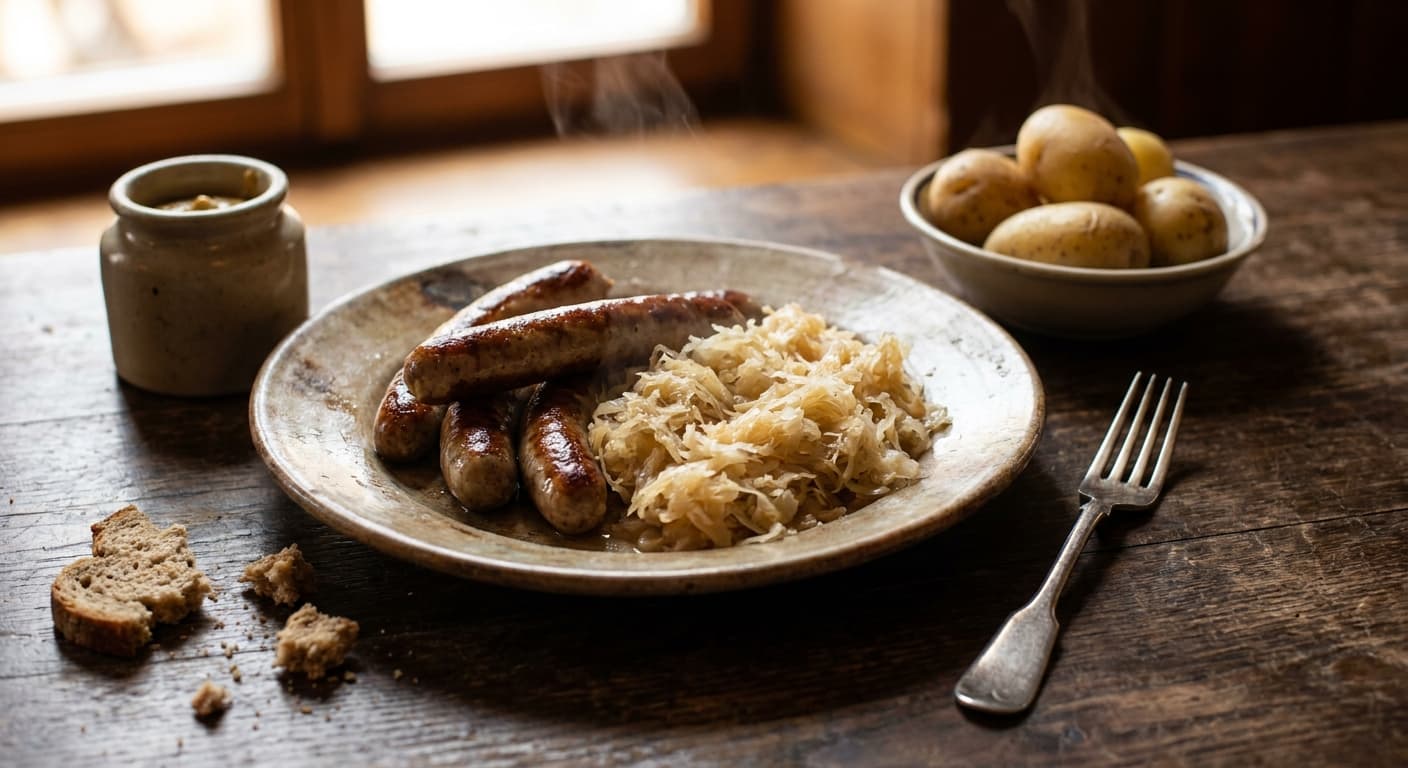
Bratwurst with Sauerkraut (Bratwurst mit Sauerkraut) — German Sausages on Wine-Braised Cabbage
German · Main Courses · 80 min
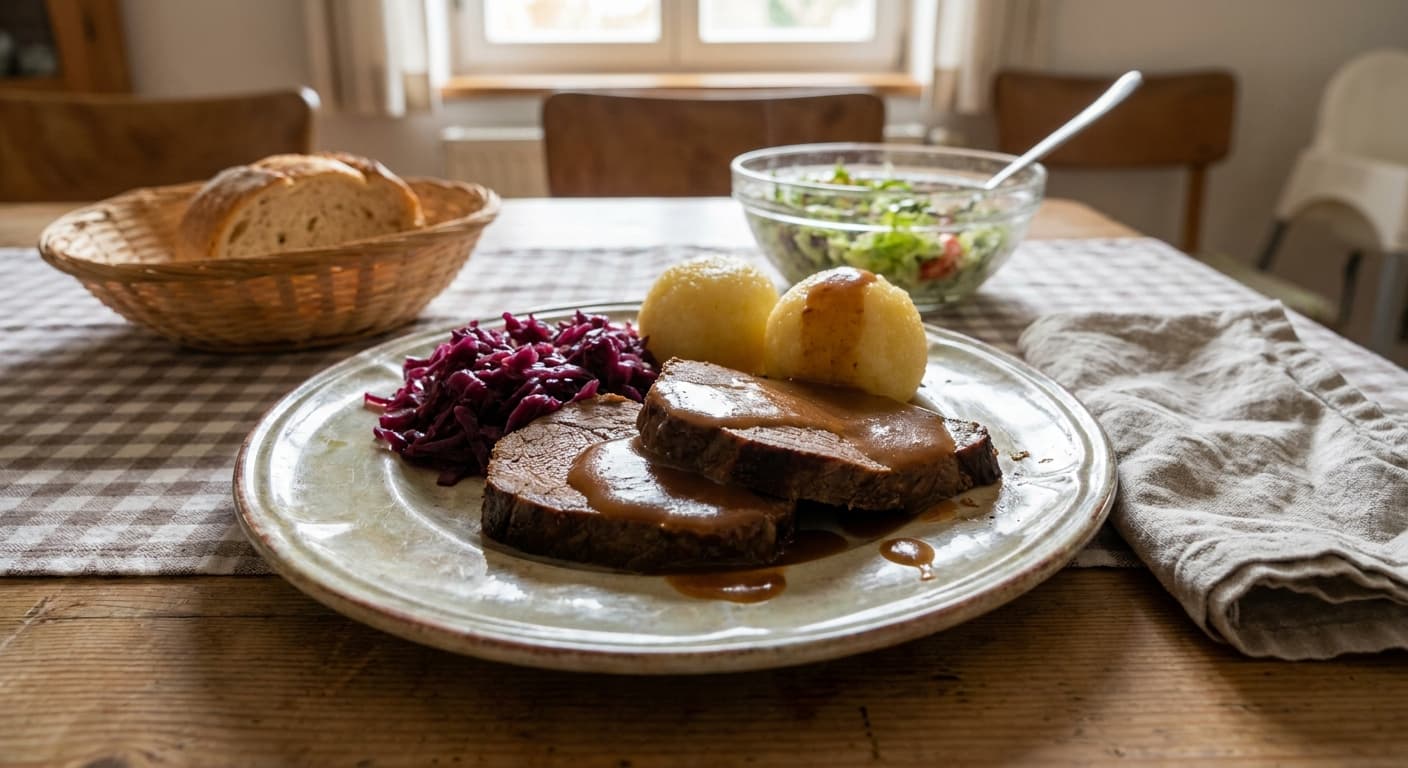
Sauerbraten (Sauerbraten) — German Marinated Pot Roast
German · Main Courses · 240 min
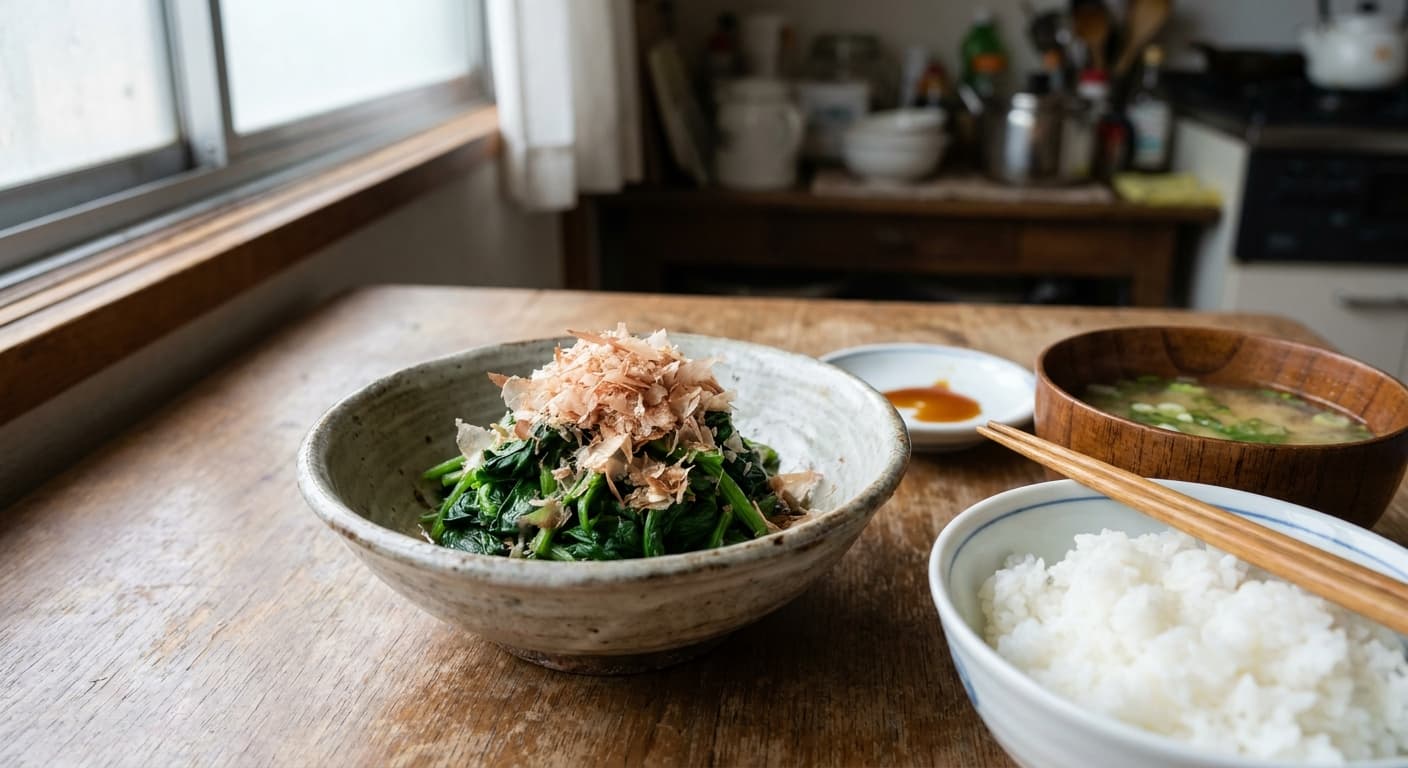
Ohitashi (お浸し) — Japanese Dashi-Soaked Greens
Japanese · Side Dishes · 20 min
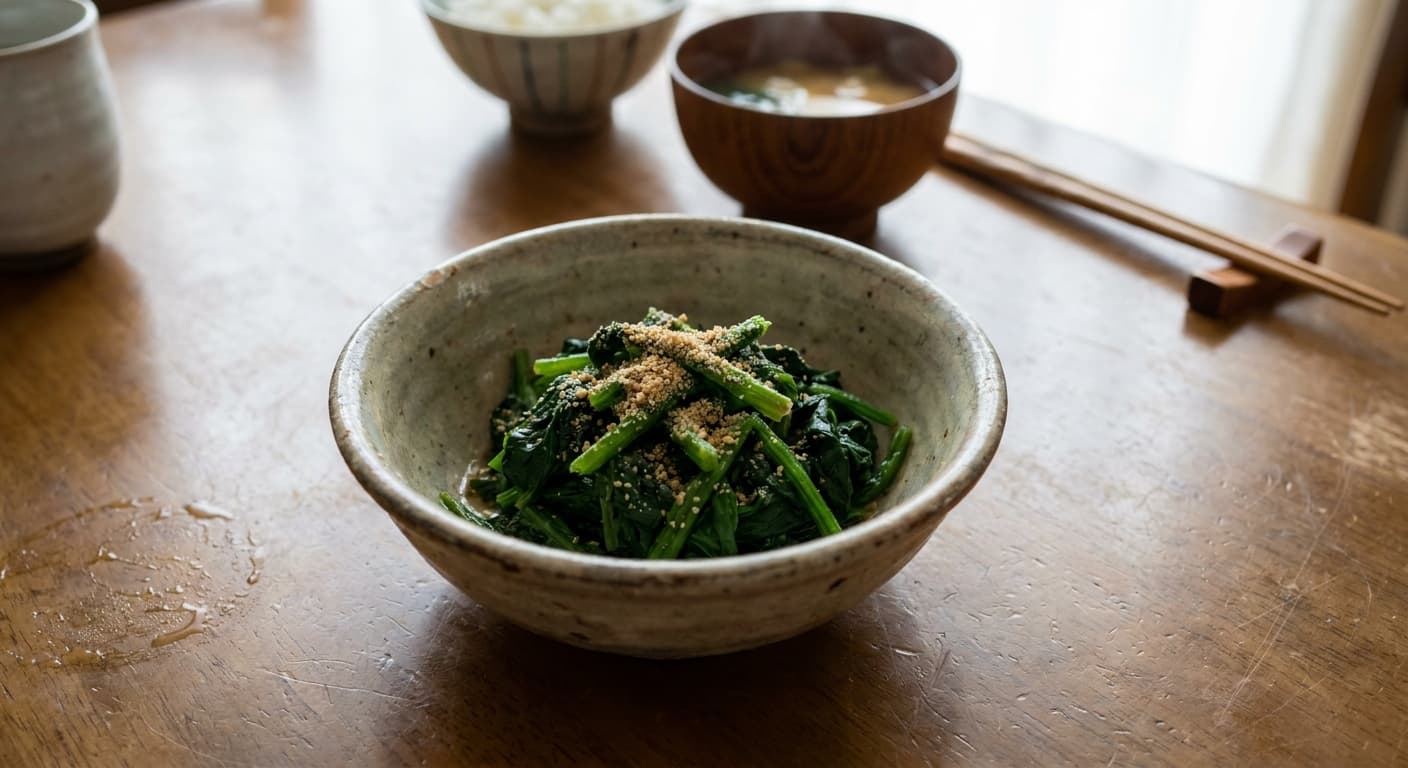
Gomaae (ごまあえ) — Japanese Spinach with Sesame Dressing
Japanese · Side Dishes · 18 min
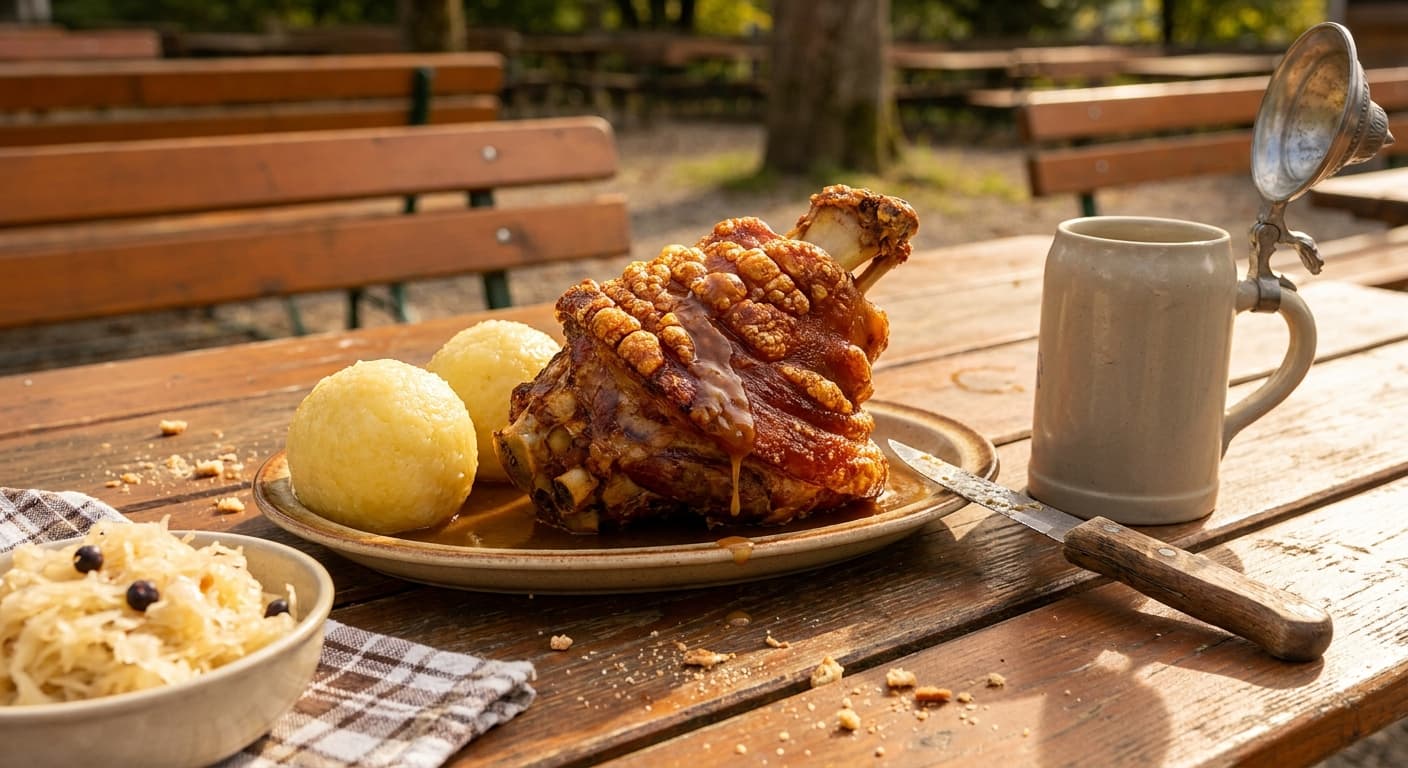
Bavarian Schweinshaxe (Schweinshaxe) — Crispy Roasted Pork Knuckle
German · Main Courses · 235 min
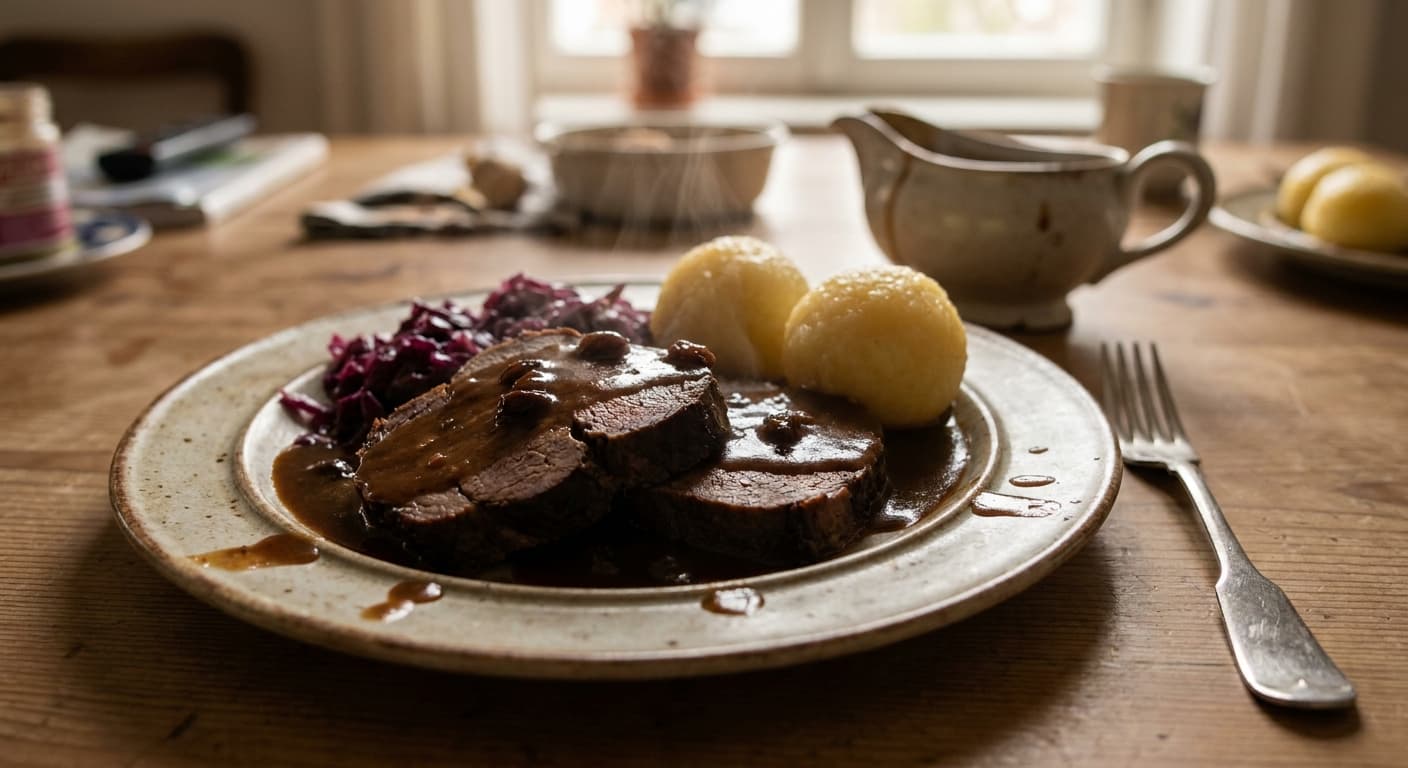
German Marinated Pot Roast (Sauerbraten) — Sweet-Sour Braised Beef
German · Main Courses · 245 min
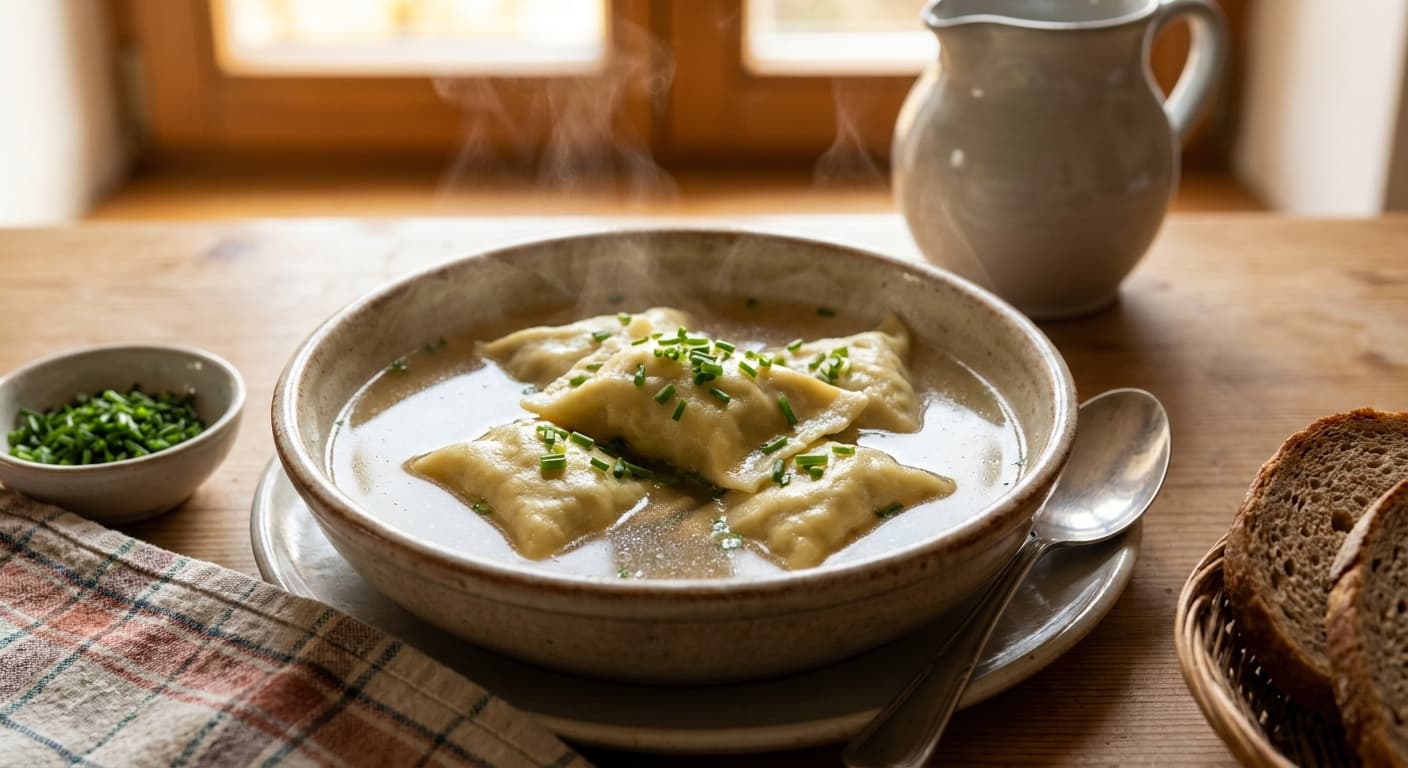
Swabian Stuffed Pasta (Maultaschen) — Spinach-Meat Dumplings in Broth
German · Main Courses · 105 min
Reviews
Cooked this recipe?
Tap the stars to rate it — that's all it takes. A few words are welcome but optional.
No ratings yet. Cooked this one? Be the first to rate it — it takes one tap.