Loobia Polo ba Sabzi (لوبیا پلو با سبزی) — Persian Green Bean and Herb Rice
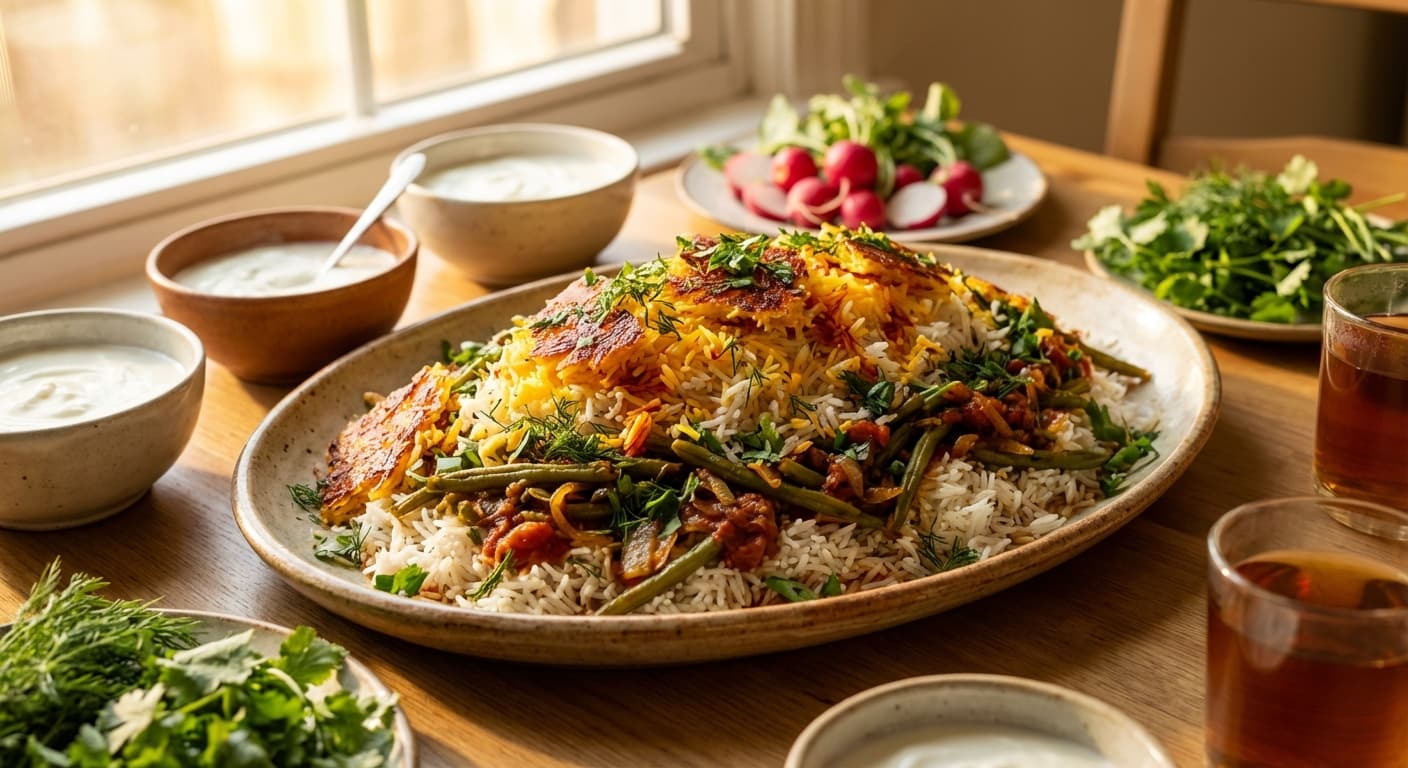
Loobia Polo ba Sabzi is a fragrant Persian layered rice featuring tender green beans, sautéed onions, tomato paste, and a fresh mix of herbs, finished with saffron. It’s fluffy, colorful, and ideal for family-style meals.
Printable Recipe Card
Servings: 6 · Total: 130 min · Difficulty: medium
Ingredients (quick list)
- 500 g Basmati rice (long-grain; rinsed until water runs mostly clear)
- 2500 ml Water (for parboiling rice)
- 24 g Salt (for salting parboil water (about 4 tsp); plus more to taste at the table)
- 450 g Green beans (trimmed and cut into 2 cm pieces)
- 250 g Yellow onion (finely sliced)
- 75 ml Neutral oil (divided)
- 40 g Tomato paste (about 2 tbsp)
- 2 g Black pepper (about 1 tsp, or to taste)
- 25 g Fresh dill (finely chopped)
- 30 g Fresh parsley (finely chopped)
- 20 g Fresh cilantro (finely chopped)
- 15 g Fresh chives (finely chopped)
+ 4 more in the full ingredients section below.
Steps (summary)
- Rinse the basmati rice in several changes of cool water until the water is mostly clear. Cover with plenty of fresh water and l…
- Make the saffron water: crush saffron threads to a fine powder, then stir with 45 ml hot water. Cover and steep 10 minutes. Thi…
- Cook the green bean mixture: heat 45 ml oil in a wide pan over medium heat. Add sliced onion and sauté 10–12 minutes until soft…
- Add the herbs: stir chopped dill, parsley, cilantro, and chives into the warm green bean mixture. Cook 2–3 minutes over low hea…
- Parboil the rice: bring 2500 ml water to a rolling boil in a large pot, then add 24 g salt. Drain soaked rice and add it to the…
- Prepare the pot and optional yogurt tahdig: in a bowl, whisk yogurt, egg yolk, and 15 ml oil until smooth. Choose a heavy nonst…
+ 3 more steps in the full instructions section below.
Cultural Background
Loobia Polo is a well-known Persian layered rice dish commonly prepared for everyday meals and larger family gatherings. The method highlights the Persian rice technique of parboiling and steaming to achieve fluffy grains and a crisp tahdig, often finished with saffron for fragrance and color.
Equipment
💡 Tips
- For the fluffiest texture, stop parboiling when the rice has a firm core; it finishes cooking during steaming.
- If your herbs are very wet after washing, spin or pat dry; excess water can make the mixture steamy and dull the flavor.
- To prevent sticking without yogurt tahdig, line the pot base with thin potato slices and 15 ml oil, then proceed with layering.
- If the green bean mixture tastes mild, cook it 2–3 minutes uncovered to concentrate before layering.
- A heavy-bottomed pot helps create an even, crisp tahdig without scorching.
⚠️ Common Mistakes
❌ Overboiling the rice during parboil
💡 Why: Rice becomes fully cooked before steaming, leading to mushy texture and clumping.
✅ Fix: Boil only until elongated with a firm center (6–8 minutes). Drain immediately and steam to finish.
❌ Leaving too much liquid in the green bean mixture
💡 Why: Extra moisture turns the layered rice soggy and prevents proper steaming.
✅ Fix: Simmer uncovered for 2–4 minutes until the pan is nearly dry before layering.
❌ Cooking on high heat throughout steaming
💡 Why: The bottom can burn before the rice steams through, ruining tahdig and adding bitterness.
✅ Fix: Use medium heat only for the first 10 minutes to build steam, then switch to low for 45 minutes.
❌ Skipping lid towel during steaming
💡 Why: Condensation drips back onto the rice, making the top wet and compact.
✅ Fix: Wrap the lid with a clean towel and tie or tuck it securely to absorb steam.
🧊 How to Store
Cool leftovers within 2 hours. Refrigerate in an airtight container up to 4 days. Reheat covered with 1–2 tbsp water in a pan over low heat 10–12 minutes, or microwave covered 2–3 minutes, stirring once. Tahdig is best fresh; re-crisp in a dry skillet 2–3 minutes per side.
📅 Make Ahead
Chop herbs and trim/cut green beans up to 24 hours ahead; refrigerate separately in airtight containers lined with paper towel. Cook the green bean-onion-tomato mixture up to 2 days ahead and refrigerate; rewarm and stir in herbs just before layering. Rice is best steamed fresh for optimal tahdig.
🍽️ Pairs Well With
- Shirazi salad (cucumber
- tomato
- onion with lemon juice)
- Plain yogurt or cucumber-yogurt
- Pickled vegetables
- Fresh herbs and radishes
Regional Variations
- Tehran-style home cookingOften includes a stronger saffron finish and a thicker tahdig, sometimes using yogurt for a golden, cohesive crust. The herb mix may lean heavier on dill and chives for a brighter aroma.
- Northern Iran (Caspian influence)May use a larger proportion of fresh herbs and slightly less tomato paste for a greener profile, sometimes adding a small amount of souring element such as lemon juice at serving (not during cooking) for lift.
Ingredients
- 500 gBasmati rice (long-grain; rinsed until water runs mostly clear)
- 2500 mlWater (for parboiling rice)
- 24 gSalt (for salting parboil water (about 4 tsp); plus more to taste at the table)
- 450 gGreen beans (trimmed and cut into 2 cm pieces)
- 250 gYellow onion (finely sliced)
- 75 mlNeutral oil (divided)
- 40 gTomato paste (about 2 tbsp)
- 2 gBlack pepper (about 1 tsp, or to taste)
- 25 gFresh dill (finely chopped)
- 30 gFresh parsley (finely chopped)
- 20 gFresh cilantro (finely chopped)
- 15 gFresh chives (finely chopped)
- 0.3 gDried saffron threads (about 1/2 tsp, finely crushed)
- 45 mlHot water (to bloom saffron)
- 120 gPlain yogurt (for yogurt tahdig (optional but recommended))
- 18 gEgg yolk (1 large yolk, for yogurt tahdig)
🔄 Substitutions
- Fresh dill, parsley, cilantro, and chives→ Frozen mixed herbs (same total weight), thawed and squeezed dry
- Basmati rice→ Jasmine rice
- Yogurt tahdig with egg yolk→ Oil-only tahdig
Instructions
- 1
Rinse the basmati rice in several changes of cool water until the water is mostly clear. Cover with plenty of fresh water and let it soak for 30 minutes at room temperature. Meanwhile, prepare the green beans and chop the herbs; keep herbs separate so they stay bright and aromatic.
- 2
Make the saffron water: crush saffron threads to a fine powder, then stir with 45 ml hot water. Cover and steep 10 minutes. This concentrates color and aroma so you can finish the rice with a clear saffron fragrance without needing large amounts of saffron.
- 3
Cook the green bean mixture: heat 45 ml oil in a wide pan over medium heat. Add sliced onion and sauté 10–12 minutes until soft and golden. Stir in tomato paste and cook 2 minutes until it darkens slightly. Add green beans, 120 ml water, 2 g black pepper, and 2 g of the salt from your measured amount; simmer covered 12–15 minutes until beans are tender-crisp and the pan is mostly dry.
- 4
Add the herbs: stir chopped dill, parsley, cilantro, and chives into the warm green bean mixture. Cook 2–3 minutes over low heat, just until herbs wilt and release aroma. Turn off the heat and taste; the mixture should be savory and slightly concentrated because it will season the rice.
- 5
Parboil the rice: bring 2500 ml water to a rolling boil in a large pot, then add 24 g salt. Drain soaked rice and add it to the boiling water. Boil 6–8 minutes, stirring gently once or twice, until grains are elongated but still firm in the center. Drain immediately in a colander and rinse quickly with 250 ml cool water to stop cooking and remove surface starch.
- 6
Prepare the pot and optional yogurt tahdig: in a bowl, whisk yogurt, egg yolk, and 15 ml oil until smooth. Choose a heavy nonstick or well-seasoned pot. Heat 15 ml oil in the pot over medium heat for 1 minute, then spread the yogurt mixture evenly over the base to form a crisp tahdig layer.
- 7
Layer the rice: reduce heat to low. Add a thin layer of rice over the tahdig, then spoon on a layer of the green bean-herb mixture. Repeat layers, finishing with rice on top. With the handle of a spoon, poke 5–6 holes down to the bottom to help steam circulate. Drizzle the remaining 15 ml oil over the top and cover the lid with a clean towel, then place it on the pot.
- 8
Steam (dam): cook 10 minutes over medium heat to build steam, then reduce to low and steam 45 minutes. Avoid lifting the lid during this time. In the last 10 minutes, drizzle 2–3 tbsp of the saffron water over the top rice for a golden finish and a distinct saffron aroma.
- 9
Rest and serve: turn off heat and let the pot rest, covered, 10 minutes. Fluff the rice gently with a spatula, lifting from the sides to keep grains separate. Invert the pot onto a platter to release the tahdig, or remove tahdig separately. Serve the saffron-tinted rice from the top for visual contrast.
🪪 Recipe Passport
Cultural Background
Loobia Polo is a well-known Persian layered rice dish commonly prepared for everyday meals and larger family gatherings. The method highlights the Persian rice technique of parboiling and steaming to achieve fluffy grains and a crisp tahdig, often finished with saffron for fragrance and color.
Regional Variations
Researched from multiple sources and validated by the Zaffaron editorial team. Every recipe is tested for accuracy, measurements, and cultural authenticity.
Nutrition per serving
Pairs well with
If you enjoyed this recipe, here are a few related Zaffaron recipes to try next.
- Makaroni ba Sos-e Baghela (ماکارونی با سس باقلا) — Spiral Pasta with Creamy Broad Bean & Leek Sauce
- Makaroni Rangarang (ماکارونی رنگارنگ) — Colorful Persian-Style Macaroni
- Makaronii Sard ba Panir (ماکارونی سرد با پنیر) — Persian Cold Macaroni with Cheese
- Macaroni ba Loobia Sabz (ماکارونی با لوبیا سبز) — Persian-Style Pasta with Green Beans
Does your family make this differently?
Every family has their own version. Maybe your grandmother adds a secret ingredient, or your aunt has a completely different technique. Preserve your family's version — with their name on it, forever.
You Might Also Like
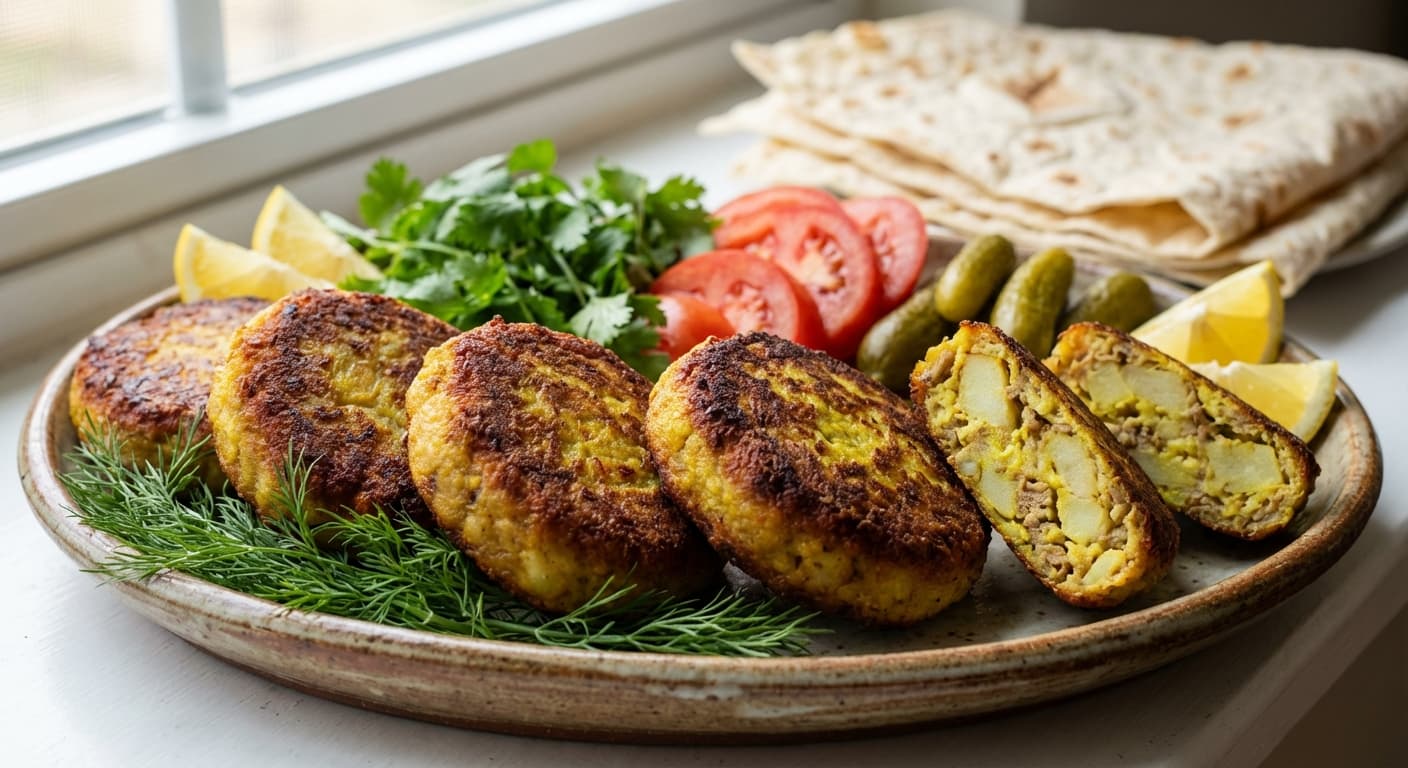
Persian Kotlet (کتلت) — Saffron-Infused Meat & Potato Patties
Persian · Main Courses · 55 min
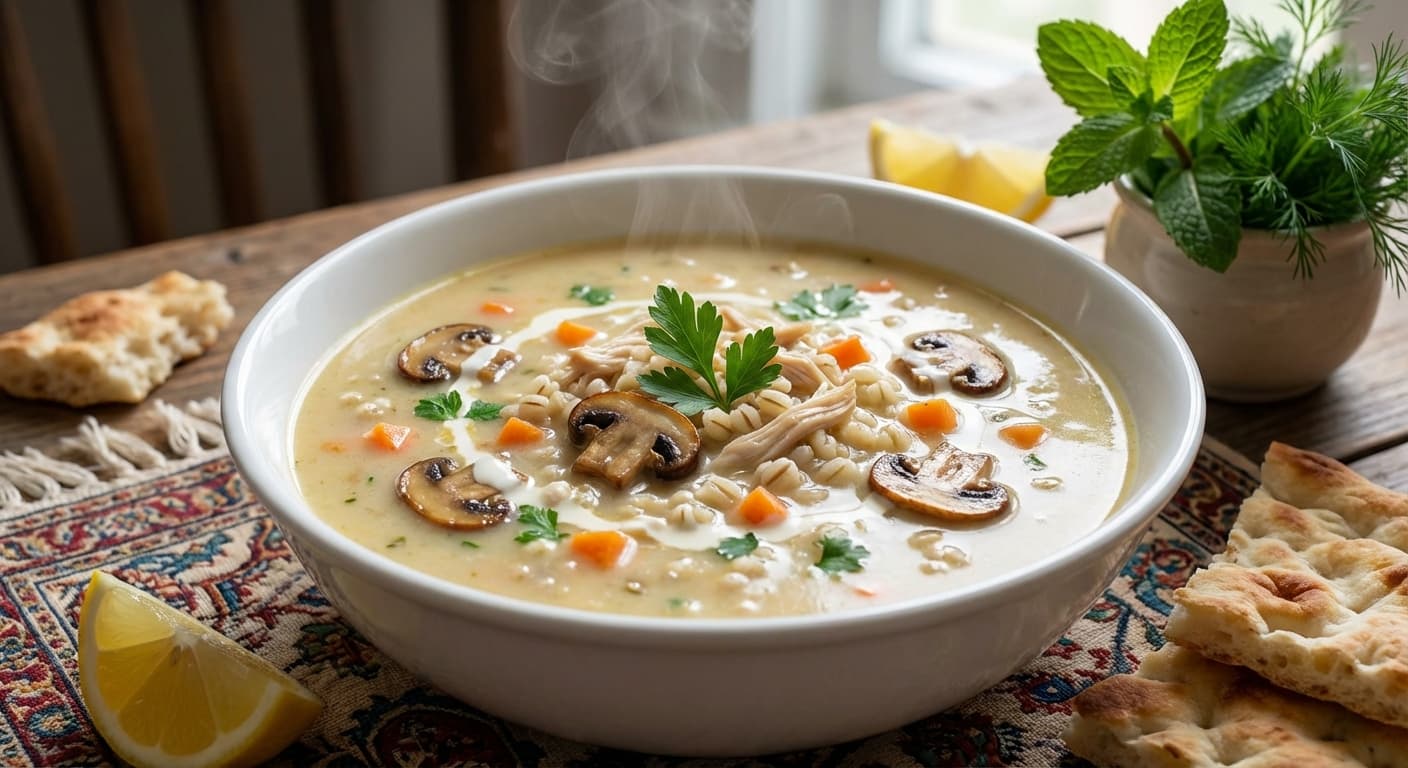
Soup-e Jo (سوپ جو) — Persian Creamy Barley Soup
Persian · Soups · 90 min
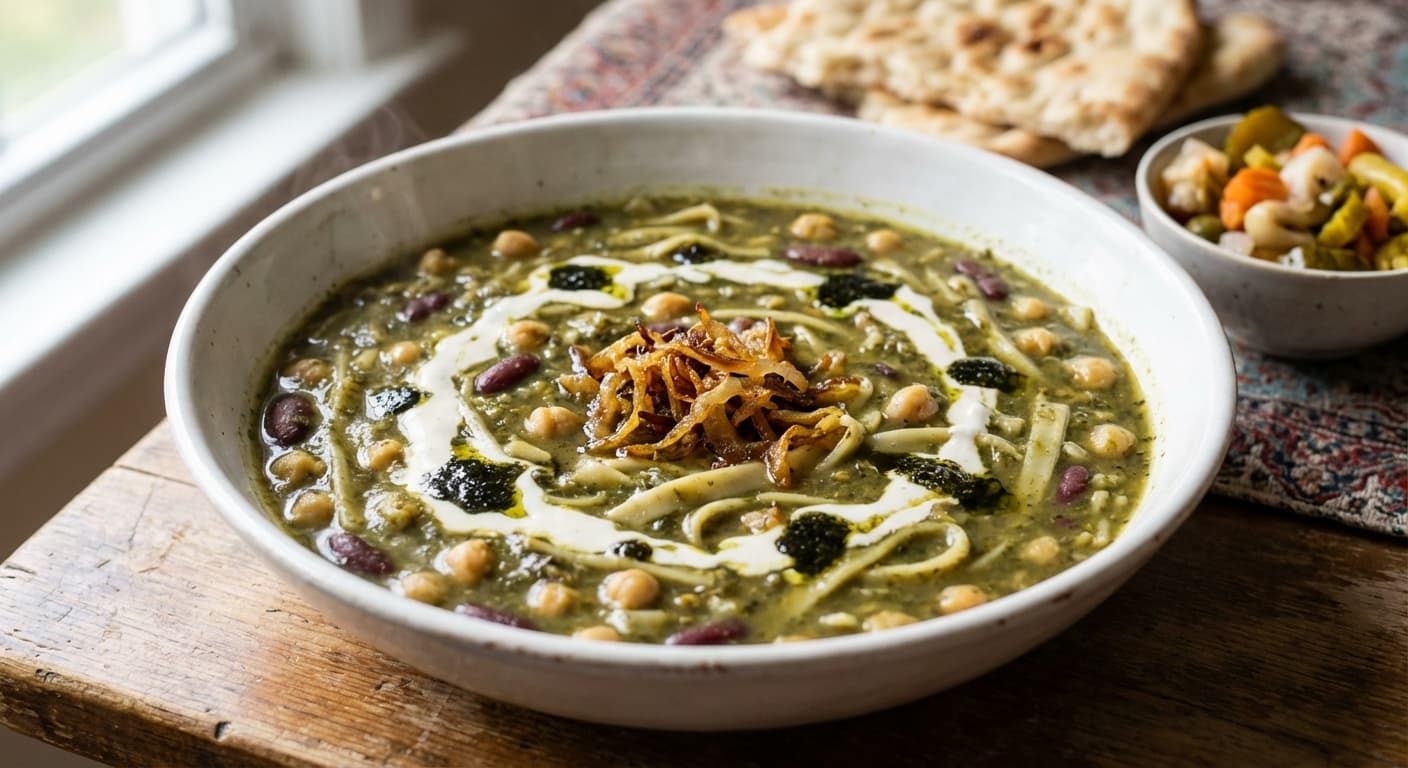
Ash Reshteh (آش رشته) — Persian Herb, Bean, and Noodle Soup
Persian · Soups · 145 min
Nigerian Jollof Rice (Jollof Rice) — Smoky Party-Style Tomato Rice
West african · Rice Dishes · 80 min
Nasi Kandar (Nasi Kandar) — Penang Mamak Curry Rice Plate
Malaysian · Rice Dishes · 110 min
Azerbaijani Milk-Rice Porridge (Südlü Sıyıq) — Creamy Breakfast Rice with Saffron
Azerbaijani · Rice Dishes · 50 min
Mıhlama (Mıhlama) — Black Sea Cornmeal and Cheese Skillet
Turkish · Main Courses · 25 min
Sabzi Challow (سبزی چلو) — Afghan Spinach Stew with Rice
Afghan · Stews · 90 min
Reviews
Cooked this recipe?
Tap the stars to rate it — that's all it takes. A few words are welcome but optional.
No ratings yet. Cooked this one? Be the first to rate it — it takes one tap.