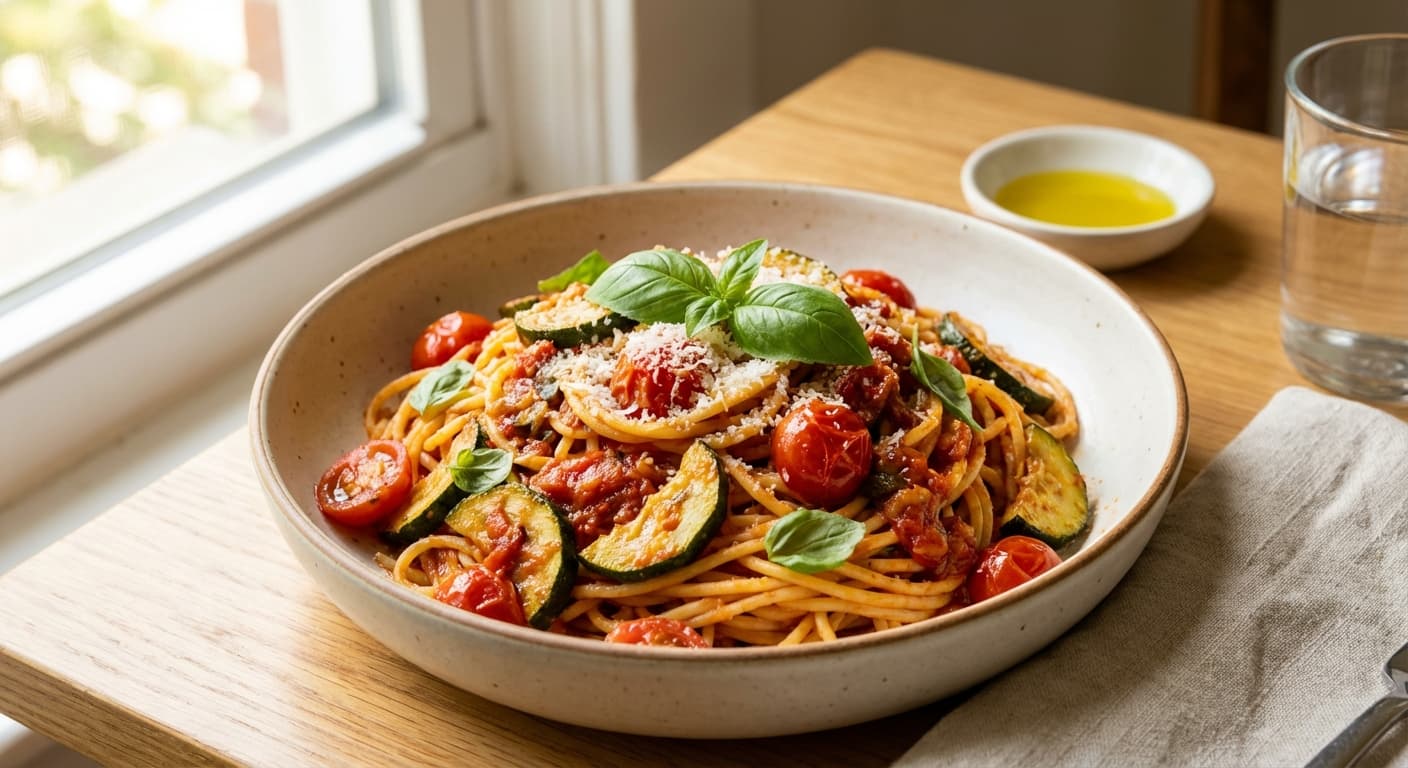
Pastay-e Gojeh-Faranghi va Kadoo (پاستای گوجهفرنگی و کدو) — Persian Tomato and Zucchini Pasta
A modern Persian home-style pasta with zucchini and tomatoes simmered into a silky sauce, finished with basil and Parmesan. Bright, savory, and weeknight-friendly with Mediterranean influence.
Printable Recipe Card
Servings: 4 · Total: 45 min · Difficulty: easy
Ingredients (quick list)
- 340 g Dried pasta (spaghetti or penne) (Choose a shape that holds sauce well)
- 3 L Water (For boiling pasta)
- 18 g Salt (For salting pasta water (about 1.5% salinity))
- 45 mL Olive oil (Extra-virgin preferred)
- 12 g Garlic (Finely sliced or minced (about 4 cloves))
- 700 g Fresh tomatoes (Ripe, grated or finely chopped)
- 20 g Tomato paste (Optional but recommended for deeper color and flavor)
- 450 g Zucchini (Cut into 1 cm half-moons)
- 1 g Black pepper (Freshly ground, plus more to taste)
- 180 mL Reserved pasta cooking water (Starchy water to emulsify and loosen sauce)
- 20 g Fresh basil (Leaves torn just before serving)
- 60 g Parmesan cheese (Finely grated, plus more for serving)
Steps (summary)
- Prep the vegetables: cut the zucchini into 1 cm half-moons and mince or thinly slice the garlic. Grate or finely chop the tomat…
- Salt the boiling water with 18 g salt, then add the pasta. Cook until just shy of al dente, usually 1–2 minutes less than the p…
- While pasta cooks, build the sauce: heat 45 mL olive oil in a wide skillet over medium heat for 1 minute. Add garlic and cook 4…
- Add the tomatoes, 5 g salt, and 1 g black pepper. Bring to a steady simmer over medium-high heat, then reduce to medium-low and…
- Add zucchini to the simmering sauce and cook 6–8 minutes over medium heat, stirring gently, until tender but still holding shap…
- Combine and emulsify: add drained pasta to the skillet along with 120 mL reserved pasta water. Toss over medium heat for 1–2 mi…
+ 1 more steps in the full instructions section below.
Cultural Background
Pasta dishes have become common in many Iranian households, reflecting global pantry staples adapted to local tastes and cooking rhythms. This style—tomato-forward with fresh herbs—often appears as a quick family meal, blending Mediterranean influence with Persian home cooking habits.
Equipment
💡 Tips
- Use very ripe tomatoes for natural sweetness; if tomatoes are watery, simmer 2–4 minutes longer to concentrate.
- Keep garlic pale; browning makes the sauce bitter. If it starts to color, lower heat and add tomatoes immediately.
- Tossing pasta with reserved starchy water is key for a glossy, restaurant-style sauce without extra oil.
- Cut zucchini evenly so it cooks at the same rate; avoid overcooking to prevent mushy texture.
- Add basil off the heat to preserve its fresh, herbal aroma.
⚠️ Common Mistakes
❌ Overcooking the pasta before tossing with sauce
💡 Why: Pasta continues cooking in the hot sauce and can turn soft quickly.
✅ Fix: Cook 1–2 minutes under package time, then finish in the skillet with pasta water for 1–2 minutes.
❌ Letting garlic brown in the oil
💡 Why: Browned garlic can taste bitter and dominate the sauce.
✅ Fix: Cook garlic only 45–60 seconds over medium heat; if it colors, lower heat and add tomatoes immediately.
❌ Skipping reserved pasta water
💡 Why: Without starch, the sauce may look watery or oily and won’t cling to pasta.
✅ Fix: Reserve at least 180 mL; add gradually while tossing until the sauce turns glossy and coats the noodles.
❌ Cooking zucchini too long
💡 Why: Zucchini releases water and becomes mushy, diluting the sauce.
✅ Fix: Add zucchini after the tomato base thickens; cook only 6–8 minutes until just tender.
🧊 How to Store
Refrigerate leftovers in an airtight container for up to 3 days. Reheat in a skillet over medium-low with 30–60 mL water to loosen, stirring 3–5 minutes. Parmesan-based sauces can tighten when cold; add liquid gradually. Freezing is not recommended due to zucchini texture changes.
📅 Make Ahead
Make the tomato sauce base (without zucchini) up to 2 days ahead and refrigerate. Rewarm in a skillet, add zucchini and cook until tender, then boil pasta fresh and toss together with reserved pasta water and Parmesan right before serving.
🍽️ Pairs Well With
- Shirazi salad (cucumber
- tomato
- onion with lemon juice and olive oil)
- Mixed herbs and radishes
- Olives and pickled vegetables
- A simple green salad with lemon-olive oil dressing
Regional Variations
- Tehran (urban home kitchens)Often finished with extra Parmesan and black pepper, and sometimes a small spoon of tomato paste for deeper color. Zucchini may be sautéed briefly first for a lightly browned edge.
- Northern Iran (Caspian-influenced)Fresh herbs may shift toward mint and parsley, and the sauce can be slightly more tart with a small splash of lemon juice added off the heat.
Ingredients
- 340 gDried pasta (spaghetti or penne) (Choose a shape that holds sauce well)
- 3 lWater (For boiling pasta)
- 18 gSalt (For salting pasta water (about 1.5% salinity))
- 45 mlOlive oil (Extra-virgin preferred)
- 12 gGarlic (Finely sliced or minced (about 4 cloves))
- 700 gFresh tomatoes (Ripe, grated or finely chopped)
- 20 gTomato paste (Optional but recommended for deeper color and flavor)
- 450 gZucchini (Cut into 1 cm half-moons)
- 1 gBlack pepper (Freshly ground, plus more to taste)
- 180 mlReserved pasta cooking water (Starchy water to emulsify and loosen sauce)
- 20 gFresh basil (Leaves torn just before serving)
- 60 gParmesan cheese (Finely grated, plus more for serving)
🔄 Substitutions
- Parmesan cheese→ Pecorino Romano
- Fresh tomatoes→ Canned crushed tomatoes
- Fresh basil→ Fresh mint or parsley
Instructions
- 1
Prep the vegetables: cut the zucchini into 1 cm half-moons and mince or thinly slice the garlic. Grate or finely chop the tomatoes so they break down quickly. Set basil aside for the end. Bring 3 L water to a rolling boil in a large pot; this takes about 8–10 minutes.
- 2
Salt the boiling water with 18 g salt, then add the pasta. Cook until just shy of al dente, usually 1–2 minutes less than the package time (about 8–10 minutes total for many shapes). Before draining, reserve 180 mL pasta water. Drain pasta; do not rinse.
- 3
While pasta cooks, build the sauce: heat 45 mL olive oil in a wide skillet over medium heat for 1 minute. Add garlic and cook 45–60 seconds, stirring constantly, until fragrant but not browned. Stir in tomato paste (if using) and cook 60 seconds to remove raw taste.
- 4
Add the tomatoes, 5 g salt, and 1 g black pepper. Bring to a steady simmer over medium-high heat, then reduce to medium-low and cook 10–12 minutes, stirring every 2–3 minutes, until the tomatoes turn glossy and the sauce thickens enough to coat a spoon.
- 5
Add zucchini to the simmering sauce and cook 6–8 minutes over medium heat, stirring gently, until tender but still holding shape. If the pan looks dry, add 30–60 mL reserved pasta water. Taste and adjust salt and pepper; the sauce should be bright and savory.
- 6
Combine and emulsify: add drained pasta to the skillet along with 120 mL reserved pasta water. Toss over medium heat for 1–2 minutes until the sauce clings to the pasta and looks silky. Turn off heat, add 60 g Parmesan, and toss 30 seconds to melt and thicken.
- 7
Finish and serve: fold in 20 g torn basil just before plating to keep its aroma fresh. Serve immediately with extra Parmesan and a few grinds of black pepper. For a looser sauce, splash in the remaining pasta water 15–30 mL at a time while tossing.
🪪 Recipe Passport
Cultural Background
Pasta dishes have become common in many Iranian households, reflecting global pantry staples adapted to local tastes and cooking rhythms. This style—tomato-forward with fresh herbs—often appears as a quick family meal, blending Mediterranean influence with Persian home cooking habits.
Regional Variations
Researched from multiple sources and validated by the Zaffaron editorial team. Every recipe is tested for accuracy, measurements, and cultural authenticity.
Nutrition per serving
Pairs well with
If you enjoyed this recipe, here are a few related Zaffaron recipes to try next.
Does your family make this differently?
Every family has their own version. Maybe your grandmother adds a secret ingredient, or your aunt has a completely different technique. Preserve your family's version — with their name on it, forever.
You Might Also Like
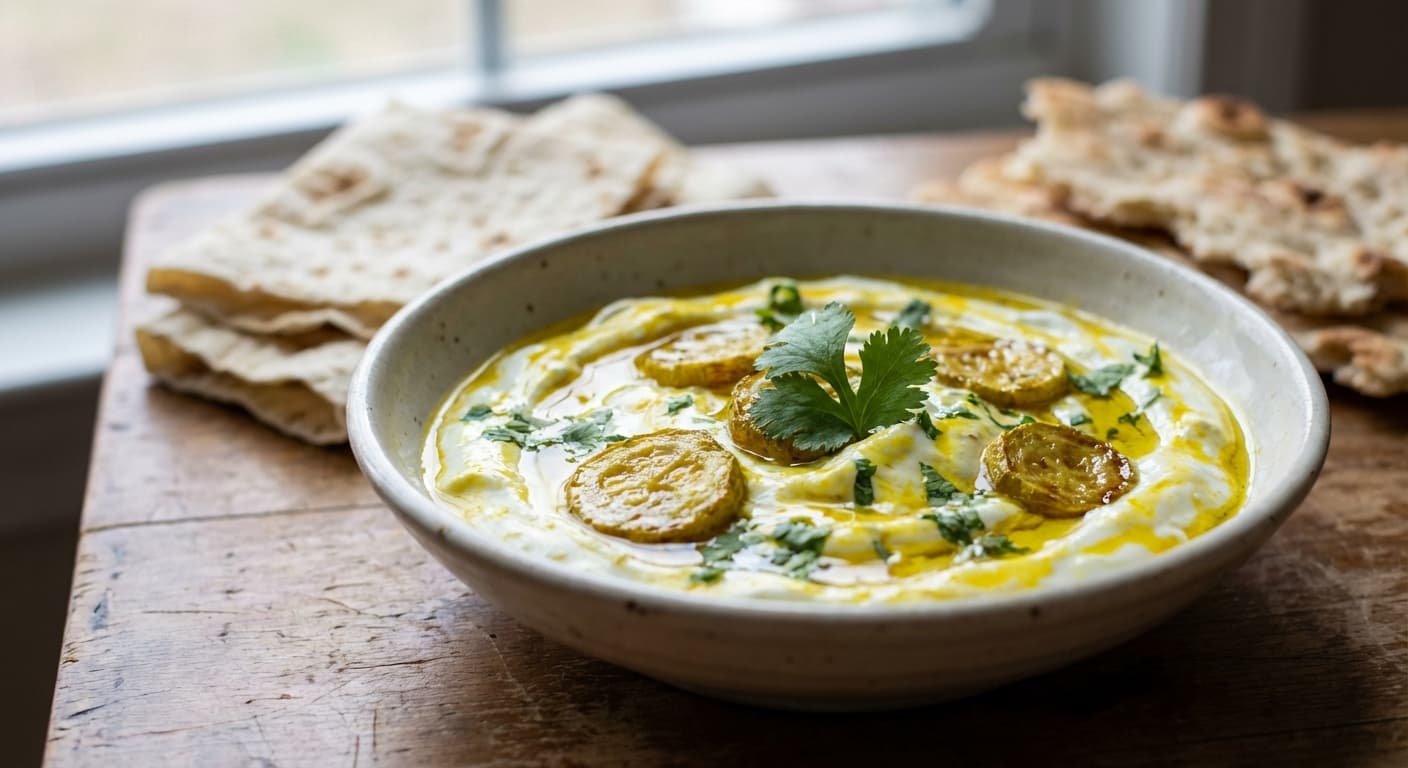
Borani Kadu (بورانی کدو) — Saffron-Infused Zucchini and Yogurt Dip
Persian · Appetizers · 40 min
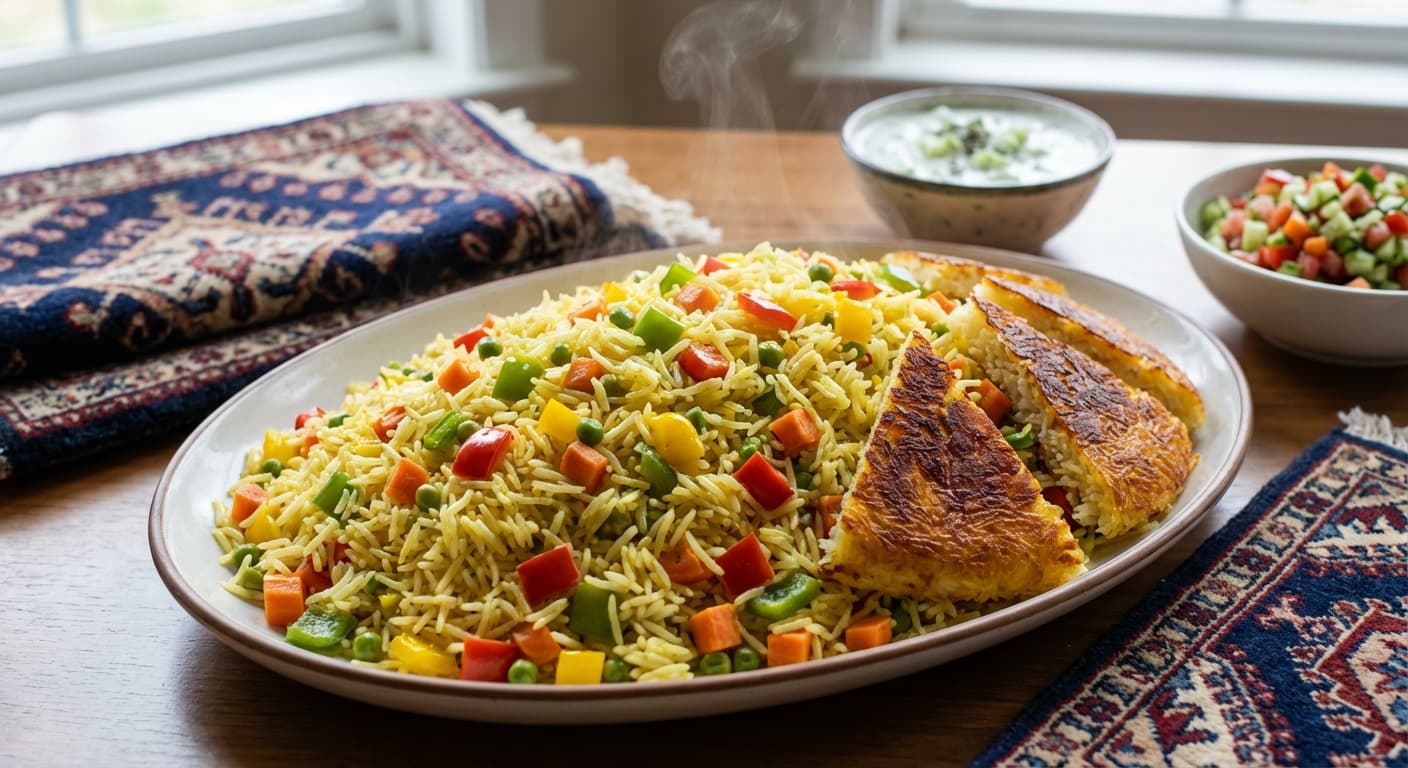
Mixed Vegetable Rice (برنج با مخلوط سبزیجات) — Persian-Style Aromatic Pilaf
Persian · Rice Dishes · 75 min
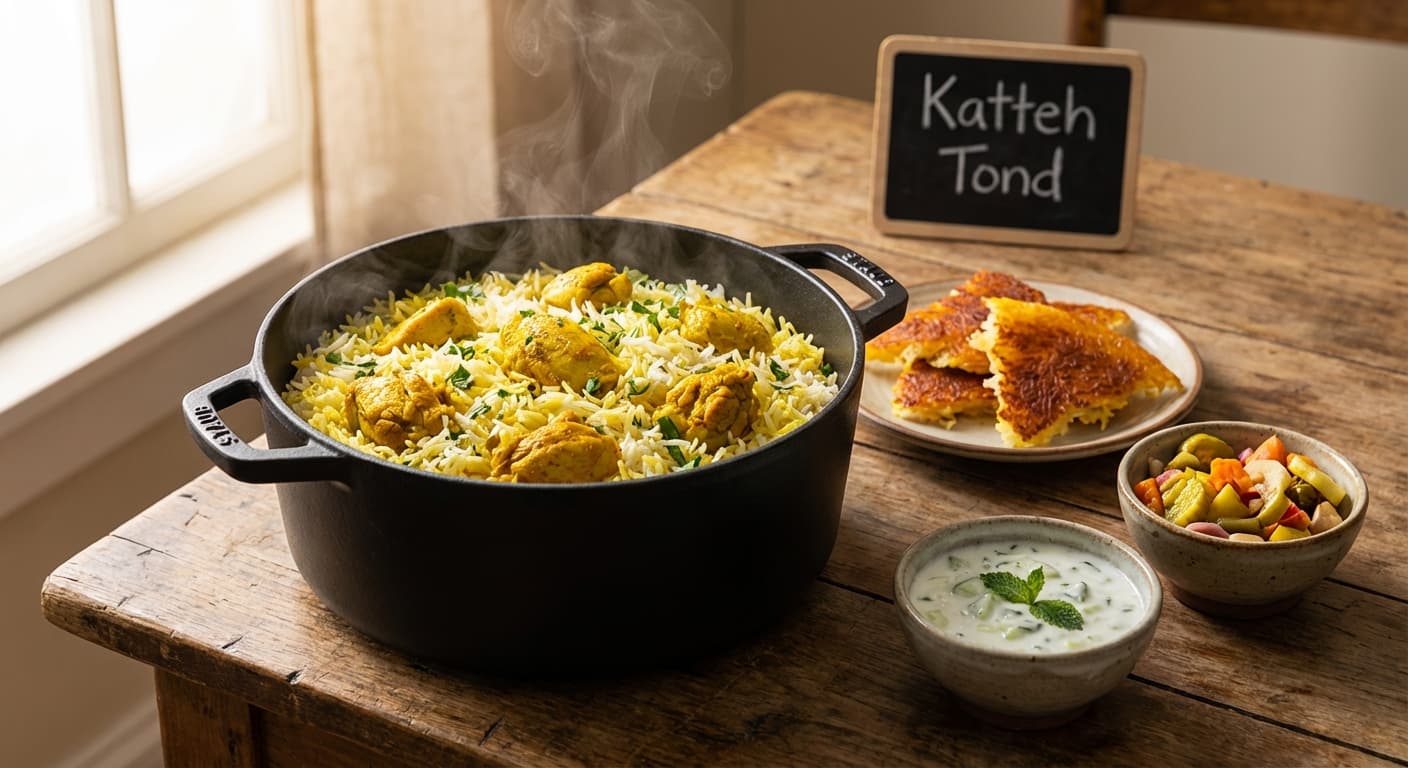
Katteh Tond (کته تند) — Spicy Caspian-Style One-Pot Chicken Rice
Persian · Rice Dishes · 85 min
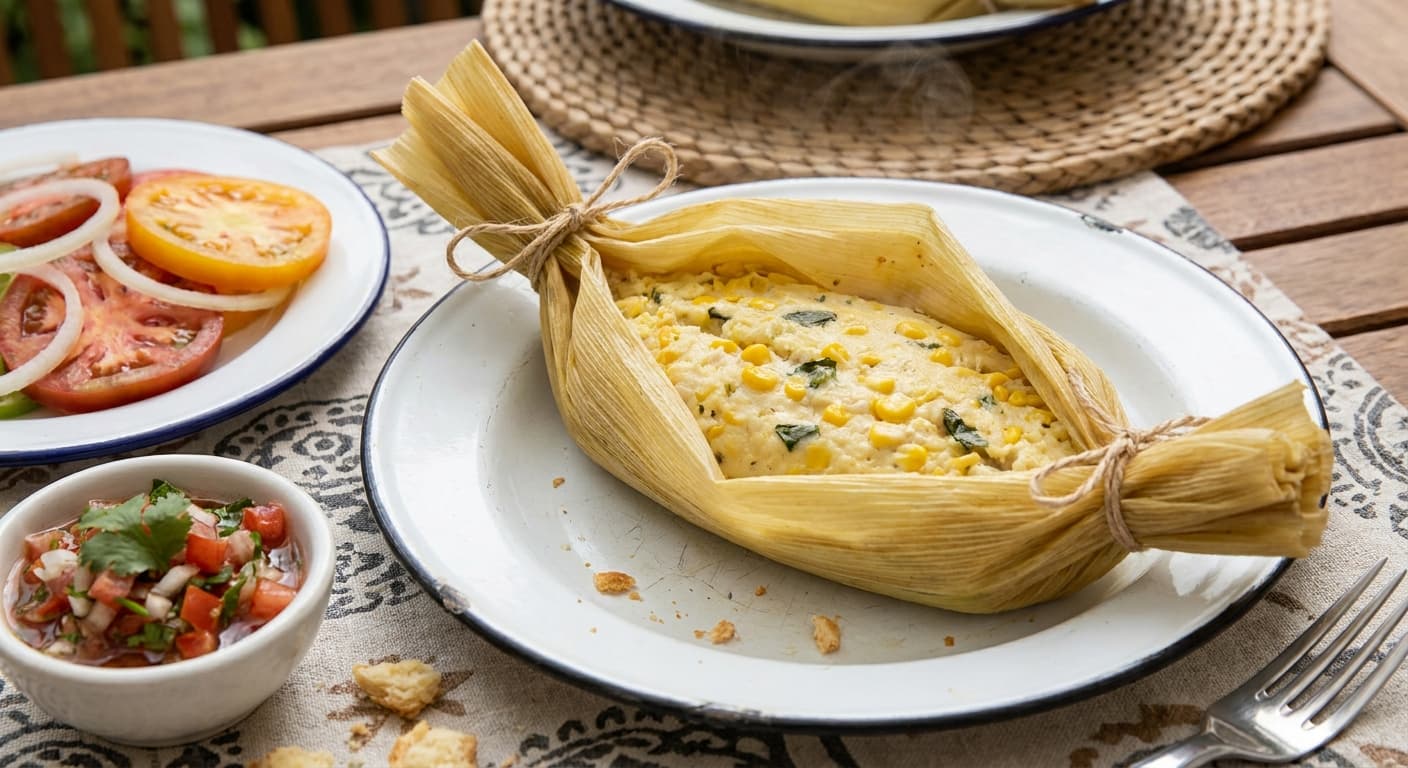
Chilean Humitas (Humitas) — Fresh Corn Parcels with Basil
Chilean · Main Courses · 90 min
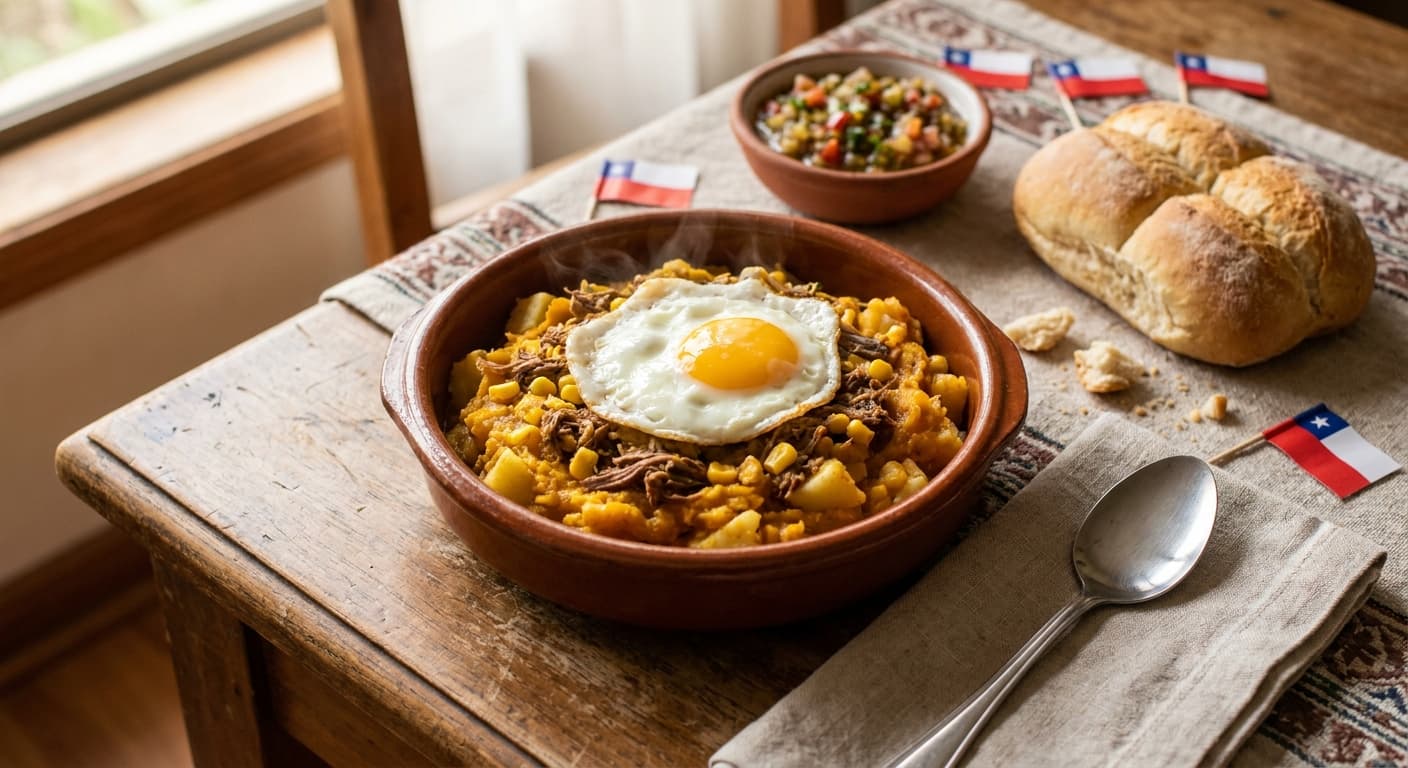
Charquicán (Charquicán) — Chilean Beef and Vegetable Hash
Chilean · Main Courses · 70 min
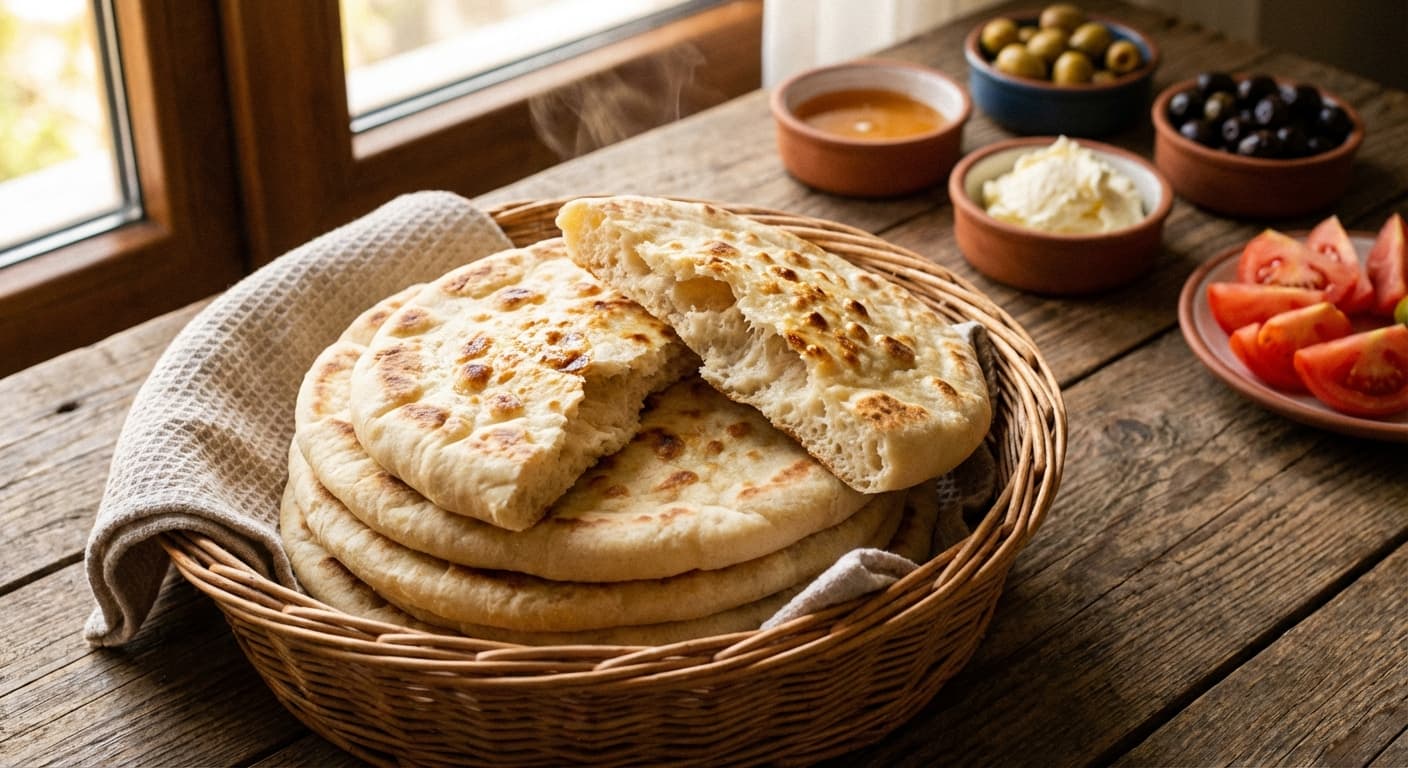
Bazlama (بازلاما) — Puffy Turkish Village Flatbread Cooked on a Saj
Turkish · Breads · 38 min
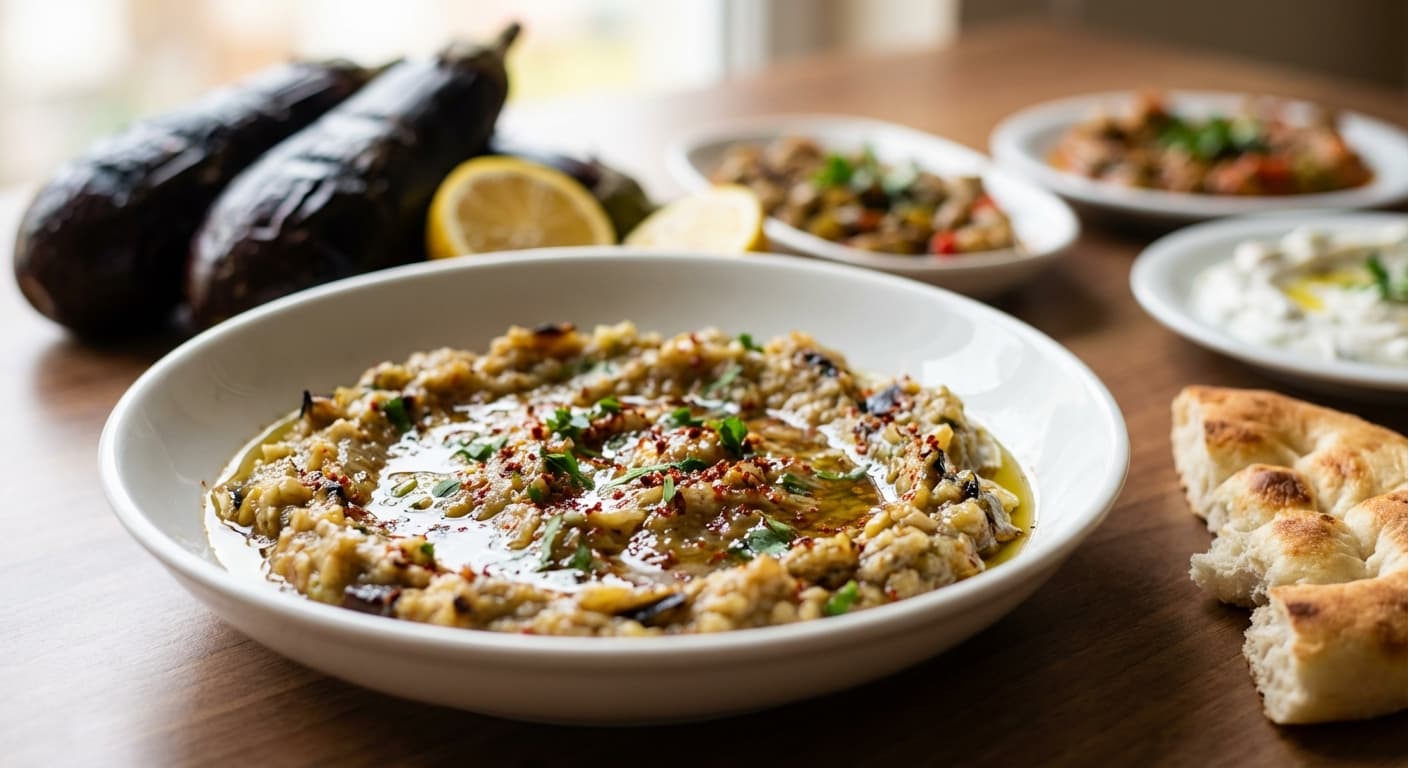
Smoky Eggplant Salad (Patlıcan Salatası) — Turkish charred eggplant with garlic and olive oil
Turkish · Salads · 40 min
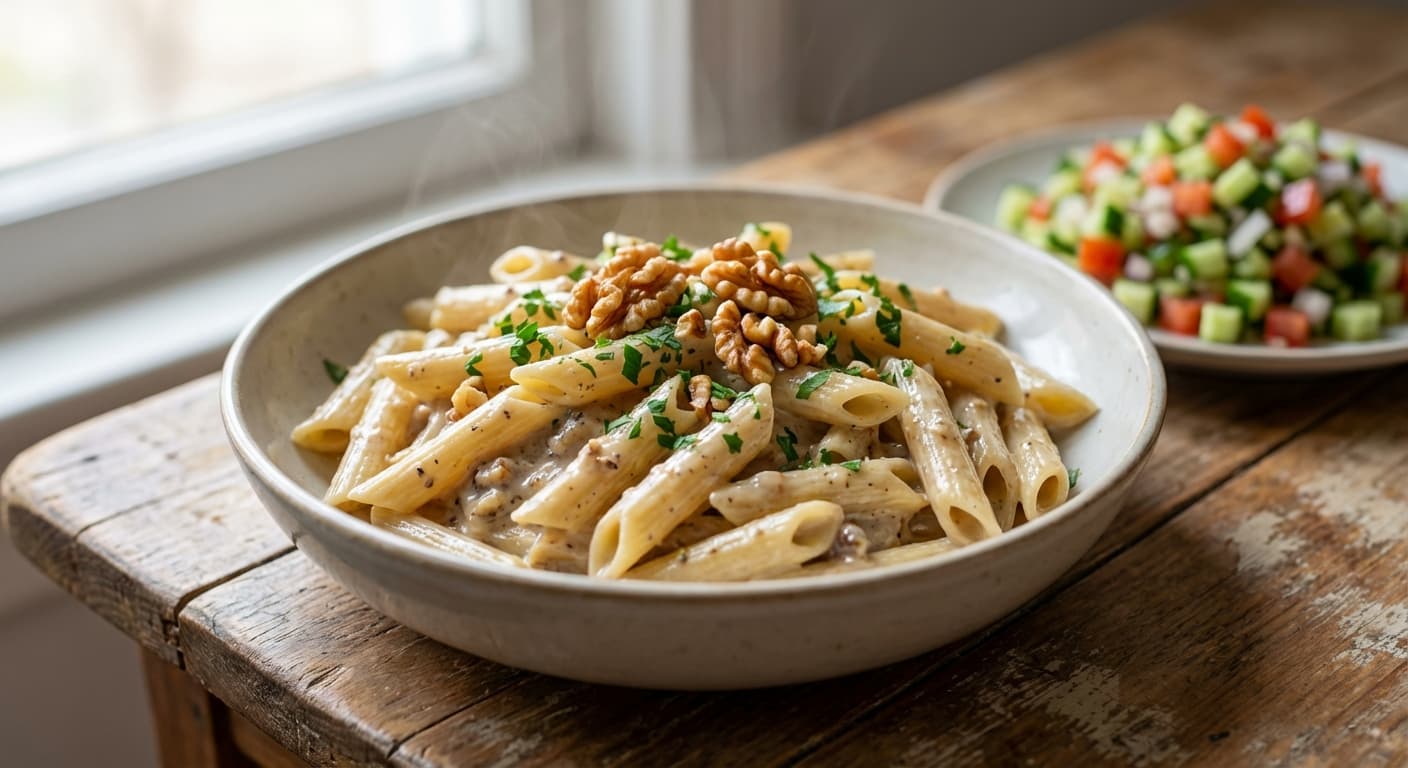
Pasta with Walnut Sauce (پاستا با سس گردو) — Creamy Persian Walnut-Yogurt Pasta
Persian · Main Courses · 35 min
Reviews
Cooked this recipe?
Tap the stars to rate it — that's all it takes. A few words are welcome but optional.
No ratings yet. Cooked this one? Be the first to rate it — it takes one tap.