Portokalopita (Πορτοκαλόπιτα) — Greek Orange Phyllo Cake Soaked in Citrus Syrup
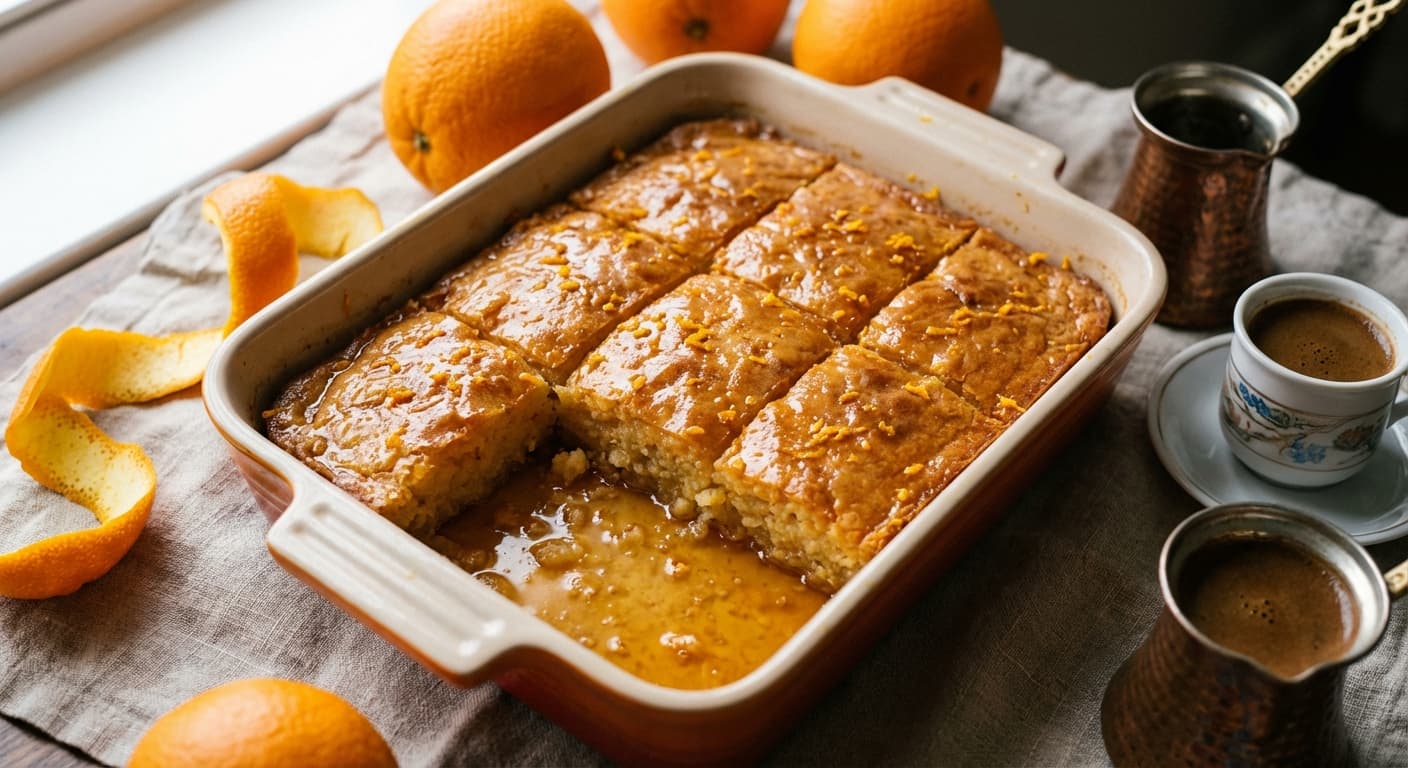
Portokalopita is a beloved Greek syrup-soaked cake made with dried, crumbled phyllo and bright orange. Often served with coffee after Sunday lunch, it balances fragrant citrus with a custardy crumb and crisp edges.
Printable Recipe Card
Servings: 12 · Total: 85 min · Difficulty: medium
Ingredients (quick list)
- 300 g phyllo dough sheets (thawed if frozen)
- 120 g unsalted butter (melted and cooled slightly)
- 400 g plain Greek yogurt (10%)
- 200 g granulated sugar
- 4 eggs (large, about 200 g without shells)
- 2 tbsp orange zest (finely grated, from 2 oranges)
- 180 ml fresh orange juice (strained)
- 2 tsp vanilla extract
- 2 tsp baking powder
- 0.5 tsp fine sea salt
- 1 tsp ground cinnamon (optional but traditional)
- 250 ml water
+ 3 more in the full ingredients section below.
Steps (summary)
- Dry the phyllo so it can soak up the custard properly. Preheat the oven to 100°C and line two large baking trays with parchment…
- Make the syrup first so it can cool while the cake bakes. In a saucepan, combine the syrup sugar, water, orange juice, orange p…
- Prepare the pan and oven for baking the cake. Increase the oven temperature to 170°C and grease a 23×33 cm baking dish with 20…
- Crumble the dried phyllo into the right texture for portokalopita. Break the dried sheets into small flakes and short ribbons,…
- Mix the orange yogurt batter until smooth and airy. In a large bowl, whisk the eggs and 200 g sugar for 1 minute until slightly…
- Combine phyllo and batter without compressing the mixture. Add the buttered phyllo to the bowl in three additions, folding with…
+ 2 more steps in the full instructions section below.
Cultural Background
Portokalopita is part of Greece’s wider tradition of syrup-soaked sweets, where citrus and honey perfume simple pantry ingredients. It’s especially popular in home kitchens because dried phyllo replaces flour, creating a uniquely tender cake with a baklava-like aroma.
Equipment
💡 Tips
- Drying the phyllo fully is essential: if it is still pliable, the cake can turn gummy; aim for brittle sheets after 20 minutes at 100°C.
- Use cool syrup on a hot cake for even soaking; if both are hot, the syrup can pool and the top may turn soggy.
- For cleaner slices, chill the soaked cake for 30 minutes, then cut along the scored lines with a long serrated knife.
⚠️ Common Mistakes
❌ Using undried or only partially dried phyllo, which makes the cake dense and pasty.
✅ Fix: Dry the sheets until brittle at 100°C, and crumble them before mixing so they absorb custard evenly.
❌ Pouring hot syrup onto a hot cake, causing uneven soaking and a soggy top.
✅ Fix: Cool the syrup to room temperature first, then ladle it slowly over the hot, scored cake in multiple passes.
❌ Overmixing after adding phyllo, which compresses the flakes and reduces lift.
✅ Fix: Fold gently in batches and let the mixture rest 5 minutes so it hydrates naturally without being pressed.
🧊 How to Store
Store covered in the refrigerator for up to 4 days, as the yogurt-based crumb stays safest chilled. Serve cold or bring to room temperature for 45 minutes; to refresh, warm individual pieces at 140°C for 8 minutes, which revives the edges without drying the center.
📅 Make Ahead
Bake and soak the cake up to 24 hours in advance; the flavor improves as the syrup equilibrates. Keep it covered in the refrigerator, then bring to room temperature before serving for the best orange aroma.
🍽️ Pairs Well With
- Greek coffee
- espresso
- vanilla ice cream
- thick strained yogurt
- toasted almonds.
Regional Variations
- Some island versions add 30 ml orange blossom water to the syrup for a more floral finish.
- In parts of northern Greece, a small amount of semolina (40 g) is whisked into the batter for a firmer sliceable crumb.
- A festive variation bakes the cake with 80 g dark chocolate chunks, turning it into a chocolate-orange syrup cake.
Ingredients
- 300 gphyllo dough sheets (thawed if frozen)
- 120 gunsalted butter (melted and cooled slightly)
- 400 gplain Greek yogurt (10%)
- 200 ggranulated sugar
- 4eggs (large, about 200 g without shells)
- 2 tbsporange zest (finely grated, from 2 oranges)
- 180 mlfresh orange juice (strained)
- 2 tspvanilla extract
- 2 tspbaking powder
- 0.5 tspfine sea salt
- 1 tspground cinnamon (optional but traditional)
- 250 mlwater
- 2orange peel (2 wide strips, pith trimmed)
- 15 mllemon juice (about 1 tbsp)
- 30 ghoney (adds gloss and aroma)
🔄 Substitutions
- plain Greek yogurt (10%)→ strained yogurt 5% + 30 ml heavy cream
- unsalted butter→ mild olive oil
- honey→ glucose syrup
Instructions
- 1
Dry the phyllo so it can soak up the custard properly. Preheat the oven to 100°C and line two large baking trays with parchment, then separate the phyllo sheets and lay them in loose, crumpled layers. Bake for 20 minutes, turning the phyllo once halfway, until it feels completely dry and brittle but not browned.
- 2
Make the syrup first so it can cool while the cake bakes. In a saucepan, combine the syrup sugar, water, orange juice, orange peel, and lemon juice, then bring to a boil over medium heat. Reduce to a steady simmer for 8 minutes, stir in the honey for 30 seconds, then remove from heat and cool to room temperature with the peel left in.
- 3
Prepare the pan and oven for baking the cake. Increase the oven temperature to 170°C and grease a 23×33 cm baking dish with 20 g of the melted butter, coating the corners well. Keep the remaining melted butter nearby because you will fold it into the phyllo for even richness.
- 4
Crumble the dried phyllo into the right texture for portokalopita. Break the dried sheets into small flakes and short ribbons, aiming for pieces about 1–3 cm so they distribute evenly through the batter. Drizzle in the remaining melted butter and toss gently with your hands until the phyllo is lightly and evenly coated.
- 5
Mix the orange yogurt batter until smooth and airy. In a large bowl, whisk the eggs and 200 g sugar for 1 minute until slightly pale, then whisk in the yogurt, orange zest, orange juice, and vanilla. Add the baking powder, salt, and cinnamon and whisk again for 20 seconds so the leavening is evenly dispersed.
- 6
Combine phyllo and batter without compressing the mixture. Add the buttered phyllo to the bowl in three additions, folding with a spatula each time until no dry pockets remain. Let the mixture stand for 5 minutes so the phyllo starts absorbing the custard, which helps the cake bake up tender rather than layered.
- 7
Bake until deeply golden with a set center. Pour the mixture into the prepared dish and level the top gently without pressing it down, then bake for 45–50 minutes. The cake is ready when the top is a rich golden brown and the center springs back; a skewer should come out mostly clean with a few moist crumbs.
- 8
Soak correctly: hot cake, cool syrup for the best absorption and texture. Remove the orange peel from the cooled syrup, then immediately score the hot cake into 12 pieces and slowly ladle the syrup over the surface in stages. Wait 2 minutes between ladles so the syrup sinks evenly, then rest the cake for at least 2 hours before serving so the crumb becomes custardy and aromatic.
🪪 Recipe Passport
Cultural Background
Portokalopita is part of Greece’s wider tradition of syrup-soaked sweets, where citrus and honey perfume simple pantry ingredients. It’s especially popular in home kitchens because dried phyllo replaces flour, creating a uniquely tender cake with a baklava-like aroma.
Regional Variations
Researched from multiple sources and validated by the Zaffaron editorial team. Every recipe is tested for accuracy, measurements, and cultural authenticity.
Nutrition per serving
Pairs well with
If you enjoyed this recipe, here are a few related Zaffaron recipes to try next.
Does your family make this differently?
Every family has their own version. Maybe your grandmother adds a secret ingredient, or your aunt has a completely different technique. Preserve your family's version — with their name on it, forever.
You Might Also Like
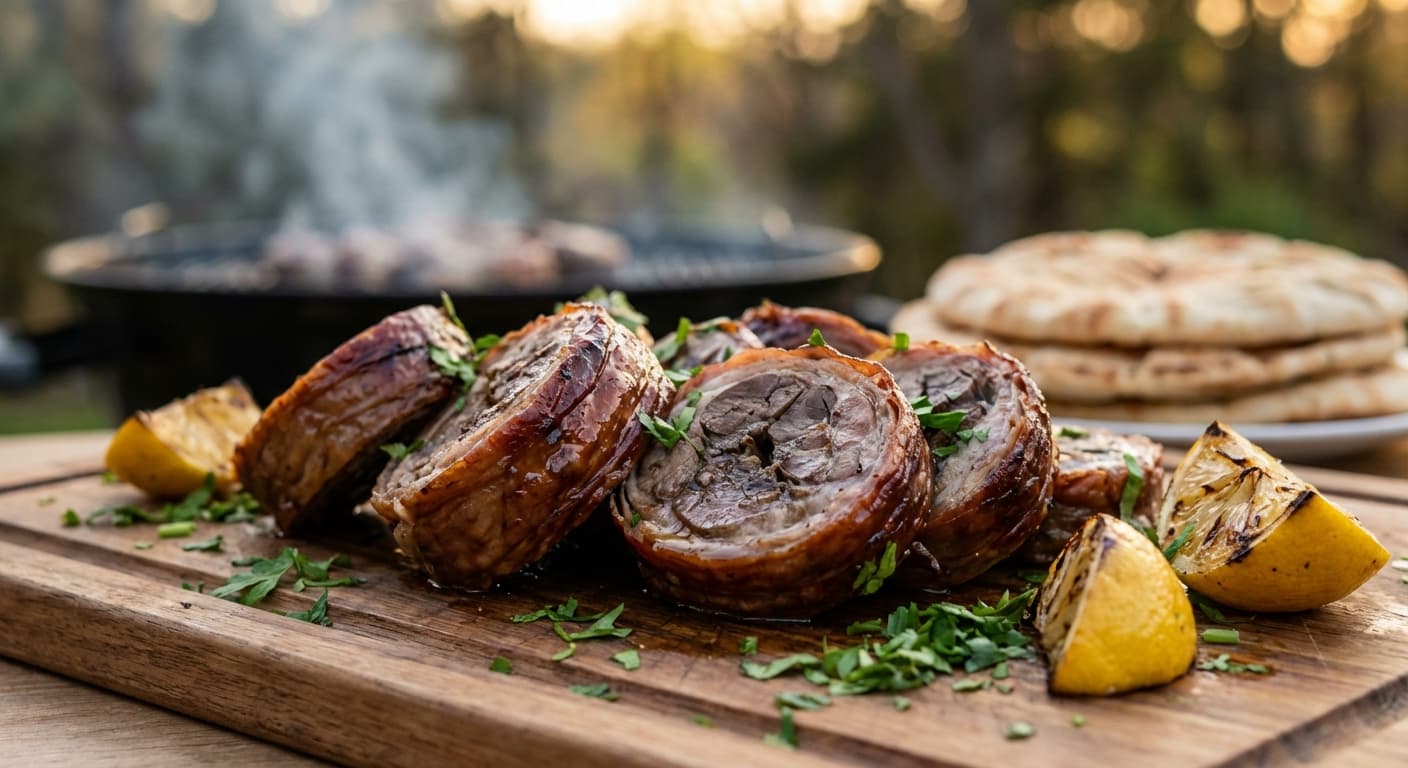
Kokoretsi (Κοκορέτσι) — Charcoal-Grilled Wrapped Lamb Offal
Greek · Kebabs · 135 min
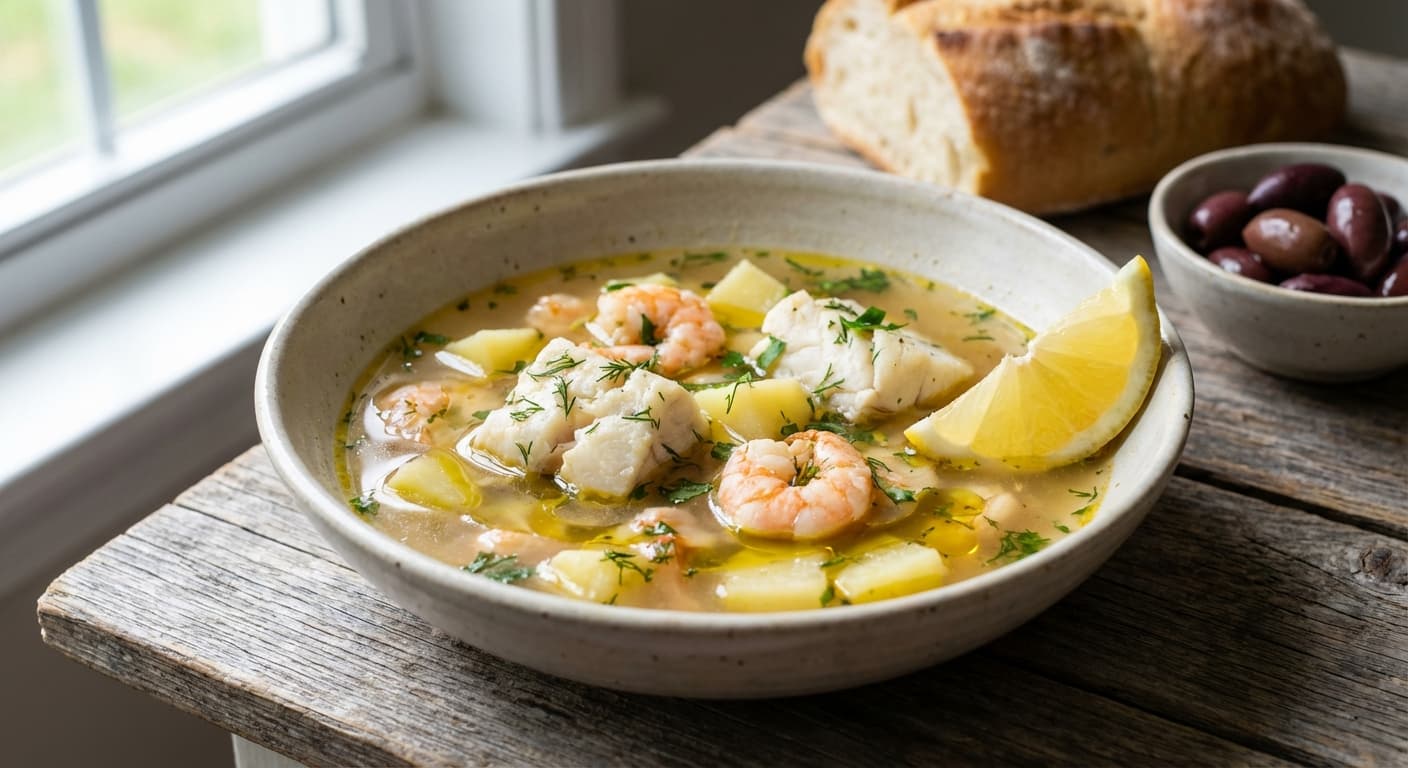
Kakavia (Κακαβιά) — Greek Fisherman’s Fish Soup with Herbs
Greek · Soups · 65 min
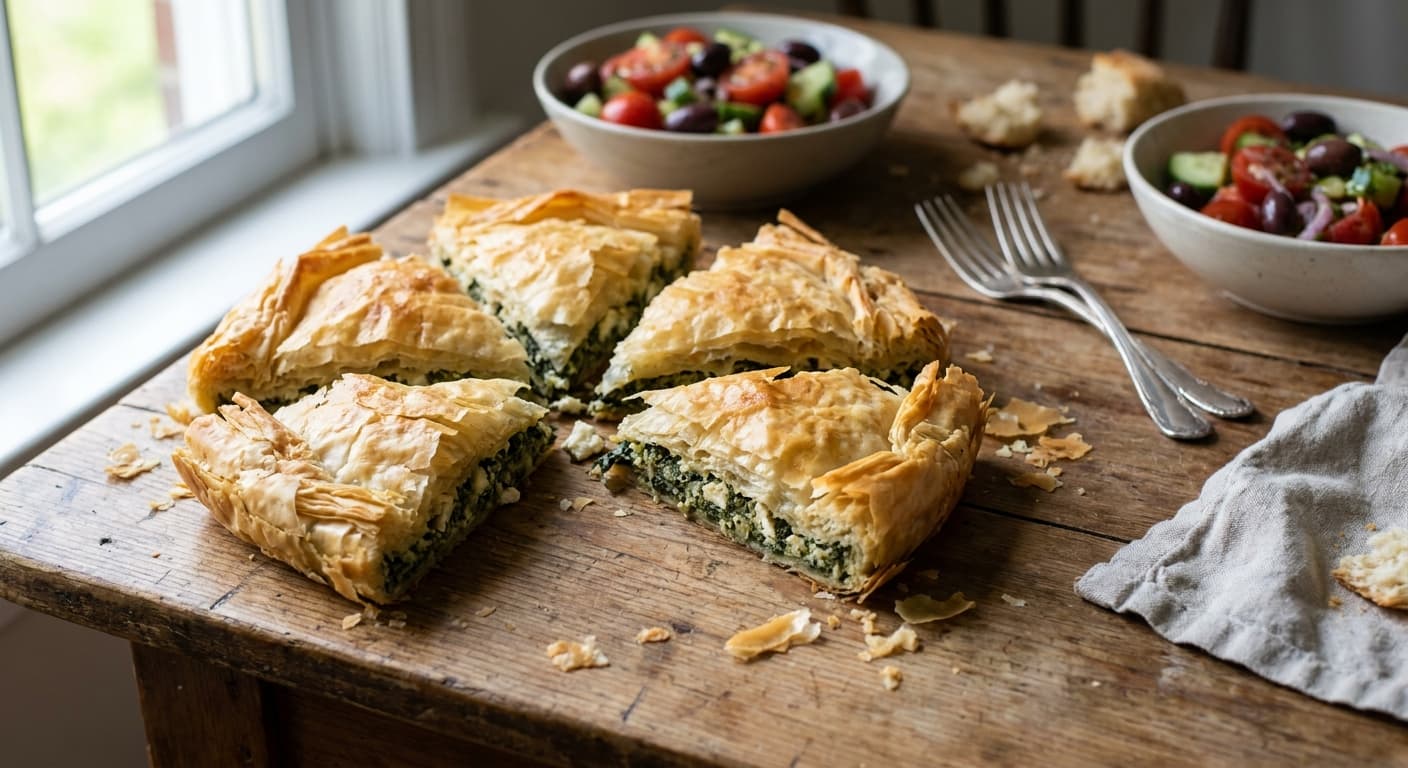
Greek Spinach Pie (Σπανακόπιτα) — Flaky Feta and Spinach Phyllo Pie
Greek · Main Courses · 95 min
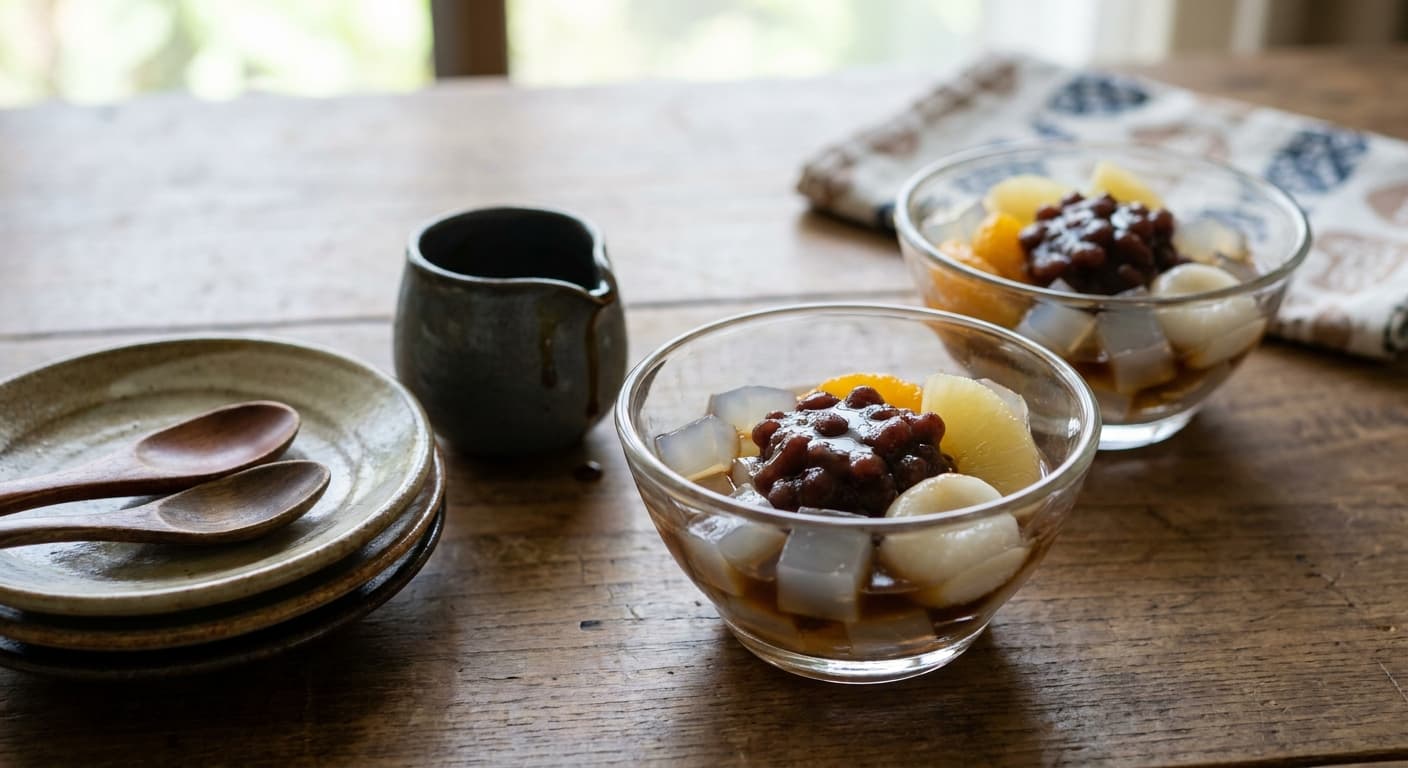
Anmitsu (あんみつ) — Kanten Jelly Dessert with Red Bean Paste
Japanese · Desserts · 55 min
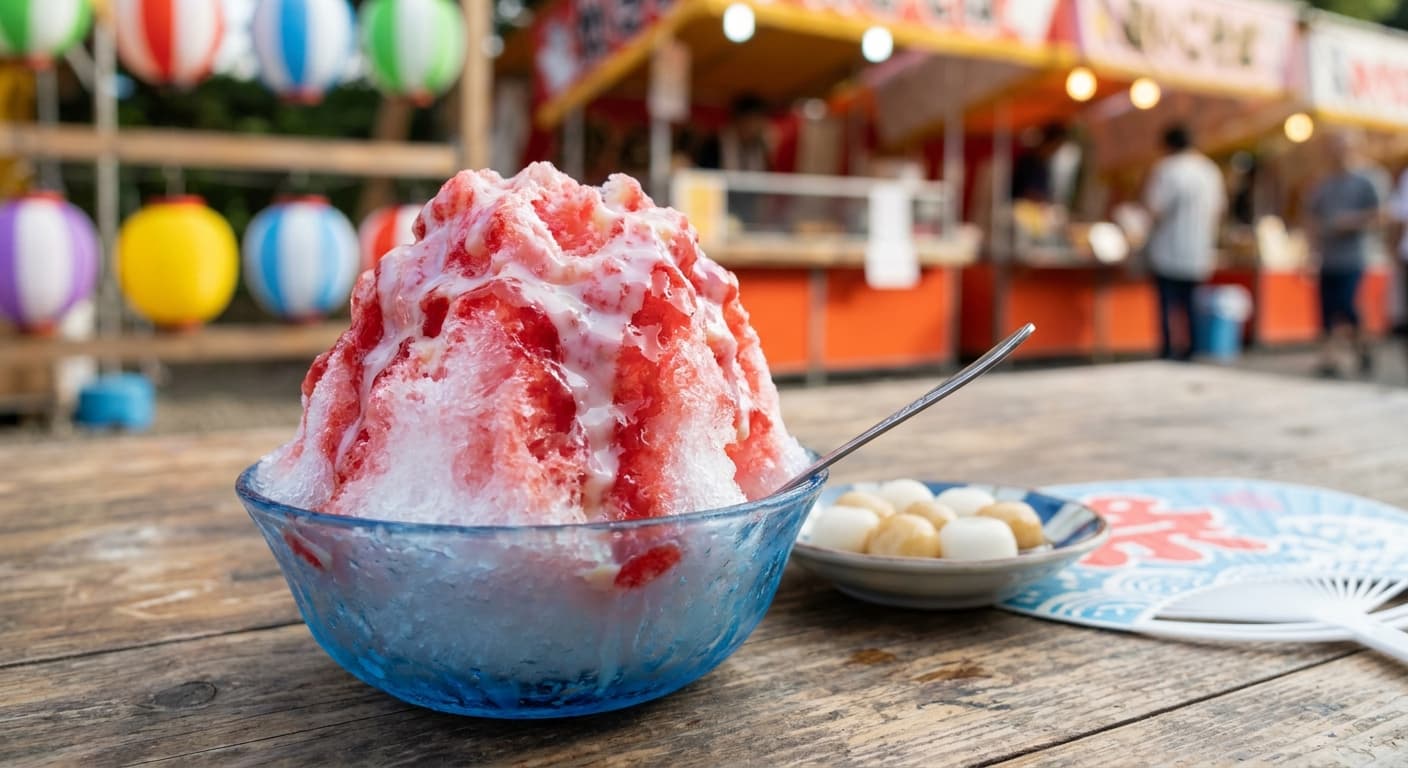
Kakigori (かき氷) — Japanese Shaved Ice with Strawberry Syrup
Japanese · Desserts · 50 min
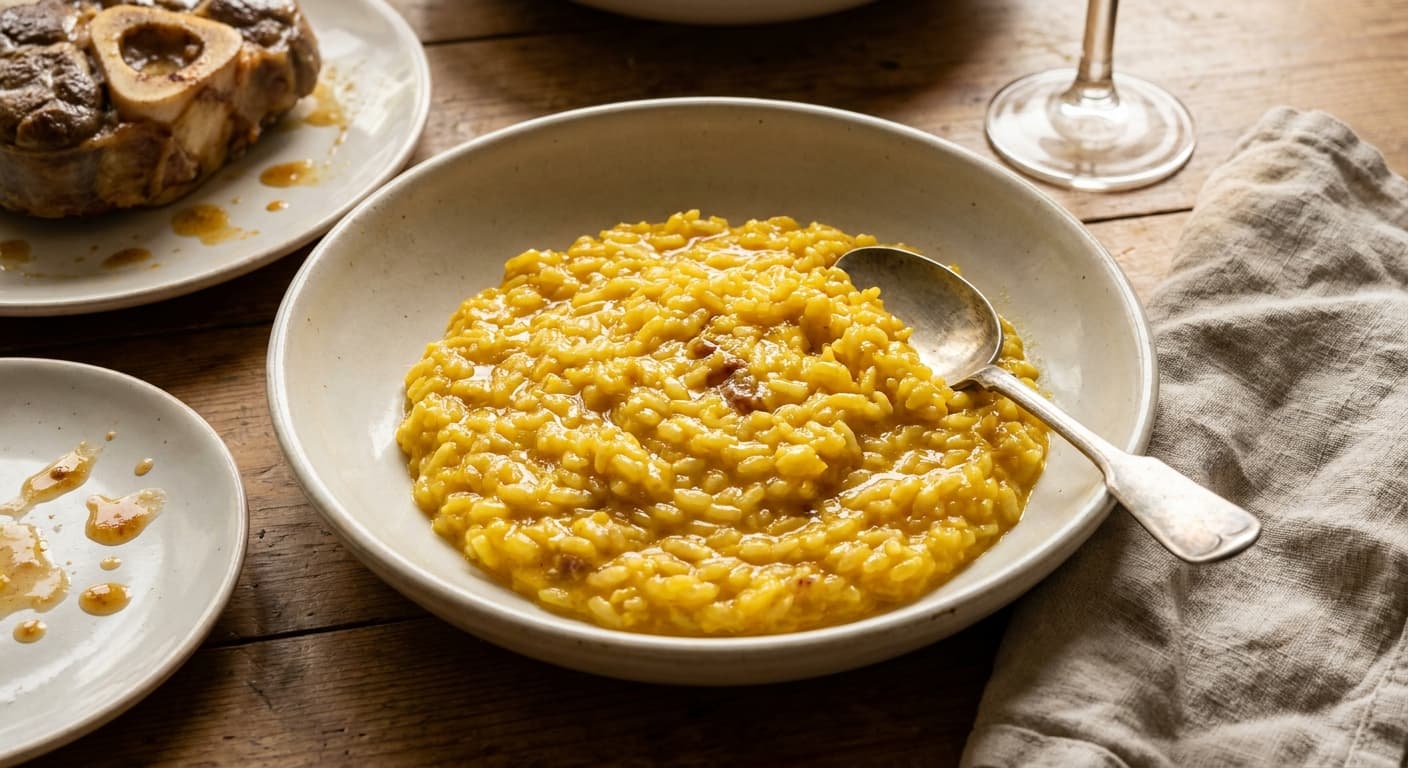
Risotto alla Milanese (Risotto alla Milanese) — Saffron-Rich Milanese Rice
Italian · Rice Dishes · 43 min
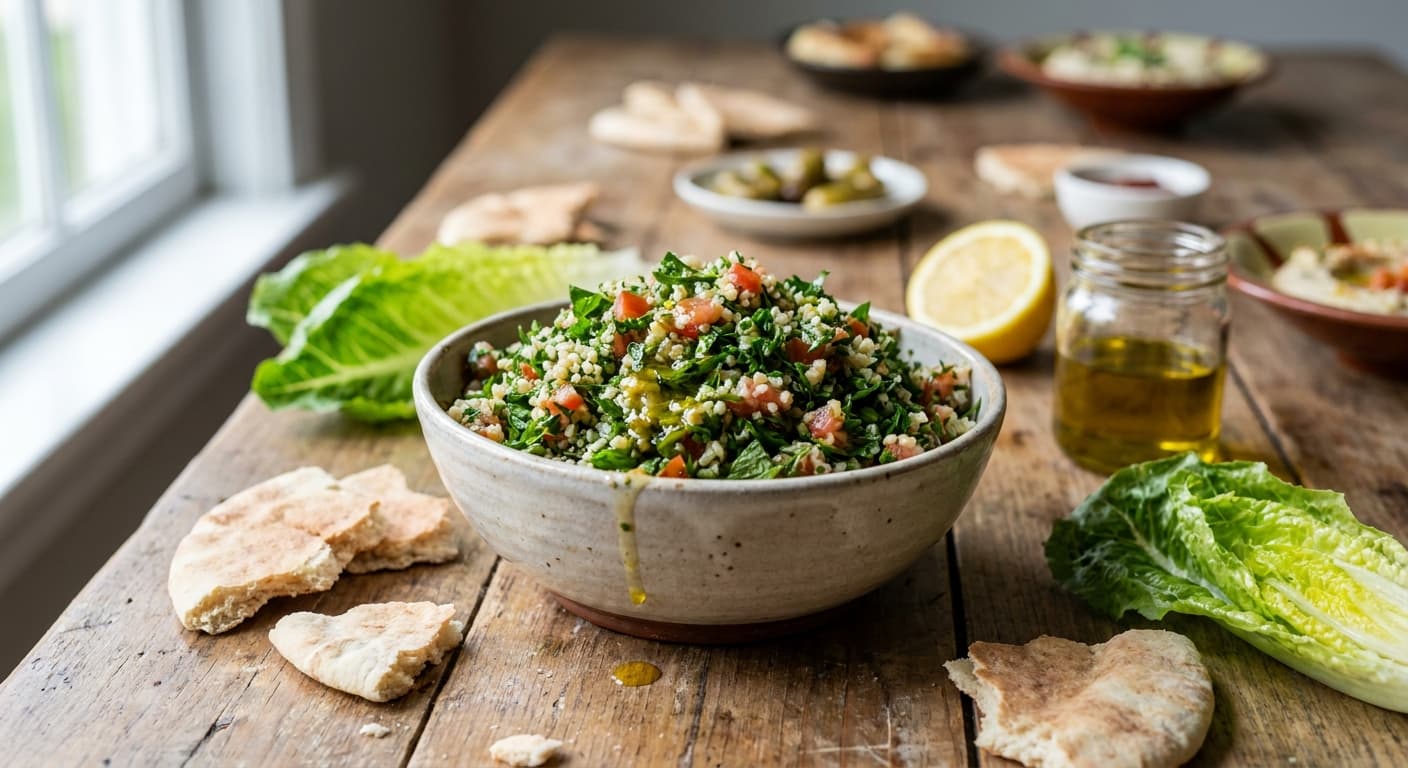
Lebanese Tabbouleh (تبولة لبنانية) — Parsley Bulgur Herb Salad
Lebanese · Salads · 35 min
Su Böreği (Su Böreği) — Turkish Layered Water Pastry with Cheese
Turkish · Main Courses · 115 min
Reviews
Cooked this recipe?
Tap the stars to rate it — that's all it takes. A few words are welcome but optional.
No ratings yet. Cooked this one? Be the first to rate it — it takes one tap.