Tsoureki (Τσουρέκι) — Greek Sweet Easter Bread with Mahlab
Tsoureki is Greece’s iconic Easter bread, braided and softly perfumed with mahlab and citrus. Traditionally baked for Pascha, it’s shared with family and guests, often topped with sesame and served with coffee.
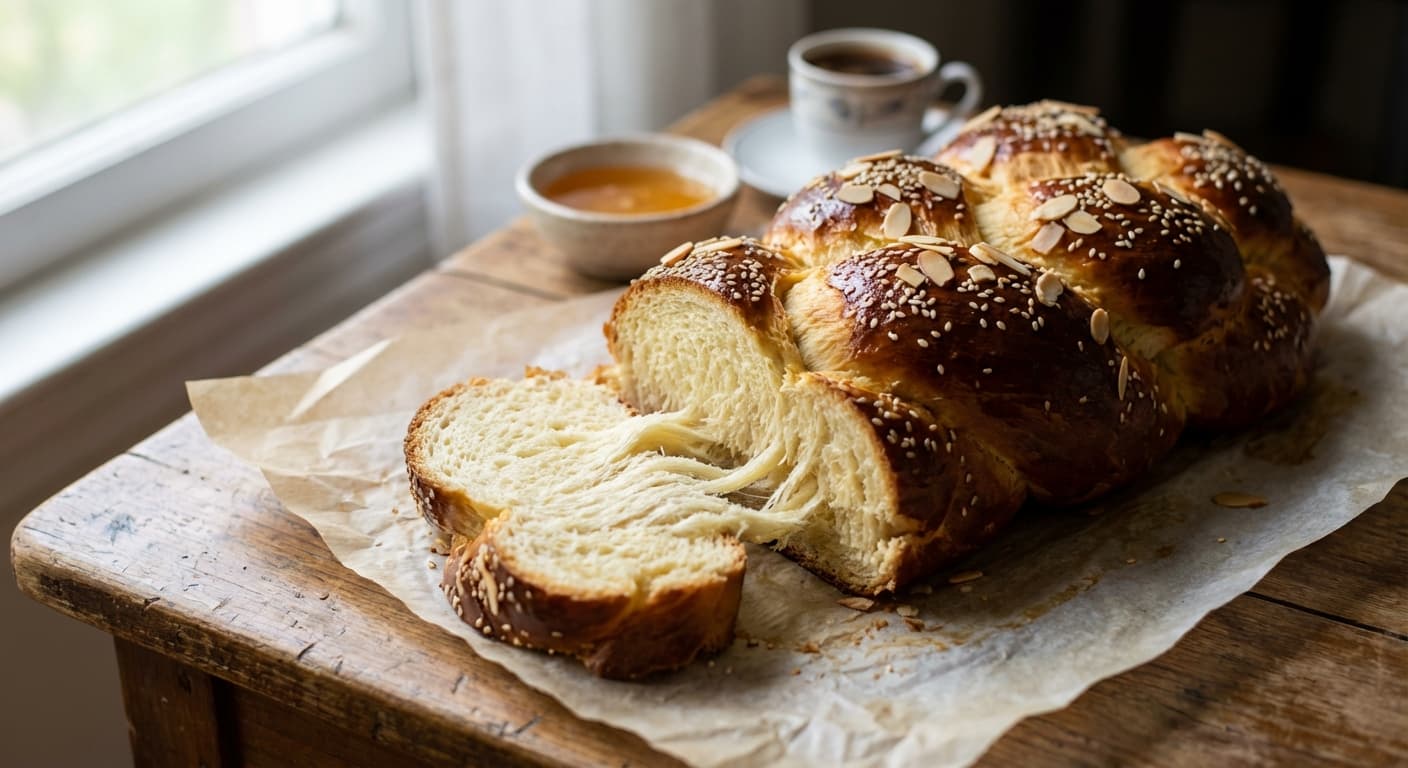
Printable Recipe Card
Servings: 12 · Total: 70 min · Difficulty: medium
Ingredients (quick list)
- 250 ml whole milk (warm to 35–38°C)
- 7 g active dry yeast
- 120 g granulated sugar (reserve 10 g to bloom yeast)
- 520 g bread flour (plus 20 g for bench as needed)
- 8 g fine sea salt
- 3 g mahlab, ground (about 1 tsp)
- 1 g mastic, ground (optional; about 1/2 tsp)
- 6 g orange zest (from 1 large orange)
- 5 ml vanilla extract (1 tsp)
- 2 large eggs (about 100 g without shells, room temp)
- 90 g unsalted butter (melted and cooled to lukewarm)
- 1 egg yolk (for egg wash)
+ 2 more in the full ingredients section below.
Steps (summary)
- Bloom the yeast by whisking the warm milk with the yeast and 10 g of the sugar in a bowl. Let it stand for 8–10 minutes until f…
- In a large mixing bowl, whisk together the flour, remaining sugar, salt, mahlab, optional mastic, and orange zest to distribute…
- Add the foamy yeast mixture, eggs, and vanilla to the dry ingredients and mix until a shaggy dough forms. Knead for 8–10 minute…
- Drizzle in the melted butter gradually while kneading, allowing each addition to fully absorb before adding more. Continue knea…
- Shape the dough into a tight ball and place it in a lightly greased bowl, turning once to coat the surface. Cover and let rise…
- Punch down the dough to release excess gas, then divide it into 3 equal pieces for a classic braid. Roll each piece into a 40–4…
+ 4 more steps in the full instructions section below.
Cultural Background
Tsoureki is closely tied to Greek Pascha, symbolizing renewal and celebration after Lent. Families often braid and gift loaves to loved ones, and the signature mahlab-and-citrus aroma is strongly associated with Easter gatherings.
Equipment
💡 Tips
- Keep the milk at 35–38°C; hotter than 45°C can weaken yeast and reduce rise.
- For extra stringy, shreddable crumb, knead to a strong windowpane and avoid adding more than 20 g extra flour.
- If the top browns too fast, tent with foil after 20 minutes while finishing the bake.
⚠️ Common Mistakes
❌ Adding all the butter at once, making the dough greasy and weak.
✅ Fix: Add butter slowly while kneading and wait until each addition is fully absorbed before adding more.
❌ Under-kneading, resulting in a dense crumb without long strands.
✅ Fix: Knead until the dough passes the windowpane test and looks glossy and elastic.
❌ Over-proofing the shaped braid so it collapses in the oven.
✅ Fix: Proof only until puffy and slowly springy to the touch, then bake immediately in a fully preheated oven.
🧊 How to Store
Wrap cooled Tsoureki tightly and keep at room temperature for up to 3 days. For longer storage, freeze sliced bread in an airtight bag up to 2 months; reheat slices at 160°C for 6–8 minutes or toast lightly to refresh the crumb.
📅 Make Ahead
Mix and knead the dough, then refrigerate it covered for up to 12 hours for a slower rise and deeper flavor. The next day, let it come to room temperature for 45–60 minutes, shape, proof, and bake as directed.
🍽️ Pairs Well With
- Greek coffee
- black tea
- orange marmalade
- honey
- butter
- chocolate spread.
Regional Variations
- Some Greek bakeries add 30 g candied orange peel to the dough for extra citrus sweetness.
- In parts of Greece, the braid is topped with flaked almonds instead of sesame for a more confectionary finish.
- A richer festive version may include 10 g ground anise or a small amount of cardamom alongside mahlab.
Ingredients
- 250 mlwhole milk (warm to 35–38°C)
- 7 gactive dry yeast
- 120 ggranulated sugar (reserve 10 g to bloom yeast)
- 520 gbread flour (plus 20 g for bench as needed)
- 8 gfine sea salt
- 3 gmahlab, ground (about 1 tsp)
- 1 gmastic, ground (optional; about 1/2 tsp)
- 6 gorange zest (from 1 large orange)
- 5 mlvanilla extract (1 tsp)
- 2large eggs (about 100 g without shells, room temp)
- 90 gunsalted butter (melted and cooled to lukewarm)
- 1egg yolk (for egg wash)
- 18 gsesame seeds (about 2 tbsp)
- 20 gblanched almonds, sliced (optional)
🔄 Substitutions
- bread flour→ all-purpose flour
- mastic, ground→ additional mahlab (1 g)
- whole milk→ 2% milk
Instructions
- 1
Bloom the yeast by whisking the warm milk with the yeast and 10 g of the sugar in a bowl. Let it stand for 8–10 minutes until foamy, which confirms the yeast is active and ready to leaven the dough.
- 2
In a large mixing bowl, whisk together the flour, remaining sugar, salt, mahlab, optional mastic, and orange zest to distribute the aromatics evenly. This step prevents clumps of spice and ensures every slice has the characteristic Tsoureki fragrance.
- 3
Add the foamy yeast mixture, eggs, and vanilla to the dry ingredients and mix until a shaggy dough forms. Knead for 8–10 minutes by hand (or 6–7 minutes on medium speed with a dough hook) until the dough begins to look smooth and elastic.
- 4
Drizzle in the melted butter gradually while kneading, allowing each addition to fully absorb before adding more. Continue kneading for 6–8 minutes until the dough is glossy, stretchy, and slightly tacky, and it can be pulled into a thin windowpane without tearing quickly.
- 5
Shape the dough into a tight ball and place it in a lightly greased bowl, turning once to coat the surface. Cover and let rise at 24–27°C for 60–90 minutes, or until doubled in size and airy when pressed gently.
- 6
Punch down the dough to release excess gas, then divide it into 3 equal pieces for a classic braid. Roll each piece into a 40–45 cm rope, keeping the thickness even so the loaf bakes uniformly and looks tidy.
- 7
Braid the three ropes loosely, tucking the ends underneath to prevent unraveling during proofing and baking. Transfer to a parchment-lined baking sheet, cover lightly, and proof for 45–60 minutes until noticeably puffy and the braid slowly springs back when touched.
- 8
Preheat the oven to 170°C and position a rack in the middle. Whisk the egg yolk with the milk for the egg wash, then brush the loaf gently without deflating it and sprinkle evenly with sesame and optional sliced almonds.
- 9
Bake for 30–35 minutes until deep golden brown and fragrant, rotating the tray at the 20-minute mark for even color. The bread is done when the internal temperature reaches 93–95°C, and it sounds hollow when tapped on the bottom.
- 10
Cool the Tsoureki on a rack for at least 60 minutes before slicing to set the crumb and keep it from becoming gummy. Serve in thick slices, and store only after fully cooled to preserve the soft, shreddable texture.
🪪 Recipe Passport
Cultural Background
Tsoureki is closely tied to Greek Pascha, symbolizing renewal and celebration after Lent. Families often braid and gift loaves to loved ones, and the signature mahlab-and-citrus aroma is strongly associated with Easter gatherings.
Regional Variations
Researched from multiple sources and validated by the Zaffaron editorial team. Every recipe is tested for accuracy, measurements, and cultural authenticity.
Nutrition per serving
Pairs well with
If you enjoyed this recipe, here are a few related Zaffaron recipes to try next.
Does your family make this differently?
Every family has their own version. Maybe your grandmother adds a secret ingredient, or your aunt has a completely different technique. Preserve your family's version — with their name on it, forever.
You Might Also Like
Kokoretsi (Κοκορέτσι) — Charcoal-Grilled Offal Wrapped in Caul Fat
Greek · Kebabs · 170 min
Lagana (Λαγάνα) — Sesame-Topped Greek Clean Monday Flatbread
Greek · Breads · 43 min
Vasilopita (Βασιλόπιτα) — Greek New Year’s Coin Cake
Greek · Desserts · 80 min
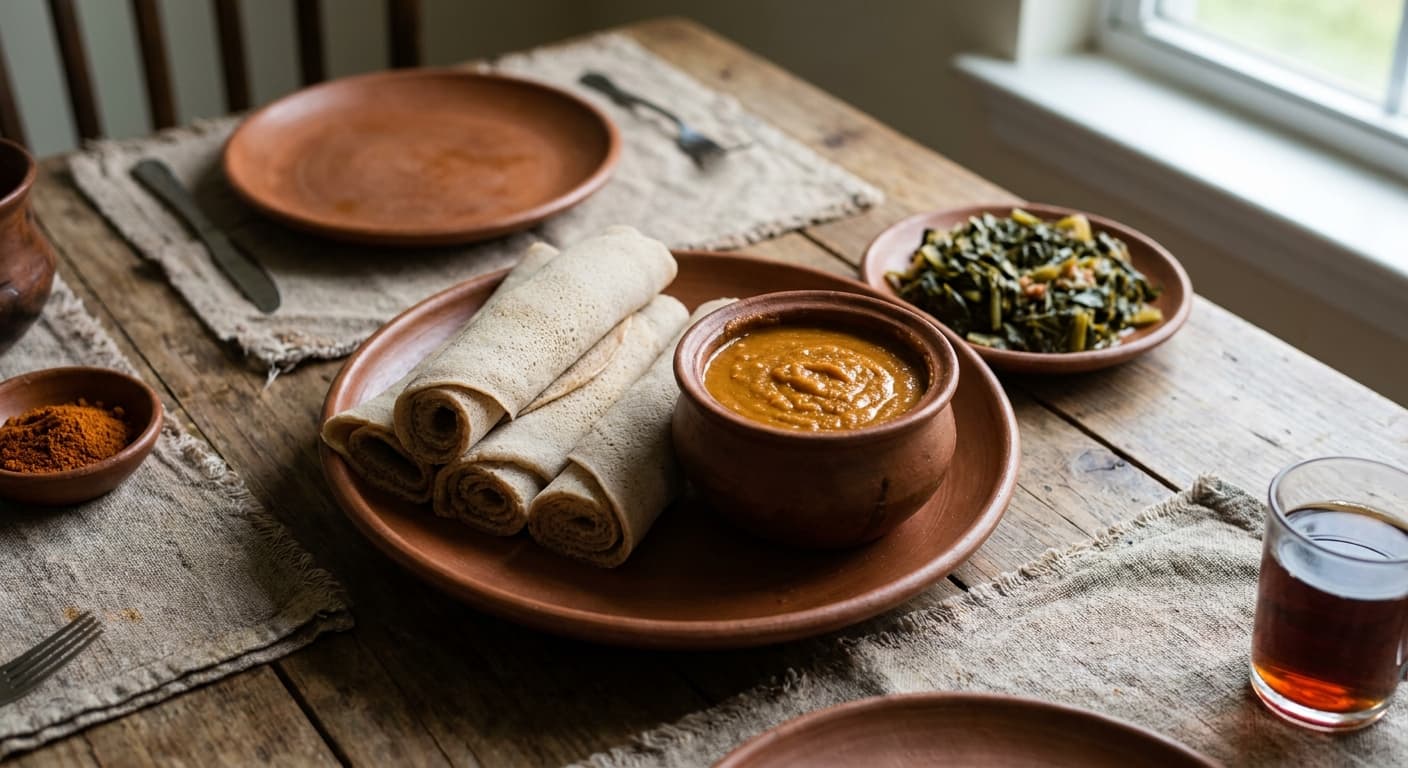
Injera (እንጀራ) — Fermented Ethiopian Teff Flatbread
Ethiopian · Breads · 70 min
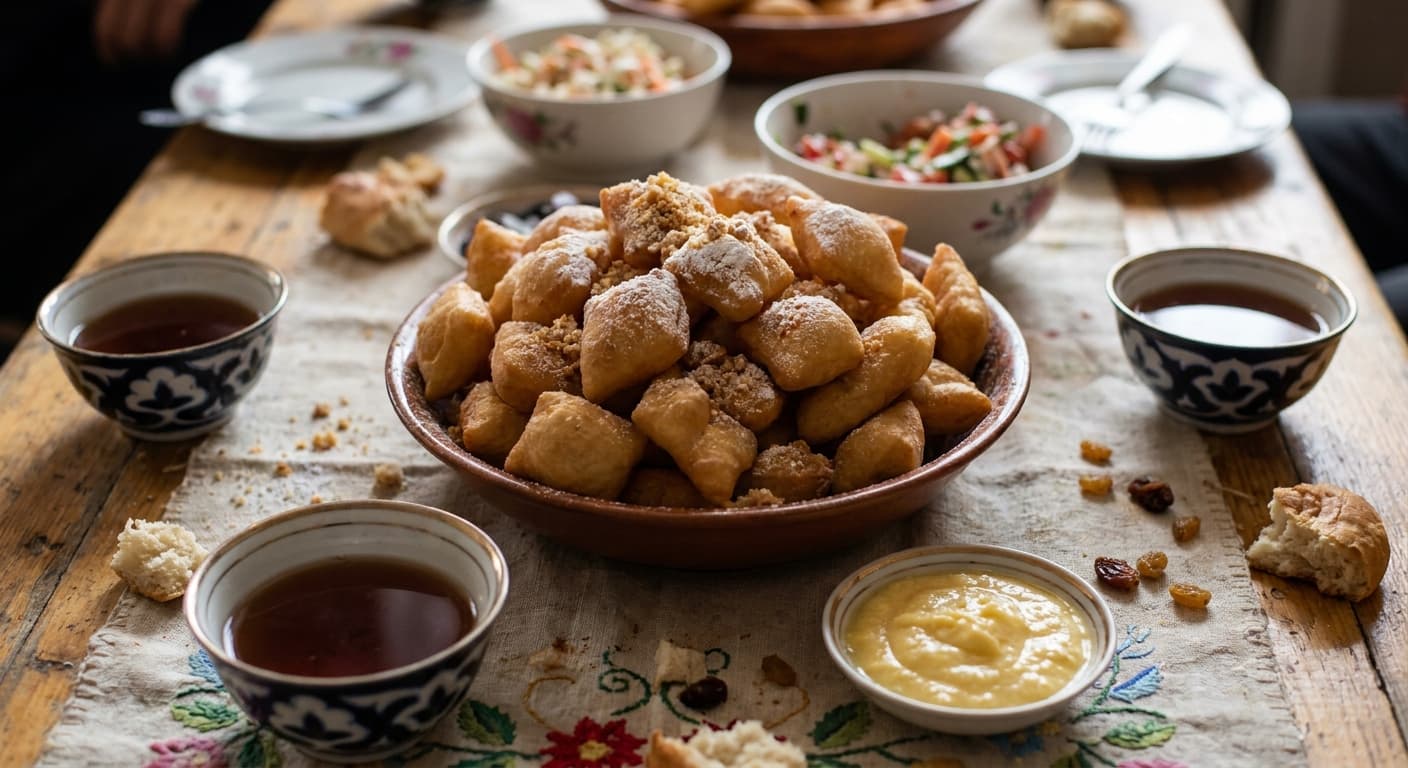
Boorsok (Боорсок) — Kyrgyz Fried Celebration Bread
Kyrgyz · Breads · 120 min
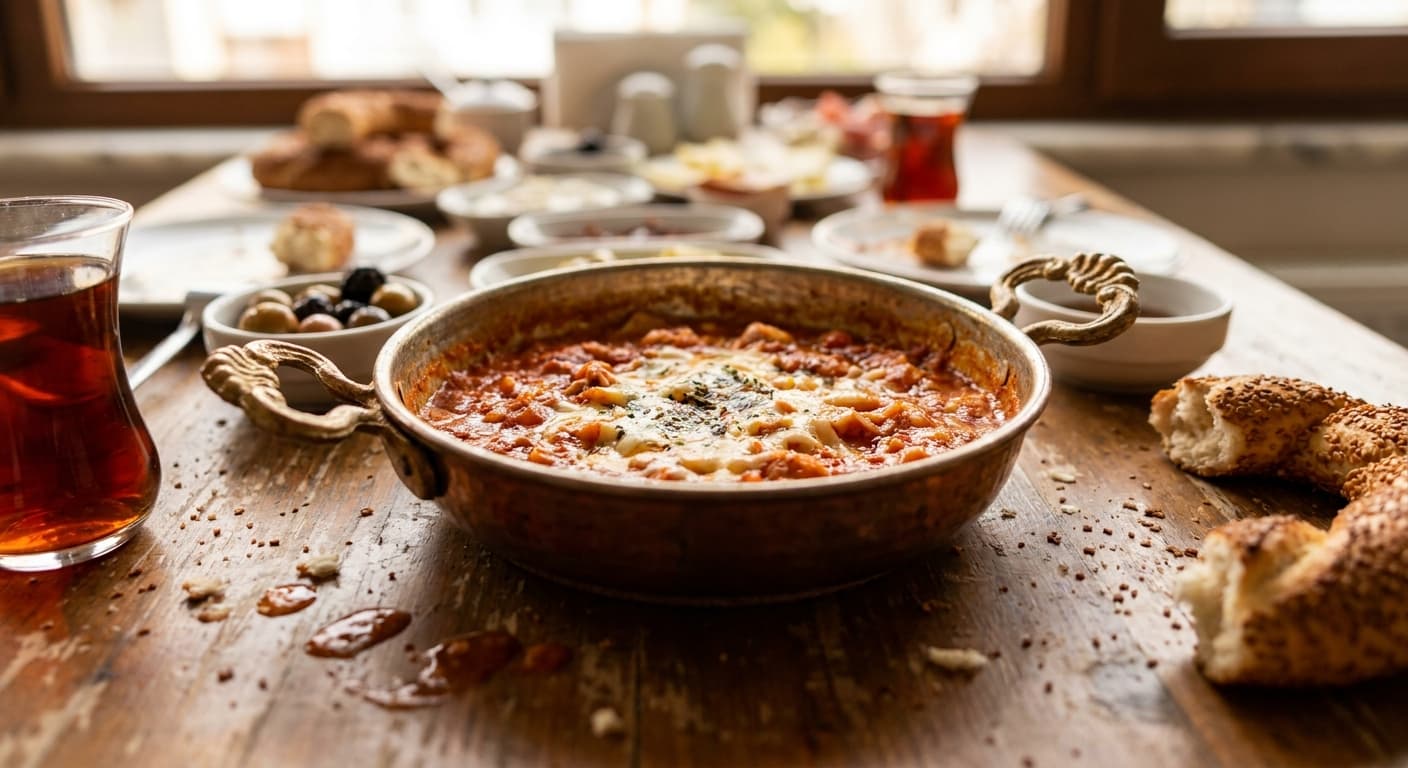
Turkish Menemen (Menemen) — Soft Eggs with Tomatoes and Peppers
Turkish · Main Courses · 37 min
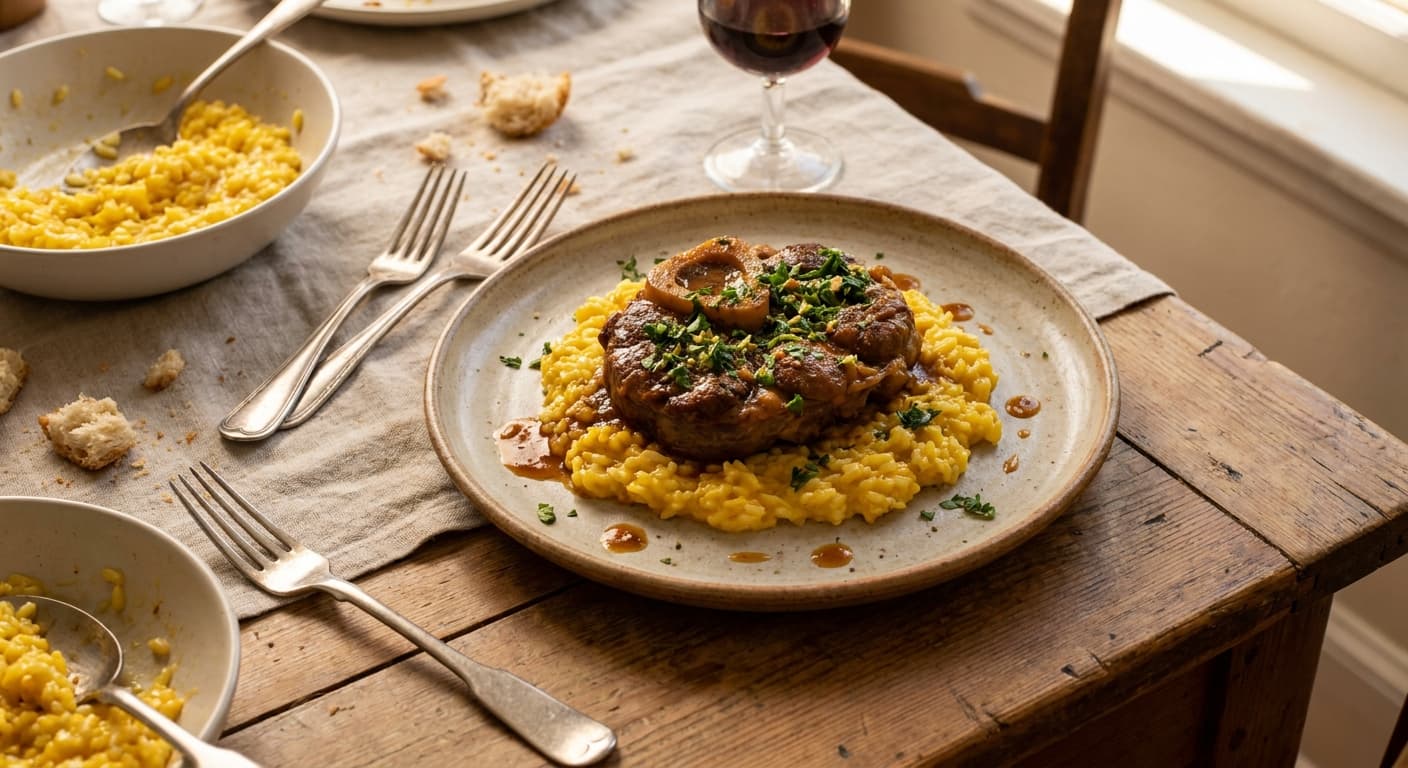
Osso Buco (Osso Buco alla Milanese) — Milanese Braised Veal Shanks
Italian · Main Courses · 145 min
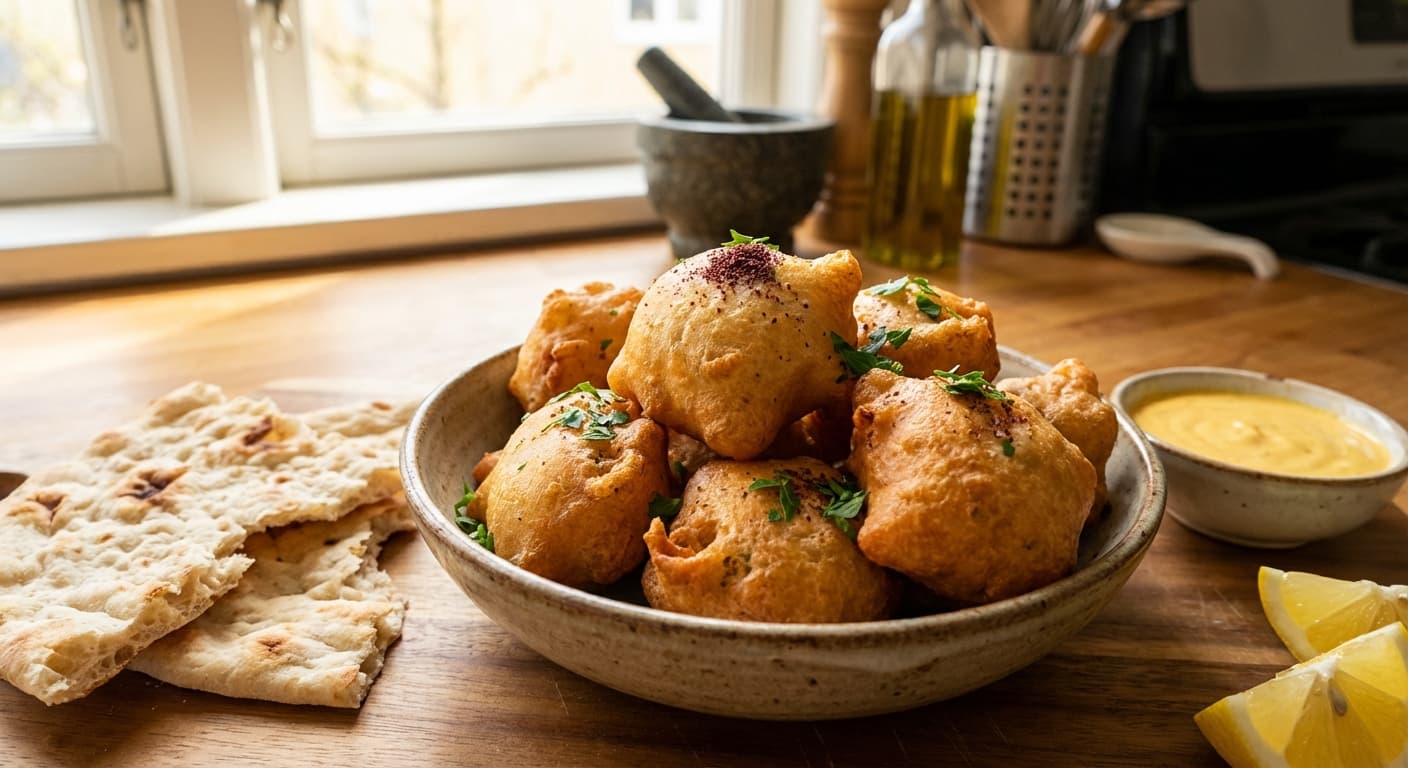
Beniye Migo (بنیه میگو) — Persian-Style Puffy Shrimp Fritters
Persian · Appetizers · 105 min
Reviews
Cooked this recipe?
Tap the stars to rate it — that's all it takes. A few words are welcome but optional.
No ratings yet. Cooked this one? Be the first to rate it — it takes one tap.