Bougatsa (Μπουγάτσα) — Greek Custard-Filled Phyllo Pastry
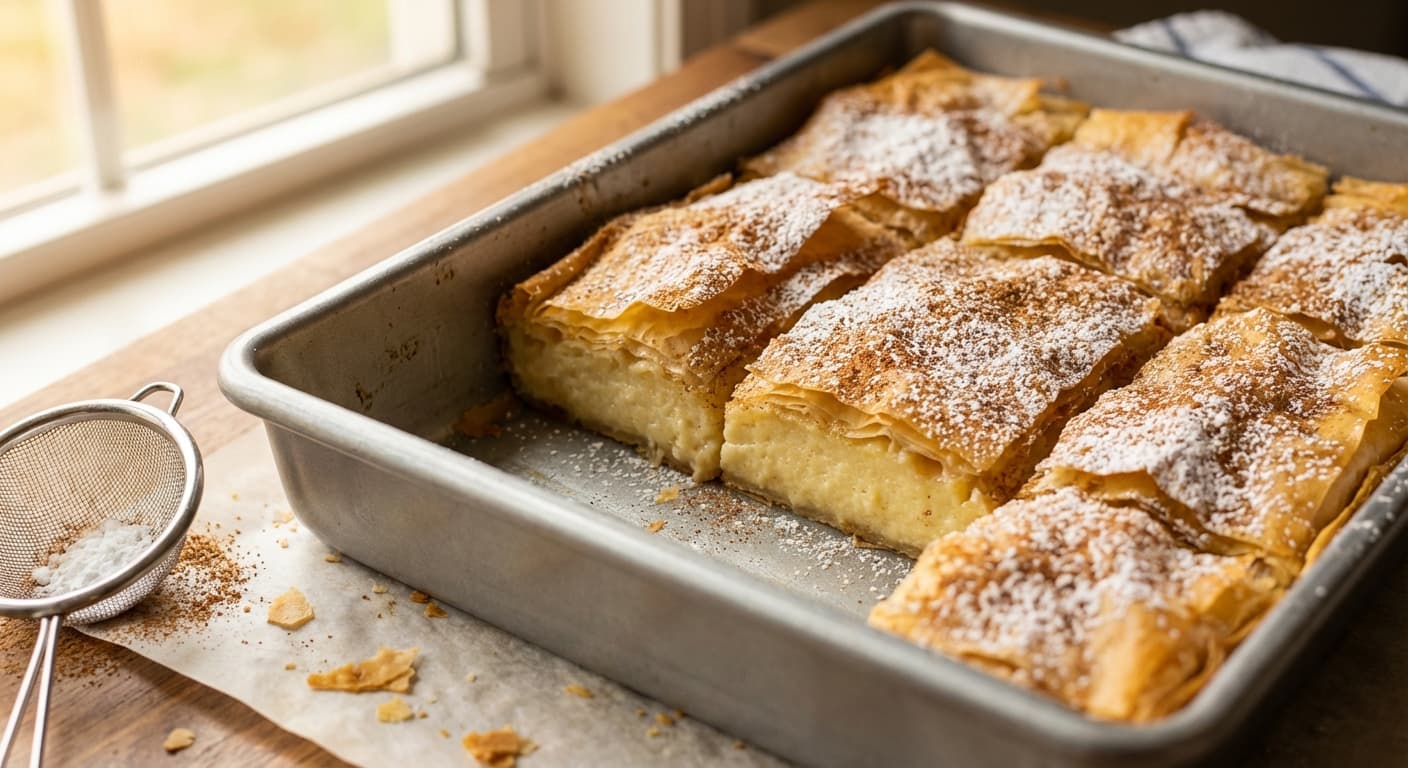
Bougatsa is a beloved breakfast pastry from northern Greece, especially Thessaloniki, where crisp phyllo surrounds a creamy semolina custard. It’s traditionally baked, cut into squares, and finished with powdered sugar and cinnamon.
Printable Recipe Card
Servings: 8 · Total: 60 min · Difficulty: medium
Ingredients (quick list)
- 450 g Phyllo dough sheets (thawed if frozen)
- 140 g Unsalted butter (melted)
- 1000 ml Whole milk
- 120 g Fine semolina (not coarse)
- 160 g Granulated sugar
- 2 Eggs (large)
- 2 tsp Vanilla extract
- 1 tsp Lemon zest (finely grated)
- 0.5 tsp Fine sea salt
- 20 g Powdered sugar
- 1 tsp Ground cinnamon
Steps (summary)
- Preheat the oven to 180°C (356°F) and position a rack in the middle. Brush a 33 x 23 cm (13 x 9 in) baking pan lightly with mel…
- Make the custard by warming the milk in a heavy saucepan over medium heat until steaming and just beginning to bubble at the ed…
- Cook the semolina custard for 3–5 minutes, whisking, until it becomes thick and glossy and the whisk leaves visible trails. Rem…
- In a bowl, whisk the eggs with the vanilla and lemon zest until smooth. Temper the eggs by whisking in 120 ml of the hot custar…
- Return the saucepan to low heat and cook for 1 minute, whisking, until the custard is thick again and silky. Transfer the custa…
- Unroll the phyllo and cover it with a lightly damp towel so it does not dry out while you work. Lay 1 sheet into the pan, letti…
+ 3 more steps in the full instructions section below.
Cultural Background
Often eaten for breakfast in northern Greece, bougatsa is tied to urban bakery culture and the craft of phyllo-making. In Thessaloniki, it’s famously served warm, cut into squares, and finished with sugar and cinnamon for a comforting start to the day.
Equipment
💡 Tips
- Keep phyllo covered with a damp towel and work quickly; if a sheet dries, it will crack and bake unevenly.
- For extra crisp layers, butter every sheet fully, including the corners, using 140 g butter total for reliable flake.
- Resting for 10 minutes before slicing helps the semolina custard set so portions stay clean and creamy.
⚠️ Common Mistakes
❌ Custard turns lumpy or grainy.
✅ Fix: Whisk semolina in gradually and continuously, then cook until glossy; if lumps form, whisk vigorously off heat for 30 seconds or pass through a fine sieve.
❌ Eggs scramble when added to the hot custard.
✅ Fix: Temper the eggs with 120 ml hot custard before combining, then return to low heat and whisk constantly for 1 minute.
❌ Phyllo bakes pale and soft.
✅ Fix: Butter each sheet evenly and bake until deeply golden; reheat in the oven to restore crispness instead of using the microwave.
🧊 How to Store
Store cooled bougatsa covered in the refrigerator for up to 3 days. Reheat on a sheet pan at 170°C (338°F) for 10–12 minutes to re-crisp the phyllo; avoid microwaving longer than 20 seconds per piece, which softens the layers.
📅 Make Ahead
Cook the custard up to 24 hours ahead and refrigerate it with plastic wrap pressed on the surface. Assemble and bake the bougatsa the next morning for the best crispness, adding 3–5 minutes to bake time if the custard is cold.
🍽️ Pairs Well With
- Greek coffee
- strong black tea
- fresh orange juice
- a dusting of extra cinnamon.
Regional Variations
- Thessaloniki-style custard bougatsa: semolina cream filling, finished with powdered sugar and cinnamon.
- Cheese bougatsa: replace custard with a sweetened soft cheese filling and omit semolina for a tangier pastry.
- Individual parcels: wrap filling in smaller phyllo stacks and bake as hand-held squares for street-food style serving.
Ingredients
- 450 gPhyllo dough sheets (thawed if frozen)
- 140 gUnsalted butter (melted)
- 1000 mlWhole milk
- 120 gFine semolina (not coarse)
- 160 gGranulated sugar
- 2Eggs (large)
- 2 tspVanilla extract
- 1 tspLemon zest (finely grated)
- 0.5 tspFine sea salt
- 20 gPowdered sugar
- 1 tspGround cinnamon
🔄 Substitutions
- Whole milk→ 2% milk
- Vanilla extract→ vanilla bean paste
- Lemon zest→ orange zest
Instructions
- 1
Preheat the oven to 180°C (356°F) and position a rack in the middle. Brush a 33 x 23 cm (13 x 9 in) baking pan lightly with melted butter, then keep the remaining butter warm so it stays fluid.
- 2
Make the custard by warming the milk in a heavy saucepan over medium heat until steaming and just beginning to bubble at the edges. Whisk in the sugar, semolina, and salt in a steady stream, whisking constantly so no lumps form as it thickens.
- 3
Cook the semolina custard for 3–5 minutes, whisking, until it becomes thick and glossy and the whisk leaves visible trails. Remove the pan from the heat and let it stand for 2 minutes so it cools slightly before adding eggs.
- 4
In a bowl, whisk the eggs with the vanilla and lemon zest until smooth. Temper the eggs by whisking in 120 ml of the hot custard, then pour the egg mixture back into the saucepan and whisk vigorously for 30 seconds to fully combine.
- 5
Return the saucepan to low heat and cook for 1 minute, whisking, until the custard is thick again and silky. Transfer the custard to a shallow dish and press plastic wrap directly onto the surface to prevent a skin while you prepare the phyllo.
- 6
Unroll the phyllo and cover it with a lightly damp towel so it does not dry out while you work. Lay 1 sheet into the pan, letting excess hang over the sides, then brush it with melted butter and repeat with 7 more sheets, rotating directions so the base is well layered.
- 7
Spoon the warm custard into the center and spread it into an even layer, leaving a 2 cm border clear around the edges. Fold the overhanging phyllo inward over the custard, brushing the folds with butter so they adhere and bake crisp.
- 8
Top with the remaining phyllo sheets, one at a time, brushing each sheet with butter and tucking the edges neatly into the pan. Brush the top generously with butter, then score the top lightly into 8 squares without cutting all the way through to the custard.
- 9
Bake for 30–35 minutes until the bougatsa is deeply golden and audibly crisp when tapped. Rest for 10 minutes so the custard sets, then cut along the scored lines, dust with powdered sugar and cinnamon, and serve warm.
🪪 Recipe Passport
Cultural Background
Often eaten for breakfast in northern Greece, bougatsa is tied to urban bakery culture and the craft of phyllo-making. In Thessaloniki, it’s famously served warm, cut into squares, and finished with sugar and cinnamon for a comforting start to the day.
Regional Variations
Researched from multiple sources and validated by the Zaffaron editorial team. Every recipe is tested for accuracy, measurements, and cultural authenticity.
Nutrition per serving
Pairs well with
If you enjoyed this recipe, here are a few related Zaffaron recipes to try next.
Does your family make this differently?
Every family has their own version. Maybe your grandmother adds a secret ingredient, or your aunt has a completely different technique. Preserve your family's version — with their name on it, forever.
You Might Also Like
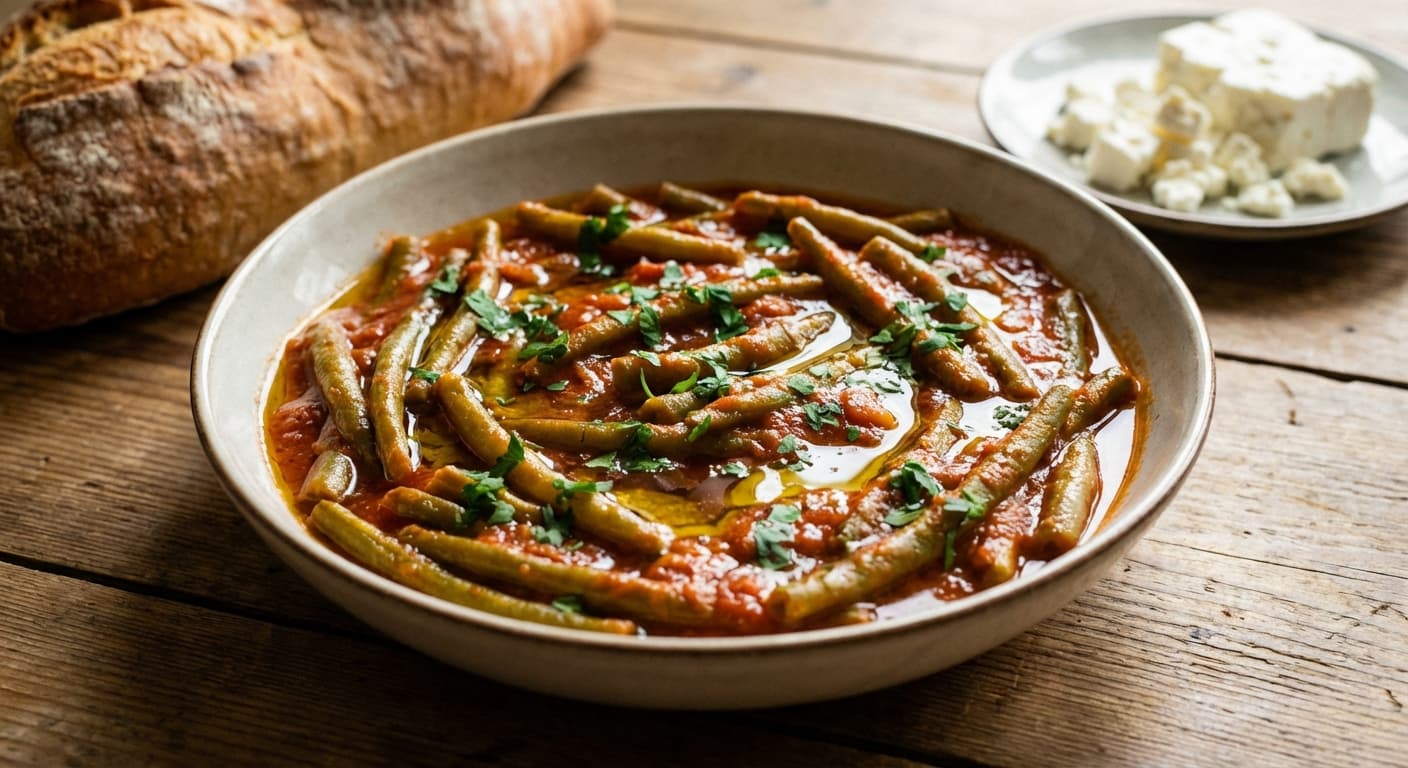
Greek Green Beans in Olive Oil (Φασολάκια λαδερά) — Tender green beans braised with tomato and extra-virgin olive oil
Greek · Main Courses · 75 min
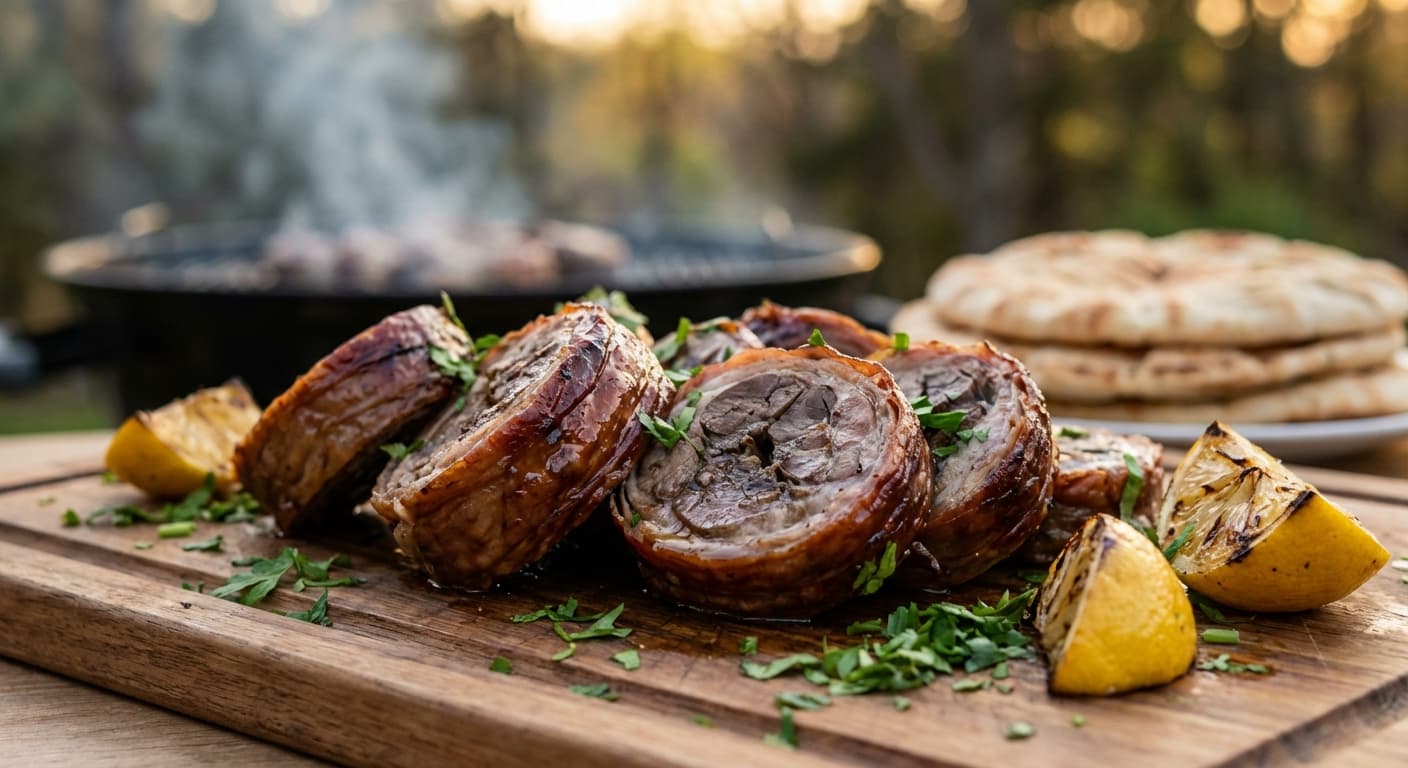
Kokoretsi (Κοκορέτσι) — Charcoal-Grilled Wrapped Lamb Offal
Greek · Kebabs · 135 min
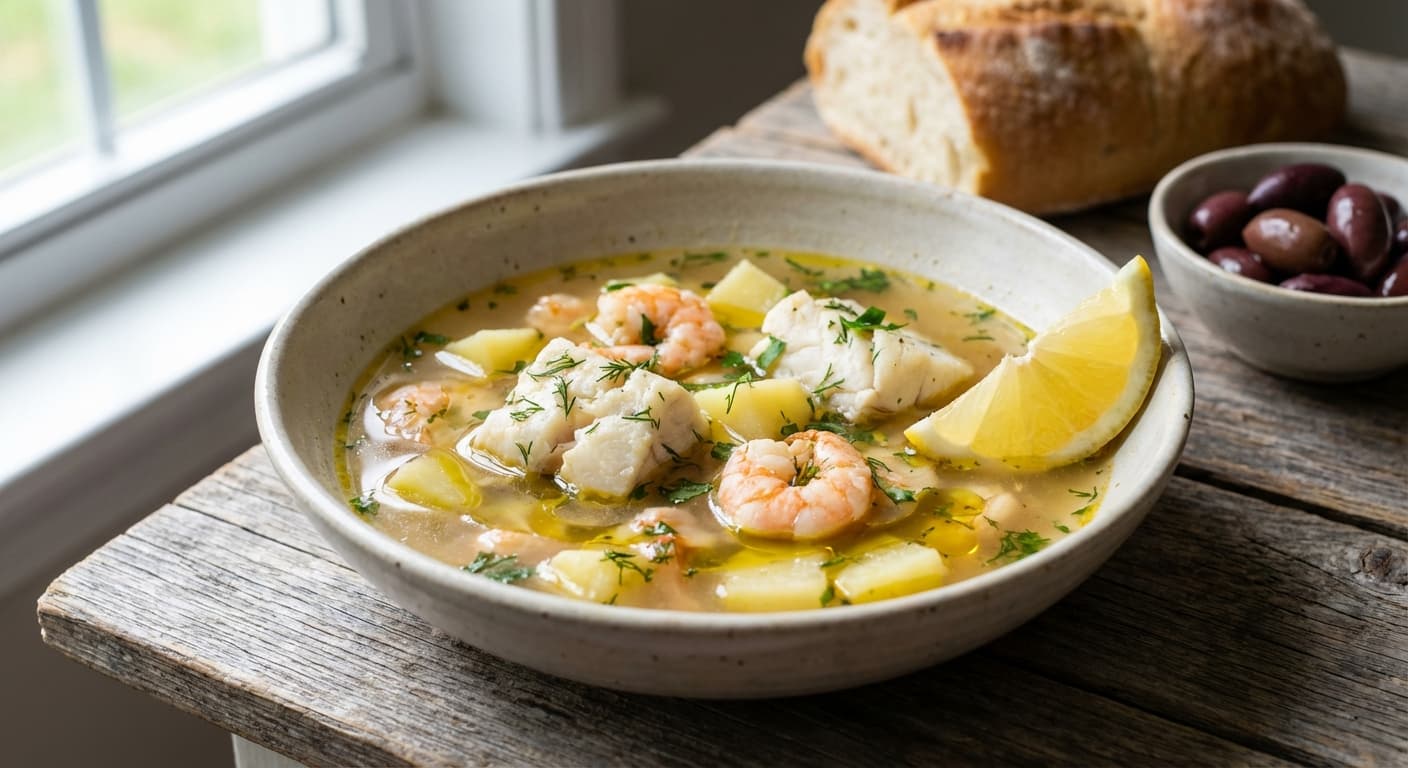
Kakavia (Κακαβιά) — Greek Fisherman’s Fish Soup with Herbs
Greek · Soups · 65 min
Bhapa Pitha (ভাপা পিঠা) — Steamed Rice Cakes with Coconut and Date Palm Jaggery
Bangladeshi · Desserts · 67 min
Watalappan (වටලප්පන්) — Sri Lankan Coconut Jaggery Custard
Sri lankan · Desserts · 70 min
Sac Kavurma (Saç Kavurma) — Thin-Sliced Turkish Meat Sautéed with Onions
Turkish · Main Courses · 38 min
Eggplant Parmesan (Melanzane alla Parmigiana) — Southern Italian Baked Eggplant
Italian · Main Courses · 100 min
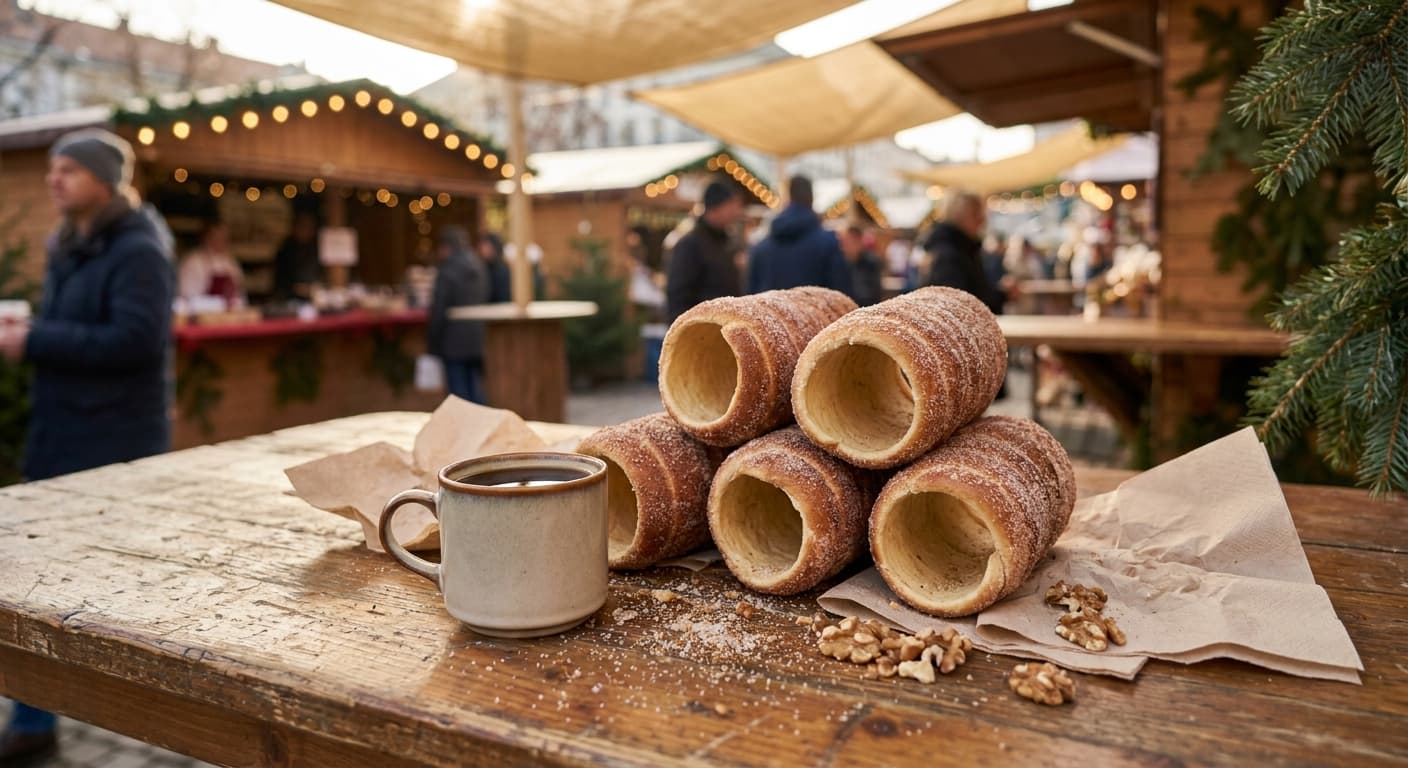
Chimney Cake (Kürtőskalács) — Hungarian Spiral Pastry with Cinnamon Sugar
Hungarian · Desserts · 59 min
Reviews
Cooked this recipe?
Tap the stars to rate it — that's all it takes. A few words are welcome but optional.
No ratings yet. Cooked this one? Be the first to rate it — it takes one tap.