Reshteh Polo (رشته پلو) — Persian Noodle Rice with Black-Eyed Peas
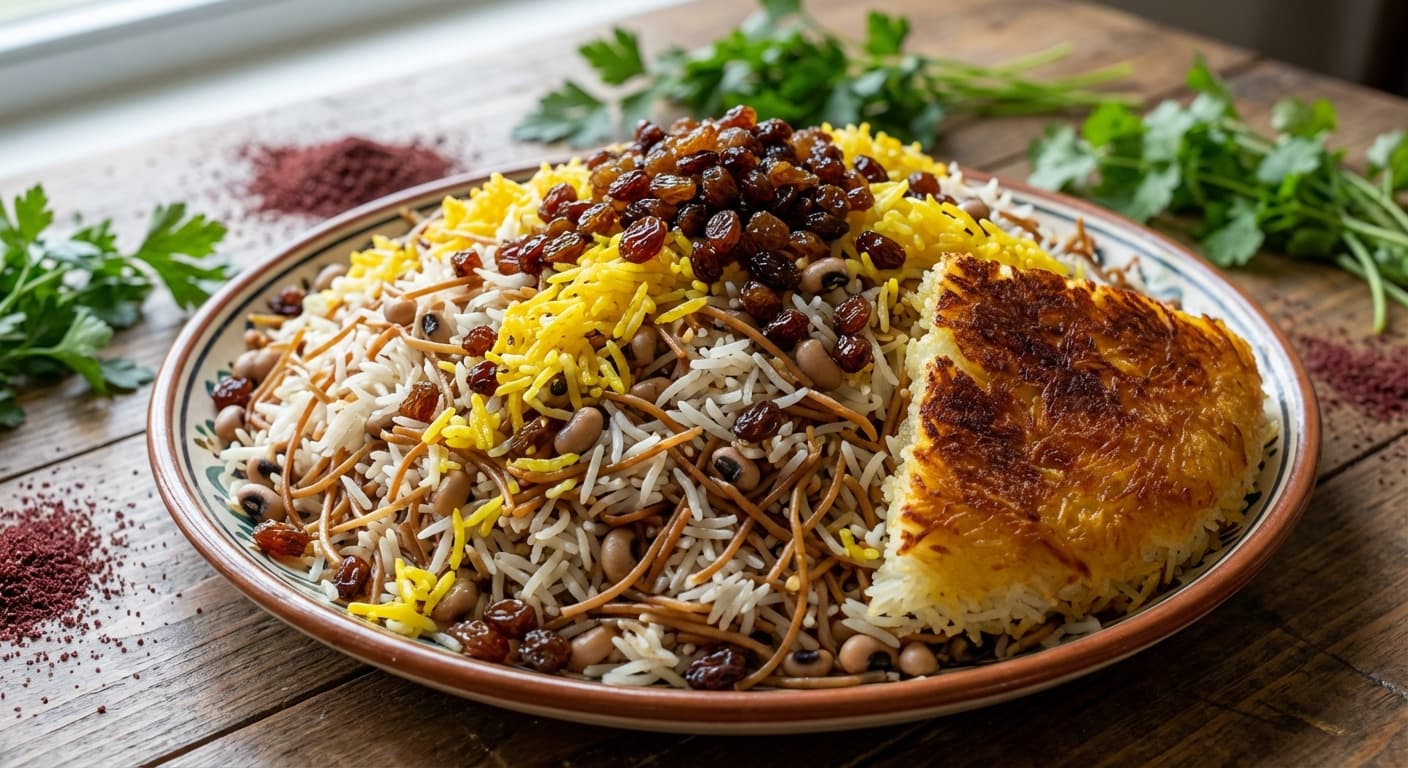
Reshteh Polo is a beloved Persian rice dish where toasted noodles mingle with fluffy basmati and legumes. Often served for Nowruz, the “noodles” symbolize life’s threads—hoping the new year’s paths become easier to untangle.
Printable Recipe Card
Servings: 6 · Total: 90 min · Difficulty: medium
Ingredients (quick list)
- 450 g Long-grain basmati rice (washed until water runs mostly clear)
- 160 g Black-eyed peas (dried) (soaked 8 hours, then drained)
- 120 g Reshteh (Persian toasted noodles) (broken into 4–6 cm pieces)
- 200 g Yellow onion (thinly sliced)
- 2 tsp Ground turmeric
- 12 g Sea salt (plus 18 g for parboiling water)
- 1 tsp Black pepper
- 60 ml Vegetable oil (divided)
- 0.25 tsp Saffron threads (ground and bloomed)
- 45 ml Hot water (for blooming saffron)
- 120 g Raisins (rinsed and well-drained)
- 2500 ml Water (for boiling peas and parboiling rice (as needed))
Steps (summary)
- Soak the black-eyed peas in plenty of water for 8 hours, then drain and rinse. In a pot, cover with 1200 ml fresh water and sim…
- Wash the basmati rice in several changes of water until the water runs mostly clear, then soak it in cool water with 12 g sea s…
- In a skillet, heat 30 ml vegetable oil over medium heat and add the sliced onion. Cook for 10–12 minutes, stirring often, until…
- Bring a large pot of water to a rolling boil and add 18 g sea salt. Drain the soaked rice and add it to the boiling water, stir…
- Drain the rice and noodles immediately in a colander and rinse quickly with 200 ml cool water to stop carryover cooking. Let it…
- Return the pot to the stove and add 30 ml vegetable oil with 60 ml water to create steam for the tahdig base. Spoon in 1/3 of t…
+ 3 more steps in the full instructions section below.
Cultural Background
Reshteh Polo is closely tied to Nowruz, when families serve noodles as a symbol of life’s intertwined paths and hopes for smoother journeys ahead. Its saffron perfume and layered steaming technique reflect the ceremony and care central to Persian rice cookery.
Equipment
💡 Tips
- For distinct grains, parboil the rice until it is firm in the center; overboiling is the fastest route to sticky Reshteh Polo.
- Break the reshteh into short pieces so it distributes evenly and doesn’t form long tangles when serving.
- Keep raisins on medium-low heat and stir constantly; 2–3 minutes is enough to plump them without turning bitter.
⚠️ Common Mistakes
❌ Boiling the rice and noodles until fully cooked before steaming
✅ Fix: Parboil only until the rice is firm in the center, then finish by steaming so grains stay separate.
❌ Adding wet peas directly into the rice layers
✅ Fix: Drain peas thoroughly and let them air-dry 5 minutes so they don’t introduce excess moisture.
❌ Burning the raisins
✅ Fix: Use medium-low heat and stir constantly; remove as soon as they plump and turn glossy.
🧊 How to Store
Cool leftovers within 2 hours, then refrigerate in an airtight container for up to 3 days. Reheat covered with 30 ml water in a pot over low heat for 10–12 minutes, or microwave covered for 2–3 minutes, stirring once to heat evenly.
📅 Make Ahead
Cook the black-eyed peas up to 2 days ahead and refrigerate them well-drained. Slice and fry the onions a day ahead, then rewarm briefly before layering. Raisins can be sautéed 2 hours ahead and kept covered at room temperature.
🍽️ Pairs Well With
- Mast-o-khiar
- Shirazi salad
- torshi
- sabzi khordan
- grilled chicken or lamb kebab
Regional Variations
- Tehran-style: served with dates or caramelized onions on top for a sweeter contrast.
- Khorasan-style: includes a pinch of ground cinnamon (0.5 tsp) with the onions for extra warmth.
- Mixed-herb version: adds 30 g chopped dill layered with the rice for a greener, fresher aroma.
Ingredients
- 450 gLong-grain basmati rice (washed until water runs mostly clear)
- 160 gBlack-eyed peas (dried) (soaked 8 hours, then drained)
- 120 gReshteh (Persian toasted noodles) (broken into 4–6 cm pieces)
- 200 gYellow onion (thinly sliced)
- 2 tspGround turmeric
- 12 gSea salt (plus 18 g for parboiling water)
- 1 tspBlack pepper
- 60 mlVegetable oil (divided)
- 0.25 tspSaffron threads (ground and bloomed)
- 45 mlHot water (for blooming saffron)
- 120 gRaisins (rinsed and well-drained)
- 2500 mlWater (for boiling peas and parboiling rice (as needed))
🔄 Substitutions
- Reshteh (Persian toasted noodles)→ Vermicelli
- Black-eyed peas (dried)→ Canned black-eyed peas
- Vegetable oil→ Ghee
Instructions
- 1
Soak the black-eyed peas in plenty of water for 8 hours, then drain and rinse. In a pot, cover with 1200 ml fresh water and simmer for 25–35 minutes until tender but not mushy. Drain well and set aside so excess moisture does not make the rice gummy.
- 2
Wash the basmati rice in several changes of water until the water runs mostly clear, then soak it in cool water with 12 g sea salt for 20 minutes. Soaking helps the grains elongate and cook evenly. Meanwhile, grind the saffron threads and bloom them with 45 ml hot water, then cover to keep the aroma trapped.
- 3
In a skillet, heat 30 ml vegetable oil over medium heat and add the sliced onion. Cook for 10–12 minutes, stirring often, until deeply golden. Stir in turmeric and black pepper and cook for 30 seconds to toast the spices, then remove from heat.
- 4
Bring a large pot of water to a rolling boil and add 18 g sea salt. Drain the soaked rice and add it to the boiling water, stirring once to prevent sticking. Boil for 5 minutes, then add the broken reshteh and boil 2–3 minutes more, until the rice is softened on the outside but still firm in the center.
- 5
Drain the rice and noodles immediately in a colander and rinse quickly with 200 ml cool water to stop carryover cooking. Let it drain for 5 minutes so the steam escapes and the grains stay separate. This brief rinse also prevents the reshteh from clumping.
- 6
Return the pot to the stove and add 30 ml vegetable oil with 60 ml water to create steam for the tahdig base. Spoon in 1/3 of the rice-noodle mixture, then scatter half the cooked black-eyed peas and half the spiced onions. Repeat with another 1/3 rice, then the remaining peas and onions, and finish with the last 1/3 rice, shaping it into a gentle mound to help steam circulate.
- 7
Use the handle of a wooden spoon to poke 5–6 holes down to the bottom of the pot to vent steam. Wrap the lid in a clean towel and cover the pot tightly to absorb condensation. Cook on medium heat for 7 minutes to build heat, then reduce to low and steam for 35 minutes until the rice is fluffy and aromatic.
- 8
While the rice steams, warm 10 ml vegetable oil in the skillet over medium-low heat and add the raisins. Cook for 2–3 minutes, stirring constantly, just until they plump and turn glossy; do not let them burn. Remove from heat and keep covered so they stay soft.
- 9
When the rice is done, drizzle the bloomed saffron over the top and let it sit off heat for 5 minutes with the lid on. Gently fluff the rice with a spatula, lifting from the sides to avoid breaking grains. Transfer to a platter and top with the sautéed raisins, then release the tahdig (if formed) and serve it alongside.
🪪 Recipe Passport
Cultural Background
Reshteh Polo is closely tied to Nowruz, when families serve noodles as a symbol of life’s intertwined paths and hopes for smoother journeys ahead. Its saffron perfume and layered steaming technique reflect the ceremony and care central to Persian rice cookery.
Regional Variations
Researched from multiple sources and validated by the Zaffaron editorial team. Every recipe is tested for accuracy, measurements, and cultural authenticity.
Nutrition per serving
Pairs well with
If you enjoyed this recipe, here are a few related Zaffaron recipes to try next.
- Sabzi Khordan Dolmeh (سبزی خوردن دلمه) — Persian-Style Stuffed Herbs & Labneh Bites
- Sabzijat Beryan (سبزیجات بریان) — Persian-Style Mediterranean Roasted Vegetables
- Salad-e Makaroni Sard (سالاد ماکارونی سرد) — Persian Cold Pasta Salad
- Rolet-e Esfenaj (رولت اسفناج) – Persian Spinach Roll with Saffron Lemon Cream Sauce
Does your family make this differently?
Every family has their own version. Maybe your grandmother adds a secret ingredient, or your aunt has a completely different technique. Preserve your family's version — with their name on it, forever.
You Might Also Like
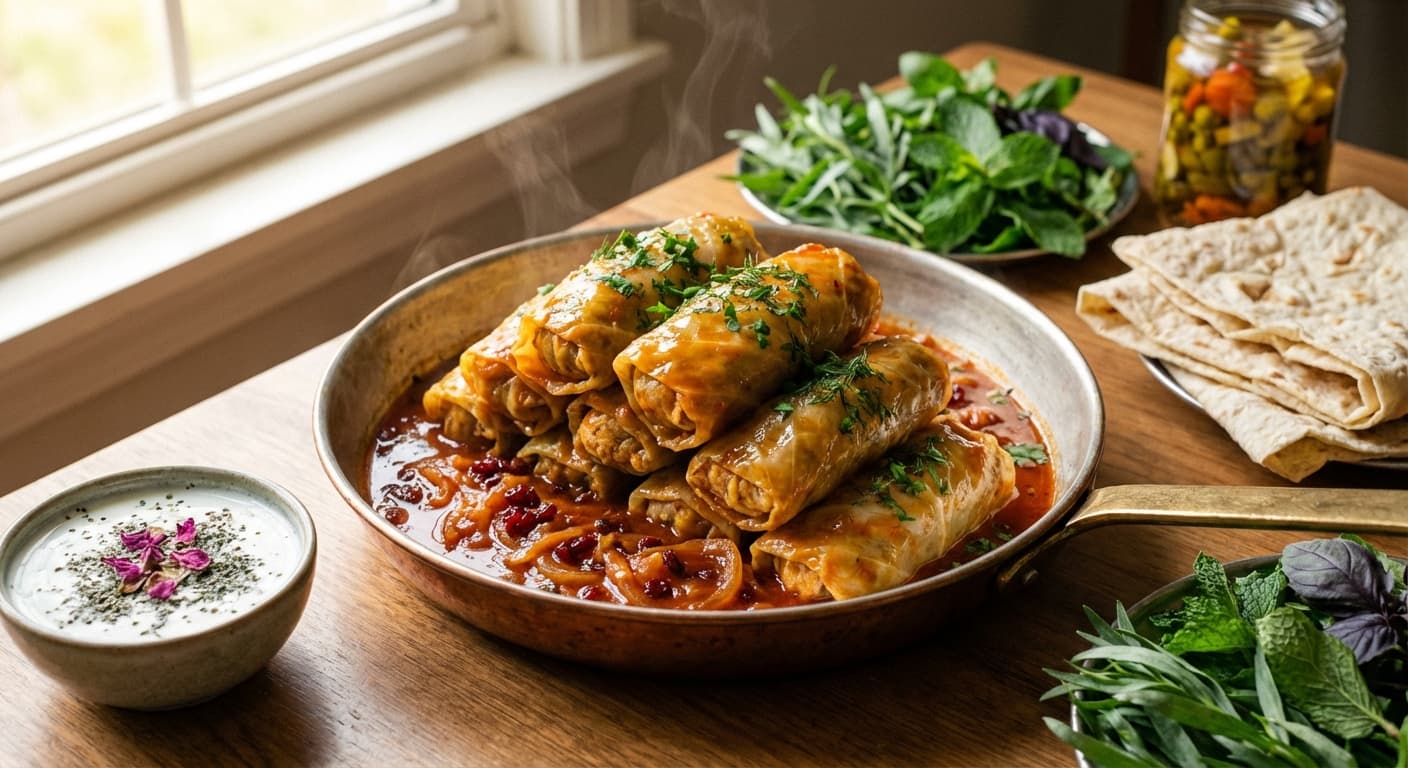
Chicken Stuffed Cabbage Rolls (دلمه کلم با مرغ) — Herb-Scented Persian Dolmeh in Tomato Saffron Sauce
Persian · Main Courses · 90 min
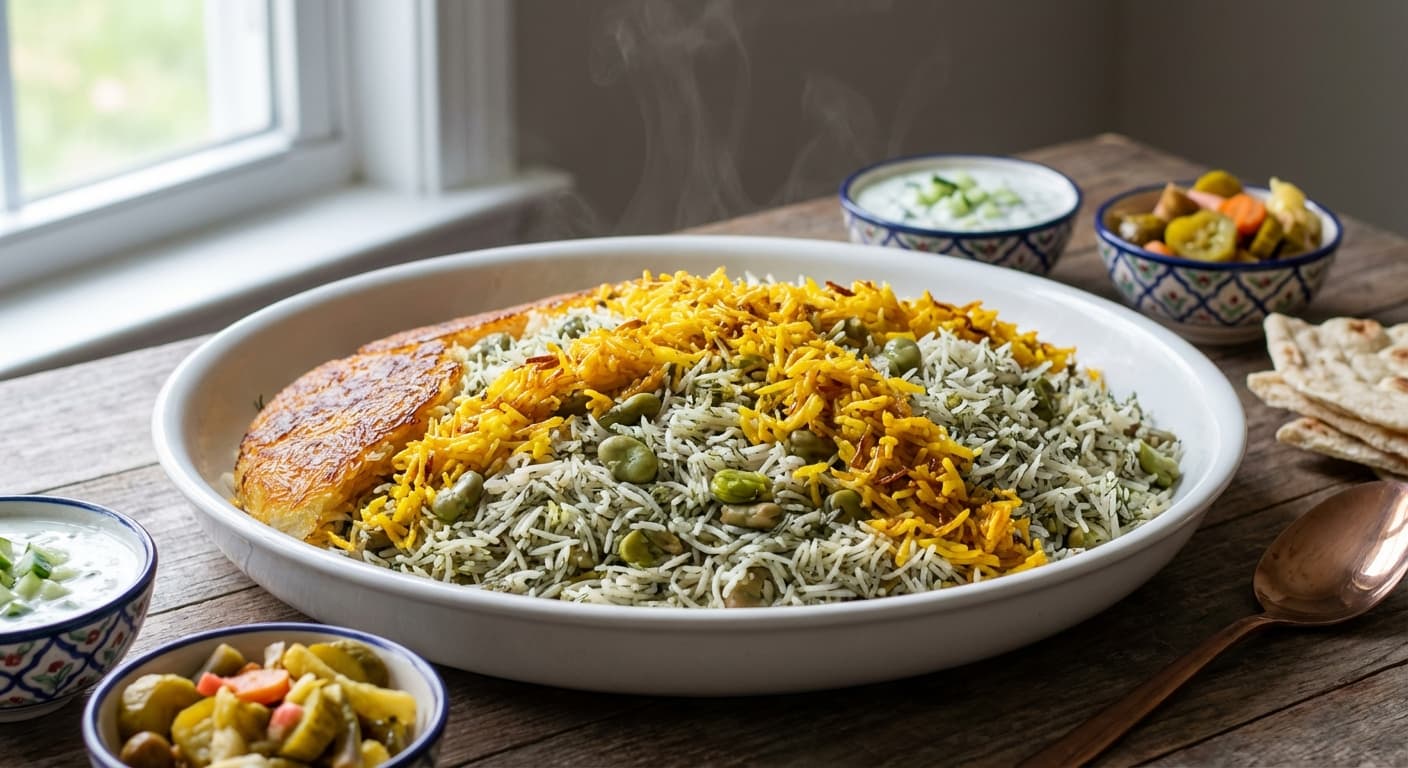
Baghali Polo (باقالی پلو) — Persian Dill and Fava Bean Rice with Saffron
Persian · Rice Dishes · 95 min
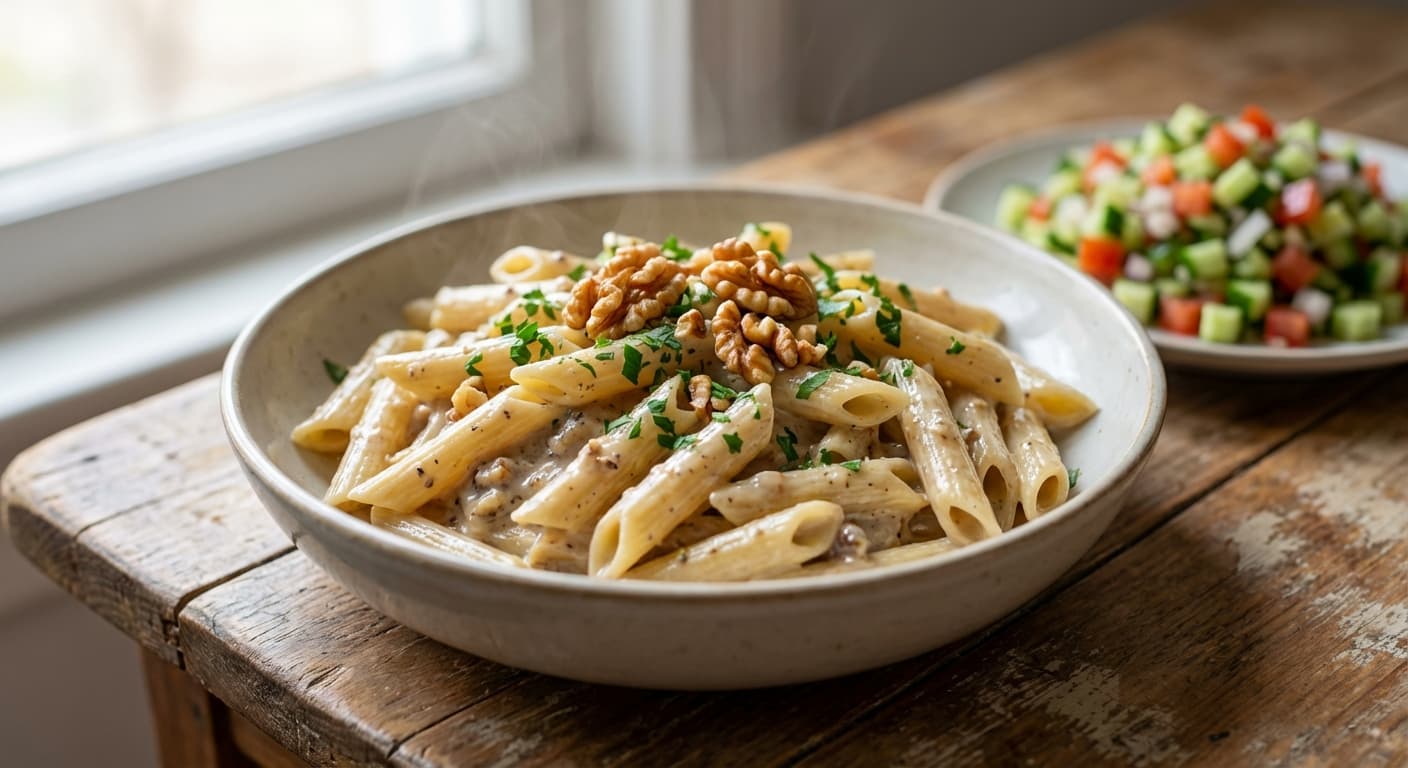
Pasta with Walnut Sauce (پاستا با سس گردو) — Creamy Persian Walnut-Yogurt Pasta
Persian · Main Courses · 35 min
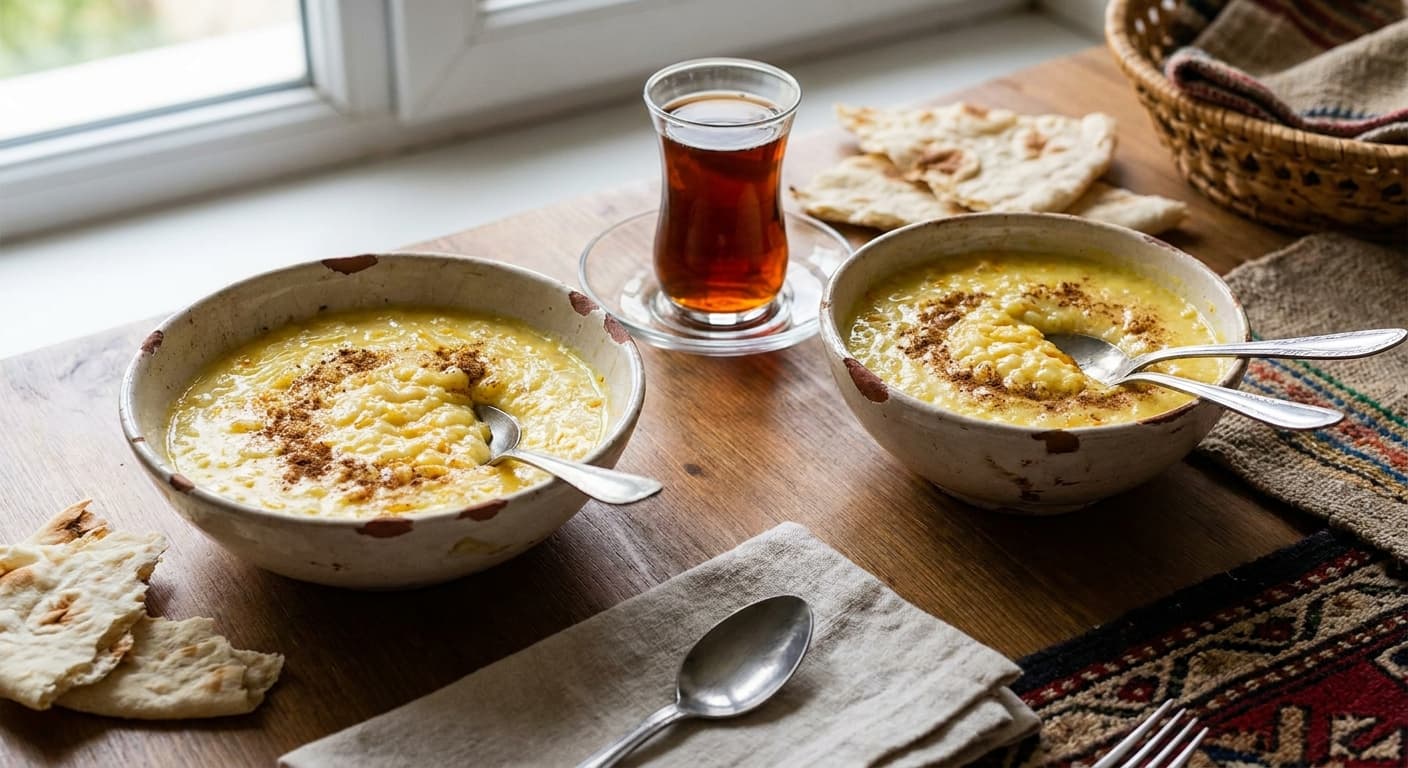
Azerbaijani Milk-Rice Porridge (Südlü Sıyıq) — Creamy Breakfast Rice with Saffron
Azerbaijani · Rice Dishes · 50 min
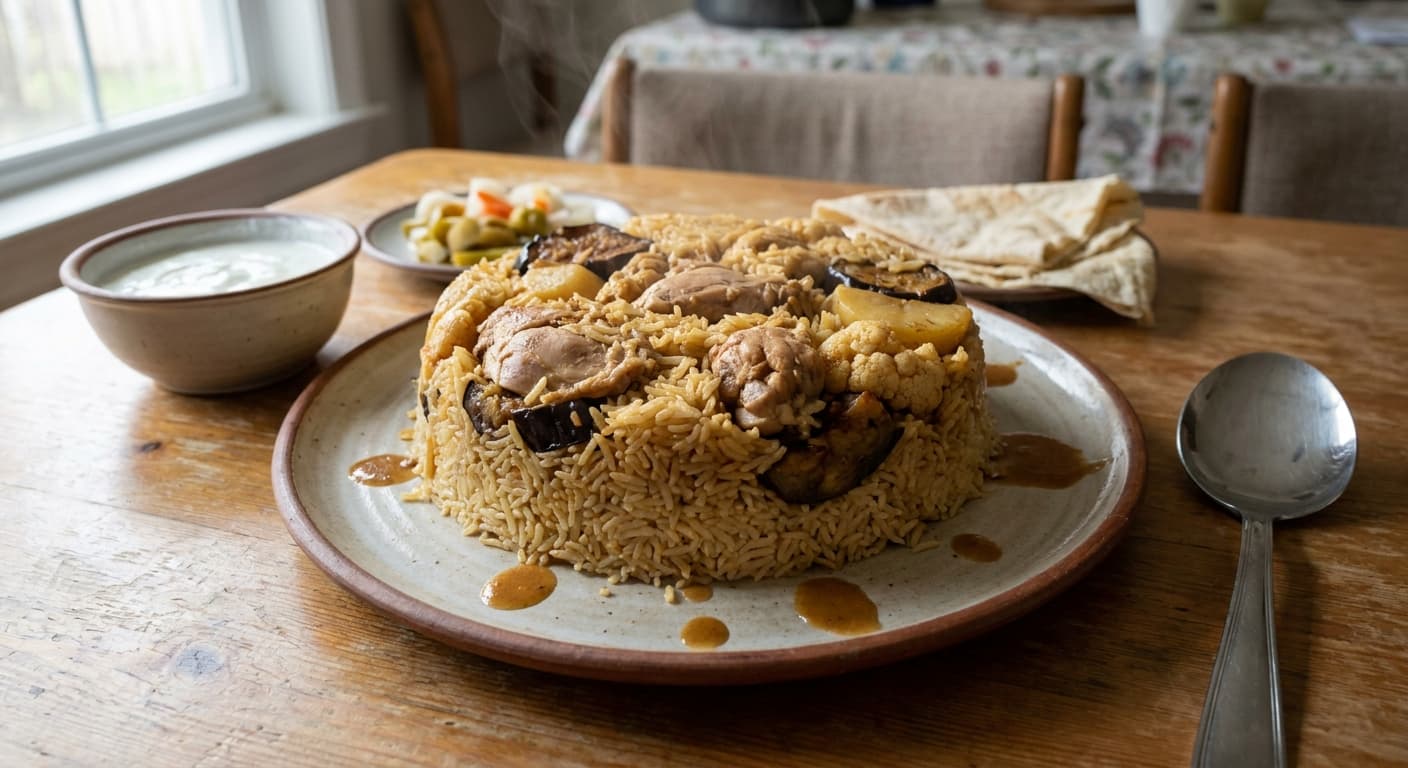
Maqluba (مقلوبة) — Jordanian Upside-Down Rice with Chicken
Jordanian · Rice Dishes · 110 min
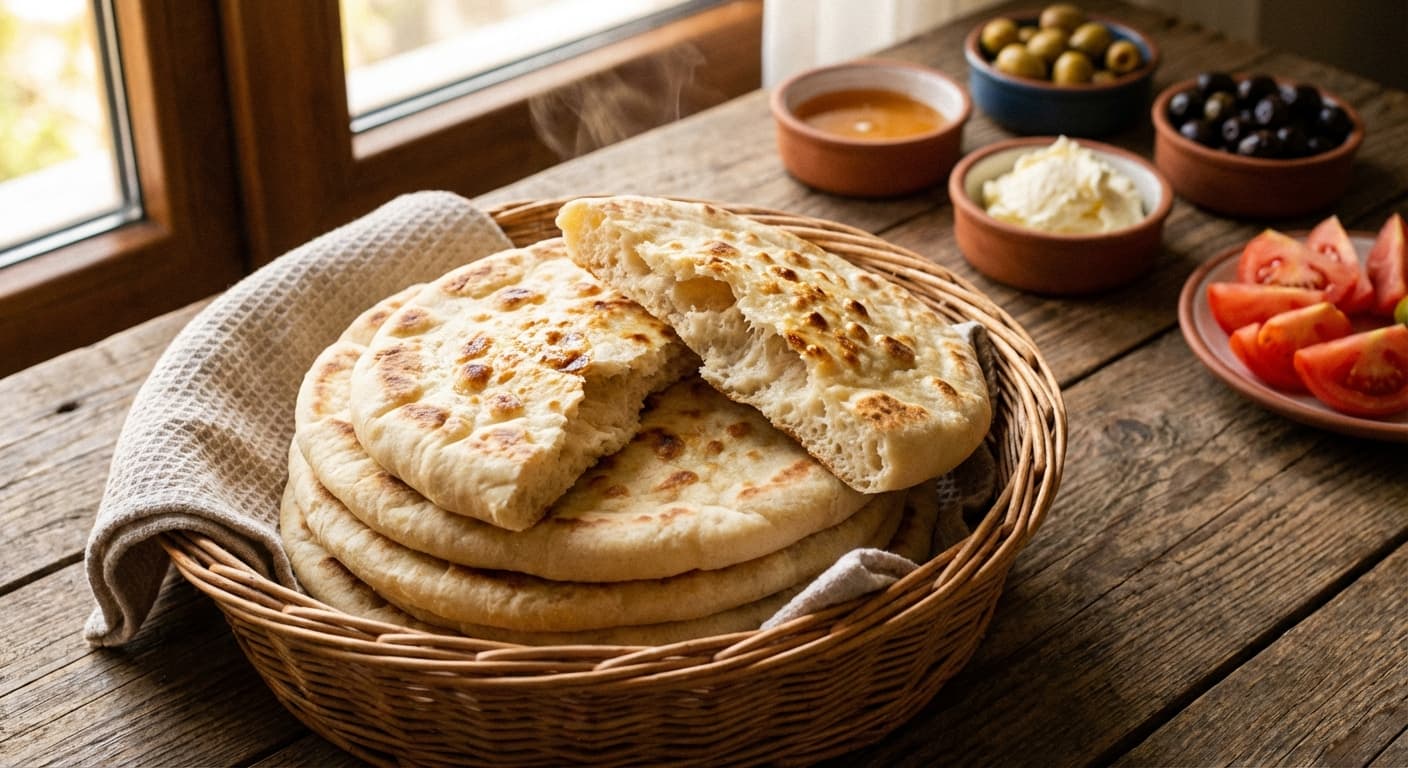
Bazlama (بازلاما) — Puffy Turkish Village Flatbread Cooked on a Saj
Turkish · Breads · 38 min
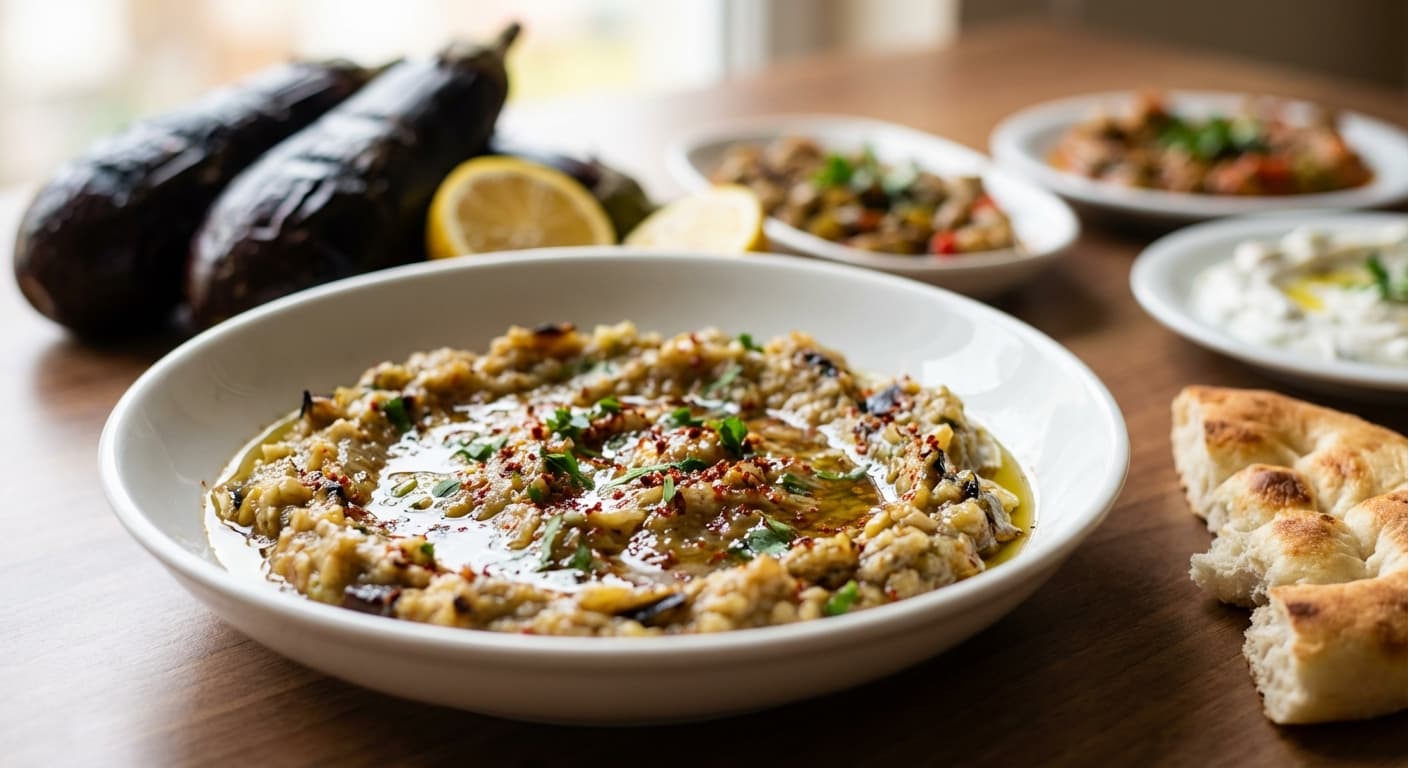
Smoky Eggplant Salad (Patlıcan Salatası) — Turkish charred eggplant with garlic and olive oil
Turkish · Salads · 40 min
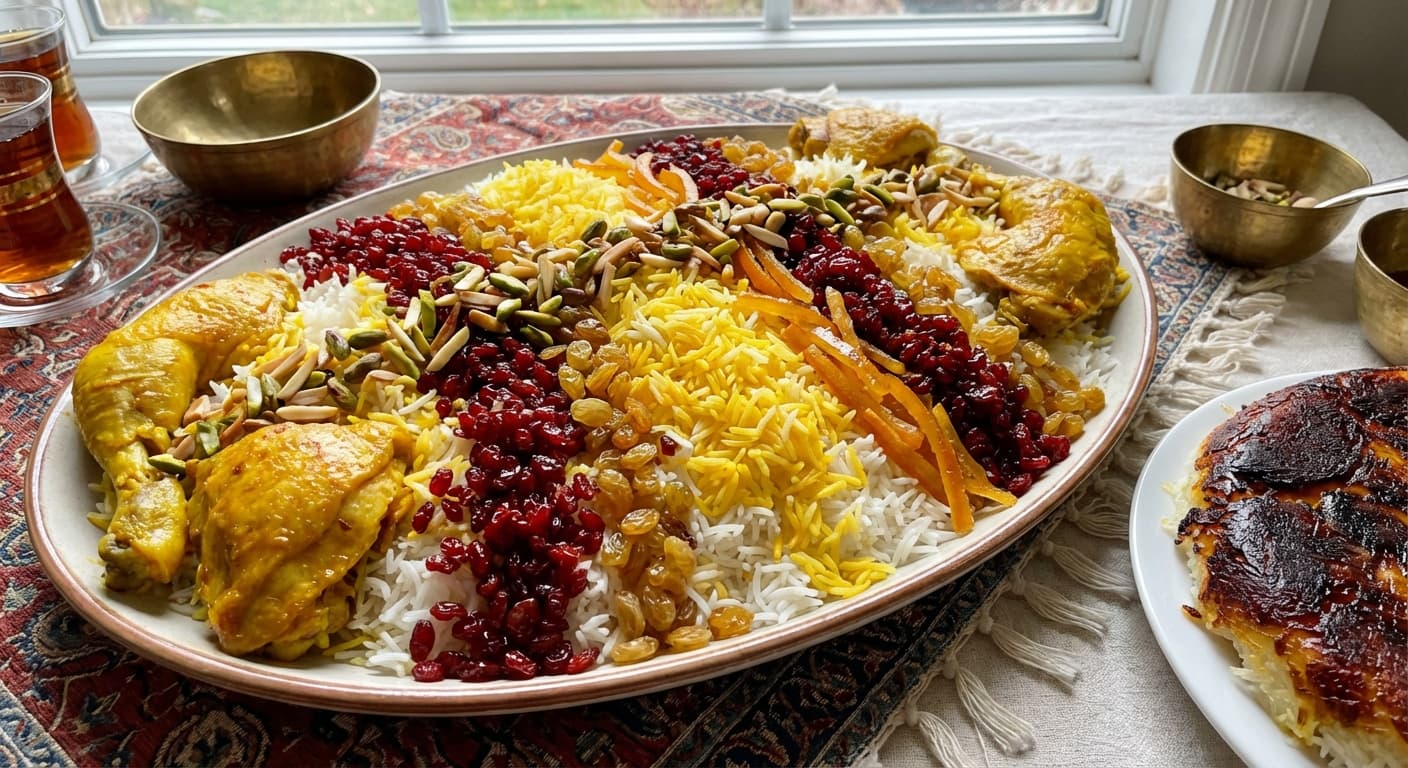
Jeweled Rice (مرصع پلو) — Festive Persian rice with saffron chicken and jeweled fruits
Persian · Rice Dishes · 135 min
Reviews
Cooked this recipe?
Tap the stars to rate it — that's all it takes. A few words are welcome but optional.
No ratings yet. Cooked this one? Be the first to rate it — it takes one tap.