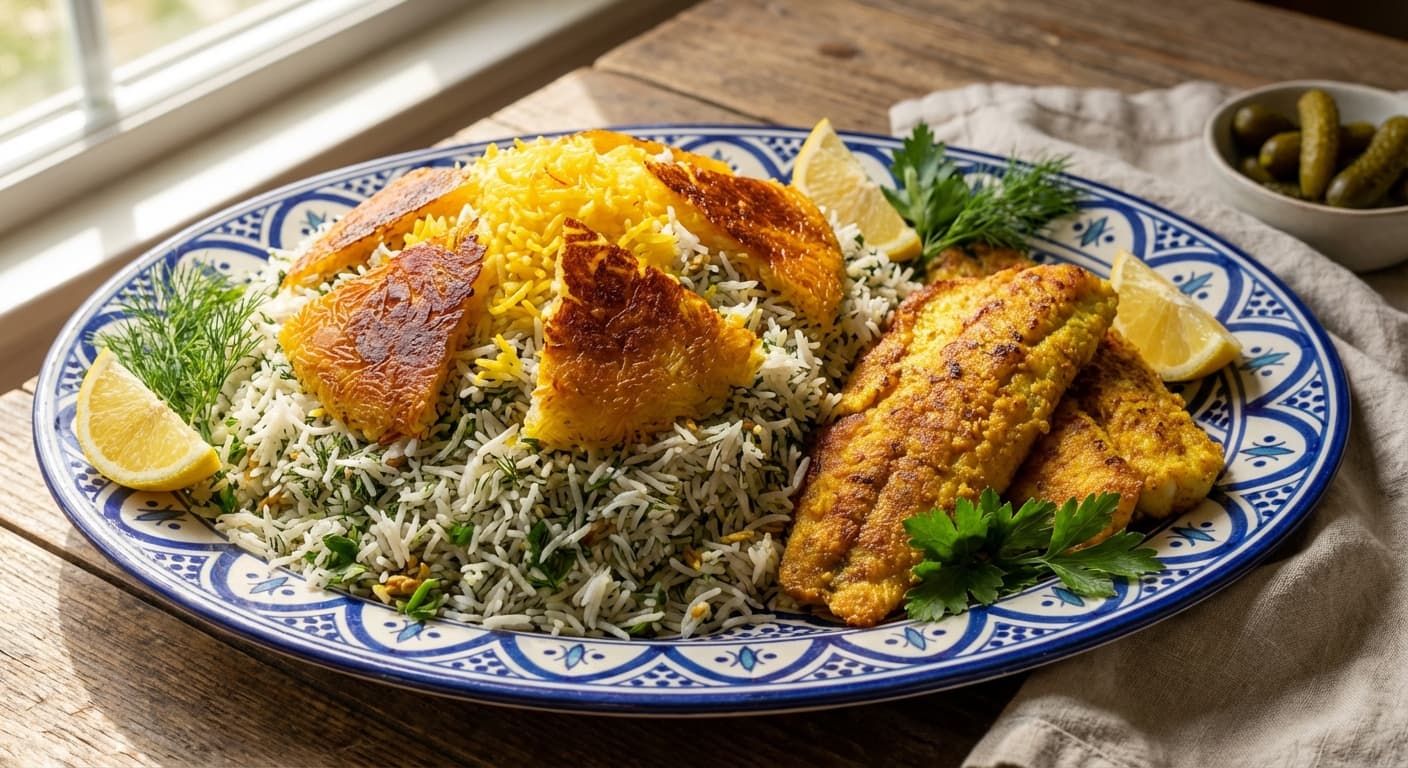
Sabzi Polo ba Mahi (سبزی پلو با ماهی) — Persian Herbed Rice with Crispy Fish
A Nowruz centerpiece, Sabzi Polo ba Mahi pairs fluffy basmati rice with a bright mix of spring herbs and crisp, lemony fish. It’s served to welcome renewal and abundance, with greens symbolizing rebirth at the new year table.
Printable Recipe Card
Servings: 4 · Total: 105 min · Difficulty: medium
Ingredients (quick list)
- 400 g Basmati rice (rinsed until water runs mostly clear)
- 2500 ml Water (for boiling the rice)
- 18 g Sea salt (about 3 tsp, divided)
- 60 g Fresh dill (finely chopped)
- 60 g Fresh parsley (finely chopped)
- 40 g Fresh cilantro (finely chopped)
- 20 g Fresh fenugreek leaves (finely chopped; remove tough stems)
- 80 g Garlic stalks (thinly sliced; green garlic or garlic chives work similarly)
- 75 ml Olive oil (5 tbsp, divided)
- 0.2 g Saffron threads (about 1/4 tsp)
- 30 ml Hot water (to bloom saffron)
- 600 g Sea bass fillets (or other firm white fish) (skin-on or skinless, pin bones removed)
+ 5 more in the full ingredients section below.
Steps (summary)
- Rinse the basmati rice in several changes of cold water until it runs mostly clear, then drain well. Cover the rice with cold w…
- Finely chop the dill, parsley, cilantro, fenugreek leaves, and slice the garlic stalks; keep them mixed in a large bowl. Bloom…
- Bring 2500 ml water to a rolling boil in a large pot and stir in the remaining 8 g salt. Add the soaked, drained rice and boil…
- Drain the parboiled rice in a colander and rinse quickly with 250 ml cold water to stop the cooking and remove excess surface s…
- Return the pot to medium heat and add 45 ml olive oil. Add 2 tbsp of the drained rice to the oil and spread it into a thin laye…
- Layer the rice and herbs: add a third of the rice, then scatter a third of the herb mixture over it, repeating until everything…
+ 4 more steps in the full instructions section below.
Cultural Background
Served widely for Nowruz, sabzi polo’s green herbs echo spring’s return and the promise of renewal. Paired with fish, it’s a celebratory meal associated with prosperity and a fresh start for the new year.
Equipment
💡 Tips
- Keep fenugreek at 20 g; more can turn the rice noticeably bitter, especially with tender spring leaves.
- For extra-fluffy rice, fully drain the parboiled rice for 2 minutes and avoid compressing the layers when adding herbs.
- If you want stronger saffron color, reserve 2 tbsp of cooked rice, mix it with all the saffron water, and spoon it over the platter at serving.
⚠️ Common Mistakes
❌ Overboiling the rice until fully soft before steaming
✅ Fix: Parboil only until the outside is tender and the center is slightly firm, then drain and steam to finish.
❌ Soggy fish that won’t brown
✅ Fix: Pat fillets very dry, heat oil until shimmering, and avoid moving the fish for the first 2 minutes of searing.
❌ Herbs turning dull and watery
✅ Fix: Chop herbs finely but do not salt them ahead; layer them with well-drained rice so steam perfumes without stewing.
🧊 How to Store
Cool rice and fish within 1 hour, then refrigerate in airtight containers for up to 3 days. Reheat rice covered with 15 ml water in a pot on low for 10–12 minutes; reheat fish in a 200°C oven for 6–8 minutes to keep it crisp.
📅 Make Ahead
Chop and refrigerate herbs up to 24 hours in a sealed container lined with a paper towel. Marinate the fish up to 2 hours ahead, and parboil the rice up to 1 hour ahead before final steaming.
🍽️ Pairs Well With
- Mast-o-khiar
- torshi
- sabzi khordan
- lemon wedges
- Shirazi salad
Regional Variations
- Northern Iran style: serve with fried whitefish and extra garlic stalks, sometimes with a sharper citrus note.
- Tahdig variation: use thin lavash bread under the rice for a larger, cracker-like crust.
- Herb balance variation: increase dill to 80 g and reduce cilantro to 25 g for a sweeter, more dill-forward profile.
Ingredients
- 400 gBasmati rice (rinsed until water runs mostly clear)
- 2500 mlWater (for boiling the rice)
- 18 gSea salt (about 3 tsp, divided)
- 60 gFresh dill (finely chopped)
- 60 gFresh parsley (finely chopped)
- 40 gFresh cilantro (finely chopped)
- 20 gFresh fenugreek leaves (finely chopped; remove tough stems)
- 80 gGarlic stalks (thinly sliced; green garlic or garlic chives work similarly)
- 75 mlOlive oil (5 tbsp, divided)
- 0.2 gSaffron threads (about 1/4 tsp)
- 30 mlHot water (to bloom saffron)
- 600 gSea bass fillets (or other firm white fish) (skin-on or skinless, pin bones removed)
- 30 mlLemon juice (2 tbsp, freshly squeezed)
- 12 gGarlic (3 cloves, finely grated)
- 2 tspGround turmeric (for color and warmth)
- 1 tspBlack pepper (freshly ground)
- 30 gAll-purpose flour (about 1/4 cup, for a light crust)
🔄 Substitutions
- Sea bass fillets→ Cod, halibut, or branzino fillets
- Fresh fenugreek leaves→ Dried fenugreek leaves
- Garlic stalks→ Scallions
Instructions
- 1
Rinse the basmati rice in several changes of cold water until it runs mostly clear, then drain well. Cover the rice with cold water and dissolve 10 g of the salt into it, then soak for 20 minutes to help the grains cook long and separate.
- 2
Finely chop the dill, parsley, cilantro, fenugreek leaves, and slice the garlic stalks; keep them mixed in a large bowl. Bloom the saffron by crushing the threads and stirring them into 30 ml hot water, then set it aside to deepen in color and aroma.
- 3
Bring 2500 ml water to a rolling boil in a large pot and stir in the remaining 8 g salt. Add the soaked, drained rice and boil for 6–8 minutes, stirring gently once or twice, until the grains are tender on the outside but still firm in the center.
- 4
Drain the parboiled rice in a colander and rinse quickly with 250 ml cold water to stop the cooking and remove excess surface starch. Let it drain for 2 minutes so the rice doesn’t steam itself into clumps.
- 5
Return the pot to medium heat and add 45 ml olive oil. Add 2 tbsp of the drained rice to the oil and spread it into a thin layer; this helps prevent sticking and encourages a crisp base.
- 6
Layer the rice and herbs: add a third of the rice, then scatter a third of the herb mixture over it, repeating until everything is used. Drizzle the bloomed saffron water over the top, then use the handle of a spoon to poke 5–6 steam holes down to the bottom so the rice steams evenly.
- 7
Wrap the lid with a clean kitchen towel and cover the pot tightly to trap steam without dripping condensation back onto the rice. Cook on medium heat for 10 minutes to build steam, then reduce to low and steam for 40 minutes until the herbs perfume the rice and a crisp tahdig forms.
- 8
While the rice steams, pat the fish fillets very dry with paper towels so they sear instead of steaming. Mix lemon juice, grated garlic, turmeric, black pepper, and 3 g salt, then rub the mixture over both sides of the fish and rest for 15 minutes.
- 9
Lightly dust the fish with the flour, shaking off any excess so the coating stays thin and crisp. Heat 30 ml olive oil in a wide skillet over medium-high heat until shimmering, then pan-fry the fish 3–4 minutes per side (depending on thickness) until deeply golden and just cooked through.
- 10
Rest the fish for 2 minutes so the juices settle and the crust stays crisp. Fluff the sabzi polo gently with a fork, lifting from the sides to keep the grains intact, then serve with the fish and pieces of tahdig from the bottom.
🪪 Recipe Passport
Cultural Background
Served widely for Nowruz, sabzi polo’s green herbs echo spring’s return and the promise of renewal. Paired with fish, it’s a celebratory meal associated with prosperity and a fresh start for the new year.
Regional Variations
Researched from multiple sources and validated by the Zaffaron editorial team. Every recipe is tested for accuracy, measurements, and cultural authenticity.
Nutrition per serving
Pairs well with
If you enjoyed this recipe, here are a few related Zaffaron recipes to try next.
- Shensel Shotormorgh (شنسل شترمرغ) — Persian Saffron Ostrich Schnitzel
- Salad Shirazi (سالاد شیرازی) — Persian Cucumber Tomato Salad
- Shekar Polo (شکر پلو) — Shirazi Sweet Saffron Rice with Citrus and Pistachio
- Sabzi Polo ba Tahchin-e Morgh-e Torsh (سبزی پلو با تهچین مرغ ترش) — Tart Herb Rice with Saffron Chicken Tahchin
Does your family make this differently?
Every family has their own version. Maybe your grandmother adds a secret ingredient, or your aunt has a completely different technique. Preserve your family's version — with their name on it, forever.
You Might Also Like
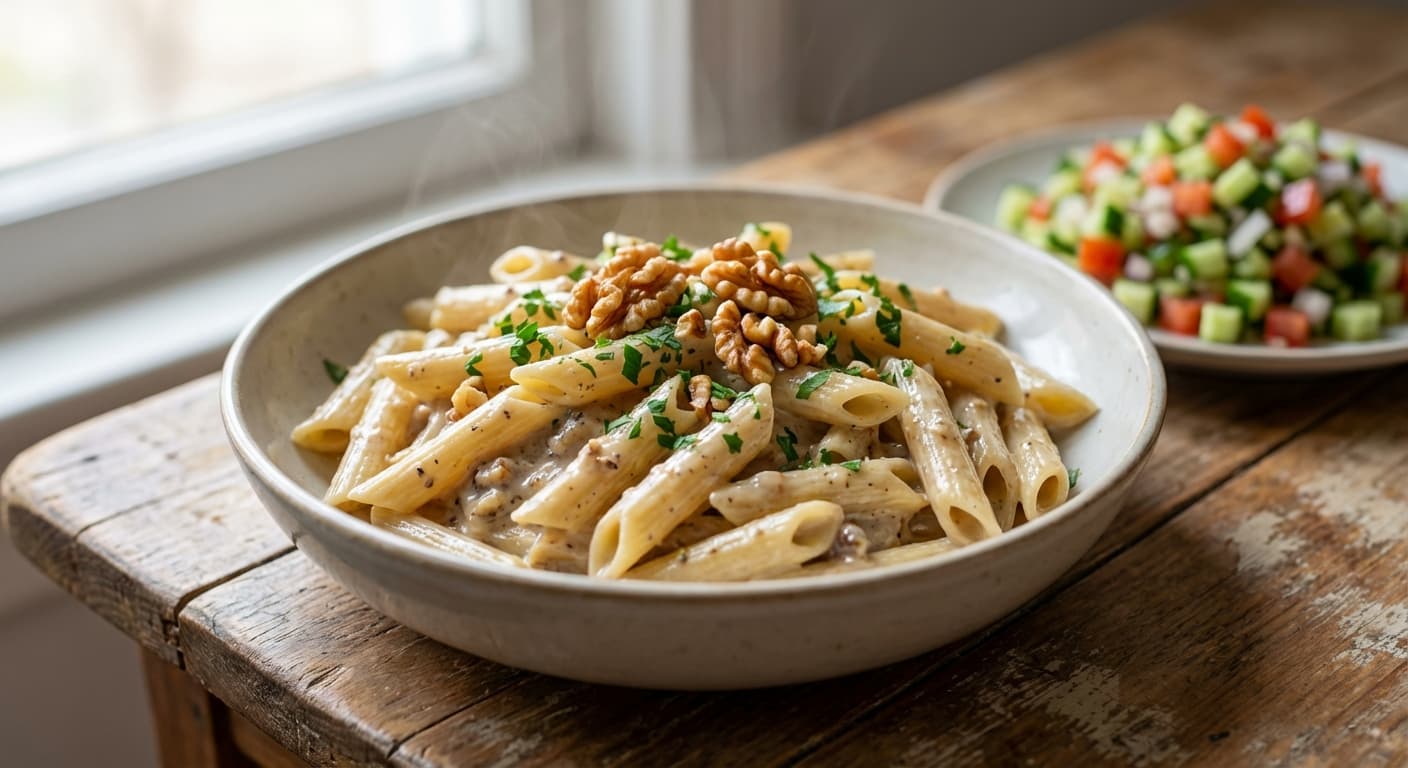
Pasta with Walnut Sauce (پاستا با سس گردو) — Creamy Persian Walnut-Yogurt Pasta
Persian · Main Courses · 35 min
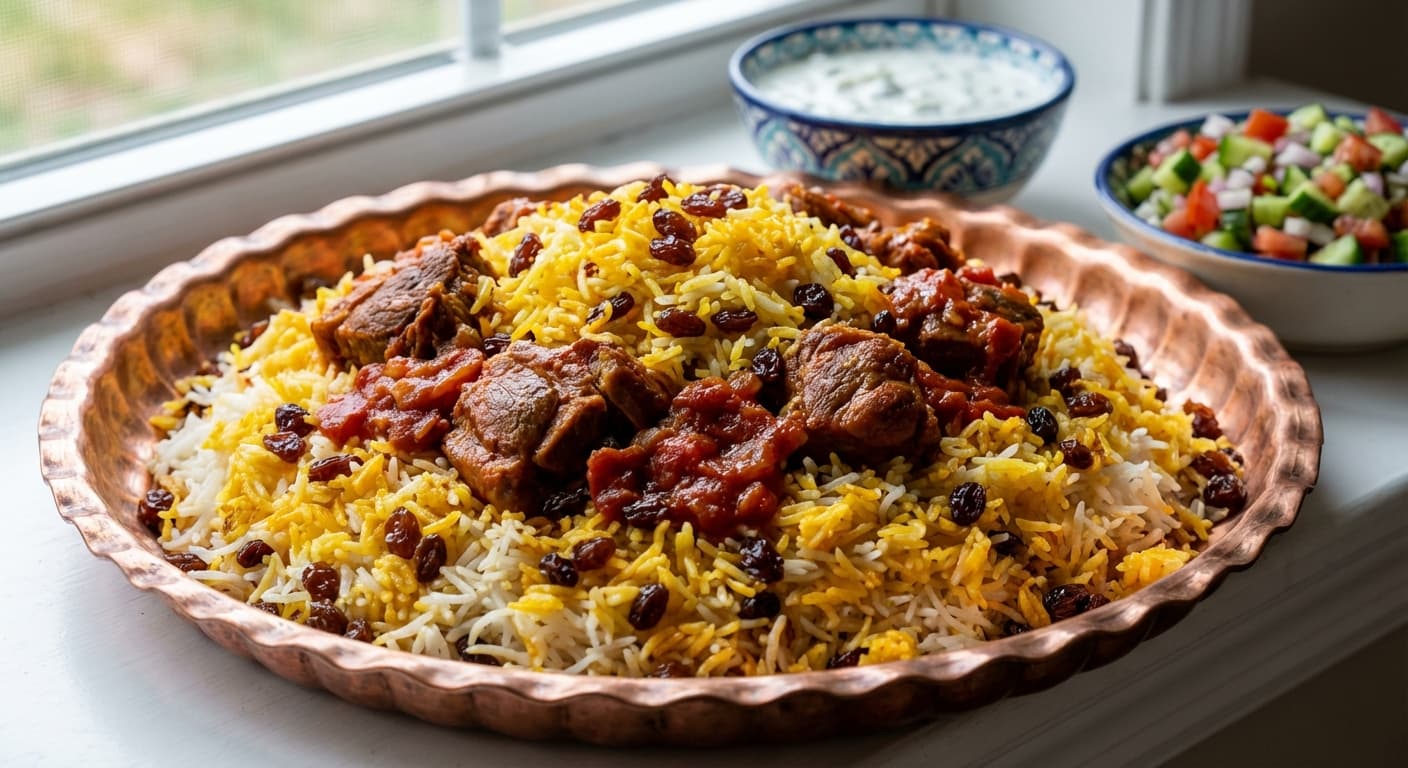
Kashmish Polow (کشمش پلو) — Persian Raisin Rice with Slow-Cooked Lamb
Persian · Rice Dishes · 155 min
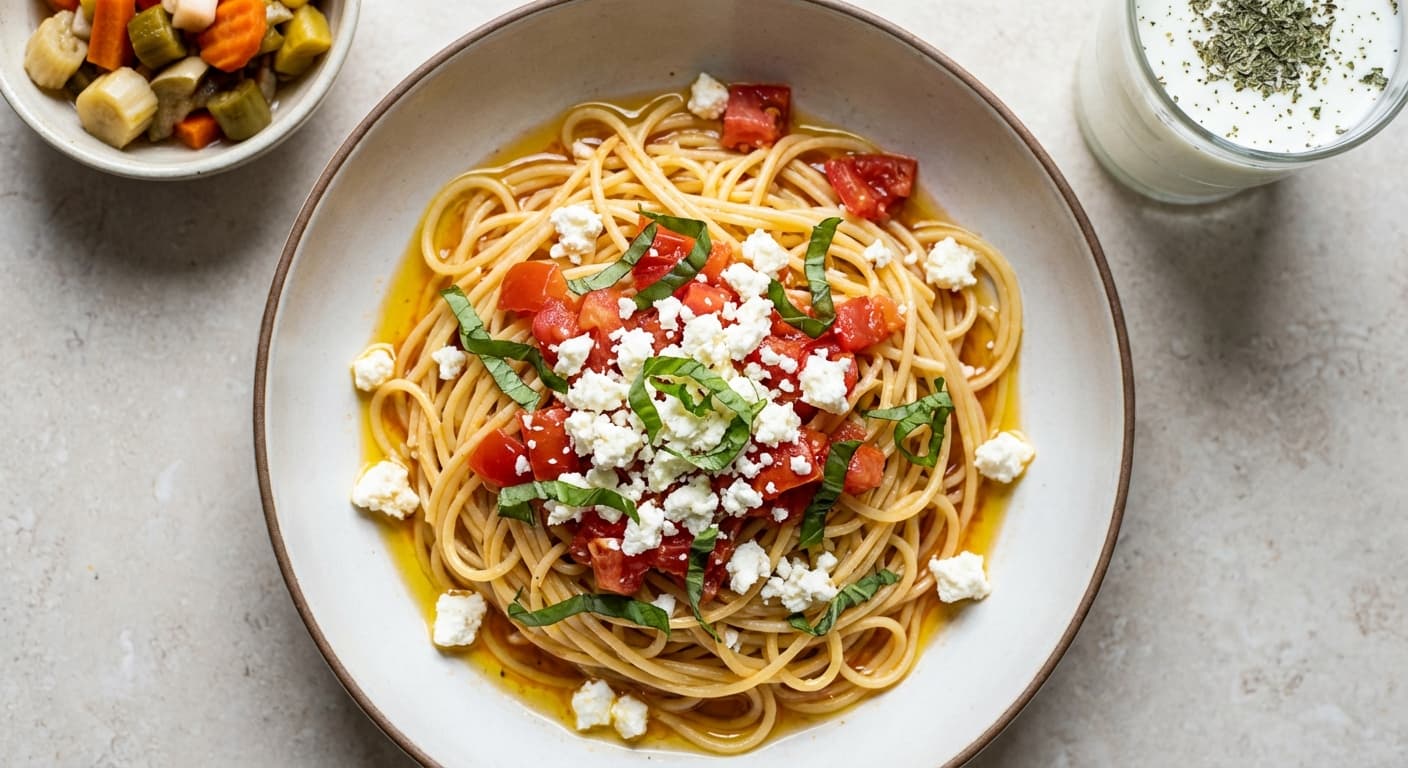
Pastay Paniri (پاستای پنیری) — Persian-Style Cheesy Pasta with Fresh Tomatoes
Persian · Main Courses · 27 min
Azerbaijani Milk Rice Porridge (Südlü Sıyıq) — Creamy Breakfast Bowl
Azerbaijani · Rice Dishes · 40 min
Moros y Cristianos (Moros y Cristianos) — Cuban Black Beans and Rice
Cuban · Rice Dishes · 130 min
Mıhlama (Mıhlama) — Black Sea Cornmeal and Cheese Skillet
Turkish · Main Courses · 25 min
Azerbaijani Milk-Rice Porridge (Südlü Sıyıq) — Creamy Breakfast Rice with Saffron
Azerbaijani · Rice Dishes · 50 min
Cold Beet Soup (Aukstā zupa) — Latvian Kefir Beet Summer Soup
Latvian · Soups · 45 min
Reviews
Cooked this recipe?
Tap the stars to rate it — that's all it takes. A few words are welcome but optional.
No ratings yet. Cooked this one? Be the first to rate it — it takes one tap.