Tangia Marrakchia (طنجية مراكشية) — Moroccan Slow-Cooked Lamb Shoulder in a Clay Urn
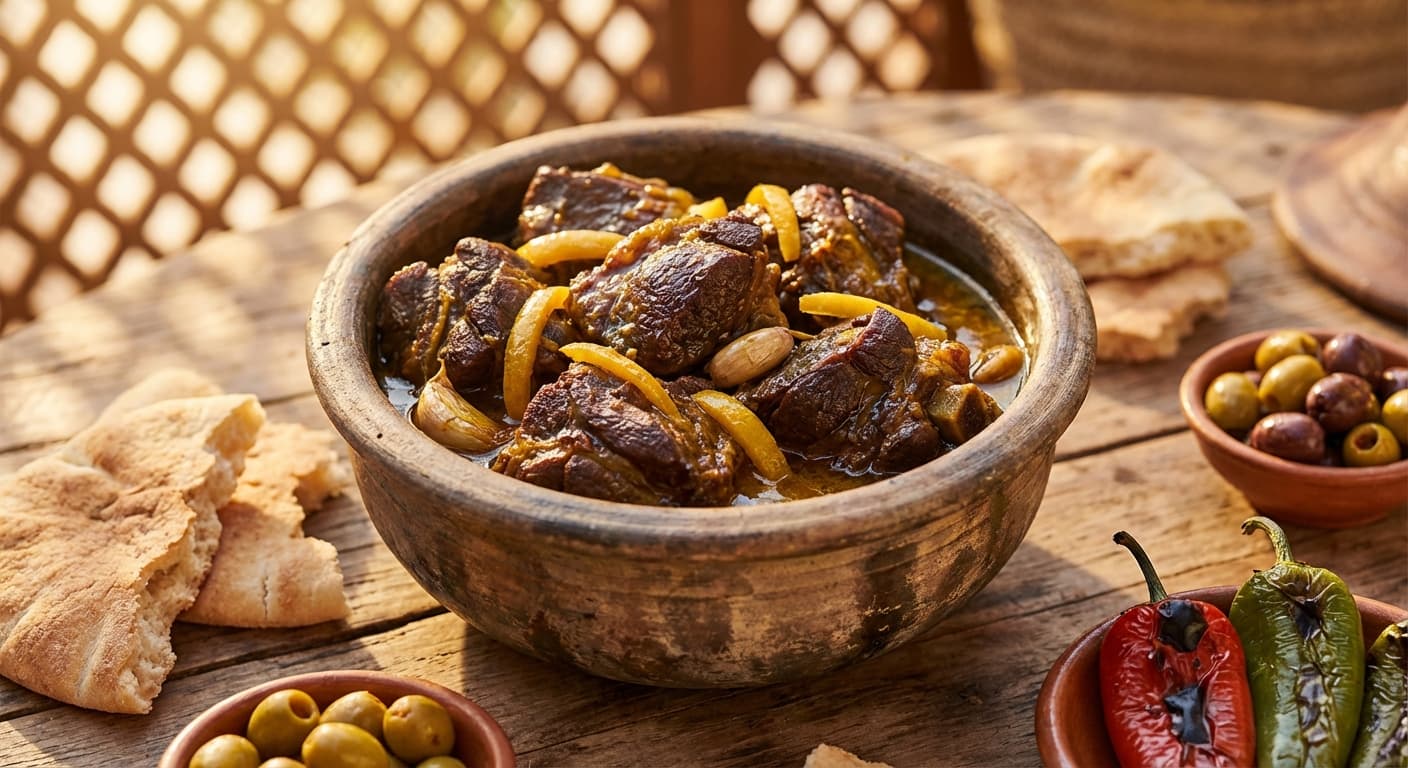
Tangia Marrakchia is a Marrakech classic: lamb slowly braised in a clay urn with preserved lemon, cumin, and saffron. Traditionally sealed and cooked in the embers of a hammam furnace, it’s a communal, celebratory dish with deep, perfumed savor.
Printable Recipe Card
Servings: 6 · Total: 265 min · Difficulty: medium
Ingredients (quick list)
- 1600 g lamb shoulder, bone-in (cut into large chunks (about 6–8 pieces))
- 10 clove garlic cloves (peeled and lightly crushed)
- 2 tbsp ground cumin
- 2 tsp ground ginger
- 2 tsp sweet paprika
- 1 tsp ground turmeric
- 1 tsp black pepper
- 0.25 tsp saffron threads (about 0.15 g)
- 30 ml warm water (for blooming saffron)
- 60 g preserved lemon peel (rinsed, pith removed, thinly sliced)
- 10 g salt (fine salt)
- 30 g smoked salted butter (smen) (or use unsalted butter if unavailable)
+ 4 more in the full ingredients section below.
Steps (summary)
- Bloom the saffron by crushing the threads lightly and soaking them in 30 ml warm water for 10 minutes. This step extracts color…
- In a large bowl, combine cumin, ginger, paprika, turmeric, black pepper, and salt, then stir in the bloomed saffron with its li…
- Add the crushed garlic, preserved lemon peel, smen, olive oil, bay leaves, and thyme to the bowl. Mix again until the aromatics…
- Transfer everything into a tangia clay urn if you have one, or into a heavy Dutch oven if you do not. Pour in 250 ml water, the…
- If using a tangia urn, cover the mouth with parchment and then foil, tying it tightly with kitchen string to create a strong se…
- Cook low and slow at 150°C / 300°F for 3 hours. Keep it undisturbed for the first 2 hours so the collagen breaks down steadily…
+ 2 more steps in the full instructions section below.
Cultural Background
In Marrakech, tangia is famously linked to workers who would seal the urn and leave it to cook in the residual heat of a hammam furnace. It’s a dish of camaraderie—shared from the vessel—defined by preserved lemon, cumin, and slow, patient cooking.
Equipment
💡 Tips
- Rinse preserved lemon peel for 10 seconds under running water to control saltiness while keeping its aroma.
- For deeper flavor, marinate the spiced lamb in the refrigerator for 12 hours before cooking, then add the water right before baking.
- If the sauce is thin at the end, uncover and cook for 15 minutes more to reduce, keeping the oven at 150°C / 300°F.
⚠️ Common Mistakes
❌ Cooking at too high a temperature, causing dry lamb and a broken sauce.
✅ Fix: Hold the oven at 150°C / 300°F and keep the vessel tightly sealed to braise gently.
❌ Using too much preserved lemon without rinsing, making the dish overly salty.
✅ Fix: Rinse the peel briefly and stick to 60 g for this quantity of lamb.
❌ Opening the lid repeatedly during cooking, leading to evaporation and tough meat.
✅ Fix: Leave it closed for at least 2 hours, then check only once near the end.
🧊 How to Store
Cool leftovers to room temperature within 2 hours, then refrigerate in an airtight container for up to 3 days. Reheat covered with 30 ml water in a 160°C oven for 20–25 minutes, or gently on the stovetop until the sauce loosens and the lamb is hot.
📅 Make Ahead
Mix the spices and coat the lamb up to 24 hours ahead, refrigerating it covered for deeper flavor. On cooking day, add the water, seal the vessel, and bake; leftovers also taste better the next day as the sauce concentrates.
🍽️ Pairs Well With
- Moroccan khobz
- couscous
- olives
- roasted peppers
- simple tomato salad.
Regional Variations
- Marrakech-style often emphasizes cumin and preserved lemon with minimal vegetables for a pure, meaty tangia.
- Some households add a pinch of ground cinnamon (0.25 tsp) for a rounder sweetness without making it dessert-like.
- A few versions include a small amount of clarified butter instead of smen for a cleaner, less funky finish.
Ingredients
- 1600 glamb shoulder, bone-in (cut into large chunks (about 6–8 pieces))
- 10 clovegarlic cloves (peeled and lightly crushed)
- 2 tbspground cumin
- 2 tspground ginger
- 2 tspsweet paprika
- 1 tspground turmeric
- 1 tspblack pepper
- 0.25 tspsaffron threads (about 0.15 g)
- 30 mlwarm water (for blooming saffron)
- 60 gpreserved lemon peel (rinsed, pith removed, thinly sliced)
- 10 gsalt (fine salt)
- 30 gsmoked salted butter (smen) (or use unsalted butter if unavailable)
- 15 mlextra virgin olive oil
- 250 mlwater (added to the urn/pot)
- 2 leafbay leaf
- 1 tspfresh thyme (leaves only)
🔄 Substitutions
- smoked salted butter (smen)→ unsalted butter
- lamb shoulder, bone-in→ lamb shank
- tangia clay urn→ heavy Dutch oven
Instructions
- 1
Bloom the saffron by crushing the threads lightly and soaking them in 30 ml warm water for 10 minutes. This step extracts color and aroma so the tangia tastes fragrant rather than flat.
- 2
In a large bowl, combine cumin, ginger, paprika, turmeric, black pepper, and salt, then stir in the bloomed saffron with its liquid. Add the lamb chunks and toss thoroughly for 2 minutes so every surface is evenly coated with the spice paste.
- 3
Add the crushed garlic, preserved lemon peel, smen, olive oil, bay leaves, and thyme to the bowl. Mix again until the aromatics are distributed between the pieces, which helps perfume the braising juices as the lamb cooks.
- 4
Transfer everything into a tangia clay urn if you have one, or into a heavy Dutch oven if you do not. Pour in 250 ml water, then press the lamb down so it sits mostly below the liquid line for gentle, even braising.
- 5
If using a tangia urn, cover the mouth with parchment and then foil, tying it tightly with kitchen string to create a strong seal. If using a Dutch oven, close the lid firmly and add a sheet of foil under the lid for a tighter seal and less evaporation.
- 6
Cook low and slow at 150°C / 300°F for 3 hours. Keep it undisturbed for the first 2 hours so the collagen breaks down steadily and the meat becomes spoon-tender.
- 7
After 3 hours, carefully open and check the liquid level; there should be a shallow pool of sauce at the bottom. Continue cooking for 45–60 minutes until the lamb yields easily when pressed with a spoon and the sauce looks glossy and reduced.
- 8
Rest the tangia, covered, for 15 minutes before serving so the juices settle back into the meat. Serve straight from the vessel, spooning the preserved lemon and sauce over the lamb for the signature Marrakech-style finish.
🪪 Recipe Passport
Cultural Background
In Marrakech, tangia is famously linked to workers who would seal the urn and leave it to cook in the residual heat of a hammam furnace. It’s a dish of camaraderie—shared from the vessel—defined by preserved lemon, cumin, and slow, patient cooking.
Regional Variations
Researched from multiple sources and validated by the Zaffaron editorial team. Every recipe is tested for accuracy, measurements, and cultural authenticity.
Nutrition per serving
Pairs well with
If you enjoyed this recipe, here are a few related Zaffaron recipes to try next.
Does your family make this differently?
Every family has their own version. Maybe your grandmother adds a secret ingredient, or your aunt has a completely different technique. Preserve your family's version — with their name on it, forever.
You Might Also Like
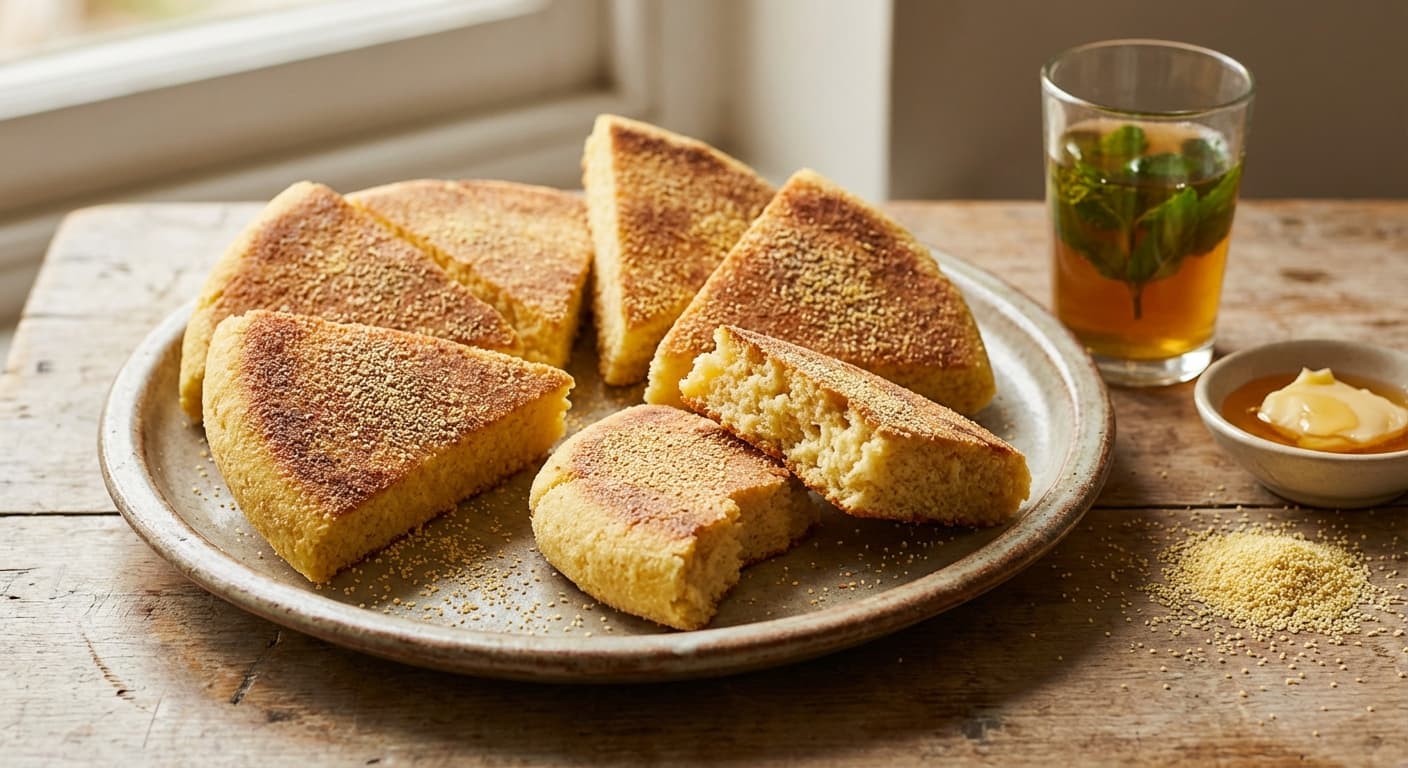
Harcha (حرشة) — Moroccan Semolina Griddle Bread
Moroccan · Breads · 35 min
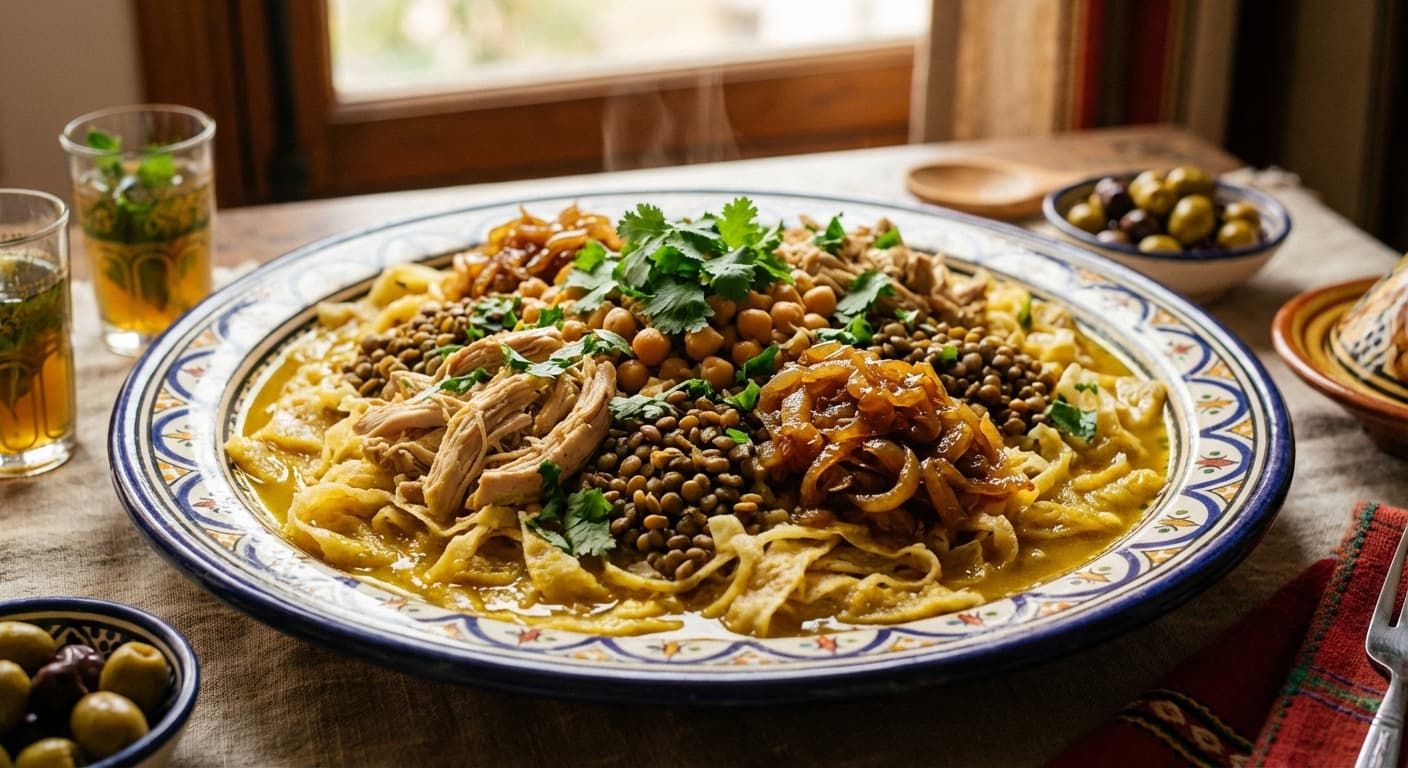
Rfissa (رفيسة) — Moroccan Shredded Flatbread with Chicken and Lentils
Moroccan · Main Courses · 135 min
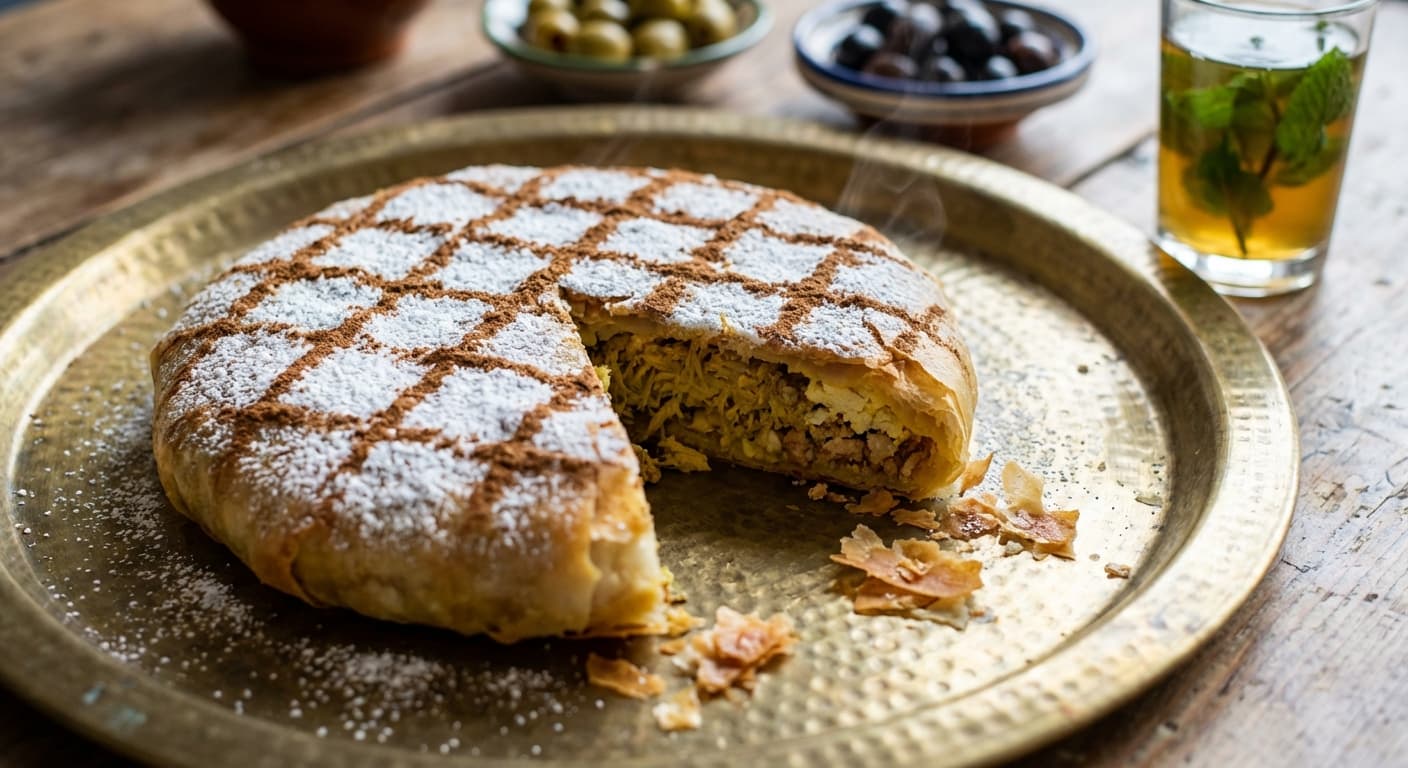
Pastilla (بسطيلة) — Moroccan Pigeon Pie with Almonds and Cinnamon
Moroccan · Main Courses · 150 min
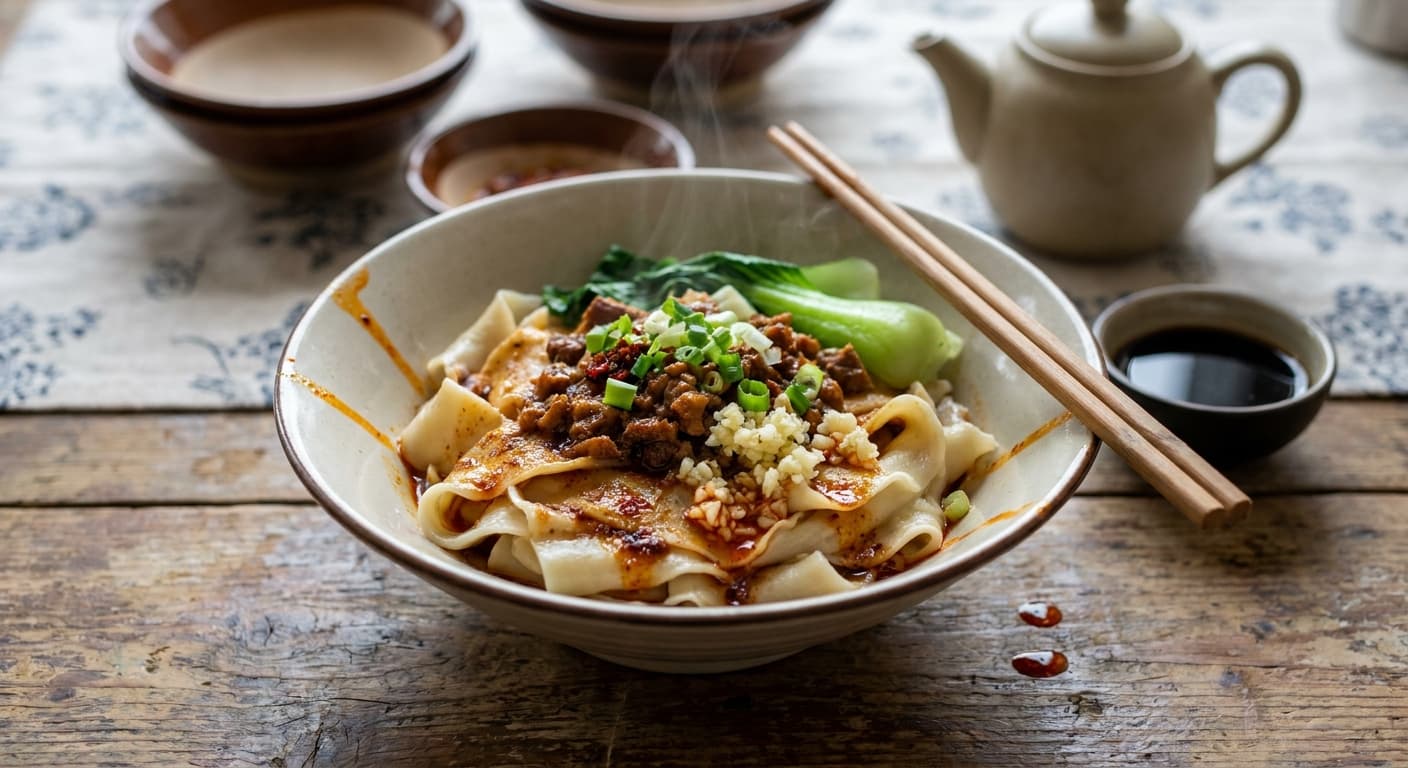
Biangbiang Noodles (油泼扯面) — Xi'an Hand-Pulled Belt Noodles
Chinese · Main Courses · 65 min
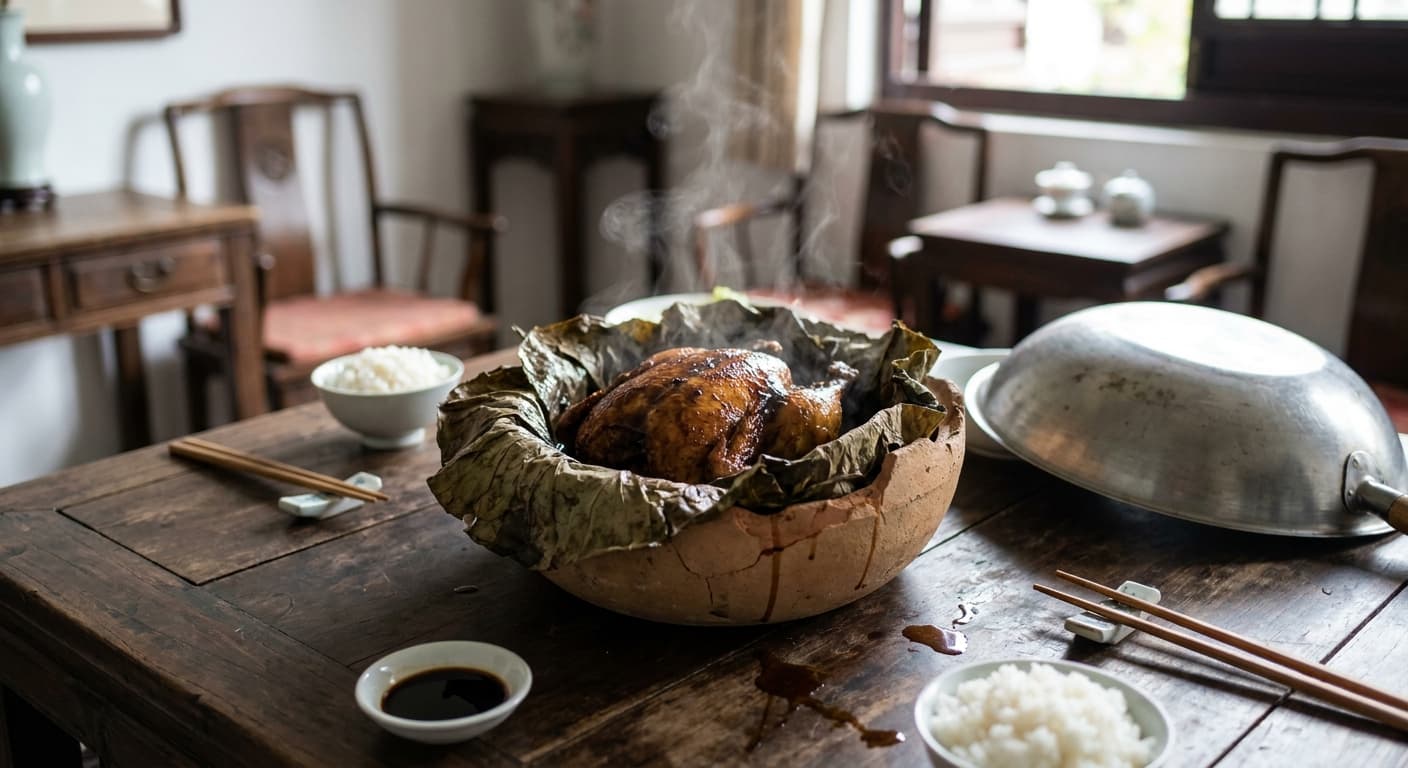
Beggar's Chicken (叫化鸡) — Lotus-Wrapped Clay-Baked Jiangnan Chicken
Chinese · Main Courses · 240 min
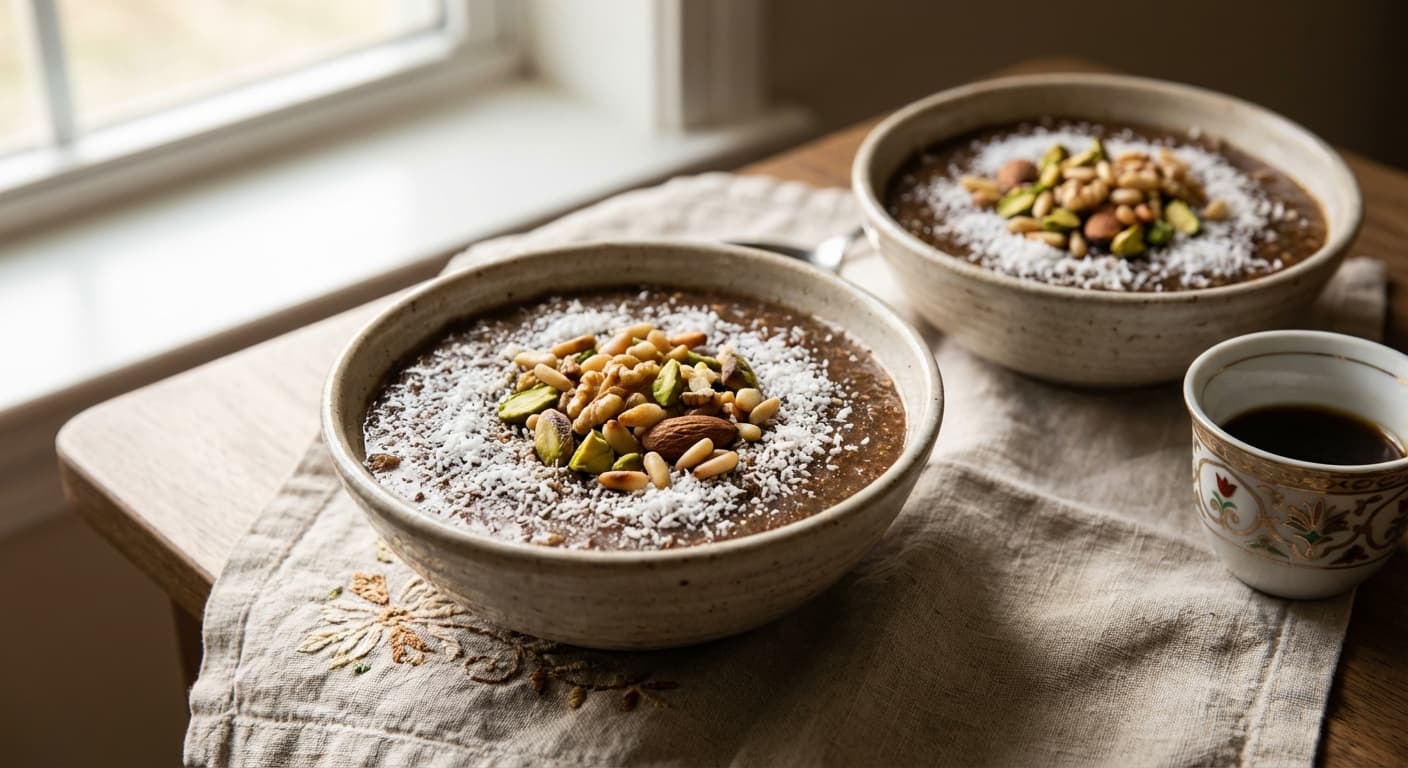
Meghli (مغلي) — Lebanese Spiced Rice Pudding with Nuts
Lebanese · Desserts · 40 min
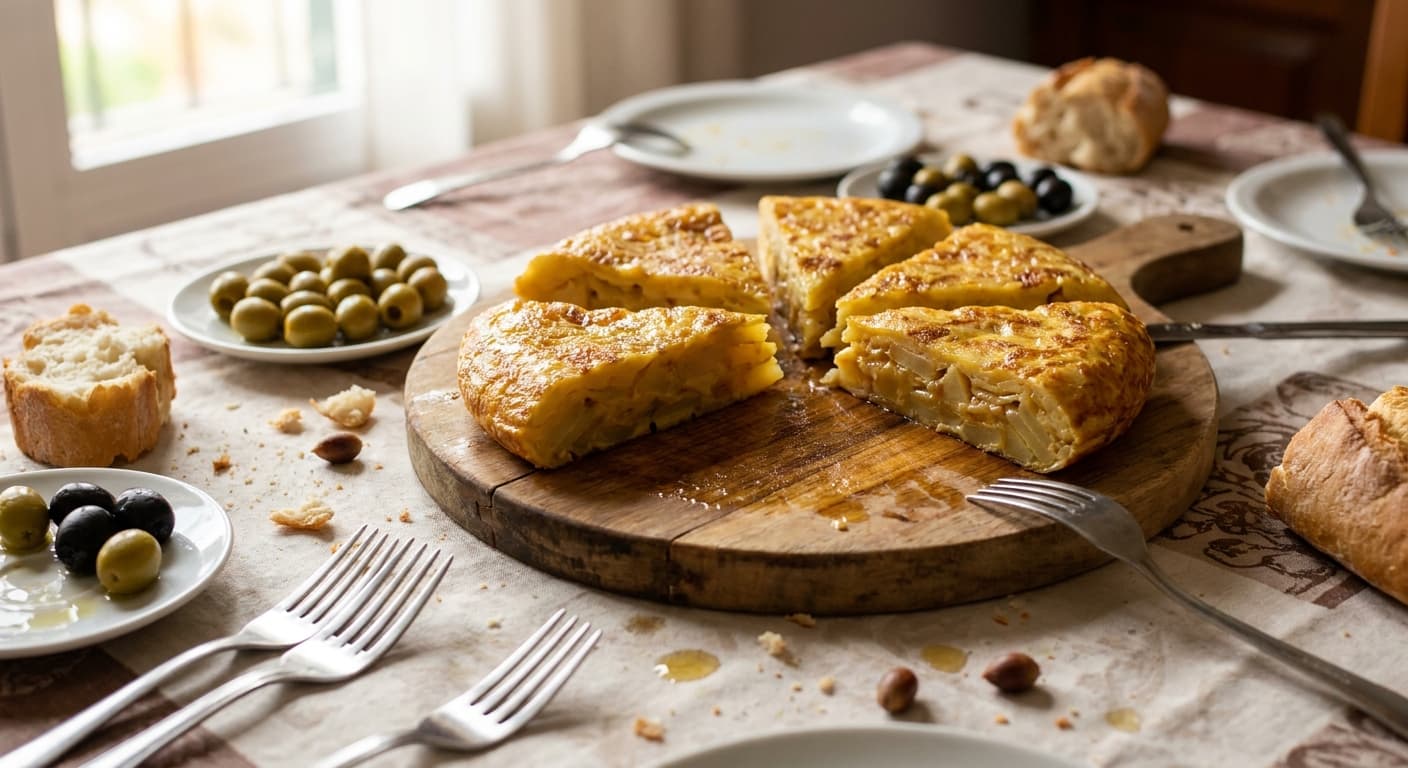
Spanish Potato Omelette (Tortilla Española) — Classic Potato and Egg Tortilla
Spanish · Main Courses · 55 min
Bulgarian Tarator (Таратор) — Cold Yogurt Cucumber Soup
Bulgarian · Soups · 15 min
Reviews
Cooked this recipe?
Tap the stars to rate it — that's all it takes. A few words are welcome but optional.
No ratings yet. Cooked this one? Be the first to rate it — it takes one tap.