Undhiyu (ઉંધિયું) — Indian Winter Mixed-Vegetable Curry with Methi Muthia
Undhiyu is a beloved Gujarati winter specialty traditionally cooked slowly with seasonal vegetables, fenugreek dumplings, and a coconut-peanut masala. It’s festive, hearty, and often served at family gatherings with puri or rotli.
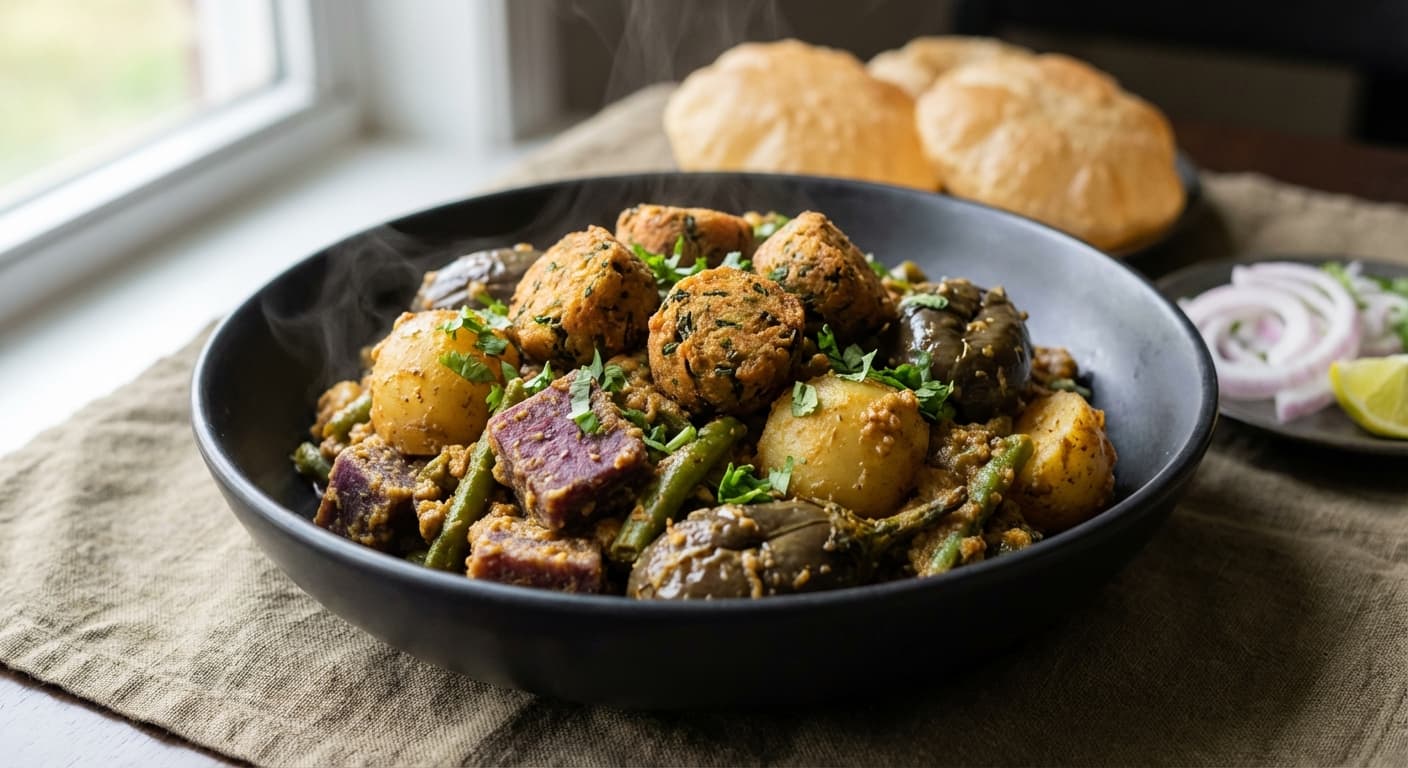
Printable Recipe Card
Servings: 6 · Total: 120 min · Difficulty: hard
Ingredients (quick list)
- 80 g Fresh fenugreek leaves (methi), finely chopped
- 90 g Chickpea flour (besan)
- 30 g Whole wheat flour (atta)
- 15 g Semolina (fine suji) (Improves texture and crispness)
- 60 g Plain yogurt
- 6 g Ginger, finely grated
- 6 g Green chili, finely minced
- 1 tsp Turmeric powder
- 0.5 tsp Red chili powder
- 0.5 tsp Carom seeds (ajwain)
- 1 tsp Sugar
- 1.25 tsp Salt
+ 25 more in the full ingredients section below.
Steps (summary)
- Make the methi muthia dough first so it can rest while you prep vegetables. In a bowl, mix chopped methi, besan, atta, semolina…
- Add 15 ml water and knead to a soft, slightly tacky dough; add another 5–10 ml water only if it feels dry. Let the dough rest f…
- Shape the dough into 18 small oval dumplings, about 18–20 g each, keeping them compact. Heat 30 ml oil in a wide skillet over m…
- Transfer the fried muthia to a plate lined with paper towel and set aside. Keep the skillet for later if you like, but wipe it…
- Prepare the masala paste by blending cilantro, coconut, peanuts, sesame, ginger, garlic, green chilies, lemon juice, sugar/jagg…
- Prep the vegetables and keep them in separate piles because they cook at different speeds. If your eggplant is very absorbent,…
+ 6 more steps in the full instructions section below.
Cultural Background
Undhiyu is a Gujarati winter icon, traditionally slow-cooked with seasonal produce and a coconut-peanut masala. It’s closely associated with Uttarayan (kite festival) and communal meals, where its sweet, spicy, and tangy balance shines.
Equipment
💡 Tips
- Keep the masala paste thick: blend with exactly 180 ml water so it clings to vegetables and reduces into a rich coating instead of a thin curry.
- Fry muthia to a deep golden color (about 6–8 minutes) so they stay intact during simmering and don’t turn gummy.
- Add eggplant only near the end and avoid aggressive stirring; gentle folding prevents it from collapsing and absorbing too much oil.
⚠️ Common Mistakes
❌ Making the masala paste too thin, resulting in a watery curry.
✅ Fix: Blend with the specified 180 ml water and simmer the paste 4–5 minutes until oil separates before adding vegetables.
❌ Adding eggplant early so it disintegrates and turns oily.
✅ Fix: Add eggplant only in the final 12–15 minutes and fold gently instead of stirring vigorously.
❌ Under-frying muthia so they fall apart in the pot.
✅ Fix: Fry until deep golden and firm, then simmer gently; if needed, add muthia only in the last 10–12 minutes.
🧊 How to Store
Cool Undhiyu to room temperature within 1 hour, then refrigerate in an airtight container for up to 3 days. Reheat covered on low with 30–60 ml water, stirring gently; avoid high heat so eggplant and muthia don’t break.
📅 Make Ahead
Blend the masala paste up to 24 hours ahead and refrigerate it airtight. You can also fry the muthia 1 day ahead; re-crisp in a dry skillet for 2 minutes before adding to the pot.
🍽️ Pairs Well With
- Puri
- rotli
- steamed basmati rice
- kachumber salad
- sweet mango pickle
- masala chaas.
Regional Variations
- Surti Undhiyu often uses more purple yam and lilva, with a slightly sweeter balance from jaggery.
- Some home styles stuff small eggplants or baby potatoes with extra masala for a richer, more festive texture.
- A lighter version steams muthia instead of frying, then adds them at the end to prevent crumbling.
Ingredients
- 80 gFresh fenugreek leaves (methi), finely chopped
- 90 gChickpea flour (besan)
- 30 gWhole wheat flour (atta)
- 15 gSemolina (fine suji) (Improves texture and crispness)
- 60 gPlain yogurt
- 6 gGinger, finely grated
- 6 gGreen chili, finely minced
- 1 tspTurmeric powder
- 0.5 tspRed chili powder
- 0.5 tspCarom seeds (ajwain)
- 1 tspSugar
- 1.25 tspSalt
- 0.25 tspBaking soda
- 30 mlVegetable oil (For shallow-frying)
- 250 gRaw banana, peeled and cut into 2.5 cm chunks
- 250 gSmall baby potatoes, scrubbed and halved
- 200 gPurple yam (suran), peeled and cut into 2.5 cm chunks
- 200 gSweet potatoes, peeled and cut into 2.5 cm chunks
- 200 gEggplant, cut into 4 cm wedges
- 150 gFresh pigeon peas (tuvar lilva), shelled (Frozen is fine)
- 150 gFresh green beans, cut into 3 cm pieces
- 20 gFresh cilantro, finely chopped
- 80 gFresh coconut, grated
- 60 gRoasted peanuts, unsalted
- 12 gSesame seeds (white), lightly toasted
- 12 gGinger, roughly chopped
- 12 gGarlic cloves
- 10 gGreen chilies
- 30 mlLemon juice
- 18 gSugar or jaggery, grated
- 2 tspCoriander powder
- 1 tspCumin powder
- 1 tspGaram masala
- 180 mlWater (To blend)
- 1 tspMustard seeds
- 0.25 tspAsafoetida (hing)
- 15 gFresh cilantro, chopped
🔄 Substitutions
- Fresh pigeon peas (tuvar lilva)→ Frozen green peas
- Purple yam (suran)→ Extra sweet potato
- Fresh coconut→ Unsweetened desiccated coconut
Instructions
- 1
Make the methi muthia dough first so it can rest while you prep vegetables. In a bowl, mix chopped methi, besan, atta, semolina, yogurt, ginger, green chili, turmeric, red chili powder, ajwain, sugar, salt, and baking soda until evenly combined.
- 2
Add 15 ml water and knead to a soft, slightly tacky dough; add another 5–10 ml water only if it feels dry. Let the dough rest for 10 minutes, which hydrates the flours and helps the muthia hold their shape during frying.
- 3
Shape the dough into 18 small oval dumplings, about 18–20 g each, keeping them compact. Heat 30 ml oil in a wide skillet over medium heat, then shallow-fry the muthia for 6–8 minutes, turning often, until deep golden and cooked through.
- 4
Transfer the fried muthia to a plate lined with paper towel and set aside. Keep the skillet for later if you like, but wipe it clean if there are burnt bits so the final curry stays bright and nutty, not bitter.
- 5
Prepare the masala paste by blending cilantro, coconut, peanuts, sesame, ginger, garlic, green chilies, lemon juice, sugar/jaggery, coriander powder, cumin powder, turmeric, garam masala, salt, and 180 ml water. Blend to a thick, slightly coarse paste; it should be spoonable, not watery, so it clings to the vegetables.
- 6
Prep the vegetables and keep them in separate piles because they cook at different speeds. If your eggplant is very absorbent, lightly rub the cut surfaces with 5 ml oil to reduce excessive oil uptake during simmering.
- 7
Heat 45 ml oil in a heavy pot or deep sauté pan over medium heat. Add mustard seeds and let them crackle for 20–30 seconds, then add ajwain and hing and stir for 10 seconds to bloom their aroma without scorching.
- 8
Add the masala paste and cook for 4–5 minutes, stirring frequently, until it thickens and the oil begins to separate at the edges. This step removes raw coconut flavor and creates the signature sweet-spicy base that makes Undhiyu taste rounded.
- 9
Add baby potatoes, suran, raw banana, and sweet potato first, and stir to coat every piece with masala. Pour in 250 ml water, bring to a gentle simmer, then cover and cook for 15 minutes, stirring once halfway to prevent sticking.
- 10
Add tuvar lilva and green beans, mix well, and cover again for 10 minutes. Keep the heat low enough that the curry simmers steadily; vigorous boiling can break softer vegetables and turn the gravy pasty.
- 11
Add eggplant wedges and the fried methi muthia, then spoon some gravy over the top so they absorb flavor without falling apart. Cover and cook 12–15 minutes, until a knife slides easily into the potatoes and suran, and the gravy is thick and glossy.
- 12
Turn off the heat and rest the Undhiyu for 10 minutes so the masala settles and coats the vegetables evenly. Finish with 15 g chopped cilantro, then serve hot with your chosen breads; the flavors deepen further as it sits.
🪪 Recipe Passport
Cultural Background
Undhiyu is a Gujarati winter icon, traditionally slow-cooked with seasonal produce and a coconut-peanut masala. It’s closely associated with Uttarayan (kite festival) and communal meals, where its sweet, spicy, and tangy balance shines.
Regional Variations
Researched from multiple sources and validated by the Zaffaron editorial team. Every recipe is tested for accuracy, measurements, and cultural authenticity.
Nutrition per serving
Pairs well with
If you enjoyed this recipe, here are a few related Zaffaron recipes to try next.
Does your family make this differently?
Every family has their own version. Maybe your grandmother adds a secret ingredient, or your aunt has a completely different technique. Preserve your family's version — with their name on it, forever.
You Might Also Like

Dal Tadka (दाल तड़का) — Indian Tempered Yellow Lentils with Ghee and Spices
Indian · Main Courses · 50 min
Thoran (തോരൻ) — Kerala Coconut Vegetable Stir-Fry
Indian · Side Dishes · 35 min
Indian Achari Murgh (अचारी मुर्ग) — Pickle-Spiced Punjabi Chicken Curry with Whole Spices
Indian · Stews · 80 min
Makmoura (مكمورة) — Jordanian Layered Chicken Bread Pie
Jordanian · Main Courses · 185 min
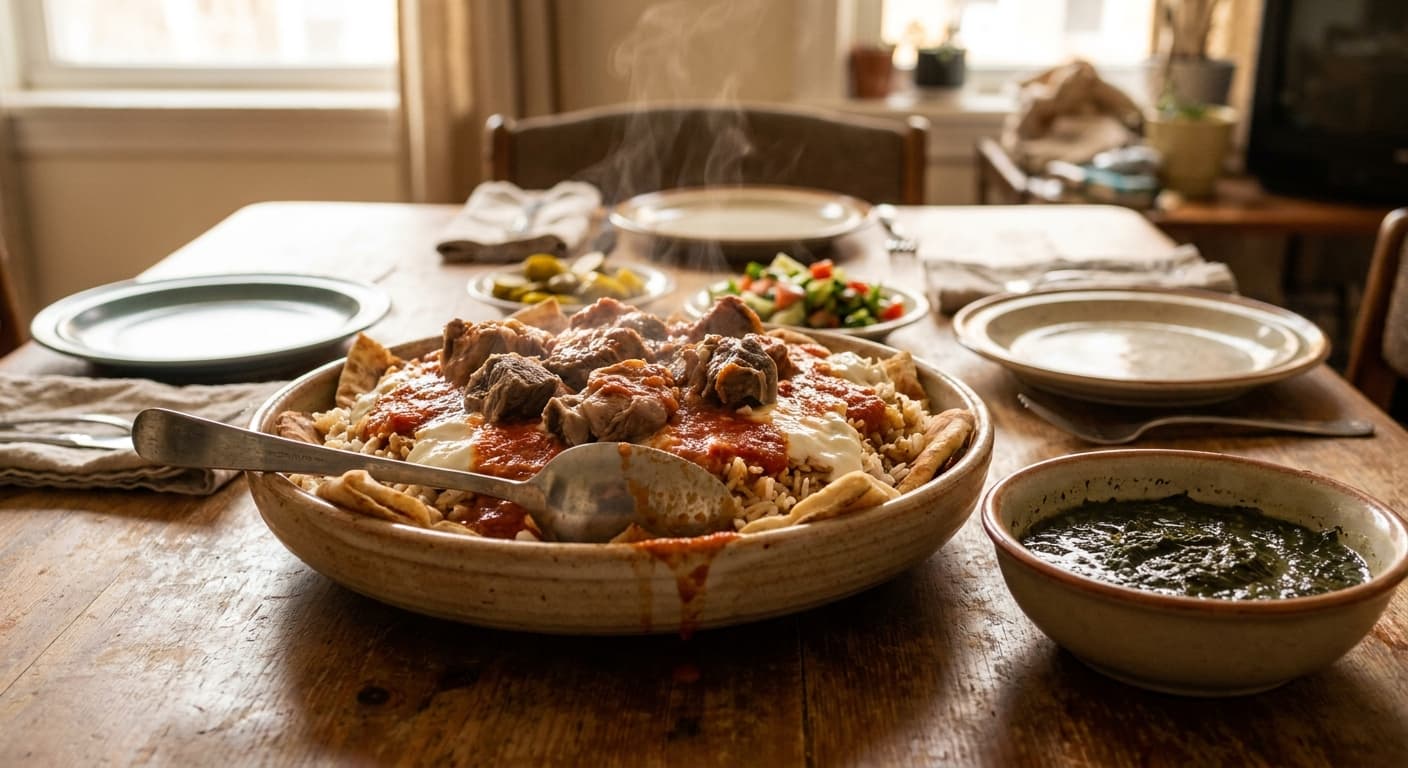
Egyptian Fatta (فتة) — Layered Meat, Rice, and Crisp Bread
Egyptian · Main Courses · 145 min
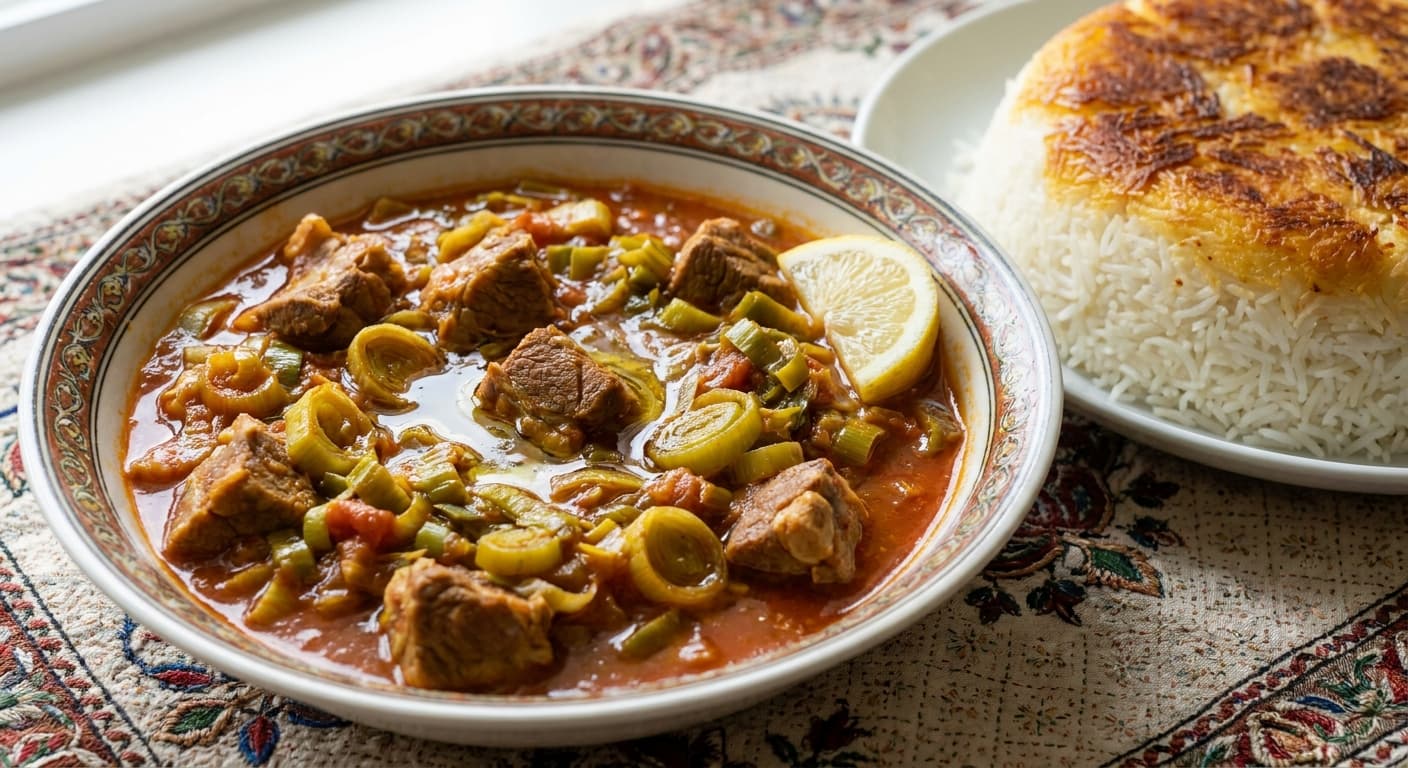
Khoresh Tareh Farangi (خورش تره فرنگی) — Persian Leek and Lamb Stew
Persian · Stews · 130 min

Sheermal (شیرمال) — Afghan Saffron Milk Bread with a Gentle Sweetness
Afghan · Breads · 43 min
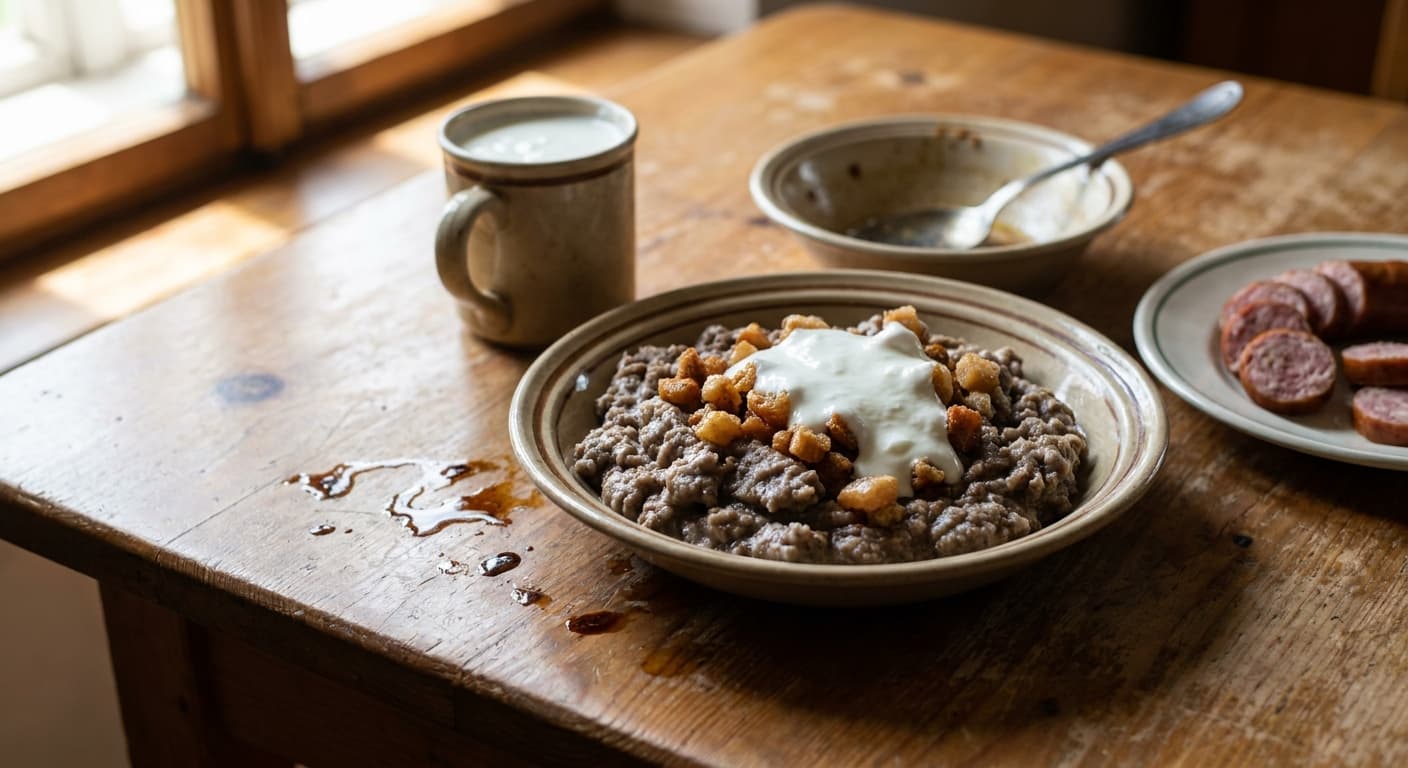
Buckwheat Žganci (Ajdovi žganci) — Slovenian Buckwheat Crumbs with Cracklings
Slovenian · Side Dishes · 45 min
Reviews
Cooked this recipe?
Tap the stars to rate it — that's all it takes. A few words are welcome but optional.
No ratings yet. Cooked this one? Be the first to rate it — it takes one tap.