Khoresh Tareh Farangi (خورش تره فرنگی) — Persian Leek and Lamb Stew
Khoresh Tareh Farangi is a fragrant Persian stew where leeks slowly melt into a savory, lemon-bright sauce around tender lamb. It’s a homestyle classic often served with chelow, showcasing Iran’s love of herb-forward, gently spiced khoresh.
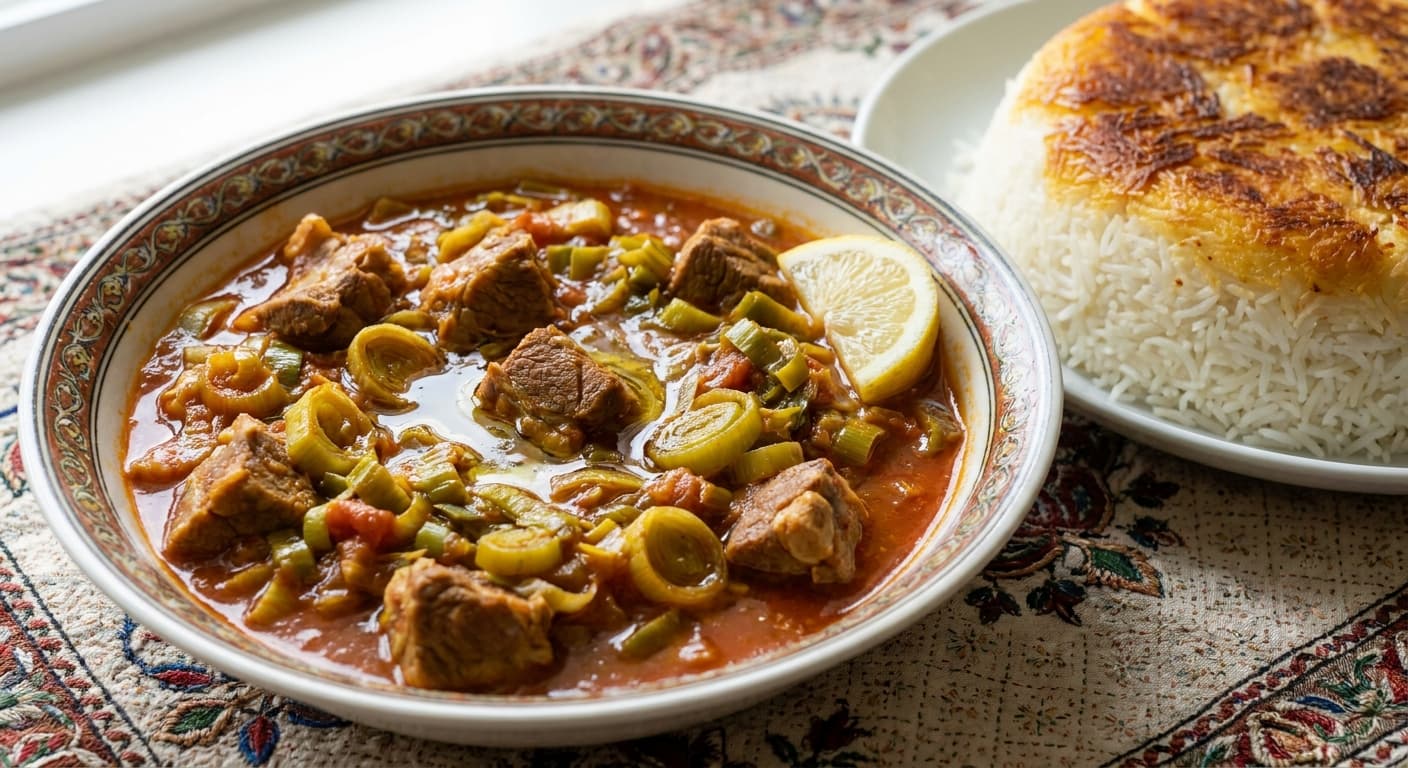
Printable Recipe Card
Servings: 4 · Total: 130 min · Difficulty: medium
Ingredients (quick list)
- 600 g lamb stew meat, cut into 3 cm cubes (shoulder or leg; beef chuck can be used)
- 500 g leeks, cleaned and sliced into 1 cm rounds (white and light green parts) (wash thoroughly to remove grit)
- 200 g yellow onion, finely diced
- 30 ml vegetable oil
- 2 tsp ground turmeric
- 8 g fine salt
- 1 tsp black pepper, freshly ground
- 30 g tomato paste (about 2 tbsp)
- 900 ml water
- 30 ml fresh lemon juice (about 2 tbsp)
Steps (summary)
- Trim the leeks, keeping the white and light green parts, then slice them into 1 cm rounds. Place them in a bowl of cold water,…
- Heat 15 ml of the vegetable oil in a heavy pot over medium heat, then add the diced onion. Cook for 8–10 minutes, stirring ofte…
- Add the lamb cubes to the pot and raise the heat to medium-high. Sear for 6–8 minutes, turning the pieces so they brown on mult…
- Stir in the turmeric, black pepper, and 4 g of the salt, coating the meat and onions evenly. Cook the spices for 60–90 seconds…
- Push the meat to one side and add the tomato paste to the empty spot in the pot. Fry the paste for 2 minutes, stirring constant…
- Pour in 900 ml water and scrape the bottom of the pot to dissolve any browned bits into the broth. Bring to a gentle boil, then…
+ 3 more steps in the full instructions section below.
Cultural Background
Leek-based khoresh are cherished in Persian home cooking for their gentle sweetness and comforting depth. Khoresh Tareh Farangi highlights how Iranian stews build flavor through slow simmering, balanced by a final sour note for brightness.
Equipment
💡 Tips
- For the cleanest leek flavor, sauté the leeks separately as written; adding raw leeks directly to the pot can make the stew taste grassy.
- If the stew reduces too much, add 100 ml water and simmer 10 minutes to re-thicken; Persian khoresh should be glossy, not watery.
- For a deeper color, fry the tomato paste until it turns brick-red, but stop before it scorches or the stew will taste bitter.
⚠️ Common Mistakes
❌ Not washing leeks thoroughly, leaving grit in the stew.
✅ Fix: Slice first, then soak and swish in cold water; lift leeks out and drain so sand stays in the bowl.
❌ Boiling hard after adding leeks, making the stew taste harsh and the meat dry.
✅ Fix: Keep a low, steady simmer with small bubbles; adjust heat and keep the pot partially covered if reducing too fast.
❌ Adding lemon juice too early so the meat tightens and the stew tastes sharp.
✅ Fix: Add lemon juice in the last 10 minutes, then simmer briefly to round the acidity.
🧊 How to Store
Cool completely, then refrigerate in a sealed container for up to 3 days. Reheat gently on the stovetop over low heat for 10–15 minutes, adding 50–100 ml water if needed; the flavor improves after a night as the leeks meld into the sauce.
📅 Make Ahead
Clean and slice the leeks up to 24 hours ahead and refrigerate them well covered. The stew can be cooked 1 day ahead; reheat slowly and add the lemon juice after reheating to keep the flavor fresh.
🍽️ Pairs Well With
- Chelow (Persian steamed rice)
- tahdig
- Shirazi salad
- torshi
- plain yogurt.
Regional Variations
- Some Tehran-style versions use more tomato paste for a redder stew, while lighter home versions keep it subtle and let the leeks dominate.
- In some households, a small pinch of dried lime powder is added at the end for a deeper sour note alongside lemon.
Ingredients
- 600 glamb stew meat, cut into 3 cm cubes (shoulder or leg; beef chuck can be used)
- 500 gleeks, cleaned and sliced into 1 cm rounds (white and light green parts) (wash thoroughly to remove grit)
- 200 gyellow onion, finely diced
- 30 mlvegetable oil
- 2 tspground turmeric
- 8 gfine salt
- 1 tspblack pepper, freshly ground
- 30 gtomato paste (about 2 tbsp)
- 900 mlwater
- 30 mlfresh lemon juice (about 2 tbsp)
🔄 Substitutions
- lamb stew meat→ beef chuck, cut into 3 cm cubes
- fresh lemon juice→ verjuice
- vegetable oil→ ghee
Instructions
- 1
Trim the leeks, keeping the white and light green parts, then slice them into 1 cm rounds. Place them in a bowl of cold water, swish well to release any sand, and lift them out to drain so grit stays behind.
- 2
Heat 15 ml of the vegetable oil in a heavy pot over medium heat, then add the diced onion. Cook for 8–10 minutes, stirring often, until the onion turns soft and lightly golden without burning.
- 3
Add the lamb cubes to the pot and raise the heat to medium-high. Sear for 6–8 minutes, turning the pieces so they brown on multiple sides and the surface moisture evaporates.
- 4
Stir in the turmeric, black pepper, and 4 g of the salt, coating the meat and onions evenly. Cook the spices for 60–90 seconds so the turmeric blooms and loses its raw edge.
- 5
Push the meat to one side and add the tomato paste to the empty spot in the pot. Fry the paste for 2 minutes, stirring constantly, until it darkens slightly and smells sweet rather than sharp.
- 6
Pour in 900 ml water and scrape the bottom of the pot to dissolve any browned bits into the broth. Bring to a gentle boil, then reduce to a low simmer, cover, and cook for 60 minutes until the lamb is starting to turn tender.
- 7
While the meat simmers, heat the remaining 15 ml oil in a skillet over medium heat and add the drained leeks. Sauté for 10–12 minutes, stirring frequently, until the leeks soften, reduce in volume, and take on light golden edges.
- 8
Add the sautéed leeks to the pot and stir well so they disperse through the stew. Cover again and simmer for 35–45 minutes, until the lamb is fully tender and the leeks have melted into a thick, cohesive sauce.
- 9
Stir in the remaining 4 g salt and the lemon juice, then simmer uncovered for 5–8 minutes to balance the flavors and slightly concentrate the sauce. Let the stew rest off the heat for 10 minutes before serving so the oil rises and the flavors settle.
🪪 Recipe Passport
Cultural Background
Leek-based khoresh are cherished in Persian home cooking for their gentle sweetness and comforting depth. Khoresh Tareh Farangi highlights how Iranian stews build flavor through slow simmering, balanced by a final sour note for brightness.
Regional Variations
Researched from multiple sources and validated by the Zaffaron editorial team. Every recipe is tested for accuracy, measurements, and cultural authenticity.
Nutrition per serving
Pairs well with
If you enjoyed this recipe, here are a few related Zaffaron recipes to try next.
Does your family make this differently?
Every family has their own version. Maybe your grandmother adds a secret ingredient, or your aunt has a completely different technique. Preserve your family's version — with their name on it, forever.
You Might Also Like
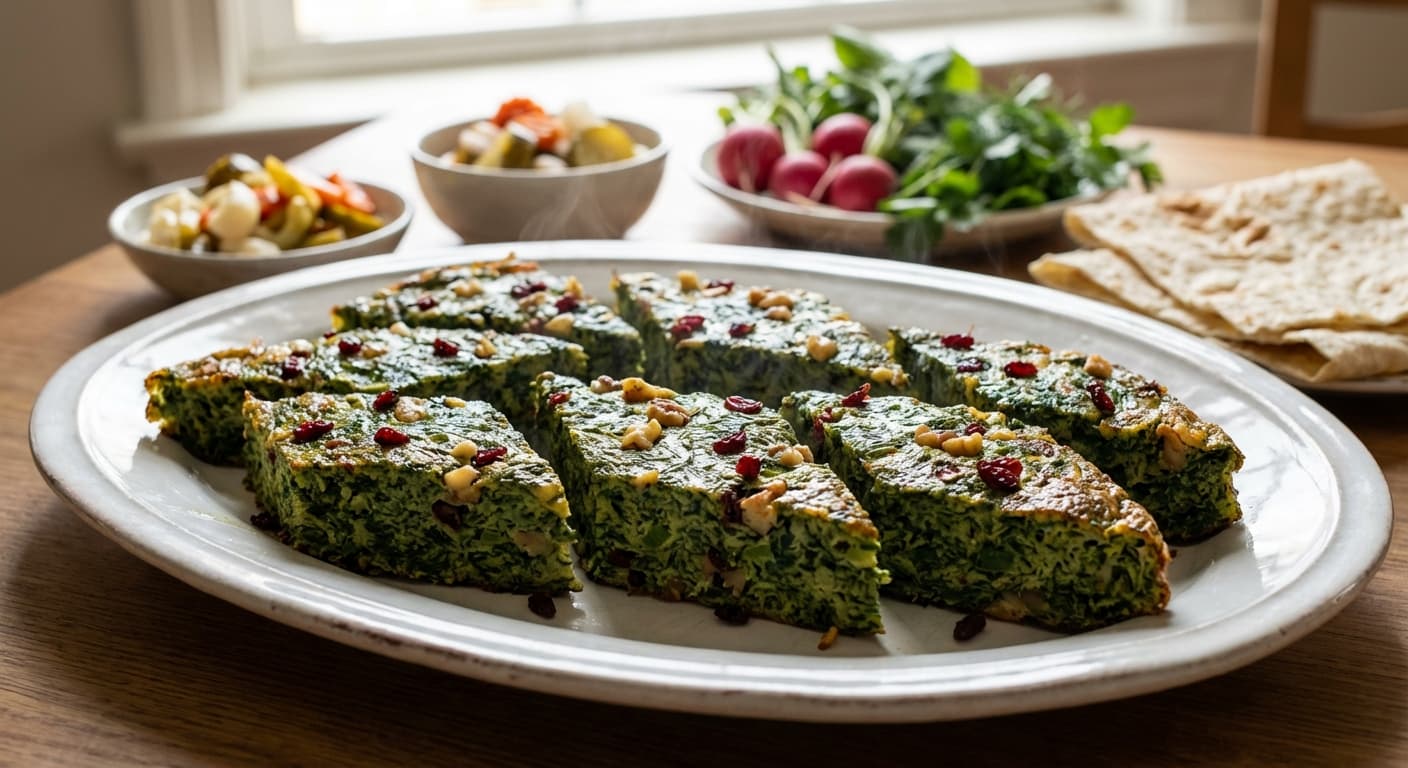
Kuku Sabzi (کوکو سبزی) — Emerald Persian Herb Frittata
Persian · Main Courses · 38 min
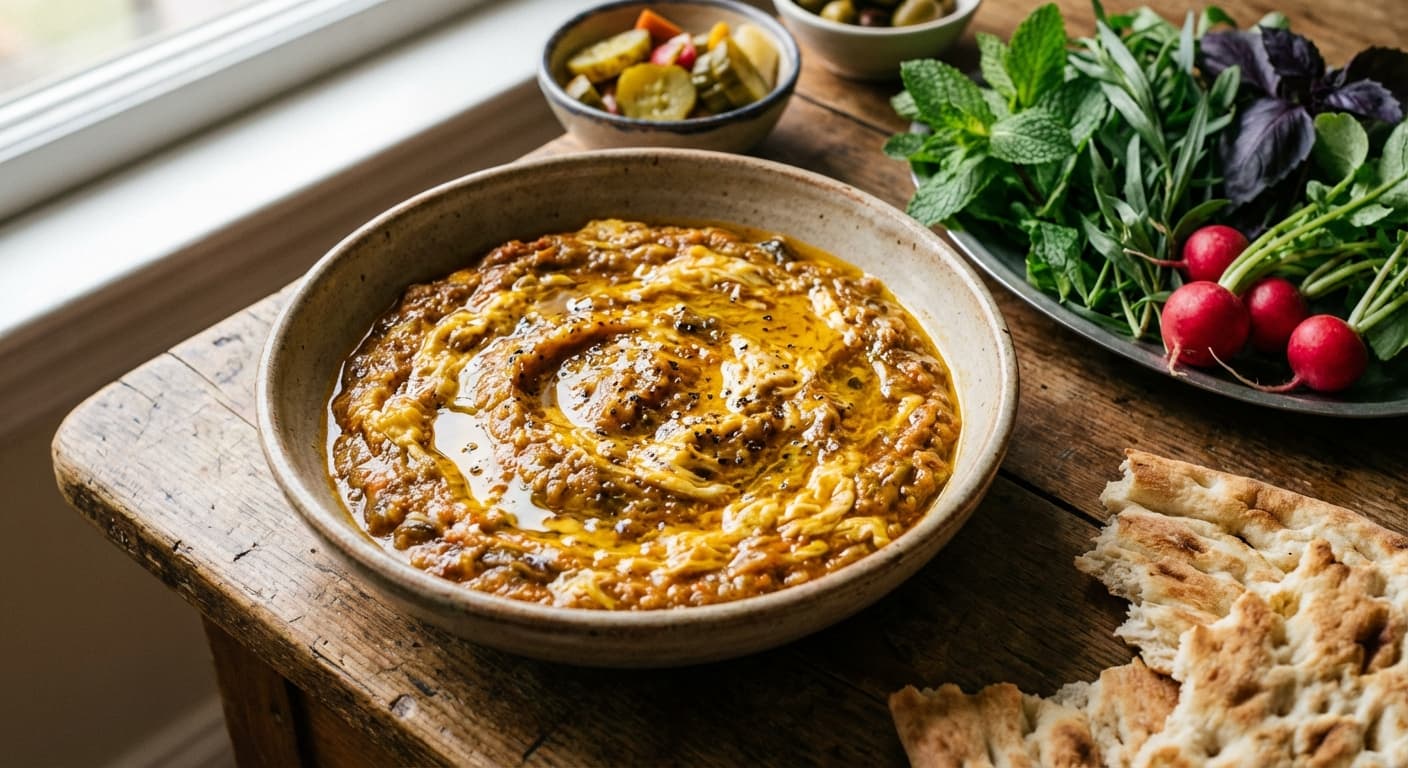
Smoked Silk Mirza Ghasemi (میرزا قاسمی) — Silky smoked eggplant with tomato, garlic, and eggs
Persian · Appetizers · 60 min
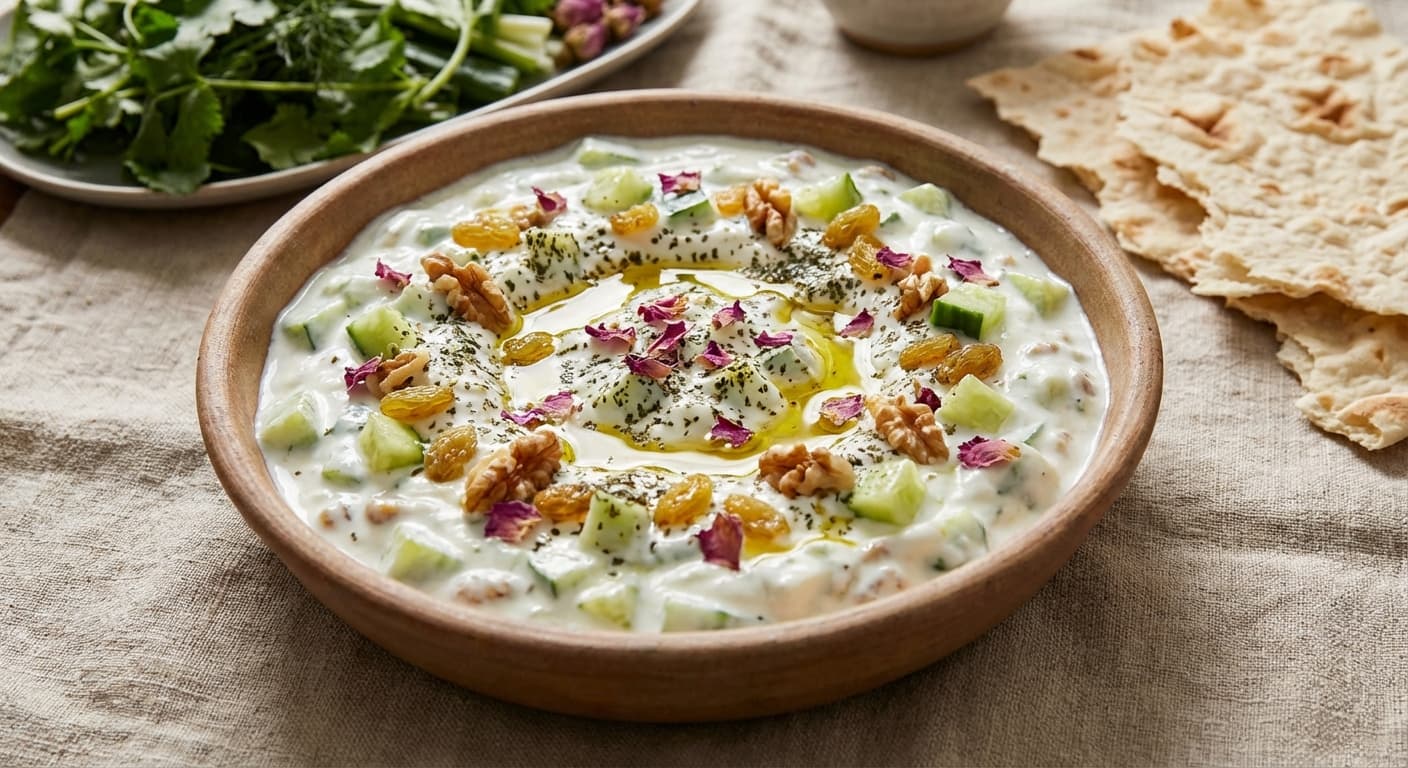
Mast-o-Khiar (ماست و خیار) — Persian Cucumber and Herb Yogurt Dip
Persian · Side Dishes · 25 min
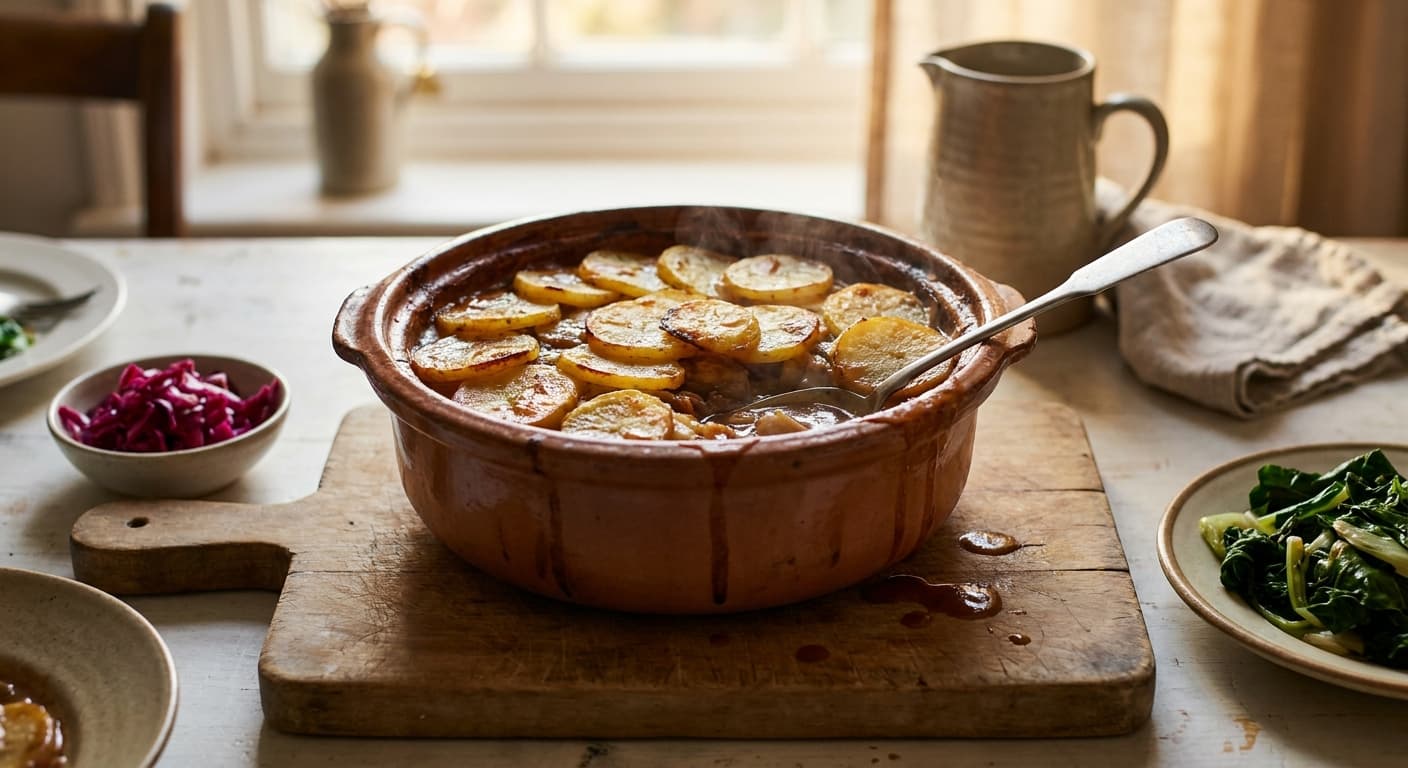
Lancashire Hotpot (Lancashire Hotpot) — Lamb and Potato Oven Stew
British · Stews · 180 min
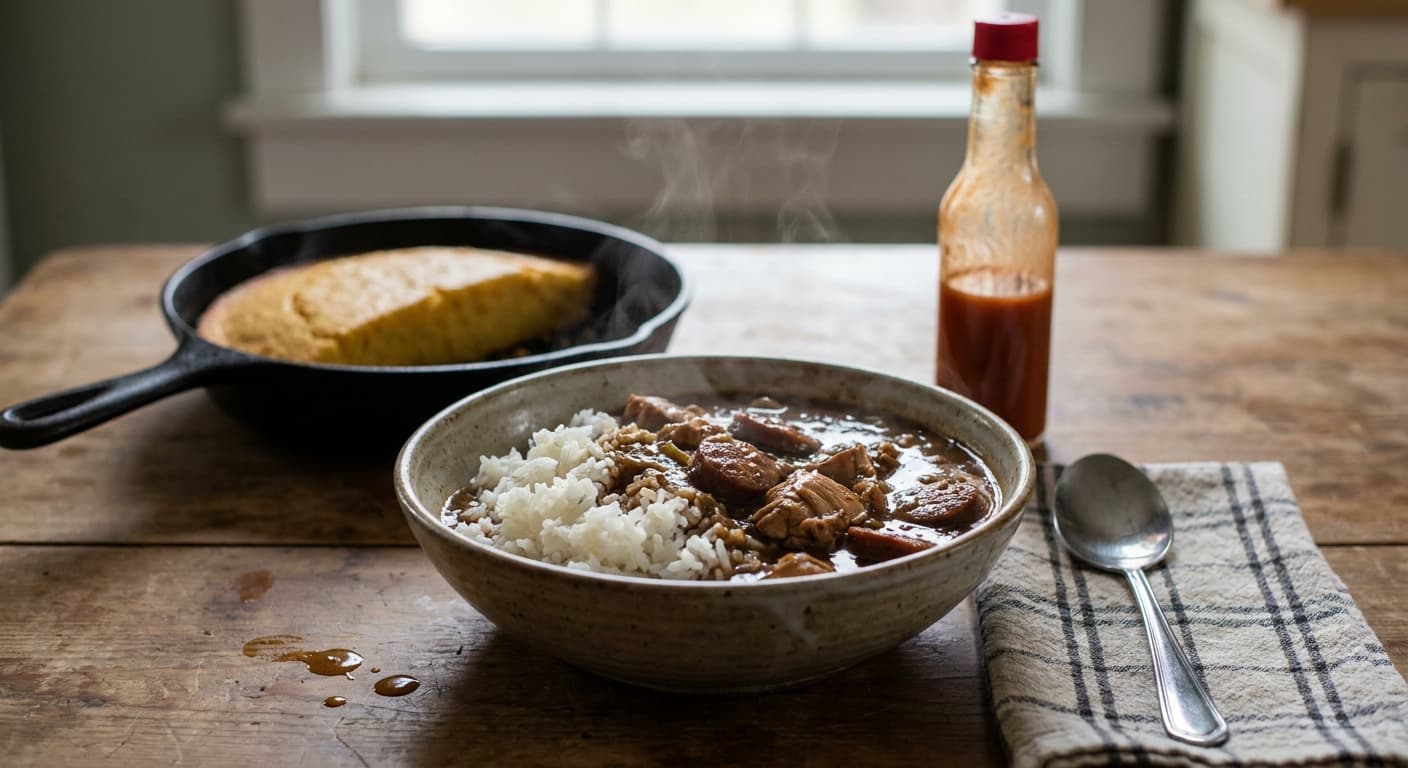
Chicken and Andouille Gumbo (English) — Louisiana Roux Stew
American · Stews · 120 min
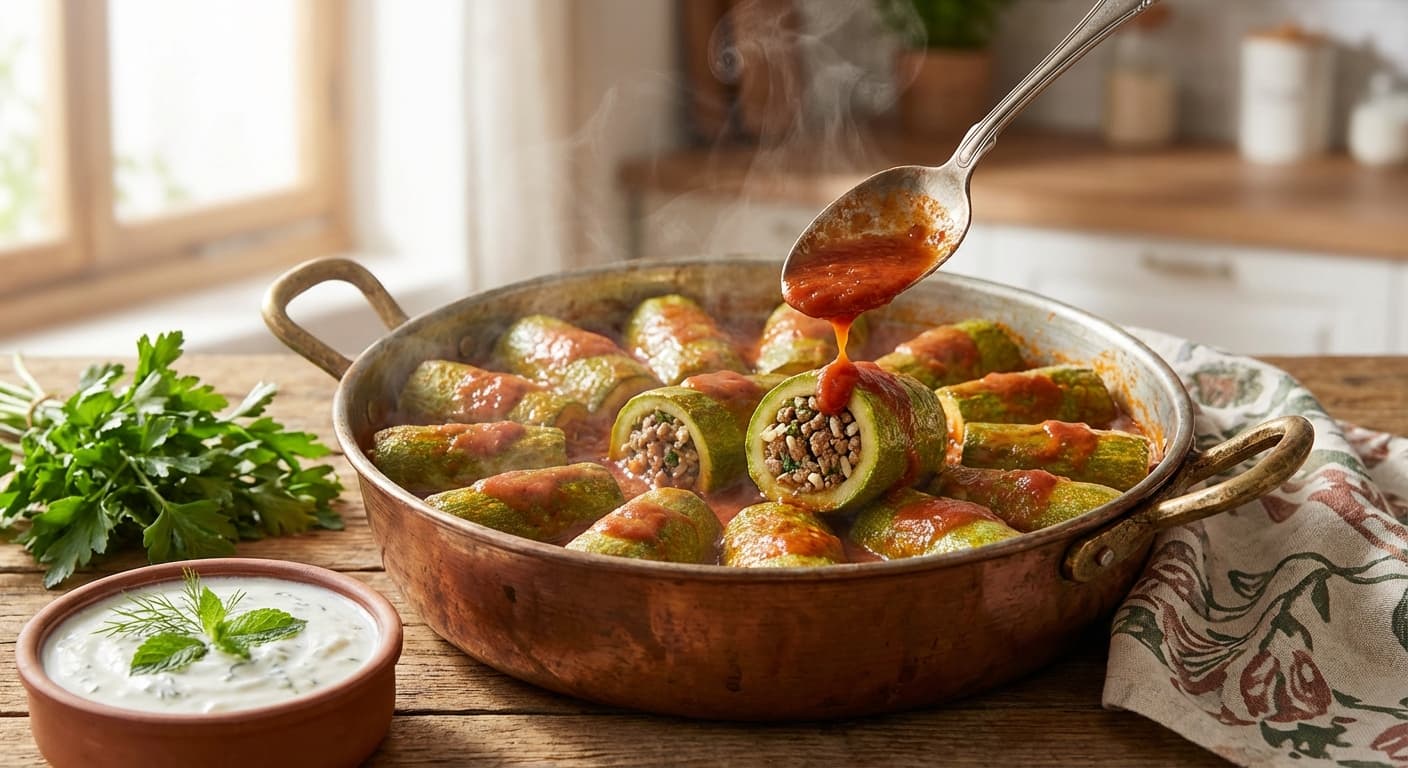
Stuffed Zucchini (Kabak Dolması) — Hollowed zucchini filled with spiced minced meat and rice
Turkish · Main Courses · 90 min
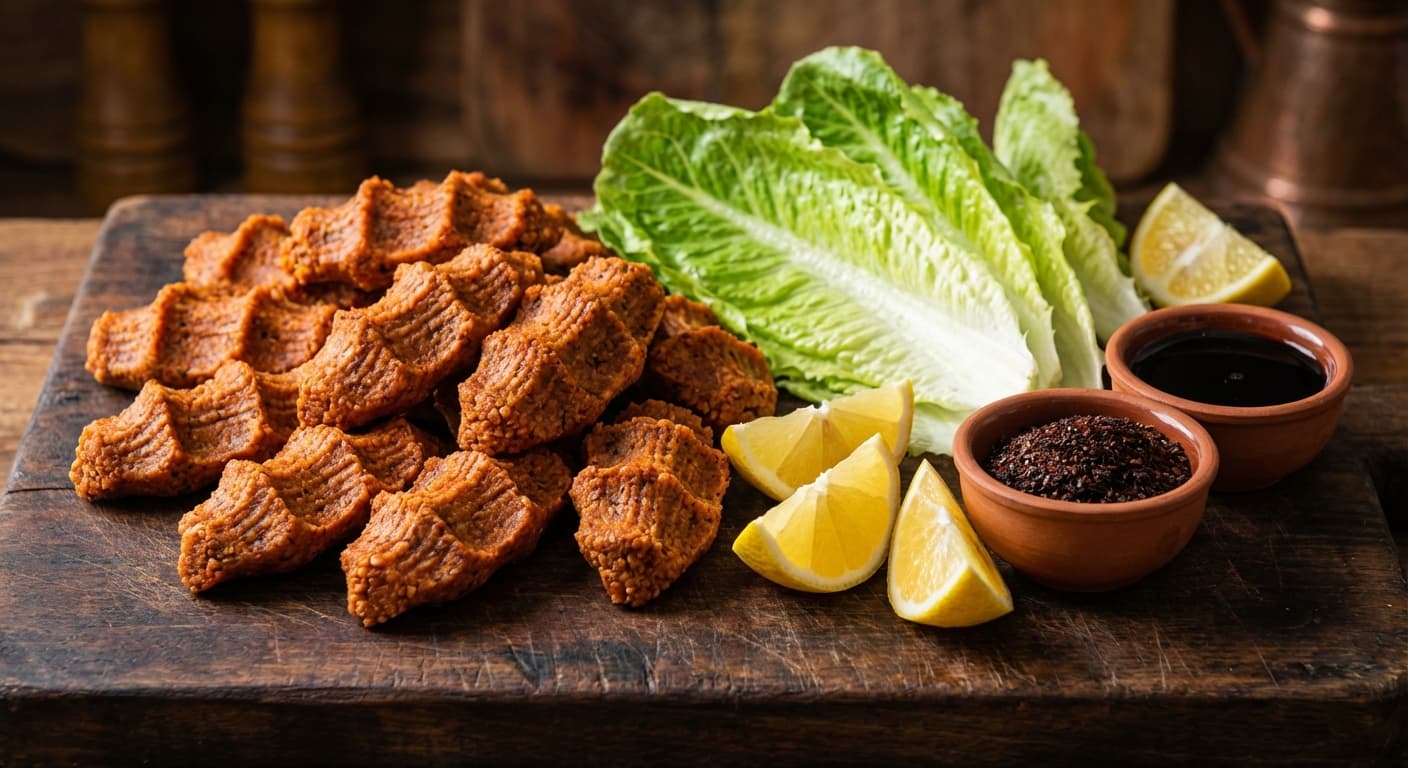
Cig Kofte (Çiğ Köfte) — Isot-kissed bulgur kneaded and served in lettuce
Turkish · Appetizers · 25 min
Dongpo Pork (东坡肉) — Hangzhou Red-Braised Pork Belly
Chinese · Main Courses · 205 min
Reviews
Cooked this recipe?
Tap the stars to rate it — that's all it takes. A few words are welcome but optional.
No ratings yet. Cooked this one? Be the first to rate it — it takes one tap.