The Art of Tahdig: Why Persians Obsess Over Crispy Rice
Tahdig is more than a crunchy layer at the bottom of the pot, it’s the little drama Persians gladly plan their whole meal around. Here’s how to make it reliably crisp, golden, and worthy of the family table.
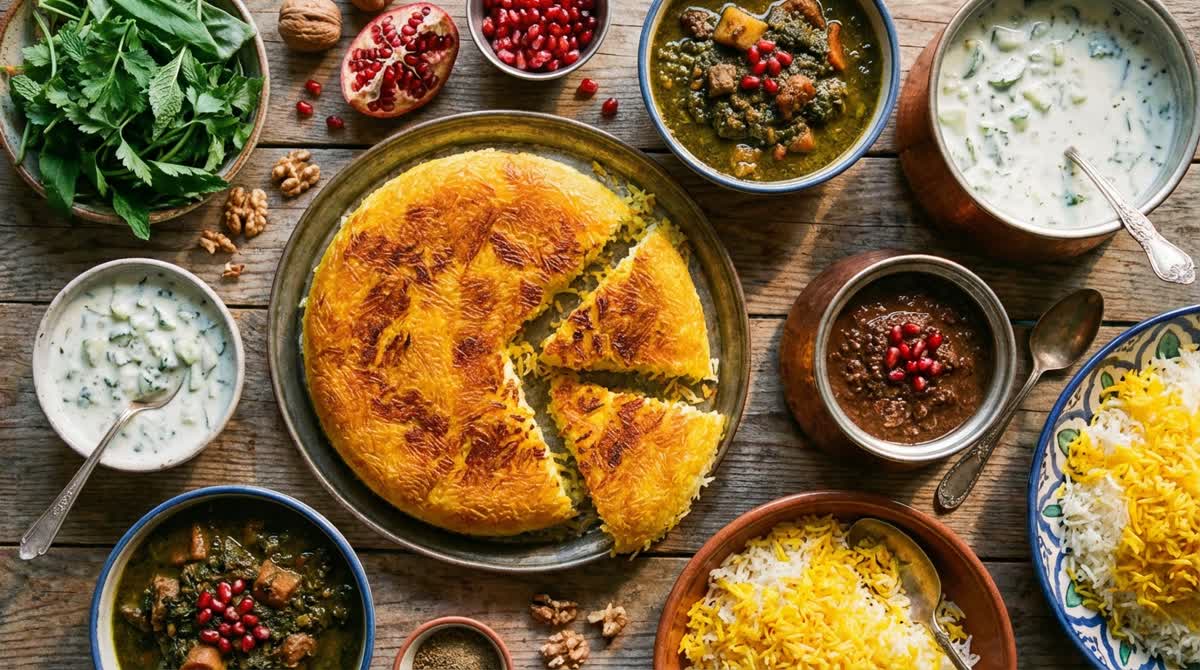
Tahdig: the crunch that turns rice into a celebration
If you’ve ever sat at a Persian table and watched the room go quiet when the rice pot is flipped, you’ve witnessed the magic of tahdig. The word literally means “bottom of the pot,” but culturally it means something closer to prize or victory lap. Tahdig is the crackly, golden crust that forms beneath fluffy, aromatic rice, and it’s so beloved that families will negotiate over who gets which piece like it’s a limited-edition gift.
Persian cooking has a talent for taking humble ingredients and giving them ceremony. In a cuisine full of fragrant stews (khoresh) and slow-cooked rice, tahdig is the playful, crunchy counterpoint. It’s also the cook’s quiet flex: anyone can boil rice, but a clean, evenly browned tahdig says you know your pot, your heat, and your patience.
In this guide, I’ll walk you through the technique, the cultural why, and the small decisions that make the difference between a pale, stuck layer and that satisfying, shatter-into-sheets crust.
Why tahdig matters (beyond texture)
Tahdig is texture, yes, but it’s also hospitality and craft. Persian meals are often built around rice, and rice is expected to be excellent. When the rice is excellent and the tahdig is excellent, it’s a sign the cook cared.
There’s also the joy of contrast. Persian stews like Ghormeh Sabzi and Fesenjan are rich, saucy, and deeply flavored. A crisp tahdig gives you something to scoop with, something to snap, something that keeps each bite interesting. Even with simpler dishes like Zereshk Polo or Baghali Polo, tahdig turns rice into an experience.
And then there’s the ritual. The pot flip is theater. The first crack when you tap the crust is a drumroll. The sharing is its own etiquette: kids often get the first crunchy bits, elders are offered the best golden pieces, and the cook gets “one for quality control” (which is entirely non-negotiable).
The two big tahdig styles: bread and potato
Tahdig comes in many forms, but two are classics in many homes:
- Bread tahdig (n1n tahdig): Usually lavash, sometimes pita or thin flatbread. It gets buttery and crisp, almost like a savory cracker. It’s forgiving and great for beginners.
- Potato tahdig (sibzamini tahdig): Sliced potatoes layered at the bottom. When done right, it’s like a giant, golden potato chip fused into a cake. It’s a little more heat-sensitive but incredibly satisfying.
There are also yogurt tahdig, saffron tahdig, lettuce tahdig in some families, and even tahdig made with rice itself pressed into the base. The method below can be adapted to most styles.
The technique, from fluffy rice to crisp bottom
The most common approach for Persian-style rice is parboiling, draining, then steaming. That’s how you get distinct grains and the right conditions for a crust to form.
Step 1: Choose the right rice and rinse it well
Long-grain basmati is a favorite because it elongates beautifully and stays separate. Whatever you use, rinse until the water runs mostly clear. This removes excess starch that can make the rice gummy and can also interfere with crispness.
Tip: If you have time, soak the rice 30 minutes to a few hours with salt. It helps the grains cook evenly and can improve texture.
Step 2: Parboil like you mean it
Bring a big pot of well-salted water to a rolling boil. Add the rinsed rice and boil until the grains are tender on the outside but still firm at the center. If you bite one, it should have a slight chalky core. This stage is the foundation: too underdone and you’ll end up steaming forever; too done and you’ll get mushy rice that compacts and tears the crust.
Drain the rice and give it a gentle rinse with warm water to stop cooking and remove surface starch.
Step 3: Set up the pot for tahdig
This is where your tahdig is made or lost. You want:
- Fat at the bottom (oil, butter, or a mix).
- Even heat and a pot with decent thickness.
- A tight lid (or a lid wrapped with a clean towel) to catch condensation and keep the rice steaming, not dripping.
For bread tahdig: lay the bread pieces in the oiled pot so there’s full coverage.
For potato tahdig: slice potatoes evenly (about 1/8 inch, 3 mm). Lay them in a single layer, slightly overlapping, in the oiled pot. Sprinkle with salt, and if you want, a pinch of turmeric or saffron water for color.
Step 4: Build the rice mound and steam
Add the parboiled rice gently on top, lifting so you don’t crush it. Shape it into a loose mound with a small “chimney” hole in the center (use the handle of a spoon). This helps steam circulate.
Drizzle a little oil or melted butter over the rice, and if you love saffron, add a few spoonfuls of saffron water across the top.
Start with medium-high heat for a few minutes to get the bottom sizzling, then reduce to low. Cover and let it steam. Depending on your pot and heat, 35–50 minutes is common.
The three things that make tahdig actually crisp
1) Heat control: crisp needs time, not aggression
High heat can burn the bottom before the rice steams properly. Low heat over time allows moisture to evaporate at the base and the starches to toast. Think of it as building a crust slowly, like good bread.
Practical cue: You should hear a gentle sizzle early on, then a quieter, steady cooking sound. If it smells sharply toasted too soon, lower the heat.
2) Enough fat, but not swimming
Fat is your insurance against sticking and your vehicle for browning. Too little and the crust tears; too much and it can get greasy and soft. A thin, even layer at the bottom, plus a small drizzle over the rice, usually does it.
3) Dry steam: keep condensation from ruining the crust
If water drips back down, it softens the top and can make the tahdig uneven. Wrapping the lid with a clean towel (or using a tight-fitting lid) helps absorb condensation. Just keep the towel away from open flame.
How to flip the pot without heartbreak
The flip is the moment everyone waits for, and yes, it can be intimidating. Here’s the calm way:
- Turn off the heat and let the pot rest 5–10 minutes. This helps the crust release.
- Run the bottom of the pot briefly under cool water, or set it on a damp towel for a few seconds. This quick temperature change can loosen sticking.
- Place a large platter over the pot. Use oven mitts.
- Flip confidently in one motion. Don’t hesitate.
If it doesn’t release immediately, don’t panic. Put it back on low heat for a few minutes and try again. Worst case, lift the tahdig out in pieces and call it “rustic.” It will still disappear.
Troubleshooting: the fixes Persian home cooks actually use
My tahdig is pale
- Heat may be too low, or time too short.
- Pot might be thin and losing heat.
- Try a slightly longer cook on low, or a short final 2–3 minutes on medium (carefully).
My tahdig burned
- Heat too high, especially early.
- Too little rice on top can also mean less insulation.
- Next time, start with less heat and more time.
It sticks and tears
- Not enough fat at the bottom, or you flipped too soon.
- Let it rest longer, and use the cool-water trick.
- Consider a nonstick pot while learning. Many Persian households have a “rice pot” for a reason.
My rice is mushy
- Rice over-parboiled, or steamed too long with too much water.
- Drain well. Parboil to that “tender outside, firm inside” stage.
Tahdig pairings that make a Persian meal feel complete
Tahdig is happiest next to something saucy. If you want to build a meal that feels like a warm welcome, start with a classic stew and a bright side:
- Ghormeh Sabzi with plenty of dried lime and herbs
- Fesenjan for walnut-pomegranate richness
- Joojeh Kabab with grilled tomatoes and sumac
- A simple salad like Shirazi Salad to cut through the richness
And if you’re serving guests, here’s a small Persian truth: everyone says they’re “fine” without tahdig, but everyone notices when it’s there.
The real secret: tahdig is practice, not perfection
Every Persian cook has a tahdig story. One that stuck, one that burned, one that slid out like a golden crown. That’s part of why we love it. Tahdig teaches you to pay attention, to trust your senses, and to stay patient.
So don’t treat your first attempt like a test. Treat it like a tradition you’re learning. Put on something you love, let the rice steam, and get ready for that moment when the whole kitchen smells like toasted butter and victory.
When you flip the pot and the tahdig comes out intact, you’ll understand the obsession. And when it doesn’t, you’ll still have crispy pieces to snack on while you try again.