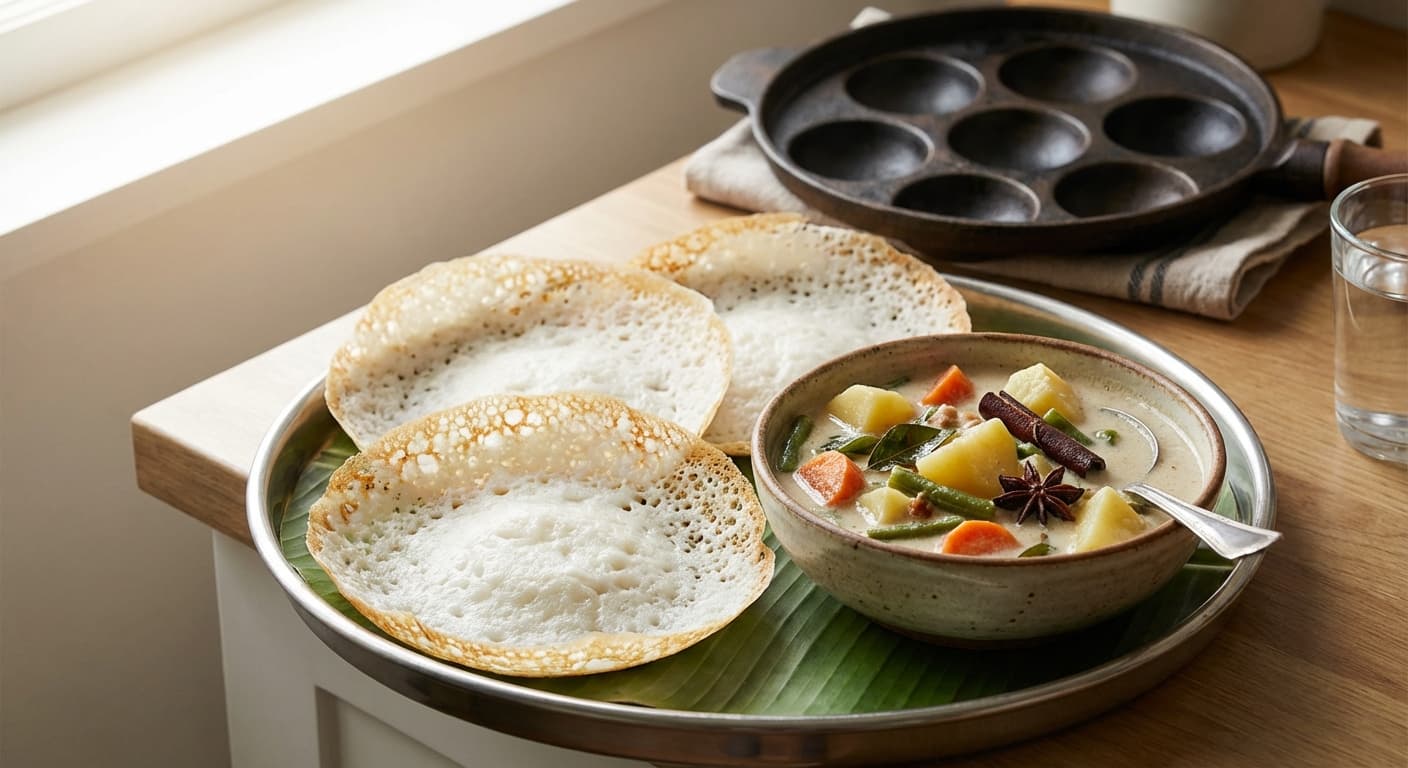
Appam with Stew (അപ്പം & ഇഷ്ടു) — Lacy rice pancakes with coconut vegetable curry
Appam with stew is a beloved Kerala breakfast where lacy fermented rice pancakes meet a gentle coconut-milk curry. The pairing reflects the region’s rice culture and coastal pantry, often served for family mornings and festive brunches.
Printable Recipe Card
Servings: 4 · Total: 80 min · Difficulty: medium
Ingredients (quick list)
- 300 g Raw rice (sona masuri or idli rice)
- 60 g Cooked white rice (Helps create a softer crumb and lacy edges.)
- 120 g Grated coconut (fresh or frozen, thawed)
- 240 ml Warm water (About 40°C for activating yeast.)
- 4 g Instant yeast
- 12 g Granulated sugar (Supports fermentation and browning.)
- 6 g Fine sea salt
- 200 ml Water (Add as needed while blending for a pourable batter.)
- 10 ml Neutral oil (Use sunflower, canola, or refined coconut oil.)
- 15 ml Coconut oil
- 1 stick Cinnamon stick (About 5 cm.)
- 3 pod Green cardamom pods (Lightly crushed.)
+ 14 more in the full ingredients section below.
Steps (summary)
- Rinse the raw rice in several changes of water until it runs mostly clear, then soak it in plenty of water for 4 hours. Drain t…
- In a small bowl, dissolve the yeast and sugar in 240 ml warm water and let it stand for 10 minutes until foamy. If it does not…
- Blend the soaked rice, cooked rice, and grated coconut with 200 ml water until very smooth, adding a little more water only if…
- Pour the batter into a large bowl, stir in the yeast mixture and the salt, and mix well for 1 full minute to aerate. Cover and…
- Once fermented, gently stir the batter to even it out without knocking out all the bubbles, and rest it for 10 minutes. If the…
- Start the stew by heating coconut oil in a pot over medium heat, then add cinnamon, cardamom, cloves, and peppercorns and sauté…
+ 6 more steps in the full instructions section below.
Cultural Background
Appam and stew is a signature Kerala combination rooted in coastal rice farming and abundant coconuts. Often served for Sunday breakfasts and celebrations, it showcases the region’s preference for gentle spice, whole aromatics, and coconut-forward gravies.
Equipment
💡 Tips
- For extra-lacy edges, keep the pan slightly hotter than you think and swirl quickly within 3 seconds of pouring the batter.
- Do not boil after adding thick coconut milk; hold it just below a simmer to prevent curdling and keep the stew velvety.
- If fermentation is slow, place the batter in an oven with the light on (about 30°C) for a steadier rise.
⚠️ Common Mistakes
❌ Batter turns too thick after fermentation and appam come out bready.
✅ Fix: Thin the batter with 15–30 ml water at a time until it pours easily and can be swirled into a lace within seconds.
❌ Stew splits or looks grainy after adding coconut milk.
✅ Fix: Keep heat low, avoid boiling, and add thick coconut milk off-heat or on the lowest flame while stirring gently.
❌ Appam stick to the pan and tear when lifting.
✅ Fix: Preheat the pan properly, use a light oil film (about 2 ml), and wait until edges are clearly crisp before loosening.
🧊 How to Store
Refrigerate leftover stew in an airtight container for up to 3 days. Reheat gently over low heat until steaming (do not boil), adding 30–60 ml water if thickened. Appam are best fresh; store cooled appam wrapped for 24 hours and reheat covered in a skillet for 45–60 seconds per side.
📅 Make Ahead
Soak rice and prepare the batter base the night before, then ferment overnight for breakfast. The stew can be cooked up to 2 days ahead and reheated gently; cook appam fresh for the best lace and soft center.
🍽️ Pairs Well With
- Kerala-style coconut chutney
- banana
- sambar (optional)
- black tea or South Indian filter coffee
Regional Variations
- Chicken stew version: replace mixed vegetables with 500 g bone-in chicken and simmer until tender before adding coconut milk.
- Kerala ‘Ishtu’ with peas: add 120 g green peas and reduce beans to 60 g for a sweeter, softer stew.
- Spice-forward stew: add 1 tsp whole fennel seeds with the tempering spices for a more aromatic, church-festival style profile.
Ingredients
- 300 gRaw rice (sona masuri or idli rice)
- 60 gCooked white rice (Helps create a softer crumb and lacy edges.)
- 120 gGrated coconut (fresh or frozen, thawed)
- 240 mlWarm water (About 40°C for activating yeast.)
- 4 gInstant yeast
- 12 gGranulated sugar (Supports fermentation and browning.)
- 6 gFine sea salt
- 200 mlWater (Add as needed while blending for a pourable batter.)
- 10 mlNeutral oil (Use sunflower, canola, or refined coconut oil.)
- 15 mlCoconut oil
- 1 stickCinnamon stick (About 5 cm.)
- 3 podGreen cardamom pods (Lightly crushed.)
- 2Whole cloves
- 12Black peppercorns
- 160 gOnion (Thinly sliced.)
- 12 gGinger (Julienned.)
- 10 gGarlic (Thinly sliced.)
- 2Green chilies (Slit lengthwise.)
- 1 bunchCurry leaves (About 10–12 leaves.)
- 250 gPotato (Peeled and cut into 2 cm cubes.)
- 150 gCarrot (Cut into 1 cm slices.)
- 120 gGreen beans (Cut into 2 cm pieces.)
- 1.5 tspGround black pepper
- 400 mlThin coconut milk (From a can or extracted; about 1:1 coconut milk to water if mixing at home.)
- 200 mlThick coconut milk (Full-fat, added at the end to keep it silky.)
- 10 mlLime juice (For brightness.)
🔄 Substitutions
- Instant yeast→ Active dry yeast (4 g)
- Thin coconut milk→ Canned coconut milk diluted with water (200 ml coconut milk + 200 ml water)
- Green beans→ Green peas (120 g)
Instructions
- 1
Rinse the raw rice in several changes of water until it runs mostly clear, then soak it in plenty of water for 4 hours. Drain thoroughly so excess water does not thin the batter too much, which can prevent lacy edges.
- 2
In a small bowl, dissolve the yeast and sugar in 240 ml warm water and let it stand for 10 minutes until foamy. If it does not foam, replace the yeast because weak yeast will give dense appam without the signature honeycomb center.
- 3
Blend the soaked rice, cooked rice, and grated coconut with 200 ml water until very smooth, adding a little more water only if the blender struggles. The texture should be like thin pancake batter, flowing easily but still coating a spoon.
- 4
Pour the batter into a large bowl, stir in the yeast mixture and the salt, and mix well for 1 full minute to aerate. Cover and ferment in a warm place for 8 hours, or until the batter looks bubbly and has a pleasant, mildly tangy aroma.
- 5
Once fermented, gently stir the batter to even it out without knocking out all the bubbles, and rest it for 10 minutes. If the batter is too thick to swirl, add 15–30 ml water at a time until it pours smoothly from a ladle.
- 6
Start the stew by heating coconut oil in a pot over medium heat, then add cinnamon, cardamom, cloves, and peppercorns and sauté for 30 seconds until fragrant. Add onion, ginger, garlic, green chilies, and curry leaves and cook for 6–8 minutes, stirring, until the onions turn translucent and sweet.
- 7
Add potato, carrot, and beans along with 300 ml water and 7 g salt, then bring to a gentle boil. Cover and simmer for 12–15 minutes until the vegetables are tender but not falling apart, because the stew should stay creamy and structured.
- 8
Stir in the thin coconut milk and simmer uncovered for 6–8 minutes, keeping the heat low so the coconut does not split. Add the ground black pepper and simmer 1 minute more to let the pepper bloom in the fat.
- 9
Turn the heat to the lowest setting and add the thick coconut milk, stirring gently for 1–2 minutes until the stew looks glossy and lightly thickened. Switch off the heat and stir in the lime juice, then cover and let it stand 5 minutes so the flavors round out.
- 10
Cook the appam by heating an appam pan (or small nonstick wok) over medium-high heat and lightly brushing with about 2 ml oil. Ladle 80–90 ml batter into the center, immediately swirl the pan in a circle to spread a thin lace around the sides while keeping a thicker pool in the middle, then cover and cook 2 minutes until the edges crisp and the center sets.
- 11
Remove the appam when the edges are golden and lacy and the center is springy, then repeat with the remaining batter, oiling lightly as needed. Keep cooked appam covered with a clean towel so they stay soft in the center while you finish the batch.
- 12
Serve 2–3 appam per person with a generous ladle of hot stew, ensuring each plate gets vegetables and plenty of coconut gravy. For the most authentic texture contrast, eat immediately while the appam edges are crisp and the stew is silky.
🪪 Recipe Passport
Cultural Background
Appam and stew is a signature Kerala combination rooted in coastal rice farming and abundant coconuts. Often served for Sunday breakfasts and celebrations, it showcases the region’s preference for gentle spice, whole aromatics, and coconut-forward gravies.
Regional Variations
Researched from multiple sources and validated by the Zaffaron editorial team. Every recipe is tested for accuracy, measurements, and cultural authenticity.
Nutrition per serving
Pairs well with
If you enjoyed this recipe, here are a few related Zaffaron recipes to try next.
Does your family make this differently?
Every family has their own version. Maybe your grandmother adds a secret ingredient, or your aunt has a completely different technique. Preserve your family's version — with their name on it, forever.
You Might Also Like
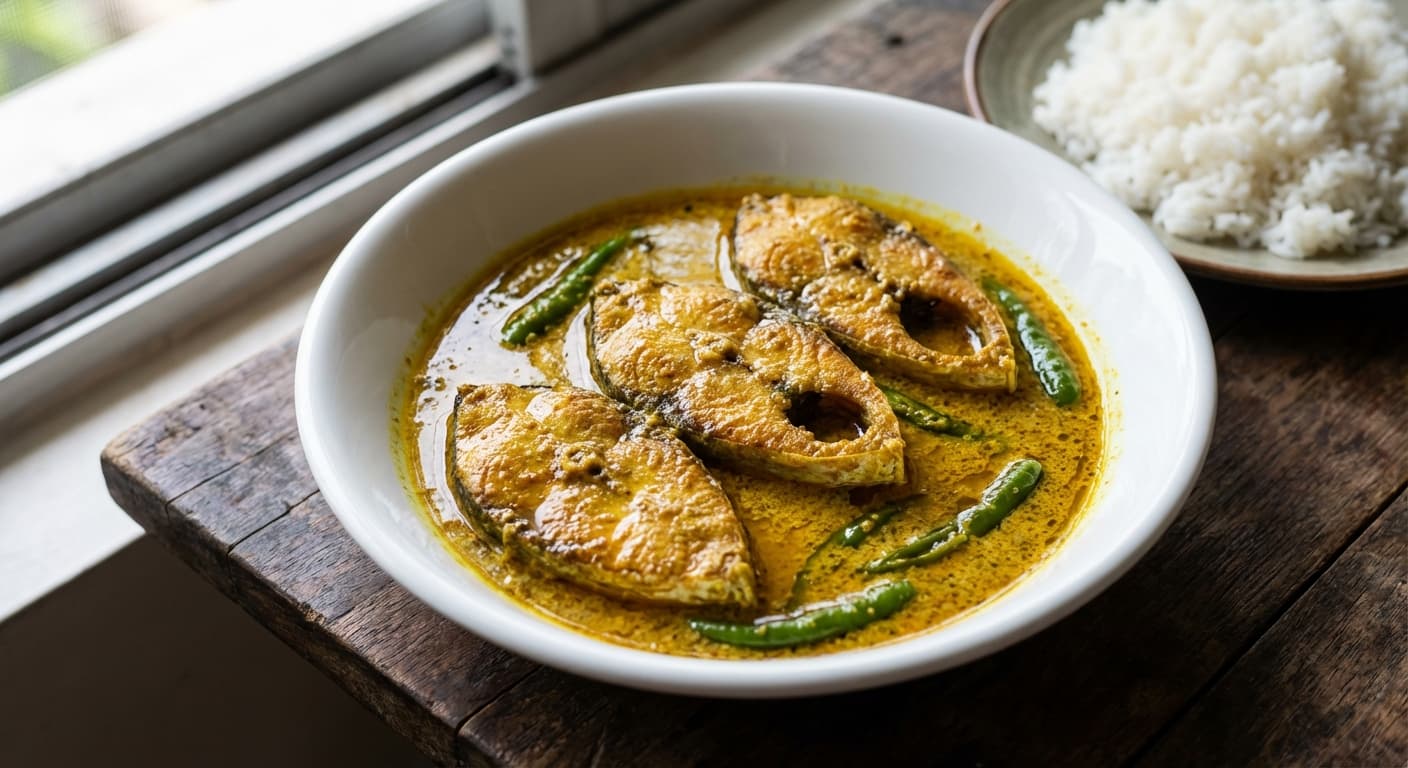
Shorshe Ilish (শরষে ইলিশ) — Hilsa in Mustard-Grreen Chili Gravy
Indian · Main Courses · 38 min
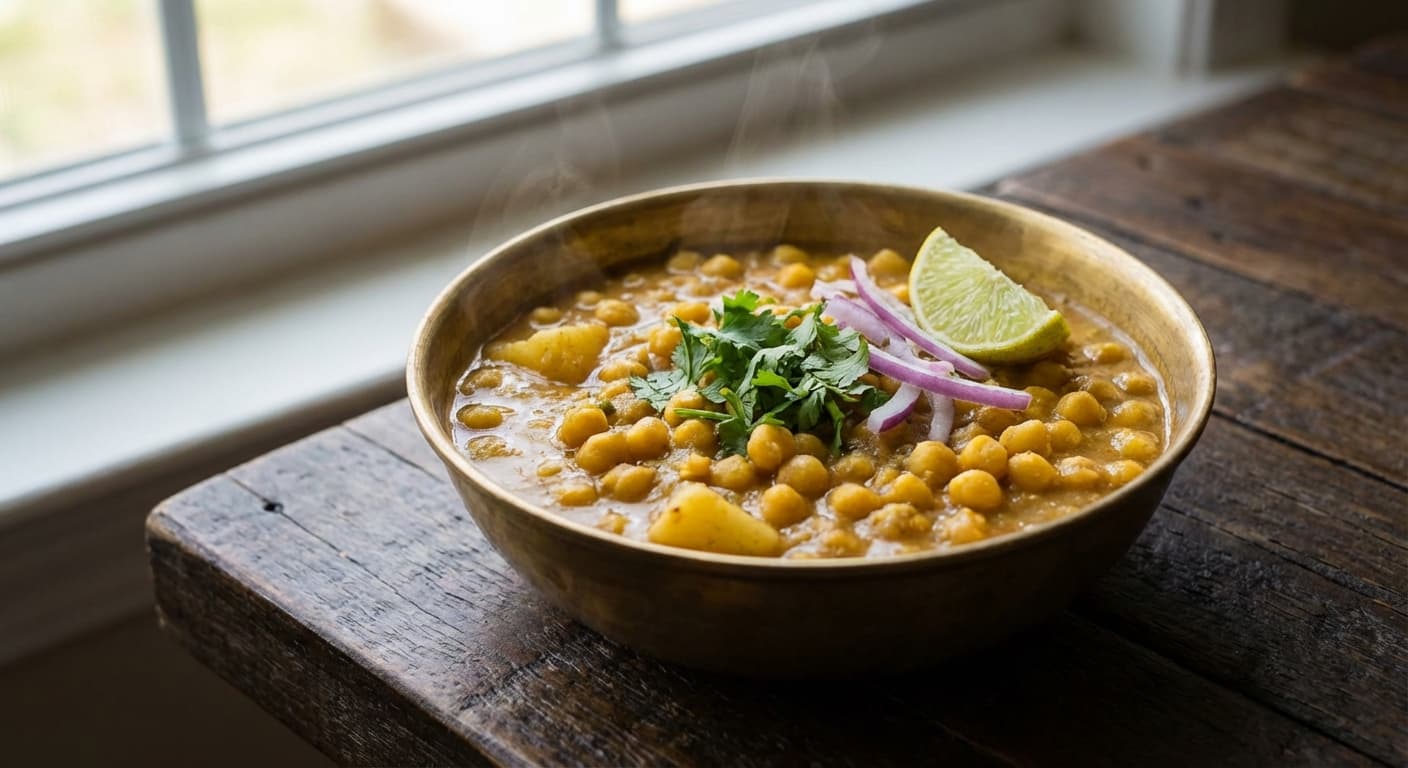
Ghugni (ঘুগনি) — Indian Spiced Yellow Peas Curry with Onions
Indian · Stews · 70 min
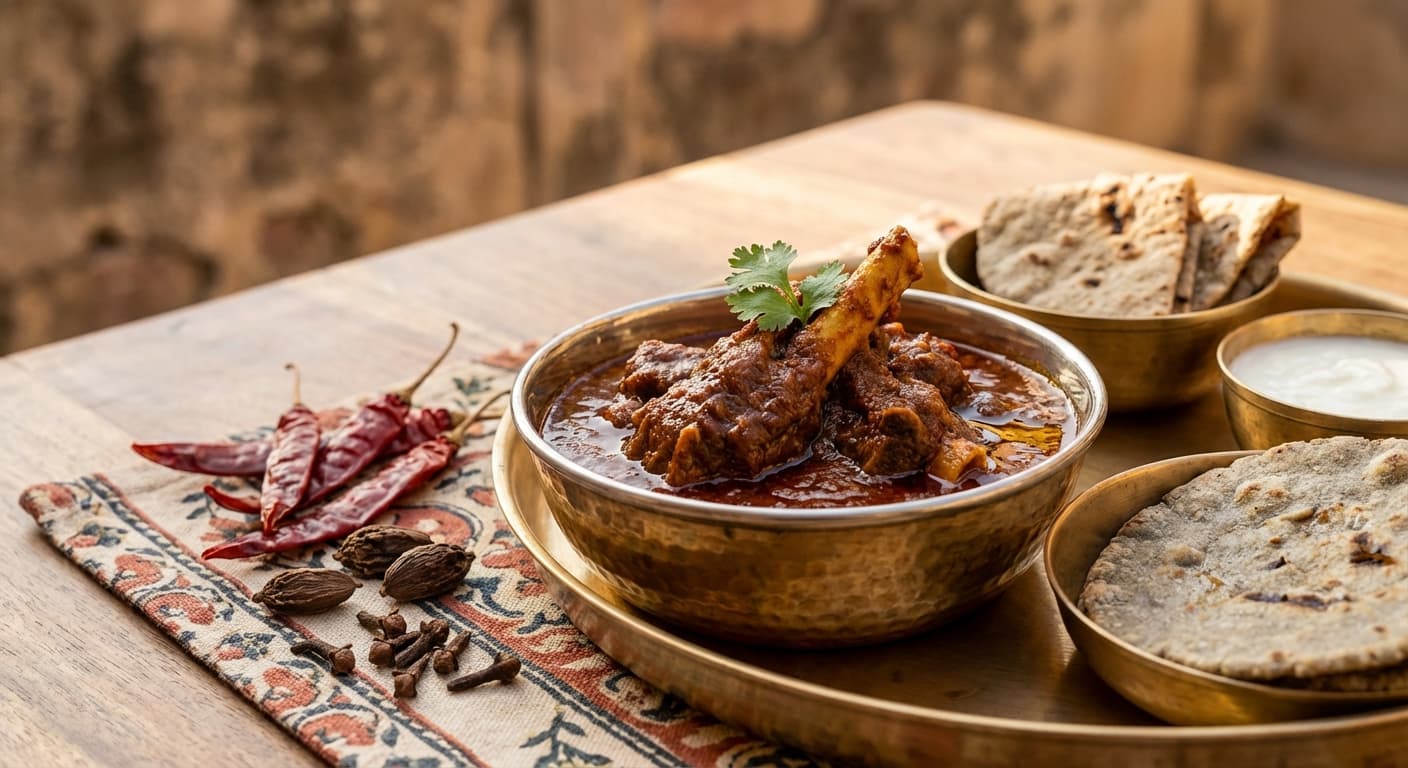
Laal Maas (लाल मांस) — Indian Fiery Rajasthani mutton curry with red chilies
Indian · Stews · 110 min

Chorrillana (Chorrillana) — Chilean Loaded Fries with Beef and Eggs
Chilean · Main Courses · 60 min
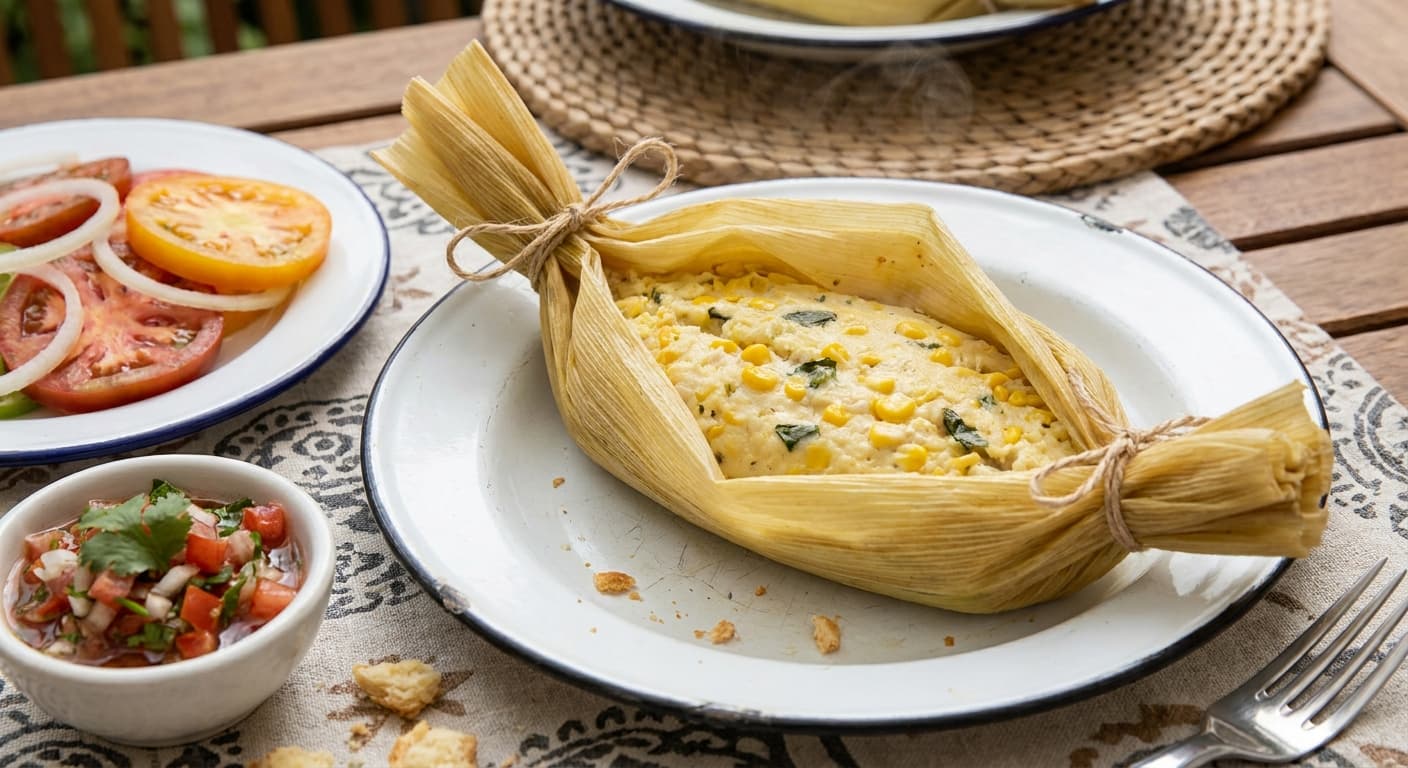
Chilean Humitas (Humitas) — Fresh Corn Parcels with Basil
Chilean · Main Courses · 90 min
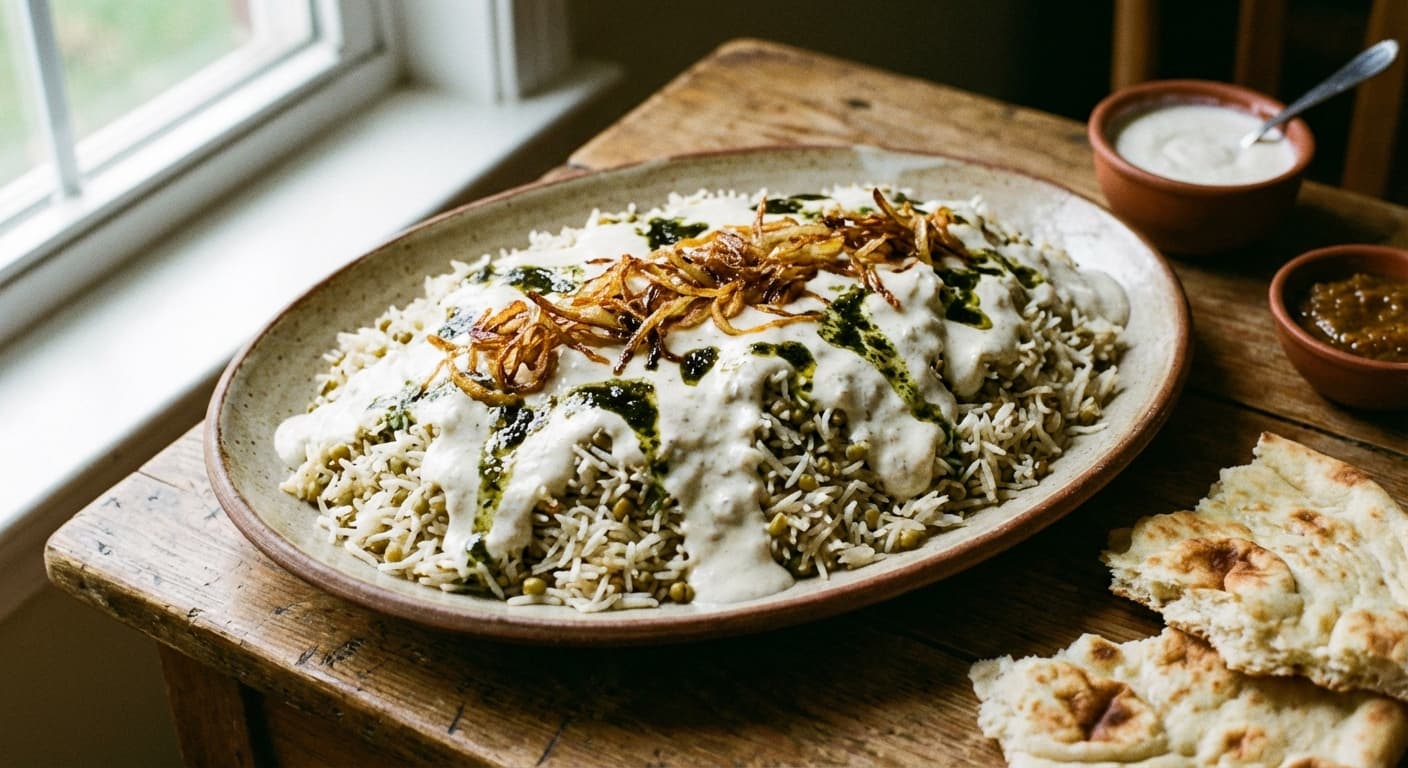
Khichiri Qorooti (خچری قروتی) — Afghan Rice and Mung Beans with Dried Yogurt Sauce
Afghan · Main Courses · 90 min
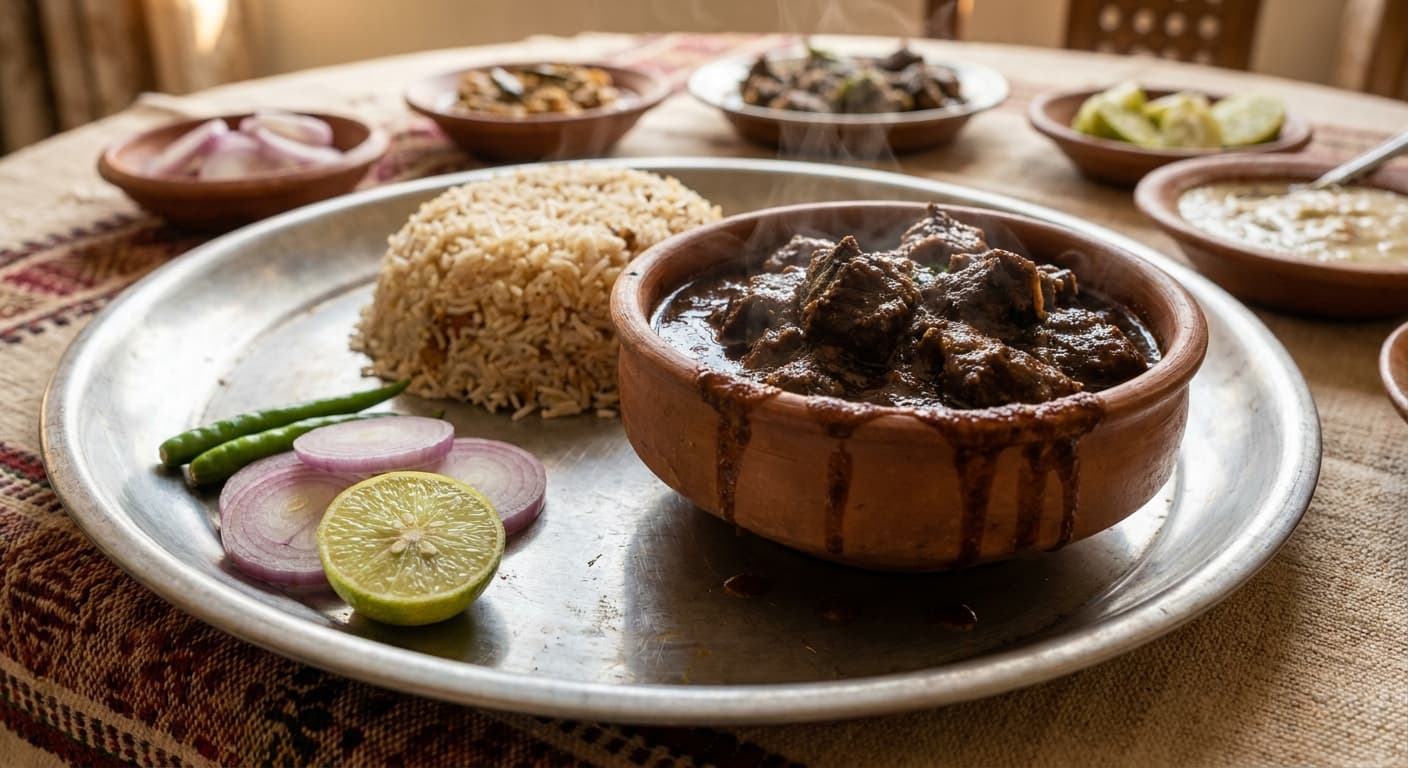
Kala Bhuna (কালা ভুনা) — Chittagong Dark Beef Bhuna
Bangladeshi · Main Courses · 175 min
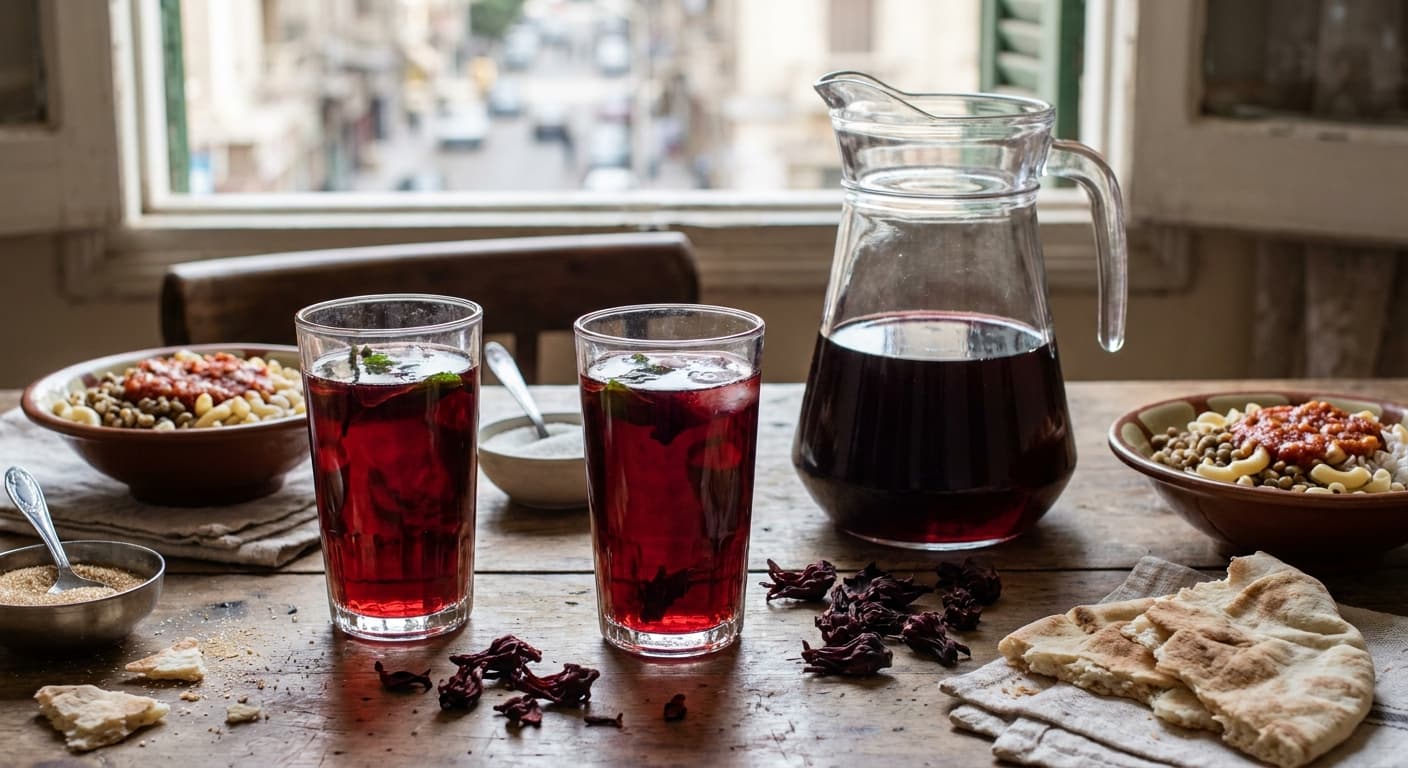
Egyptian Karkadeh (كركديه) — Chilled Hibiscus Tea
Egyptian · Drinks · 18 min
Reviews
Cooked this recipe?
Tap the stars to rate it — that's all it takes. A few words are welcome but optional.
No ratings yet. Cooked this one? Be the first to rate it — it takes one tap.