Hue-Style Spicy Beef Noodle Soup (Bún Bò Huế) — Lemongrass Beef and Pork Rice Noodle Soup
Bun Bo Hue is the bold noodle soup of Hue in central Vietnam, known for lemongrass broth, beef, pork hock, fermented shrimp paste, and red chile oil. It is aromatic, savory, and deeply restorative.
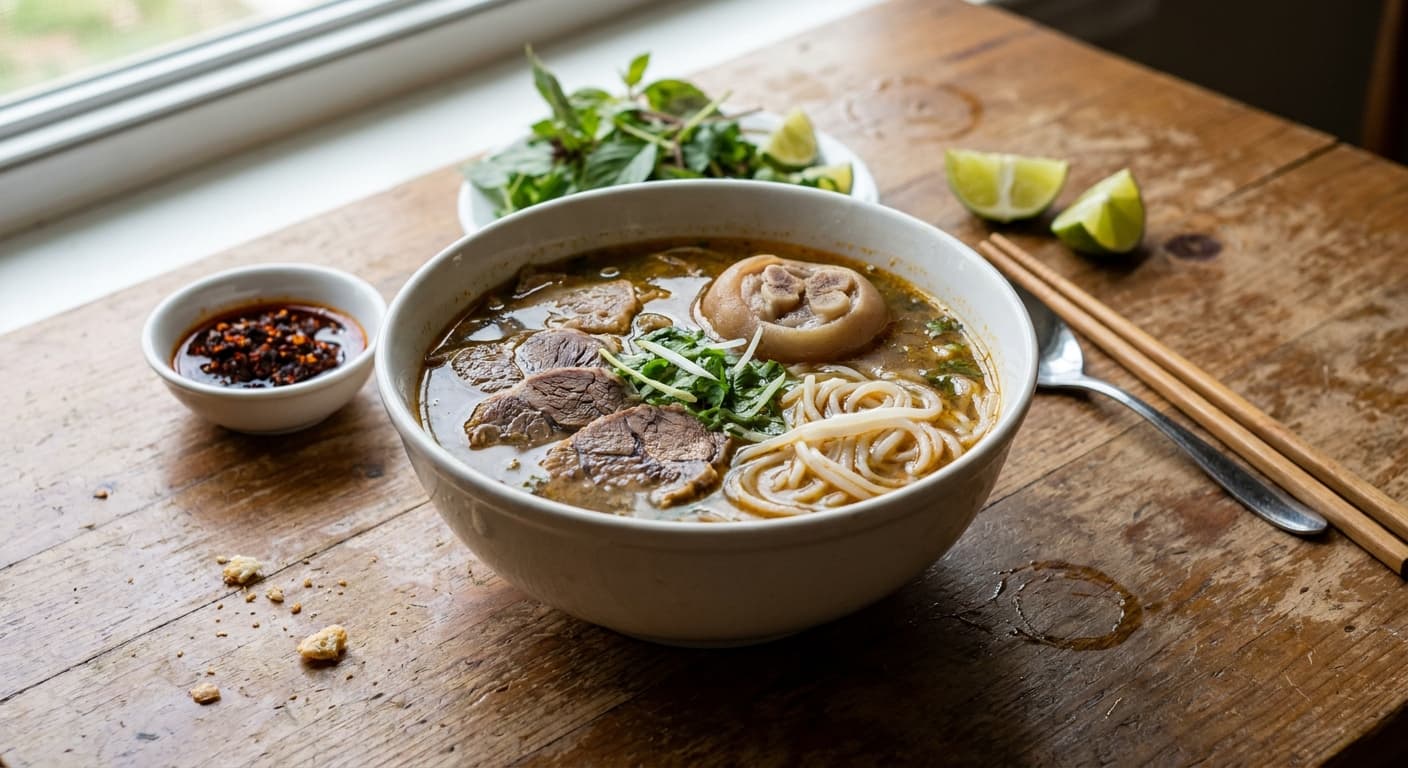
Printable Recipe Card
Servings: 6 · Total: 260 min · Difficulty: hard
Ingredients (quick list)
- 1.5 kg beef marrow bones
- 900 g beef shank (whole piece, tied if loose)
- 900 g pork hock (cut crosswise into 5 cm pieces)
- 5 l water
- 8 stalk lemongrass (trimmed, bruised, and cut into 10 cm lengths)
- 2 large yellow onions (halved)
- 2 inch fresh ginger (sliced and lightly crushed)
- 1.5 tbsp fine sea salt
- 30 g rock sugar
- 45 g mam ruoc Hue fermented shrimp paste
- 240 ml warm water
- 60 ml fish sauce
+ 18 more in the full ingredients section below.
Steps (summary)
- Place the beef bones, beef shank, and pork hock in a large stockpot and cover with cold water by at least 5 cm. Bring to a hard…
- Return the cleaned bones, beef shank, and pork hock to the pot with 5 l fresh water, the bruised lemongrass, onions, ginger, sa…
- Simmer the broth uncovered for 2.5 to 3 hours, keeping the liquid moving gently rather than boiling violently. Remove the pork…
- Stir the mam ruoc Hue fermented shrimp paste into 240 ml warm water and let it stand for 10 minutes so the sediment settles. Ca…
- Heat the neutral oil and annatto seeds in a small saucepan over medium-low heat for 3 minutes, until the oil turns brick red, t…
- Strain the broth through a fine sieve into a clean pot, then stir in two-thirds of the chile oil and keep the broth hot. Slice…
+ 2 more steps in the full instructions section below.
Cultural Background
Named for Hue, Vietnam's former imperial capital, this soup reflects central Vietnamese cooking: assertive, aromatic, and chile-forward. It is a beloved breakfast and family meal, not just restaurant food.
Equipment
💡 Tips
- Do not skip blanching the bones and meats; it is the difference between a clean, aromatic broth and a cloudy, heavy one.
- Keep the broth at a low simmer after the initial boil, because violent boiling emulsifies fat and makes the soup greasy.
- Mam ruoc is stronger than ordinary shrimp paste, so dissolve and decant it before adding it to the pot for a smoother Hue-style flavor.
⚠️ Common Mistakes
❌ Boiling the broth hard for hours
✅ Fix: After the first boil and skim, keep the pot at a gentle simmer so the broth stays clean and fragrant.
❌ Adding mam ruoc directly from the jar
✅ Fix: Dissolve it in warm water, let sediment settle, and add only the clear seasoned liquid.
❌ Overcooking the noodles before assembly
✅ Fix: Cook them just until springy, drain well, and assemble bowls only when the broth is boiling-hot.
🧊 How to Store
Store broth, meats, noodles, and herbs separately. Refrigerate broth and meats for up to 3 days or freeze broth for 2 months; reheat broth to a full simmer and warm noodles briefly in boiling water before serving.
📅 Make Ahead
Make the broth and chile oil 1 day ahead and refrigerate them separately. Slice the meats after chilling for neater pieces, then reheat the broth and cook the noodles just before serving.
🍽️ Pairs Well With
- Shredded banana blossom
- bean sprouts
- lime wedges
- fresh herbs
- sliced chiles
- extra chile oil.
Regional Variations
- Hue versions tend to be stronger with lemongrass, mam ruoc, pork hock, and a red chile-annatto oil.
- Southern Vietnamese bowls often include a sweeter broth and a larger platter of herbs and shredded vegetables.
- Some households add beef tendon, oxtail, crab paste, or omit pork blood according to family preference.
Ingredients
- 1.5 kgbeef marrow bones
- 900 gbeef shank (whole piece, tied if loose)
- 900 gpork hock (cut crosswise into 5 cm pieces)
- 5 lwater
- 8 stalklemongrass (trimmed, bruised, and cut into 10 cm lengths)
- 2large yellow onions (halved)
- 2 inchfresh ginger (sliced and lightly crushed)
- 1.5 tbspfine sea salt
- 30 grock sugar
- 45 gmam ruoc Hue fermented shrimp paste
- 240 mlwarm water
- 60 mlfish sauce
- 80 mlneutral oil
- 2 tbspannatto seeds
- 6 clovegarlic (finely minced)
- 3shallots (finely minced)
- 2 tbspred chile flakes
- 1 tbspsweet paprika
- 1 tspcayenne pepper
- 300 gcongealed pork blood (cut into 2.5 cm cubes)
- 700 gdried thick round rice vermicelli
- 250 gbanana blossom (thinly shredded and held in cold water with lime juice)
- 300 gbean sprouts
- 1 bunchVietnamese coriander
- 1 bunchThai basil
- 1 bunchmint
- 1 bunchcilantro
- 6green onions (thinly sliced)
- 3large limes (cut into wedges)
- 4bird's eye chiles (thinly sliced)
🔄 Substitutions
- pork hock→ beef tendon
- mam ruoc Hue fermented shrimp paste→ 60 ml fish sauce mixed with 15 g finely mashed fermented shrimp paste
- banana blossom→ thinly shredded green cabbage
Instructions
- 1
Place the beef bones, beef shank, and pork hock in a large stockpot and cover with cold water by at least 5 cm. Bring to a hard boil for 10 minutes, then drain, rinse the bones and meat under warm water, and scrub the pot clean so the final broth tastes clear rather than muddy.
- 2
Return the cleaned bones, beef shank, and pork hock to the pot with 5 l fresh water, the bruised lemongrass, onions, ginger, salt, and rock sugar. Bring to a gentle boil, then reduce the heat to a quiet simmer and skim foam from the surface for the first 30 minutes.
- 3
Simmer the broth uncovered for 2.5 to 3 hours, keeping the liquid moving gently rather than boiling violently. Remove the pork hock pieces when tender, usually after about 90 minutes, and remove the beef shank when a skewer passes through easily, usually after about 2 hours.
- 4
Stir the mam ruoc Hue fermented shrimp paste into 240 ml warm water and let it stand for 10 minutes so the sediment settles. Carefully pour the clear purple-brown liquid into the broth and leave the gritty sediment behind, then add the fish sauce and simmer for 15 minutes.
- 5
Heat the neutral oil and annatto seeds in a small saucepan over medium-low heat for 3 minutes, until the oil turns brick red, then strain out and discard the seeds. Return the colored oil to the pan, add the minced lemongrass, garlic, shallots, chile flakes, paprika, and cayenne, and cook for 4 minutes until fragrant but not burned.
- 6
Strain the broth through a fine sieve into a clean pot, then stir in two-thirds of the chile oil and keep the broth hot. Slice the cooled beef shank thinly across the grain, keep the pork hock pieces whole, and simmer the pork blood cubes in the broth for 8 minutes to heat them through.
- 7
Cook the thick round rice vermicelli according to the package directions until tender but springy, then rinse briefly with hot water and drain well. Divide the noodles among 6 deep bowls, top each bowl with sliced beef shank, pork hock, pork blood, and green onions, then ladle over boiling-hot broth.
- 8
Serve immediately with banana blossom, bean sprouts, Vietnamese coriander, Thai basil, mint, cilantro, lime wedges, sliced chiles, and the remaining chile oil on the side. Each diner should add herbs and lime at the table, because Bun Bo Hue is meant to balance fiery broth with fresh, crisp garnishes.
🪪 Recipe Passport
Cultural Background
Named for Hue, Vietnam's former imperial capital, this soup reflects central Vietnamese cooking: assertive, aromatic, and chile-forward. It is a beloved breakfast and family meal, not just restaurant food.
Regional Variations
Researched from multiple sources and validated by the Zaffaron editorial team. Every recipe is tested for accuracy, measurements, and cultural authenticity.
📚 Sources & Cultural References
- Andrea Nguyen — Into the Vietnamese Kitchen — (2006)
- Mai Pham — Pleasures of the Vietnamese Table — (2001)
Sources cited by the Zaffaron editorial team during recipe research. Cultural and culinary references supporting authenticity claims.
Nutrition per serving
Pairs well with
If you enjoyed this recipe, here are a few related Zaffaron recipes to try next.
Does your family make this differently?
Every family has their own version. Maybe your grandmother adds a secret ingredient, or your aunt has a completely different technique. Preserve your family's version — with their name on it, forever.
You Might Also Like
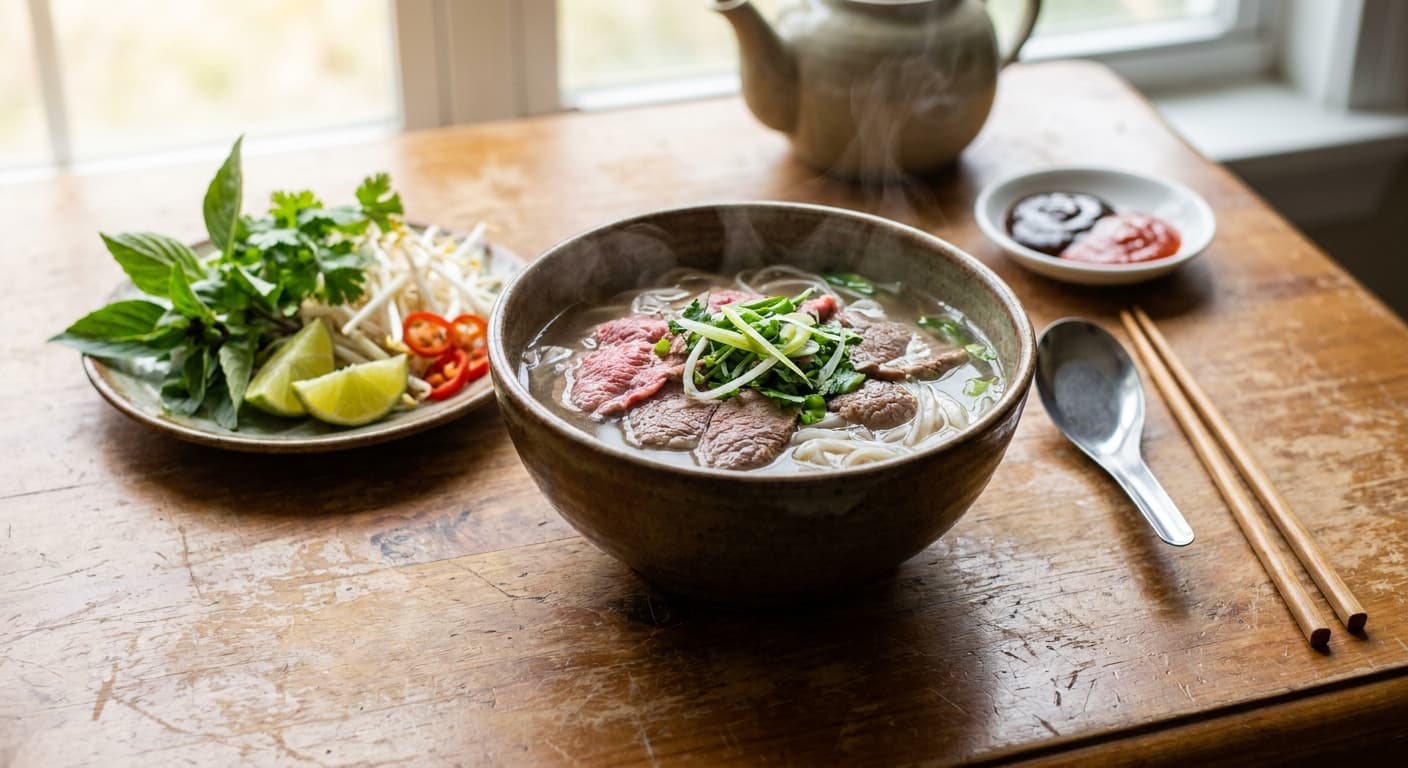
Beef Pho (Phở Bò) — Vietnamese Beef Noodle Soup
Vietnamese · Soups · 405 min
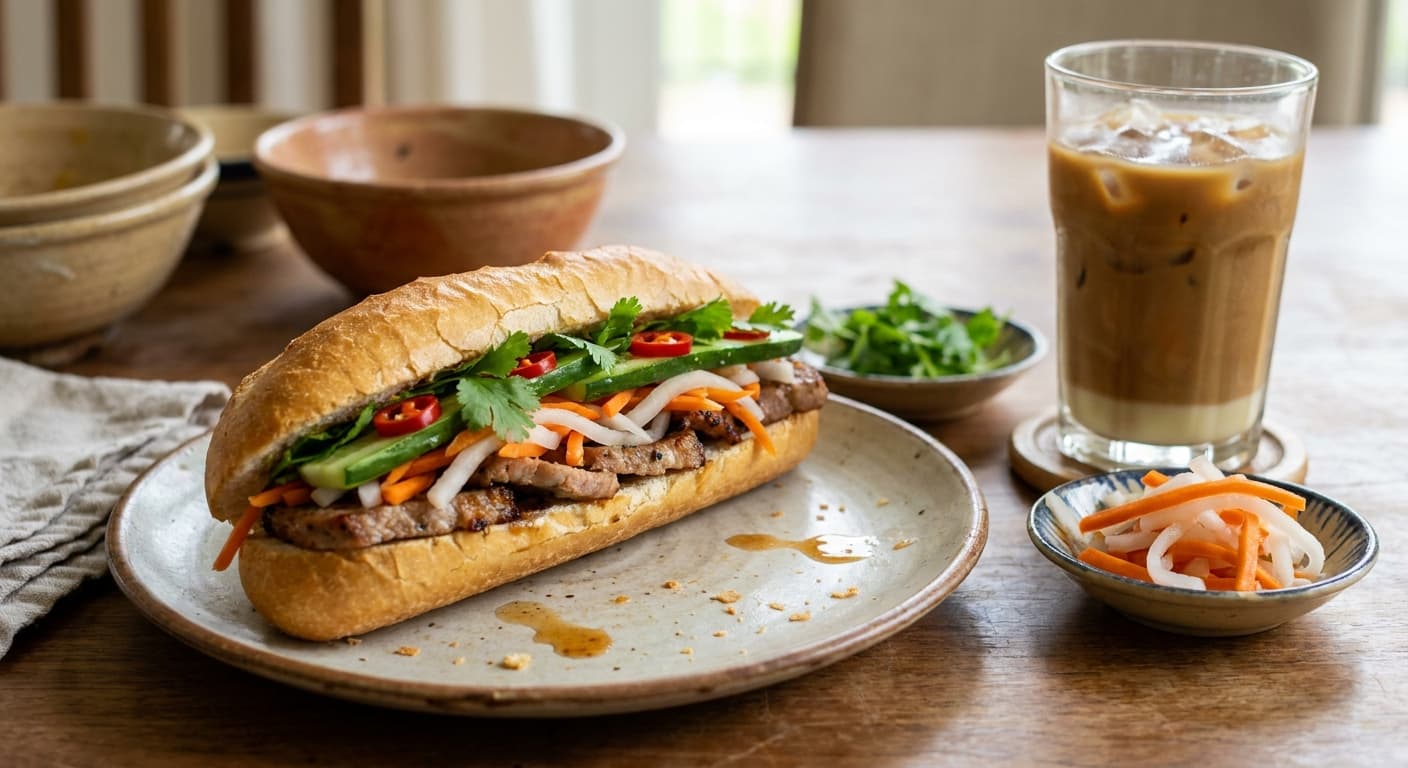
Vietnamese Pork Banh Mi (Bánh Mì Thịt) — Crisp Baguette Sandwich with Pickles, Pâté, and Herbs
Vietnamese · Main Courses · 60 min

Vietnamese Beef Stew (Bò Kho) — Lemongrass-Spiced Carrot Stew
Vietnamese · Stews · 185 min
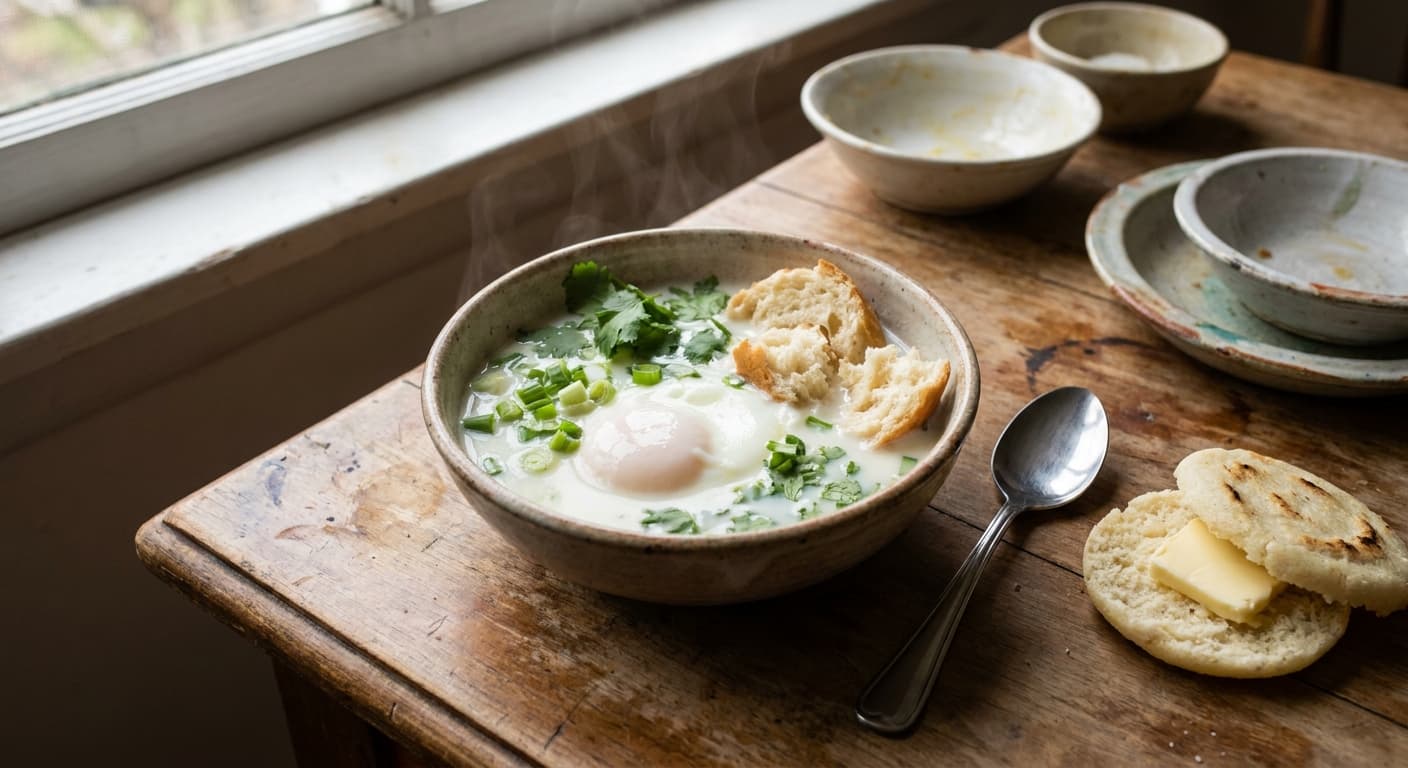
Changua (Changua) — Colombian Milk-and-Egg Breakfast Soup
Colombian · Soups · 25 min
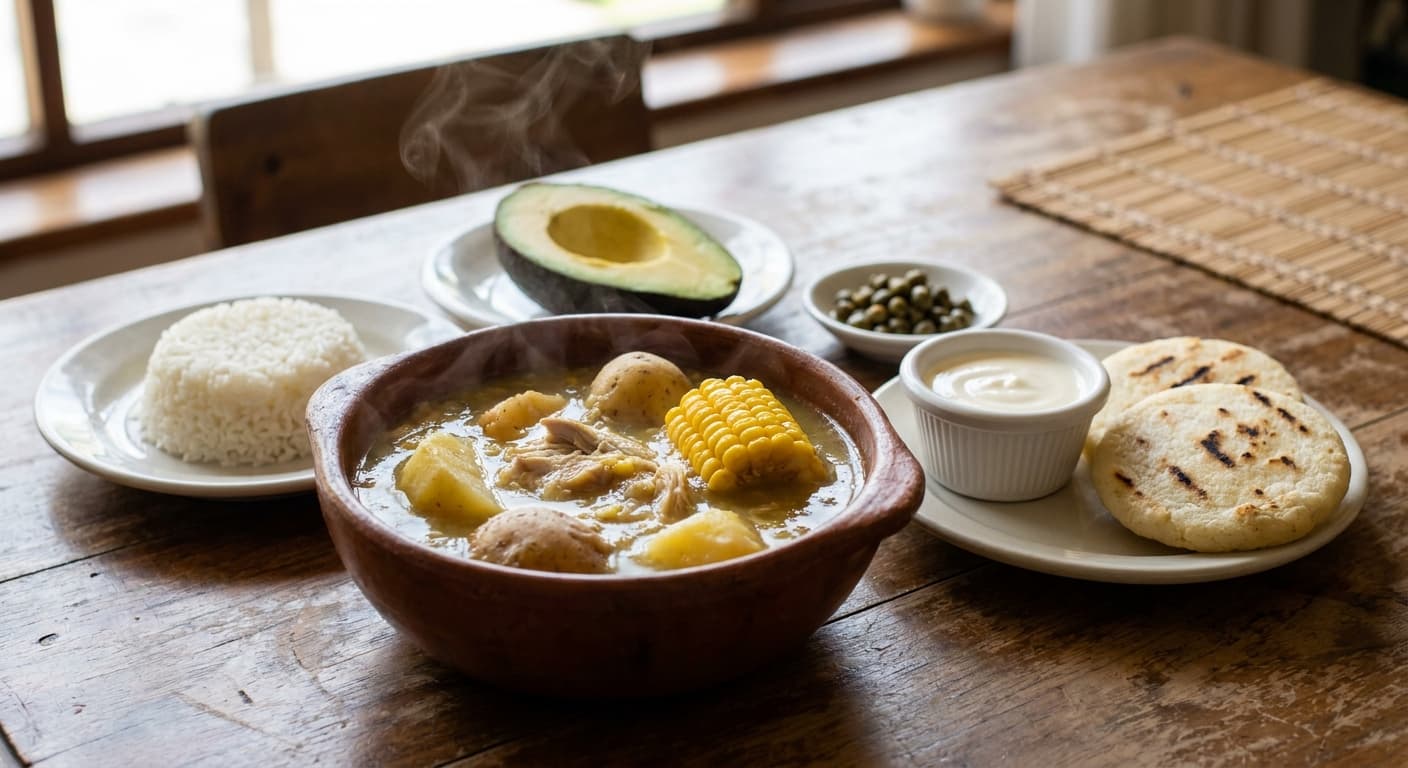
Colombian Chicken and Potato Soup (Ajiaco Santafereño) — Bogotá-Style Guascas Soup
Colombian · Soups · 110 min
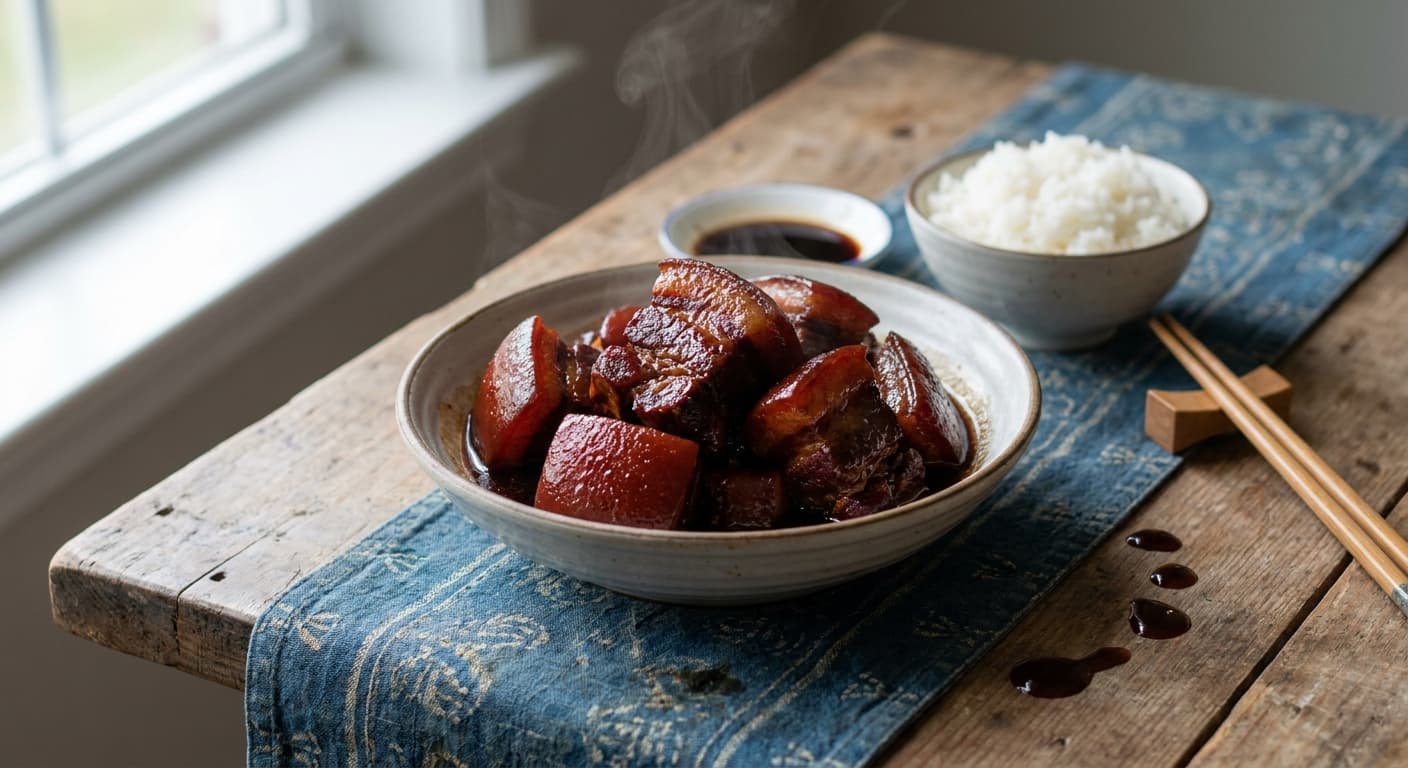
Dongpo Pork (东坡肉) — Hangzhou Red-Braised Pork Belly
Chinese · Main Courses · 205 min
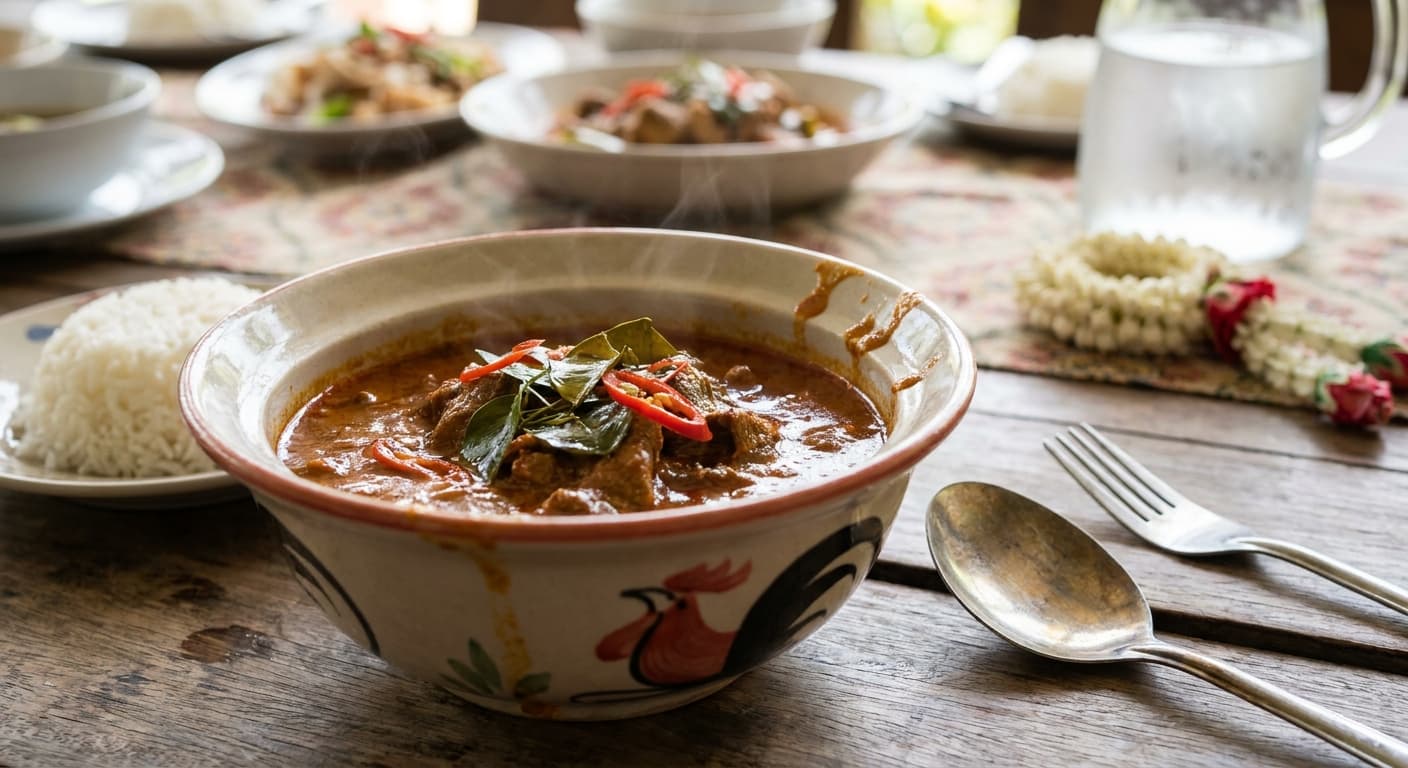
Panang Curry (แกงแพนง) — Rich Thai Coconut Beef Curry
Thai · Main Courses · 75 min
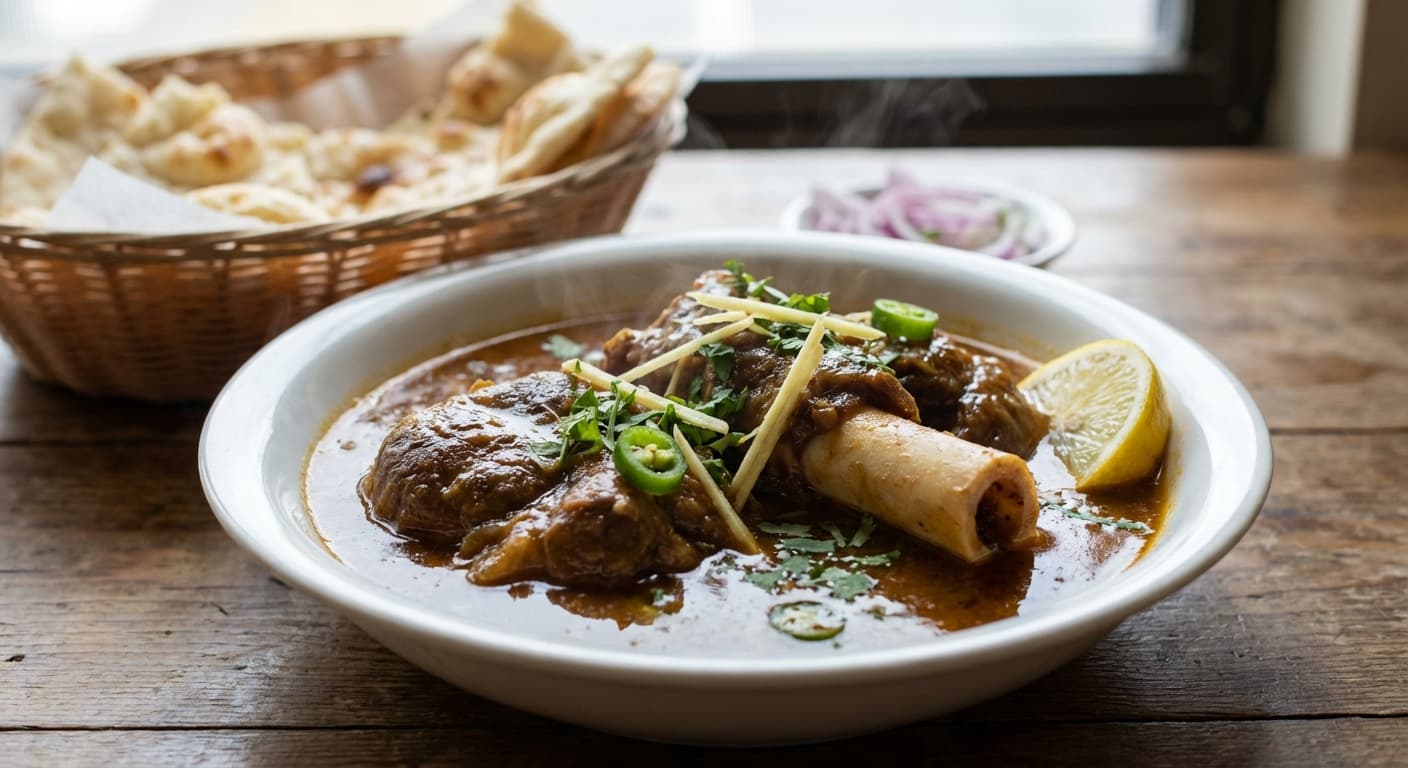
Nihari (نہاری) — Indian Overnight-Cooked Beef Stew with Warming Spices
Indian · Stews · 275 min
Reviews
Cooked this recipe?
Tap the stars to rate it — that's all it takes. A few words are welcome but optional.
No ratings yet. Cooked this one? Be the first to rate it — it takes one tap.