Char Kway Teow (炒粿条) — Smoky Malaysian Stir-Fried Rice Noodles
Char kway teow is a beloved Malaysian hawker dish, especially associated with Penang’s wok stalls. Flat rice noodles are fried over fierce heat with prawns, cockles, egg, bean sprouts, chives, soy sauces, and lard for deep wok hei.
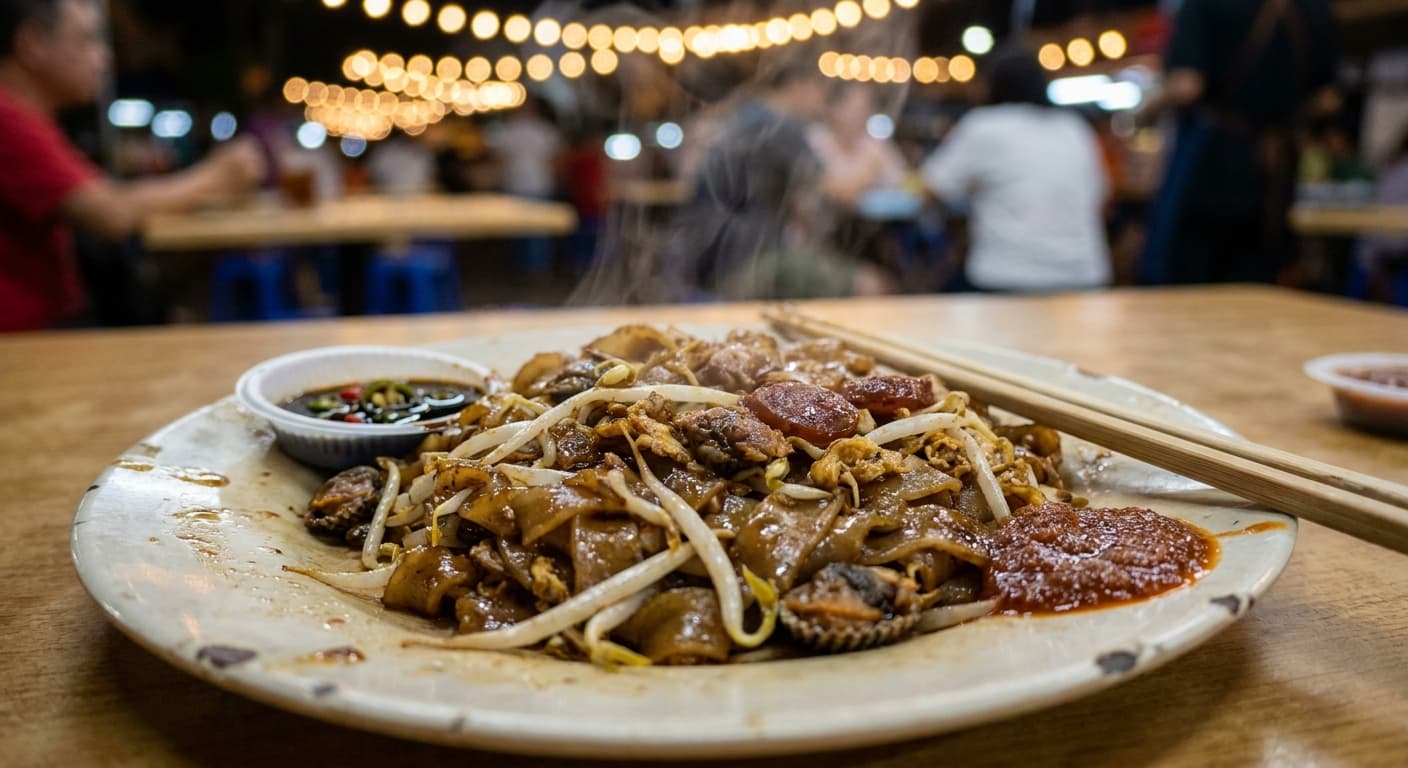
Printable Recipe Card
Servings: 4 · Total: 37 min · Difficulty: medium
Ingredients (quick list)
- 700 g fresh flat rice noodles (wide kway teow, loosened gently by hand)
- 60 g pork lard
- 5 clove garlic (finely chopped)
- 300 g large prawns (peeled and deveined)
- 200 g fresh cockles (briefly blanched and shelled)
- 120 g Chinese sausage (lap cheong, thinly sliced on the diagonal)
- 4 eggs
- 220 g bean sprouts (rinsed and well drained)
- 80 g Chinese chives (cut into 5 cm lengths)
- 3 tbsp light soy sauce
- 1.5 tbsp dark soy sauce
- 1 tbsp oyster sauce
+ 4 more in the full ingredients section below.
Steps (summary)
- Combine the light soy sauce, dark soy sauce, oyster sauce, fish sauce, white pepper, sugar, and chili paste in a small bowl. St…
- Separate the fresh rice noodles gently with your fingers, keeping the strands as intact as possible. If they are stiff from ref…
- Heat a well-seasoned carbon-steel wok over high heat until a faint wisp of smoke appears. Add 15 g of the pork lard, then add o…
- Cook the dish in 4 small batches for proper wok hei and noodle texture. For each batch, add 75 g prawns and 30 g Chinese sausag…
- Add 175 g rice noodles to the wok and spread them across the hot surface for 10 seconds before tossing. Spoon in one quarter of…
- Push the noodles to one side of the wok and crack in 1 egg. Break the yolk, let the egg set for 10 seconds, then fold the noodl…
+ 2 more steps in the full instructions section below.
Cultural Background
Char kway teow grew from the practical food of Chinese laborers into a defining Malaysian hawker classic. Penang versions are especially prized for high-heat wok hei, cockles, prawns, and a balance of dark soy and chili.
Equipment
💡 Tips
- Use a very hot wok and cook in small batches; overcrowding creates steamed noodles instead of smoky char kway teow.
- Fresh rice noodles are more authentic than dried noodles, but they must be handled gently because broken strands turn sticky.
- Have every ingredient measured and within reach before cooking because each batch takes only a few minutes.
⚠️ Common Mistakes
❌ Cooking the full quantity in one wokful.
✅ Fix: Cook 1 serving at a time so the noodles sear instead of steaming.
❌ Stirring the noodles constantly from the moment they enter the wok.
✅ Fix: Let them sit briefly against the hot metal to develop light char and wok hei.
❌ Overcooking the cockles and bean sprouts.
✅ Fix: Add them at the end and toss for less than 30 seconds.
🧊 How to Store
Char kway teow is best eaten immediately. Refrigerate leftovers in an airtight container for up to 2 days, then reheat in a very hot wok with 1 tbsp water for 1 to 2 minutes to loosen the noodles.
📅 Make Ahead
Mix the sauce, slice the sausage, clean the seafood, and wash the sprouts up to 6 hours ahead. Keep each component chilled separately and bring the noodles to room temperature before frying.
🍽️ Pairs Well With
- Sambal belacan
- sliced red chilies in soy sauce
- iced kopi
- cucumber slices.
Regional Variations
- Penang char kway teow often includes cockles, prawns, Chinese sausage, egg, chives, and a strong smoky wok aroma.
- Singapore-style versions may taste slightly sweeter and can include more dark soy for a deeper color.
- Halal Malaysian versions replace lard and pork sausage with vegetable oil and beef or chicken sausage.
Ingredients
- 700 gfresh flat rice noodles (wide kway teow, loosened gently by hand)
- 60 gpork lard
- 5 clovegarlic (finely chopped)
- 300 glarge prawns (peeled and deveined)
- 200 gfresh cockles (briefly blanched and shelled)
- 120 gChinese sausage (lap cheong, thinly sliced on the diagonal)
- 4eggs
- 220 gbean sprouts (rinsed and well drained)
- 80 gChinese chives (cut into 5 cm lengths)
- 3 tbsplight soy sauce
- 1.5 tbspdark soy sauce
- 1 tbspoyster sauce
- 2 tspfish sauce
- 0.5 tspwhite pepper
- 1 tspsugar
- 2 tbspchili paste (Malaysian-style ground red chili paste, adjust by measured portion only)
🔄 Substitutions
- fresh cockles→ small clams
- pork lard→ neutral peanut oil
- Chinese sausage→ halal beef Chinese-style sausage
Instructions
- 1
Combine the light soy sauce, dark soy sauce, oyster sauce, fish sauce, white pepper, sugar, and chili paste in a small bowl. Stir until the sugar dissolves so the sauce can be added quickly without slowing the wok.
- 2
Separate the fresh rice noodles gently with your fingers, keeping the strands as intact as possible. If they are stiff from refrigeration, steam them for 2 minutes or microwave them covered for 45 seconds before loosening.
- 3
Heat a well-seasoned carbon-steel wok over high heat until a faint wisp of smoke appears. Add 15 g of the pork lard, then add one quarter of the garlic and stir for 5 seconds until fragrant but not brown.
- 4
Cook the dish in 4 small batches for proper wok hei and noodle texture. For each batch, add 75 g prawns and 30 g Chinese sausage, then stir-fry for about 45 seconds until the prawns are just turning opaque.
- 5
Add 175 g rice noodles to the wok and spread them across the hot surface for 10 seconds before tossing. Spoon in one quarter of the prepared sauce and stir-fry briskly for 45 to 60 seconds, letting the noodles char lightly at the edges.
- 6
Push the noodles to one side of the wok and crack in 1 egg. Break the yolk, let the egg set for 10 seconds, then fold the noodles through it so small curds cling to the strands.
- 7
Add 55 g bean sprouts, 20 g Chinese chives, and 50 g cockles to the wok. Toss for 20 to 30 seconds only, keeping the sprouts crisp and the cockles tender rather than overcooked.
- 8
Slide the finished batch onto a warm plate and repeat the same process with the remaining lard, garlic, prawns, sausage, noodles, sauce, eggs, vegetables, and cockles. Serve immediately after the final batch because char kway teow loses its smoky fragrance as it sits.
🪪 Recipe Passport
Cultural Background
Char kway teow grew from the practical food of Chinese laborers into a defining Malaysian hawker classic. Penang versions are especially prized for high-heat wok hei, cockles, prawns, and a balance of dark soy and chili.
Regional Variations
Researched from multiple sources and validated by the Zaffaron editorial team. Every recipe is tested for accuracy, measurements, and cultural authenticity.
📚 Sources & Cultural References
- Wendy Hutton — The Food of Malaysia — (2005)
- Alan Davidson — The Oxford Companion to Food — (2014)
Sources cited by the Zaffaron editorial team during recipe research. Cultural and culinary references supporting authenticity claims.
Nutrition per serving
Pairs well with
If you enjoyed this recipe, here are a few related Zaffaron recipes to try next.
Does your family make this differently?
Every family has their own version. Maybe your grandmother adds a secret ingredient, or your aunt has a completely different technique. Preserve your family's version — with their name on it, forever.
You Might Also Like
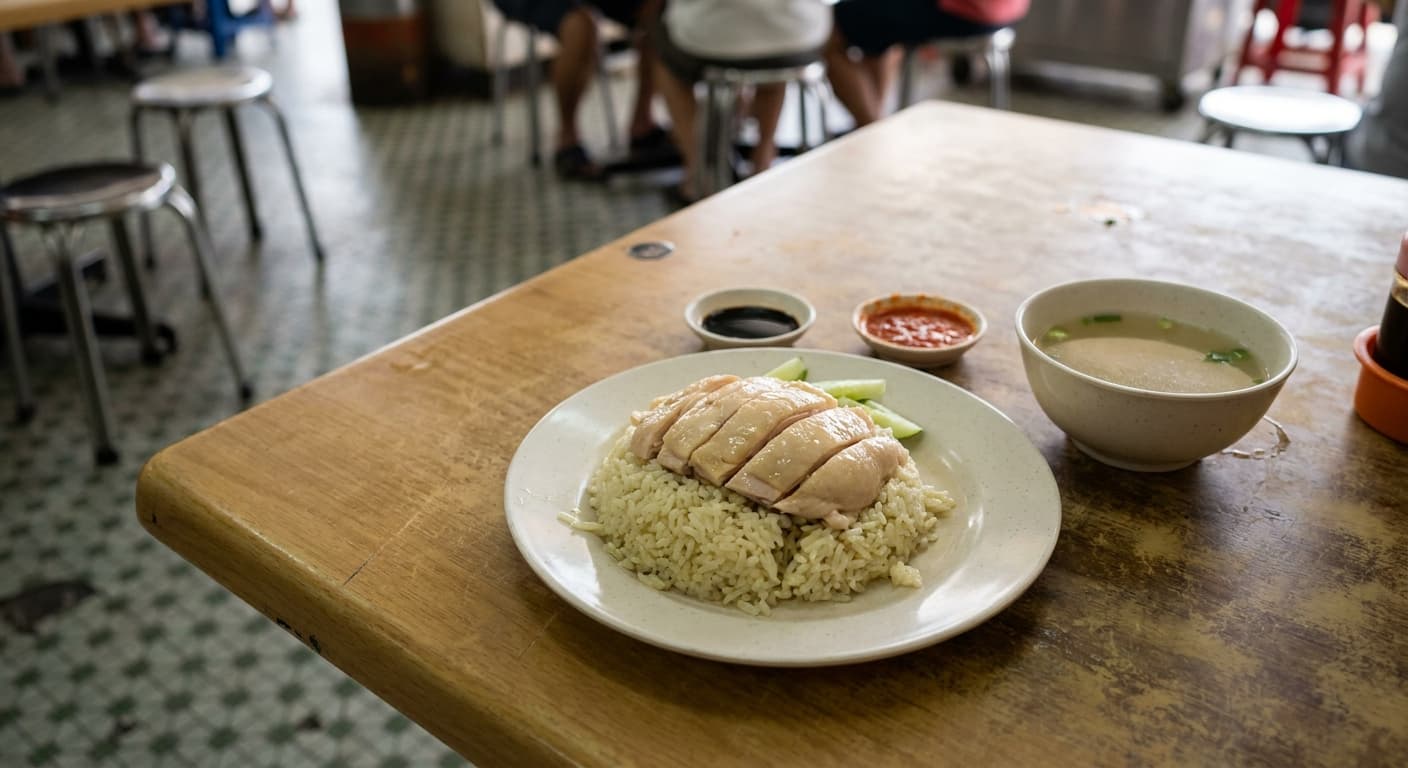
Hainanese Chicken Rice (Nasi Ayam Hainan) — Malaysian Kopitiam Classic
Malaysian · Main Courses · 110 min
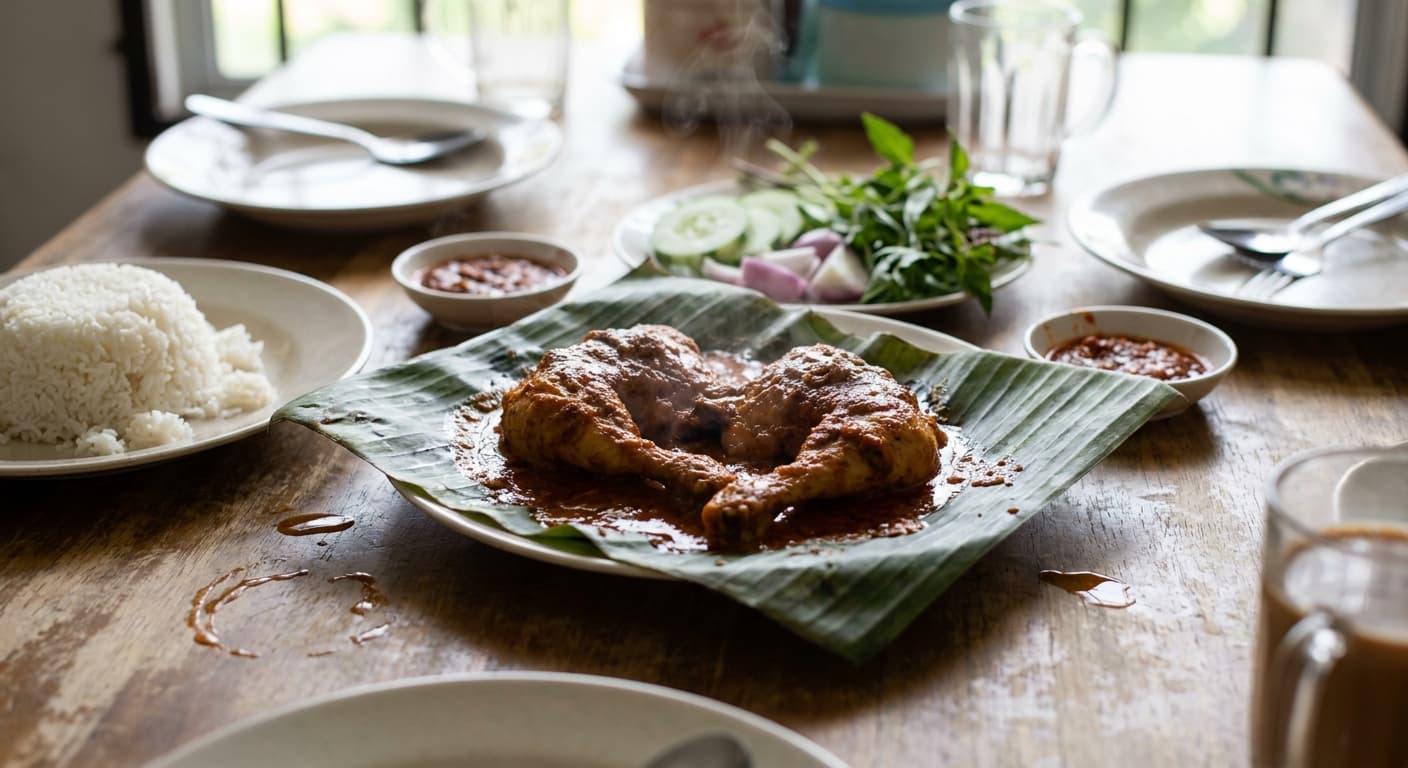
Ayam Percik (Ayam Percik) — Malaysian Coconut-Glazed Grilled Chicken
Malaysian · Main Courses · 80 min
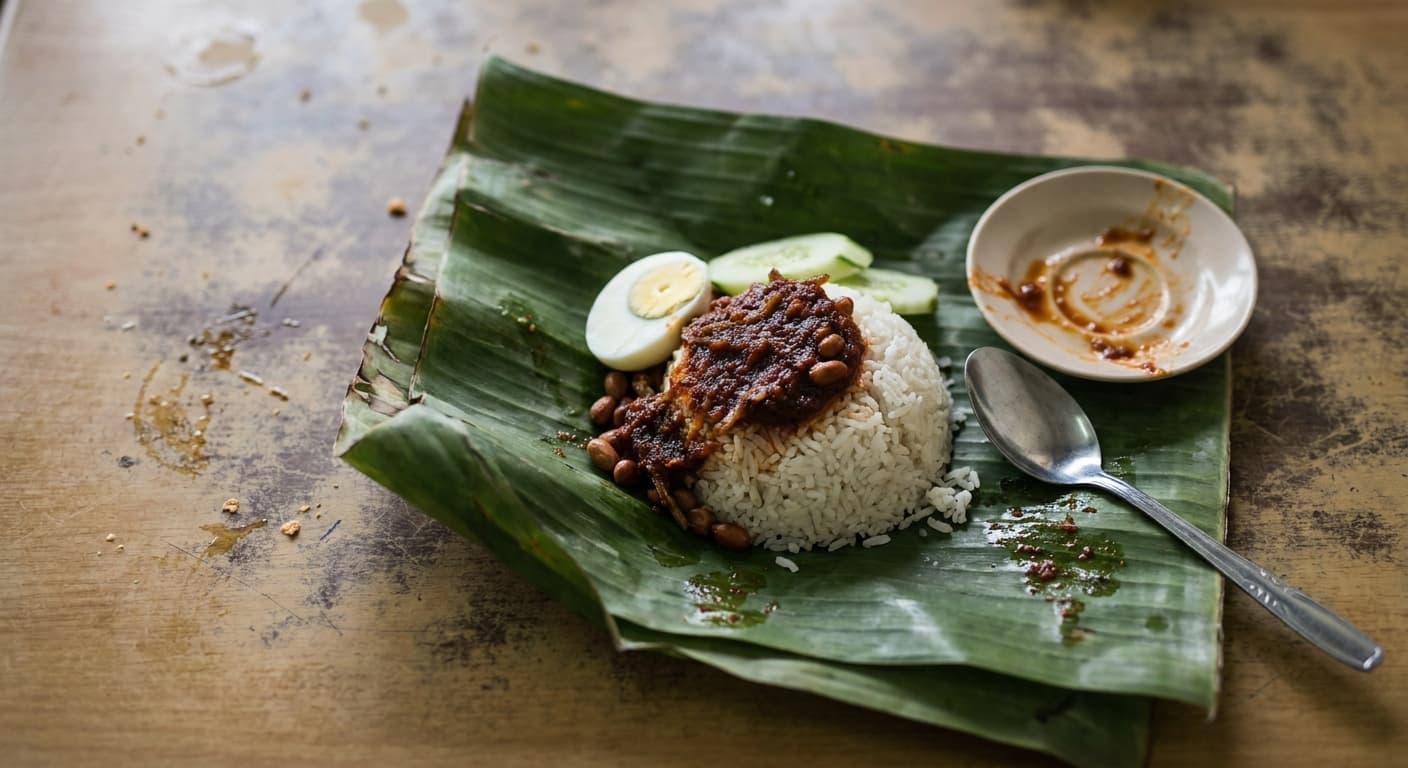
Malaysian Coconut Rice (Nasi Lemak) — Banana-Leaf Breakfast with Sambal Ikan Bilis
Malaysian · Rice Dishes · 95 min
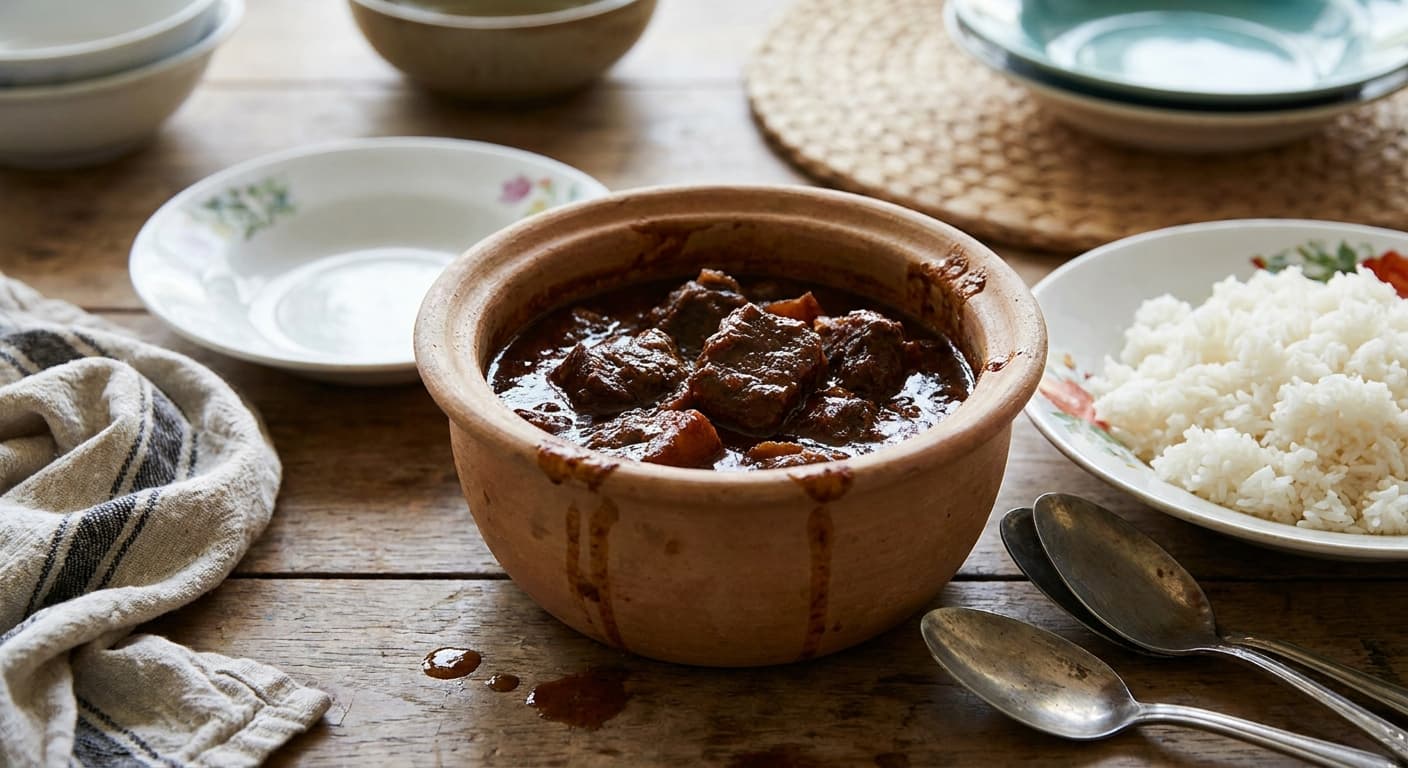
Pone Yay Gyi Curry (ပုန်းရည်ကြီးဟင်း) — Burmese Pork and Fermented Bean Paste
Burmese · Main Courses · 115 min
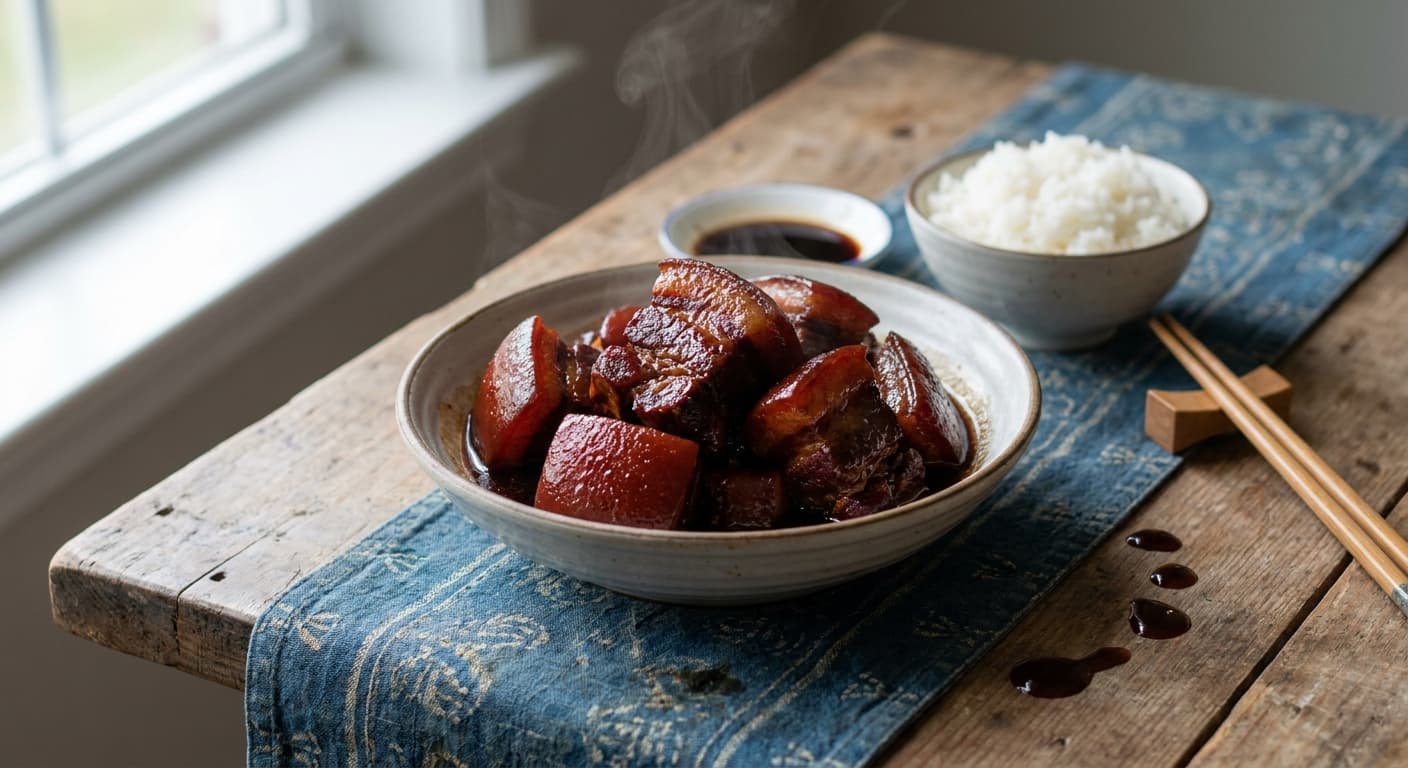
Dongpo Pork (东坡肉) — Hangzhou Red-Braised Pork Belly
Chinese · Main Courses · 205 min
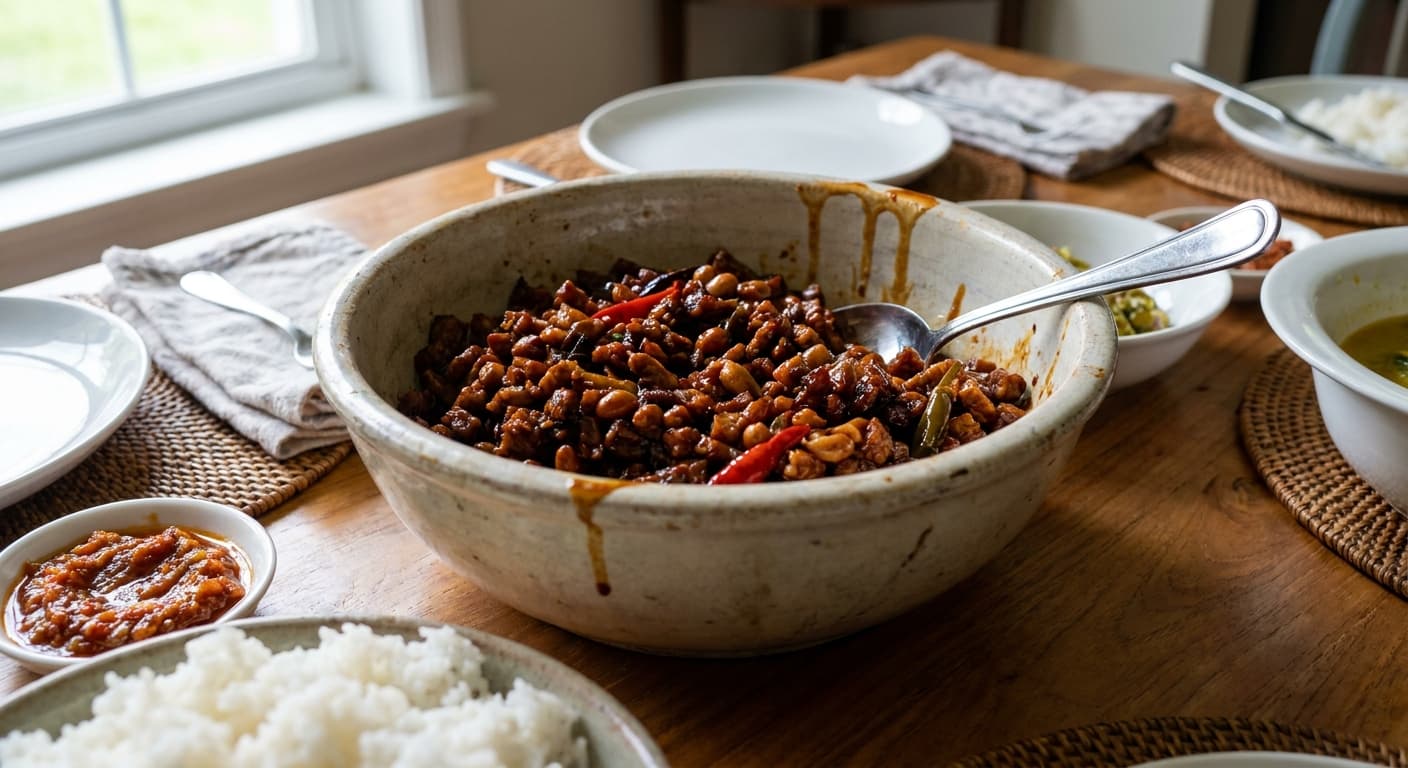
Sweet-Spiced Tempeh Stir-Fry (Tempe Orek) — Crisp Indonesian Soy-Glazed Tempeh
Indonesian · Side Dishes · 45 min
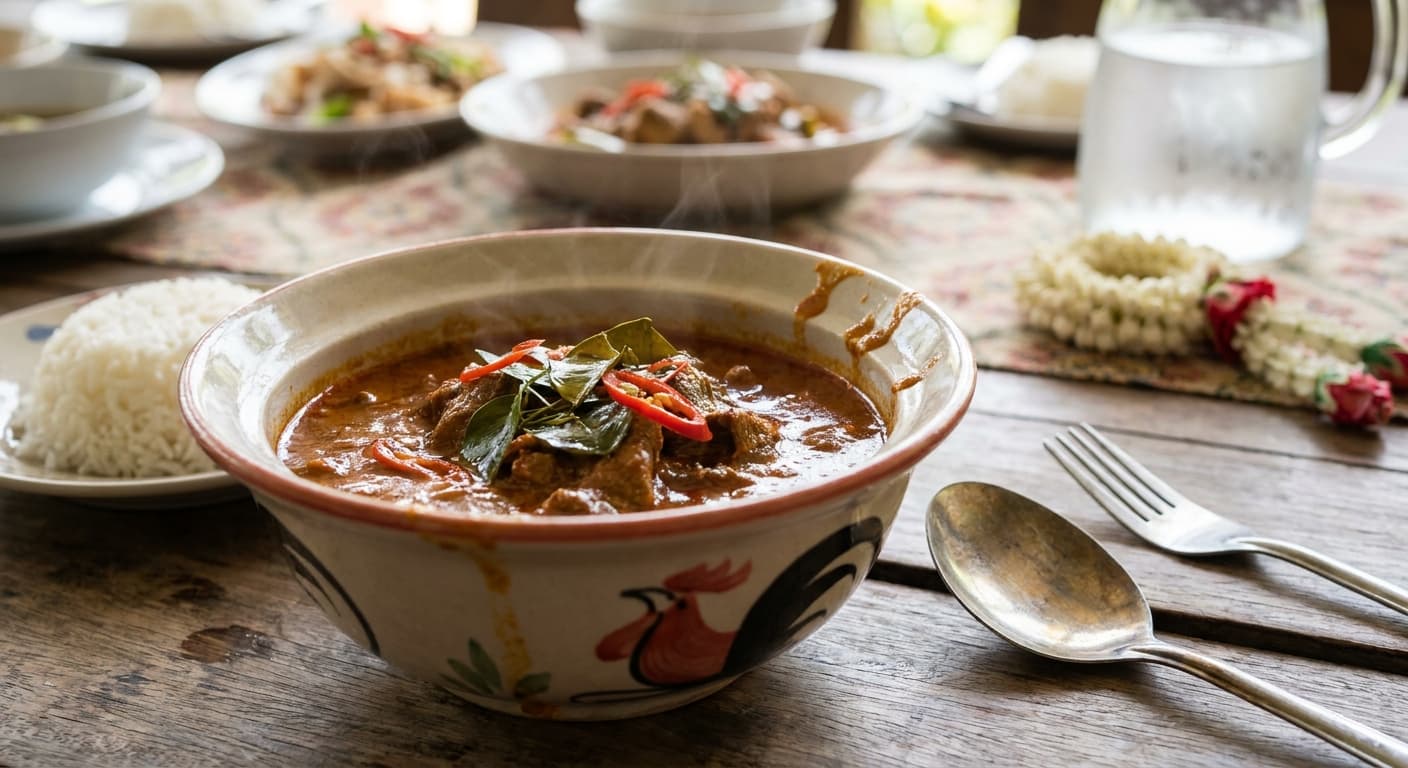
Panang Curry (แกงแพนง) — Rich Thai Coconut Beef Curry
Thai · Main Courses · 75 min
Egyptian Fatta (فتة) — Layered Meat, Rice, and Crisp Bread
Egyptian · Main Courses · 145 min
Reviews
Cooked this recipe?
Tap the stars to rate it — that's all it takes. A few words are welcome but optional.
No ratings yet. Cooked this one? Be the first to rate it — it takes one tap.