Chelo Kebab Koobideh (چلو کباب کوبیده) — Persian Minced Meat Skewers with Saffron Rice
Chelo Kebab Koobideh is a beloved Iranian classic: juicy minced-meat skewers perfumed with saffron, served over fluffy chelo rice. It’s a staple of kebab houses and family gatherings, prized for its smoky char and simple seasoning.
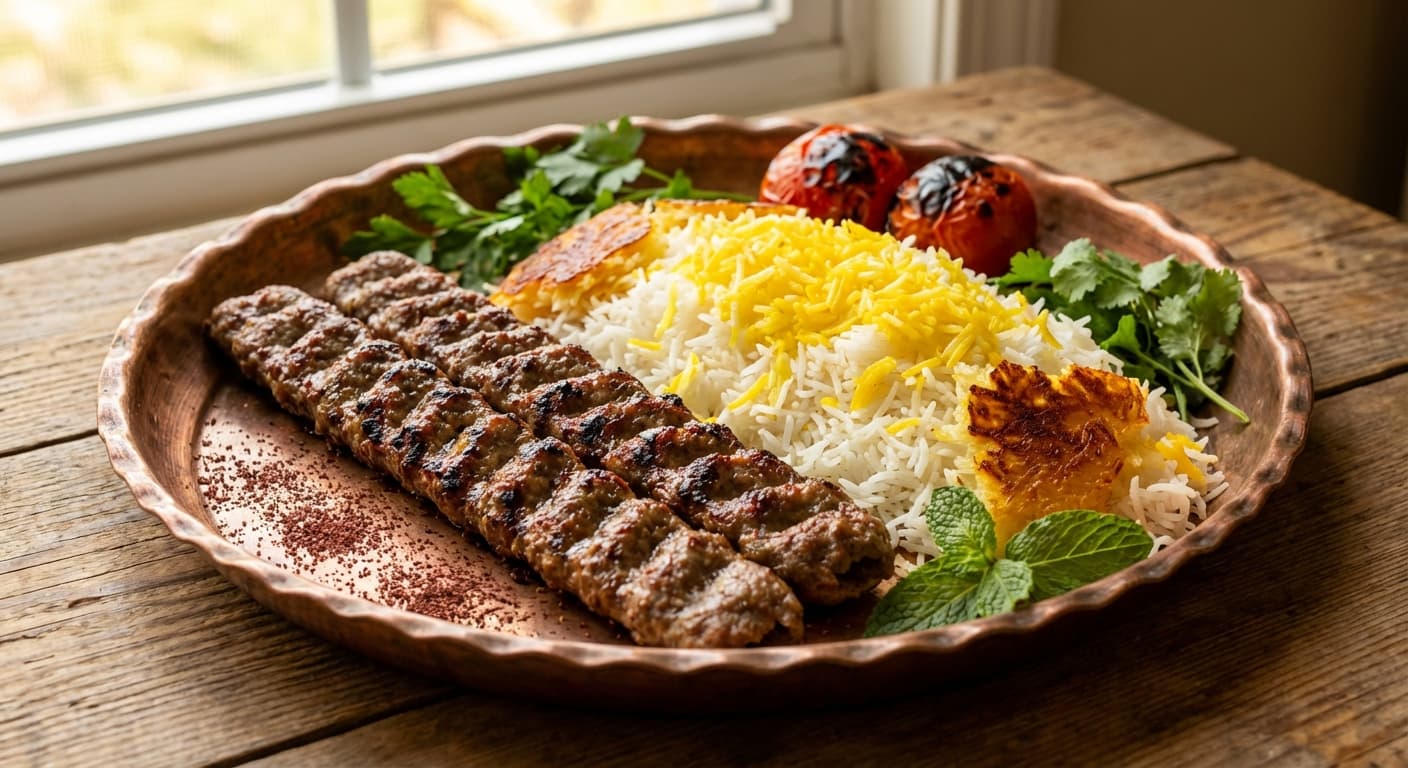
Printable Recipe Card
Servings: 4 · Total: 75 min · Difficulty: medium
Ingredients (quick list)
- 400 g Basmati rice (Preferably aged basmati for longer grains)
- 2500 ml Water (Includes soaking, boiling, and steaming water)
- 18 g Fine sea salt (About 3 tsp, divided)
- 0.25 tsp Persian saffron threads (Finely crushed)
- 30 ml Hot water (For blooming saffron)
- 40 g Unsalted butter (Adds classic aroma and sheen)
- 30 ml Neutral oil (For the pot base)
- 60 g Plain yogurt (Creates a crisp, golden tahdig)
- 1 Egg yolk (Helps bind and brown the tahdig)
- 600 g Ground beef (80–85% lean) (Chilled well for easier shaping)
- 200 g Ground lamb (Adds traditional richness)
- 300 g Yellow onions (About 2 medium; finely grated)
+ 3 more in the full ingredients section below.
Steps (summary)
- Bloom the saffron for the rice by crushing 0.25 tsp saffron threads and mixing with 30 ml hot water. Let it steep for 10 minute…
- Rinse the basmati rice in several changes of water until the water runs mostly clear. Cover it with 1200 ml water and stir in 1…
- Bring 1200 ml water to a lively boil in a large pot and add the soaked, drained rice. Boil 6–8 minutes, stirring once or twice,…
- Drain the rice in a colander and rinse quickly with 200 ml water to stop the cooking. Let it drain for 2 minutes so excess wate…
- If making tahdig, whisk 60 g yogurt with 1 egg yolk and 2 tbsp (about 120 g) of the parboiled rice in a bowl until evenly coate…
- Return the pot to medium heat and add 30 ml neutral oil and 20 g of the butter. Spread the yogurt-rice tahdig mixture across th…
+ 9 more steps in the full instructions section below.
Cultural Background
Chelo Kebab Koobideh is a defining dish of Iranian kebab culture, popularized by traditional chelow-kababi restaurants and served at celebrations and weekend family meals. Its simplicity highlights technique: onion handling, proper kneading, and live-fire grilling.
Equipment
💡 Tips
- Squeeze grated onion until very dry; aim to remove about 120 ml juice from 300 g onion to keep the mixture from falling off the skewers.
- Knead until the meat turns sticky and strands slightly; this protein binding is the main secret to koobideh that holds together.
- Turn skewers rapidly at the start (every 20–30 seconds for 2 minutes) to set the crust before slower turning to finish cooking.
⚠️ Common Mistakes
❌ Kebab mixture falls off the skewers on the grill.
✅ Fix: Squeeze grated onion very dry, knead until sticky, chill 20 minutes, and turn rapidly for the first 2 minutes to set the surface.
❌ Rice turns mushy or clumps.
✅ Fix: Parboil only until the center is slightly firm, drain well, and steam on low heat with a tightly wrapped lid to keep grains separate.
❌ Kebabs taste dry and crumbly.
✅ Fix: Use 80–85% lean meat, avoid overcooking past 71°C internal temperature, and brush with saffron butter near the end rather than early.
🧊 How to Store
Store cooked kebabs and rice separately in airtight containers for up to 3 days refrigerated. Reheat rice with 15 ml water covered on low heat, and rewarm kebabs in a 180°C oven for 8–10 minutes; avoid microwaving too long to prevent toughness.
📅 Make Ahead
Grate and squeeze the onions up to 1 day ahead and keep the pulp refrigerated. Mix and knead the meat up to 12 hours ahead, covered and chilled; shape onto skewers just before grilling for best adhesion.
🍽️ Pairs Well With
- Sumac
- mast-o-khiar
- torshi
- fresh herbs (sabzi khordan)
- lavash
- grilled peppers
- doogh.
Regional Variations
- Tehran-style koobideh often uses a beef-lamb blend and is served with generous saffron rice and grilled tomato.
- Some home cooks add 1 tsp ground sumac to the meat for a tangier profile while keeping the classic salt-and-pepper base.
- In some regions, koobideh is served with bread instead of chelo, turning it into a quicker kebab-and-nan meal.
FAQ
Is Chelo Kebab Koobideh different from Koobideh?
Koobideh refers to the minced-meat kebab itself. Chelo Kebab Koobideh is the full plate: koobideh served with Persian steamed rice (chelo) and typical sides like grilled tomatoes.
Ingredients
- 400 gBasmati rice (Preferably aged basmati for longer grains)
- 2500 mlWater (Includes soaking, boiling, and steaming water)
- 18 gFine sea salt (About 3 tsp, divided)
- 0.25 tspPersian saffron threads (Finely crushed)
- 30 mlHot water (For blooming saffron)
- 40 gUnsalted butter (Adds classic aroma and sheen)
- 30 mlNeutral oil (For the pot base)
- 60 gPlain yogurt (Creates a crisp, golden tahdig)
- 1Egg yolk (Helps bind and brown the tahdig)
- 600 gGround beef (80–85% lean) (Chilled well for easier shaping)
- 200 gGround lamb (Adds traditional richness)
- 300 gYellow onions (About 2 medium; finely grated)
- 1.5 tspBlack pepper (Freshly ground)
- 0.25 tspBaking soda (Optional; helps tenderness and browning)
- 4Tomatoes (Medium, firm, for grilling alongside kebab)
🔄 Substitutions
- Ground lamb→ Ground beef (same amount)
- Charcoal grill→ Cast-iron grill pan
- Plain yogurt (tahdig base)→ Neutral oil only
Instructions
- 1
Bloom the saffron for the rice by crushing 0.25 tsp saffron threads and mixing with 30 ml hot water. Let it steep for 10 minutes so the color turns deep golden and the aroma becomes pronounced.
- 2
Rinse the basmati rice in several changes of water until the water runs mostly clear. Cover it with 1200 ml water and stir in 10 g salt, then soak for 20 minutes to help the grains elongate.
- 3
Bring 1200 ml water to a lively boil in a large pot and add the soaked, drained rice. Boil 6–8 minutes, stirring once or twice, until the grains are tender on the outside but still firm in the center.
- 4
Drain the rice in a colander and rinse quickly with 200 ml water to stop the cooking. Let it drain for 2 minutes so excess water does not make the steamed rice soggy.
- 5
If making tahdig, whisk 60 g yogurt with 1 egg yolk and 2 tbsp (about 120 g) of the parboiled rice in a bowl until evenly coated. This mixture will form a crisp, golden base that releases more easily when inverted.
- 6
Return the pot to medium heat and add 30 ml neutral oil and 20 g of the butter. Spread the yogurt-rice tahdig mixture across the bottom in an even layer, then mound the remaining rice on top without packing it down.
- 7
Poke 5–6 holes into the rice with the handle of a spoon to vent steam, then drizzle 2 tbsp (30 ml) of the saffron water over the top. Wrap the lid in a clean towel, cover tightly, and steam on low heat for 30 minutes until fluffy and aromatic.
- 8
Prepare the onion for koobideh by finely grating 300 g yellow onions, then squeeze hard through a fine mesh or clean cloth until you have about 120 ml onion juice removed. The drier onion pulp prevents the meat from sliding off the skewers while keeping the kebab tender.
- 9
In a cold bowl, combine 600 g ground beef, 200 g ground lamb, the squeezed onion pulp, 10 g salt, 1.5 tsp black pepper, and 0.25 tsp baking soda if using. Knead vigorously for 4–5 minutes until the mixture becomes sticky and cohesive, which is essential for proper adhesion to the skewers.
- 10
Cover the meat and chill for 20 minutes to firm the fat and improve shaping. While it chills, soak your hands in a bowl of cold water and prepare 8 wide metal kebab skewers if available.
- 11
Divide the meat into 8 equal portions (about 100 g each) and press each portion firmly onto a skewer, spreading it into a long, even strip about 2 cm thick. Use wet fingers to pinch classic koobideh ridges along the length, and press the ends extra firmly so they do not loosen over the heat.
- 12
Heat a charcoal grill (or very hot gas grill) to high, aiming for an intense sear. Place the skewers over the hottest zone and turn them every 20–30 seconds for the first 2 minutes to set the surface and prevent slipping.
- 13
Continue grilling, turning every 45–60 seconds, until browned with light char and cooked through, about 6–8 minutes total depending on heat. Grill the 4 tomatoes alongside, turning until blistered and softened, about 6–7 minutes.
- 14
Bloom the basting saffron by mixing 0.125 tsp crushed saffron with 15 ml hot water for 5 minutes, then stir into 30 g melted butter. Brush the kebabs lightly during the last 1–2 minutes of grilling so the saffron perfume stays vivid and the surface shines.
- 15
Finish the rice by dotting the remaining 20 g butter over the top and letting it melt under the lid for 2 minutes off heat. Fluff the rice gently, serve kebabs immediately over chelo, and add grilled tomatoes so each plate gets smoke, saffron, and sweetness together.
🪪 Recipe Passport
Cultural Background
Chelo Kebab Koobideh is a defining dish of Iranian kebab culture, popularized by traditional chelow-kababi restaurants and served at celebrations and weekend family meals. Its simplicity highlights technique: onion handling, proper kneading, and live-fire grilling.
Regional Variations
Researched from multiple sources and validated by the Zaffaron editorial team. Every recipe is tested for accuracy, measurements, and cultural authenticity.
Nutrition per serving
Pairs well with
If you enjoyed this recipe, here are a few related Zaffaron recipes to try next.
- Authentic Persian Kabab Koobideh (کباب کوبیده) — Charcoal-Grilled Minced Meat Skewers
- Salad Shirazi (سالاد شیرازی) — Persian Cucumber Tomato Salad
- Persian Steamed Rice Masterclass (چلو و پلو) — Chelo and Polow techniques with perfect tahdig
- Jujeh Kebab (جوجه کباب) — Persian Lemon-Saffron Chicken Skewers
- Crispy Saffron Tahdig (ته دیگ زعفرانی)
Does your family make this differently?
Every family has their own version. Maybe your grandmother adds a secret ingredient, or your aunt has a completely different technique. Preserve your family's version — with their name on it, forever.
You Might Also Like
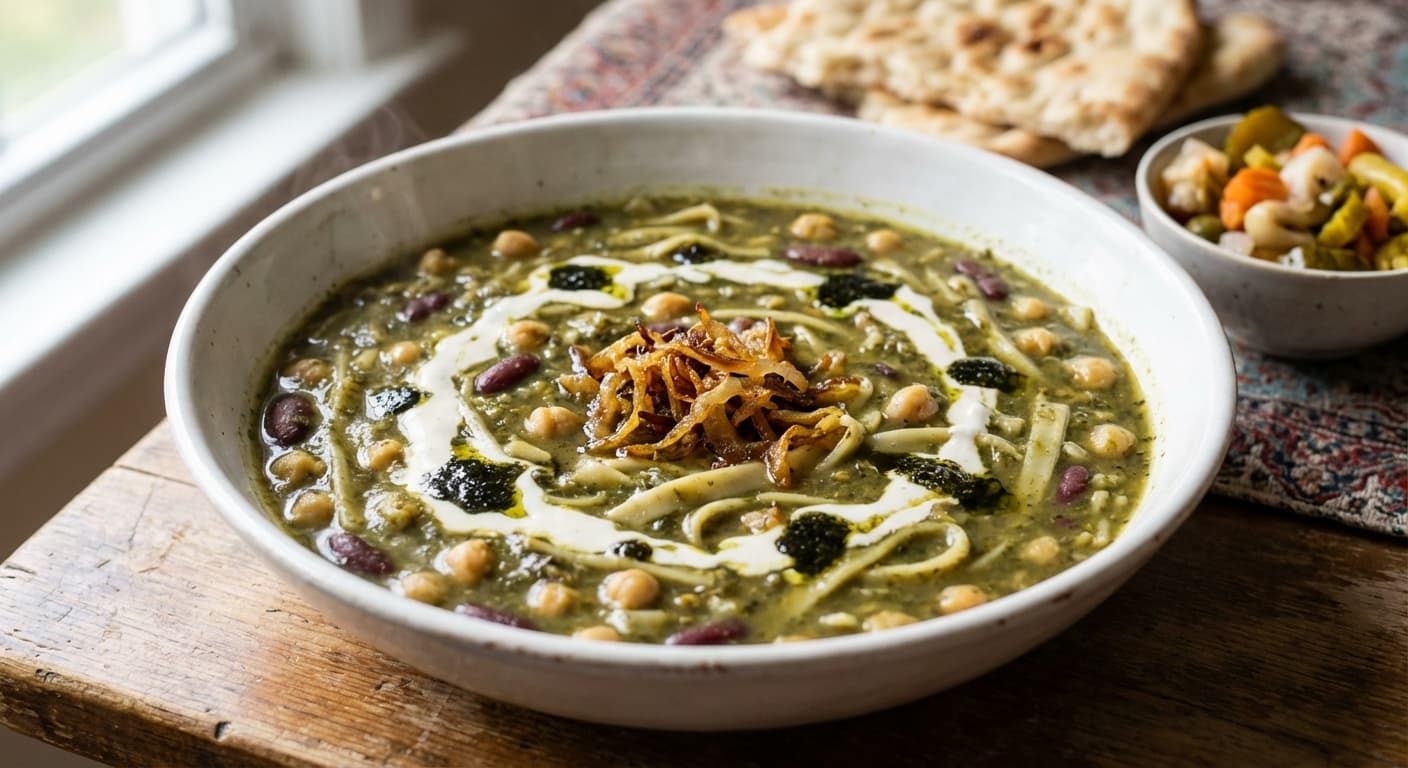
Ash Reshteh (آش رشته) — Persian Herb, Bean, and Noodle Soup
Persian · Soups · 145 min
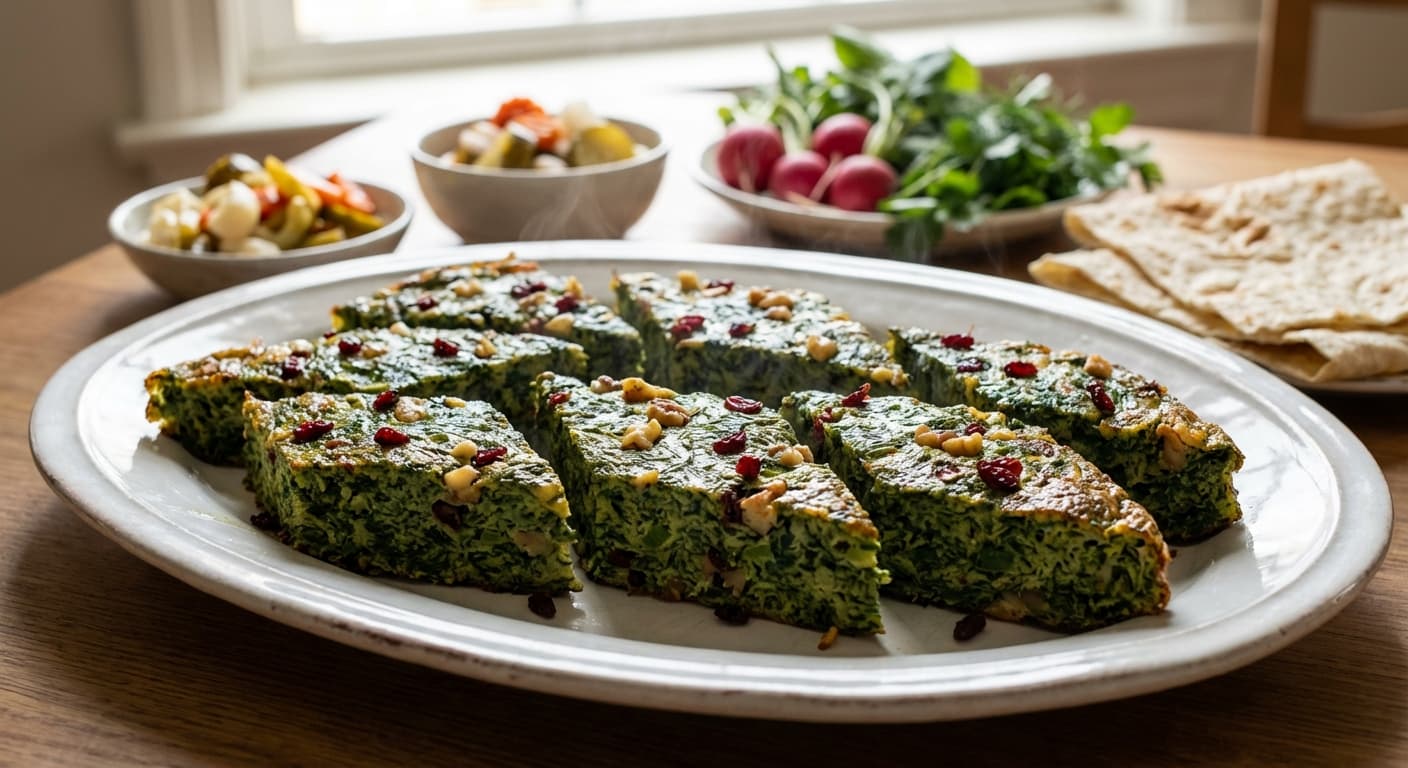
Kuku Sabzi (کوکو سبزی) — Emerald Persian Herb Frittata
Persian · Main Courses · 38 min
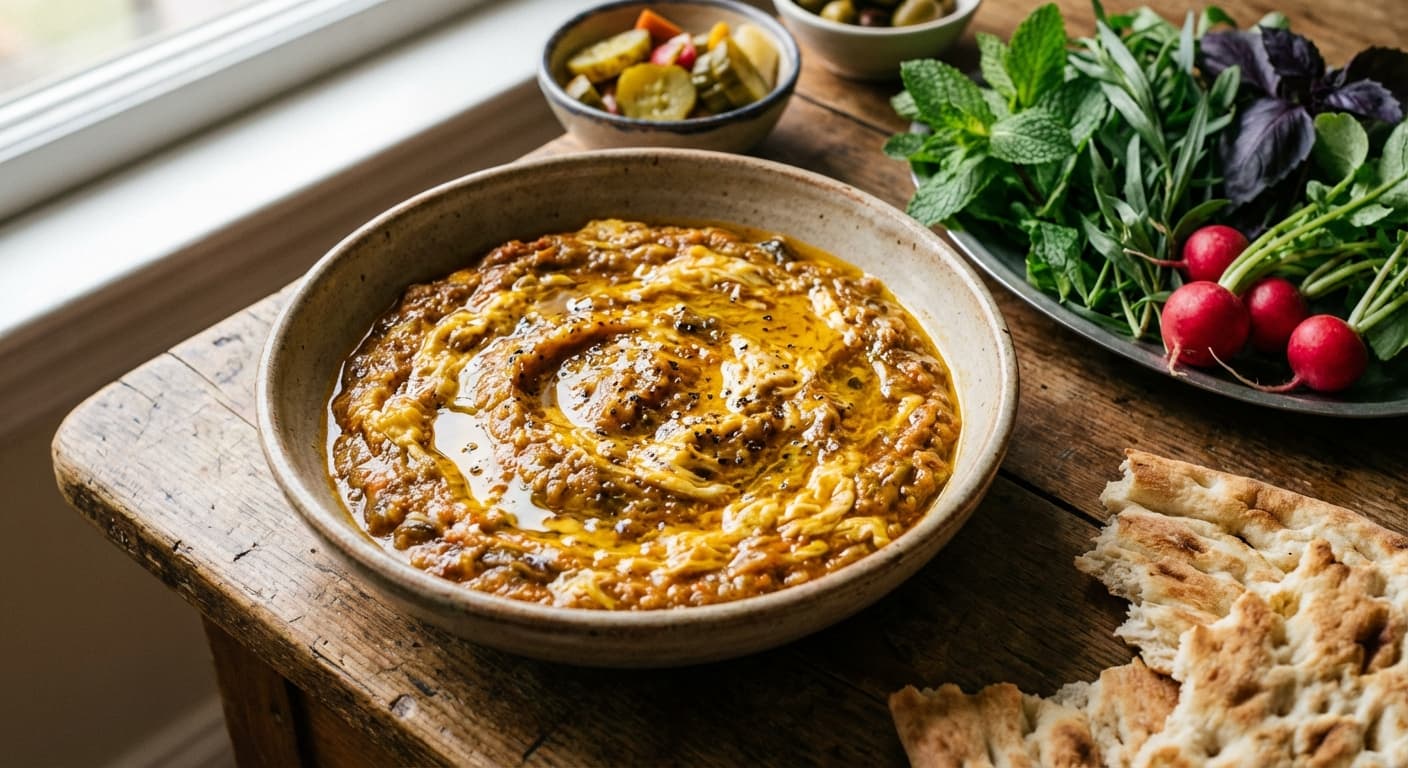
Smoked Silk Mirza Ghasemi (میرزا قاسمی) — Silky smoked eggplant with tomato, garlic, and eggs
Persian · Appetizers · 60 min
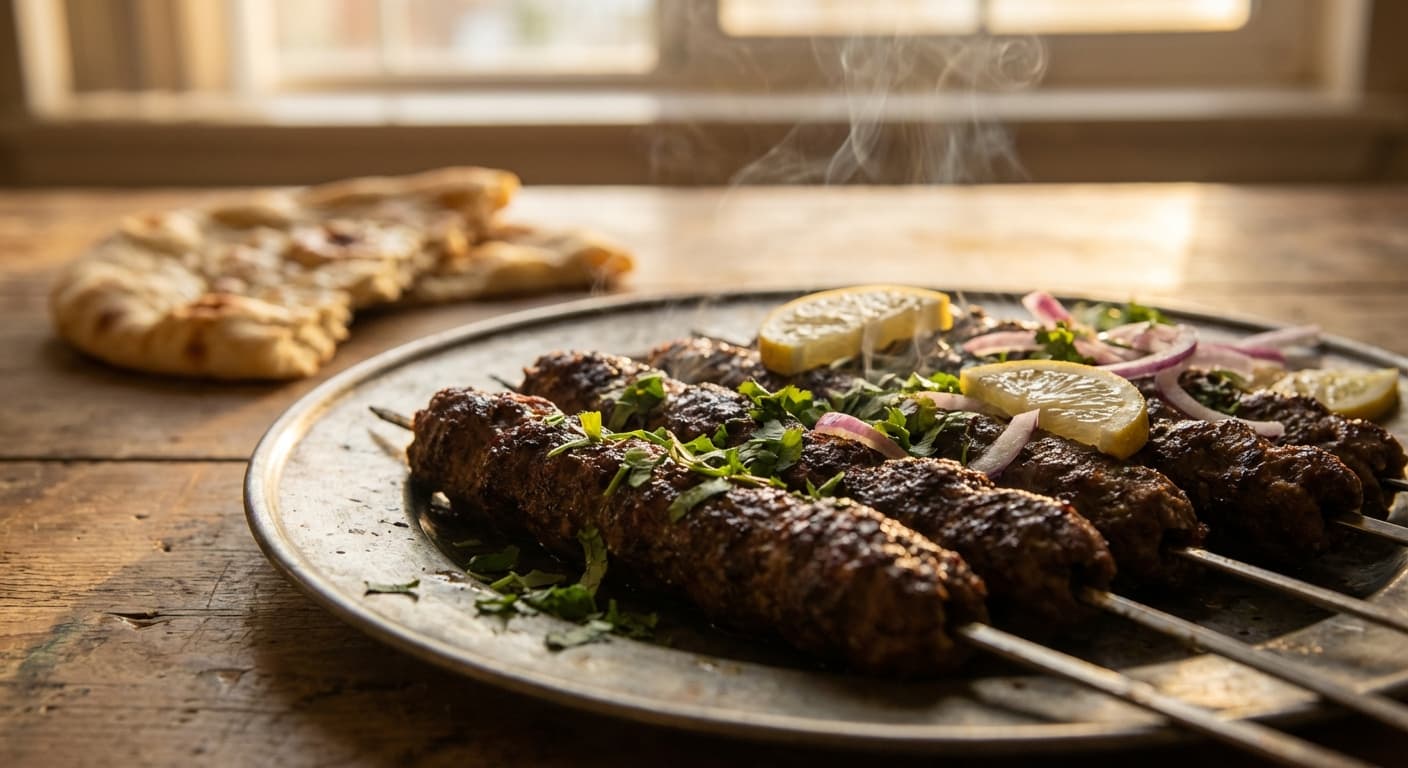
Seekh Kebab (کباب سیخی) — Afghan Grilled Minced Meat Skewers with Cumin
Afghan · Kebabs · 37 min
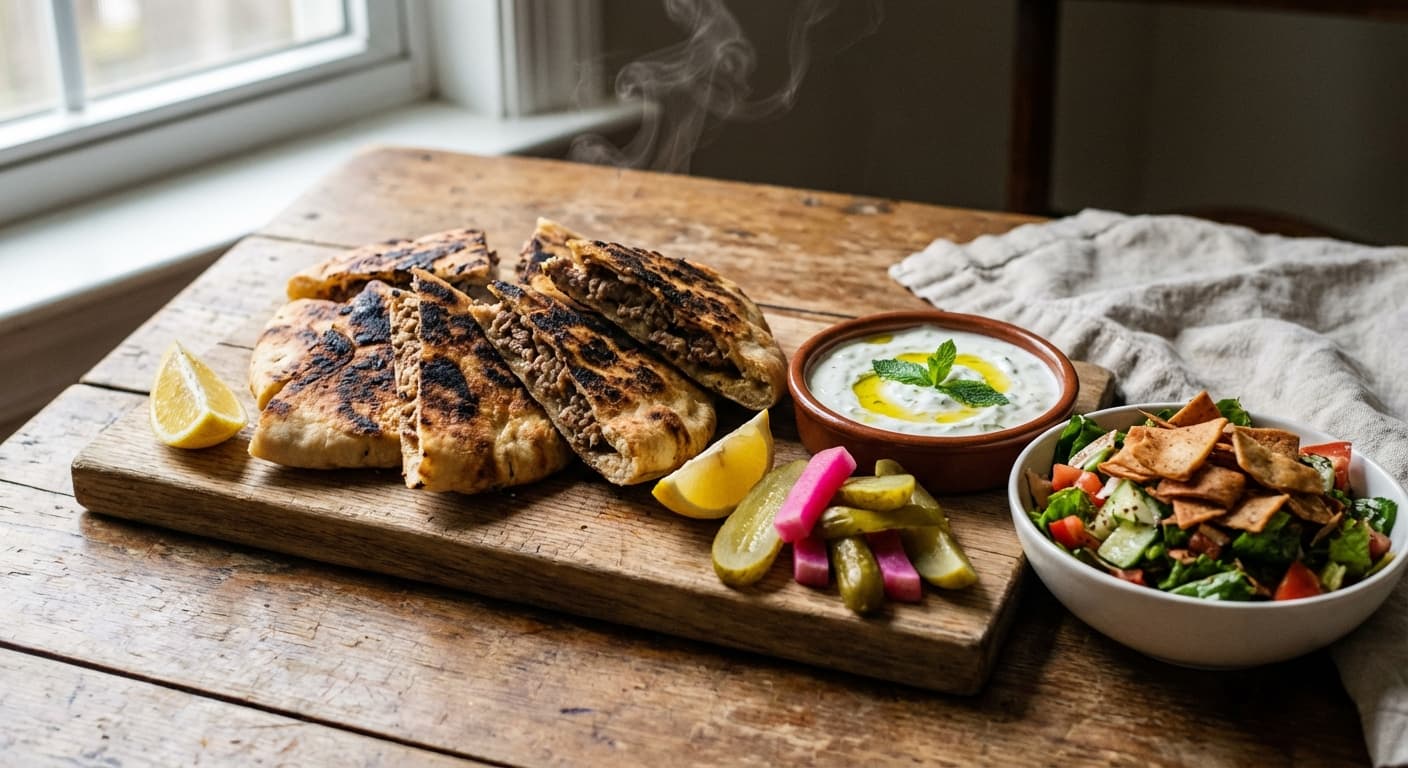
Arayess (عرايس) — Lebanese Grilled Stuffed Pita with Spiced Meat
Lebanese · Kebabs · 34 min
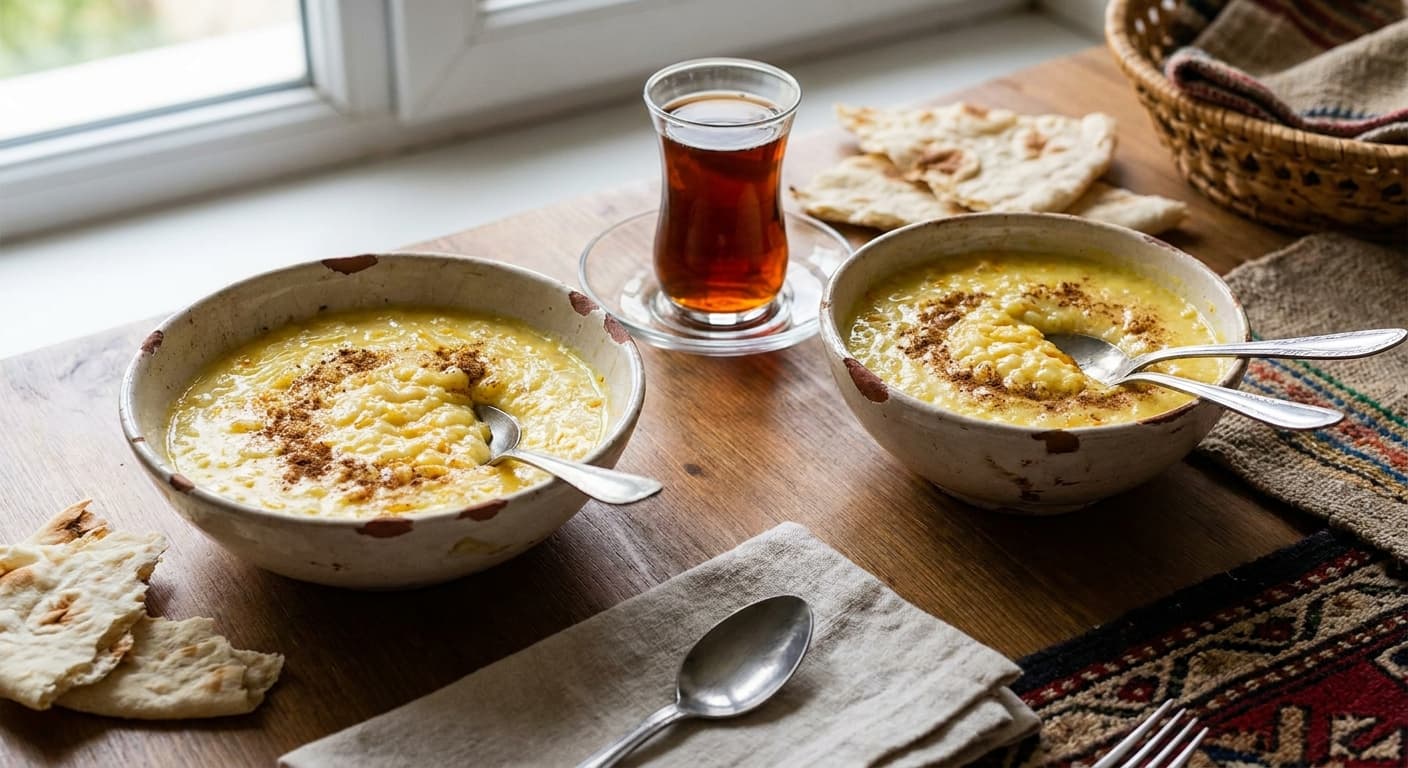
Azerbaijani Milk-Rice Porridge (Südlü Sıyıq) — Creamy Breakfast Rice with Saffron
Azerbaijani · Rice Dishes · 50 min
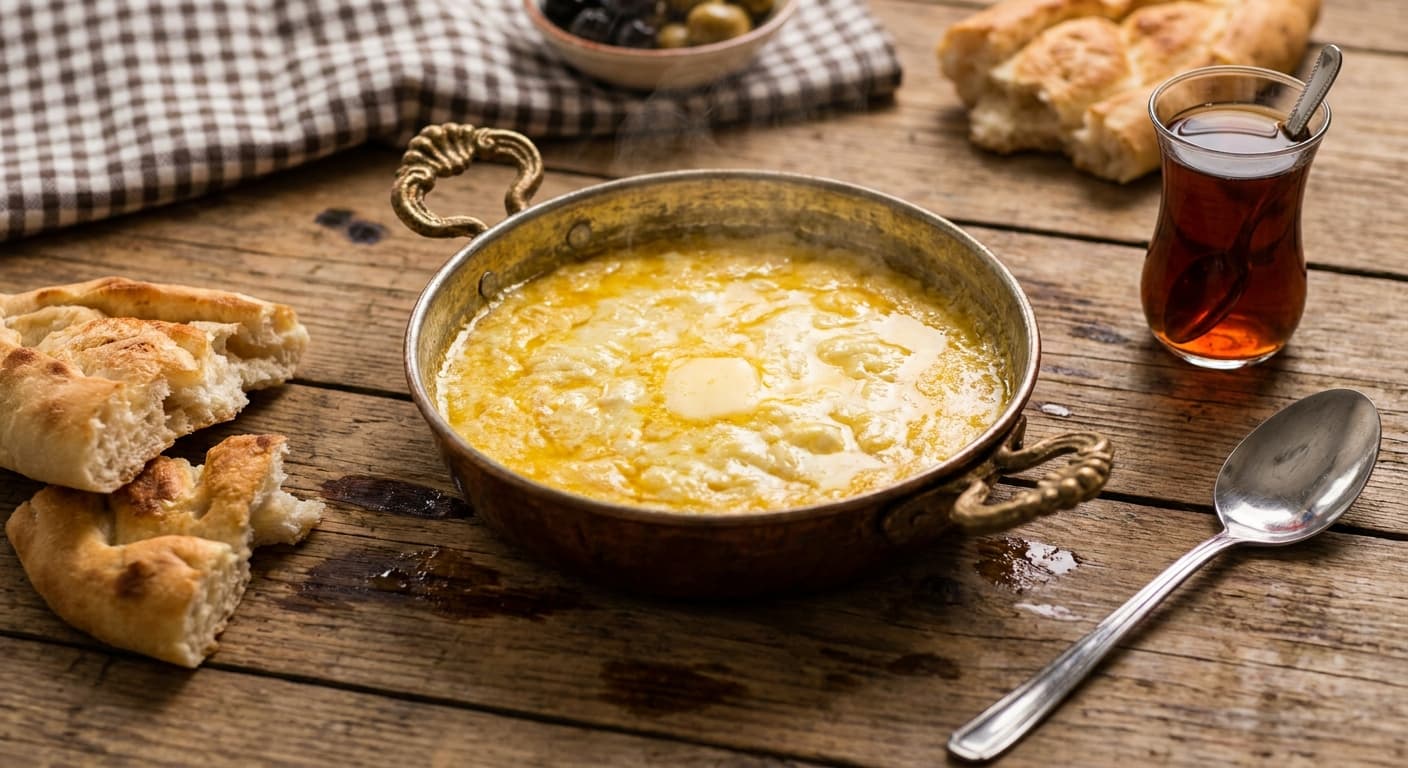
Mıhlama (Mıhlama) — Black Sea Cornmeal and Cheese Skillet
Turkish · Main Courses · 25 min
Sabzi Chalaw (سبزی چلو) — Afghan Herb Rice with Meat Stew
Afghan · Rice Dishes · 130 min
Reviews
Cooked this recipe?
Tap the stars to rate it — that's all it takes. A few words are welcome but optional.
No ratings yet. Cooked this one? Be the first to rate it — it takes one tap.