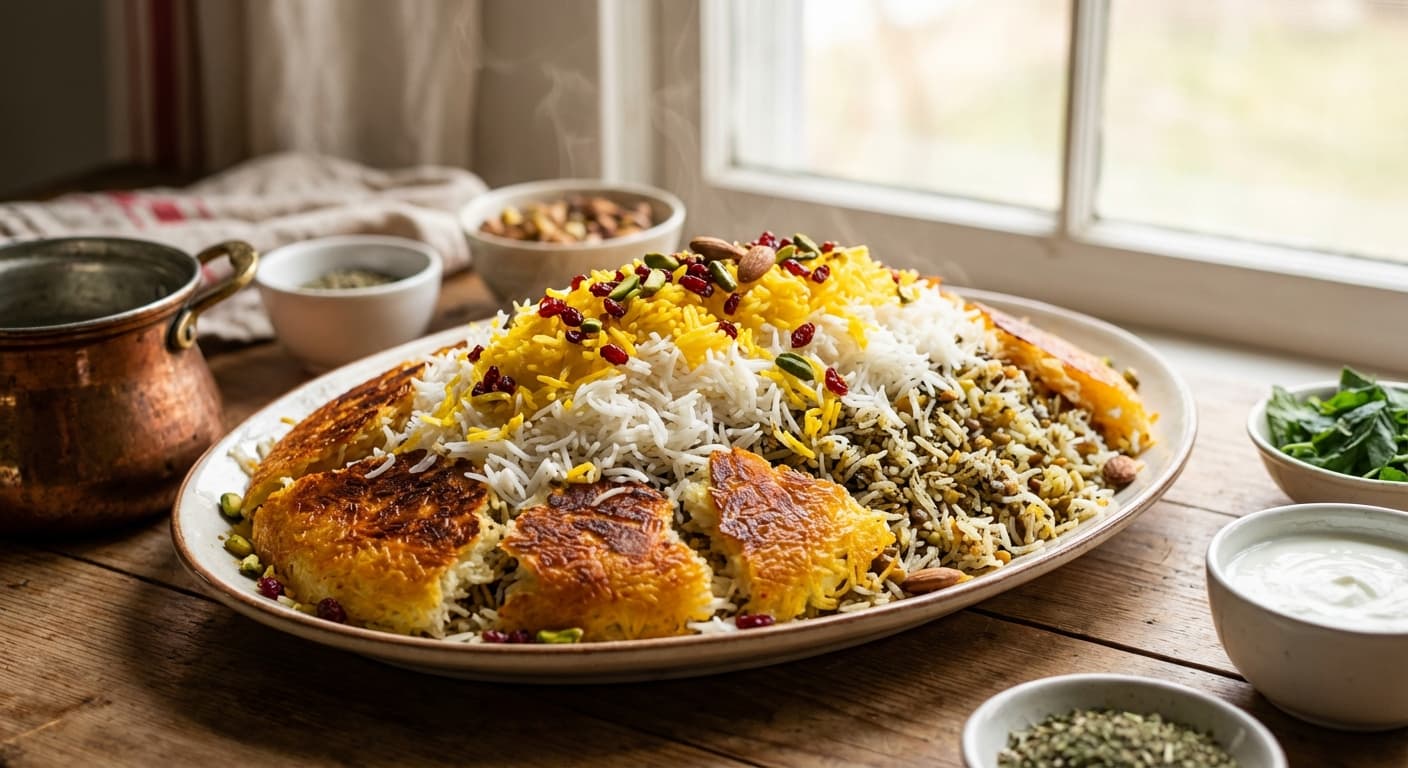
Chelo va Polow (چلو و پلو) — Persian Steamed Rice & Mixed Rice Master Method
A detailed Persian master method for Chelo (plain steamed rice) and Polow (mixed rice), focused on long, separate grains and crisp golden tahdig. Includes exact ratios, timing, and troubleshooting for consistent results anywhere.
Printable Recipe Card
Servings: 6 · Total: 145 min · Difficulty: medium
Ingredients (quick list)
- 500 g Basmati rice (aged basmati preferred; rinse until water runs mostly clear)
- 2000 ml Lukewarm water (for soaking and rinsing; about 35–40°C for the soak)
- 24 g Fine sea salt (about 4 tsp; split between soak and boiling water)
- 3500 ml Water (for parboiling and steaming; more may be needed for boiling)
- 60 ml Neutral oil (such as sunflower, grapeseed, or canola; for pot and drizzling)
Steps (summary)
- Rinse the rice in a bowl with cool water 4–6 times, gently swishing and draining until the water is mostly clear. Add 1000 ml l…
- Bring 3000 ml water to a rolling boil in a large pot (at least 5 liters). Add the remaining 12 g salt. Add the drained rice and…
- Immediately drain the rice in a colander. Rinse quickly with 250 ml cool water only if you salted heavily or want a lighter fla…
- Make the tahdig base: set a heavy pot (nonstick or well-seasoned) over medium heat for 2 minutes. Add 45 ml oil and swirl to co…
- Build the rice: spoon in the drained rice, forming a gentle mound so steam circulates. With the handle of a wooden spoon, poke…
- Steam for Chelo: cook 10 minutes on medium-high until you see strong steam escaping. Reduce to low and steam 35–40 minutes. For…
+ 1 more steps in the full instructions section below.
Cultural Background
Steamed rice is a centerpiece of many Persian meals, and the distinction between plain rice and mixed rice reflects both technique and occasion. Tahdig, the crisp crust formed at the bottom of the pot, is widely valued as a special part of the meal and is often shared at the table.
Equipment
💡 Tips
- Choose aged basmati for the longest, most separate grains; very fresh rice can turn sticky even with correct technique.
- The parboil endpoint is key: the grain should be long and flexible, with a tiny firm core; overboiling causes broken grains and a dense final texture.
- Keep the lid tightly wrapped with a towel to absorb condensation so water does not drip back onto the rice and soften the tahdig.
- For Polow, only add mix-ins that are already cooked and relatively dry (for example, sautéed vegetables, cooked lentils, or shredded cooked meat) to avoid soggy rice.
- If your stove runs hot, use a heat diffuser on low to prevent burning the tahdig before the rice finishes steaming.
⚠️ Common Mistakes
❌ Skipping the soak or using cold water for soaking
💡 Why: Soaking hydrates the grain evenly, helping it elongate and cook through without breaking; cold soaking can be slower and less consistent.
✅ Fix: Soak 60 minutes in lukewarm salted water, then drain thoroughly before parboiling.
❌ Overboiling during parboil
💡 Why: If the center is fully soft at the boil stage, the grains will split and turn clumpy after steaming.
✅ Fix: Start checking at 6 minutes; drain when grains are long and mostly tender with a tiny firm core.
❌ Condensation dripping onto the rice
💡 Why: Water droplets fall back, making the surface gummy and softening the tahdig.
✅ Fix: Wrap the lid with a towel and keep the seal tight; avoid frequent lid lifting.
❌ Tahdig burns before rice finishes
💡 Why: Heat is too high or the pot is too thin, causing the bottom to brown faster than the rice can steam.
✅ Fix: Use a heavy pot, reduce to low after 10 minutes, and consider a heat diffuser; extend steaming time rather than increasing heat.
🧊 How to Store
Cool rice within 1 hour. Refrigerate in an airtight container up to 4 days. Reheat covered with 1–2 tbsp water in a pot on low 10–12 minutes or microwave covered 2–3 minutes, stirring once. Tahdig is best fresh; re-crisp in a dry skillet 2–4 minutes per side.
📅 Make Ahead
You can rinse and soak the rice up to 2 hours ahead at room temperature. Parboiled, drained rice can be held 30 minutes before steaming (spread on a tray to prevent clumping). Fully cooked rice keeps 4 days refrigerated; reheat gently with a splash of water.
🍽️ Pairs Well With
- Persian saffron chicken or lamb stew
- Cucumber-yogurt salad (mast-o-khiar) or a simple tomato-cucumber salad
- Pickled vegetables and fresh herbs
- Grilled kebabs and roasted tomatoes
Regional Variations
- Tehran-style home cookingOften favors very white, highly separated chelo with a thin, evenly golden tahdig, achieved by careful parboil timing and steady low steaming.
- Northern Iran (Caspian influence)Polow is frequently prepared with more aromatic mix-ins such as herbs, greens, or legumes; the rice may be slightly more moist to complement rich stews and seafood.
Ingredients
- 500 gBasmati rice (aged basmati preferred; rinse until water runs mostly clear)
- 2000 mlLukewarm water (for soaking and rinsing; about 35–40°C for the soak)
- 24 gFine sea salt (about 4 tsp; split between soak and boiling water)
- 3500 mlWater (for parboiling and steaming; more may be needed for boiling)
- 60 mlNeutral oil (such as sunflower, grapeseed, or canola; for pot and drizzling)
🔄 Substitutions
- Basmati rice→ Jasmine rice
- Neutral oil→ Ghee (clarified butter)
Instructions
- 1
Rinse the rice in a bowl with cool water 4–6 times, gently swishing and draining until the water is mostly clear. Add 1000 ml lukewarm water and 12 g salt, stir, and soak 60 minutes at room temperature. Drain well in a fine sieve; do not rinse after soaking.
- 2
Bring 3000 ml water to a rolling boil in a large pot (at least 5 liters). Add the remaining 12 g salt. Add the drained rice and stir once to prevent sticking. Boil uncovered 6–8 minutes, stirring gently once halfway, until grains are elongated and the center is just barely firm.
- 3
Immediately drain the rice in a colander. Rinse quickly with 250 ml cool water only if you salted heavily or want a lighter flavor; otherwise skip rinsing for better aroma. Let the rice drain 5 minutes so excess water stops dripping, which helps keep grains separate.
- 4
Make the tahdig base: set a heavy pot (nonstick or well-seasoned) over medium heat for 2 minutes. Add 45 ml oil and swirl to coat the bottom evenly. Add 60 ml water to the oil (it will sizzle lightly); this helps form an even crust and reduces sticking.
- 5
Build the rice: spoon in the drained rice, forming a gentle mound so steam circulates. With the handle of a wooden spoon, poke 5–6 holes to the bottom for steam vents. Drizzle the remaining 15 ml oil over the top. Wrap the lid in a clean towel and cover tightly.
- 6
Steam for Chelo: cook 10 minutes on medium-high until you see strong steam escaping. Reduce to low and steam 35–40 minutes. For Polow: after 10 minutes of steaming, quickly open the pot and sprinkle in fully cooked, dry mix-ins (see tips), then re-cover and steam 30–35 minutes on low.
- 7
Check and unmold: turn off heat and rest covered 5 minutes to let the crust set. Scoop out the fluffy rice first. To release tahdig, place the pot over very low heat 1 minute, then invert onto a plate. If needed, loosen edges with a thin spatula and invert again.
🪪 Recipe Passport
Cultural Background
Steamed rice is a centerpiece of many Persian meals, and the distinction between plain rice and mixed rice reflects both technique and occasion. Tahdig, the crisp crust formed at the bottom of the pot, is widely valued as a special part of the meal and is often shared at the table.
Regional Variations
Researched from multiple sources and validated by the Zaffaron editorial team. Every recipe is tested for accuracy, measurements, and cultural authenticity.
Nutrition per serving
Pairs well with
If you enjoyed this recipe, here are a few related Zaffaron recipes to try next.
- Chelow Kabab Tarkhooni (چلو کباب ترخونی) — Persian Tarragon Kebabs with Rice
- Classic Jujeh Kebab (جوجه کباب) — Lemon-Garlic Saffron-Style Grilled Chicken
- Crispy Persian-Style Peanut Glazed Chicken Wings (بال مرغ با سس بادامزمینی) — Herb-crusted baked wings with tamarind-ginger peanut glaze
- Dami Yarma (دامی یارما) — Persian Azeri Bulgur Pilaf
Does your family make this differently?
Every family has their own version. Maybe your grandmother adds a secret ingredient, or your aunt has a completely different technique. Preserve your family's version — with their name on it, forever.
You Might Also Like
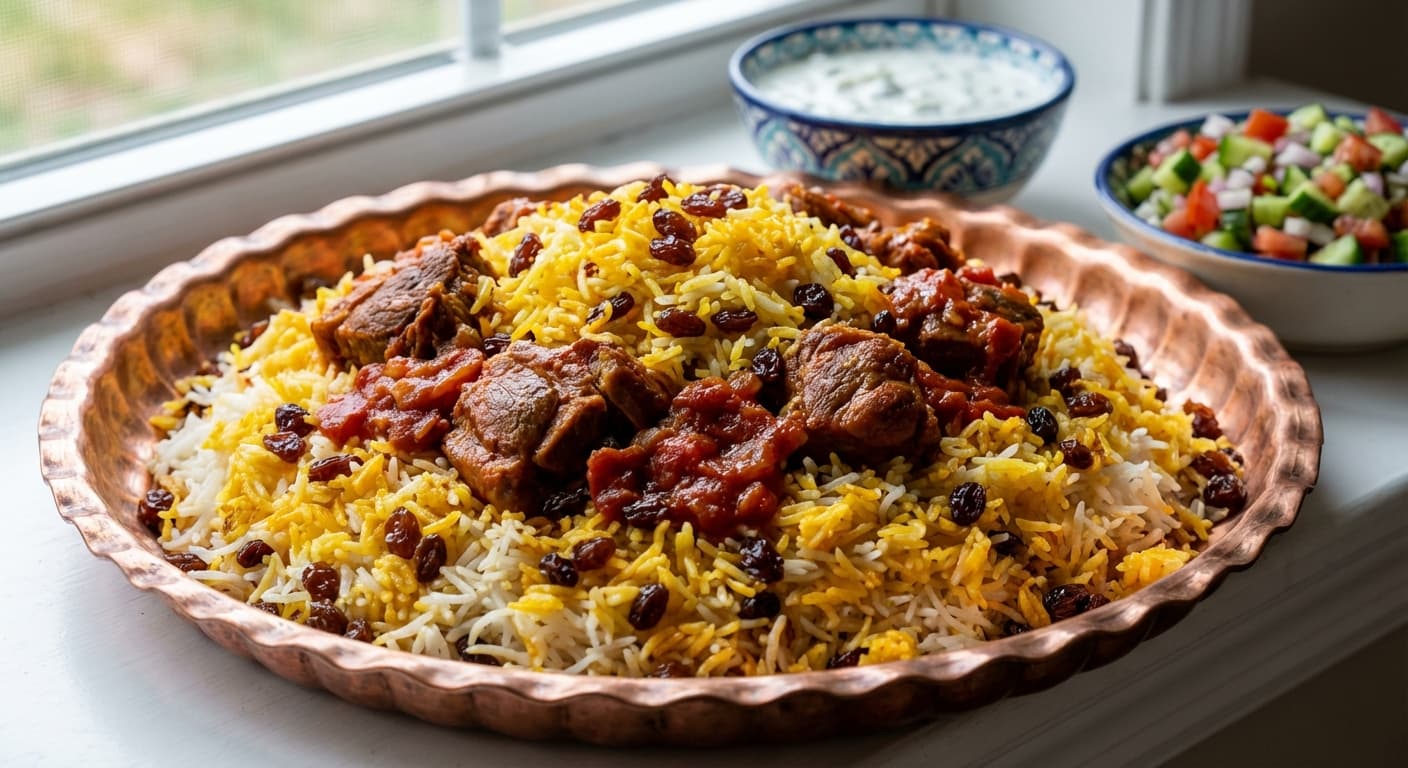
Kashmish Polow (کشمش پلو) — Persian Raisin Rice with Slow-Cooked Lamb
Persian · Rice Dishes · 155 min
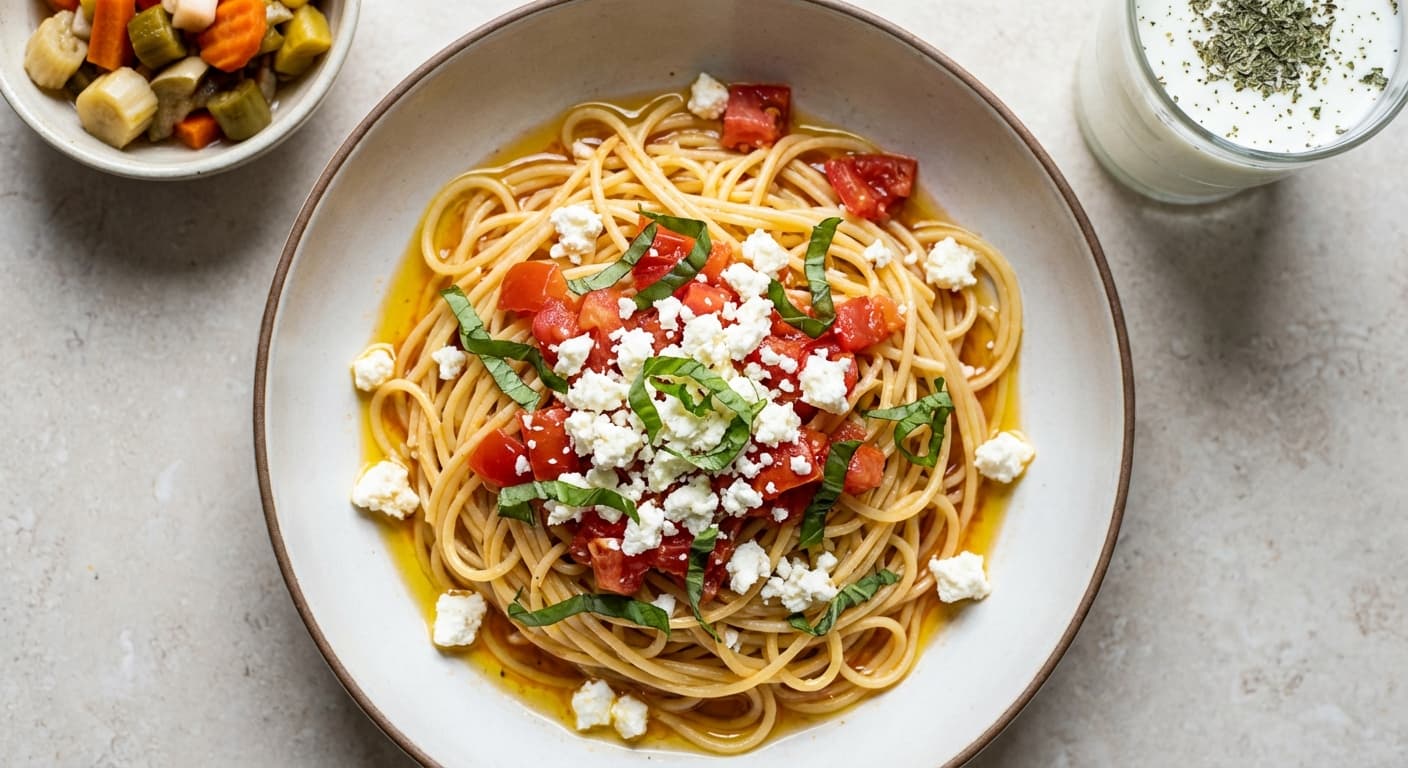
Pastay Paniri (پاستای پنیری) — Persian-Style Cheesy Pasta with Fresh Tomatoes
Persian · Main Courses · 27 min
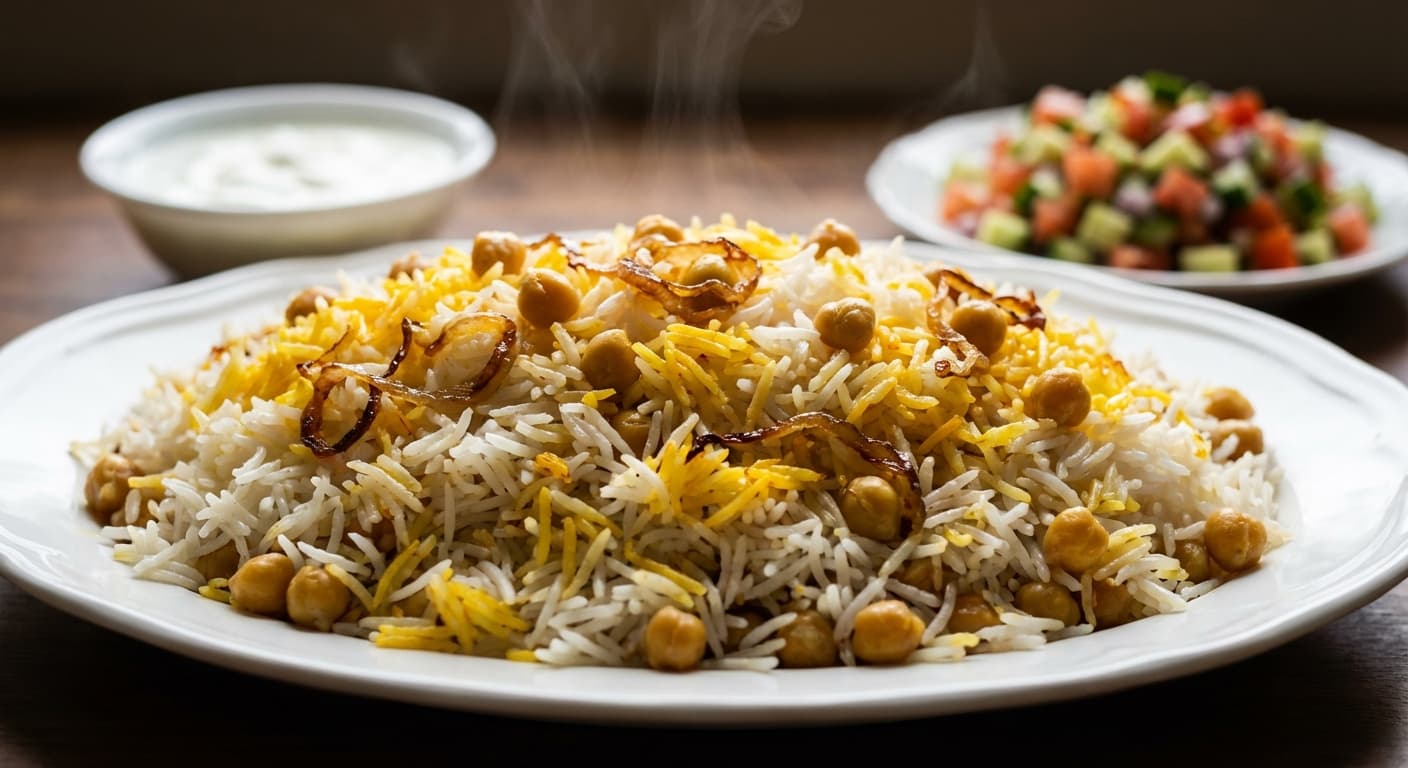
Nokhod Polo (نخود پلو) — Saffron Chickpea Rice with Warm Spices
Persian · Rice Dishes · 80 min
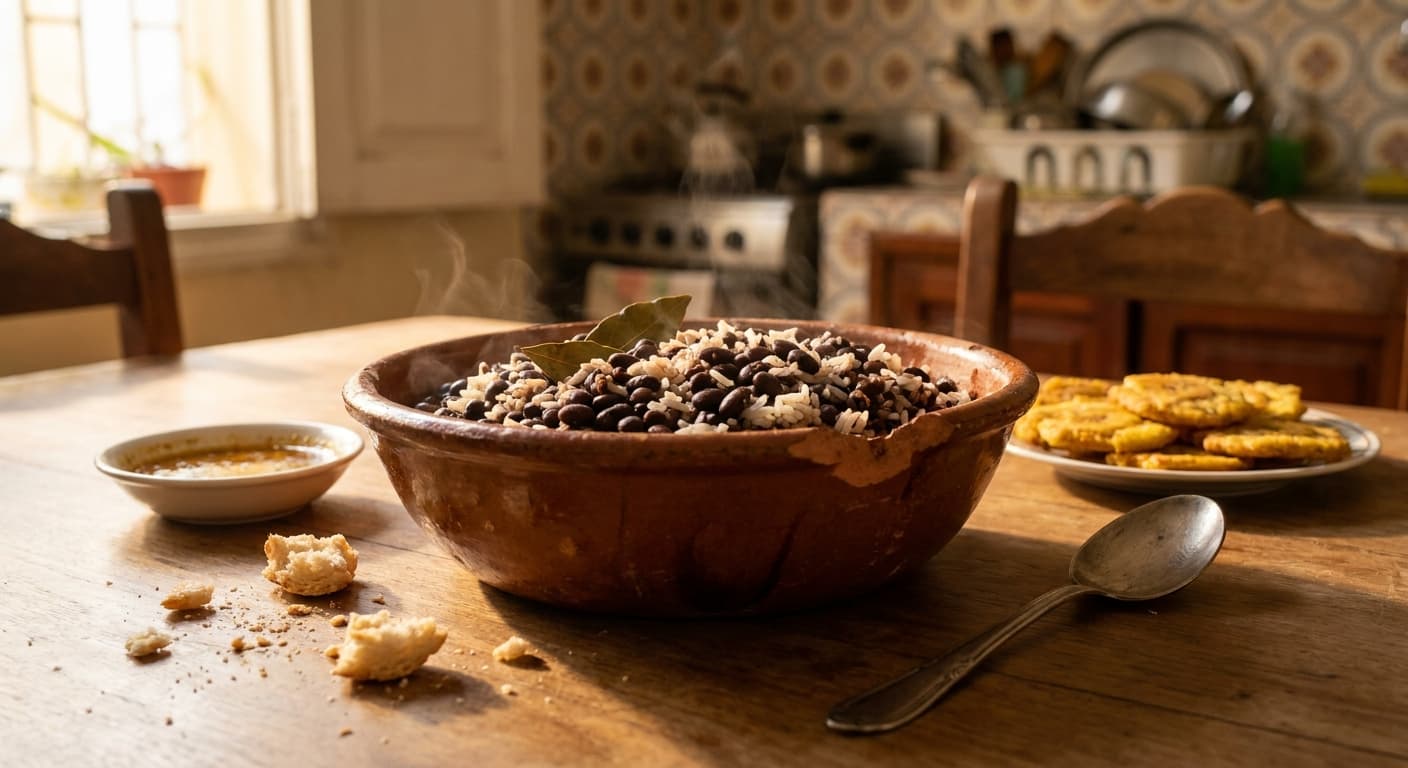
Moros y Cristianos (Moros y Cristianos) — Cuban Black Beans and Rice
Cuban · Rice Dishes · 130 min
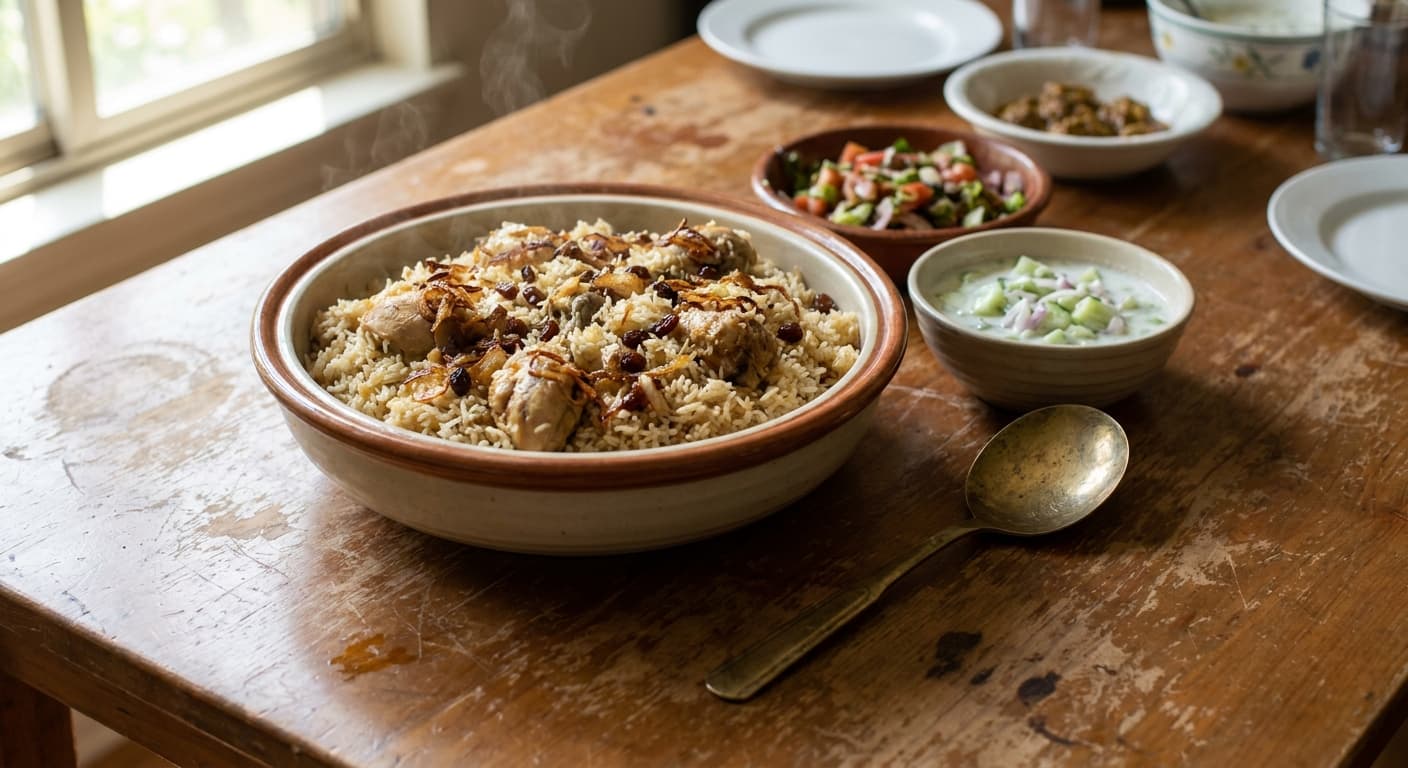
Morog Polao (মোরগ পোলাও) — Bangladeshi Chicken Pilaf
Bangladeshi · Rice Dishes · 100 min
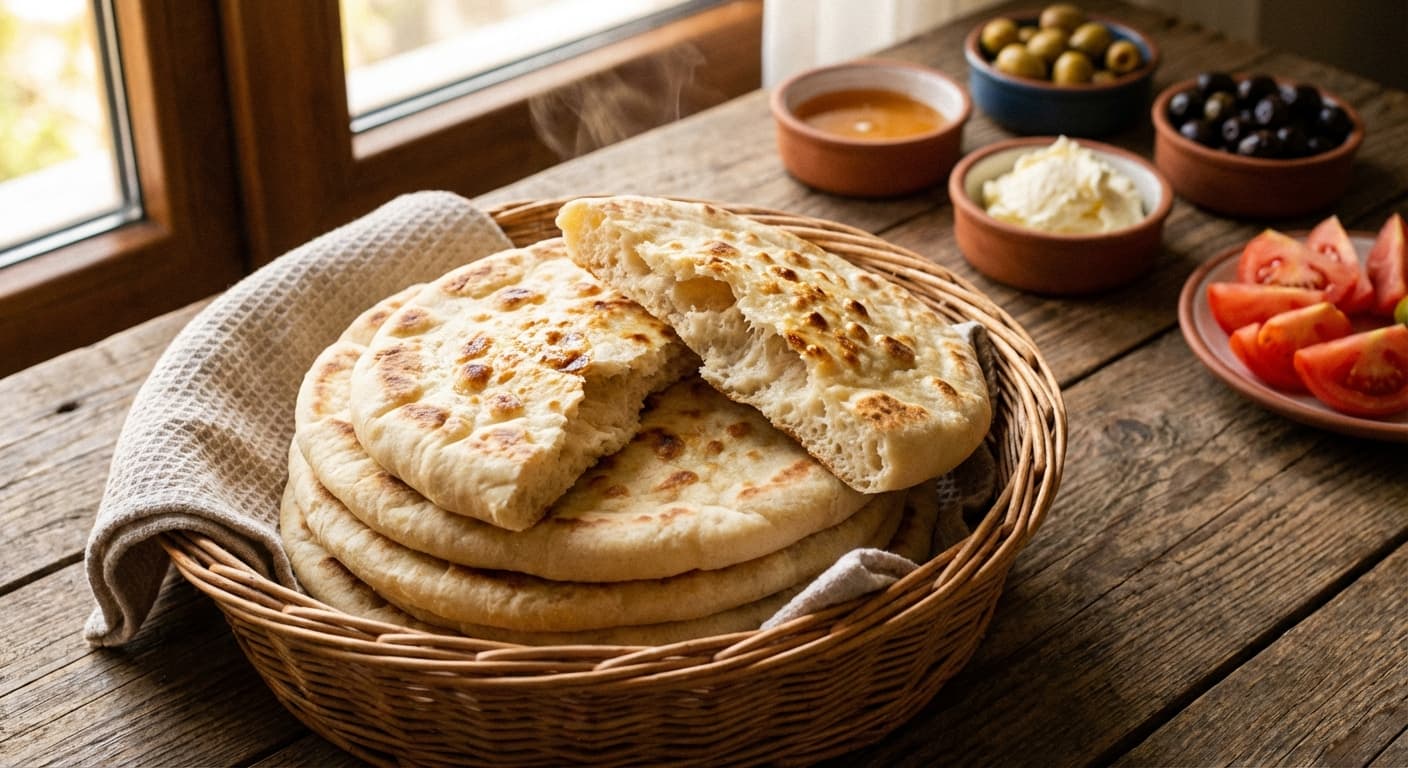
Bazlama (بازلاما) — Puffy Turkish Village Flatbread Cooked on a Saj
Turkish · Breads · 38 min
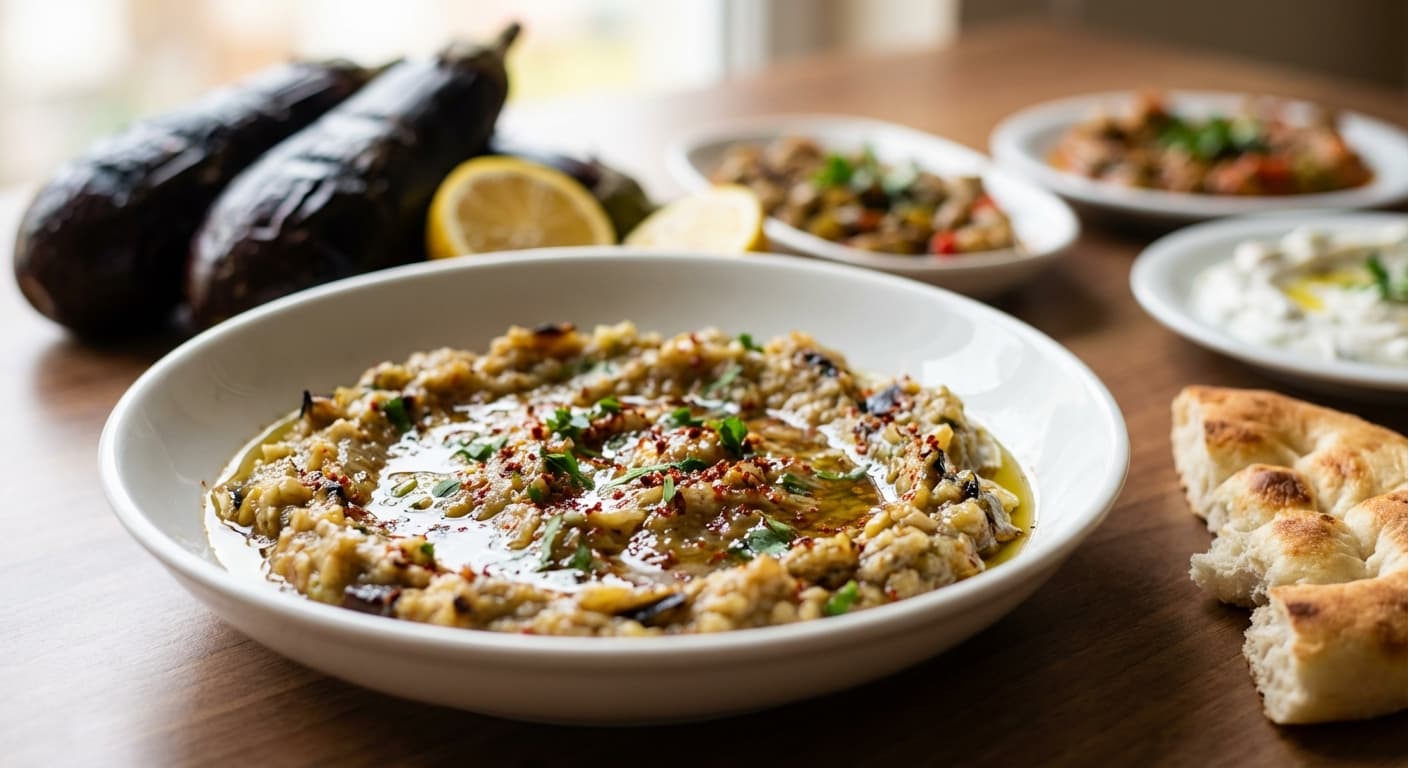
Smoky Eggplant Salad (Patlıcan Salatası) — Turkish charred eggplant with garlic and olive oil
Turkish · Salads · 40 min
Yemeni Mandi (مندي) — Smoke-Scented Spiced Rice and Lamb
Yemeni · Main Courses · 170 min
Reviews
Cooked this recipe?
Tap the stars to rate it — that's all it takes. A few words are welcome but optional.
No ratings yet. Cooked this one? Be the first to rate it — it takes one tap.