Erishte Ashi (Əriştə Aşı) — Azerbaijani Homemade Noodle Soup
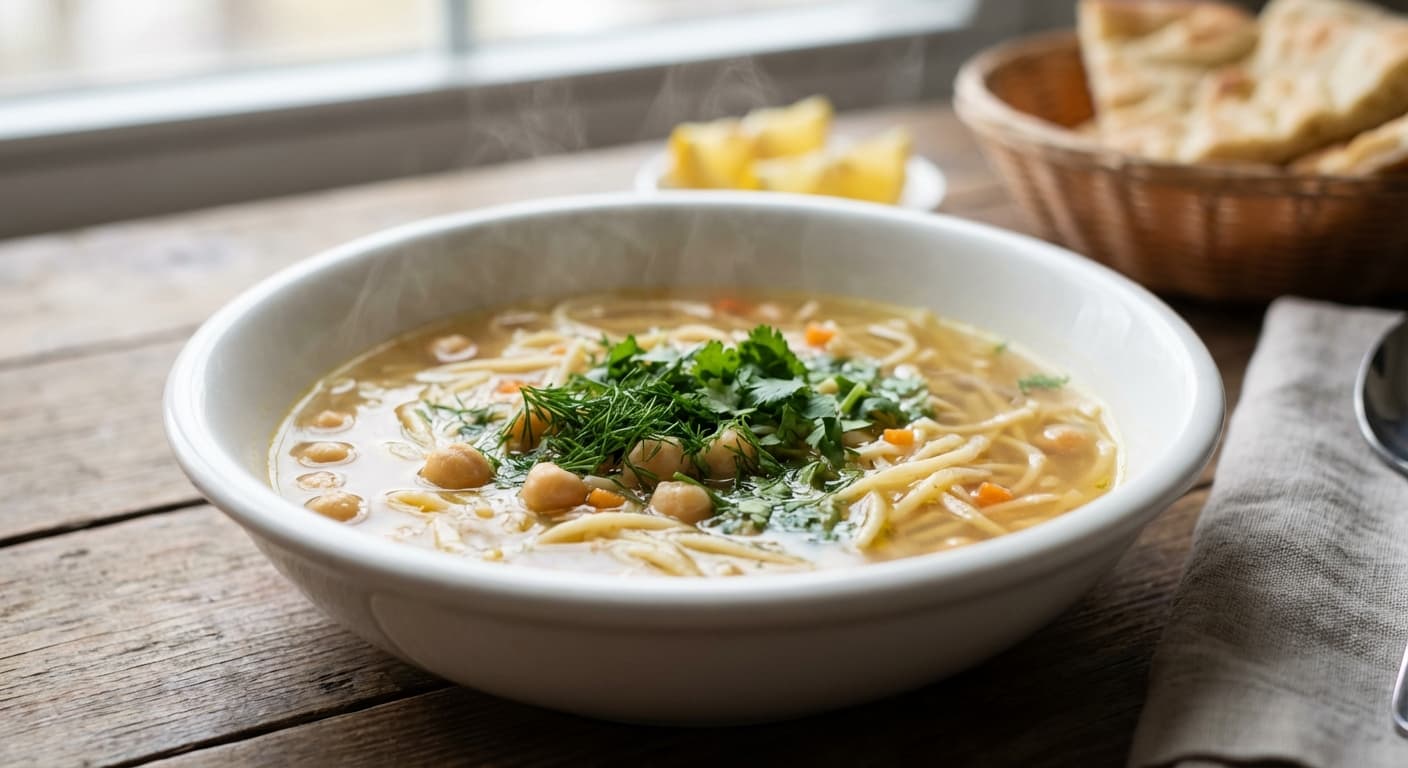
Əriştə Aşı is a comforting Azerbaijani soup built around thin homemade noodles simmered in a simple, herb-scented broth. It’s a practical, family-table dish often made when you want something warm, light, and nourishing without fuss.
Printable Recipe Card
Servings: 6 · Total: 75 min · Difficulty: medium
Ingredients (quick list)
- 300 g all-purpose flour (plus 20 g extra for dusting)
- 1 egg (large, about 50 g without shell)
- 80 ml water (room temperature)
- 3 g fine salt (about 1/2 tsp)
- 20 g unsalted butter
- 200 g onion (finely diced)
- 120 g carrot (small dice)
- 60 g celery (small dice)
- 240 g chickpeas, cooked (drained; equivalent to about 150 g cooked from dry)
- 1 leaf bay leaf
- 1 tsp ground turmeric
- 0.5 tsp black pepper (freshly ground)
+ 4 more in the full ingredients section below.
Steps (summary)
- Make the noodle dough: combine 300 g flour and 3 g salt in a bowl and form a well. Add the egg and 80 ml water, then mix until…
- Rest and roll: cover the dough and let it rest 20 minutes so the gluten relaxes for easier rolling. Dust the counter with a por…
- Cut the erishte: loosely roll the sheet into a cylinder and slice into 2–3 mm ribbons, then gently shake the strands apart with…
- Build the base: melt 20 g butter in a soup pot over medium heat, then add onion, carrot, and celery. Cook 8–10 minutes, stirrin…
- Season and simmer: stir in 1 tsp turmeric and 0.5 tsp black pepper for 30 seconds to bloom the spices, then add 1700 ml water,…
- Cook the noodles: bring the soup back to a lively simmer and add the homemade noodles in a steady stream while stirring so they…
+ 1 more steps in the full instructions section below.
Cultural Background
Əriştə Aşı reflects the Azerbaijani tradition of stretching pantry staples into a satisfying meal, with homemade noodles as a point of pride. It’s commonly served as a simple home soup, especially in cooler months, when fresh herbs brighten the bowl.
Equipment
💡 Tips
- For cleaner-cut noodles, let the rolled dough sheet dry 5–8 minutes before slicing; it reduces sticking and keeps the strands distinct in the soup.
- Keep the soup at a gentle simmer after adding noodles; a hard boil can break the noodles and make the broth cloudy.
- If you want a richer bowl, replace 400 ml of the water with light chicken stock while keeping the total liquid at 1700 ml.
⚠️ Common Mistakes
❌ Adding noodles at a rapid boil and not stirring, causing clumps.
✅ Fix: Lower to a lively simmer and add noodles gradually while stirring for the first 30–45 seconds.
❌ Overcooking the noodles until they turn mushy and thicken the soup too much.
✅ Fix: Simmer only until just tender (6–8 minutes for fresh), then rest covered off-heat for 3 minutes.
❌ Cooking the herbs for too long, dulling their flavor and color.
✅ Fix: Stir herbs in after turning off the heat, then cover briefly to infuse without boiling.
🧊 How to Store
Cool leftovers within 2 hours and refrigerate in a sealed container for up to 3 days. The noodles will keep absorbing broth, so reheat gently with 150–250 ml added water per portion until loosened and steaming hot.
📅 Make Ahead
Prepare and cut the noodles up to 24 hours ahead, then air-dry on a tray and refrigerate in a covered container with a light dusting of flour. The soup base can be simmered 1 day ahead; reheat to a simmer before adding noodles.
🍽️ Pairs Well With
- Fresh herbs
- lemon wedges
- pickled vegetables (torshi)
- warm flatbread
- black tea.
Regional Variations
- Some families enrich the broth with small lamb meatballs (about 20–25 g each) simmered before adding noodles.
- In parts of Azerbaijan, dried mint is added alongside fresh herbs for a more pronounced, rustic aroma.
- A lighter version skips legumes entirely and relies on onions, herbs, and noodles for a clean, delicate soup.
Ingredients
- 300 gall-purpose flour (plus 20 g extra for dusting)
- 1egg (large, about 50 g without shell)
- 80 mlwater (room temperature)
- 3 gfine salt (about 1/2 tsp)
- 20 gunsalted butter
- 200 gonion (finely diced)
- 120 gcarrot (small dice)
- 60 gcelery (small dice)
- 240 gchickpeas, cooked (drained; equivalent to about 150 g cooked from dry)
- 1 leafbay leaf
- 1 tspground turmeric
- 0.5 tspblack pepper (freshly ground)
- 15 gfresh dill (finely chopped)
- 10 gfresh cilantro (finely chopped)
- 5 gfresh mint (finely chopped)
- 15 mllemon juice (about 1 tbsp)
🔄 Substitutions
- homemade noodles→ dried egg noodles
- unsalted butter→ olive oil
- chickpeas, cooked→ cannellini beans, cooked
Instructions
- 1
Make the noodle dough: combine 300 g flour and 3 g salt in a bowl and form a well. Add the egg and 80 ml water, then mix until a shaggy dough forms and knead 8–10 minutes until smooth and firm; add up to 10 ml extra water only if it will not come together.
- 2
Rest and roll: cover the dough and let it rest 20 minutes so the gluten relaxes for easier rolling. Dust the counter with a portion of the extra flour, roll the dough into a thin sheet about 1 mm thick, and let the sheet air-dry 5 minutes so it cuts cleanly.
- 3
Cut the erishte: loosely roll the sheet into a cylinder and slice into 2–3 mm ribbons, then gently shake the strands apart with a little flour to prevent sticking. Spread the noodles on a tray and let them dry while you start the soup, at least 10 minutes for better texture in the broth.
- 4
Build the base: melt 20 g butter in a soup pot over medium heat, then add onion, carrot, and celery. Cook 8–10 minutes, stirring often, until the onion turns translucent and sweet but not browned.
- 5
Season and simmer: stir in 1 tsp turmeric and 0.5 tsp black pepper for 30 seconds to bloom the spices, then add 1700 ml water, the bay leaf, chickpeas, and 10 g salt. Bring to a boil, reduce to a steady simmer, and cook 15 minutes so the vegetables soften and the broth becomes fragrant.
- 6
Cook the noodles: bring the soup back to a lively simmer and add the homemade noodles in a steady stream while stirring so they do not clump. Simmer 6–8 minutes until the noodles are tender but still pleasantly springy; skim any foam and remove the bay leaf.
- 7
Finish with herbs and brightness: turn off the heat and stir in dill, cilantro, and mint so their aroma stays fresh. Add 15 ml lemon juice, cover the pot for 3 minutes, then taste and adjust with an additional 1 g salt if needed before serving hot.
🪪 Recipe Passport
Cultural Background
Əriştə Aşı reflects the Azerbaijani tradition of stretching pantry staples into a satisfying meal, with homemade noodles as a point of pride. It’s commonly served as a simple home soup, especially in cooler months, when fresh herbs brighten the bowl.
Regional Variations
Researched from multiple sources and validated by the Zaffaron editorial team. Every recipe is tested for accuracy, measurements, and cultural authenticity.
Nutrition per serving
Pairs well with
If you enjoyed this recipe, here are a few related Zaffaron recipes to try next.
Does your family make this differently?
Every family has their own version. Maybe your grandmother adds a secret ingredient, or your aunt has a completely different technique. Preserve your family's version — with their name on it, forever.
You Might Also Like

Shor Gogal (Şorqoğal) — Azerbaijani turmeric-layered pastry with spiced filling
Azerbaijani · Breads · 105 min
Paxlava (پاخلاوا) — Azerbaijani Walnut-Layered Pastry Soaked in Syrup
Azerbaijani · Desserts · 115 min
Khashil (Xəşil) — Azerbaijani wheat porridge with butter and grape molasses
Azerbaijani · Main Courses · 65 min
Romanian Tripe Soup (Ciorbă de burtă) — Creamy Sour Beef Tripe Soup
Romanian · Soups · 270 min
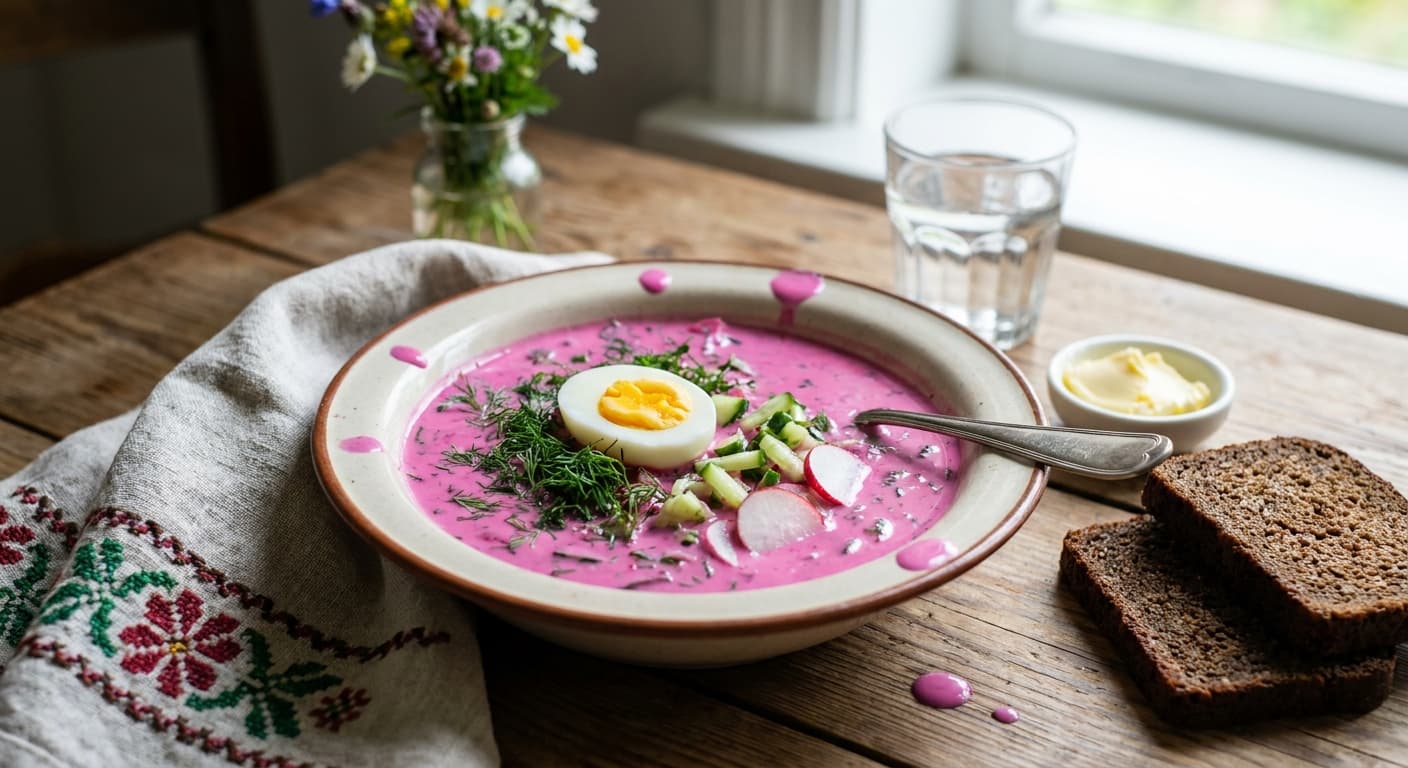
Cold Beet Soup (Aukstā zupa) — Latvian Kefir Beet Summer Soup
Latvian · Soups · 45 min
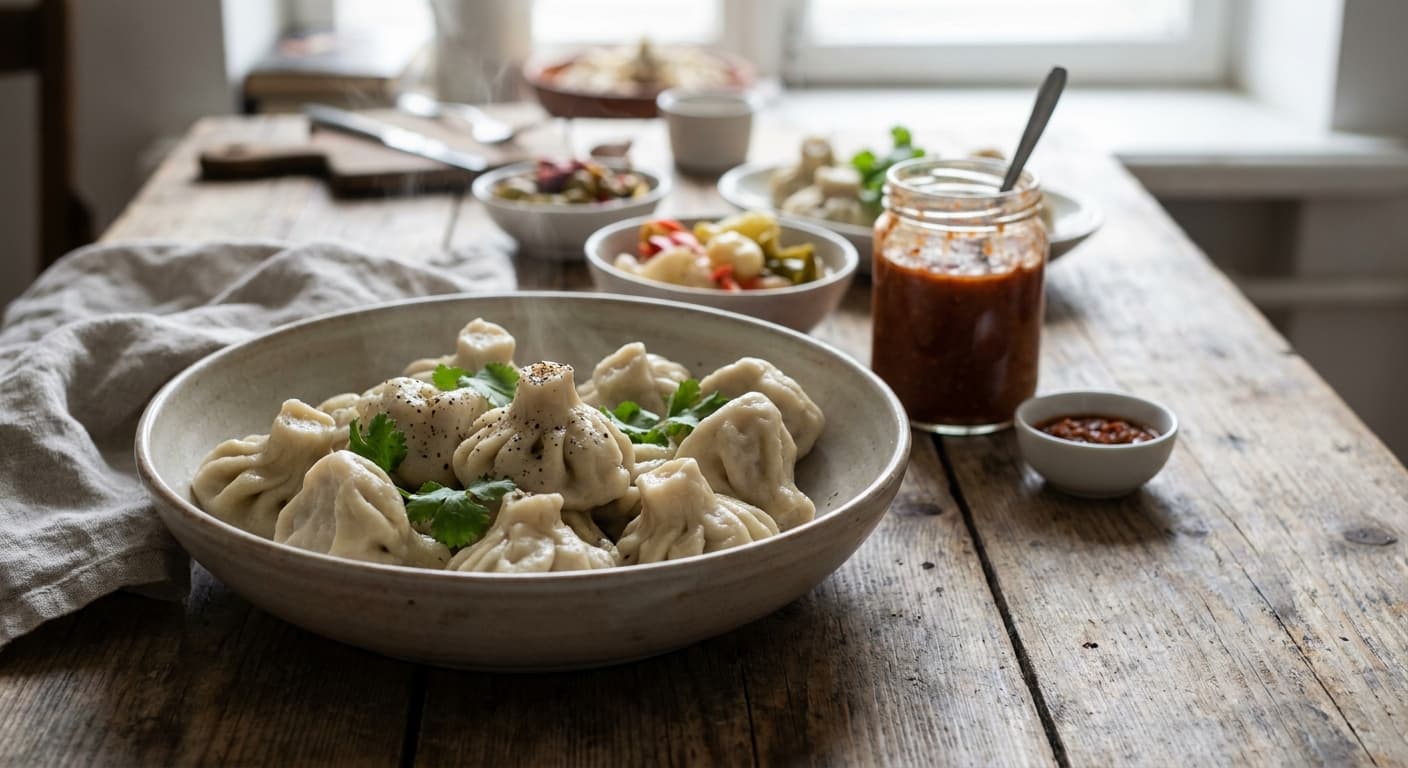
Georgian Khinkali (ხინკალი) — Juicy Meat Soup Dumplings
Georgian · Main Courses · 100 min
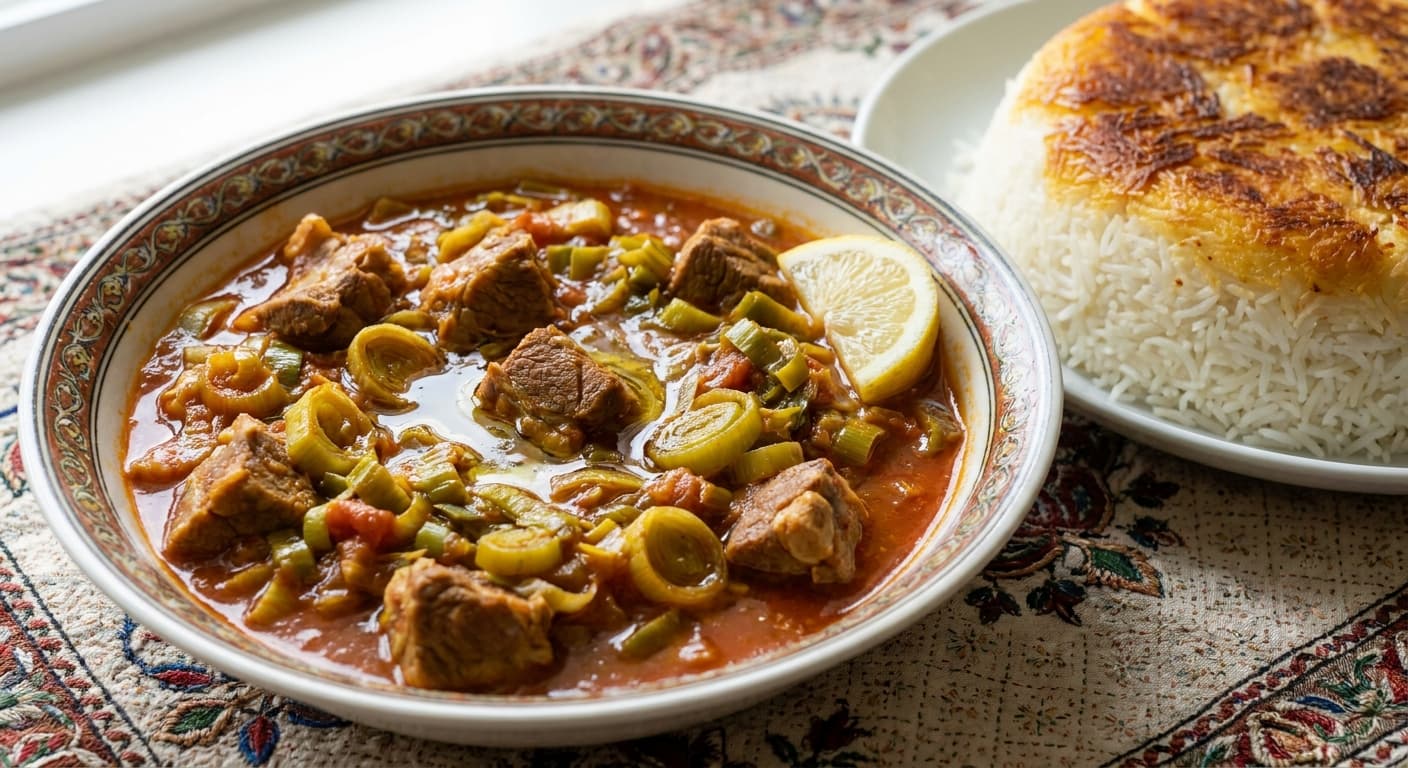
Khoresh Tareh Farangi (خورش تره فرنگی) — Persian Leek and Lamb Stew
Persian · Stews · 130 min
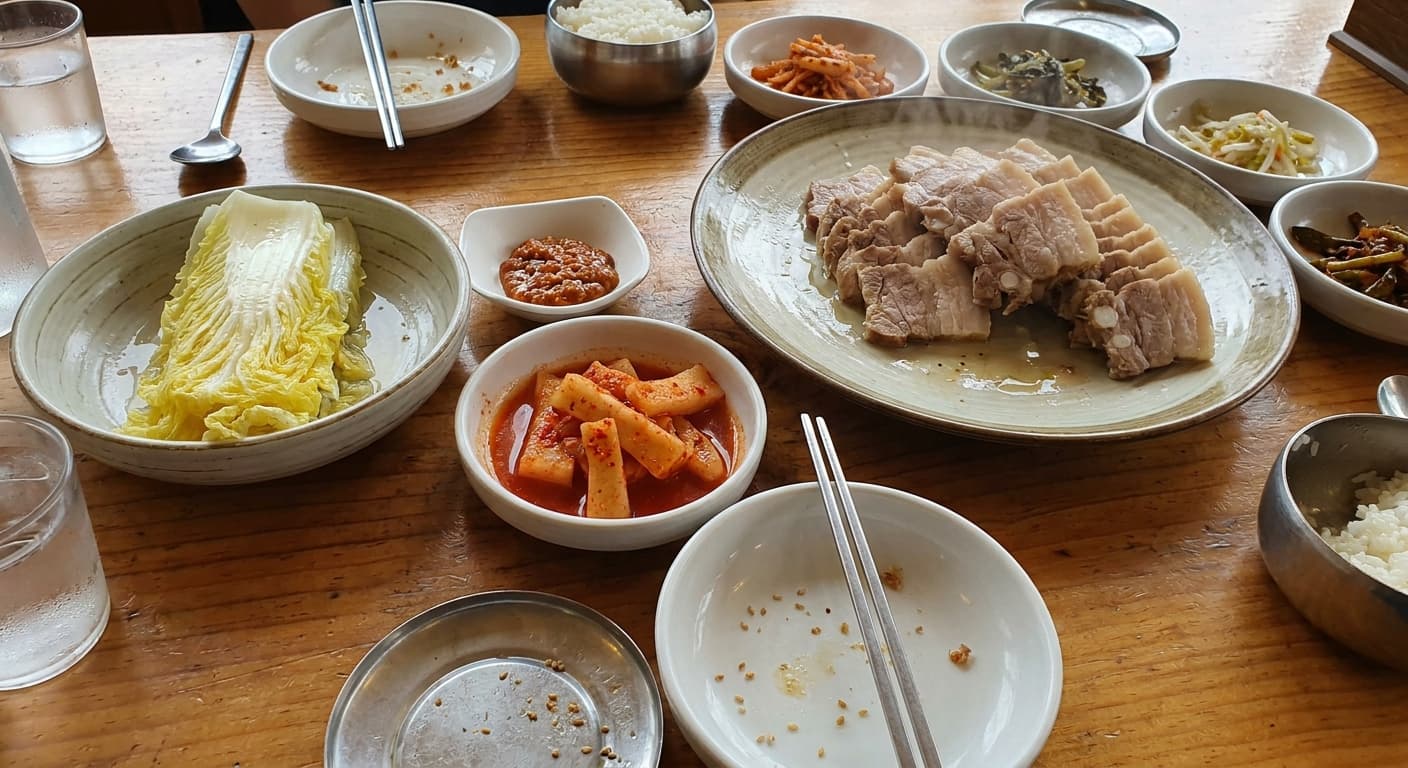
Bossam (보쌈) — Korean Boiled Pork Lettuce Wraps
Korean · Main Courses · 135 min
Reviews
Cooked this recipe?
Tap the stars to rate it — that's all it takes. A few words are welcome but optional.
No ratings yet. Cooked this one? Be the first to rate it — it takes one tap.