Fasali (فصلی) — Azerbaijani layered flaky flatbread brushed with butter
Fasali is a beloved Azerbaijani laminated flatbread, traditionally cooked on a saj or skillet and finished with melted butter. Its thin, folded layers create a crisp-tender bite that pairs beautifully with tea, cheese, or honey.
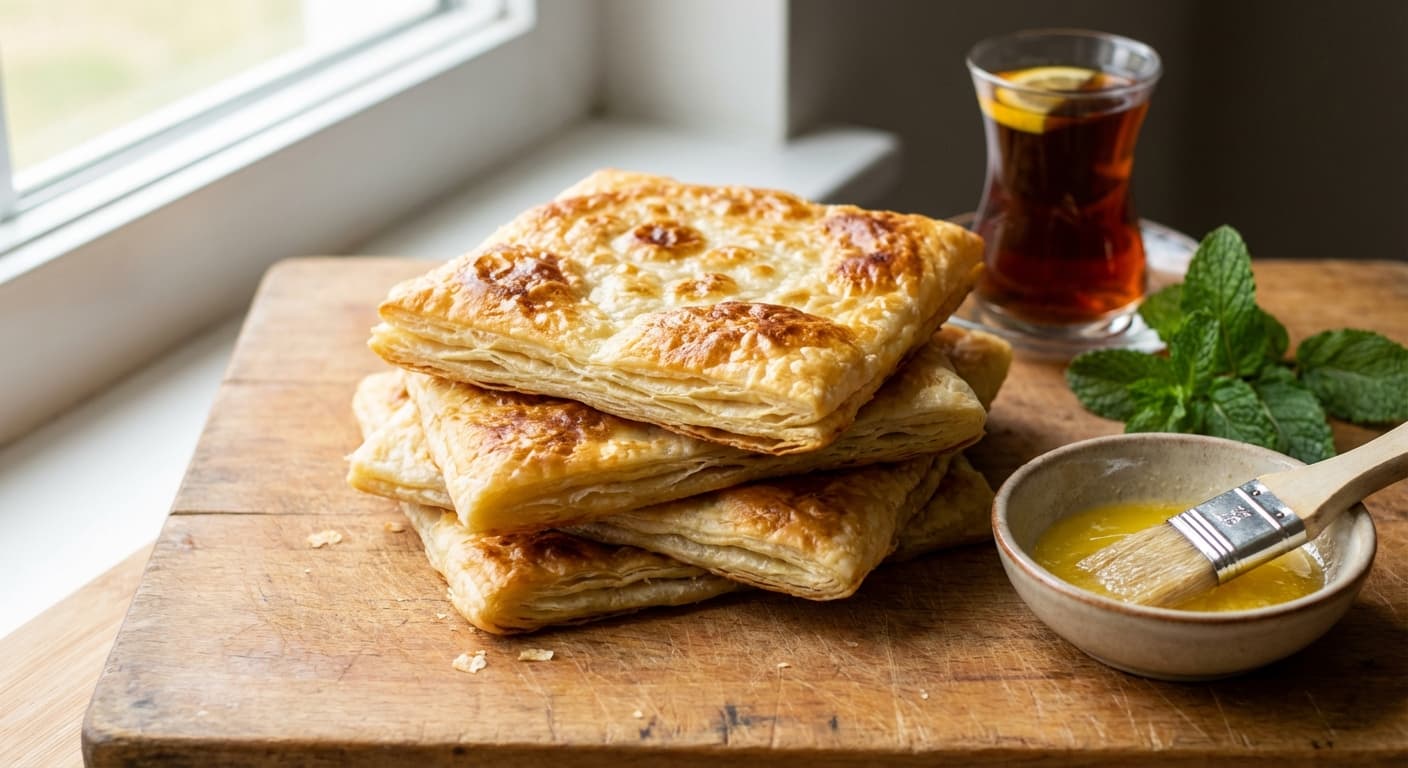
Printable Recipe Card
Servings: 8 · Total: 60 min · Difficulty: medium
Ingredients (quick list)
- 500 g all-purpose flour
- 8 g fine sea salt (about 1.5 tsp)
- 8 g granulated sugar (about 2 tsp)
- 4 g instant yeast (about 1 tsp)
- 260 ml whole milk (warm, 35–40°C)
- 60 ml water (warm, 35–40°C)
- 20 ml sunflower oil (about 1 1/3 tbsp)
- 140 g unsalted butter (melted; reserve 30 g for brushing after cooking)
Steps (summary)
- Make the dough by whisking the flour, salt, sugar, and instant yeast in a large bowl until evenly combined. Add the warm milk,…
- Knead the dough for 8 minutes until smooth and elastic, either by hand on a lightly floured surface or with a mixer on medium s…
- Cover the dough and let it rest for 15 minutes to relax the gluten, which makes rolling thin layers easier. During this rest, m…
- Divide the dough into 8 equal pieces, about 105 g each, and shape each into a tight ball. Cover the balls with a towel and rest…
- Roll one dough ball into a very thin round, about 28–30 cm wide, dusting lightly as needed to prevent sticking. Brush the surfa…
- Create layers by folding the round into a long strip, then folding the strip into a compact square or coil, keeping the buttere…
+ 4 more steps in the full instructions section below.
Cultural Background
In Azerbaijani home cooking, fasali is a treasured layered bread often made for breakfast tables and tea gatherings. Its skillet-baked, butter-brushed layers reflect the region’s love of simple dough craft turned luxurious through technique.
Equipment
💡 Tips
- Roll the first sheet very thin; the final round should be thicker so the laminated layers can puff instead of drying out.
- Keep butter warm and fluid, but not sizzling hot; overheated butter can soak in and reduce flakiness.
- Cook over steady medium heat so the bread browns before the outside hardens; too-high heat seals the layers and leaves the center undercooked.
⚠️ Common Mistakes
❌ The layers fuse and the bread turns bready instead of flaky.
✅ Fix: Brush butter all the way to the edges and avoid pressing too hard during the final roll; rest the folded dough 10 minutes before rolling.
❌ Outside browns too fast while the center stays doughy.
✅ Fix: Lower to medium heat and extend cooking to 3 minutes per side; cover the cooked stack for 5 minutes to finish steaming through.
❌ Dough keeps shrinking back when rolling thin.
✅ Fix: Increase the rest after dividing to 15 minutes and roll in short passes, rotating the dough between passes instead of forcing it.
🧊 How to Store
Cool fasali completely, then wrap tightly and store at room temperature up to 24 hours or refrigerate up to 3 days. Reheat on a dry skillet over medium-low for 60–90 seconds per side, then brush with 2 g butter per piece to refresh the layers.
📅 Make Ahead
Prepare and fold the laminated dough pieces, then refrigerate covered for up to 12 hours. Bring to room temperature for 20 minutes before the final roll and skillet cooking for the best layering.
🍽️ Pairs Well With
- Black tea
- feta-style cheese
- honey
- kaymak
- jam
- fresh herbs.
Regional Variations
- Saj-style fasali: cooked on a convex griddle for faster blistering and a slightly smokier aroma.
- Sweeter tea-table fasali: increase sugar to 15 g and finish with 5 g honey brushed on each hot bread.
- Herb fasali: sprinkle 10 g finely chopped dill between folds for a fragrant savory version.
Ingredients
- 500 gall-purpose flour
- 8 gfine sea salt (about 1.5 tsp)
- 8 ggranulated sugar (about 2 tsp)
- 4 ginstant yeast (about 1 tsp)
- 260 mlwhole milk (warm, 35–40°C)
- 60 mlwater (warm, 35–40°C)
- 20 mlsunflower oil (about 1 1/3 tbsp)
- 140 gunsalted butter (melted; reserve 30 g for brushing after cooking)
🔄 Substitutions
- whole milk→ water
- unsalted butter→ ghee
- instant yeast→ active dry yeast
Instructions
- 1
Make the dough by whisking the flour, salt, sugar, and instant yeast in a large bowl until evenly combined. Add the warm milk, warm water, and sunflower oil, then mix until a shaggy dough forms and no dry flour remains.
- 2
Knead the dough for 8 minutes until smooth and elastic, either by hand on a lightly floured surface or with a mixer on medium speed. The dough should feel soft but not sticky; if it clings to your hands, dust in 5 g flour at a time without exceeding the extra 20 g.
- 3
Cover the dough and let it rest for 15 minutes to relax the gluten, which makes rolling thin layers easier. During this rest, melt the butter and keep it warm so it stays fluid for brushing.
- 4
Divide the dough into 8 equal pieces, about 105 g each, and shape each into a tight ball. Cover the balls with a towel and rest for 10 minutes so they roll without springing back.
- 5
Roll one dough ball into a very thin round, about 28–30 cm wide, dusting lightly as needed to prevent sticking. Brush the surface with 12–14 g melted butter, making sure the edges are coated so the layers separate and turn flaky.
- 6
Create layers by folding the round into a long strip, then folding the strip into a compact square or coil, keeping the buttered surfaces inside. Set it aside under a towel and repeat with the remaining dough balls, using about 110 g of the butter total for lamination.
- 7
Rest the folded pieces for 10 minutes so the butter firms slightly and the gluten relaxes again. This short rest helps the bread puff into distinct layers instead of tearing during the final roll.
- 8
Roll each folded piece gently into a round about 18–20 cm wide, keeping some thickness so the layers can steam and separate. If any butter leaks, dust a pinch of flour under the dough and continue rolling with light pressure rather than forcing it thin.
- 9
Heat a heavy skillet or saj over medium heat for 3 minutes, aiming for a surface temperature around 190–210°C. Cook one fasali round at a time for 2 to 3 minutes on the first side until golden spots appear, then flip and cook 2 to 3 minutes more until evenly browned and cooked through.
- 10
Transfer the hot bread to a plate and immediately brush with about 4 g melted butter per piece, using the reserved 30 g for finishing. Stack and cover the breads for 5 minutes so the steam softens the interior while the layers stay flaky at the edges.
🪪 Recipe Passport
Cultural Background
In Azerbaijani home cooking, fasali is a treasured layered bread often made for breakfast tables and tea gatherings. Its skillet-baked, butter-brushed layers reflect the region’s love of simple dough craft turned luxurious through technique.
Regional Variations
Researched from multiple sources and validated by the Zaffaron editorial team. Every recipe is tested for accuracy, measurements, and cultural authenticity.
Nutrition per serving
Pairs well with
If you enjoyed this recipe, here are a few related Zaffaron recipes to try next.
Does your family make this differently?
Every family has their own version. Maybe your grandmother adds a secret ingredient, or your aunt has a completely different technique. Preserve your family's version — with their name on it, forever.
You Might Also Like
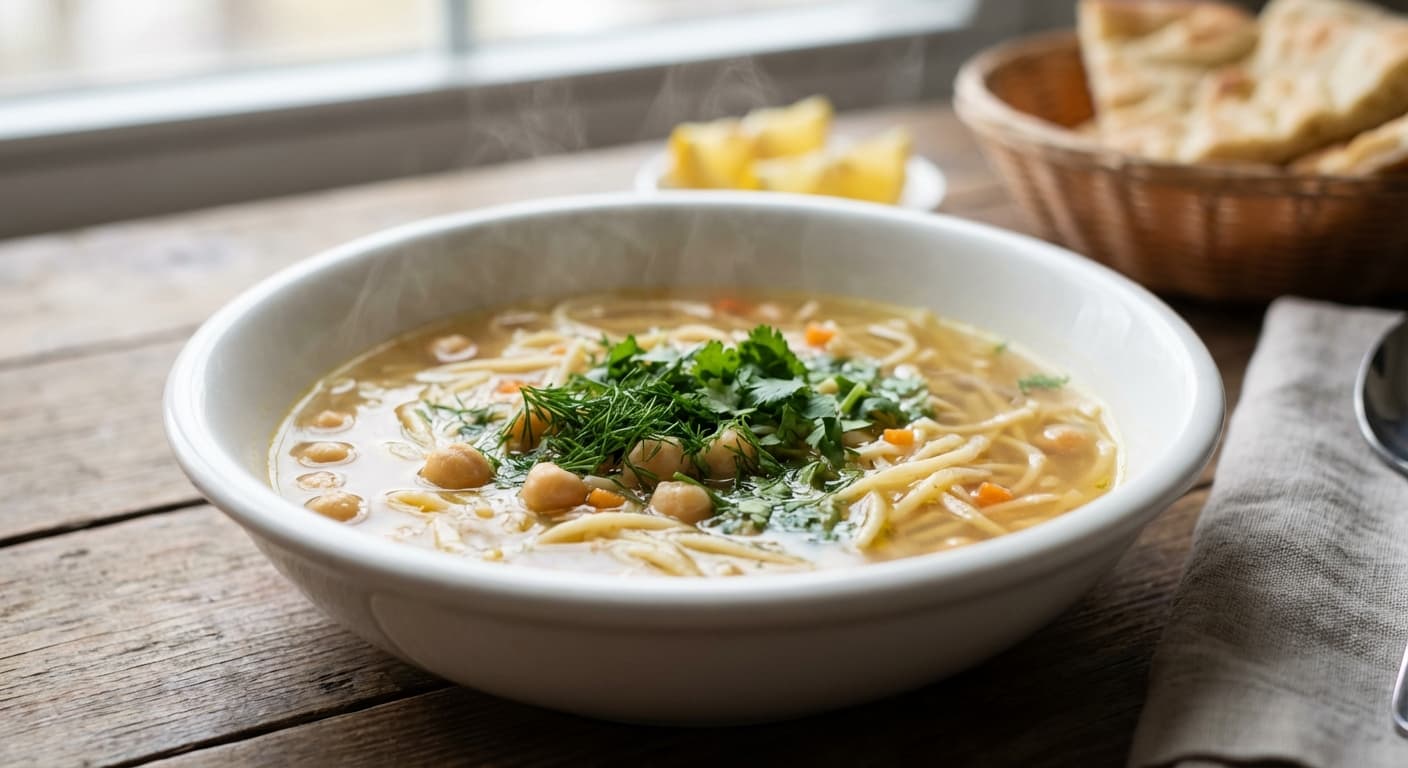
Erishte Ashi (Əriştə Aşı) — Azerbaijani Homemade Noodle Soup
Azerbaijani · Soups · 75 min
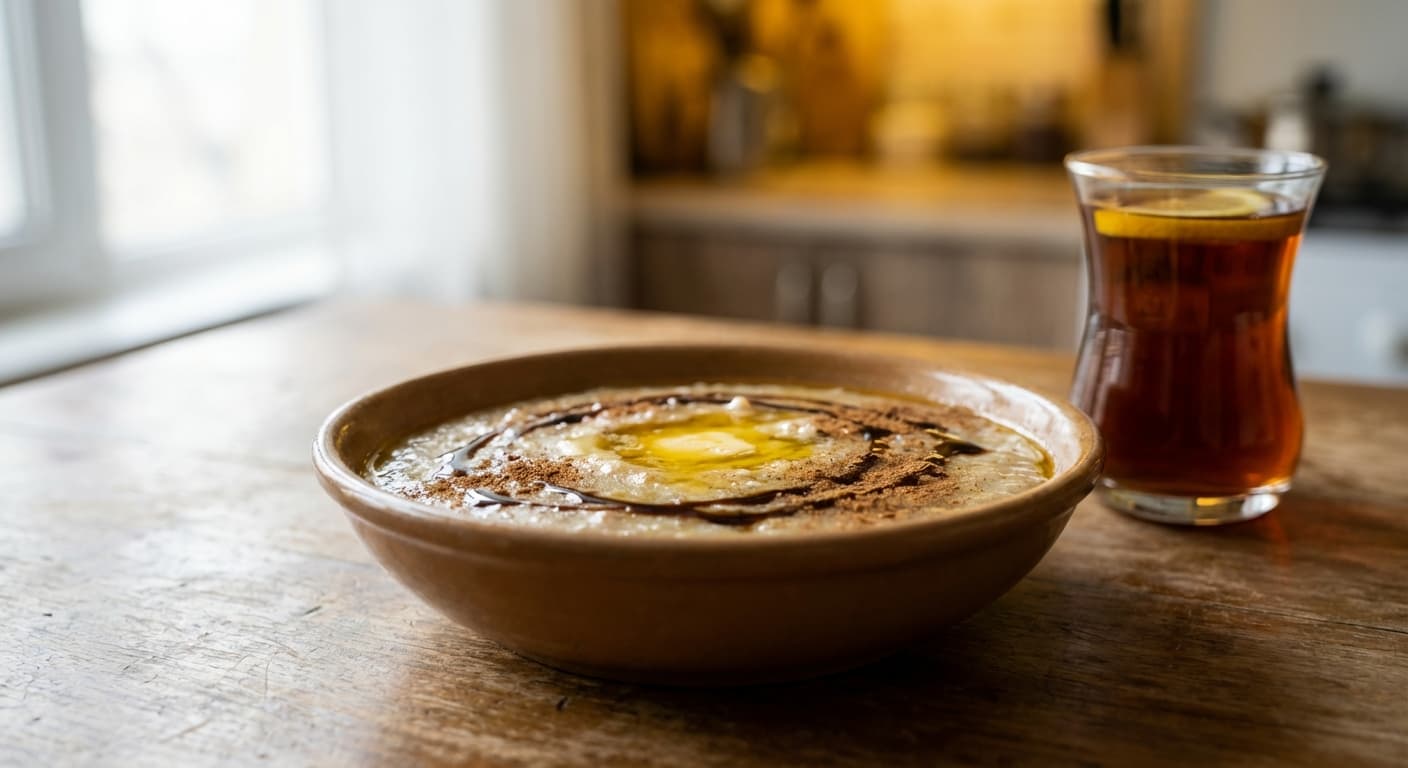
Khashil (Xəşil) — Azerbaijani wheat porridge with butter and grape molasses
Azerbaijani · Main Courses · 65 min
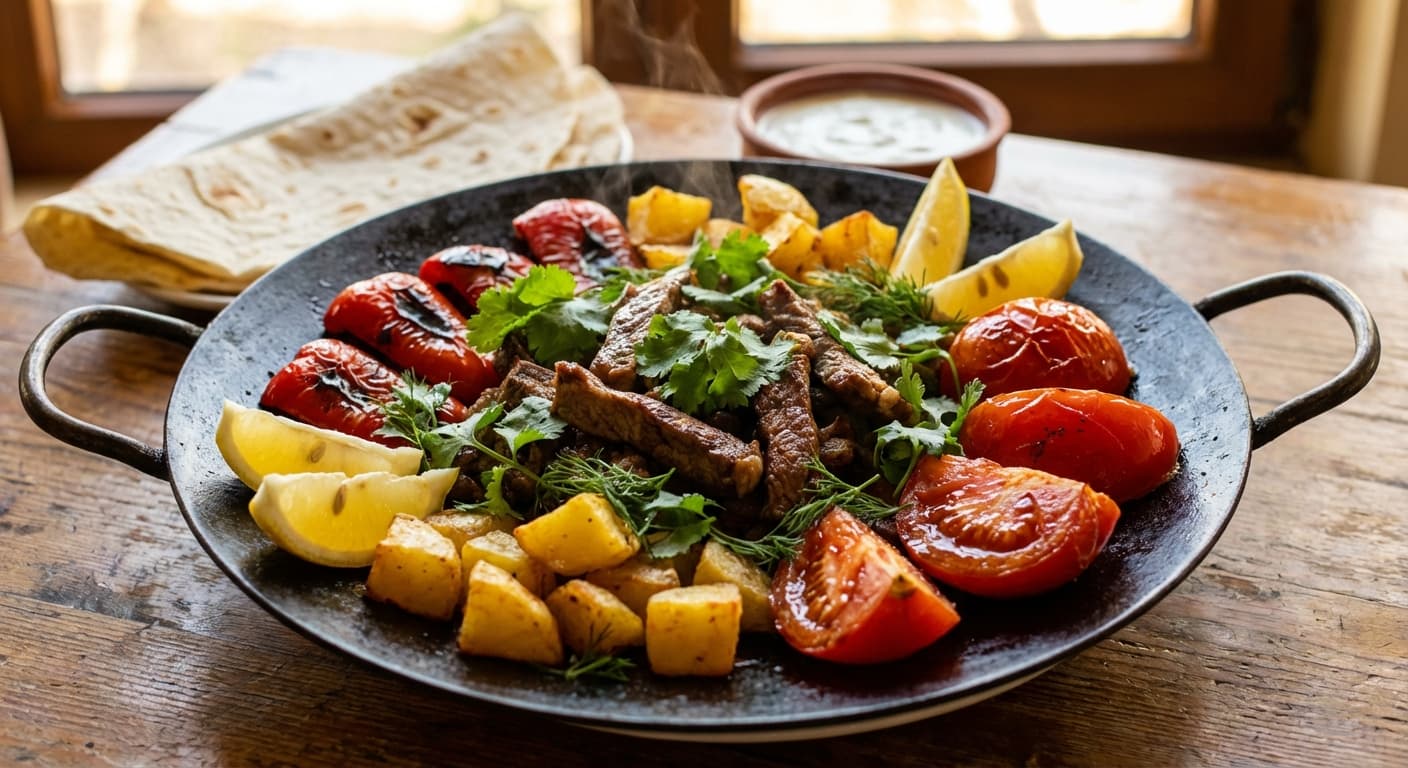
Sac Qovurma (Sacda ət və tərəvəz) — Fast-cooked Azerbaijani meat and vegetables on a saj
Azerbaijani · Main Courses · 38 min
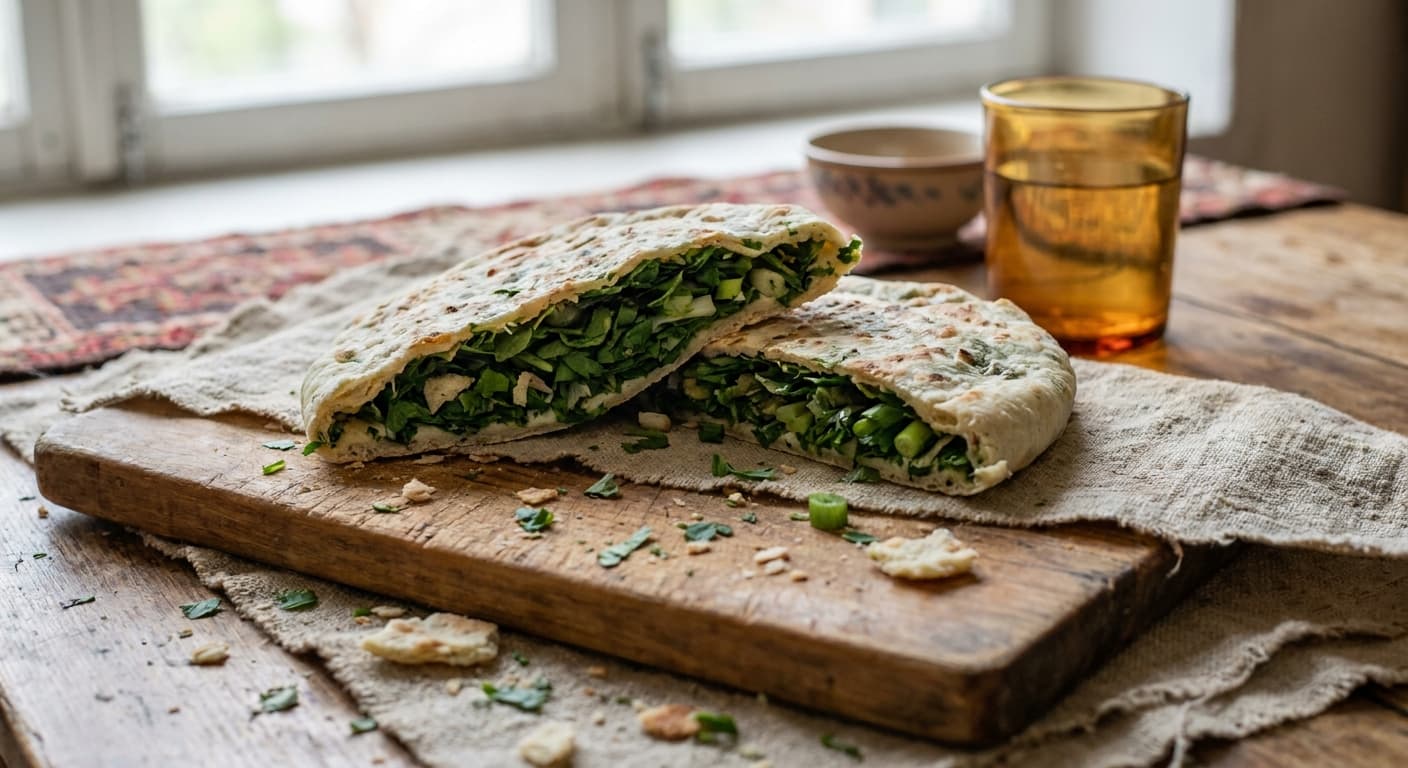
Zhingyalov Hats (Ժենգյալով հաց) — Artsakh Herb-Stuffed Flatbread
Armenian · Breads · 73 min
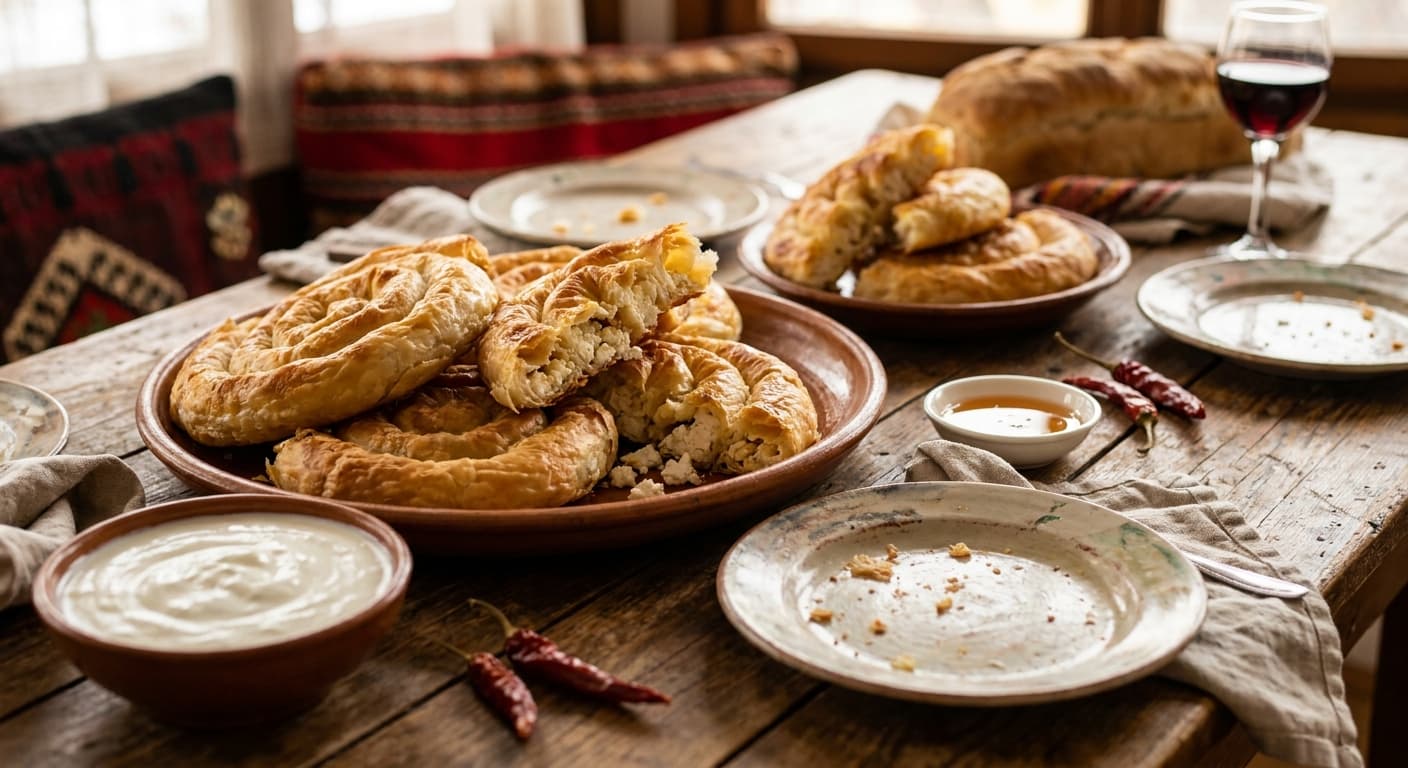
Bulgarian Banitsa (Баница) — Flaky Sirene-Filled Phyllo Pie
Bulgarian · Breads · 68 min
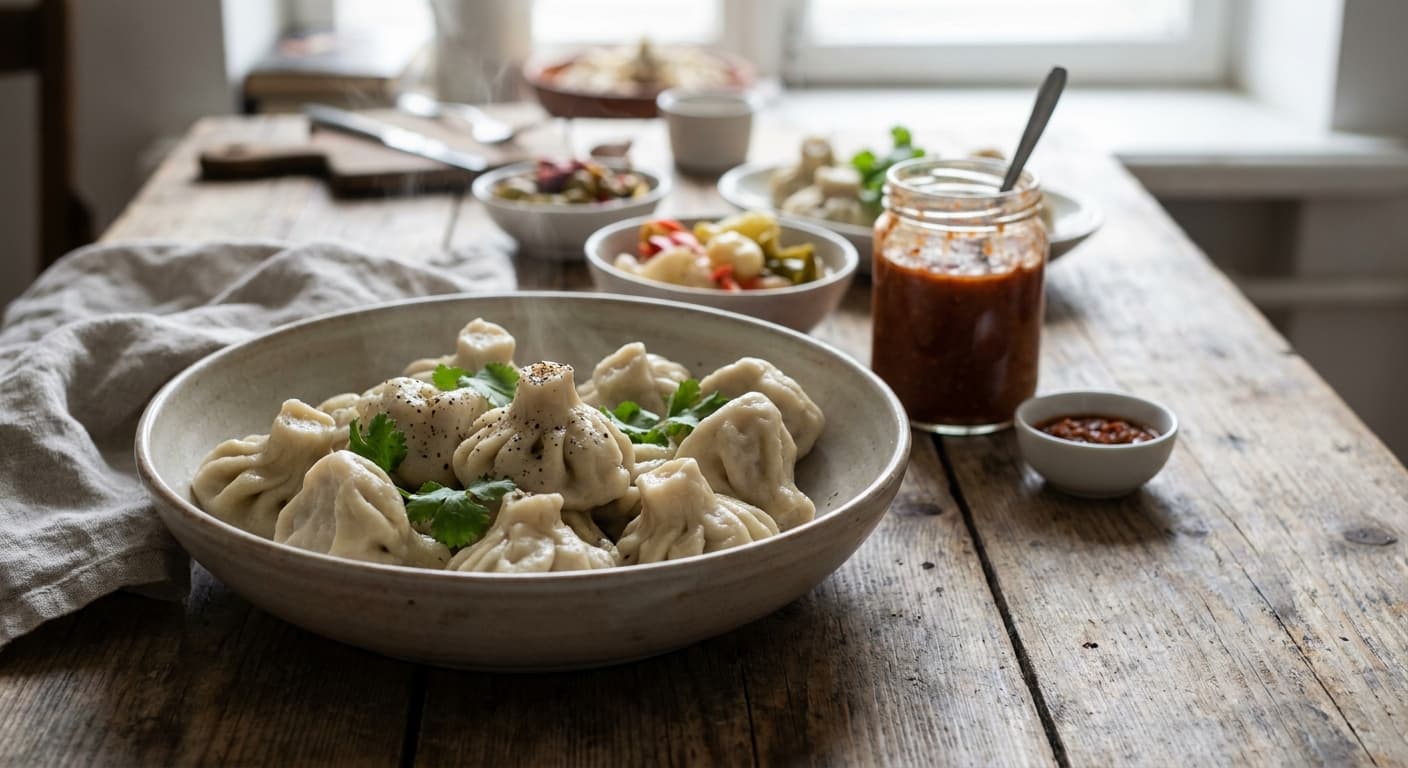
Georgian Khinkali (ხინკალი) — Juicy Meat Soup Dumplings
Georgian · Main Courses · 100 min
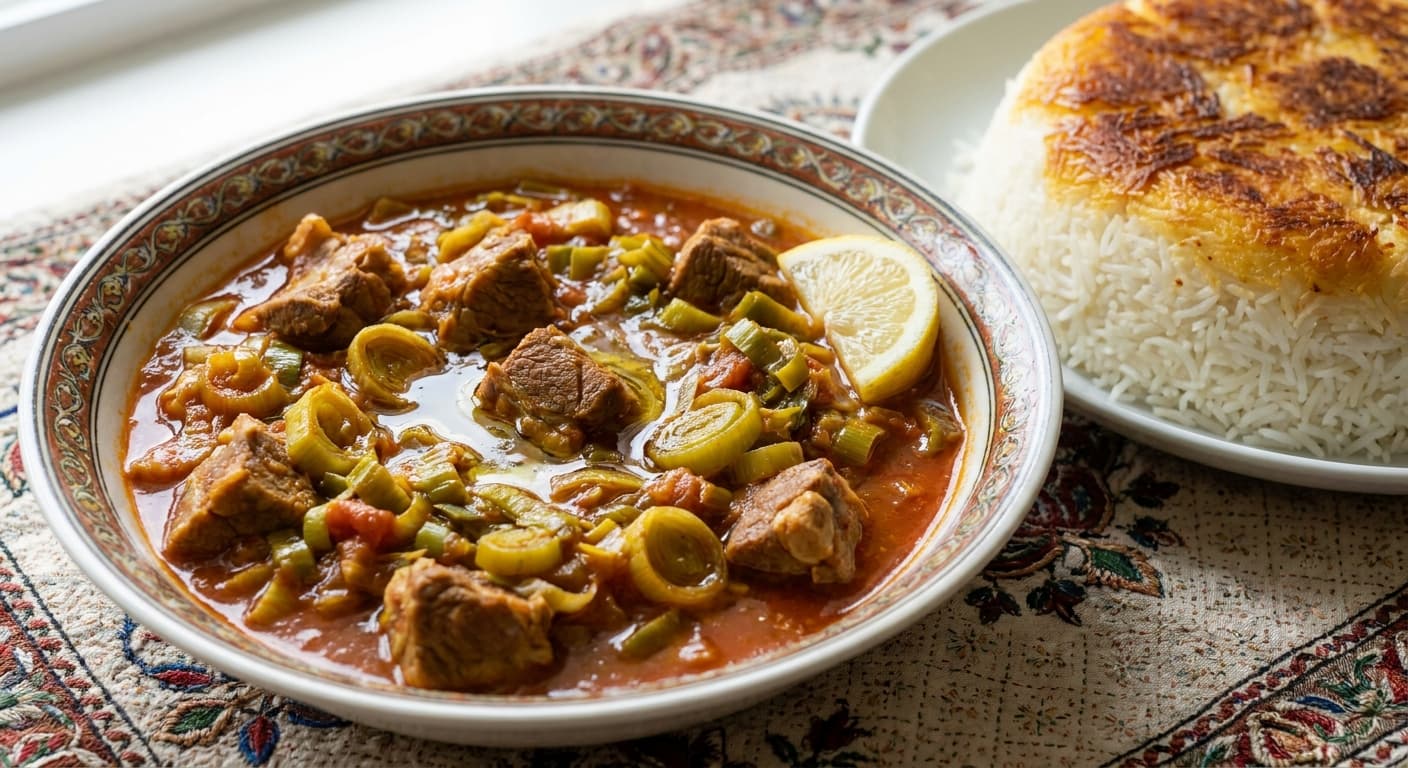
Khoresh Tareh Farangi (خورش تره فرنگی) — Persian Leek and Lamb Stew
Persian · Stews · 130 min
Besso (በሶ) — Ethiopian Roasted Barley Bites
Ethiopian · Appetizers · 20 min
Reviews
Cooked this recipe?
Tap the stars to rate it — that's all it takes. A few words are welcome but optional.
No ratings yet. Cooked this one? Be the first to rate it — it takes one tap.