Meghli (مغلي) — Lebanese Spiced Rice Pudding with Nuts
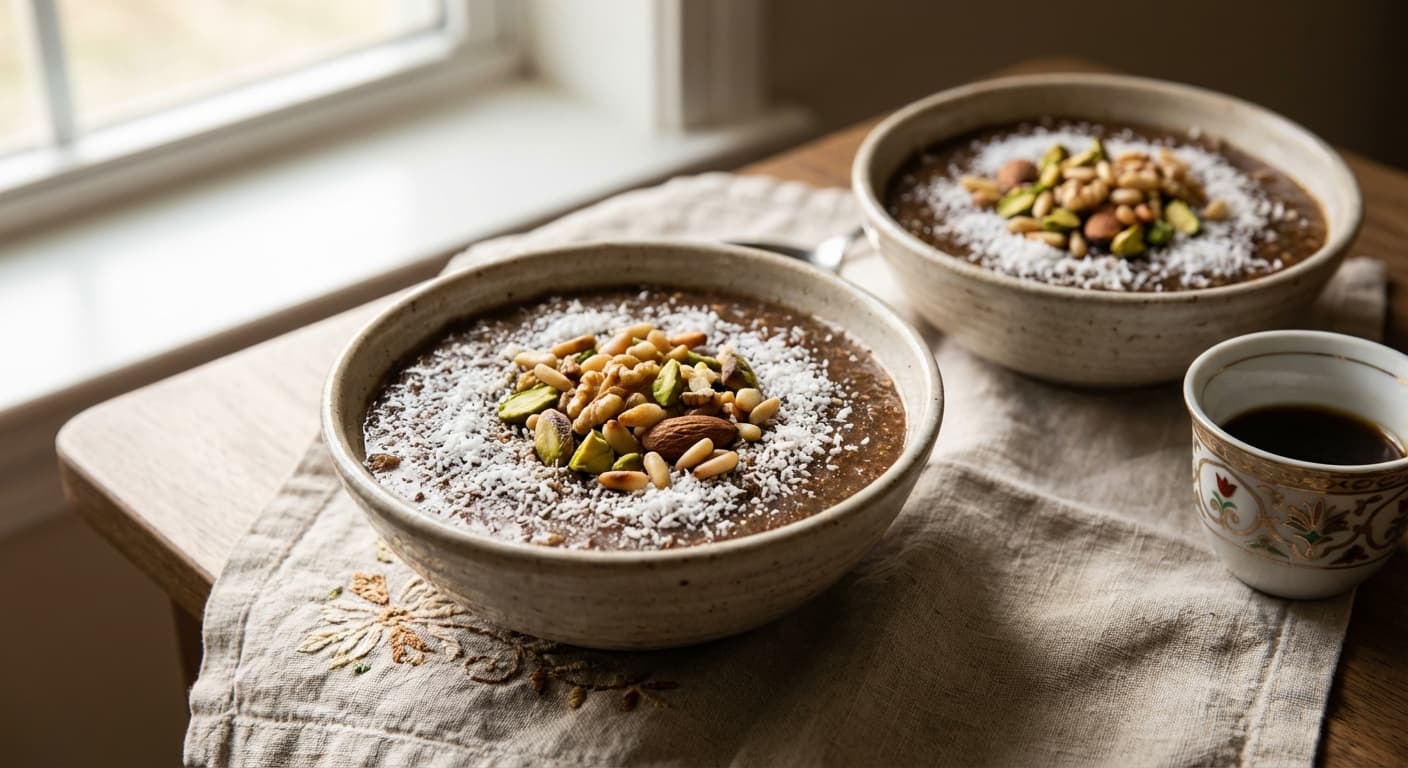
Meghli is a Lebanese rice-flour pudding perfumed with caraway, cinnamon, and anise, traditionally served to celebrate a newborn. It’s cooked into a silky, lightly thickened cream and finished with crunchy nuts and coconut for contrast.
Printable Recipe Card
Servings: 6 · Total: 40 min · Difficulty: easy
Ingredients (quick list)
- 70 g Rice flour (finely milled)
- 120 g Granulated sugar
- 1000 ml Water
- 2 tsp Ground caraway
- 1.5 tsp Ground cinnamon
- 1 tsp Ground anise (aniseed powder)
- 0.25 tsp Fine salt
- 1 tbsp Orange blossom water (add off-heat for best aroma)
- 30 g Unsweetened shredded coconut
- 20 g Pine nuts (lightly toasted)
- 30 g Walnuts (coarsely chopped)
- 25 g Pistachios (coarsely chopped, unsalted)
+ 1 more in the full ingredients section below.
Steps (summary)
- Set out 6 small serving bowls or ramekins so you can portion the pudding as soon as it is cooked. If you are toasting nuts, toa…
- In a medium bowl, whisk the rice flour with 250 ml of the water until perfectly smooth and lump-free. This slurry is essential…
- In a heavy-bottomed saucepan, combine the remaining 750 ml water, sugar, ground caraway, cinnamon, anise, and salt. Whisk well,…
- While whisking the pot continuously, slowly pour in the rice-flour slurry in a thin stream. Keep the heat at medium and whisk w…
- Continue cooking for 8–10 minutes, stirring with a whisk and then a silicone spatula, until the mixture becomes glossy and thic…
- Turn off the heat and stir in the orange blossom water for a fresh, floral finish. Immediately ladle the hot Meghli into the pr…
+ 1 more steps in the full instructions section below.
Cultural Background
In Lebanon, Meghli is closely tied to birth celebrations, offered to family and visitors as a symbol of sweetness and abundance. Its earthy spices and generous nut topping reflect Levantine hospitality and the tradition of sharing dessert in community.
Equipment
💡 Tips
- Whisk the rice flour with cold water first; adding dry flour directly to the pot almost always creates stubborn lumps.
- For a deeper, more aromatic Meghli, toast the ground spices in the dry pot for 20 seconds before adding water, then proceed as written.
- Add orange blossom water off-heat; boiling it for long dulls the floral aroma and can make it taste bitter.
⚠️ Common Mistakes
❌ Adding rice flour directly to hot liquid, causing lumps.
✅ Fix: Always make a smooth slurry with cold water first, then pour it in slowly while whisking constantly.
❌ Undercooking so the pudding stays loose and doesn’t set.
✅ Fix: Cook until glossy and clearly thick (8–10 minutes after adding slurry), then give it 2 extra minutes on low heat.
❌ Scorching the bottom of the pot, creating bitter flavor.
✅ Fix: Use a heavy pot, keep heat moderate, and scrape the base and corners frequently with a spatula.
🧊 How to Store
Cover the bowls tightly and refrigerate for up to 4 days. Serve cold, or let sit 10 minutes at room temperature for a softer texture; avoid reheating, as it can thin the set and dull the spice aroma. Add nut toppings just before serving.
📅 Make Ahead
Cook and portion Meghli up to 2 days in advance, then keep covered in the refrigerator. Toast and chop nuts ahead and store airtight at room temperature; garnish right before serving for maximum crunch.
🍽️ Pairs Well With
- Arabic coffee
- mint tea
- fresh orange segments
- dates
- maamoul.
Regional Variations
- Some Lebanese families increase caraway and reduce anise for a more earthy, less licorice-like profile.
- In parts of the Levant, Meghli is topped with extra coconut and raisins for a sweeter, more textured finish.
- A few home cooks replace a portion of water with almond milk for richer body, though the classic version is water-based.
Ingredients
- 70 gRice flour (finely milled)
- 120 gGranulated sugar
- 1000 mlWater
- 2 tspGround caraway
- 1.5 tspGround cinnamon
- 1 tspGround anise (aniseed powder)
- 0.25 tspFine salt
- 1 tbspOrange blossom water (add off-heat for best aroma)
- 30 gUnsweetened shredded coconut
- 20 gPine nuts (lightly toasted)
- 30 gWalnuts (coarsely chopped)
- 25 gPistachios (coarsely chopped, unsalted)
- 25 gBlanched almonds (slivered or roughly chopped)
🔄 Substitutions
- Orange blossom water→ Rose water
- Pine nuts→ Chopped hazelnuts
- Granulated sugar→ Light brown sugar
Instructions
- 1
Set out 6 small serving bowls or ramekins so you can portion the pudding as soon as it is cooked. If you are toasting nuts, toast the pine nuts in a dry skillet over medium heat for 2–3 minutes, stirring constantly, then cool them completely.
- 2
In a medium bowl, whisk the rice flour with 250 ml of the water until perfectly smooth and lump-free. This slurry is essential for a silky Meghli, so keep whisking until it looks like thin cream.
- 3
In a heavy-bottomed saucepan, combine the remaining 750 ml water, sugar, ground caraway, cinnamon, anise, and salt. Whisk well, then place the pot over medium heat and bring it just to a gentle simmer while stirring to dissolve the sugar.
- 4
While whisking the pot continuously, slowly pour in the rice-flour slurry in a thin stream. Keep the heat at medium and whisk without stopping so the starch thickens evenly and does not catch on the bottom.
- 5
Continue cooking for 8–10 minutes, stirring with a whisk and then a silicone spatula, until the mixture becomes glossy and thick enough to coat the back of a spoon. Once thick, reduce to low heat and cook 2 more minutes, scraping the corners of the pot to prevent scorching.
- 6
Turn off the heat and stir in the orange blossom water for a fresh, floral finish. Immediately ladle the hot Meghli into the prepared bowls, then tap each bowl lightly on the counter to level the surface and release bubbles.
- 7
Let the bowls cool at room temperature for 30 minutes, then refrigerate for at least 3 hours to fully set. Before serving, top each portion with shredded coconut, pine nuts, walnuts, pistachios, and almonds so the garnish stays crisp against the creamy pudding.
🪪 Recipe Passport
Cultural Background
In Lebanon, Meghli is closely tied to birth celebrations, offered to family and visitors as a symbol of sweetness and abundance. Its earthy spices and generous nut topping reflect Levantine hospitality and the tradition of sharing dessert in community.
Regional Variations
Researched from multiple sources and validated by the Zaffaron editorial team. Every recipe is tested for accuracy, measurements, and cultural authenticity.
Nutrition per serving
Pairs well with
If you enjoyed this recipe, here are a few related Zaffaron recipes to try next.
Does your family make this differently?
Every family has their own version. Maybe your grandmother adds a secret ingredient, or your aunt has a completely different technique. Preserve your family's version — with their name on it, forever.
You Might Also Like
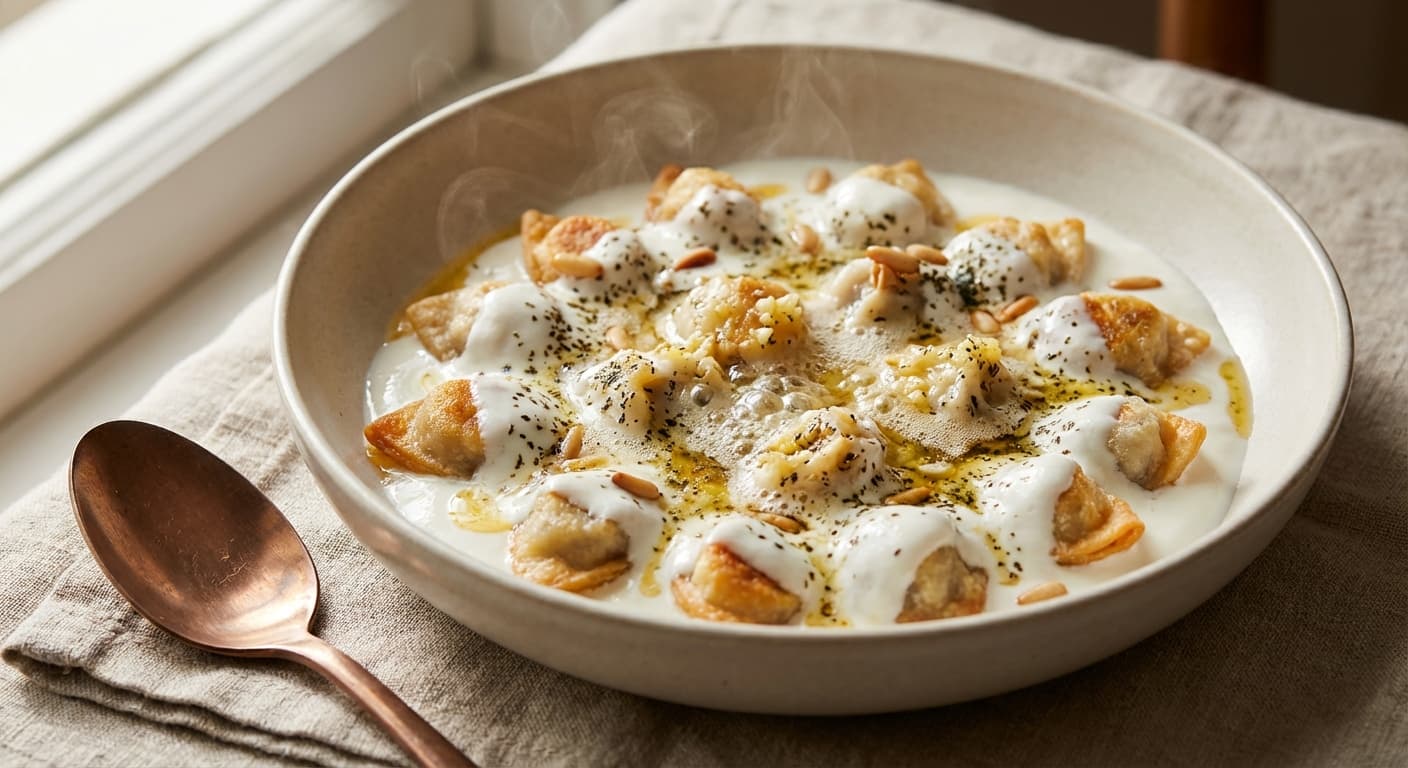
Shish Barak (شيش برك) — Lebanese Lamb Dumplings in Warm Yogurt Sauce
Lebanese · Main Courses · 105 min
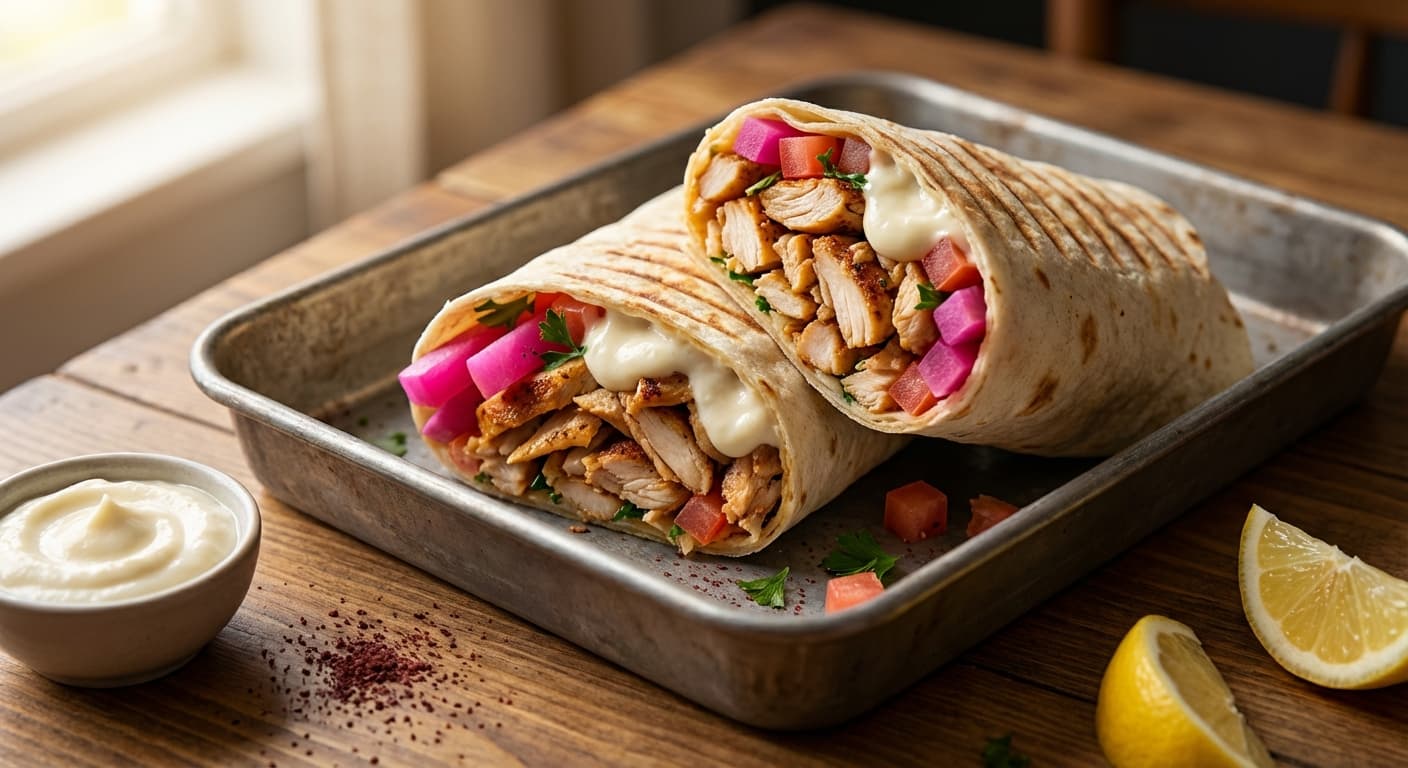
Shawarma Djaj (شاورما دجاج) — Lebanese Chicken Shawarma with Toum
Lebanese · Kebabs · 45 min
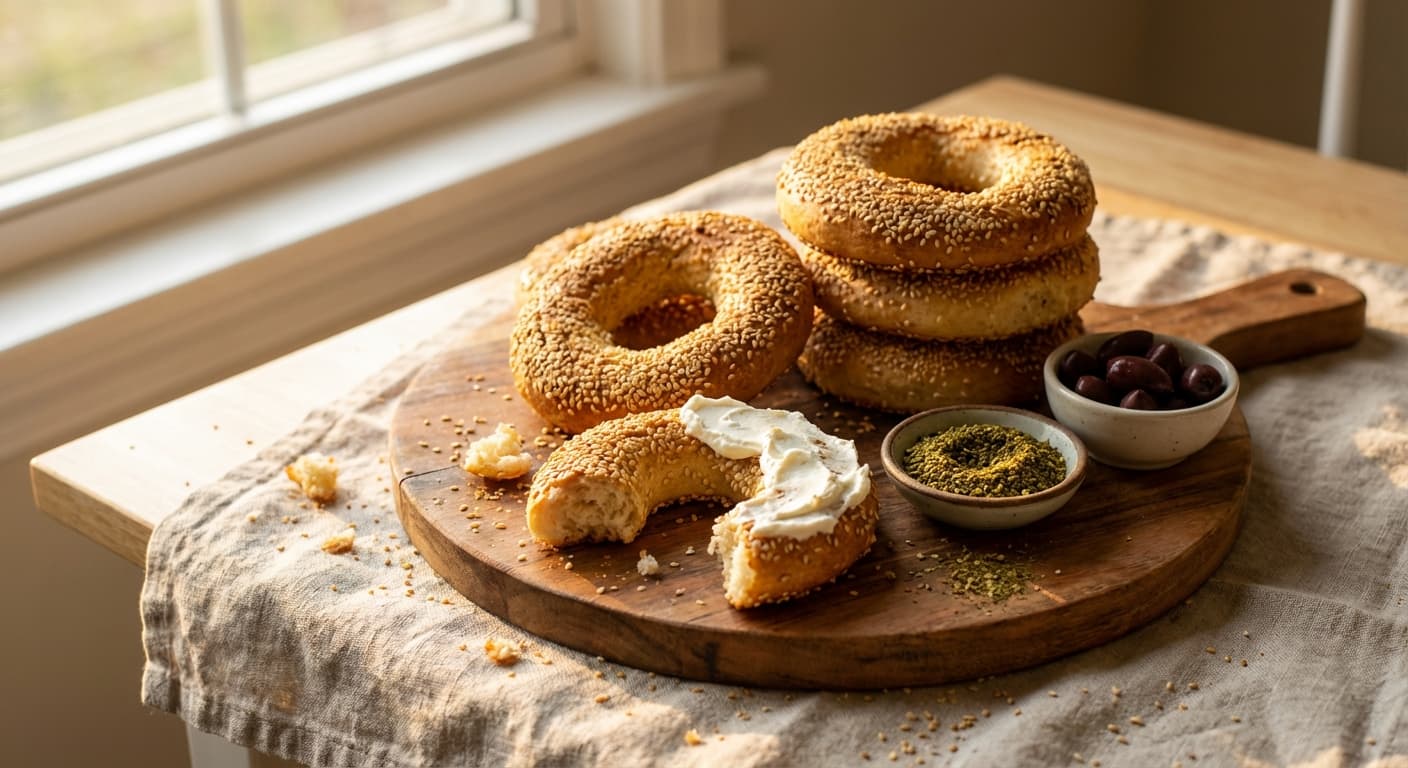
Kaak (كعك) — Lebanese Sesame Bread Rings with a Crisp Crust
Lebanese · Breads · 43 min
Romanian Cheese Doughnuts (Papanași) — Fried Curd-Cheese Rings with Sour Cream and Jam
Romanian · Desserts · 45 min
Sklandrausis (Sklandrausis) — Latvian Rye Carrot-Potato Tart
Latvian · Desserts · 100 min
Mıhlama (Mıhlama) — Black Sea Cornmeal and Cheese Skillet
Turkish · Main Courses · 25 min
Ash-e Sak (آش ساک) — Gorgani Spinach and Lamb Ash
Persian · Soups · 175 min
Chicken and Andouille Gumbo (English) — Louisiana Roux Stew
American · Stews · 120 min
Reviews
Cooked this recipe?
Tap the stars to rate it — that's all it takes. A few words are welcome but optional.
No ratings yet. Cooked this one? Be the first to rate it — it takes one tap.