Amritsari Kulcha (अमृतसरी कुलचा) — Tandoor-Baked Stuffed Leavened Bread
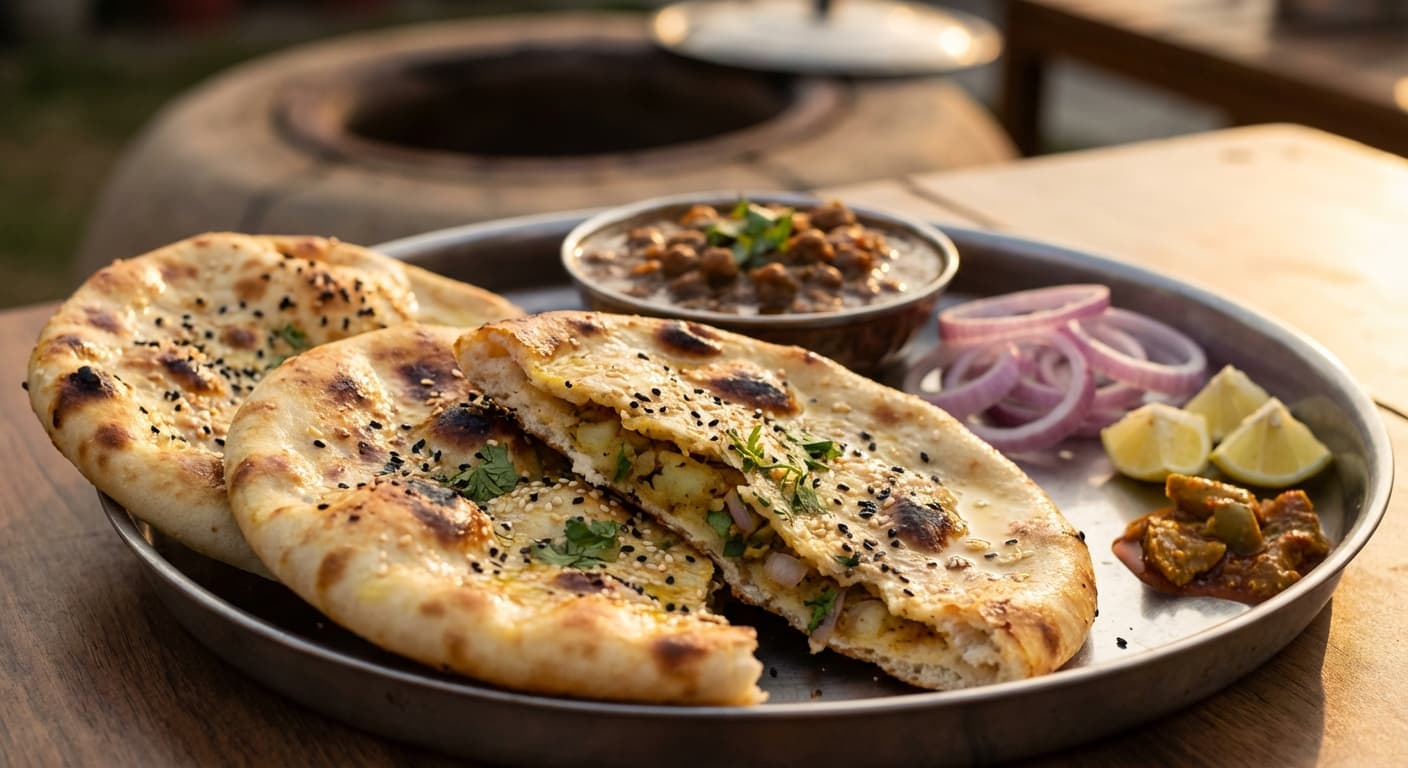
Amritsari Kulcha is a beloved Punjabi street-food bread from Amritsar, traditionally leavened, stuffed with spiced potatoes, and baked in a blazing tandoor. It’s finished with butter and served with chole and tangy pickles.
Printable Recipe Card
Servings: 6 · Total: 65 min · Difficulty: medium
Ingredients (quick list)
- 360 g all-purpose flour
- 40 g fine semolina (sooji) (Adds bite and helps mimic tandoor texture)
- 120 g plain yogurt
- 140 ml warm water (About 40°C)
- 4 g instant yeast
- 8 g granulated sugar
- 8 g fine salt
- 4 g baking powder (Supports puff and tenderness)
- 20 ml neutral oil
- 10 g ghee (For a richer crumb)
- 450 g potatoes, boiled and peeled (Weight after boiling and peeling)
- 70 g red onion, finely chopped
+ 15 more in the full ingredients section below.
Steps (summary)
- Make the dough base by mixing the warm water, sugar, and instant yeast in a bowl until fully dissolved. Rest it for 5 minutes;…
- In a large bowl, whisk the all-purpose flour, semolina, salt, and baking powder until evenly combined. Add the yogurt, oil, ghe…
- Knead the dough for 8 minutes until smooth and elastic, adding up to 10 ml additional water only if it feels dry. The dough sho…
- Lightly oil the bowl, place the dough inside, and cover it. Let it rise for 60 minutes at warm room temperature until roughly d…
- Prepare the stuffing while the dough rises by mashing the boiled potatoes until mostly smooth with a few small chunks. Mix in o…
- Divide the stuffing into 6 equal portions, about 90 g each, and roll them into tight balls to make stuffing easier. Cover the p…
+ 7 more steps in the full instructions section below.
Cultural Background
Kulcha is a hallmark of Amritsar’s dhabas and street stalls, where breads are slapped onto tandoor walls and served with chole for a filling meal. The potato-anardana stuffing reflects Punjab’s love of bold, tangy flavors balanced with butter and heat.
Equipment
💡 Tips
- For the most authentic Amritsari tang, keep anardana at 6 g and crush it coarsely so you get little bursts of sourness.
- Aim for a dough temperature that feels warm but not hot; around 26–28°C during proofing gives better flavor and stretch.
- If you see stuffing leaking while rolling, pinch the seam again and rest the dough 2 minutes before continuing.
⚠️ Common Mistakes
❌ Over-flouring while rolling, leading to dry, tough kulcha.
✅ Fix: Dust lightly and rely on short rests; keep the dough slightly tacky for better blistering.
❌ Stuffing leaks and burns on the hot surface.
✅ Fix: Seal the pleats firmly, keep stuffing balls compact, and avoid rolling thinner than 6 mm.
❌ Pale bread with no blisters.
✅ Fix: Preheat the skillet/steel for a full 20 minutes and bake closer to the broiler on high heat.
🧊 How to Store
Cool completely, then store kulchas airtight at room temp for 12 hours or refrigerate up to 3 days. Reheat on a hot skillet 60–90 seconds per side, then brush with 2 g ghee per kulcha; avoid microwaving more than 20 seconds to prevent chewiness.
📅 Make Ahead
Make the stuffing up to 24 hours ahead and refrigerate it covered, then portion before shaping. The dough can be mixed and refrigerated after 30 minutes of room proofing for up to 18 hours; bring to room temp 45 minutes before stuffing.
🍽️ Pairs Well With
- Amritsari chole
- sliced onion with lemon
- mango pickle
- mint-coriander chutney
- masala chai.
Regional Variations
- Paneer kulcha: replace 150 g of potato with 150 g crumbled paneer and add 1 g extra garam masala.
- Onion kulcha: reduce potato to 350 g and increase onion to 140 g for a sharper, sweeter filling.
- Herbed kulcha: add 1 tsp (2 g) dried fenugreek leaves (kasuri methi) to the stuffing for a dhaba-style aroma.
Ingredients
- 360 gall-purpose flour
- 40 gfine semolina (sooji) (Adds bite and helps mimic tandoor texture)
- 120 gplain yogurt
- 140 mlwarm water (About 40°C)
- 4 ginstant yeast
- 8 ggranulated sugar
- 8 gfine salt
- 4 gbaking powder (Supports puff and tenderness)
- 20 mlneutral oil
- 10 gghee (For a richer crumb)
- 450 gpotatoes, boiled and peeled (Weight after boiling and peeling)
- 70 gred onion, finely chopped
- 20 gfresh cilantro, finely chopped
- 10 ggreen chili, finely chopped
- 8 gginger, finely grated
- 6 gpomegranate seeds (anardana), lightly crushed (Classic Amritsari tang)
- 4 gcoriander seeds, lightly crushed
- 3 gcumin seeds
- 2 gKashmiri red chili powder
- 2 ggaram masala
- 3 gamchur (dried mango powder)
- 2 gnigella seeds (kalonji)
- 2 gtoasted cumin seeds
- 6 gsesame seeds
- 10 gfresh cilantro, chopped
- 60 mlwater (For wetting the top so seeds adhere)
- 30 gghee, melted (Brush after baking)
🔄 Substitutions
- pomegranate seeds (anardana)→ amchur (dried mango powder) 2 g extra
- instant yeast→ active dry yeast 5 g
- fine semolina (sooji)→ all-purpose flour 40 g
Instructions
- 1
Make the dough base by mixing the warm water, sugar, and instant yeast in a bowl until fully dissolved. Rest it for 5 minutes; it should look slightly foamy, which confirms the yeast is active.
- 2
In a large bowl, whisk the all-purpose flour, semolina, salt, and baking powder until evenly combined. Add the yogurt, oil, ghee, and the yeast mixture, then mix until a shaggy dough forms with no dry flour pockets.
- 3
Knead the dough for 8 minutes until smooth and elastic, adding up to 10 ml additional water only if it feels dry. The dough should be soft and slightly tacky but not wet, which helps it stick and blister like tandoor bread.
- 4
Lightly oil the bowl, place the dough inside, and cover it. Let it rise for 60 minutes at warm room temperature until roughly doubled, because proper fermentation is what gives kulcha its distinctive chew and aroma.
- 5
Prepare the stuffing while the dough rises by mashing the boiled potatoes until mostly smooth with a few small chunks. Mix in onion, cilantro, green chili, ginger, crushed anardana, crushed coriander, cumin seeds, chili powder, garam masala, amchur, and salt until evenly distributed.
- 6
Divide the stuffing into 6 equal portions, about 90 g each, and roll them into tight balls to make stuffing easier. Cover the portions so they do not dry out, since dry stuffing can tear the dough during rolling.
- 7
Punch down the risen dough and divide it into 6 equal pieces, about 95 g each, then shape each into a smooth ball. Cover the dough balls and rest for 10 minutes to relax gluten, which prevents spring-back when you roll.
- 8
Preheat the oven to 275°C for at least 20 minutes with a heavy cast-iron skillet or pizza steel on the top rack, placing it 10–12 cm from the broiler element. This setup imitates a tandoor wall and intense top heat, which is essential for blistering and fast baking.
- 9
Stuff one kulcha by dusting a dough ball with 3 g flour and rolling it into a 10 cm disc. Place one stuffing ball in the center, pleat the edges up to seal tightly, then gently flatten the sealed ball with your palm.
- 10
Roll the stuffed dough into an oval about 18 cm long and 6–7 mm thick, dusting with minimal flour to avoid dryness. If the dough resists, rest it 2 minutes and continue, because forcing it can cause leaks.
- 11
Wet the top surface with about 10 ml water, then press on a mix of nigella, toasted cumin, sesame, and chopped cilantro so it adheres. Flip the kulcha and lightly wet the plain side with another 5 ml water, which helps it cling to the hot surface like a tandoor bake.
- 12
Carefully place the kulcha, plain wet side down, onto the preheated skillet/steel and immediately switch to broil on high. Broil for 2 to 3 minutes until deep brown blisters appear, then bake 1 minute more to set the center, watching closely to prevent burning.
- 13
Remove the kulcha and brush with 5 g melted ghee while hot so it absorbs and shines. Repeat shaping and baking for the remaining kulchas, keeping finished breads wrapped in a clean towel to stay soft.
🪪 Recipe Passport
Cultural Background
Kulcha is a hallmark of Amritsar’s dhabas and street stalls, where breads are slapped onto tandoor walls and served with chole for a filling meal. The potato-anardana stuffing reflects Punjab’s love of bold, tangy flavors balanced with butter and heat.
Regional Variations
Researched from multiple sources and validated by the Zaffaron editorial team. Every recipe is tested for accuracy, measurements, and cultural authenticity.
Nutrition per serving
Pairs well with
If you enjoyed this recipe, here are a few related Zaffaron recipes to try next.
- Kachori (कचौरी) — Flaky fried pastry stuffed with spiced moong dal
- Baingan Bharta (बैंगन का भरता) — Indian Smoky Roasted Eggplant Mash
- Chingri Malai Curry (চিংড়ি মালাই কারি) — Indian Prawns in Coconut Milk with Gentle Spices
- Gulab Jamun (गुलाब जामुन) — Indian Rose-Scented Milk Dumplings in Cardamom Syrup
Does your family make this differently?
Every family has their own version. Maybe your grandmother adds a secret ingredient, or your aunt has a completely different technique. Preserve your family's version — with their name on it, forever.
You Might Also Like
Gatte ki Sabzi (गट्टे की सब्ज़ी) — Indian Gram Flour Dumplings in Yogurt-Spice Gravy
Indian · Stews · 60 min
Thepla (थेपला) — Indian Fenugreek-Spiced Flatbread, Soft and Travel-Friendly
Indian · Breads · 45 min
Undhiyu (ઉંધિયું) — Gujarati winter mixed-vegetable curry with methi muthia
Indian · Main Courses · 115 min
Icelandic Rye Bread (Rúgbrauð) — Dense Geothermal-Style Rye Loaf
Icelandic · Breads · 440 min
Zhingyalov Hats (Ժենգյալով հաց) — Artsakh Herb-Stuffed Flatbread
Armenian · Breads · 73 min
Ash-e Sak (آش ساک) — Golestani Spinach, Legume, and Meatball Soup
Persian · Soups · 175 min
Seekh Kebab (کباب سیخی) — Afghan Grilled Minced Meat Skewers with Cumin
Afghan · Kebabs · 37 min
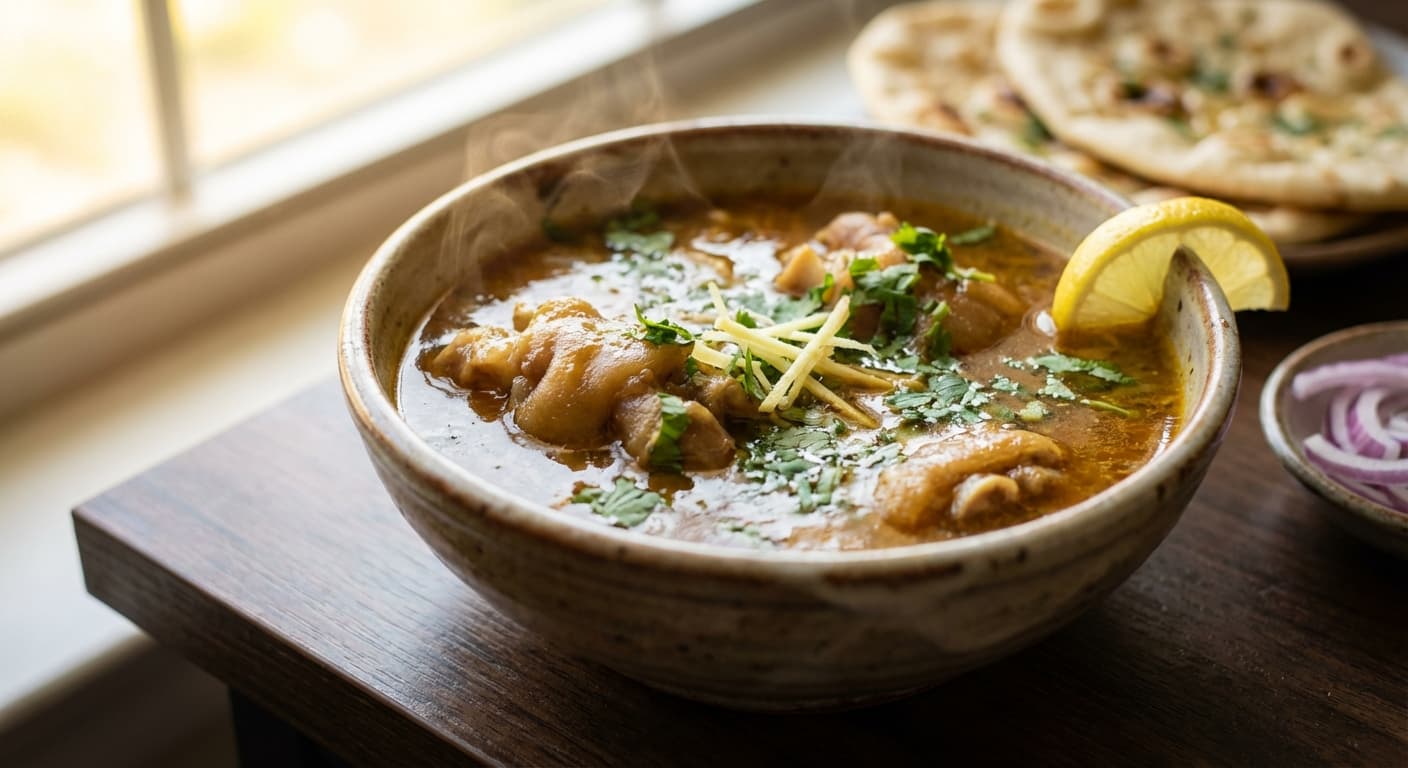
Paya Soup (پایا) — Indian Trotter Broth with Ginger and Garam Masala
Indian · Soups · 235 min
Reviews
Cooked this recipe?
Tap the stars to rate it — that's all it takes. A few words are welcome but optional.
No ratings yet. Cooked this one? Be the first to rate it — it takes one tap.