Khorak-e Hoboobat (خوراک حبوبات) — Persian Seven-Grain & Legume Stew
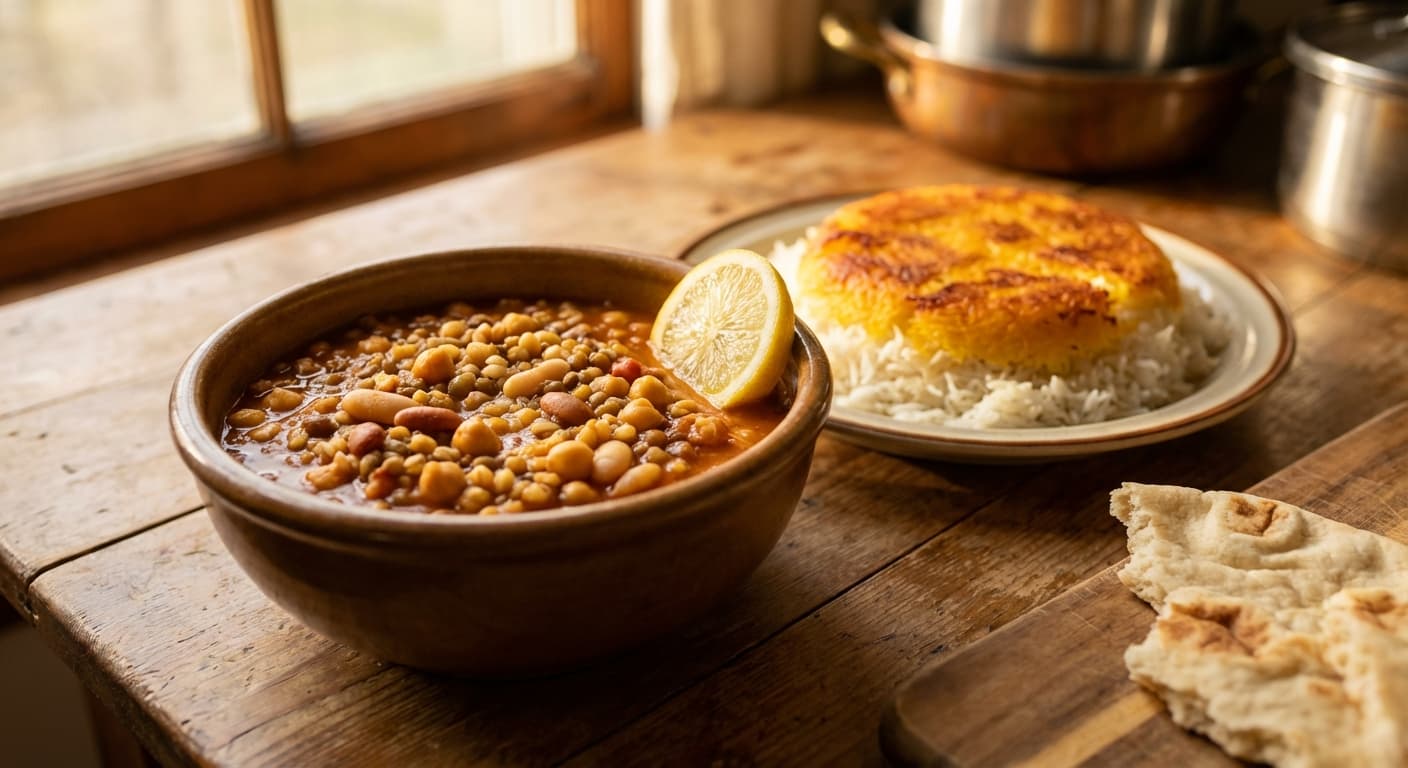
A hearty Persian stew of seven grains and legumes simmered until velvety, flavored with turmeric, tomatoes, and olive oil. Nourishing and restorative, it’s finished bright with lemon and served hot with bread.
Printable Recipe Card
Servings: 6 · Total: 930 min · Difficulty: medium
Ingredients (quick list)
- 90 g Dried chickpeas (soaked 10–12 hours, drained)
- 90 g Dried white beans (soaked 10–12 hours, drained)
- 90 g Dried pinto beans (soaked 10–12 hours, drained)
- 70 g Dried brown lentils (rinsed well)
- 70 g Pearled barley (rinsed well)
- 70 g Wheat berries (rinsed well; soak 2 hours if possible for faster cooking)
- 60 g Basmati rice (rinsed until water runs mostly clear)
- 250 g Yellow onion (finely diced)
- 30 ml Olive oil (plus more to drizzle at serving if desired)
- 2 tsp Ground turmeric
- 2 tsp Fine sea salt (add in stages; adjust to taste)
- 1 tsp Ground black pepper
+ 4 more in the full ingredients section below.
Steps (summary)
- Soak chickpeas, white beans, and pinto beans in plenty of cold water for 10–12 hours at room temperature (or refrigerated if wa…
- In a heavy pot over medium heat, warm olive oil for 1 minute. Add diced onion and cook 10–12 minutes, stirring often, until sof…
- Stir in tomato paste and cook 2 minutes, stirring constantly, until it darkens slightly and smells sweet. Add crushed tomatoes…
- Add drained chickpeas, white beans, and pinto beans, then pour in 2000 ml hot water. Bring to a boil over high heat (about 8–10…
- Add wheat berries, pearled barley, and lentils. Return to a gentle simmer and cook 45 minutes, partially covered, stirring ever…
- Stir in rinsed basmati rice and 1 1/2 tsp of the salt. Simmer 25–35 minutes, stirring more frequently (every 5–8 minutes) as st…
+ 1 more steps in the full instructions section below.
Cultural Background
Legume-and-grain stews are widely cooked in Iranian home kitchens, especially in cooler months when filling, restorative meals are valued. Versions of this dish are often associated with family cooking and practical nourishment, using pantry staples simmered slowly to develop depth and a comforting texture.
Equipment
💡 Tips
- Use a heavy-bottomed pot and stir frequently after adding rice; the starch can scorch if left unattended.
- Hot water maintains an even simmer; cold water can toughen bean skins and slow cooking.
- If beans are older and cooking slowly, extend the first simmer by 20–40 minutes before adding wheat and barley.
- For a silkier texture, mash 1–2 ladles of the stew near the end instead of adding flour or thickeners.
- Add lemon juice only at the end; early acidity can slow softening in some legumes.
⚠️ Common Mistakes
❌ Adding lemon juice (or other acids) early in cooking
💡 Why: Acid can slow the softening of some legumes and keep skins firm.
✅ Fix: Finish with lemon juice after the grains and beans are fully tender; brighten at the table with extra lemon wedges.
❌ Letting the stew boil hard after grains are added
💡 Why: A rolling boil can split bean skins and make grains cook unevenly while increasing sticking.
✅ Fix: Maintain a gentle simmer and stir regularly; lower heat as soon as bubbles become vigorous.
❌ Not stirring once rice is added
💡 Why: Rice starch settles and can scorch on the bottom, creating a burnt taste.
✅ Fix: Stir every 5–8 minutes after adding rice and use a heavy pot; add small splashes of hot water if it thickens too quickly.
❌ Using insufficient water for the long simmer
💡 Why: Grains keep absorbing liquid and can turn the stew into a paste before fully tender.
✅ Fix: Keep hot water nearby and add 125–250 ml as needed to maintain a spoonable consistency.
🧊 How to Store
Cool completely, then refrigerate in an airtight container for up to 4 days. The stew thickens as it sits; reheat gently with 125–250 ml water, stirring often. Freeze up to 3 months; thaw overnight in the refrigerator before reheating.
📅 Make Ahead
Soak beans up to 24 hours ahead (refrigerated). The stew can be cooked 1–2 days in advance; flavors deepen as it rests. Reheat gently with added water to loosen, stirring frequently.
🍽️ Pairs Well With
- Warm flatbread or crusty bread
- Fresh herbs and radishes
- Pickled vegetables
- Plain yogurt (optional
- if not dairy-free)
Regional Variations
- Northern Iran (Caspian-influenced)Often finished with more sourness (extra lemon or verjuice) and served alongside fresh herbs and pickles; the stew may be looser and more brothy.
- Central IranCommonly cooked thicker and more porridge-like, with extra mashing of beans and grains for a velvety texture suited to eating with bread.
- Western IranSome households increase turmeric and black pepper for a deeper, warmer profile and may add additional legumes depending on pantry availability.
Ingredients
- 90 gDried chickpeas (soaked 10–12 hours, drained)
- 90 gDried white beans (soaked 10–12 hours, drained)
- 90 gDried pinto beans (soaked 10–12 hours, drained)
- 70 gDried brown lentils (rinsed well)
- 70 gPearled barley (rinsed well)
- 70 gWheat berries (rinsed well; soak 2 hours if possible for faster cooking)
- 60 gBasmati rice (rinsed until water runs mostly clear)
- 250 gYellow onion (finely diced)
- 30 mlOlive oil (plus more to drizzle at serving if desired)
- 2 tspGround turmeric
- 2 tspFine sea salt (add in stages; adjust to taste)
- 1 tspGround black pepper
- 400 gCanned crushed tomatoes
- 30 gTomato paste
- 2000 mlWater (hot, plus extra as needed to maintain a stew consistency)
- 30 mlLemon juice (freshly squeezed, to finish)
🔄 Substitutions
- Wheat berries→ Cracked wheat (bulgur), 60 g
- Basmati rice→ Short-grain rice, 60 g
- Olive oil→ Neutral vegetable oil, 30 ml
Instructions
- 1
Soak chickpeas, white beans, and pinto beans in plenty of cold water for 10–12 hours at room temperature (or refrigerated if warm). Drain and rinse. Rinse lentils, barley, wheat berries, and rice separately. If time allows, soak wheat berries in water for 2 hours, then drain to shorten simmering.
- 2
In a heavy pot over medium heat, warm olive oil for 1 minute. Add diced onion and cook 10–12 minutes, stirring often, until soft and lightly golden. Add turmeric and black pepper and cook 30 seconds to bloom the spices without scorching, scraping the pot bottom to keep the fond from darkening.
- 3
Stir in tomato paste and cook 2 minutes, stirring constantly, until it darkens slightly and smells sweet. Add crushed tomatoes and cook 5 minutes at a steady simmer to reduce raw acidity. This step builds the stew’s deep color and helps the tomato base cling to the grains and beans.
- 4
Add drained chickpeas, white beans, and pinto beans, then pour in 2000 ml hot water. Bring to a boil over high heat (about 8–10 minutes), skim any foam, then reduce to low. Cover with the lid slightly ajar and simmer 60 minutes, stirring every 15 minutes so beans don’t settle and stick.
- 5
Add wheat berries, pearled barley, and lentils. Return to a gentle simmer and cook 45 minutes, partially covered, stirring every 10–15 minutes. If the stew thickens too quickly, add 125–250 ml hot water at a time. Keep the heat low; a slow bubble prevents split skins and preserves a creamy texture.
- 6
Stir in rinsed basmati rice and 1 1/2 tsp of the salt. Simmer 25–35 minutes, stirring more frequently (every 5–8 minutes) as starch increases, until rice is tender and the stew is velvety. Mash a ladleful of beans against the pot side to thicken naturally, then taste and add remaining salt.
- 7
Turn off the heat and rest the stew, covered, for 10 minutes to finish hydrating the grains. Stir in lemon juice for brightness. Adjust consistency with hot water if needed; it should be spoonable but not soupy. Serve hot with an optional drizzle of olive oil and extra lemon wedges on the side.
🪪 Recipe Passport
Cultural Background
Legume-and-grain stews are widely cooked in Iranian home kitchens, especially in cooler months when filling, restorative meals are valued. Versions of this dish are often associated with family cooking and practical nourishment, using pantry staples simmered slowly to develop depth and a comforting texture.
Regional Variations
Researched from multiple sources and validated by the Zaffaron editorial team. Every recipe is tested for accuracy, measurements, and cultural authenticity.
Nutrition per serving
Pairs well with
If you enjoyed this recipe, here are a few related Zaffaron recipes to try next.
Does your family make this differently?
Every family has their own version. Maybe your grandmother adds a secret ingredient, or your aunt has a completely different technique. Preserve your family's version — with their name on it, forever.
You Might Also Like
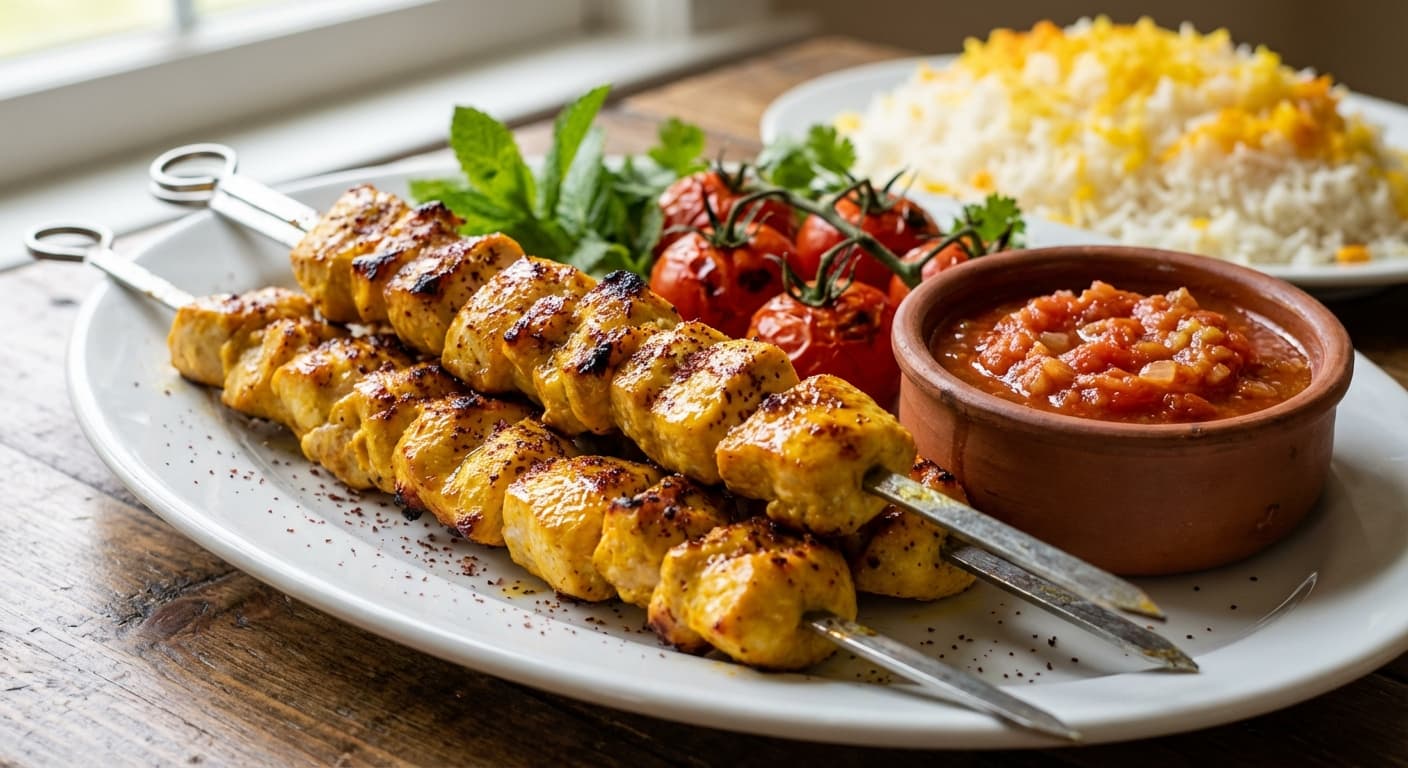
Jujeh Kabab (جوجه کباب) — Saffron-Turmeric Chicken with Rustic Tomato Sauce
Persian · Kebabs · 45 min
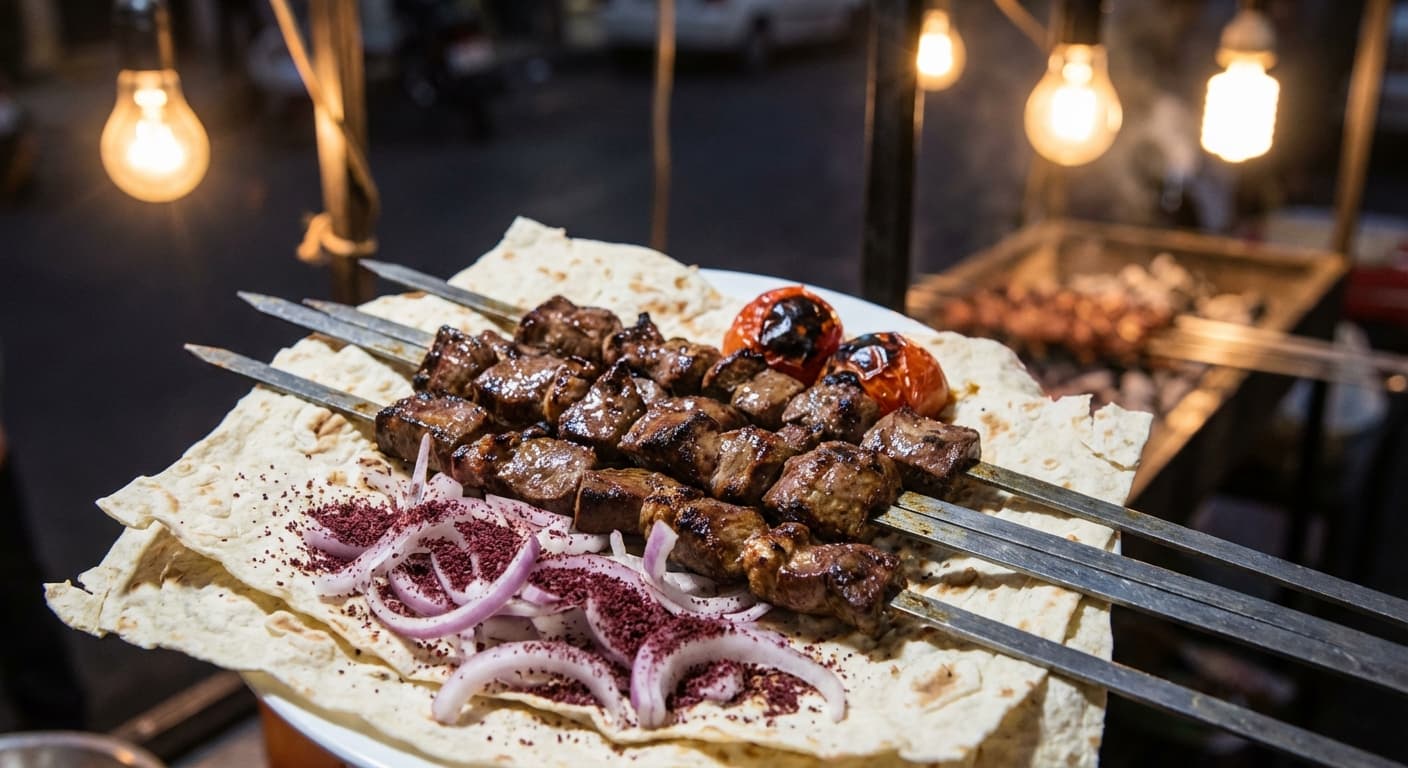
Jigar Kabab (جگر کباب) — Classic Persian Lamb Liver Skewers
Persian · Kebabs · 33 min
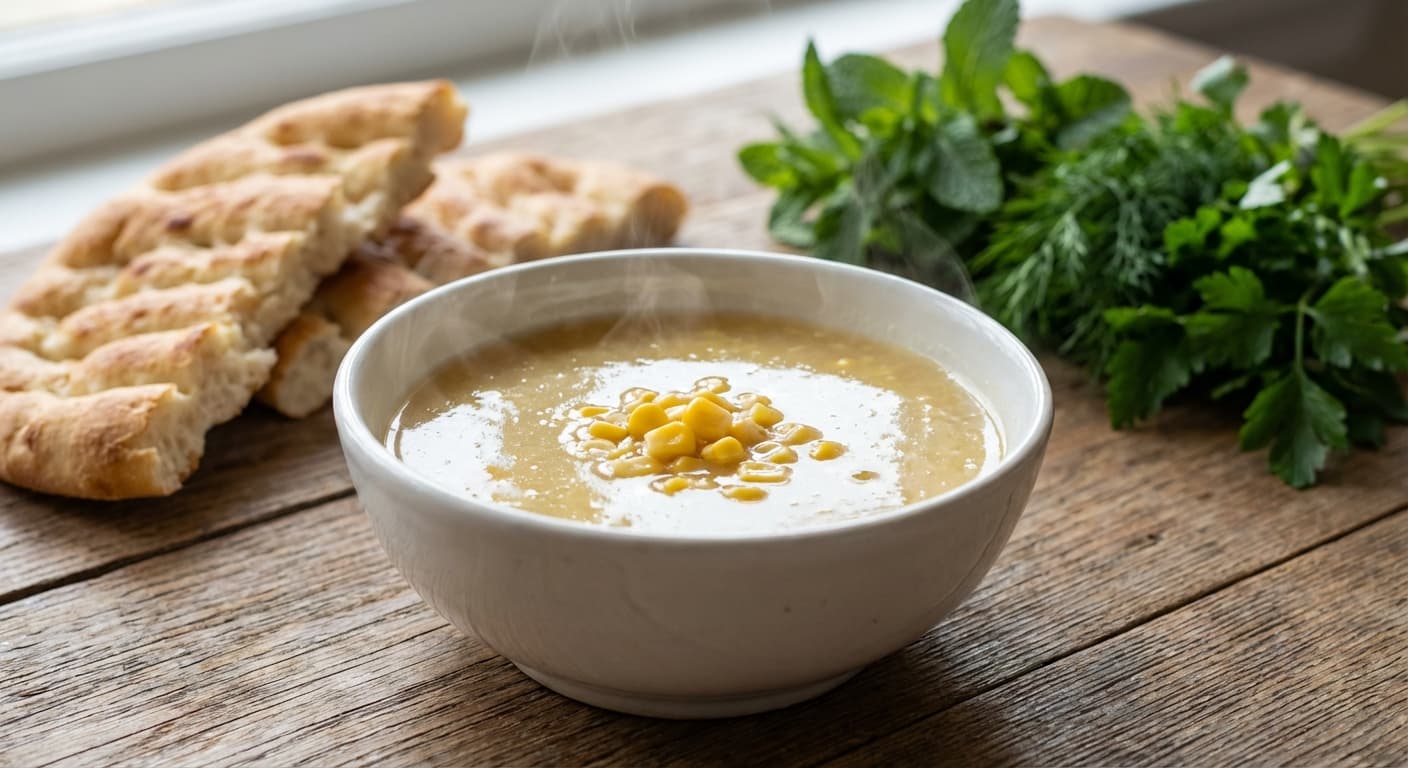
Persian Sweet Corn Soup (سوپ ذرت) — Silky Golden Comfort Soup
Persian · Soups · 50 min
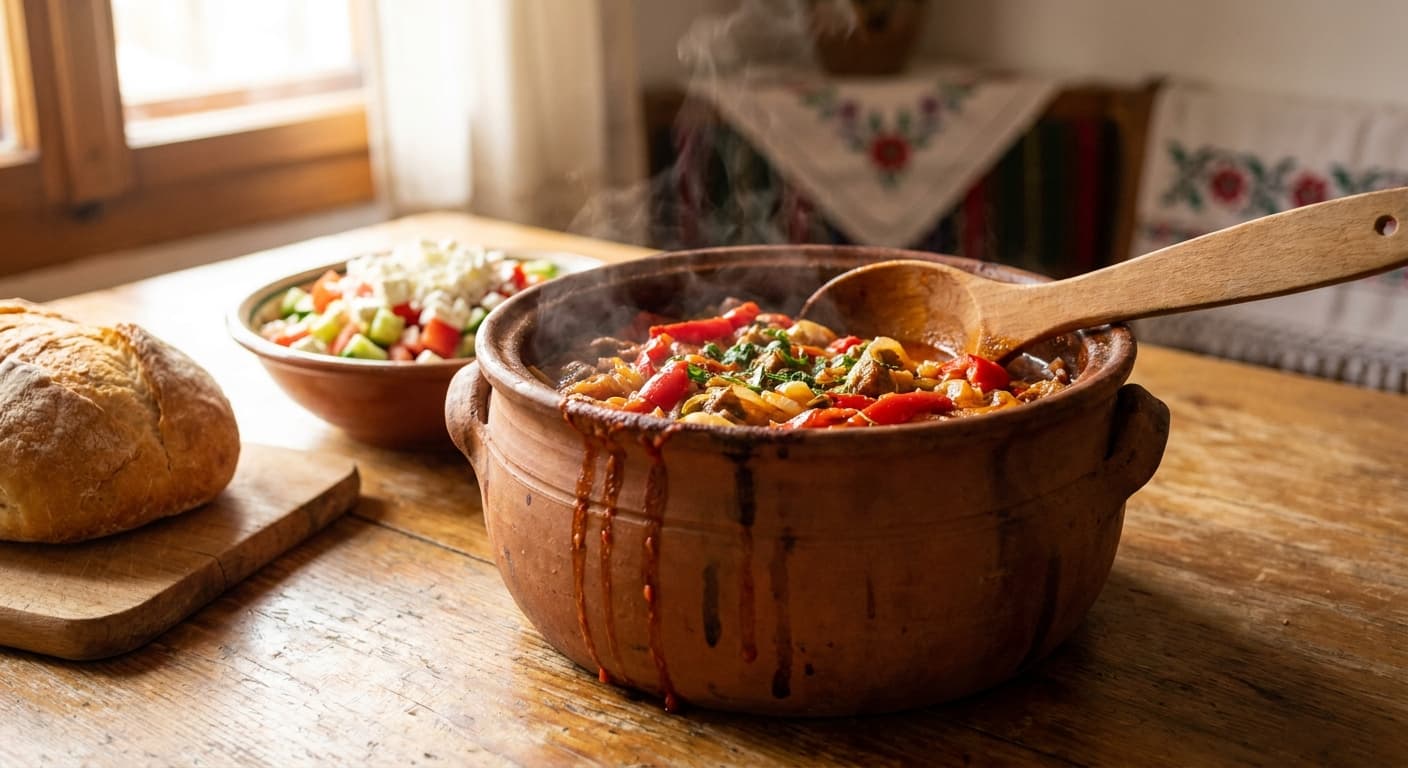
Bulgarian Pork Kavarma (Каварма) — Clay-Pot Pepper and Pork Stew
Bulgarian · Stews · 115 min
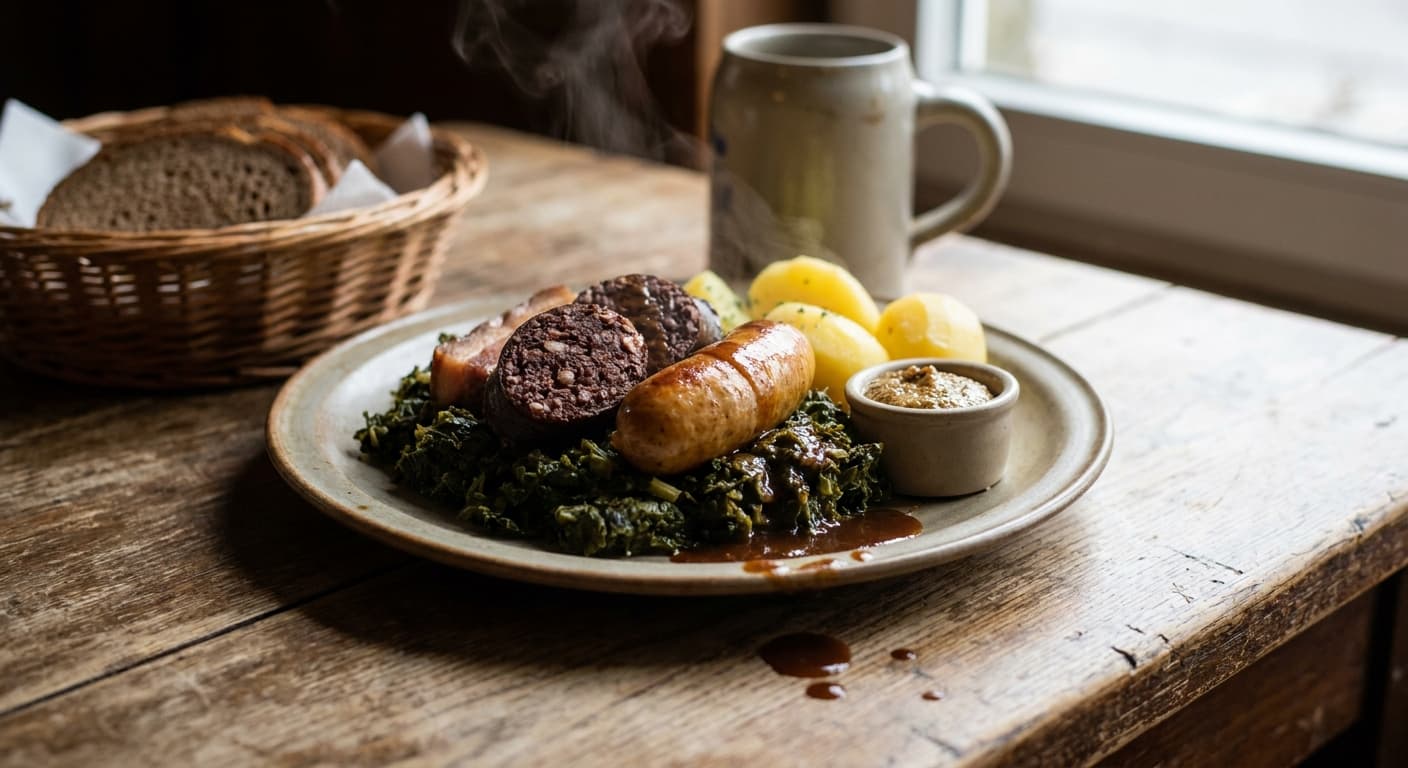
Kale with Pinkel Sausage (Grünkohl mit Pinkel) — North German Winter Stew
German · Stews · 130 min
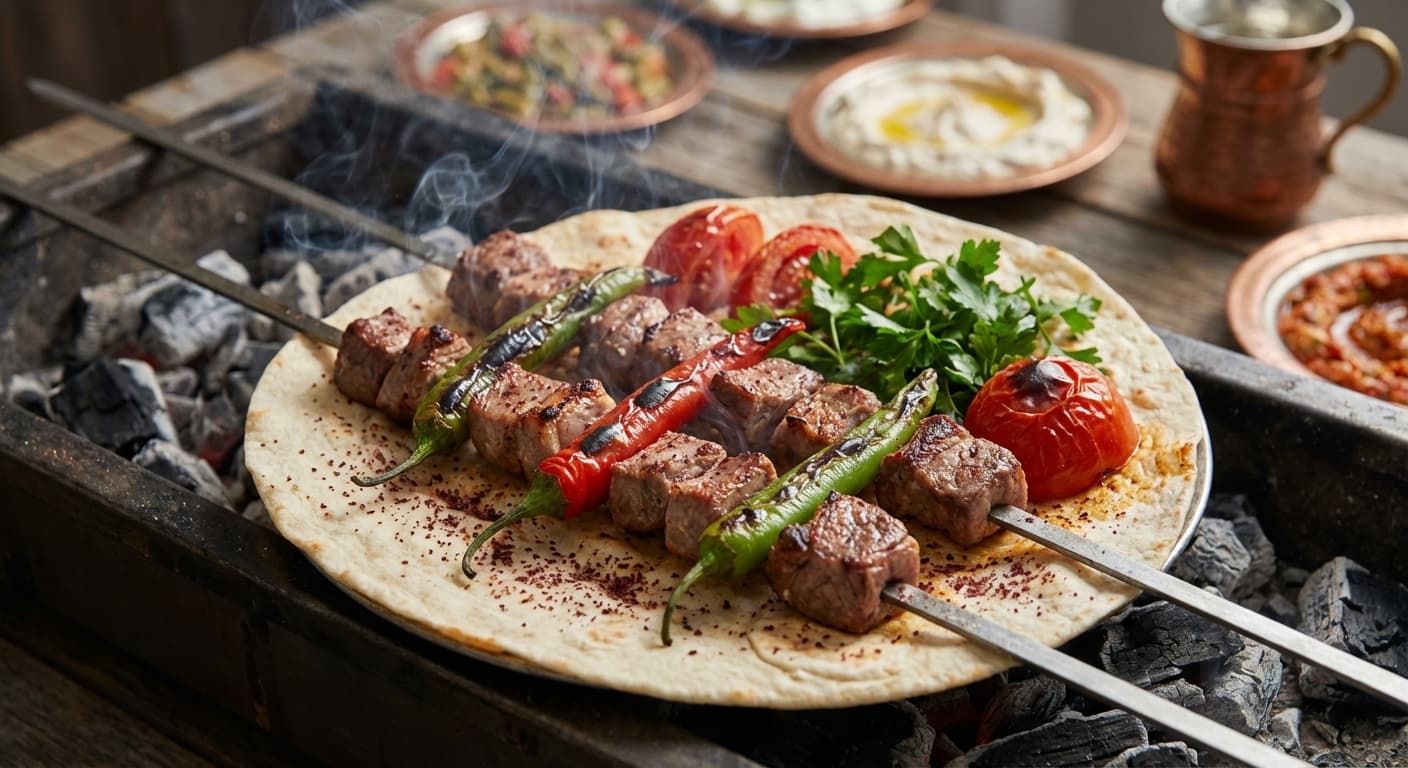
Turkish Shish Kebab (Şiş Kebap) — Charcoal-Grilled Marinated Lamb Skewers
Turkish · Kebabs · 37 min
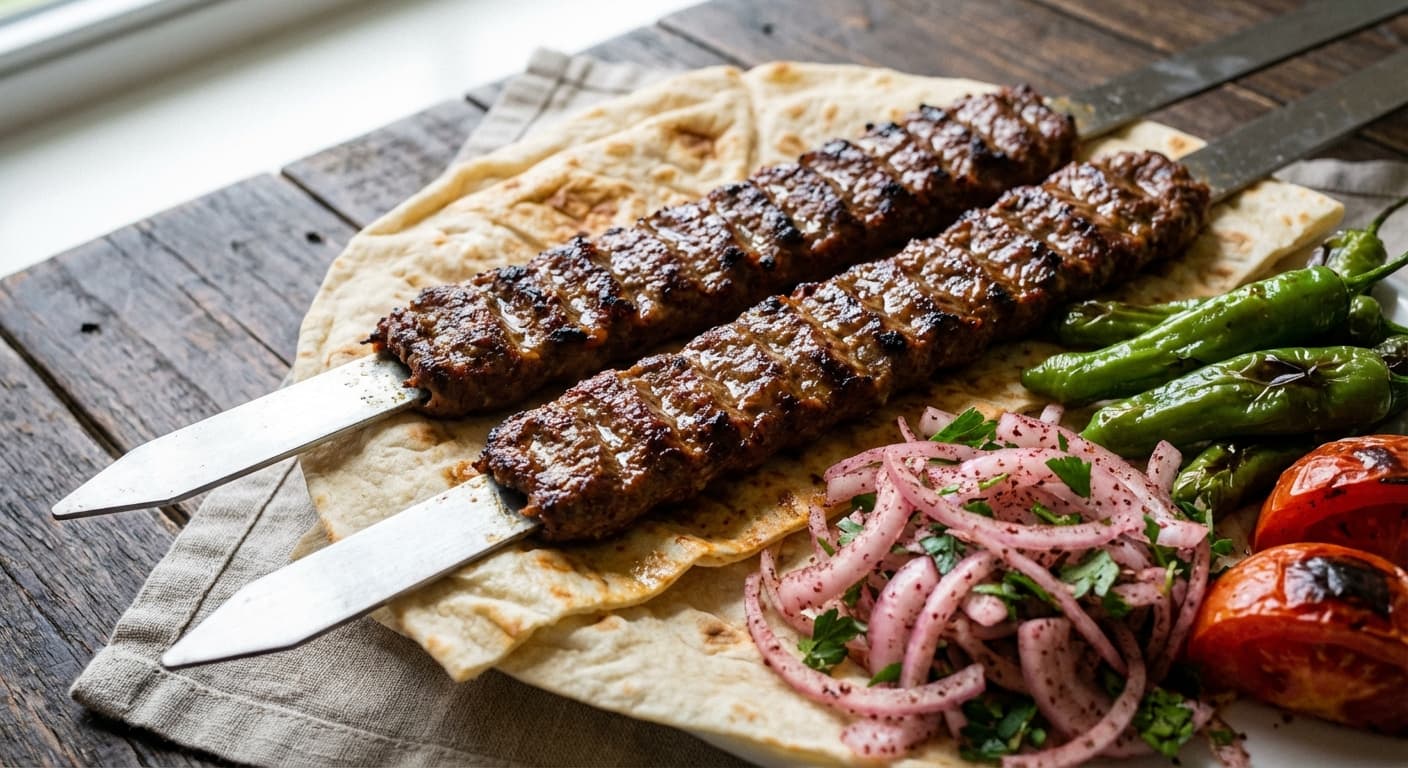
Urfa Kebab (اورفا کباب) — Mild Turkish minced skewer with sumac onions
Turkish · Kebabs · 37 min
Burmese Mohinga (မုန့်ဟင်းခါး) — Fish Noodle Soup with Lemongrass
Burmese · Soups · 110 min
Reviews
Cooked this recipe?
Tap the stars to rate it — that's all it takes. A few words are welcome but optional.
No ratings yet. Cooked this one? Be the first to rate it — it takes one tap.