Khorak-e Macaroni (خوراک ماکارونی) — Persian Baked Pasta
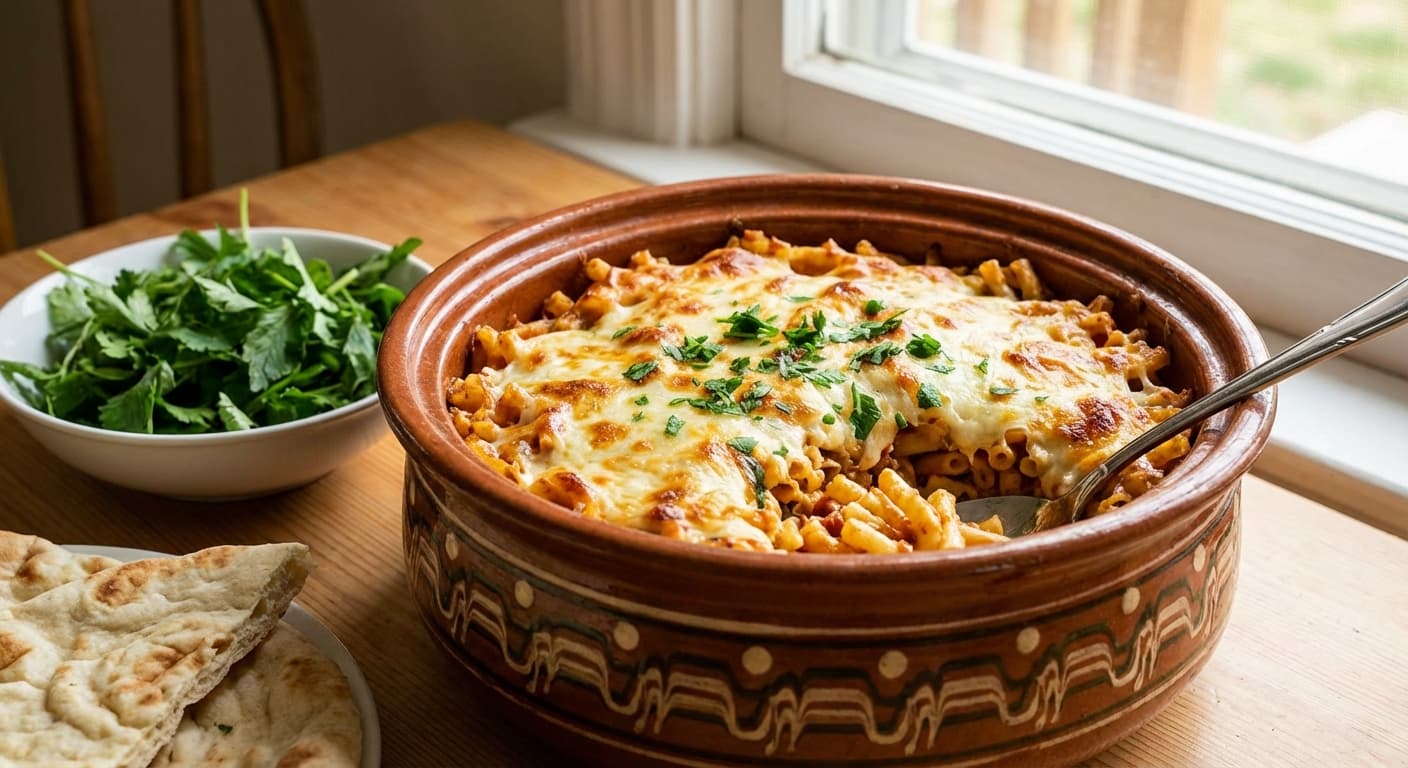
Khorak-e Macaroni is an Iranian comfort bake: pasta layered with a spiced meat sauce, then soaked with a creamy egg-and-milk custard and finished under heat until bubbly with a golden mozzarella crust.
Printable Recipe Card
Servings: 6 · Total: 80 min · Difficulty: medium
Ingredients (quick list)
- 4 L Water (for boiling pasta)
- 18 g Salt (12 g for pasta water, 6 g for sauce and custard)
- 400 g Dried spaghetti (broken into thirds)
- 45 ml Olive oil (divided)
- 200 g Yellow onion (finely diced)
- 350 g Ground beef (80–90% lean)
- 2 g Black pepper (freshly ground)
- 2 g Ground turmeric (for warmth and color)
- 45 g Tomato paste (about 3 tbsp)
- 400 g Canned crushed tomatoes (or tomato passata)
- 20 g Fresh parsley (finely chopped)
- 300 ml Milk (whole milk preferred)
+ 3 more in the full ingredients section below.
Steps (summary)
- Heat the oven to 190°C / 375°F with a rack in the middle. Bring 4 L water to a rolling boil in a large pot, then stir in 12 g s…
- Drain the pasta well and return it to the pot. Toss immediately with 15 ml olive oil to prevent sticking. Cover and set aside w…
- In a wide skillet over medium-high heat, warm 15 ml olive oil for 30 seconds. Add 200 g diced onion and cook 6–8 minutes, stirr…
- Stir in 2 g turmeric, 2 g black pepper, and the remaining 6 g salt. Add 45 g tomato paste and cook 2 minutes, stirring constant…
- Turn off the heat and stir in 20 g chopped parsley. Taste and adjust seasoning if needed. The sauce should be concentrated and…
- Whisk the custard in a bowl: combine 300 ml milk, 150 ml heavy cream, and 3 eggs until very smooth, about 45–60 seconds. This m…
+ 2 more steps in the full instructions section below.
Cultural Background
Baked macaroni is a widely loved home-style dish in Iran, often associated with weeknight family meals and school-lunch leftovers. It reflects how Persian kitchens adapted pantry pasta into familiar flavors using tomato, warming spices, and a baked finish for a hearty, shareable casserole.
Equipment
💡 Tips
- Undercook the pasta slightly; it finishes in the oven and stays pleasantly firm.
- Cook the tomato paste briefly until it darkens to remove raw acidity and deepen flavor.
- If using fresh mozzarella, blot it very dry and use less to avoid excess moisture on top.
- Resting after baking is essential for neat slices; cutting too soon can make it look soupy.
- For a crispier bottom, preheat the baking dish in the oven for 5 minutes, then carefully add the first layer.
⚠️ Common Mistakes
❌ Boiling the pasta until fully tender
💡 Why: The pasta continues cooking in the custard; fully cooked pasta can become mushy after baking.
✅ Fix: Cook 2 minutes less than package directions and drain well before mixing.
❌ Using a watery meat sauce
💡 Why: Excess liquid prevents the custard from setting cleanly and can make the bake soupy.
✅ Fix: Simmer the sauce until thick and glossy; if needed, cook 3–5 minutes longer before assembling.
❌ Skipping the resting time after baking
💡 Why: The custard needs time to set; cutting immediately causes the layers to slide and leak.
✅ Fix: Rest 10–15 minutes, then slice with a sharp knife and lift with a spatula.
❌ Over-broiling the cheese topping
💡 Why: Mozzarella can go from golden to rubbery and burnt quickly under direct heat.
✅ Fix: Broil only 1–2 minutes and watch continuously; stop as soon as browned spots appear.
🧊 How to Store
Cool to room temperature within 2 hours, then refrigerate covered for up to 4 days. Reheat covered at 175°C / 350°F for 20–25 minutes (add 1–2 tbsp water if dry), or microwave individual portions until hot throughout. Freeze tightly wrapped portions up to 2 months; thaw overnight in the fridge before reheating.
📅 Make Ahead
Prepare the meat sauce up to 2 days ahead and refrigerate. You can also assemble the full dish (without baking) up to 12 hours ahead; cover and refrigerate, then bake straight from cold by adding 8–10 minutes to the covered baking time before adding cheese.
🍽️ Pairs Well With
- Shirazi salad (cucumber
- tomato
- onion with lemon juice)
- Plain yogurt or cucumber yogurt
- Pickled vegetables
- Fresh herbs and radishes
Regional Variations
- Tehran-style home kitchensOften baked as a casserole with a generous cheese topping and a creamy egg mixture for a sliceable, lasagna-like texture.
- Northern Iran (Caspian-influenced households)May include extra fresh herbs and sometimes a slightly tangier tomato profile, served with abundant salad and pickles alongside.
- Iranian diaspora (international)Commonly made with readily available pasta shapes (penne or rigatoni) and oven-friendly cheeses, while keeping the familiar tomato-and-spice base.
Ingredients
- 4 lWater (for boiling pasta)
- 18 gSalt (12 g for pasta water, 6 g for sauce and custard)
- 400 gDried spaghetti (broken into thirds)
- 45 mlOlive oil (divided)
- 200 gYellow onion (finely diced)
- 350 gGround beef (80–90% lean)
- 2 gBlack pepper (freshly ground)
- 2 gGround turmeric (for warmth and color)
- 45 gTomato paste (about 3 tbsp)
- 400 gCanned crushed tomatoes (or tomato passata)
- 20 gFresh parsley (finely chopped)
- 300 mlMilk (whole milk preferred)
- 150 mlHeavy cream (for richness)
- 3 largeEggs (about 150 g without shells)
- 200 gMozzarella cheese (shredded, low-moisture melts best)
🔄 Substitutions
- Ground beef→ Ground lamb or ground turkey
- Heavy cream→ Evaporated milk (same volume)
- Mozzarella cheese→ Low-moisture provolone or mild cheddar
Instructions
- 1
Heat the oven to 190°C / 375°F with a rack in the middle. Bring 4 L water to a rolling boil in a large pot, then stir in 12 g salt. Add 400 g spaghetti (broken into thirds) and cook 2 minutes less than package directions, about 7–8 minutes, until just flexible and slightly underdone.
- 2
Drain the pasta well and return it to the pot. Toss immediately with 15 ml olive oil to prevent sticking. Cover and set aside while you make the sauce. This undercooking is important because the pasta will finish baking in custard; fully cooked pasta can turn soft and lose structure in the oven.
- 3
In a wide skillet over medium-high heat, warm 15 ml olive oil for 30 seconds. Add 200 g diced onion and cook 6–8 minutes, stirring often, until translucent with light golden edges. Add 350 g ground beef and cook 6–7 minutes, breaking it up, until no pink remains and moisture has mostly evaporated.
- 4
Stir in 2 g turmeric, 2 g black pepper, and the remaining 6 g salt. Add 45 g tomato paste and cook 2 minutes, stirring constantly, until it darkens slightly and smells roasted. Pour in 400 g crushed tomatoes plus 200 ml water, bring to a simmer, then reduce to medium-low and cook 10 minutes until thick.
- 5
Turn off the heat and stir in 20 g chopped parsley. Taste and adjust seasoning if needed. The sauce should be concentrated and not watery; it will loosen slightly when baked with the custard. If it looks thin, simmer 3–5 minutes longer. If too thick, add 30–60 ml water and stir smooth.
- 6
Whisk the custard in a bowl: combine 300 ml milk, 150 ml heavy cream, and 3 eggs until very smooth, about 45–60 seconds. This mixture should be pourable and evenly blended so it sets into a tender, creamy interior. Set aside at room temperature while you assemble to prevent uneven baking.
- 7
Grease a 23×33 cm (9×13 in) baking dish with the remaining 15 ml olive oil. Mix the pasta with the meat sauce in the pot until evenly coated. Spread half of the pasta mixture into the dish, press lightly, then pour over half the custard. Add the remaining pasta mixture and pour the rest of the custard evenly on top.
- 8
Cover tightly with foil and bake 25 minutes at 190°C / 375°F. Remove foil, scatter 200 g shredded mozzarella evenly, and bake uncovered 12–15 minutes until bubbling at the edges. For deeper browning, broil 1–2 minutes, watching constantly. Rest 10 minutes before slicing so the custard sets cleanly.
🪪 Recipe Passport
Cultural Background
Baked macaroni is a widely loved home-style dish in Iran, often associated with weeknight family meals and school-lunch leftovers. It reflects how Persian kitchens adapted pantry pasta into familiar flavors using tomato, warming spices, and a baked finish for a hearty, shareable casserole.
Regional Variations
Researched from multiple sources and validated by the Zaffaron editorial team. Every recipe is tested for accuracy, measurements, and cultural authenticity.
Nutrition per serving
Pairs well with
If you enjoyed this recipe, here are a few related Zaffaron recipes to try next.
Does your family make this differently?
Every family has their own version. Maybe your grandmother adds a secret ingredient, or your aunt has a completely different technique. Preserve your family's version — with their name on it, forever.
You Might Also Like
Pastay Paniri (پاستای پنیری) — Persian-Style Cheesy Pasta with Fresh Tomatoes
Persian · Main Courses · 27 min
Nokhod Polo (نخود پلو) — Saffron Chickpea Rice with Warm Spices
Persian · Rice Dishes · 80 min
Golden Turmeric Potato and Spinach Casserole (غراتان سیبزمینی و اسفناج) — Mediterranean-Inspired Layered Gratin
Persian · Main Courses · 70 min
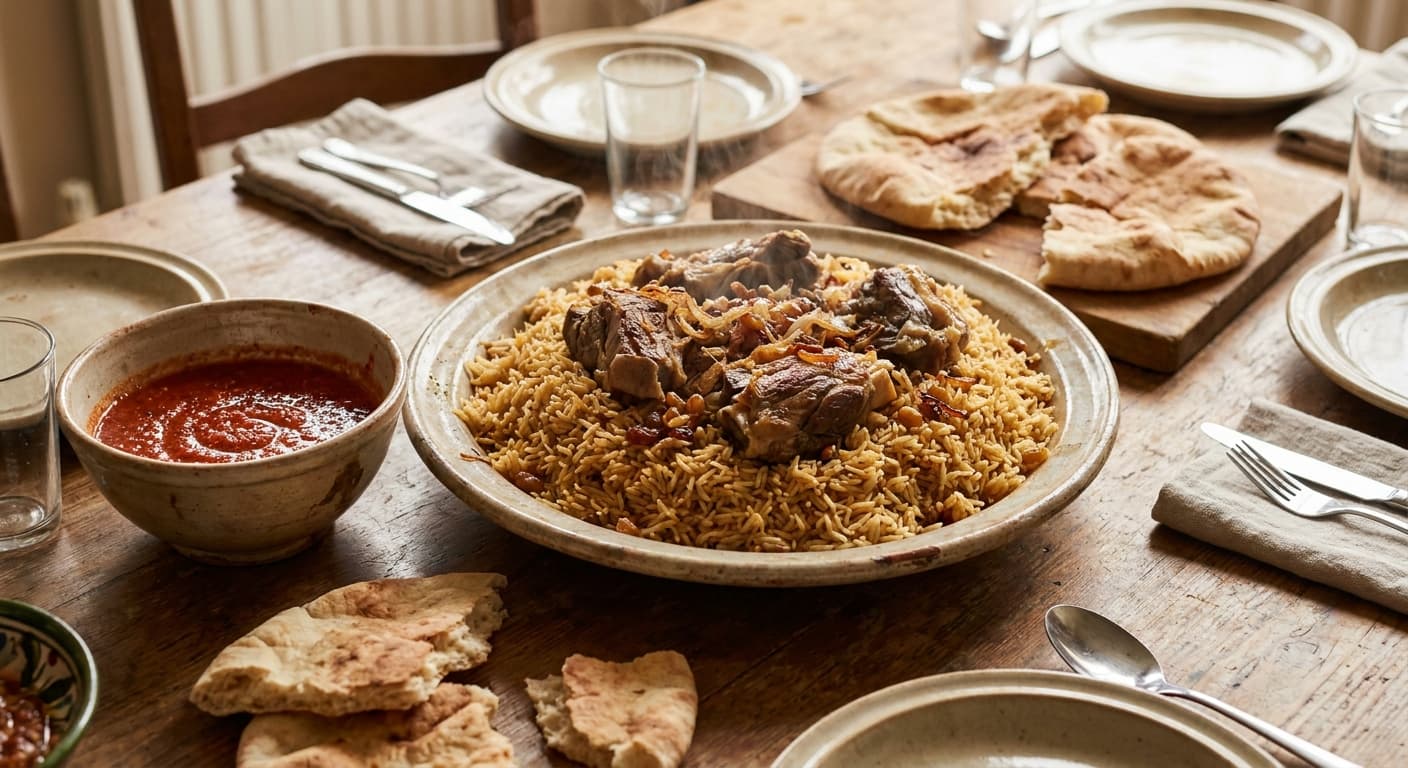
Yemeni Mandi (مندي) — Smoke-Scented Spiced Rice and Lamb
Yemeni · Main Courses · 170 min
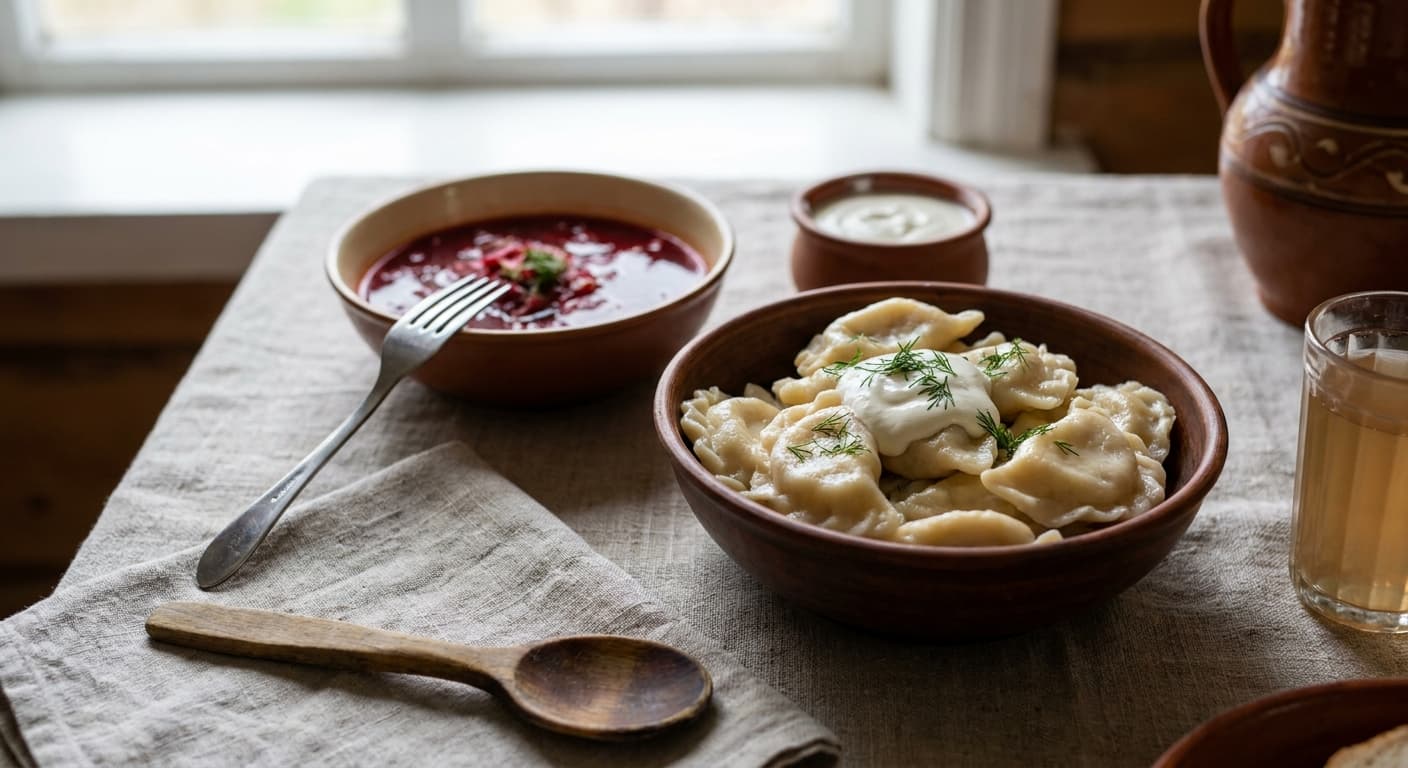
Varenyky (Вареники) — Ukrainian Potato-Cheese Dumplings
Ukrainian · Main Courses · 95 min
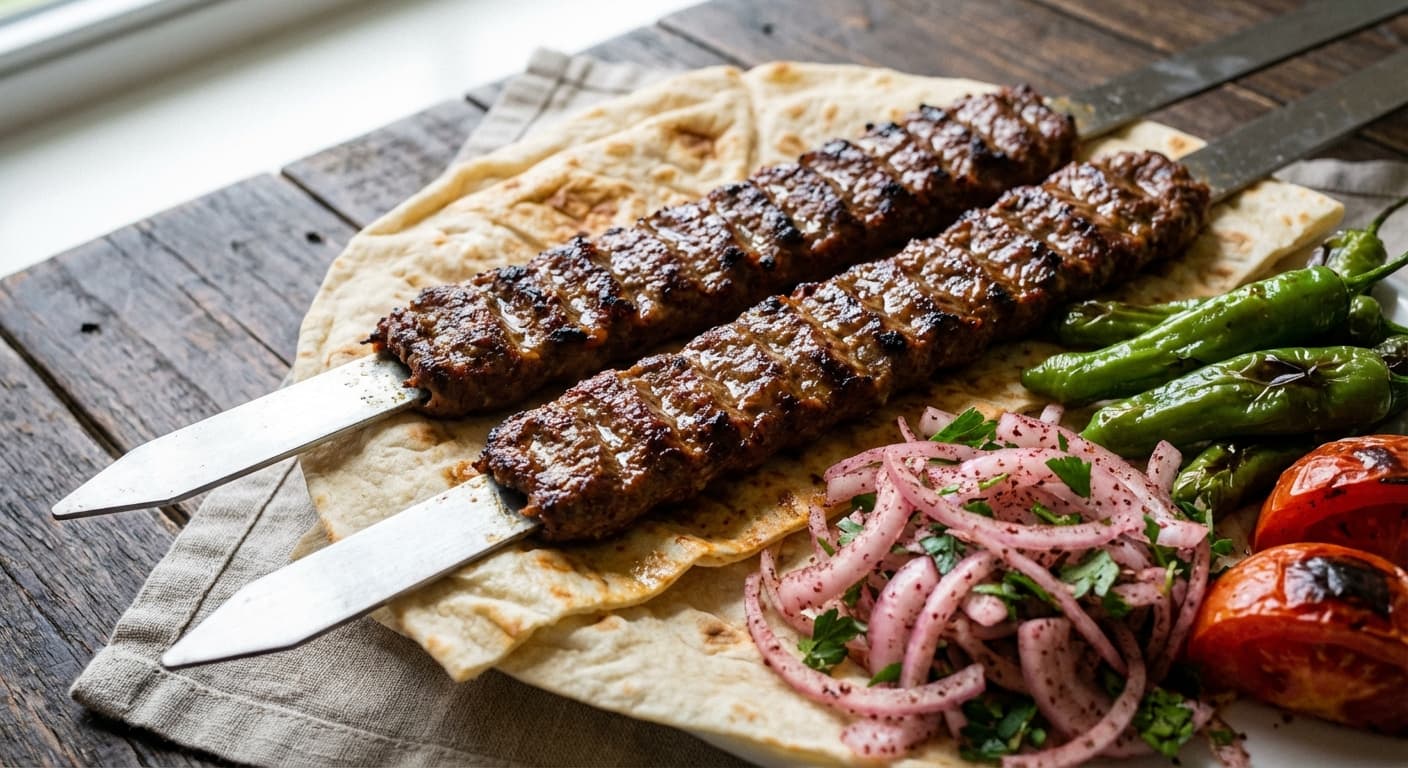
Urfa Kebab (اورفا کباب) — Mild Turkish minced skewer with sumac onions
Turkish · Kebabs · 37 min
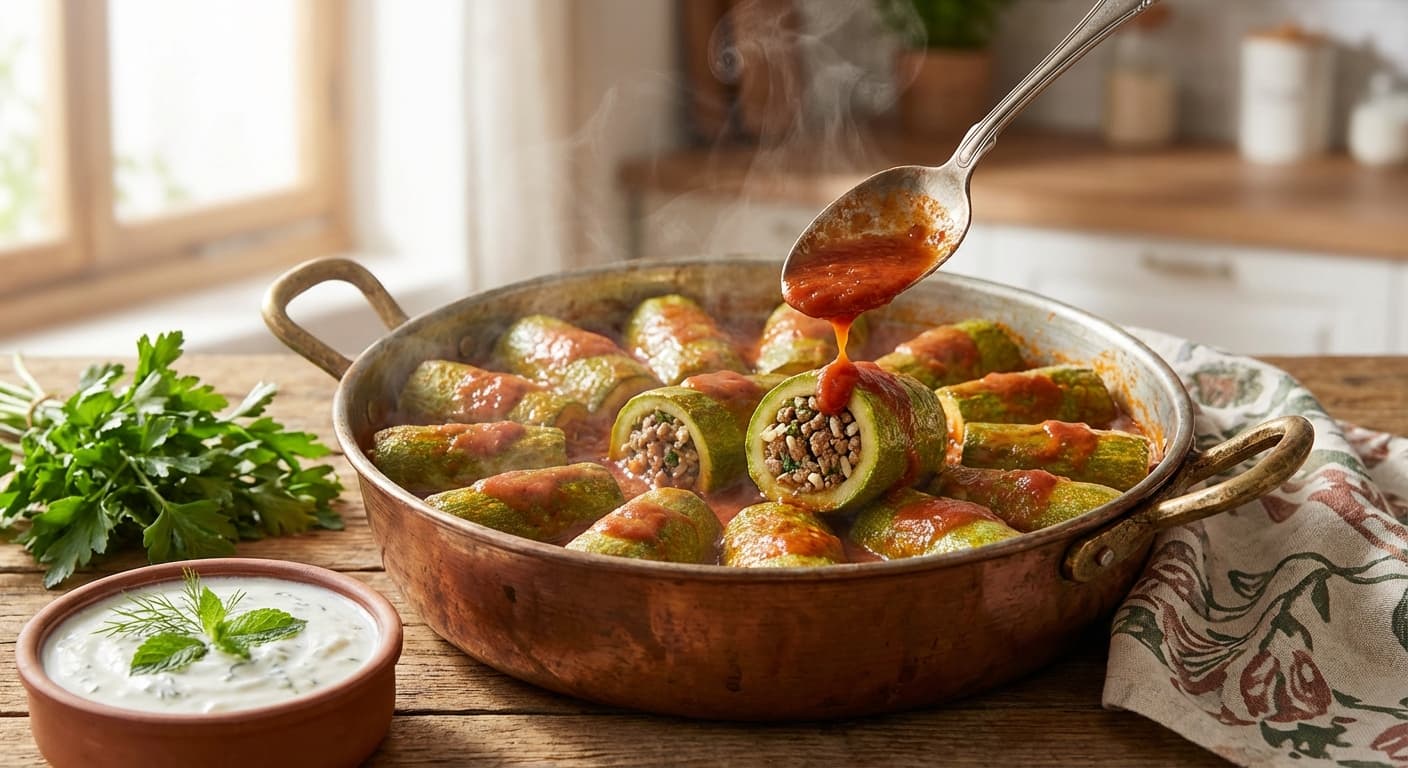
Stuffed Zucchini (Kabak Dolması) — Hollowed zucchini filled with spiced minced meat and rice
Turkish · Main Courses · 90 min
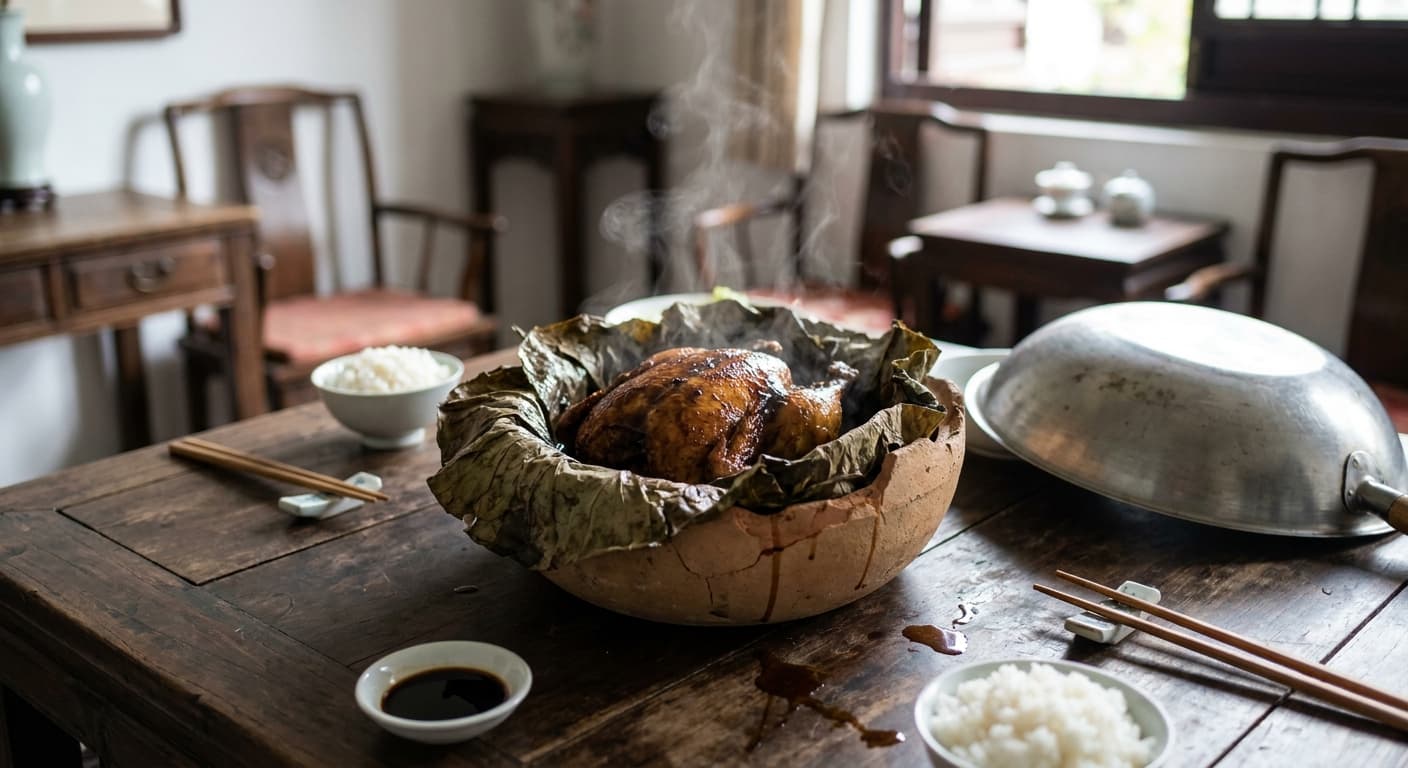
Beggar's Chicken (叫化鸡) — Lotus-Wrapped Clay-Baked Jiangnan Chicken
Chinese · Main Courses · 240 min
Reviews
Cooked this recipe?
Tap the stars to rate it — that's all it takes. A few words are welcome but optional.
No ratings yet. Cooked this one? Be the first to rate it — it takes one tap.