Kozhukattai (मोदक) — Indian Steamed Rice Dumplings with Sweet Coconut
Kozhukattai, also known as Modak, are delicate South Indian–style steamed rice dumplings filled with coconut and jaggery. Offered during Ganesh Chaturthi and enjoyed as a festive sweet, they balance floral cardamom with rich caramel notes.
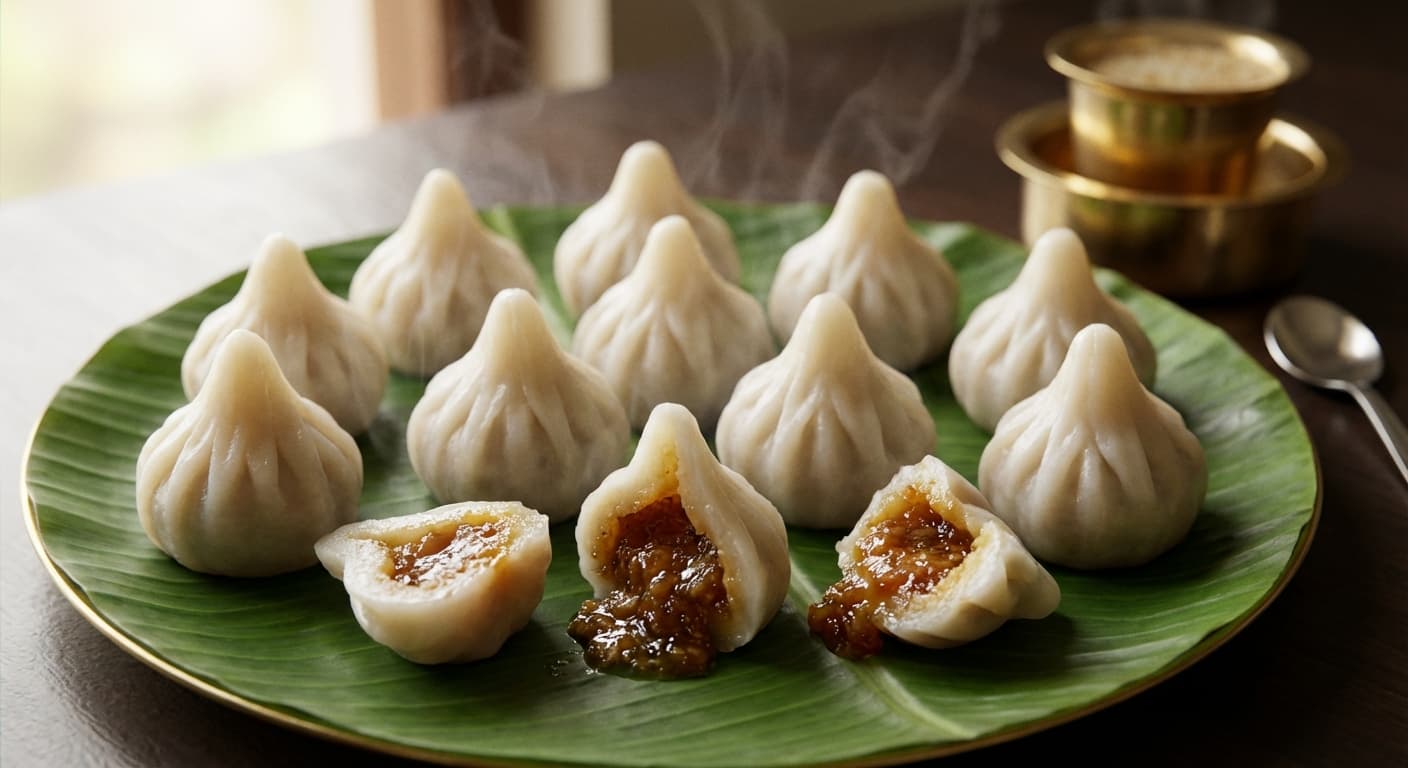
Printable Recipe Card
Servings: 12 · Total: 65 min · Difficulty: medium
Ingredients (quick list)
- 180 g Rice flour (fine, store-bought or freshly milled)
- 300 ml Water (plus 30 ml extra if needed while kneading)
- 2 g Salt (about 1/3 tsp)
- 10 g Ghee (about 2 tsp, plus 5 g for greasing hands)
- 200 g Fresh grated coconut (tightly packed)
- 150 g Jaggery (grated or crushed)
- 1 tsp Green cardamom powder (freshly ground for best aroma)
Steps (summary)
- Make the coconut-jaggery filling first so it can cool and firm up before shaping. Add jaggery and 30 ml water to a small pan an…
- Strain the syrup through a fine sieve if it has grit, then return it to the pan. Add coconut and 5 g ghee and cook for 6–8 minu…
- Stir in cardamom powder and cook 1 minute more to bloom the aroma. If the filling still looks loose or weepy, add 8 g rice flou…
- Prepare the dough using the hot-water method for a smooth, crack-free shell. Bring 300 ml water to a boil with salt and 10 g gh…
- Add rice flour all at once and immediately stir with a sturdy spoon until a shaggy mass forms and no dry flour remains. Cover t…
- Transfer the hot dough to a bowl and let it stand 3 minutes until it is warm but safe to handle. Knead for 5–7 minutes until ve…
+ 6 more steps in the full instructions section below.
Cultural Background
Modak and kozhukattai are beloved steamed sweets offered to Lord Ganesha, especially during Ganesh Chaturthi and Vinayaka Chaturthi. The pleated shape symbolizes careful handiwork and devotion, while jaggery-coconut reflects traditional South Indian pantry staples.
Equipment
💡 Tips
- Keep the dough covered with a damp cloth at all times; even 5 minutes of exposure can cause cracking while pleating.
- Cook the filling until it leaves the pan and holds a mound; a wet filling can leak and tear the rice shell during steaming.
- Use hot water for kneading and add extra water in 5 ml increments; rice flour absorbs differently by brand and humidity.
⚠️ Common Mistakes
❌ Dough cracks while shaping or pleating.
✅ Fix: Knead longer while warm and add 5–15 ml hot water gradually; keep dough balls covered with a damp cloth.
❌ Filling leaks and breaks the shell during steaming.
✅ Fix: Cook filling until it leaves the pan and cool fully before stuffing; if needed, thicken with 8 g rice flour.
❌ Dumplings stick to the steamer plate.
✅ Fix: Line with parchment or banana leaf and lightly grease; let steamed dumplings rest 2 minutes before lifting.
🧊 How to Store
Cool completely, then refrigerate in an airtight container for up to 3 days with parchment between layers to prevent sticking. Reheat by steaming 3–4 minutes or microwaving with 10 ml water covered for 30–45 seconds to soften the shell.
📅 Make Ahead
Prepare the filling up to 2 days ahead and refrigerate tightly covered; bring to room temperature before shaping. You can also portion dough and filling balls 2 hours ahead, keeping dough covered with a damp cloth to prevent drying.
🍽️ Pairs Well With
- Filter coffee
- masala chai
- banana leaf meal
- payasam
- fresh banana slices.
Regional Variations
- Tamil kozhukattai: often shaped as smooth half-moons and sometimes made savory with urad dal, pepper, and curry leaves.
- Maharashtrian ukadiche modak: typically more pronounced pleats and sometimes includes nutmeg or saffron in the filling.
- Kerala style: may use coconut milk in the filling and banana leaf lining for a subtle grassy aroma.
Ingredients
- 180 gRice flour (fine, store-bought or freshly milled)
- 300 mlWater (plus 30 ml extra if needed while kneading)
- 2 gSalt (about 1/3 tsp)
- 10 gGhee (about 2 tsp, plus 5 g for greasing hands)
- 200 gFresh grated coconut (tightly packed)
- 150 gJaggery (grated or crushed)
- 1 tspGreen cardamom powder (freshly ground for best aroma)
🔄 Substitutions
- Fresh grated coconut→ Unsweetened desiccated coconut
- Jaggery→ Light brown sugar
- Ghee→ Coconut oil
Instructions
- 1
Make the coconut-jaggery filling first so it can cool and firm up before shaping. Add jaggery and 30 ml water to a small pan and heat on low for 3 minutes, stirring until the jaggery melts into a syrup.
- 2
Strain the syrup through a fine sieve if it has grit, then return it to the pan. Add coconut and 5 g ghee and cook for 6–8 minutes on medium-low, stirring constantly until the mixture looks glossy and starts leaving the sides of the pan.
- 3
Stir in cardamom powder and cook 1 minute more to bloom the aroma. If the filling still looks loose or weepy, add 8 g rice flour and cook 1–2 minutes until it turns thicker and holds together; then cool completely.
- 4
Prepare the dough using the hot-water method for a smooth, crack-free shell. Bring 300 ml water to a boil with salt and 10 g ghee, then reduce heat to low so the water is gently simmering.
- 5
Add rice flour all at once and immediately stir with a sturdy spoon until a shaggy mass forms and no dry flour remains. Cover the pan and steam the dough on the lowest heat for 2 minutes to fully hydrate the flour.
- 6
Transfer the hot dough to a bowl and let it stand 3 minutes until it is warm but safe to handle. Knead for 5–7 minutes until very smooth; if it feels dry or cracks at the edges, knead in up to 30 ml hot water, 5 ml at a time.
- 7
Divide the dough into 12 equal balls (about 24–26 g each) and keep them covered with a damp cloth to prevent drying. Divide the cooled filling into 12 balls (about 28–30 g each) so every dumpling is evenly stuffed.
- 8
Grease your palms with about 5 g ghee and flatten one dough ball into a 7–8 cm disc, keeping the center slightly thicker than the edges. Pinch and pleat the rim to form a cup, then place one filling ball inside and gently press it down.
- 9
Bring the pleats together over the filling and pinch to seal, shaping into a teardrop modak or a smooth kozhukattai. Repeat with remaining dough and filling, keeping shaped dumplings covered so the surface does not dry and crack.
- 10
Set up a steamer with 2–3 cm water and bring it to a steady boil. Line the steamer plate with parchment or lightly greased banana leaf, then place dumplings with 2 cm space between them so steam circulates evenly.
- 11
Steam on medium heat for 10–12 minutes, until the outer shell turns slightly translucent and looks glossy. Rest the dumplings in the steamer (heat off) for 2 minutes so the skin sets, then lift them out carefully with a thin spatula.
- 12
Serve warm for the softest texture and the most fragrant cardamom-coconut aroma. If serving later, re-steam for 2–3 minutes to revive the tender, chewy shell without drying it out.
🪪 Recipe Passport
Cultural Background
Modak and kozhukattai are beloved steamed sweets offered to Lord Ganesha, especially during Ganesh Chaturthi and Vinayaka Chaturthi. The pleated shape symbolizes careful handiwork and devotion, while jaggery-coconut reflects traditional South Indian pantry staples.
Regional Variations
Researched from multiple sources and validated by the Zaffaron editorial team. Every recipe is tested for accuracy, measurements, and cultural authenticity.
Nutrition per serving
Pairs well with
If you enjoyed this recipe, here are a few related Zaffaron recipes to try next.
Does your family make this differently?
Every family has their own version. Maybe your grandmother adds a secret ingredient, or your aunt has a completely different technique. Preserve your family's version — with their name on it, forever.
You Might Also Like
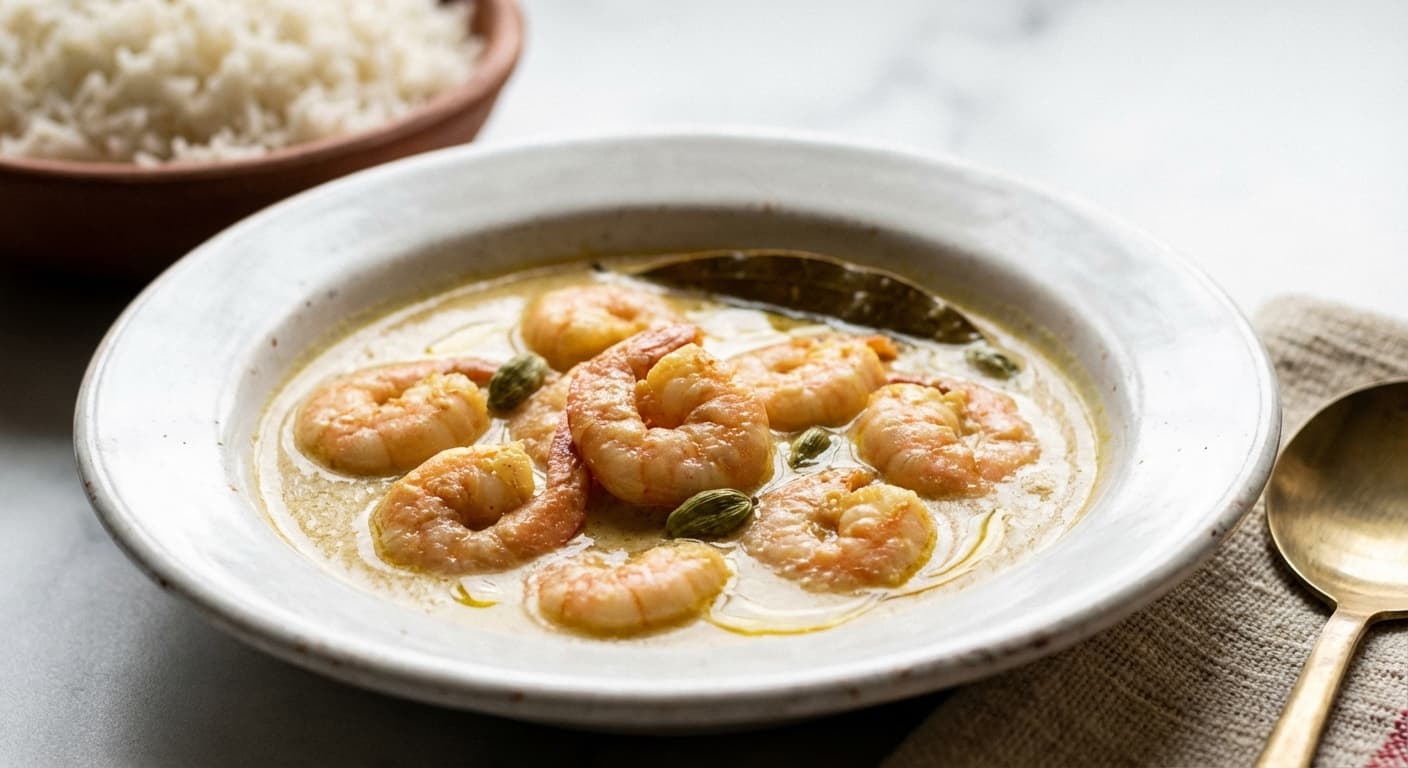
Chingri Malai Curry (চিংড়ি মালাই কারি) — Indian Prawns in Coconut Milk with Gentle Spices
Indian · Main Courses · 45 min
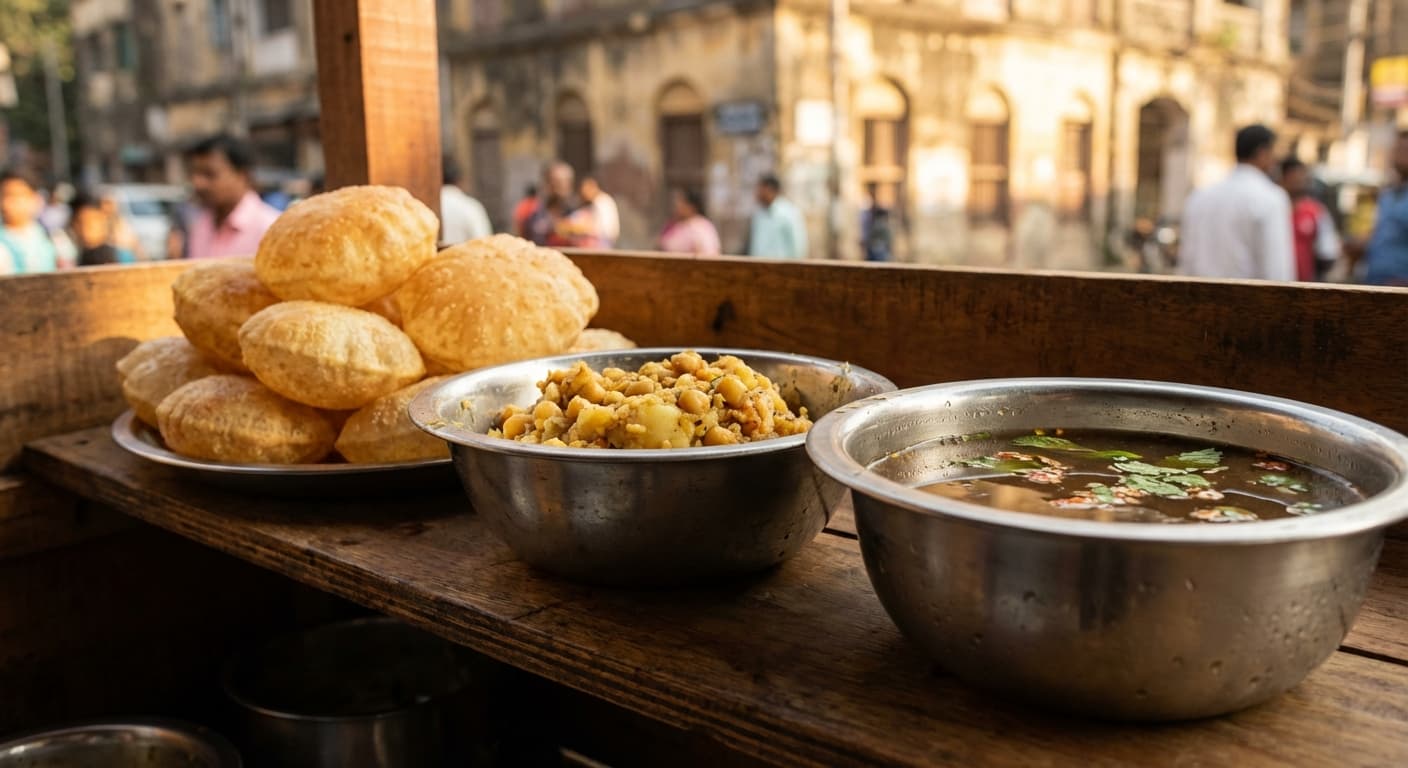
Puchka (पुचका) — Indian Tangy Tamarind Water-Filled Semolina Puris
Indian · Appetizers · 70 min
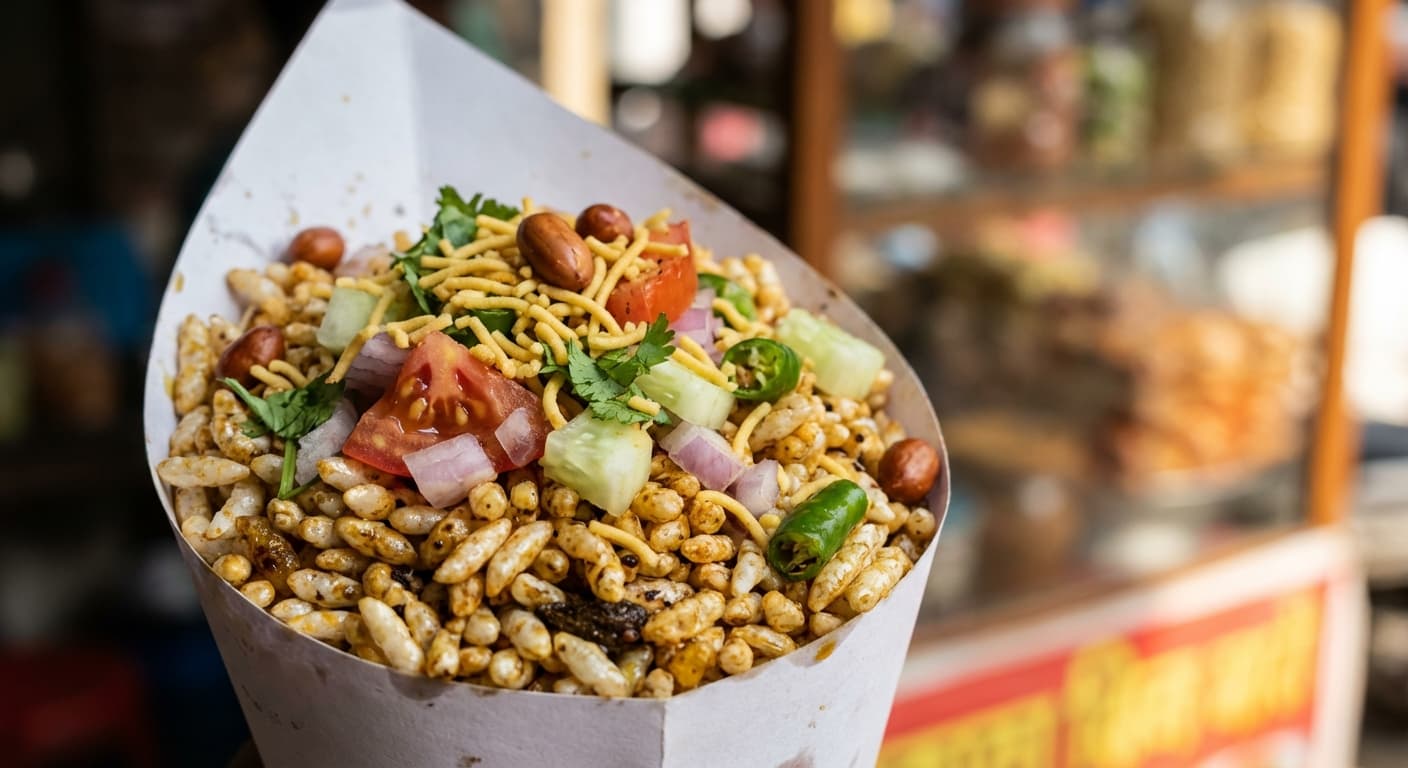
Jhal Muri (ঝাল মুড়ি) — Indian Puffed Rice Snack with Mustard Oil and Chilies
Indian · Side Dishes · 15 min
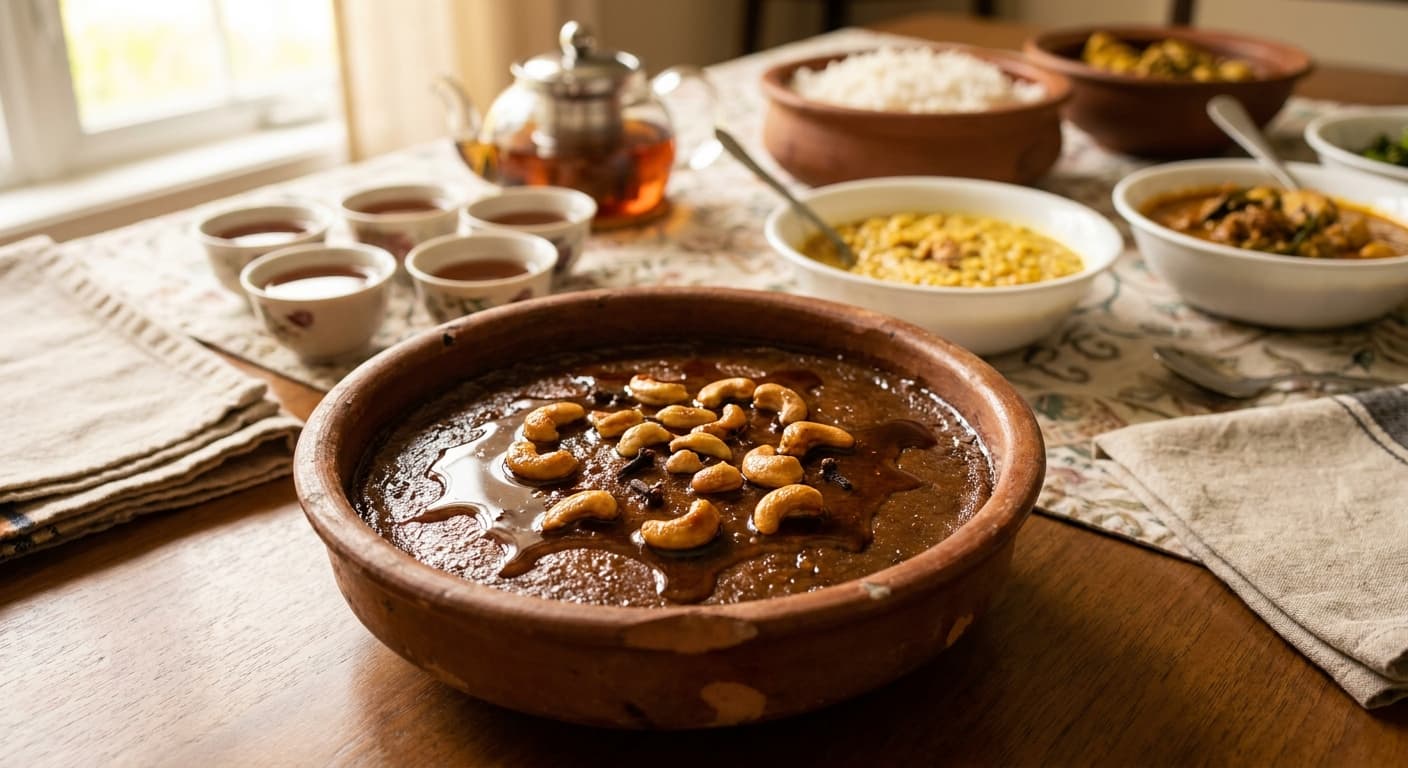
Watalappan (වටලප්පන්) — Sri Lankan Coconut Jaggery Custard
Sri lankan · Desserts · 70 min
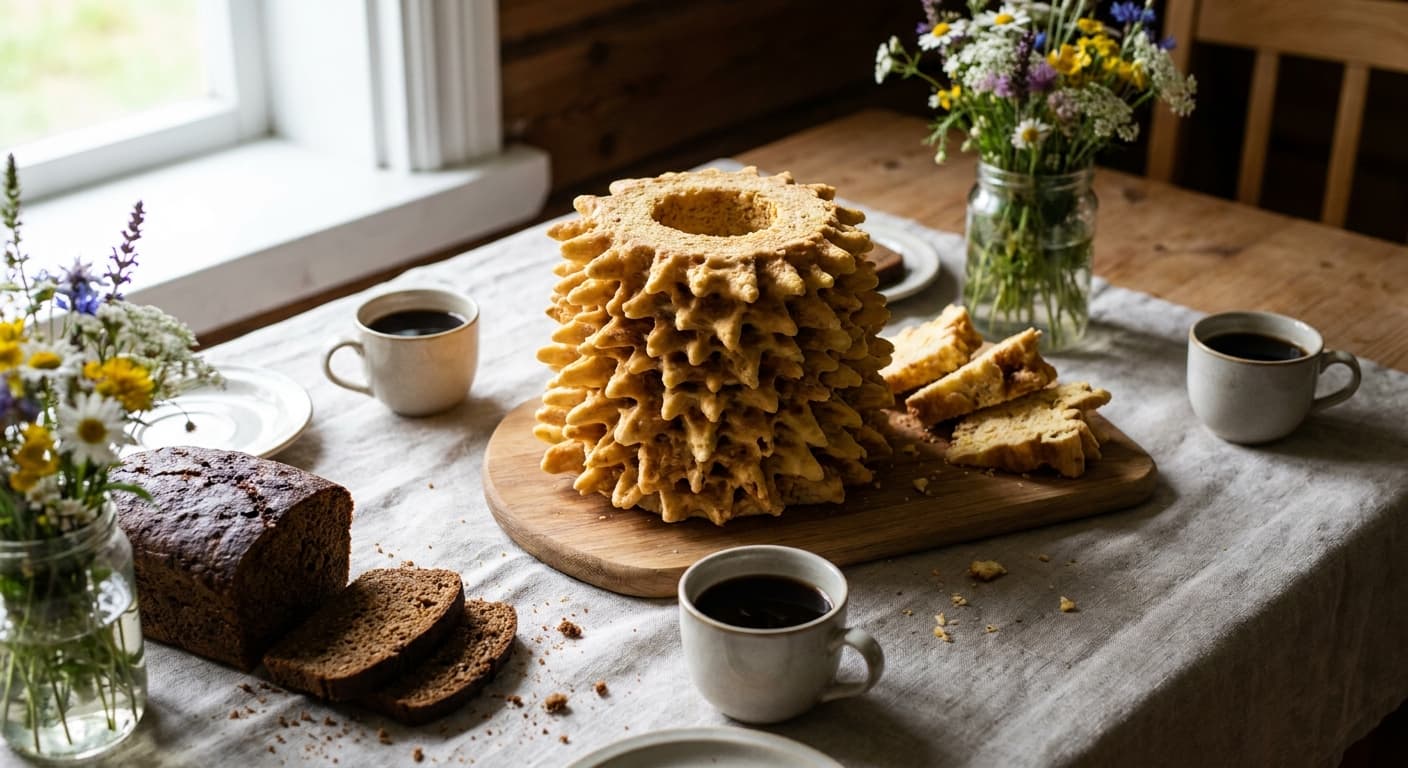
Lithuanian Tree Cake (Šakotis) — Spit-Baked Celebration Cake
Lithuanian · Desserts · 230 min
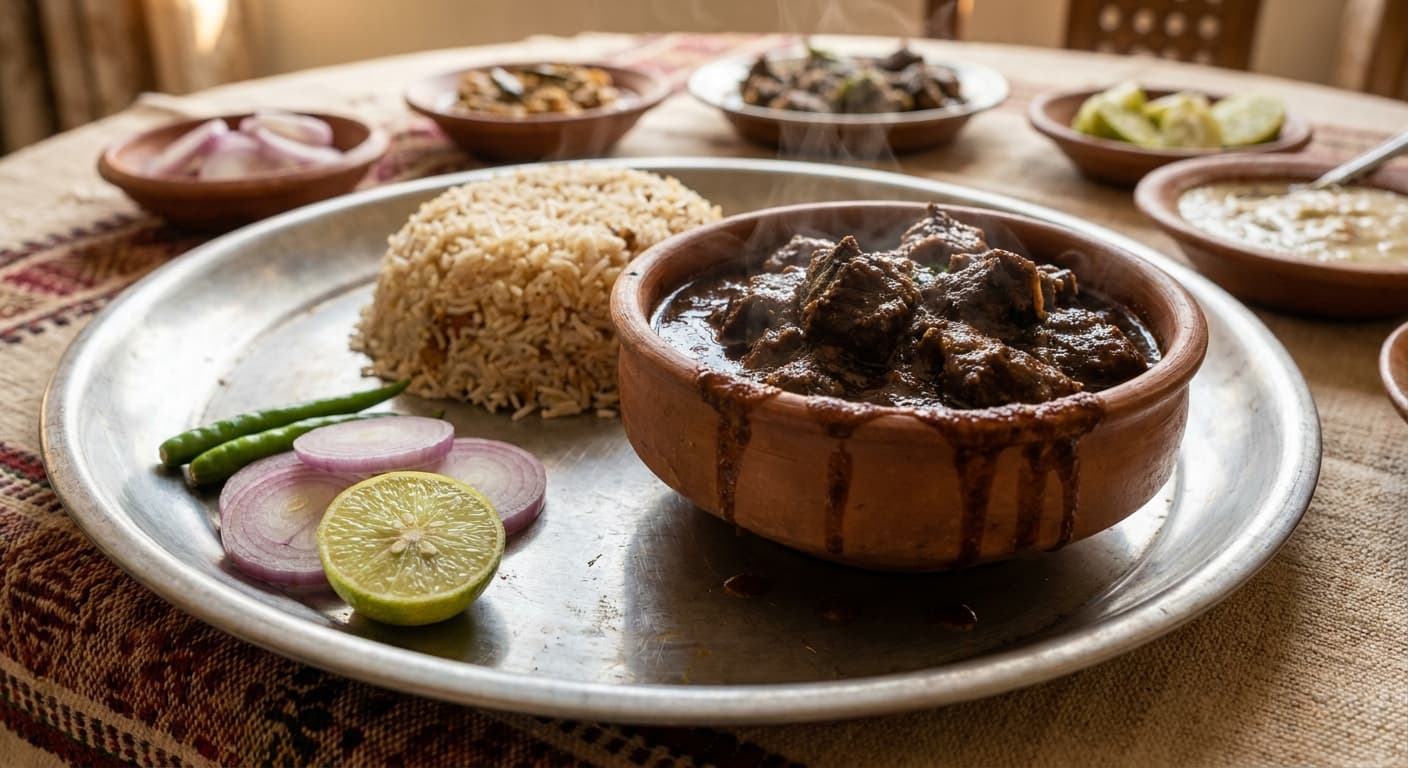
Kala Bhuna (কালা ভুনা) — Chittagong Dark Beef Bhuna
Bangladeshi · Main Courses · 175 min
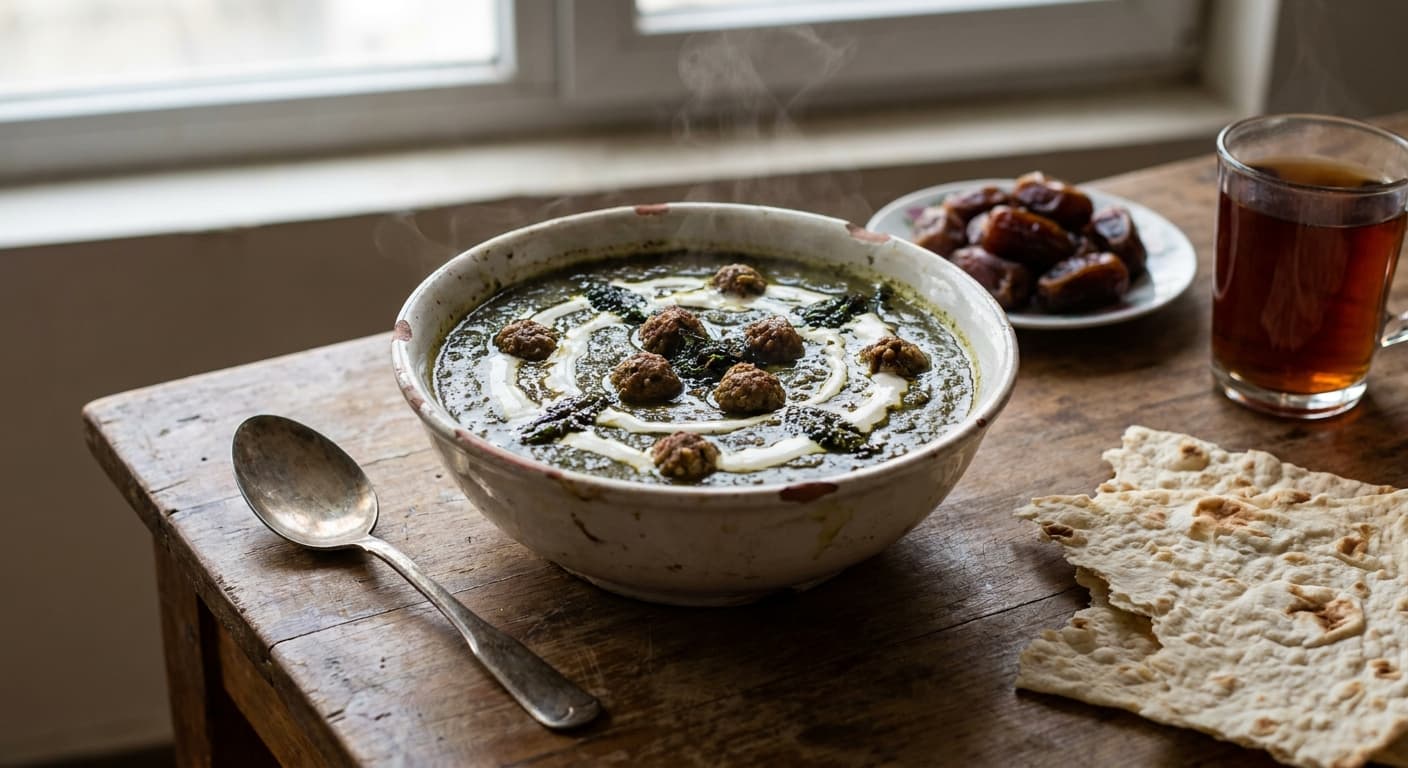
Ash-e Sak (آش ساک) — Golestani Spinach, Legume, and Meatball Soup
Persian · Soups · 175 min
Khuushuur (Хуушуур) — Crisp Mongolian Fried Meat Pockets
Mongolian · Main Courses · 70 min
Reviews
Cooked this recipe?
Tap the stars to rate it — that's all it takes. A few words are welcome but optional.
No ratings yet. Cooked this one? Be the first to rate it — it takes one tap.