Watalappan (වටලප්පන්) — Sri Lankan Coconut Jaggery Custard
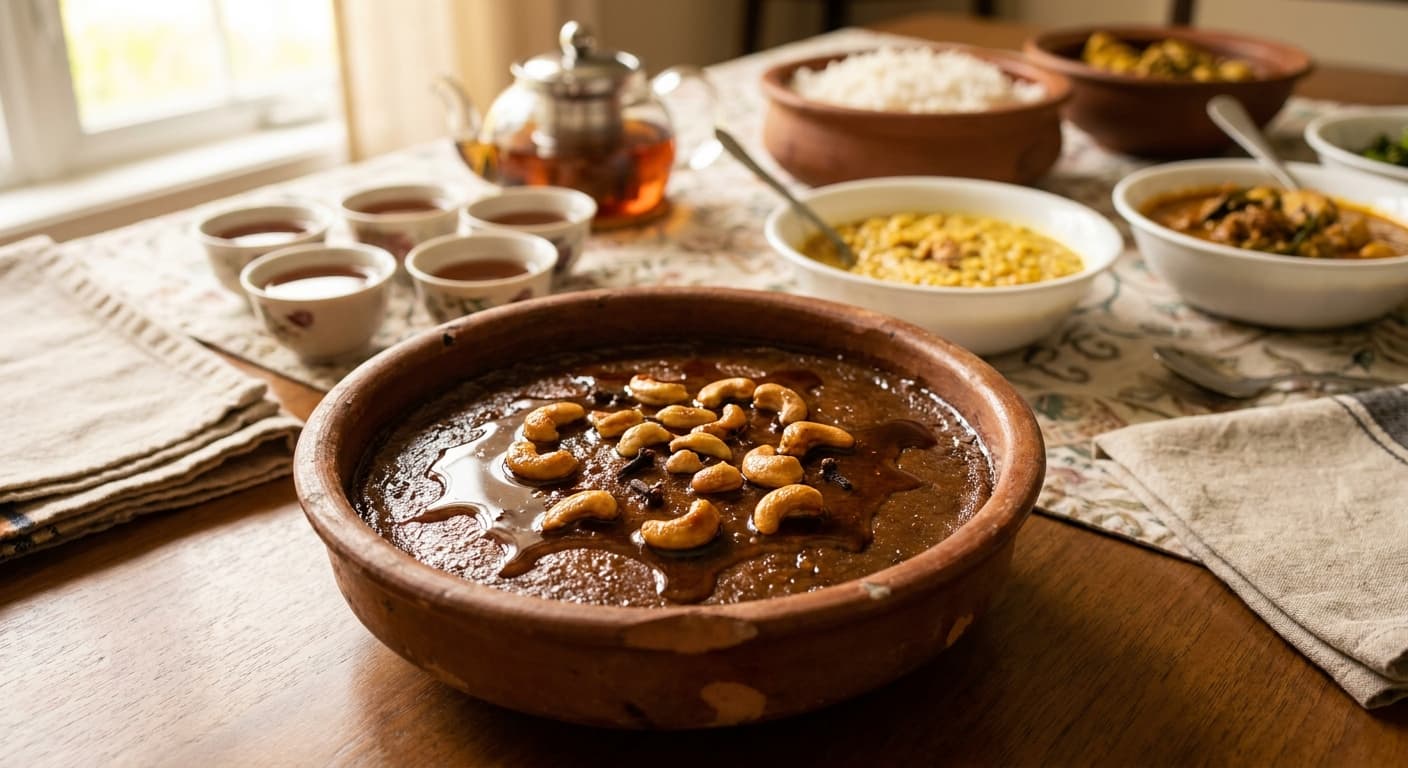
Watalappan is a Sri Lankan Moor coconut custard steamed with kithul jaggery, eggs, cardamom, rampe, and Ceylon cinnamon. It is especially loved at Ramadan and Eid feasts, where its caramel warmth balances rich rice-and-curry meals.
Printable Recipe Card
Servings: 8 · Total: 70 min · Difficulty: medium
Ingredients (quick list)
- 250 g kithul jaggery (finely chopped or grated)
- 400 ml thick coconut milk
- 5 eggs (large)
- 6 pod green cardamom (lightly crushed)
- 1 stick Ceylon cinnamon
- 1 rampe leaf (fresh pandan leaf, tied in a knot)
- 0.25 tsp ground nutmeg
- 0.25 tsp fine sea salt
- 1 tsp vanilla extract
- 40 g raw cashews (split or roughly chopped)
- 1 tsp coconut oil (for greasing the steaming dish)
Steps (summary)
- Lightly grease a 1 l heatproof bowl or eight 125 ml ramekins with the coconut oil. Set a steamer over medium heat with enough w…
- Place the chopped kithul jaggery, 200 ml of the coconut milk, crushed cardamom pods, Ceylon cinnamon stick, rampe leaf, and fin…
- Strain the jaggery mixture through a fine sieve into a bowl, pressing gently on the spices but not forcing any gritty sediment…
- In a separate bowl, whisk the eggs just until the yolks and whites are evenly blended. Do not whip in excess air, because a foa…
- Slowly pour the cooled jaggery-coconut mixture into the eggs while whisking gently and constantly. Pass the combined custard th…
- Pour the custard into the prepared bowl or ramekins and scatter the cashews evenly over the surface. Cover the dish tightly wit…
+ 2 more steps in the full instructions section below.
Cultural Background
Watalappan reflects Sri Lanka's Moor Muslim table, where coconut milk and kithul jaggery meet spice-trade aromatics. Charmaine Solomon helped document this style of Sri Lankan festive cooking for a wider audience.
Equipment
💡 Tips
- Use genuine kithul jaggery if possible, because its smoky, mineral caramel flavor is the signature taste of Sri Lankan watalappan.
- Keep the steamer at a gentle simmer rather than a hard boil; aggressive steam creates holes and a rubbery egg texture.
- Straining twice is worth the extra minute, because it gives the custard the silky texture expected in a well-made festive watalappan.
⚠️ Common Mistakes
❌ Steaming over heat that is too high
✅ Fix: Keep the water at a steady simmer so the eggs set gently and the custard stays smooth instead of pocked with bubbles.
❌ Adding hot jaggery syrup directly to the eggs
✅ Fix: Cool the syrup for 10 minutes and add it slowly while whisking, which prevents scrambled egg streaks.
❌ Skipping the sieve
✅ Fix: Strain the spiced syrup and then the finished custard mixture to remove spice grit, egg strands, and jaggery sediment.
🧊 How to Store
Store covered in the refrigerator for up to 4 days. Watalappan is best served chilled or cool; if you prefer it warmer, let it stand at room temperature for 30 minutes rather than reheating strongly, which can curdle the custard.
📅 Make Ahead
Make watalappan 1 day ahead and chill it covered; the jaggery, coconut, rampe, and spice aromas deepen overnight. Add extra toasted cashews just before serving if you want a fresher crunch.
🍽️ Pairs Well With
- Sri Lankan milk tea
- fresh mango
- fruit salad
- Eid biryani
- rice and curry.
Regional Variations
- Some Sri Lankan households bake watalappan in a water bath instead of steaming it, especially when making a large party dessert.
- For a darker, stronger custard, cooks increase the kithul jaggery slightly and reduce the vanilla so the palm caramel dominates.
- Cashews may be mixed into the custard, scattered only on top, or omitted for a smoother ceremonial version.
Ingredients
- 250 gkithul jaggery (finely chopped or grated)
- 400 mlthick coconut milk
- 5eggs (large)
- 6 podgreen cardamom (lightly crushed)
- 1 stickCeylon cinnamon
- 1rampe leaf (fresh pandan leaf, tied in a knot)
- 0.25 tspground nutmeg
- 0.25 tspfine sea salt
- 1 tspvanilla extract
- 40 graw cashews (split or roughly chopped)
- 1 tspcoconut oil (for greasing the steaming dish)
🔄 Substitutions
- kithul jaggery→ dark palm sugar
- rampe leaf→ fresh pandan leaf
- cashews→ 40 g toasted coconut flakes
Instructions
- 1
Lightly grease a 1 l heatproof bowl or eight 125 ml ramekins with the coconut oil. Set a steamer over medium heat with enough water to steam for 50 minutes, and wrap the steamer lid in a clean kitchen towel so condensed water does not drip onto the custard.
- 2
Place the chopped kithul jaggery, 200 ml of the coconut milk, crushed cardamom pods, Ceylon cinnamon stick, rampe leaf, and fine sea salt in a small saucepan. Warm over low heat for 5 to 7 minutes, stirring until the jaggery dissolves completely, then remove from the heat and let the mixture cool for 10 minutes.
- 3
Strain the jaggery mixture through a fine sieve into a bowl, pressing gently on the spices but not forcing any gritty sediment through. Discard the cardamom pods, Ceylon cinnamon stick, and rampe leaf, then stir in the remaining 200 ml coconut milk, vanilla extract, and ground nutmeg.
- 4
In a separate bowl, whisk the eggs just until the yolks and whites are evenly blended. Do not whip in excess air, because a foamy mixture makes watalappan rise unevenly and gives the custard a spongy texture instead of a smooth, dense set.
- 5
Slowly pour the cooled jaggery-coconut mixture into the eggs while whisking gently and constantly. Pass the combined custard through the fine sieve once more into a jug, which removes chalazae and any spice fragments for the cleanest texture.
- 6
Pour the custard into the prepared bowl or ramekins and scatter the cashews evenly over the surface. Cover the dish tightly with foil, making sure the foil does not touch the custard, so steam can cook it gently without adding water to the surface.
- 7
Steam over medium-low heat for 40 to 50 minutes for one large bowl, or 22 to 28 minutes for small ramekins. The watalappan is ready when the edges are set, the center has a soft wobble, and a thin knife inserted near the center comes out mostly clean.
- 8
Remove the custard from the steamer and let it cool uncovered for 20 minutes, then cover and chill for at least 3 hours before serving. Serve cold or cool, cutting the large custard into spoonable wedges or presenting individual ramekins with their glossy jaggery syrup pooled at the edges.
🪪 Recipe Passport
Cultural Background
Watalappan reflects Sri Lanka's Moor Muslim table, where coconut milk and kithul jaggery meet spice-trade aromatics. Charmaine Solomon helped document this style of Sri Lankan festive cooking for a wider audience.
Regional Variations
Researched from multiple sources and validated by the Zaffaron editorial team. Every recipe is tested for accuracy, measurements, and cultural authenticity.
📚 Sources & Cultural References
- Charmaine Solomon — The Complete Asian Cookbook — (1976)
- Peter Kuruvita — Serendip: My Sri Lankan Kitchen — (2009)
Sources cited by the Zaffaron editorial team during recipe research. Cultural and culinary references supporting authenticity claims.
Nutrition per serving
Pairs well with
If you enjoyed this recipe, here are a few related Zaffaron recipes to try next.
Does your family make this differently?
Every family has their own version. Maybe your grandmother adds a secret ingredient, or your aunt has a completely different technique. Preserve your family's version — with their name on it, forever.
You Might Also Like

Sri Lankan Kottu Roti (කොත්තු රොටි) — Chopped Flatbread Stir-Fry with Chicken Curry Gravy
Sri lankan · Main Courses · 65 min
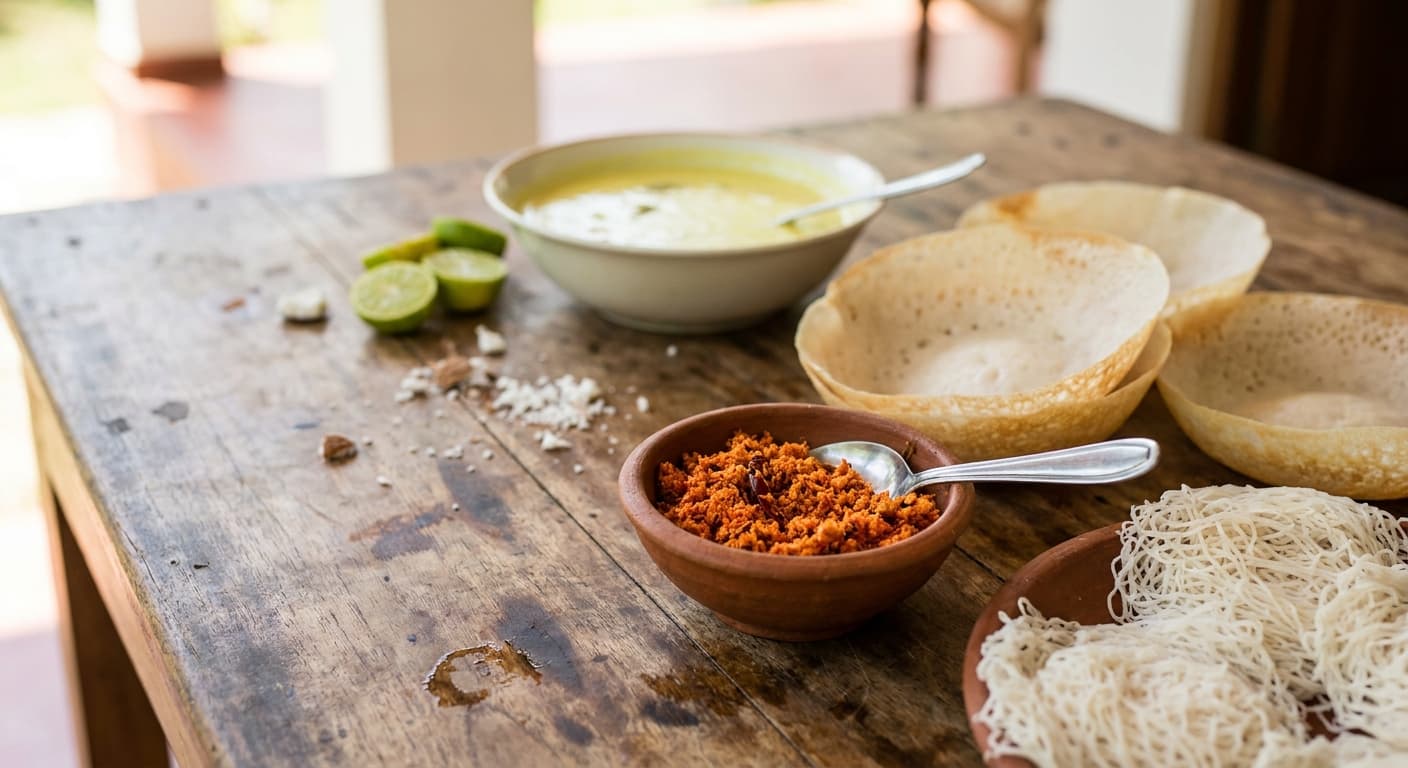
Pol Sambol (පොල් සම්බෝල) — Sri Lankan Coconut Chili Relish
Sri lankan · Side Dishes · 15 min
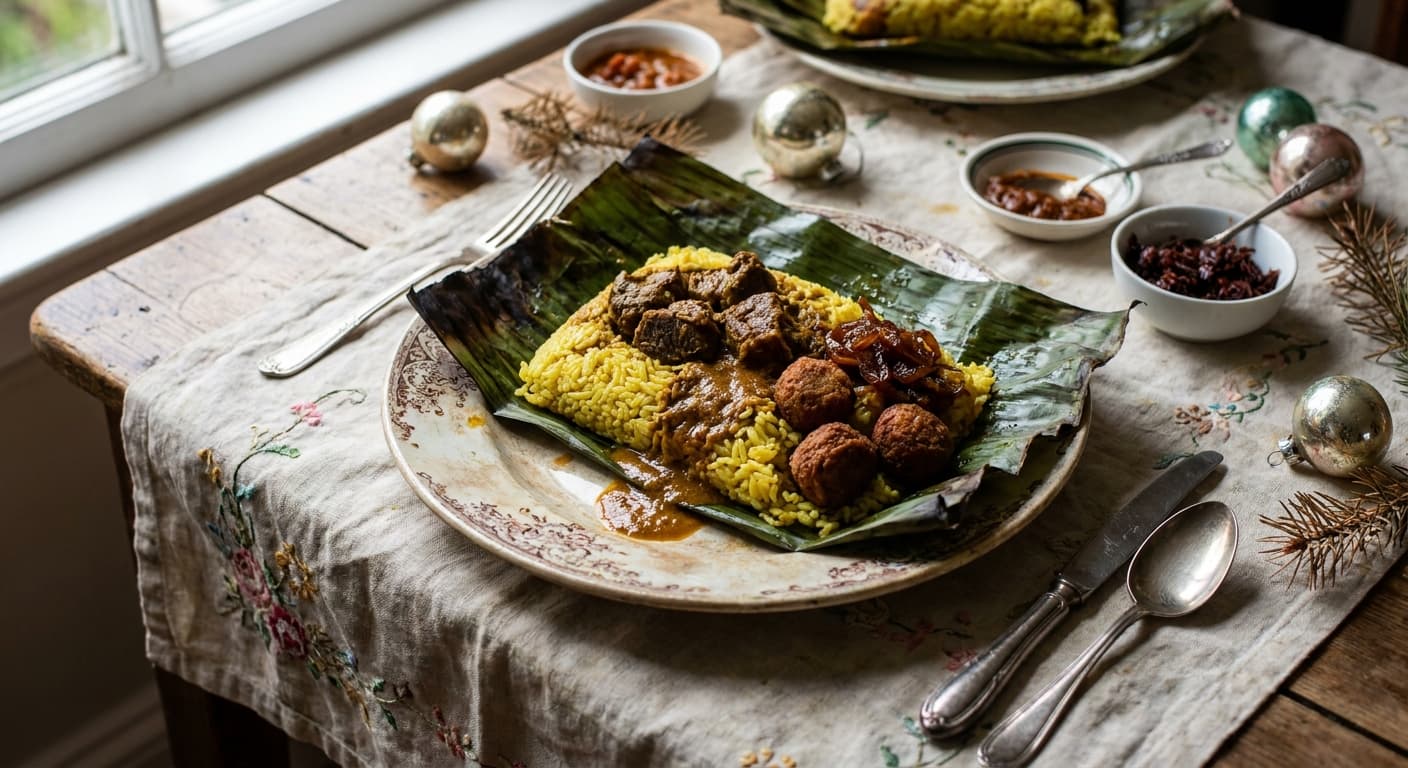
Lamprais (ලම්ප්රයිස්) — Banana-Leaf Burgher Rice Parcel
Sri lankan · Main Courses · 240 min
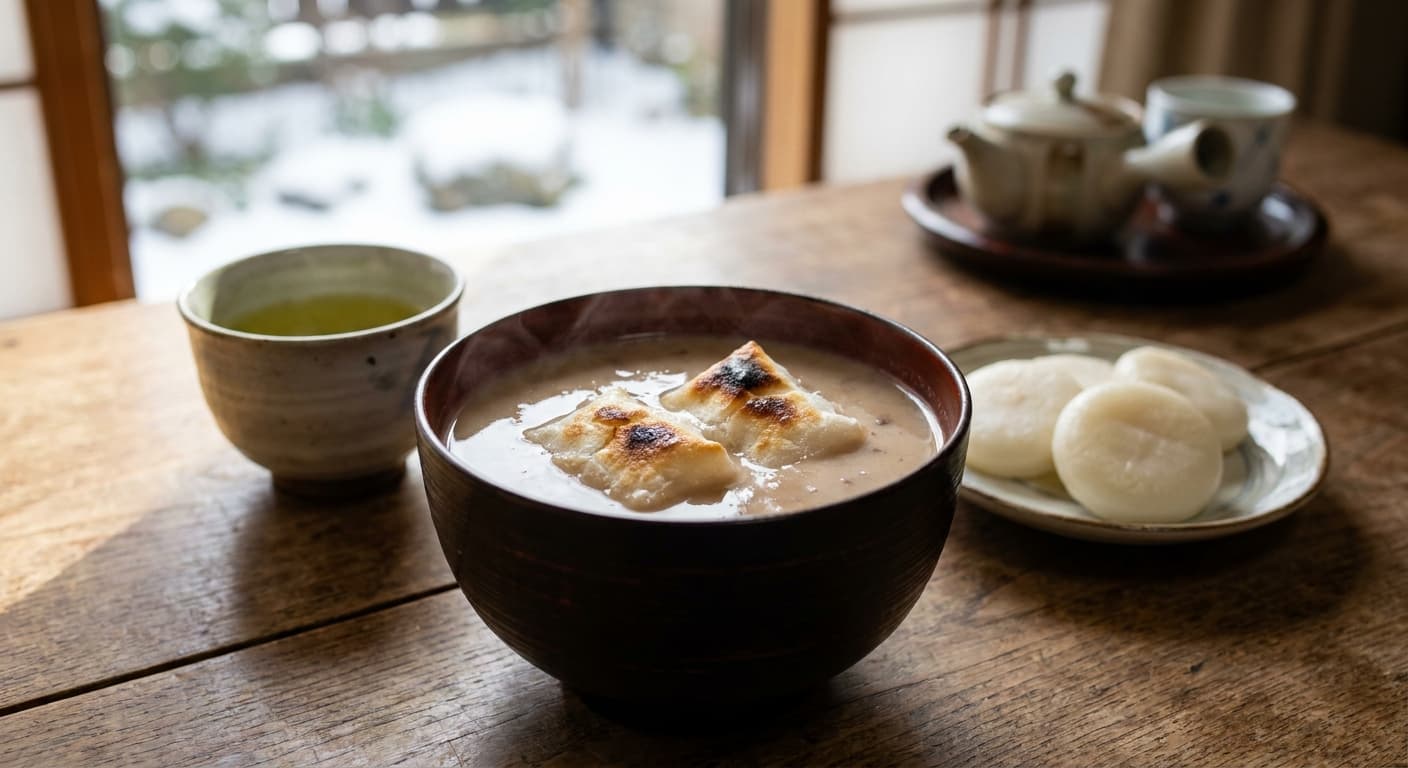
Kurumi Shiruko (くるみ汁粉) — Sendai-Style Sweet Walnut Azuki Soup with Mochi
Japanese · Desserts · 120 min
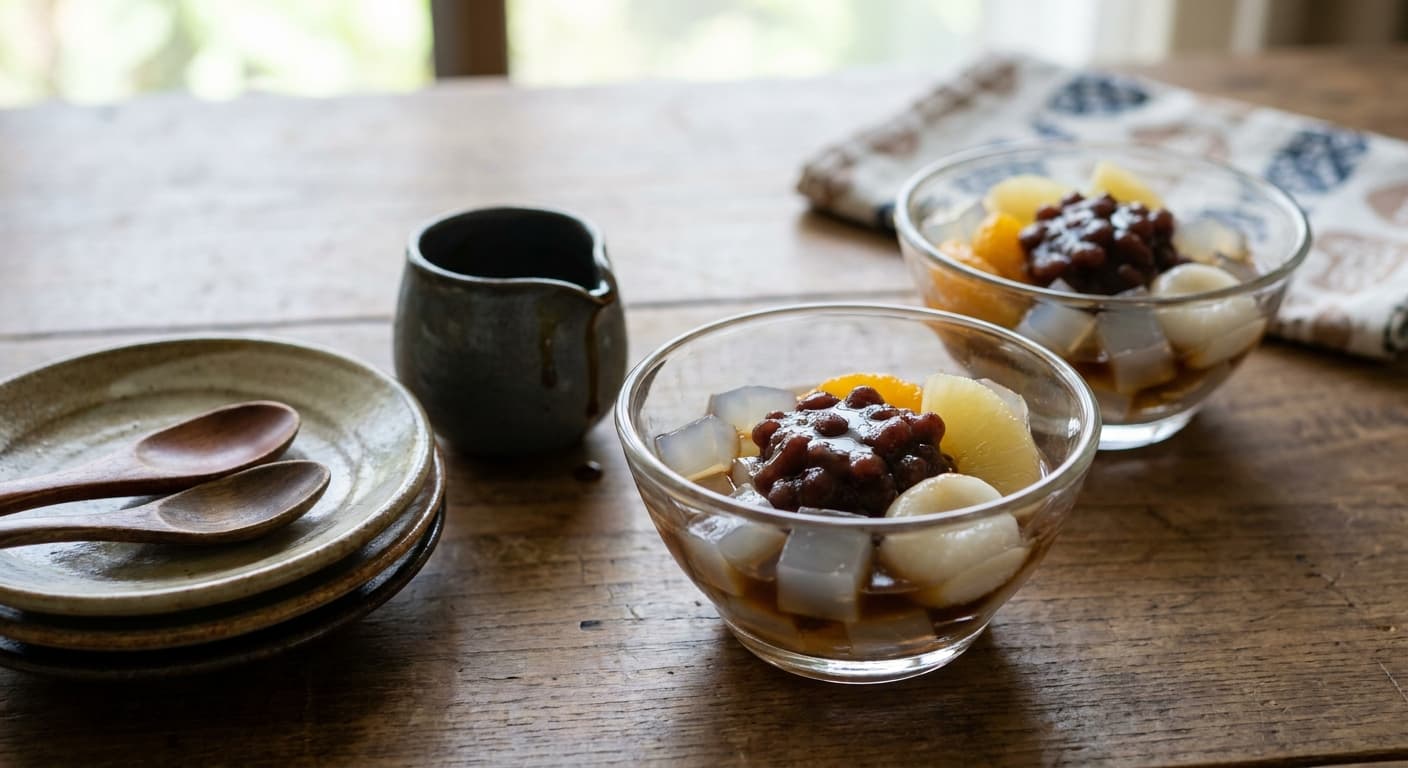
Anmitsu (あんみつ) — Kanten Jelly Dessert with Red Bean Paste
Japanese · Desserts · 55 min
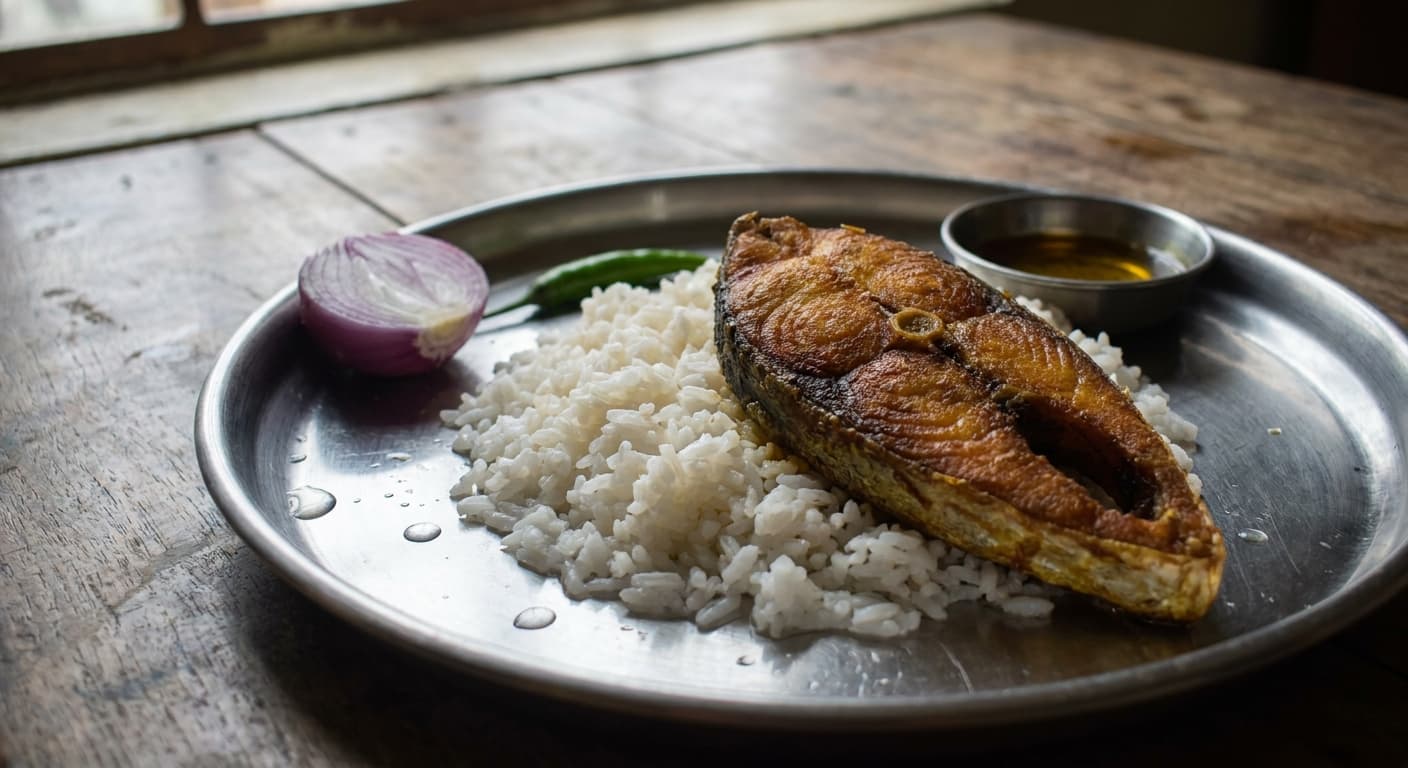
Panta Bhat (পান্তা ভাত) — Overnight Fermented Rice with Fried Ilish
Bangladeshi · Rice Dishes · 35 min
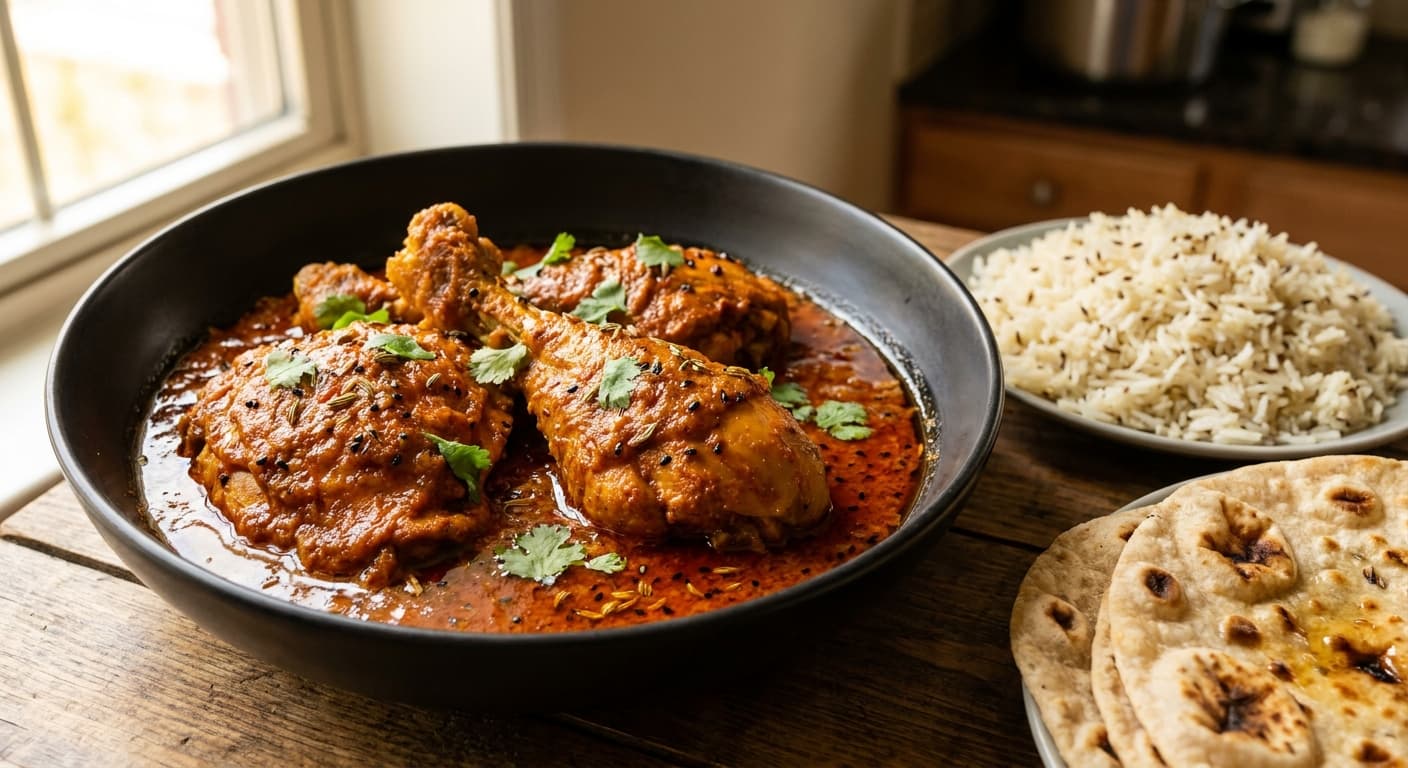
Indian Achari Murgh (अचारी मुर्ग) — Pickle-Spiced Punjabi Chicken Curry with Whole Spices
Indian · Stews · 80 min
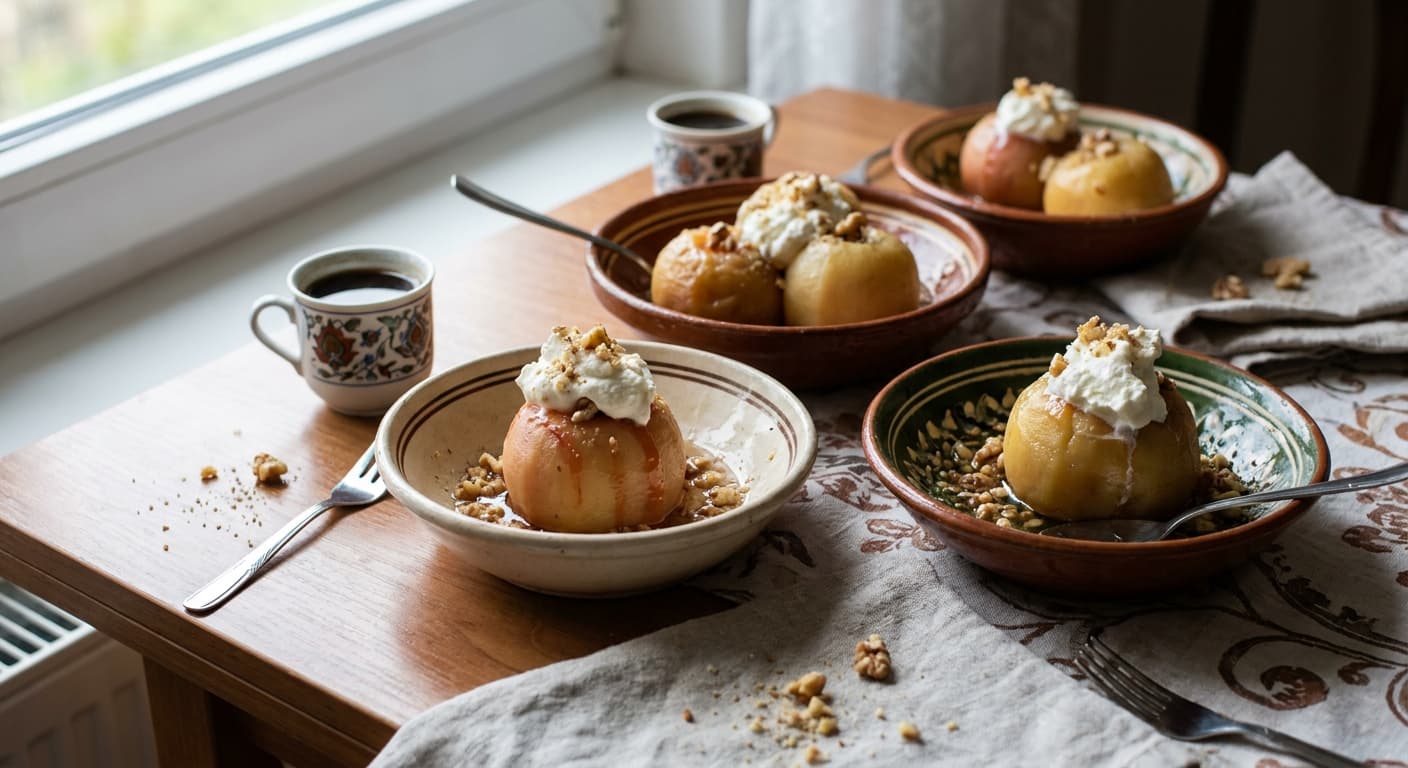
Tufahije (Tufahije) — Bosnian Walnut-Stuffed Poached Apples
Bosnian · Desserts · 50 min
Reviews
Cooked this recipe?
Tap the stars to rate it — that's all it takes. A few words are welcome but optional.
No ratings yet. Cooked this one? Be the first to rate it — it takes one tap.