Naan Panir Sabzi (نان و پنیر و سبزی)
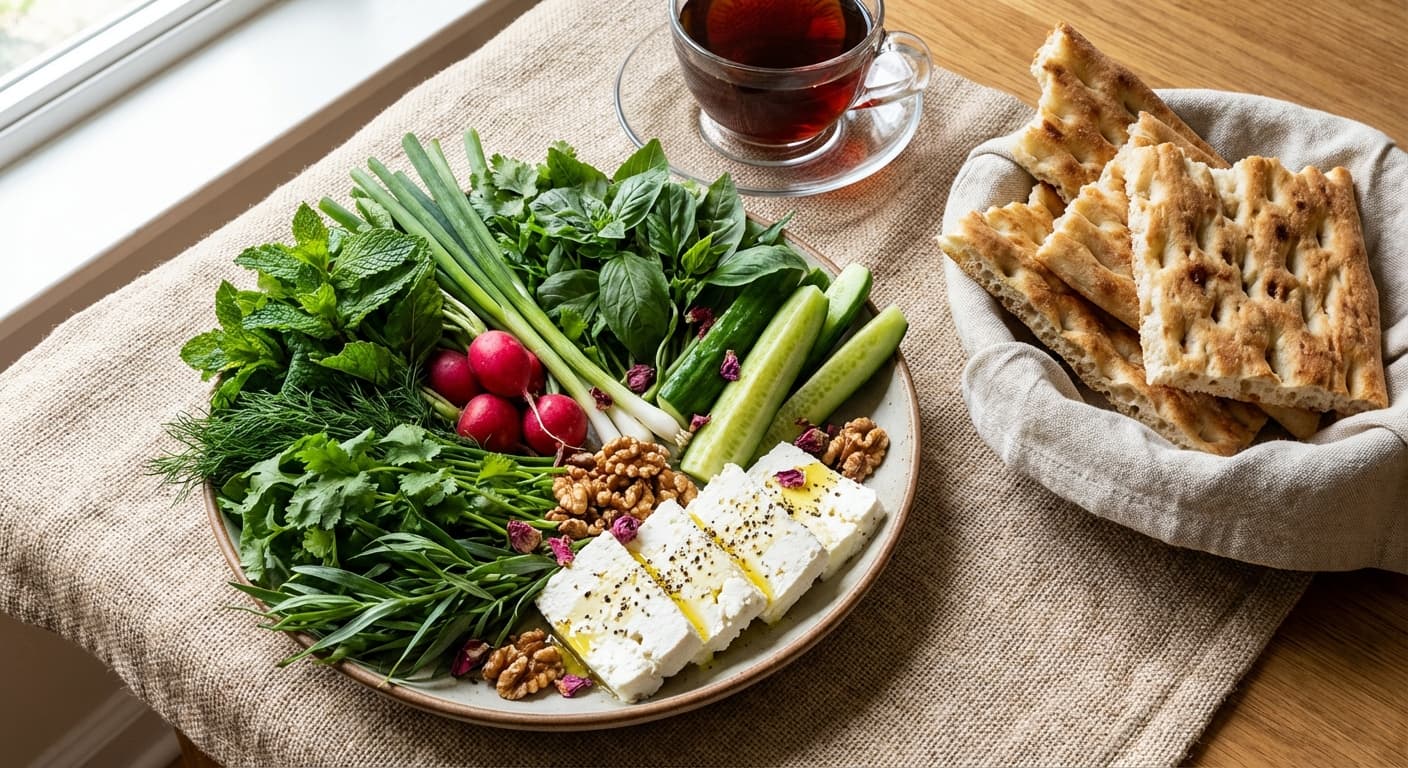
A classic Iranian breakfast and mezze-style platter of fresh herbs, creamy feta, walnuts, and warm bread. Simple, fragrant, and endlessly customizable—perfect with tea or alongside a full Persian spread.
Printable Recipe Card
Servings: 4 · Total: 25 min · Difficulty: easy
Ingredients (quick list)
- 400 g Sangak bread (or barbari; cut into serving pieces)
- 200 g Feta cheese (preferably Iranian-style, drained and sliced)
- 200 g Radishes (washed, trimmed, halved if large)
- 250 g Persian cucumbers (washed, cut into spears)
- 80 g Scallions (trimmed; keep whole or cut into 10 cm lengths)
- 30 g Fresh mint (leaves and tender stems)
- 30 g Fresh basil (leaves and tender stems)
- 15 g Fresh tarragon (leaves only if stems are tough)
- 20 g Fresh dill (tender fronds)
- 25 g Fresh cilantro (tender stems included)
- 60 g Walnut halves (lightly toasted)
- 2 g Dried rose petals (food-grade, optional garnish)
+ 2 more in the full ingredients section below.
Steps (summary)
- Wash the herbs, scallions, cucumbers, and radishes thoroughly in cold water. Spin dry in a salad spinner for 30–45 seconds, the…
- Prepare the vegetables: cut cucumbers into 8–10 cm spears and halve large radishes. Trim scallions and either keep whole or cut…
- Toast the walnuts in a dry skillet over medium heat for 3–4 minutes, shaking the pan every 20–30 seconds until fragrant and sli…
- Slice the feta into 1–1.5 cm slabs or thick triangles and place in the center of the platter. If using olive oil, drizzle 15 ml…
- Warm the bread just before serving: heat the oven to 180°C and warm sangak or barbari for 4–5 minutes, or toast briefly in a dr…
- To eat the traditional way, place a piece of warm bread in your hand, add a slice of feta, then layer mint, basil, tarragon, di…
Cultural Background
Nan o panir o sabzi is one of the most beloved everyday combinations in Iranian homes, commonly served for breakfast, a light dinner, or as part of a spread when guests arrive. The platter reflects Persian hospitality: simple ingredients arranged generously, meant for sharing and building bites at the table.
Equipment
💡 Tips
- Keep herbs mostly whole (not chopped) to prevent bruising and bitterness; tear only at the table if desired.
- If your feta is very salty, soak it in cold water for 10 minutes, then drain well before plating.
- Dry herbs thoroughly; water droplets dilute flavor and can make the bread gummy.
- For a more elegant platter, separate herbs by type in small bundles so guests can build balanced bites.
⚠️ Common Mistakes
❌ Plating herbs while still wet after washing
💡 Why: Water dilutes aroma, makes the platter soggy, and can cause the bread to become gummy quickly.
✅ Fix: Spin herbs dry, then rest on towels for 10 minutes before arranging; keep rose petals away from wet areas.
❌ Over-toasting walnuts
💡 Why: Walnuts burn fast and develop bitterness that overwhelms the delicate herbs and cheese.
✅ Fix: Toast over medium heat for 3–4 minutes, shake often, and transfer immediately to a cool plate.
❌ Serving bread cold or dried out
💡 Why: Cold, stale bread cracks when folded and doesn’t hold the cheese and herbs comfortably.
✅ Fix: Warm at 180°C for 4–5 minutes right before serving; cover with a clean towel to keep it soft on the table.
🧊 How to Store
Store leftover herbs and vegetables separately from cheese and bread. Wrap herbs loosely in paper towels, place in a sealed container, and refrigerate up to 2 days. Keep feta in an airtight container up to 4 days. Bread is best same day; freeze extra bread up to 1 month and rewarm at 180°C for 6–8 minutes.
📅 Make Ahead
Wash and dry herbs up to 24 hours ahead; store wrapped in paper towels in an airtight container in the refrigerator. Toast walnuts up to 3 days ahead and store airtight at room temperature. Slice vegetables up to 6 hours ahead and refrigerate; warm the bread only at serving time.
🍽️ Pairs Well With
- Serve with hot Persian tea (chai)
- olives
- torshi
- tomatoes
- and a soft-boiled egg for breakfast; or alongside kuku sabzi
- mirza ghasemi
- and a bowl of yogurt (mast) for a light meal.
Regional Variations
- TehranOften served very simply with sangak, feta, radish, and a generous sabzi khordan mix; walnuts may be added, but the emphasis is on freshness and variety of herbs rather than extra garnishes.
- Gilan (Northern Iran)Herb platters tend to be more abundant and intensely green; locals may include stronger, regional herbs when available and commonly pair the platter with olives and torshi for a sharper, more acidic table.
Ingredients
- 400 gSangak bread (or barbari; cut into serving pieces)
- 200 gFeta cheese (preferably Iranian-style, drained and sliced)
- 200 gRadishes (washed, trimmed, halved if large)
- 250 gPersian cucumbers (washed, cut into spears)
- 80 gScallions (trimmed; keep whole or cut into 10 cm lengths)
- 30 gFresh mint (leaves and tender stems)
- 30 gFresh basil (leaves and tender stems)
- 15 gFresh tarragon (leaves only if stems are tough)
- 20 gFresh dill (tender fronds)
- 25 gFresh cilantro (tender stems included)
- 60 gWalnut halves (lightly toasted)
- 2 gDried rose petals (food-grade, optional garnish)
- 15 mlExtra-virgin olive oil (optional, for drizzling over feta)
- 1 gBlack pepper (freshly ground, optional)
🔄 Substitutions
- Sangak bread→ Barbari bread or lavash
- Feta cheese→ Bulgarian white cheese or goat feta
- Fresh tarragon→ Fresh chives
Instructions
- 1
Wash the herbs, scallions, cucumbers, and radishes thoroughly in cold water. Spin dry in a salad spinner for 30–45 seconds, then lay herbs on clean towels for 10 minutes to air-dry; excess water dulls flavor and makes the platter soggy. Trim wilted leaves and tough stems, keeping the herbs mostly whole for traditional “sabzi khordan” style.
- 2
Prepare the vegetables: cut cucumbers into 8–10 cm spears and halve large radishes. Trim scallions and either keep whole or cut into 10 cm lengths for easy grabbing. Arrange all vegetables on a large platter with open space in the center for the cheese. Keep everything at cool room temperature for 10 minutes so aromas bloom.
- 3
Toast the walnuts in a dry skillet over medium heat for 3–4 minutes, shaking the pan every 20–30 seconds until fragrant and slightly darker. Immediately transfer to a plate to cool for 5 minutes; leaving them in the hot pan can make them bitter. Scatter walnuts onto the platter or serve in a small bowl.
- 4
Slice the feta into 1–1.5 cm slabs or thick triangles and place in the center of the platter. If using olive oil, drizzle 15 ml over the feta and finish with 1 g black pepper. For a fragrant Persian touch, sprinkle 2 g dried rose petals over the cheese or around the platter, keeping them away from wet vegetables.
- 5
Warm the bread just before serving: heat the oven to 180°C and warm sangak or barbari for 4–5 minutes, or toast briefly in a dry skillet for 60–90 seconds per side. Cut into serving pieces. Serve immediately with the platter so the bread stays soft and the herbs remain crisp.
- 6
To eat the traditional way, place a piece of warm bread in your hand, add a slice of feta, then layer mint, basil, tarragon, dill, cilantro, and a bite of radish or cucumber. Add a walnut half for richness. Fold and eat right away; this keeps the bread from getting wet and preserves the bright herb aroma.
🪪 Recipe Passport
Cultural Background
Nan o panir o sabzi is one of the most beloved everyday combinations in Iranian homes, commonly served for breakfast, a light dinner, or as part of a spread when guests arrive. The platter reflects Persian hospitality: simple ingredients arranged generously, meant for sharing and building bites at the table.
Regional Variations
Researched from multiple sources and validated by the Zaffaron editorial team. Every recipe is tested for accuracy, measurements, and cultural authenticity.
Nutrition per serving
Pairs well with
If you enjoyed this recipe, here are a few related Zaffaron recipes to try next.
Does your family make this differently?
Every family has their own version. Maybe your grandmother adds a secret ingredient, or your aunt has a completely different technique. Preserve your family's version — with their name on it, forever.
You Might Also Like
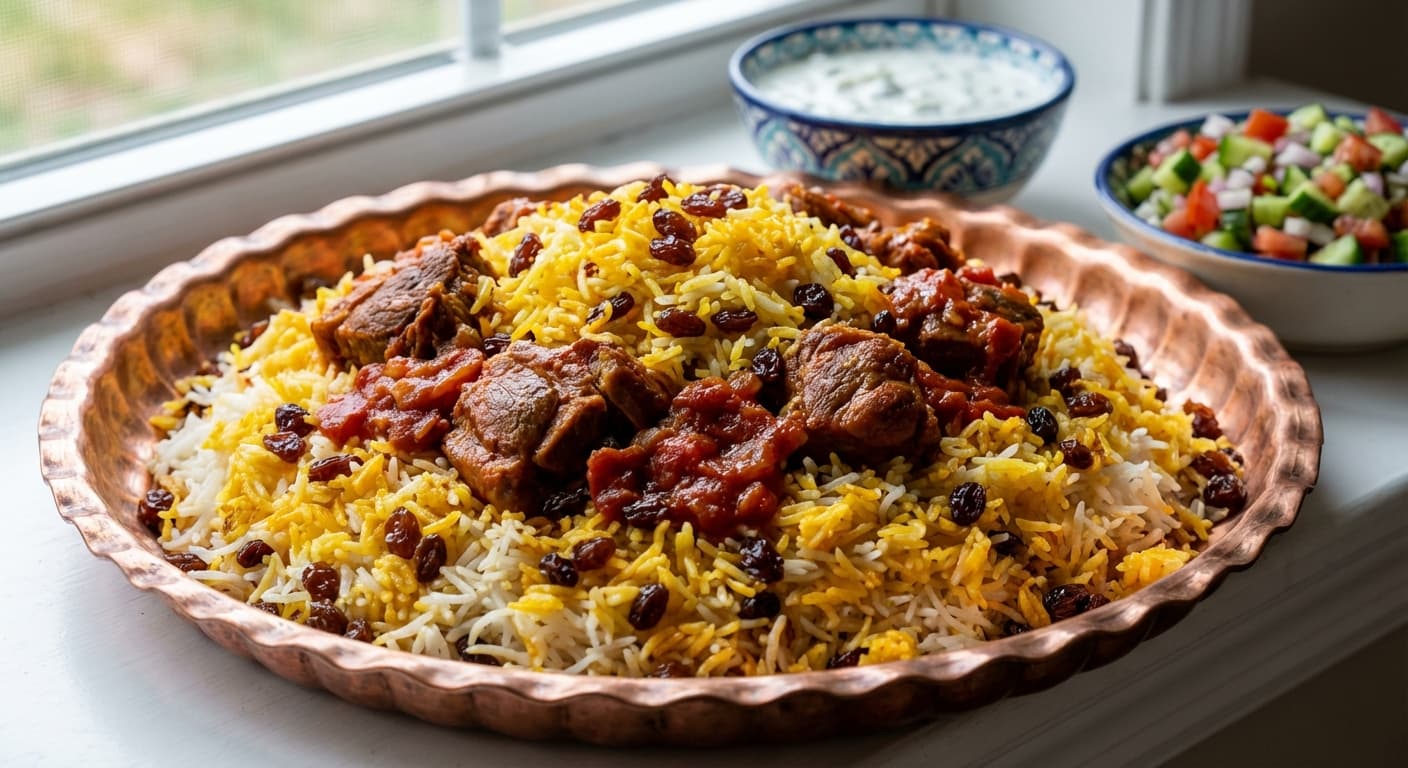
Kashmish Polow (کشمش پلو) — Persian Raisin Rice with Slow-Cooked Lamb
Persian · Rice Dishes · 155 min
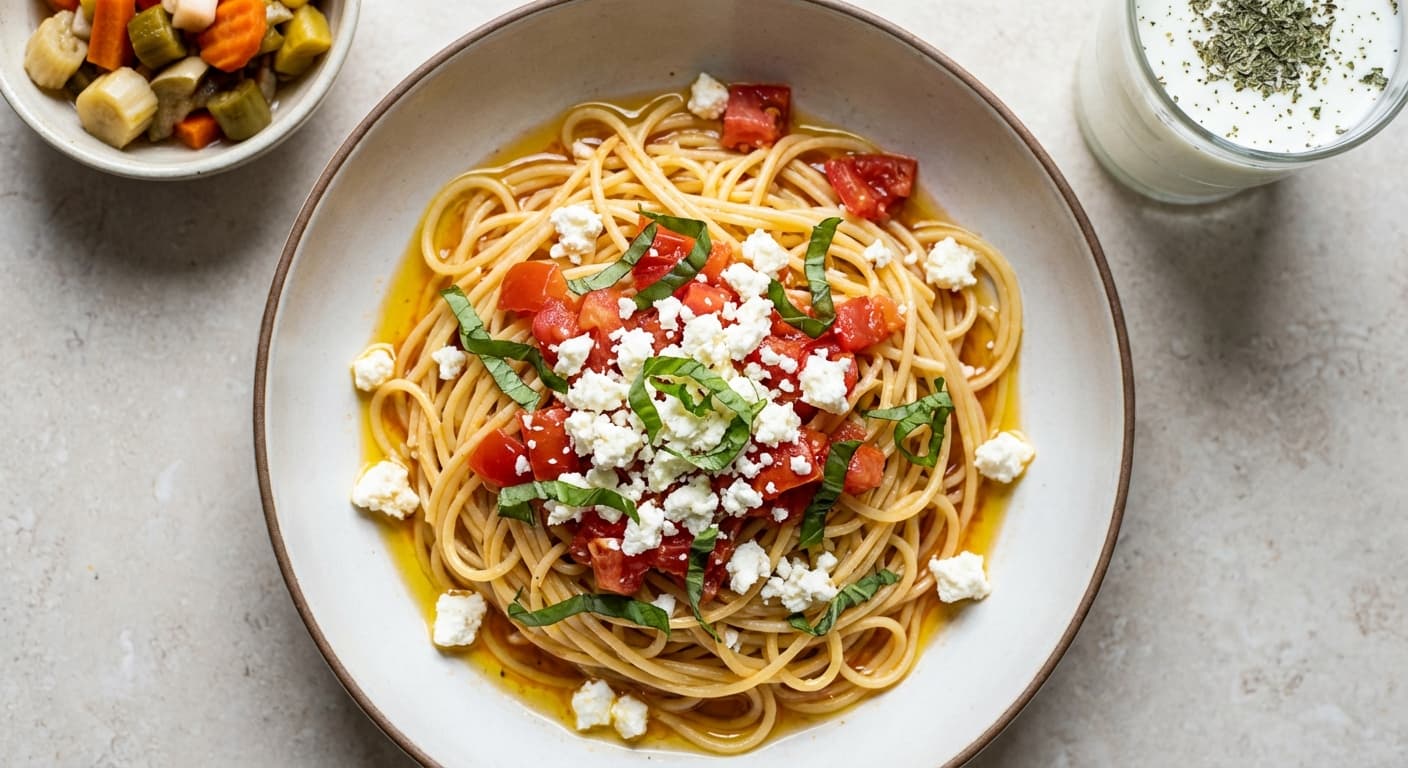
Pastay Paniri (پاستای پنیری) — Persian-Style Cheesy Pasta with Fresh Tomatoes
Persian · Main Courses · 27 min
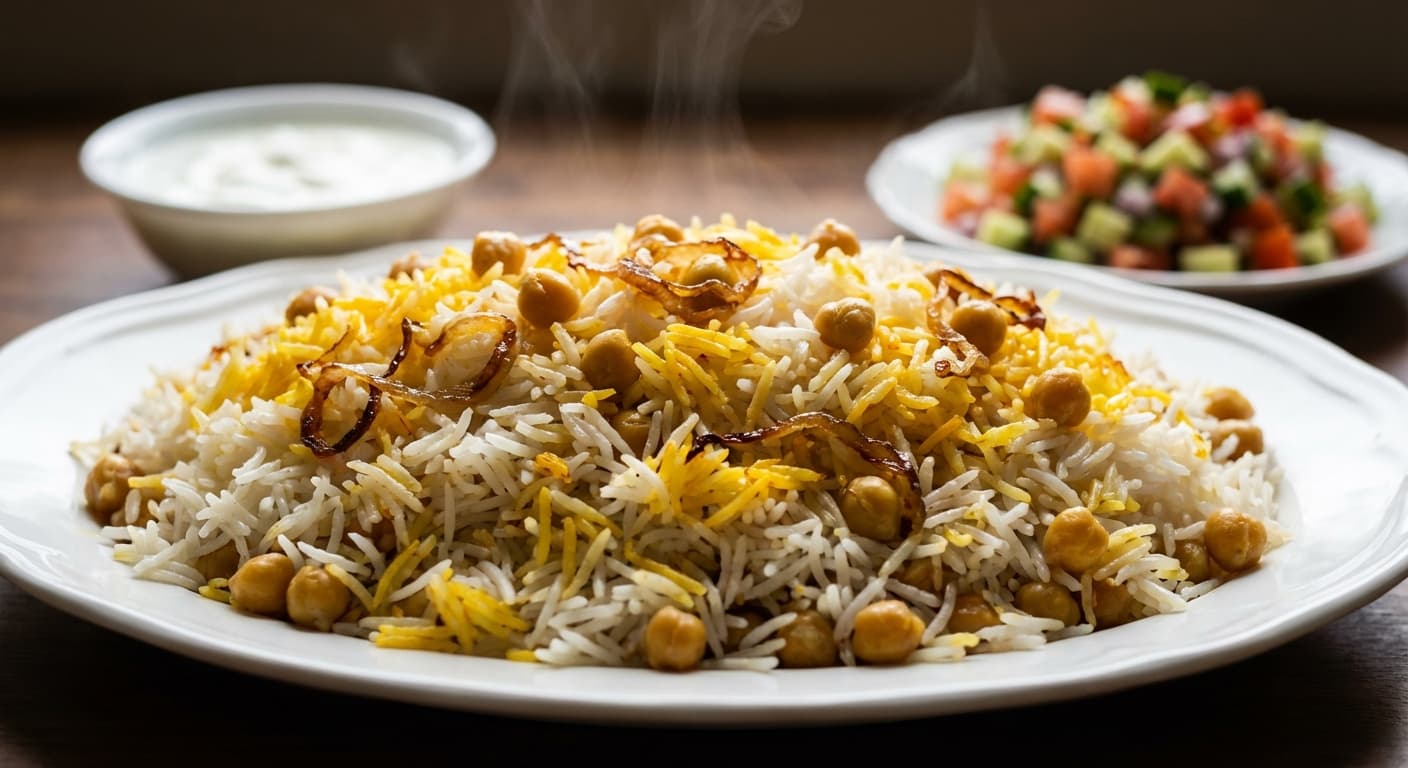
Nokhod Polo (نخود پلو) — Saffron Chickpea Rice with Warm Spices
Persian · Rice Dishes · 80 min
Chicken Chygyrtma (Toyuq Çığırtması) — Azerbaijani Chicken with Eggs and Tomatoes
Azerbaijani · Main Courses · 65 min
Turkish Menemen (Menemen) — Soft Eggs with Tomatoes and Peppers
Turkish · Main Courses · 37 min
Nan-e Sangak (نان سنگک)
Persian · Breads · 200 min
Saffron Sweet Rice (پلو شیرینی زعفرانی) — Festive Persian milk-saffron rice with nuts
Persian · Rice Dishes · 75 min
Ash-e Sak (آش ساک) — Gorgani Spinach and Lamb Ash
Persian · Soups · 175 min
Reviews
Cooked this recipe?
Tap the stars to rate it — that's all it takes. A few words are welcome but optional.
No ratings yet. Cooked this one? Be the first to rate it — it takes one tap.