Taftoon Bread (نان تافتون)
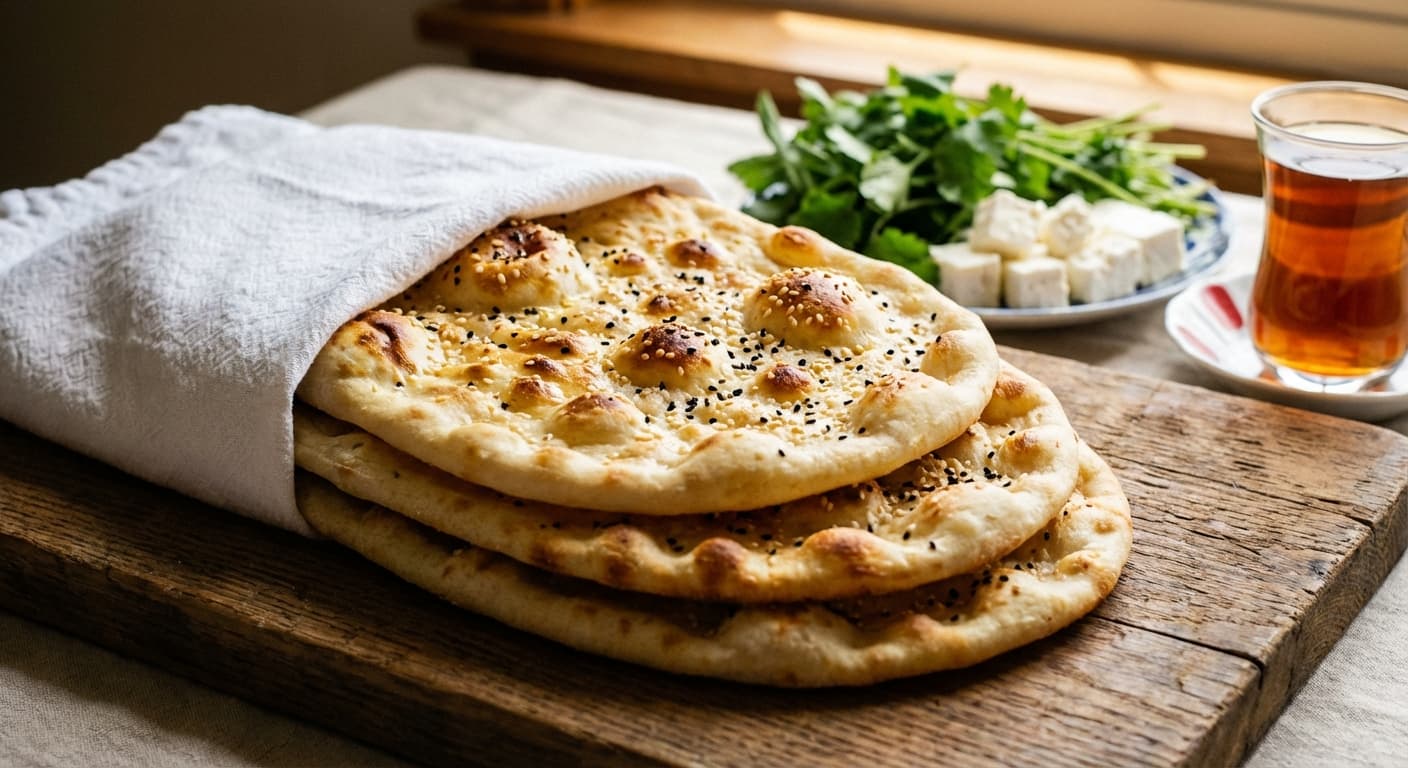
Nan-e Taftoon is a soft, slightly chewy Persian flatbread with a tender crumb and lightly blistered surface. This home-oven method uses a hot baking steel or stone to mimic taftoon heat for authentic flavor and texture.
Printable Recipe Card
Servings: 8 · Total: 123 min · Difficulty: medium
Ingredients (quick list)
- 420 g Bread flour (plus extra for dusting)
- 60 g Whole wheat flour (for a traditional wheaty aroma)
- 330 g Warm water (38–40°C / 100–104°F)
- 60 g Plain yogurt (full-fat preferred)
- 18 g Olive oil (about 1 1/2 Tbsp)
- 8 g Granulated sugar (about 2 tsp)
- 10 g Fine sea salt (about 1 3/4 tsp)
- 7 g Instant yeast (about 2 1/4 tsp)
- 6 g Nigella seeds (about 2 tsp)
- 6 g Toasted sesame seeds (about 2 tsp)
- 30 g All-purpose flour (for bench dusting as needed)
- 60 g Water (for brushing before topping)
Steps (summary)
- Place a baking steel or stone on the middle rack and preheat the oven to 260°C / 500°F for 45 minutes to fully saturate the sur…
- In a large bowl, whisk bread flour (420 g), whole wheat flour (60 g), sugar (8 g), salt (10 g), and instant yeast (7 g) until e…
- Rest the dough (covered) for 10 minutes to hydrate the flour, then knead until smooth and elastic, 8–10 minutes by hand or 6 mi…
- Lightly oil the bowl, place the dough inside, cover, and let rise at 24–27°C / 75–80°F until doubled, 60–75 minutes. To check r…
- Turn the dough onto a lightly floured surface using the 30 g all-purpose flour as needed. Divide into 8 equal pieces (about 110…
- Working with one ball at a time, flatten and stretch into an oval about 22–25 cm long and 3–4 mm thick. Transfer to parchment.…
+ 2 more steps in the full instructions section below.
Cultural Background
Taftoon is one of Iran’s classic daily breads, traditionally baked against the hot walls of a taftoon oven and eaten warm with meals. At home, it’s prized for being soft enough to wrap kebab and hearty stews, yet sturdy enough to scoop dips and spreads.
Equipment
💡 Tips
- For the softest taftoon, keep the breads stacked and wrapped as they cool; exposure to air dries them quickly.
- If your oven runs cool, extend the preheat to 60 minutes and bake one bread at a time for better heat recovery.
- Use a spray bottle instead of brushing water for a more even seed adhesion and less tearing on the surface.
⚠️ Common Mistakes
❌ Not preheating the steel/stone long enough
💡 Why: A lukewarm surface bakes slowly, drying the bread before it puffs and sets, leading to tough taftoon.
✅ Fix: Preheat at 260°C / 500°F for at least 45 minutes (60 minutes for thick stones) and bake in small batches for heat recovery.
❌ Rolling too thick or too thin
💡 Why: Too thick stays doughy inside; too thin turns cracker-dry and won’t stay soft when stacked.
✅ Fix: Aim for 3–4 mm thickness and an even oval; if the dough resists stretching, rest that piece 5 minutes and try again.
❌ Skipping the towel wrap after baking
💡 Why: Steam is what keeps taftoon supple; without wrapping, moisture escapes and the bread stiffens quickly.
✅ Fix: Stack breads immediately and wrap for 10 minutes; for serving later, rewarm briefly and rewrap to restore softness.
🧊 How to Store
Cool completely, then store airtight at room temperature for up to 2 days. For longer storage, freeze with parchment between breads in a zip-top bag for up to 2 months. Reheat from thawed in a 200°C / 400°F oven for 3–4 minutes, or directly from frozen for 6–7 minutes, wrapped loosely in foil to retain softness.
📅 Make Ahead
After the first rise, refrigerate the covered dough for 8–16 hours to develop flavor. The next day, let it sit at room temperature for 45 minutes, then divide, rest 15 minutes, shape, and bake as directed. You can also par-bake each bread for 90 seconds, cool, freeze, then finish baking from frozen for 2–3 minutes at 260°C / 500°F.
🍽️ Pairs Well With
- Serve with feta and fresh herbs (sabzi khordan)
- kashk-e bademjan
- mirza ghasemi
- abgoosht
- or alongside kebab and grilled tomatoes. It’s also excellent for wrapping koofteh
- cutlets
- or egg-and-tomato (nimroo).
Regional Variations
- Tehran and Central IranTaftoon is often kept very soft and thin, with a smooth surface and light dimpling, designed for wrapping kebab and lunchtime sandwiches. Seeds may be minimal or omitted for a cleaner, pliable bread.
- Khorasan (Northeast Iran)Bakers frequently add more nigella and sesame for a stronger aroma and a slightly more robust crust. The bread may be shaped a bit larger and baked a touch longer to develop more blistering while still remaining foldable.
Ingredients
- 420 gBread flour (plus extra for dusting)
- 60 gWhole wheat flour (for a traditional wheaty aroma)
- 330 gWarm water (38–40°C / 100–104°F)
- 60 gPlain yogurt (full-fat preferred)
- 18 gOlive oil (about 1 1/2 Tbsp)
- 8 gGranulated sugar (about 2 tsp)
- 10 gFine sea salt (about 1 3/4 tsp)
- 7 gInstant yeast (about 2 1/4 tsp)
- 6 gNigella seeds (about 2 tsp)
- 6 gToasted sesame seeds (about 2 tsp)
- 30 gAll-purpose flour (for bench dusting as needed)
- 60 gWater (for brushing before topping)
🔄 Substitutions
- Plain yogurt→ Kefir (same weight) or buttermilk (same weight)
- Instant yeast→ Active dry yeast 7 g
- Bread flour→ All-purpose flour 420 g
Instructions
- 1
Place a baking steel or stone on the middle rack and preheat the oven to 260°C / 500°F for 45 minutes to fully saturate the surface with heat. If you have a broiler, confirm it works. Meanwhile, line a tray with parchment for resting the shaped breads and keep a clean towel nearby.
- 2
In a large bowl, whisk bread flour (420 g), whole wheat flour (60 g), sugar (8 g), salt (10 g), and instant yeast (7 g) until evenly combined. Add warm water (330 g), yogurt (60 g), and olive oil (18 g). Mix with a sturdy spoon until a shaggy dough forms and no dry flour remains, about 2 minutes.
- 3
Rest the dough (covered) for 10 minutes to hydrate the flour, then knead until smooth and elastic, 8–10 minutes by hand or 6 minutes in a stand mixer on medium-low. The dough should feel soft and slightly tacky but not wet; if needed, dust with up to 10 g extra flour during kneading only.
- 4
Lightly oil the bowl, place the dough inside, cover, and let rise at 24–27°C / 75–80°F until doubled, 60–75 minutes. To check readiness, press a floured fingertip into the dough; the indentation should slowly spring back but remain faintly visible.
- 5
Turn the dough onto a lightly floured surface using the 30 g all-purpose flour as needed. Divide into 8 equal pieces (about 110 g each). Shape each into a tight ball by tucking edges under, then cover with a towel and rest for 15 minutes so the gluten relaxes for easy stretching.
- 6
Working with one ball at a time, flatten and stretch into an oval about 22–25 cm long and 3–4 mm thick. Transfer to parchment. Brush the top lightly with water (about 1–2 tsp per bread), then sprinkle with a mix of nigella (6 g) and sesame (6 g). Dimple the surface with fingertips to help prevent large bubbles.
- 7
Bake 2 breads at a time: slide the parchment with the breads onto the hot steel/stone. Bake at 260°C / 500°F for 2 minutes, then switch to broil on high for 30–60 seconds to create light blistering and pale golden spots. Remove when the bread is set, flexible, and lightly colored, total 2 1/2–3 minutes per batch.
- 8
Immediately stack the hot taftoon breads and wrap in a clean towel for 10 minutes; the trapped steam keeps them soft and foldable. Serve warm. If you prefer a slightly crisper edge, unwrap after 5 minutes and let the stack breathe for another 5 minutes before serving.
🪪 Recipe Passport
Cultural Background
Taftoon is one of Iran’s classic daily breads, traditionally baked against the hot walls of a taftoon oven and eaten warm with meals. At home, it’s prized for being soft enough to wrap kebab and hearty stews, yet sturdy enough to scoop dips and spreads.
Regional Variations
Researched from multiple sources and validated by the Zaffaron editorial team. Every recipe is tested for accuracy, measurements, and cultural authenticity.
Nutrition per serving
Pairs well with
If you enjoyed this recipe, here are a few related Zaffaron recipes to try next.
Does your family make this differently?
Every family has their own version. Maybe your grandmother adds a secret ingredient, or your aunt has a completely different technique. Preserve your family's version — with their name on it, forever.
You Might Also Like
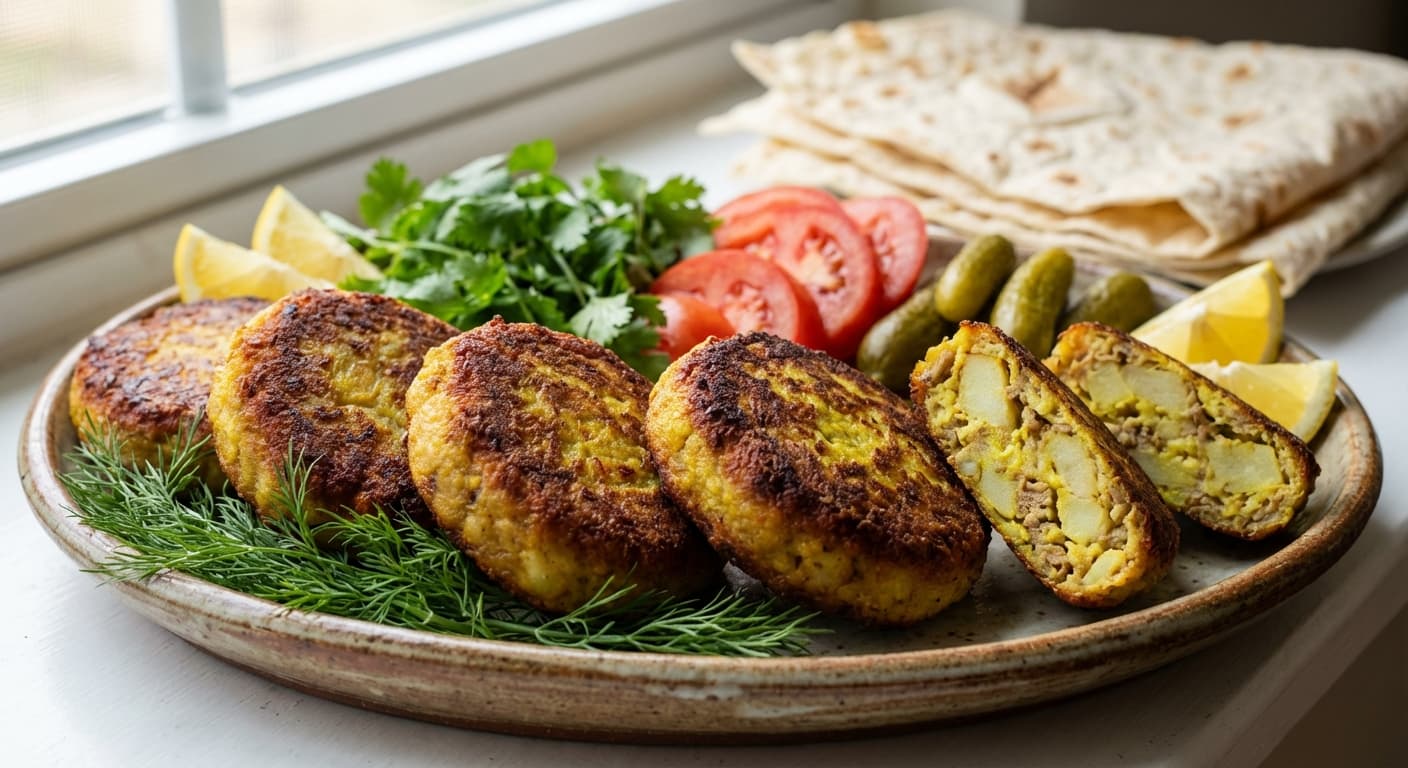
Persian Kotlet (کتلت) — Saffron-Infused Meat & Potato Patties
Persian · Main Courses · 55 min
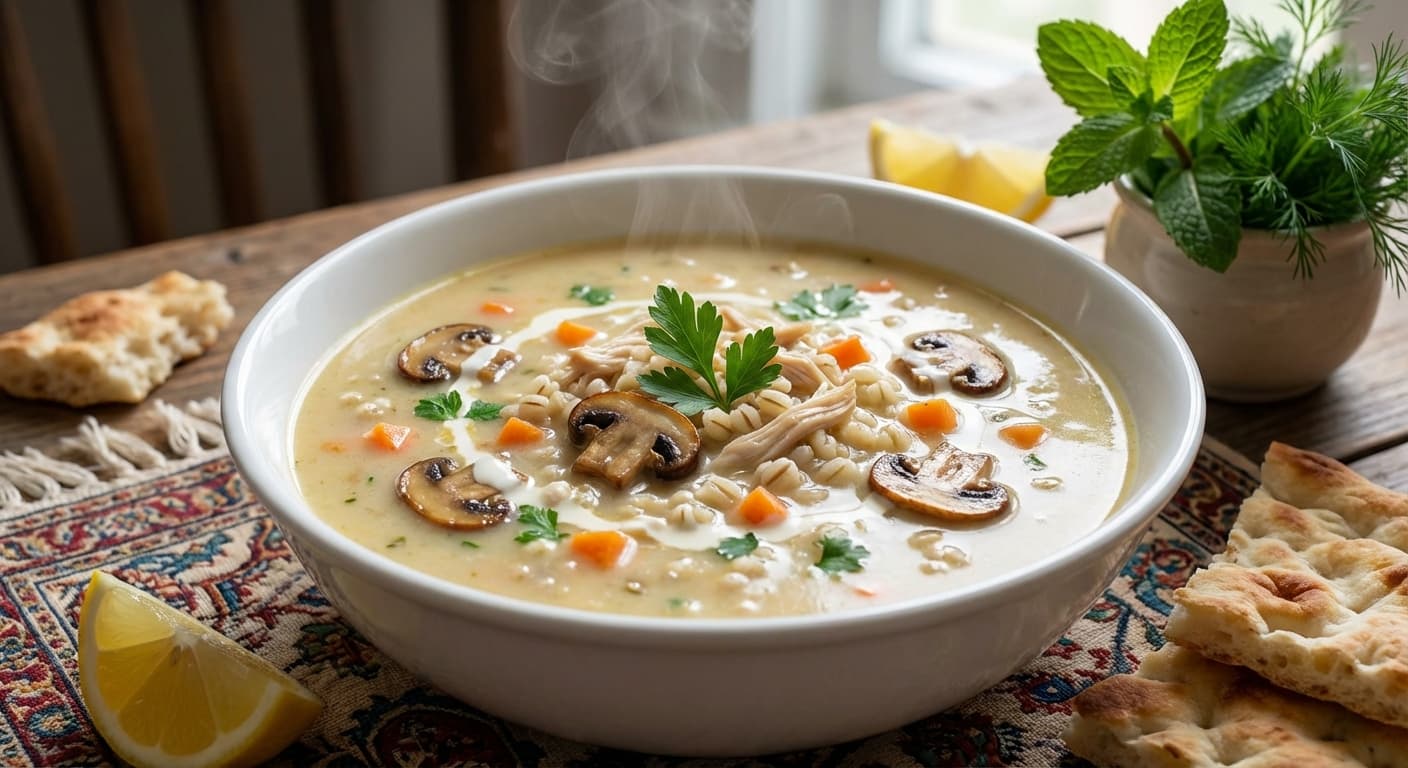
Soup-e Jo (سوپ جو) — Persian Creamy Barley Soup
Persian · Soups · 90 min
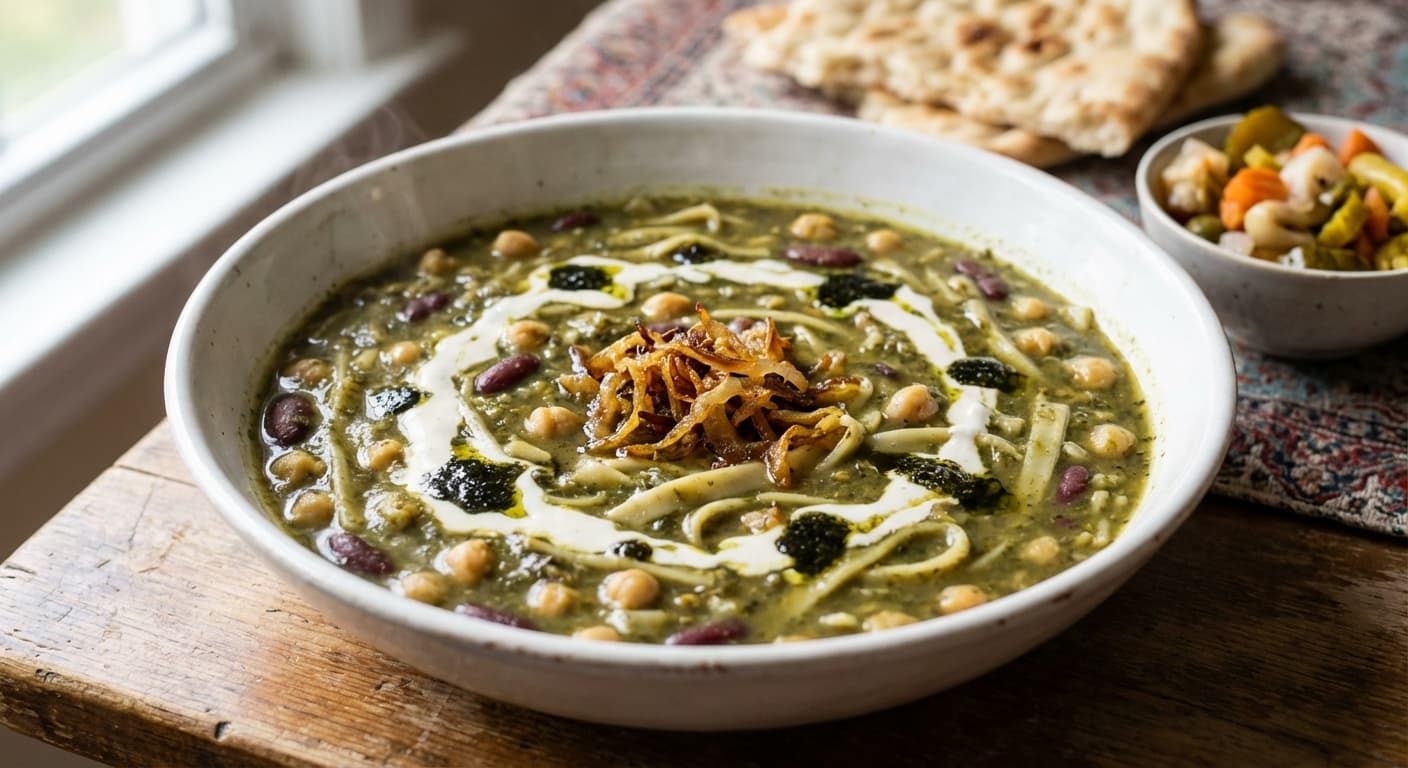
Ash Reshteh (آش رشته) — Persian Herb, Bean, and Noodle Soup
Persian · Soups · 145 min
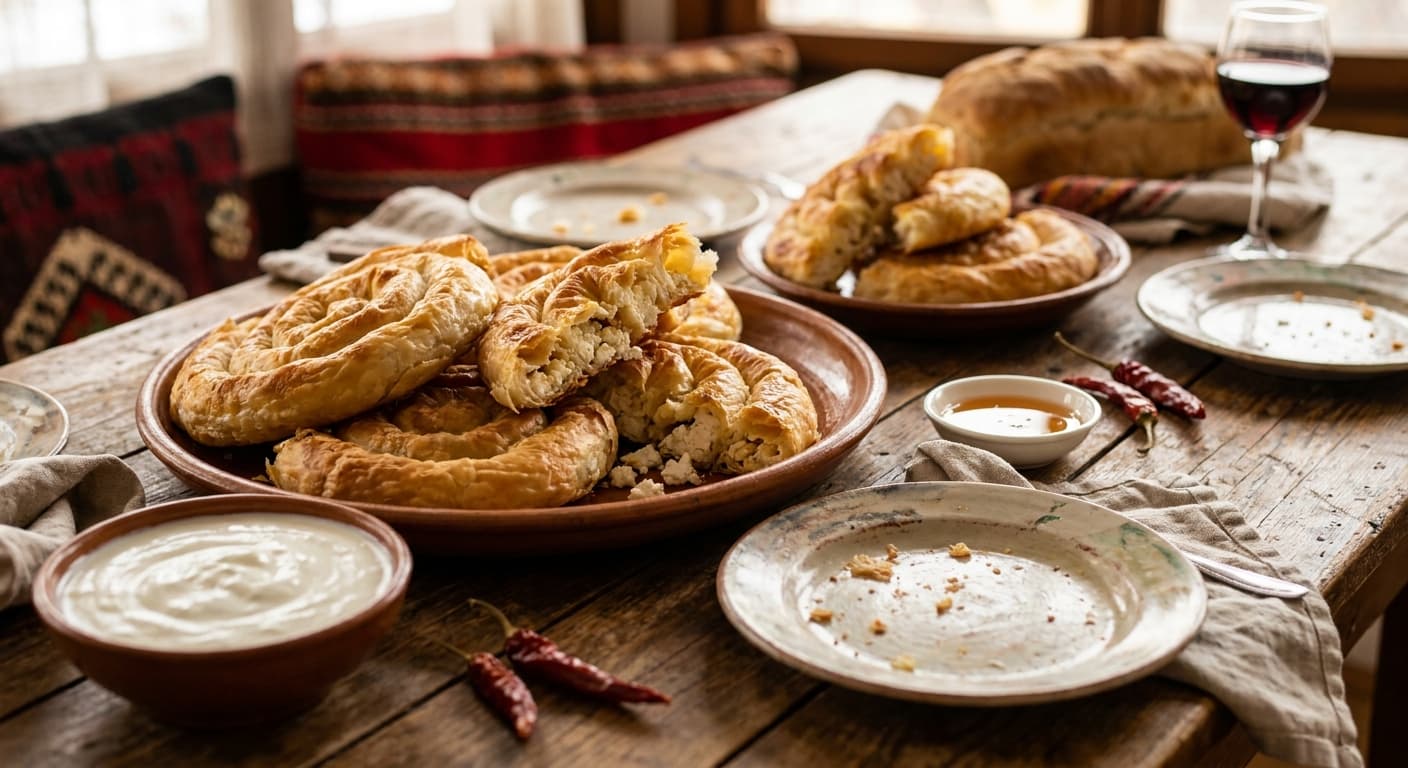
Bulgarian Banitsa (Баница) — Flaky Sirene-Filled Phyllo Pie
Bulgarian · Breads · 68 min
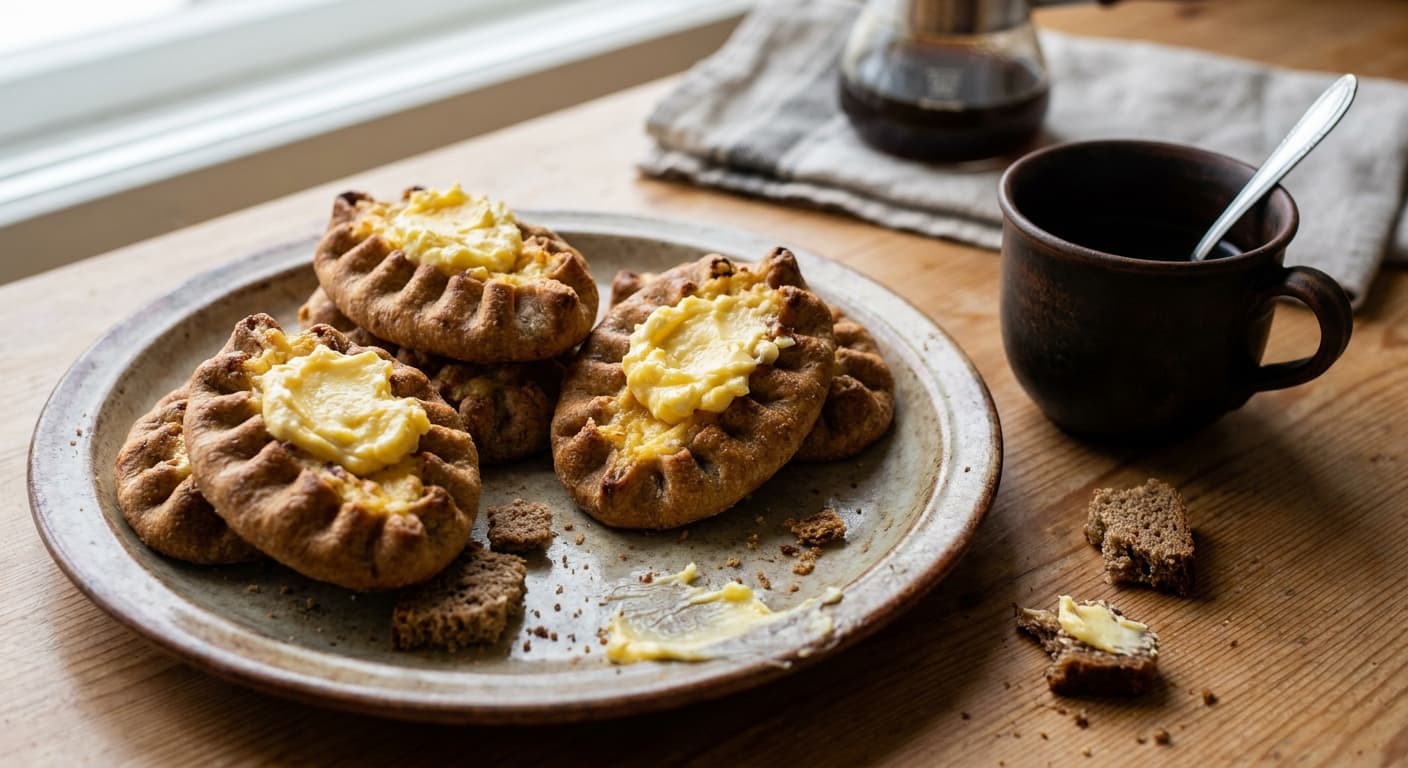
Karelian Pasties (Karjalanpiirakka) — Rye Crusts Filled with Rice Porridge
Finnish · Breads · 115 min
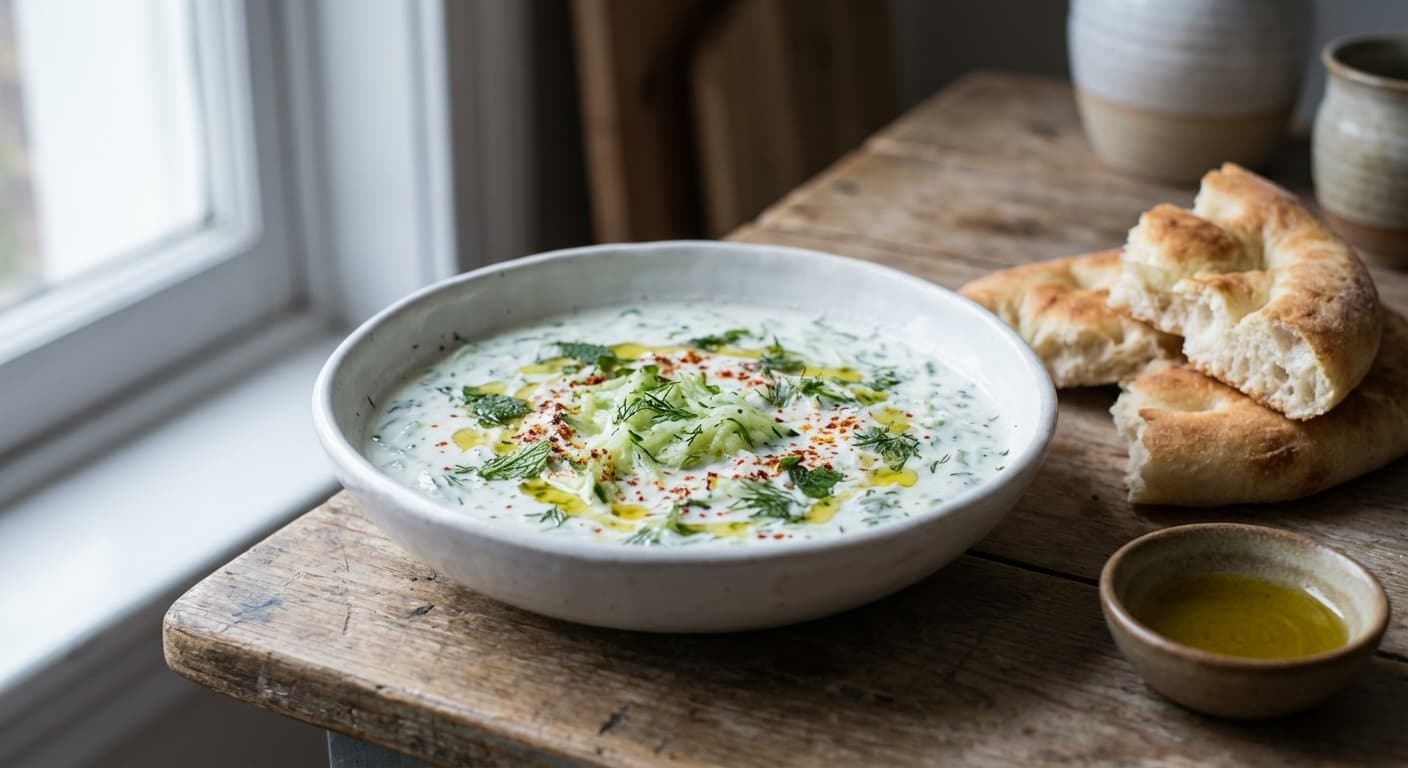
Cacık (Yoğurtlu Salatalık Mezesi) — Chilled Turkish Yogurt, Cucumber & Mint Dip
Turkish · Appetizers · 15 min
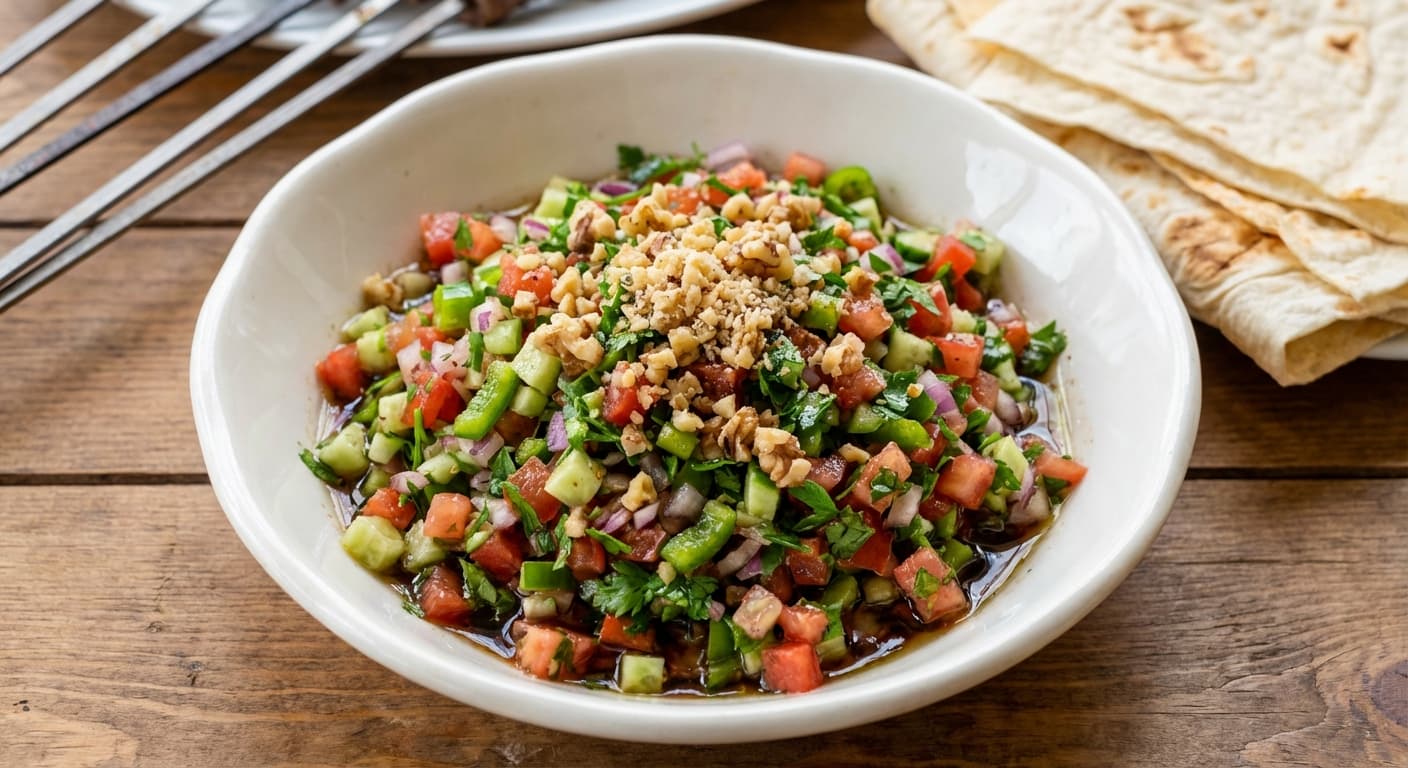
Gavurdağı Salad (Gavurdağı Salatası) — Finely Chopped Walnut & Pomegranate Salad
Turkish · Salads · 20 min
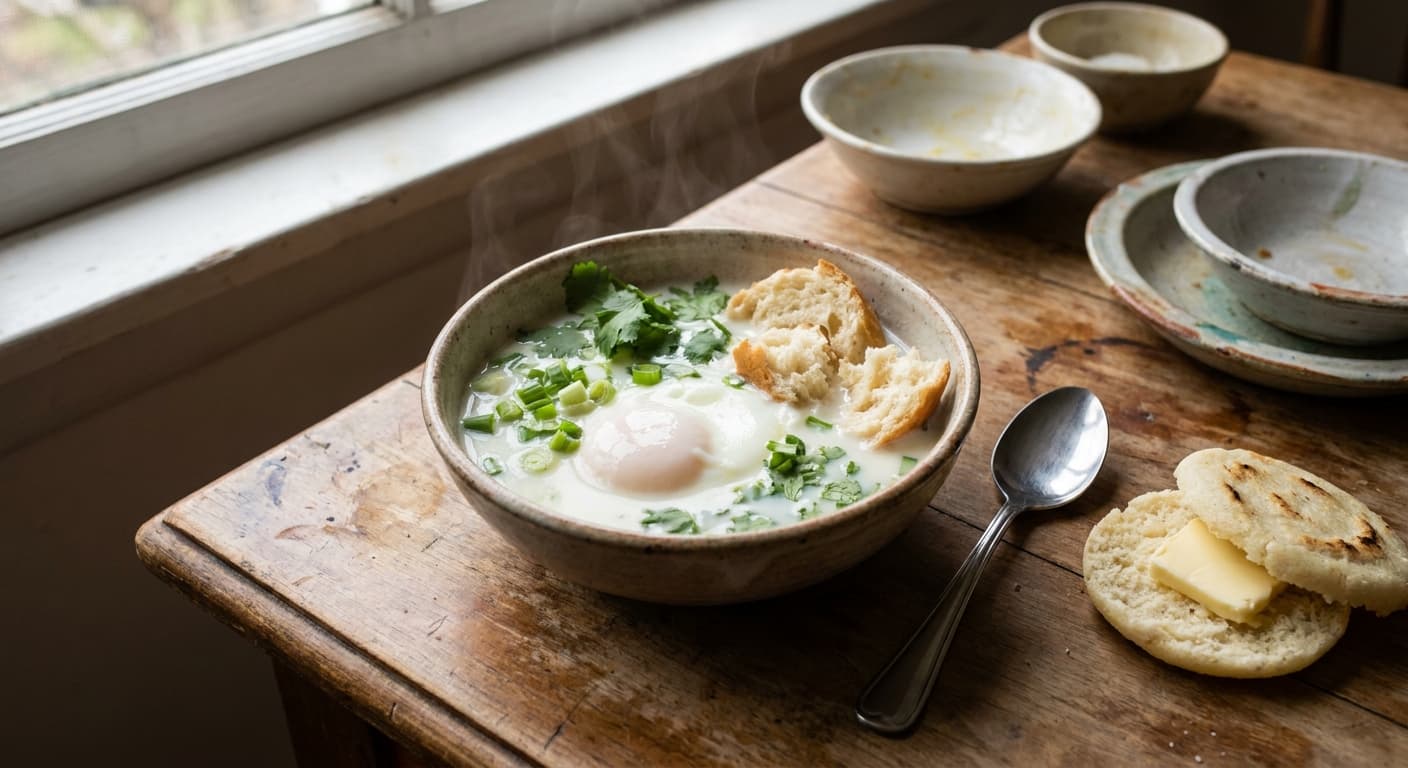
Changua (Changua) — Colombian Milk-and-Egg Breakfast Soup
Colombian · Soups · 25 min
Reviews
Cooked this recipe?
Tap the stars to rate it — that's all it takes. A few words are welcome but optional.
No ratings yet. Cooked this one? Be the first to rate it — it takes one tap.