Nigerian Egusi Soup (Ọ̀bẹ̀ Ègúsí) — Melon Seed Stew with Greens and Fish
Egusi soup is a rich Nigerian classic built from ground melon seeds, palm oil, peppers, leafy greens, and assorted meat or fish. It is commonly served with pounded yam, eba, amala, or other swallows.
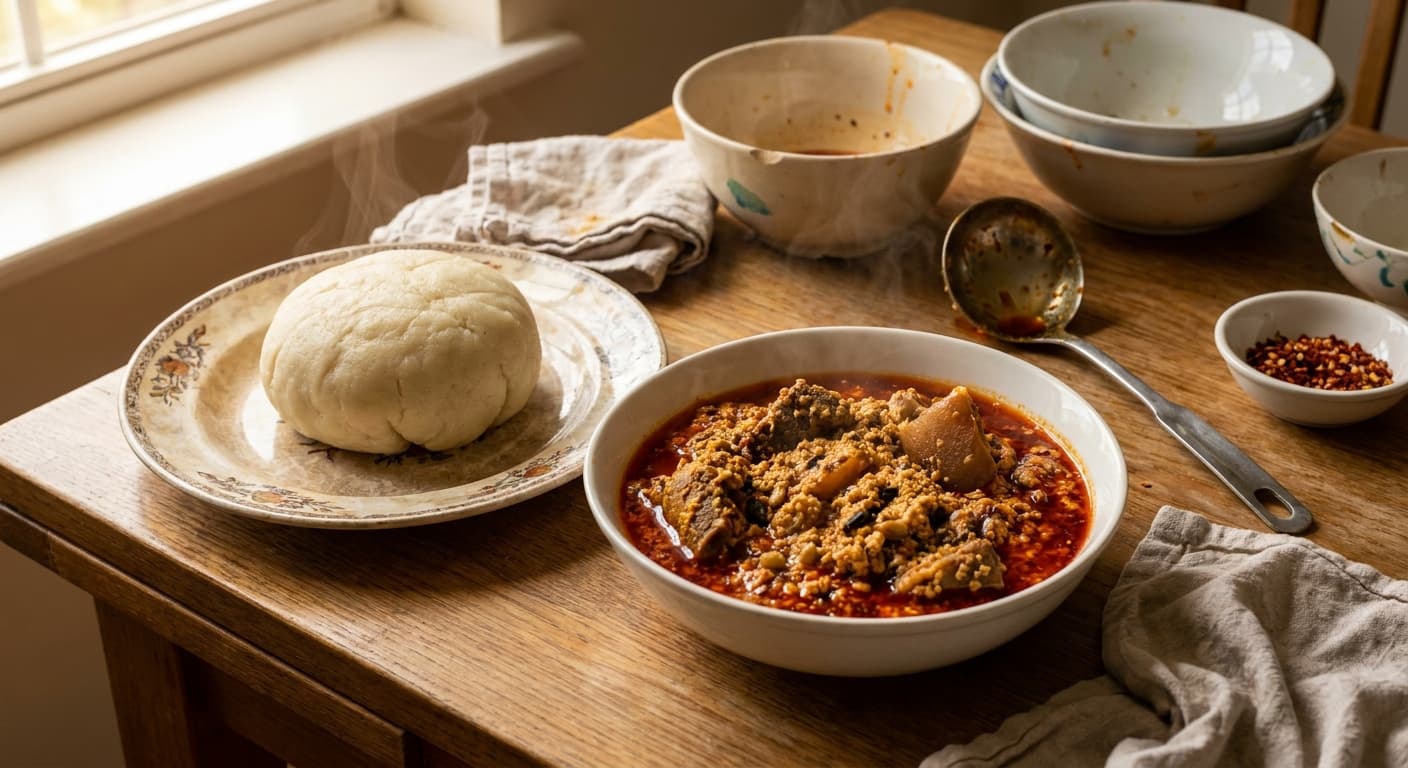
Printable Recipe Card
Servings: 6 · Total: 115 min · Difficulty: medium
Ingredients (quick list)
- 250 g hulled egusi seeds (finely ground)
- 180 ml warm water (for making the egusi paste)
- 180 ml red palm oil
- 2 large yellow onion (1 chopped for stock, 1 blended with peppers)
- 1 red bell pepper (seeded and roughly chopped)
- 2 Scotch bonnet peppers (use 1 for milder heat)
- 1500 ml water
- 600 g beef chuck (cut into 4 cm chunks)
- 300 g honeycomb tripe (cleaned and cut into 4 cm pieces)
- 100 g stockfish (soaked until pliable and rinsed)
- 150 g smoked dried fish (rinsed, deboned, and broken into large flakes)
- 30 g ground crayfish
+ 5 more in the full ingredients section below.
Steps (summary)
- Place the beef, tripe, stockfish, chopped onion, 1 bouillon cube, 5 g salt, and 1500 ml water in a heavy pot. Bring to a boil o…
- While the meat cooks, blend the remaining onion with the red bell pepper and Scotch bonnet peppers until mostly smooth. Do not…
- Stir the ground egusi with 180 ml warm water in a bowl to form a thick, spoonable paste. Let it stand for 10 minutes so the gro…
- When the meat is tender, lift the beef, tripe, and stockfish into a bowl and strain or skim the cooking liquid if needed. Measu…
- Set a wide heavy pot over medium heat and add the red palm oil. Warm it for 2 minutes until it is glossy but not smoking, then…
- Add the egusi paste in heaped spoonfuls across the surface of the fried pepper base. Cover the pot and let the paste steam undi…
+ 2 more steps in the full instructions section below.
Cultural Background
Egusi soup is one of Nigeria’s most beloved soups, with versions across Yoruba, Igbo, Edo, and other communities. Its richness makes it a staple for Sunday meals, guests, and family celebrations served with a swallow.
Equipment
💡 Tips
- Do not bleach the palm oil for egusi soup; warming it gently preserves its color and characteristic flavor.
- For the classic curd-like texture, add the egusi paste in spoonfuls and let it steam before stirring.
- If the soup becomes too thick, loosen it with 60 ml increments of reserved meat stock rather than plain water.
⚠️ Common Mistakes
❌ Stirring the egusi immediately after adding it to the pot.
✅ Fix: Let the spoonfuls steam covered for several minutes first so they set into soft curds.
❌ Using too much water in the pepper blend.
✅ Fix: Blend with minimal liquid and fry until the palm oil separates before adding stock.
❌ Cooking the greens for too long.
✅ Fix: Add ugu or spinach at the end and simmer only until just softened.
🧊 How to Store
Cool the soup within 2 hours, then refrigerate in an airtight container for up to 4 days or freeze for up to 3 months. Reheat gently in a covered pot with 30 to 60 ml water or stock, stirring often to prevent the egusi from catching.
📅 Make Ahead
Cook the meats and stock up to 2 days ahead and refrigerate them together. The egusi can also be ground in advance and stored airtight in the refrigerator for 1 week or in the freezer for 2 months.
🍽️ Pairs Well With
- Pounded yam
- eba
- amala
- semovita
- fufu
- steamed white rice.
Regional Variations
- Yoruba-style egusi often includes iru and may emphasize chunky egusi curds.
- Igbo-style versions may use bitter leaf, uziza leaf, or more assorted meats.
- Some Nigerian cooks prepare a frying method with palm oil first, while others use a boiling method for a lighter soup.
Ingredients
- 250 ghulled egusi seeds (finely ground)
- 180 mlwarm water (for making the egusi paste)
- 180 mlred palm oil
- 2large yellow onion (1 chopped for stock, 1 blended with peppers)
- 1red bell pepper (seeded and roughly chopped)
- 2Scotch bonnet peppers (use 1 for milder heat)
- 1500 mlwater
- 600 gbeef chuck (cut into 4 cm chunks)
- 300 ghoneycomb tripe (cleaned and cut into 4 cm pieces)
- 100 gstockfish (soaked until pliable and rinsed)
- 150 gsmoked dried fish (rinsed, deboned, and broken into large flakes)
- 30 gground crayfish
- 2 tbspfermented locust beans (iru, rinsed)
- 2halal-certified beef bouillon cubes (use gluten-free cubes if needed)
- 10 gfine sea salt
- 1 tspground dried chile (optional, for extra heat)
- 250 gugu leaves (sliced; spinach may be used if ugu is unavailable)
🔄 Substitutions
- ugu leaves→ fresh spinach
- stockfish→ unsalted dried cod
- fermented locust beans→ omit or use 1 tbsp fish sauce
- beef chuck and tripe→ goat meat
Instructions
- 1
Place the beef, tripe, stockfish, chopped onion, 1 bouillon cube, 5 g salt, and 1500 ml water in a heavy pot. Bring to a boil over medium-high heat, then reduce to a steady simmer and cook until the beef is tender and the tripe is pleasantly chewy, about 55 to 65 minutes.
- 2
While the meat cooks, blend the remaining onion with the red bell pepper and Scotch bonnet peppers until mostly smooth. Do not add more than 60 ml water unless the blender needs help moving, because a watery pepper blend will thin the soup and delay frying.
- 3
Stir the ground egusi with 180 ml warm water in a bowl to form a thick, spoonable paste. Let it stand for 10 minutes so the ground seeds hydrate, which helps them form soft curds instead of turning gritty.
- 4
When the meat is tender, lift the beef, tripe, and stockfish into a bowl and strain or skim the cooking liquid if needed. Measure 700 ml of the stock for the soup and reserve any extra for loosening the pot later.
- 5
Set a wide heavy pot over medium heat and add the red palm oil. Warm it for 2 minutes until it is glossy but not smoking, then stir in the pepper blend and fry for 10 to 12 minutes, scraping often, until the raw pepper smell softens and the oil begins to separate.
- 6
Add the egusi paste in heaped spoonfuls across the surface of the fried pepper base. Cover the pot and let the paste steam undisturbed for 6 minutes, then gently turn the curds so they set into tender clumps rather than dissolving completely.
- 7
Pour in 700 ml reserved meat stock, then add the cooked beef, tripe, stockfish, smoked dried fish, ground crayfish, iru, remaining bouillon cube, remaining 5 g salt, and ground dried chile if using. Simmer uncovered for 15 to 18 minutes, stirring carefully from the bottom so the egusi thickens without scorching.
- 8
Fold in the sliced ugu leaves and simmer for 4 to 5 minutes until the greens soften but keep their color. Rest the soup off the heat for 10 minutes before serving, because the egusi will continue to thicken and the palm oil will settle into a glossy layer.
🪪 Recipe Passport
Cultural Background
Egusi soup is one of Nigeria’s most beloved soups, with versions across Yoruba, Igbo, Edo, and other communities. Its richness makes it a staple for Sunday meals, guests, and family celebrations served with a swallow.
Regional Variations
Researched from multiple sources and validated by the Zaffaron editorial team. Every recipe is tested for accuracy, measurements, and cultural authenticity.
📚 Sources & Cultural References
- Jessica B. Harris — The Africa Cookbook: Tastes of a Continent — (1998)
- Alan Davidson — The Oxford Companion to Food — (1999)
Sources cited by the Zaffaron editorial team during recipe research. Cultural and culinary references supporting authenticity claims.
Nutrition per serving
Pairs well with
If you enjoyed this recipe, here are a few related Zaffaron recipes to try next.
Does your family make this differently?
Every family has their own version. Maybe your grandmother adds a secret ingredient, or your aunt has a completely different technique. Preserve your family's version — with their name on it, forever.
You Might Also Like
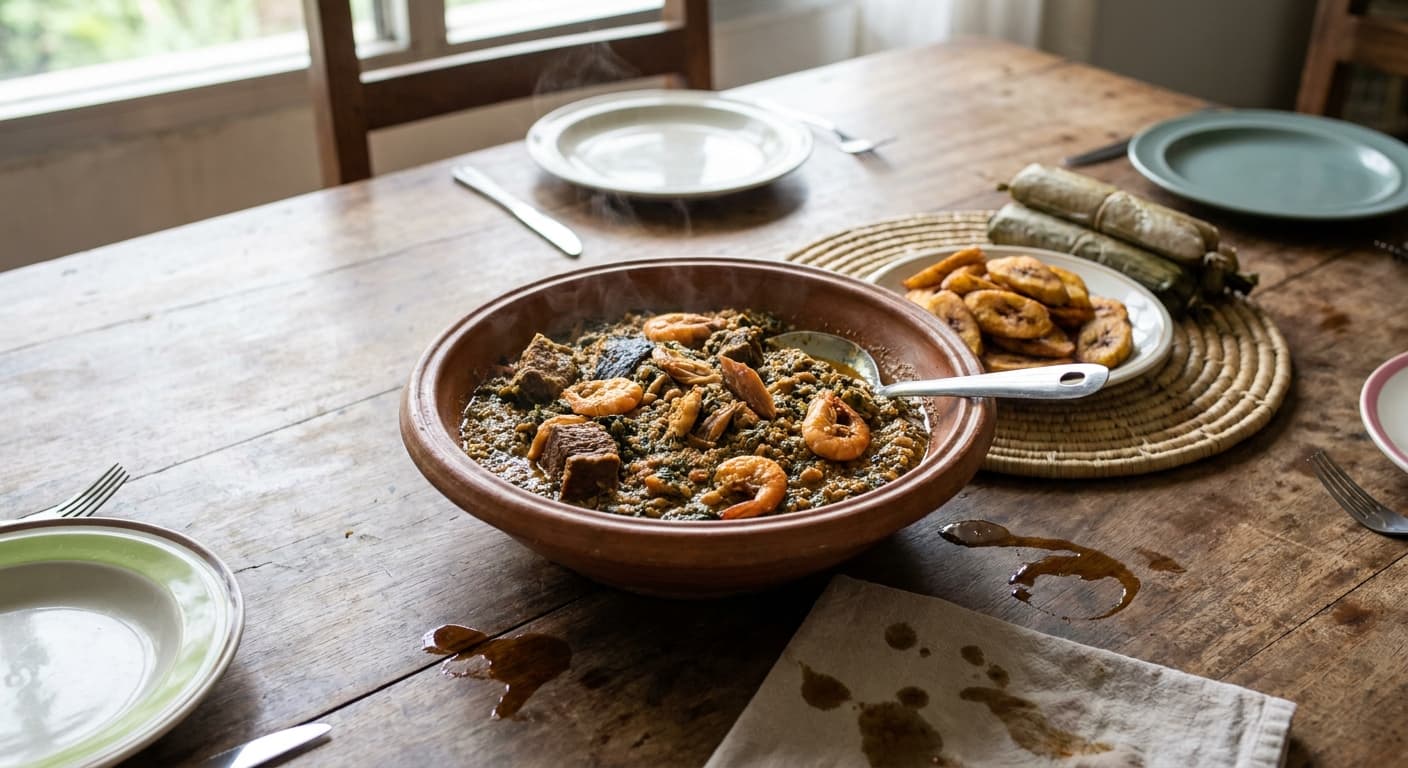
Cameroonian Ndolé (Ndolé) — Bitterleaf Peanut Stew with Beef and Seafood
West african · Stews · 140 min
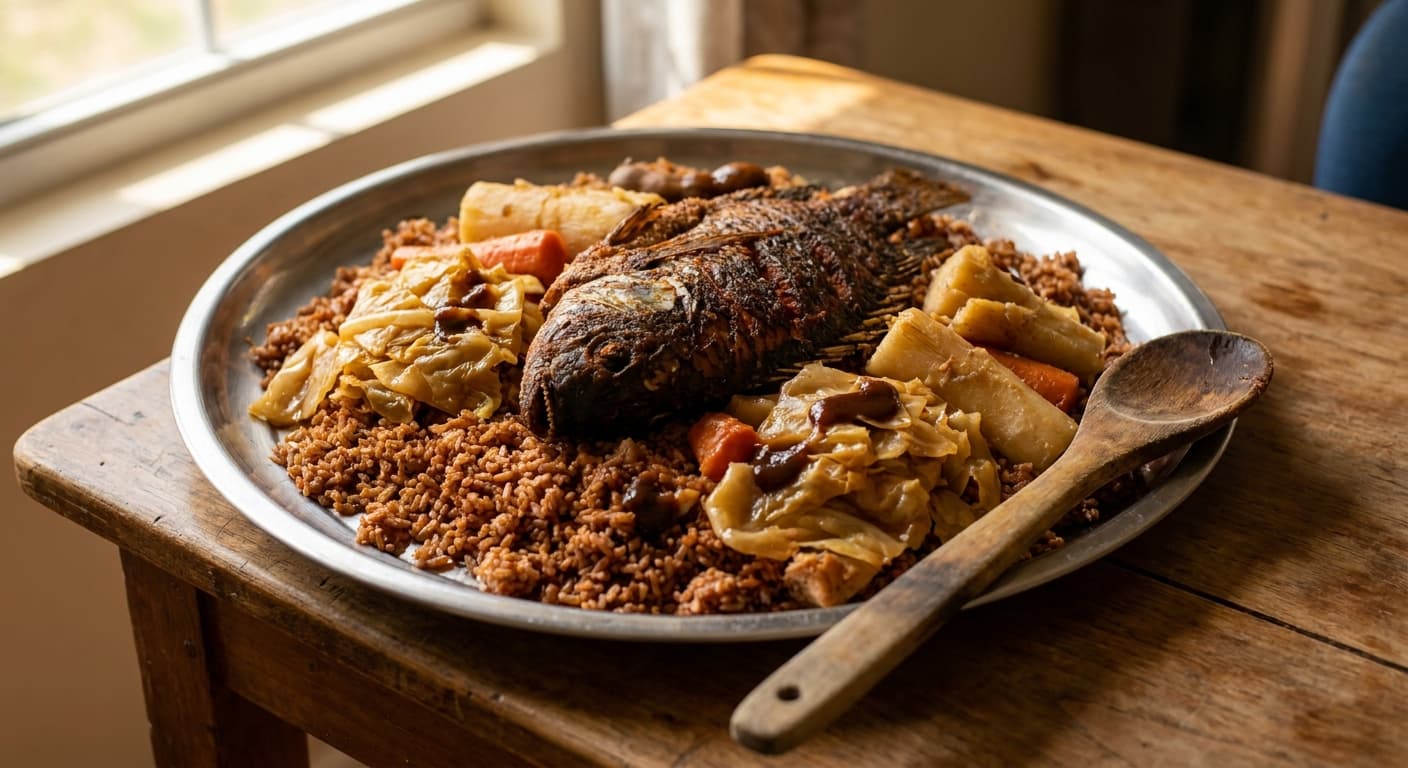
Senegalese Fish and Rice (Ceebu Jën) — Tomato-Braised National Dish
West african · Rice Dishes · 120 min
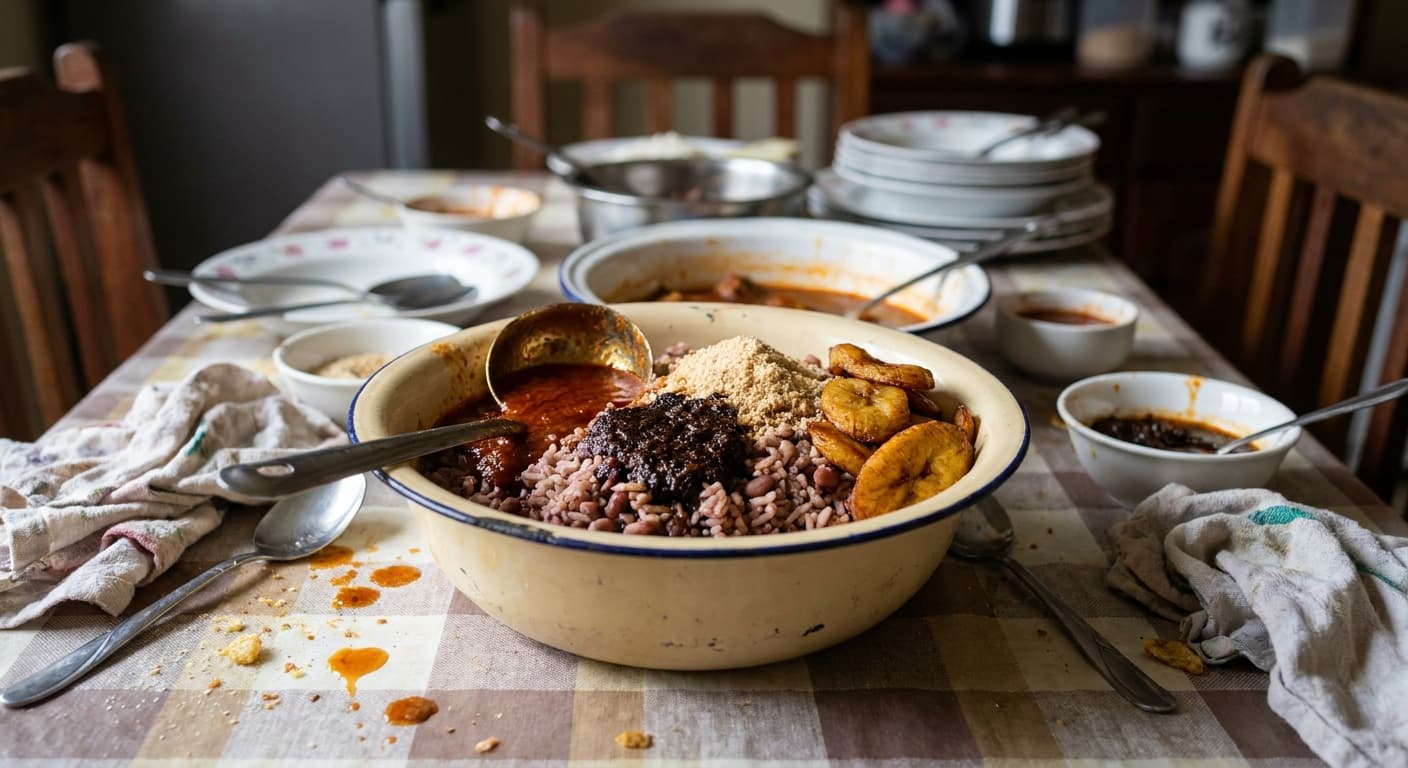
Ghanaian Waakye (Waakye) — Rice and Beans Dyed with Sorghum Leaves
West african · Rice Dishes · 85 min
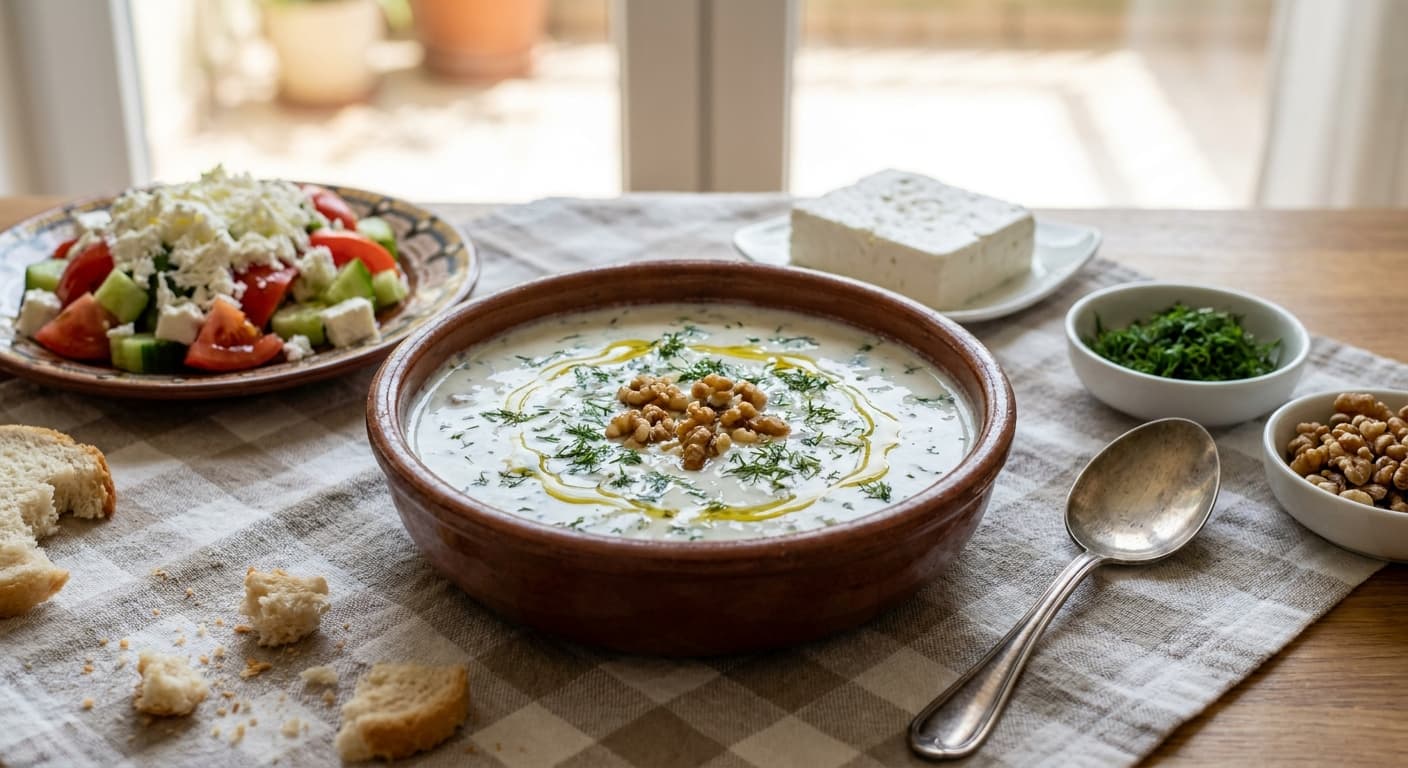
Bulgarian Tarator (Таратор) — Cold Yogurt Cucumber Soup
Bulgarian · Soups · 15 min
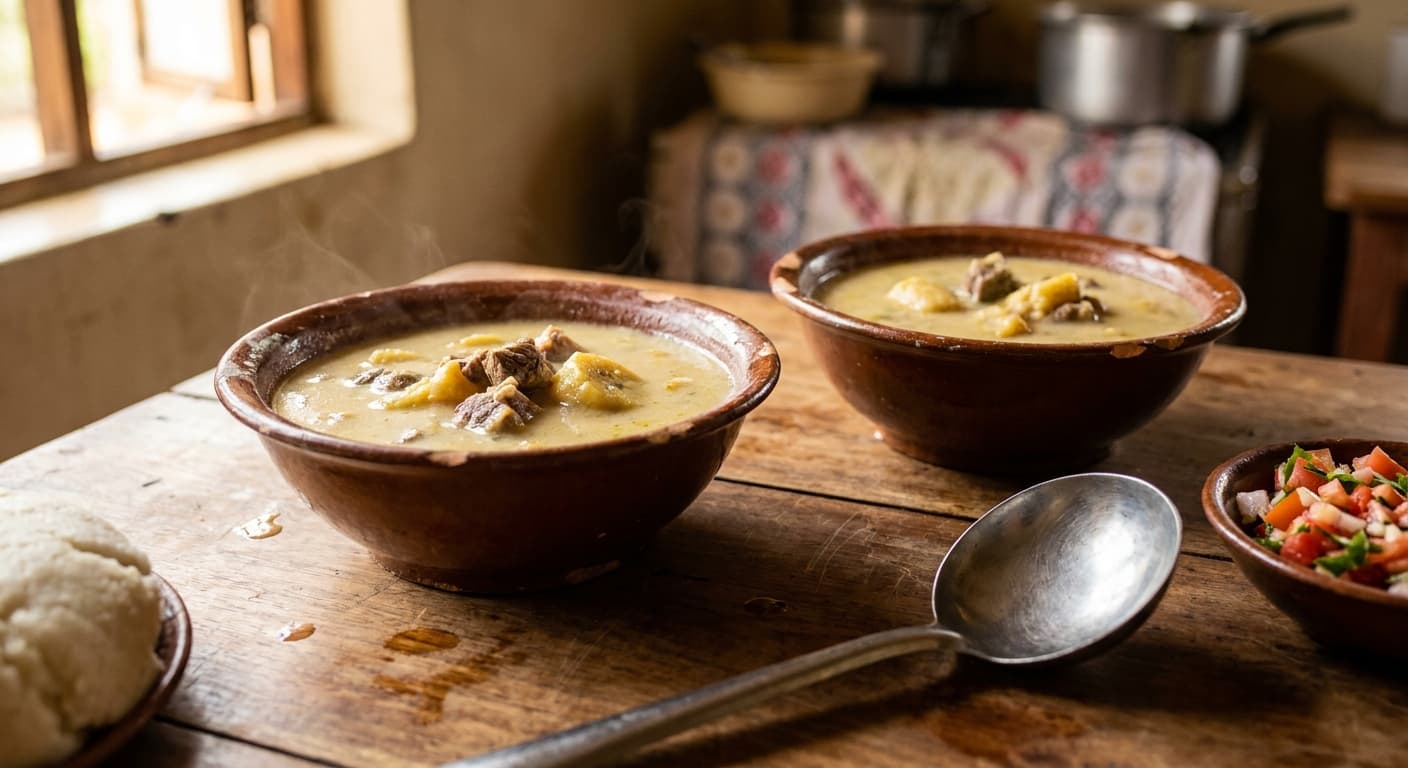
Mtori (Mtori) — Tanzanian Banana-Beef Soup
Tanzanian · Soups · 175 min
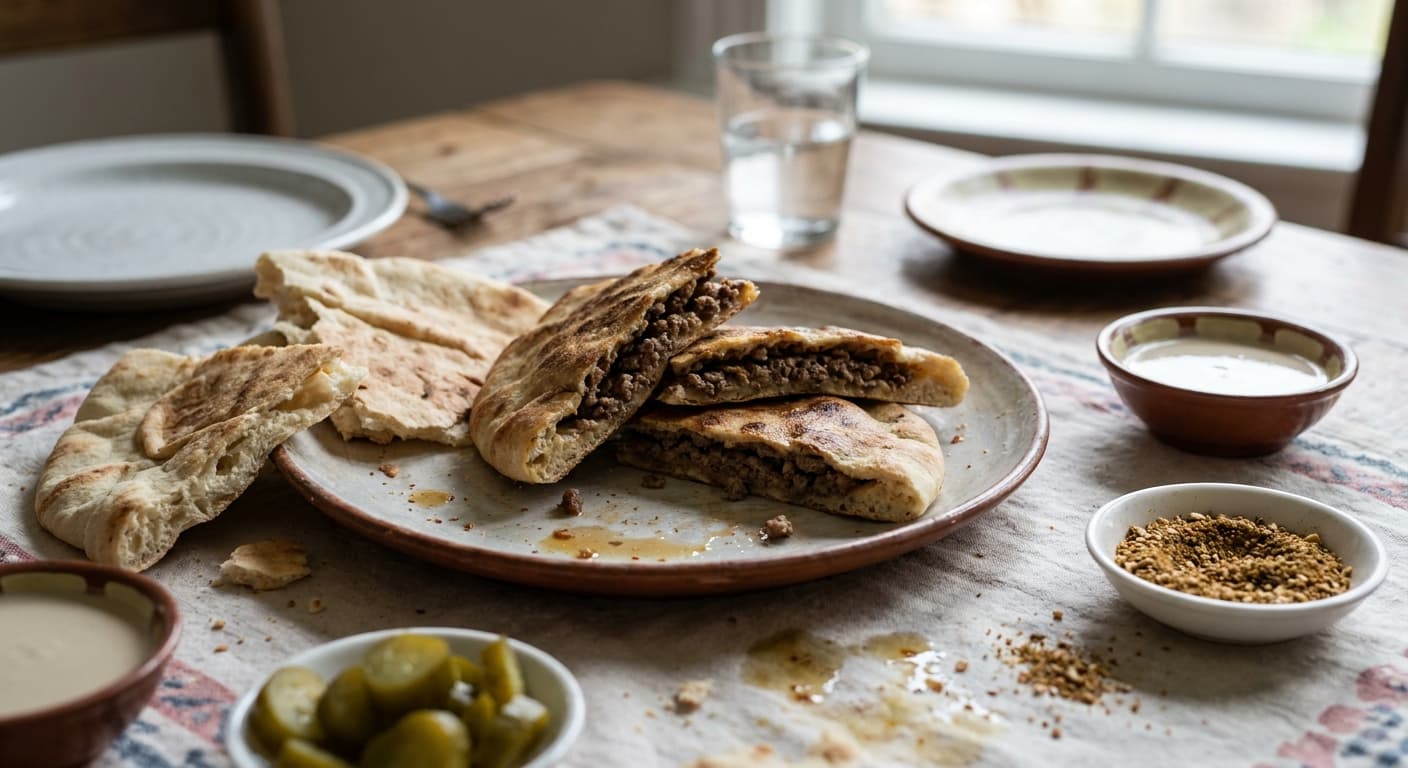
Hawawshi (حواوشي) — Egyptian Spiced Meat-Stuffed Baladi Bread
Egyptian · Main Courses · 55 min
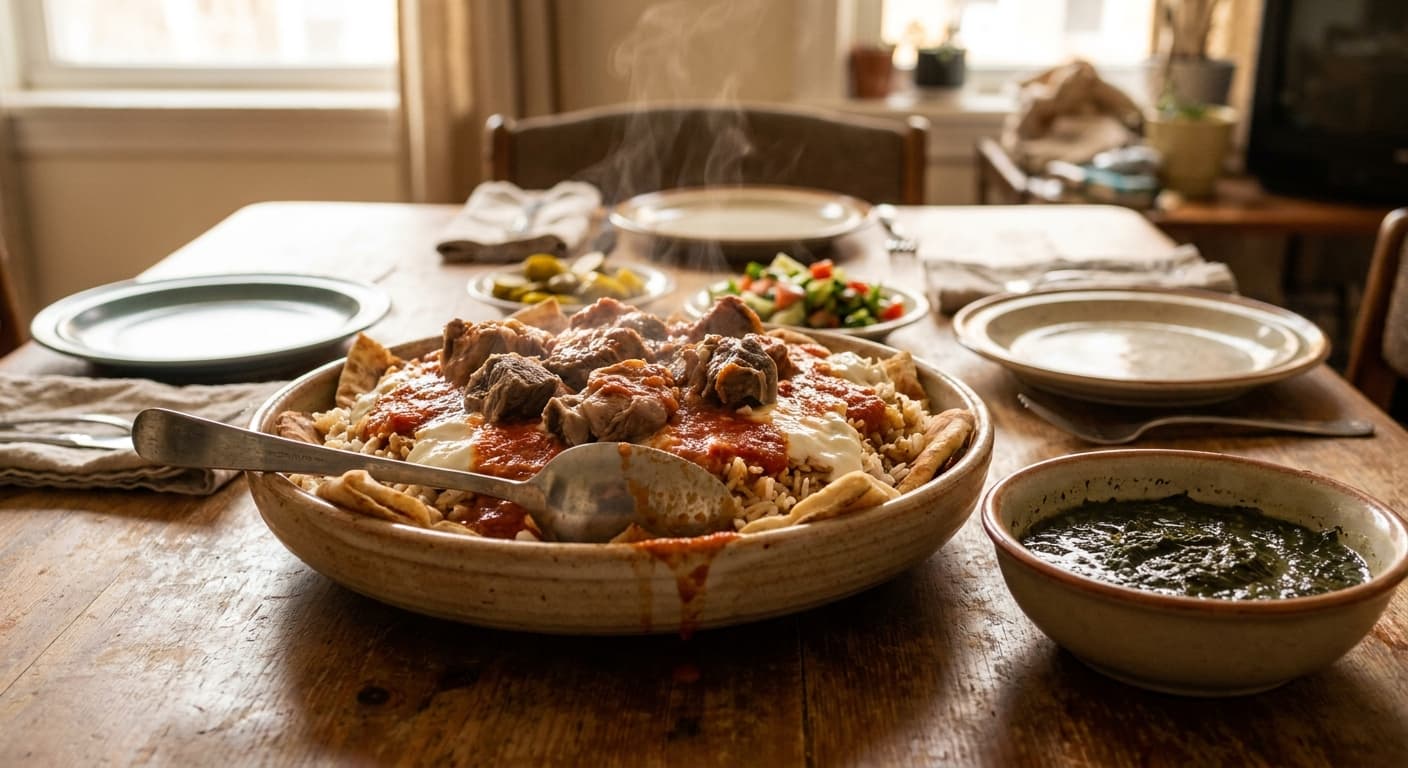
Egyptian Fatta (فتة) — Layered Meat, Rice, and Crisp Bread
Egyptian · Main Courses · 145 min
Keshkek (Keşkek) — Creamy Ceremonial Wheat and Lamb Stew
Turkish · Stews · 240 min
Reviews
Cooked this recipe?
Tap the stars to rate it — that's all it takes. A few words are welcome but optional.
No ratings yet. Cooked this one? Be the first to rate it — it takes one tap.