Bulgarian Tarator (Таратор) — Cold Yogurt Cucumber Soup
Tarator is Bulgaria’s beloved chilled yogurt soup, made with cucumber, garlic, dill, walnuts, and sunflower oil. It is a summer staple often served before grilled kebapche or beside shopska salad.
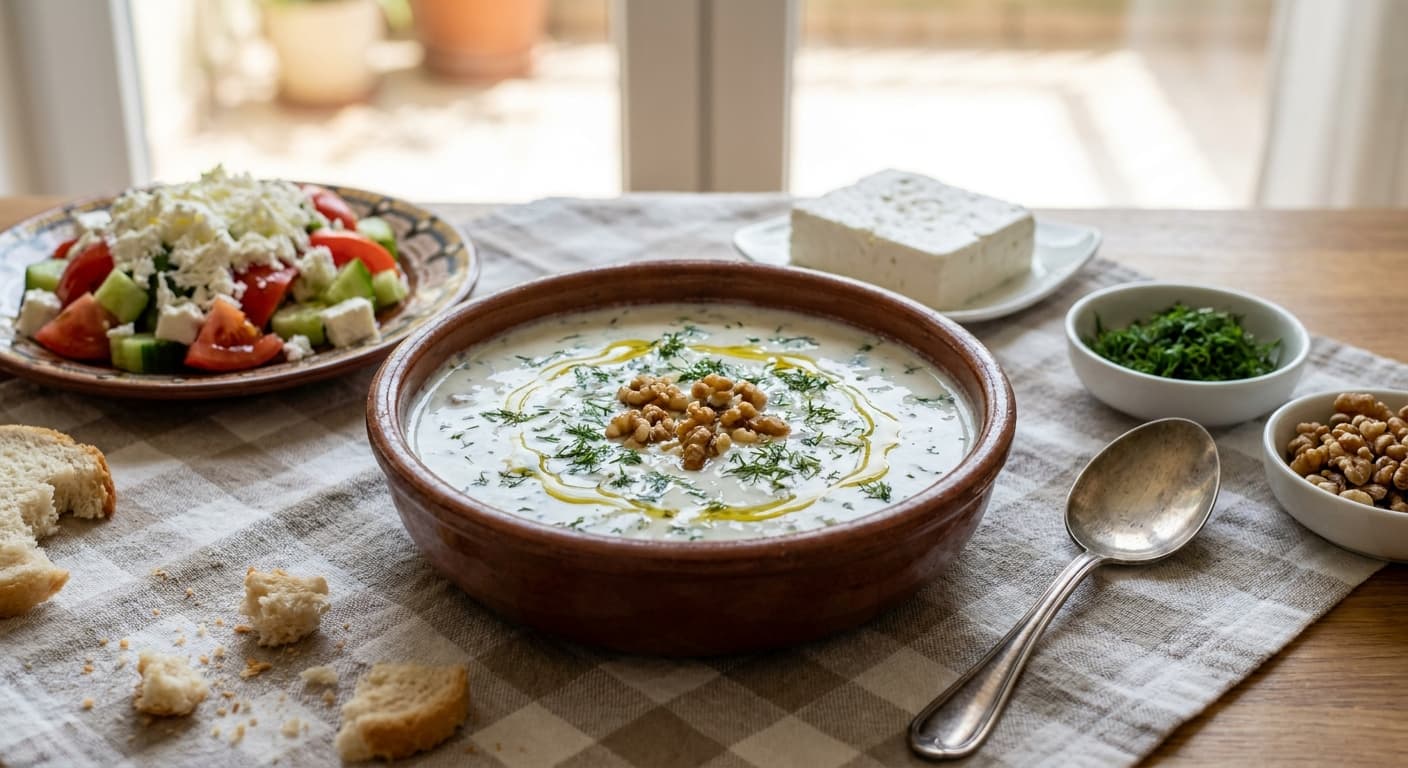
Printable Recipe Card
Servings: 4 · Total: 15 min · Difficulty: easy
Ingredients (quick list)
- 800 g Bulgarian-style plain yogurt (full-fat, tangy cultured yogurt is preferred)
- 400 ml cold water
- 450 g cucumber (peeled if the skin is tough)
- 2 clove garlic
- 40 g walnut kernels (finely chopped, plus the larger crumbs for garnish)
- 0.5 bunch fresh dill (about 20 g tender fronds, finely chopped)
- 1 tbsp sunflower oil
- 1 tbsp white wine vinegar
- 5 g fine sea salt
- 0.5 tsp freshly ground black pepper
Steps (summary)
- Chill the yogurt, water, cucumber, and serving bowls for at least 30 minutes before assembling the tarator. This Bulgarian soup…
- Cut the cucumber into 5 mm dice for a classic textured tarator, or grate it on the large holes of a box grater for a softer ver…
- Crush the garlic cloves with the remaining 3 g salt until they form a rough paste. This old practical technique distributes the…
- Whisk the Bulgarian-style yogurt in a large bowl until smooth, then gradually whisk in the cold water. Add the garlic paste, vi…
- Stir in the cucumber with its released juices, most of the chopped walnuts, and most of the dill. Do not blend the soup, becaus…
- Taste the soup after 2 minutes of resting, when the garlic and dill have begun to perfume the yogurt. If the soup is thicker th…
+ 1 more steps in the full instructions section below.
Cultural Background
Tarator is one of Bulgaria’s defining summer dishes, valued for cooling yogurt, garden cucumbers, dill, and walnuts. Katerina Seraphimova’s Bulgarian cooking work reflects this everyday table tradition.
Equipment
💡 Tips
- Use tangy Bulgarian-style yogurt rather than sweet mild yogurt, because tarator depends on bright cultured acidity.
- Dice the cucumber if you want a crisp soup, or grate it if you prefer a more spoonable, integrated texture.
- Add the walnuts just before serving if you are making the soup ahead, so they keep a pleasant bite.
⚠️ Common Mistakes
❌ Using warm ingredients
✅ Fix: Chill the yogurt, water, cucumber, and bowls before mixing so the tarator tastes crisp and refreshing.
❌ Blending the soup completely smooth
✅ Fix: Keep the cucumber and walnuts textured, because their crunch is part of the traditional character of tarator.
❌ Adding too much garlic
✅ Fix: Use 2 cloves for 4 servings and crush them with salt, which spreads the flavor evenly without making the soup aggressive.
🧊 How to Store
Store tarator covered in the refrigerator for up to 24 hours. Stir well before serving, add 30 to 60 ml cold water if it thickens, and do not heat it because this soup is meant to be served chilled.
📅 Make Ahead
Whisk the yogurt base with garlic, salt, vinegar, and water up to 12 hours ahead. Add cucumber, dill, and walnuts within 1 hour of serving for the freshest texture.
🍽️ Pairs Well With
- Shopska salad
- grilled kebapche
- crusty country bread
- roasted peppers
- sirene.
Regional Variations
- Some Bulgarian households dice the cucumber finely, while others grate it for a looser and more drinkable tarator.
- In especially hot weather, tarator may be served in glasses as a cooling drink-like soup.
- A thicker version with less water is sometimes served almost like a yogurt salad, closer in texture to a dip.
Ingredients
- 800 gBulgarian-style plain yogurt (full-fat, tangy cultured yogurt is preferred)
- 400 mlcold water
- 450 gcucumber (peeled if the skin is tough)
- 2 clovegarlic
- 40 gwalnut kernels (finely chopped, plus the larger crumbs for garnish)
- 0.5 bunchfresh dill (about 20 g tender fronds, finely chopped)
- 1 tbspsunflower oil
- 1 tbspwhite wine vinegar
- 5 gfine sea salt
- 0.5 tspfreshly ground black pepper
🔄 Substitutions
- Bulgarian-style plain yogurt→ plain Greek yogurt thinned with extra cold water
- sunflower oil→ mild extra-virgin olive oil
- walnut kernels→ toasted sunflower seeds
Instructions
- 1
Chill the yogurt, water, cucumber, and serving bowls for at least 30 minutes before assembling the tarator. This Bulgarian soup is best when very cold, because the clean sourness of the yogurt and the freshness of the cucumber should be immediately noticeable.
- 2
Cut the cucumber into 5 mm dice for a classic textured tarator, or grate it on the large holes of a box grater for a softer version. Place the cucumber in a bowl with 2 g of the measured salt and let it stand for 5 minutes to draw out a small amount of juice.
- 3
Crush the garlic cloves with the remaining 3 g salt until they form a rough paste. This old practical technique distributes the garlic evenly through the yogurt and prevents harsh raw pieces from dominating the soup.
- 4
Whisk the Bulgarian-style yogurt in a large bowl until smooth, then gradually whisk in the cold water. Add the garlic paste, vinegar, sunflower oil, and black pepper, and whisk again until the base is fluid but still creamy.
- 5
Stir in the cucumber with its released juices, most of the chopped walnuts, and most of the dill. Do not blend the soup, because authentic tarator should have a refreshing crunch from the cucumber and walnuts rather than a completely smooth texture.
- 6
Taste the soup after 2 minutes of resting, when the garlic and dill have begun to perfume the yogurt. If the soup is thicker than you like, whisk in an additional 50 ml cold water, but keep the listed seasoning unchanged for a balanced Bulgarian flavor.
- 7
Ladle the tarator into chilled bowls and garnish with the remaining walnuts and dill. Serve immediately as a cold first course, or present it in glasses as Bulgarians sometimes do during hot weather.
🪪 Recipe Passport
Cultural Background
Tarator is one of Bulgaria’s defining summer dishes, valued for cooling yogurt, garden cucumbers, dill, and walnuts. Katerina Seraphimova’s Bulgarian cooking work reflects this everyday table tradition.
Regional Variations
Researched from multiple sources and validated by the Zaffaron editorial team. Every recipe is tested for accuracy, measurements, and cultural authenticity.
📚 Sources & Cultural References
- Katerina Seraphimova — Traditional Bulgarian Cooking
- Alan Davidson — The Oxford Companion to Food — (1999)
Sources cited by the Zaffaron editorial team during recipe research. Cultural and culinary references supporting authenticity claims.
Nutrition per serving
Pairs well with
If you enjoyed this recipe, here are a few related Zaffaron recipes to try next.
Does your family make this differently?
Every family has their own version. Maybe your grandmother adds a secret ingredient, or your aunt has a completely different technique. Preserve your family's version — with their name on it, forever.
You Might Also Like
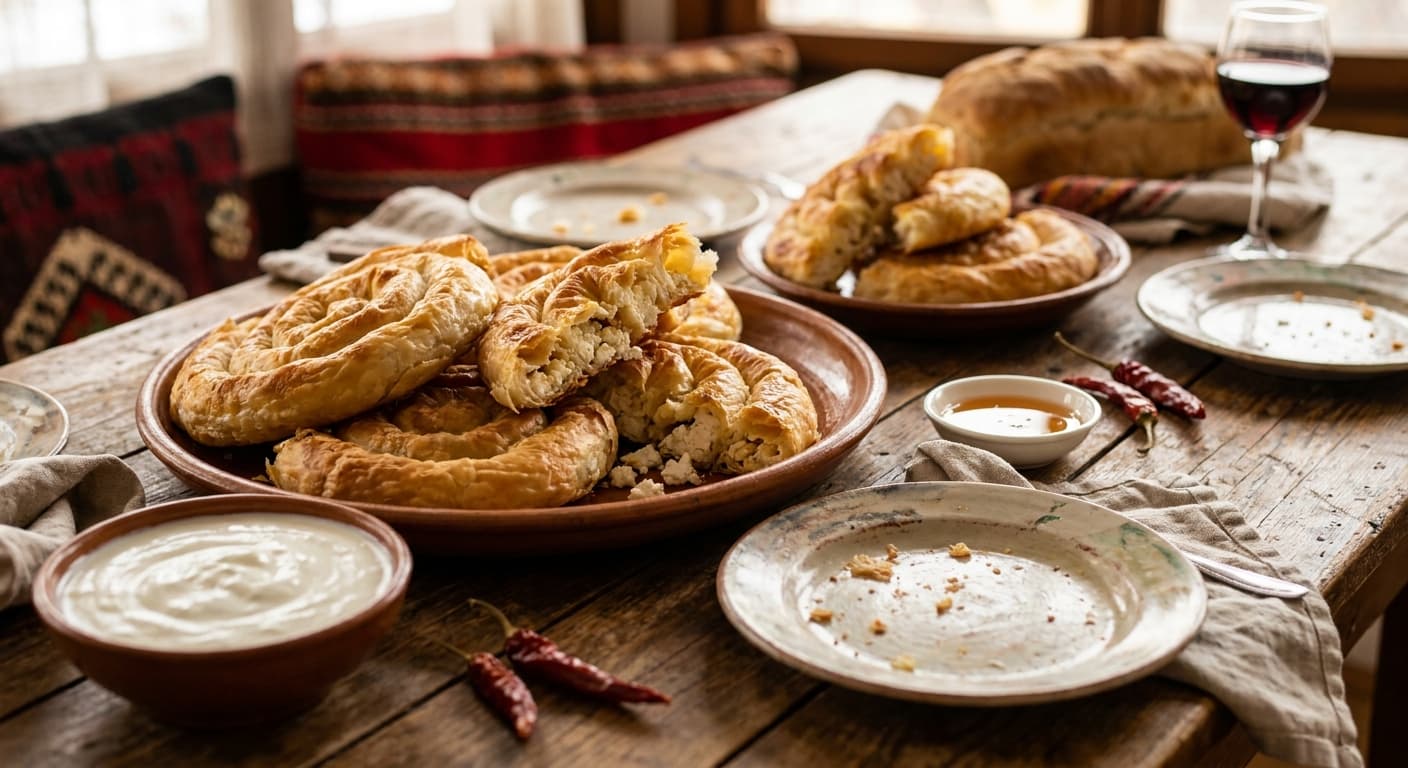
Bulgarian Banitsa (Баница) — Flaky Sirene-Filled Phyllo Pie
Bulgarian · Breads · 68 min
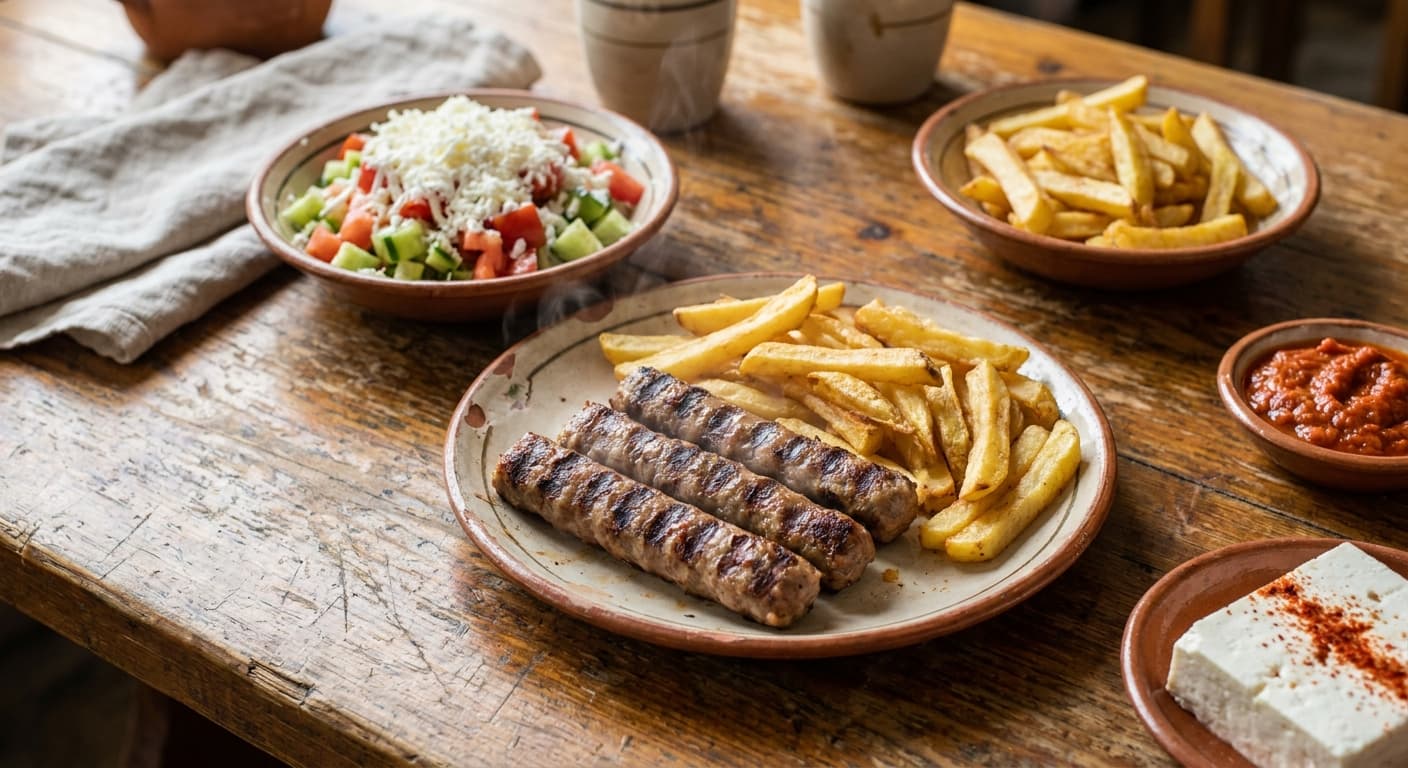
Kebapche (Кебапче) — Bulgarian Grilled Spiced Meat Sausages
Bulgarian · Kebabs · 42 min
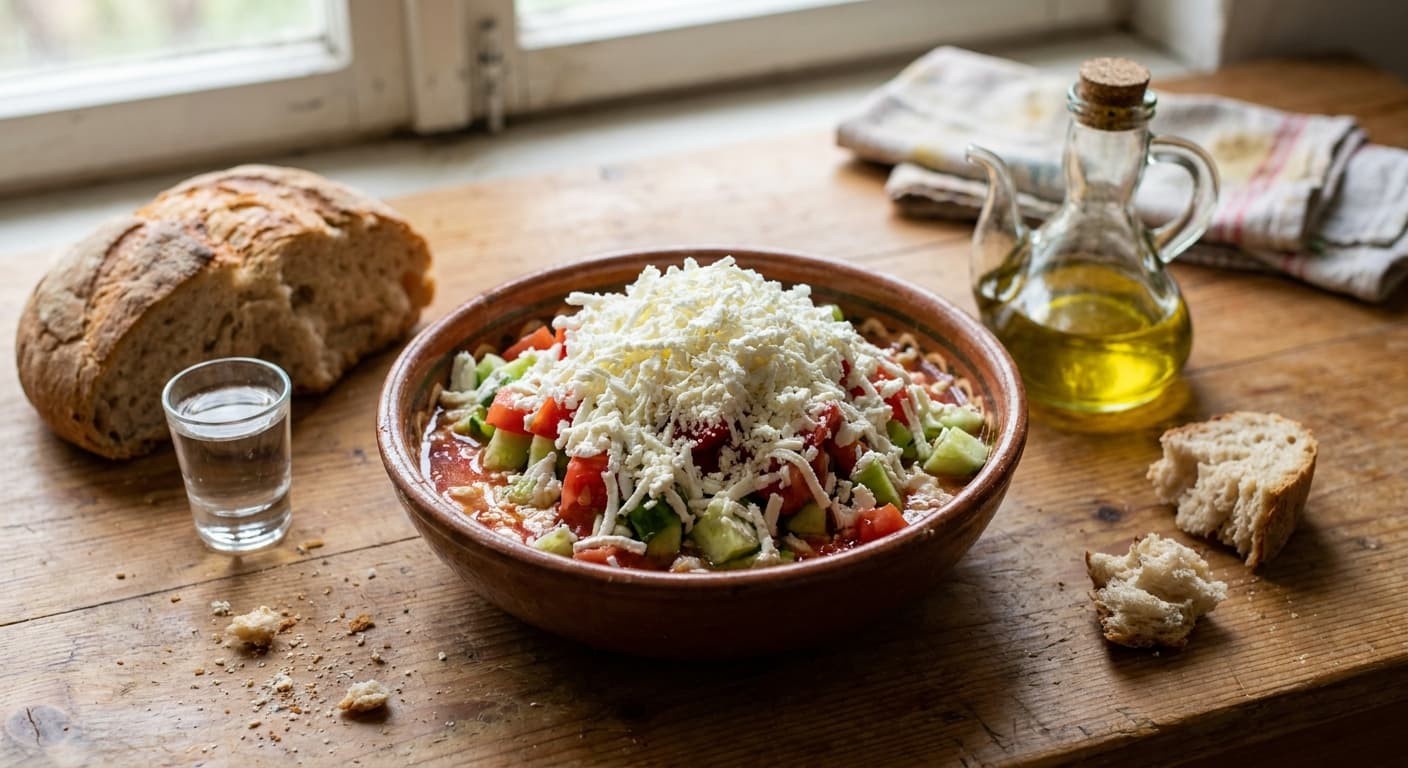
Shopska Salad (Шопска салата) — Tomato-Cucumber Salad with Sirene
Bulgarian · Salads · 20 min
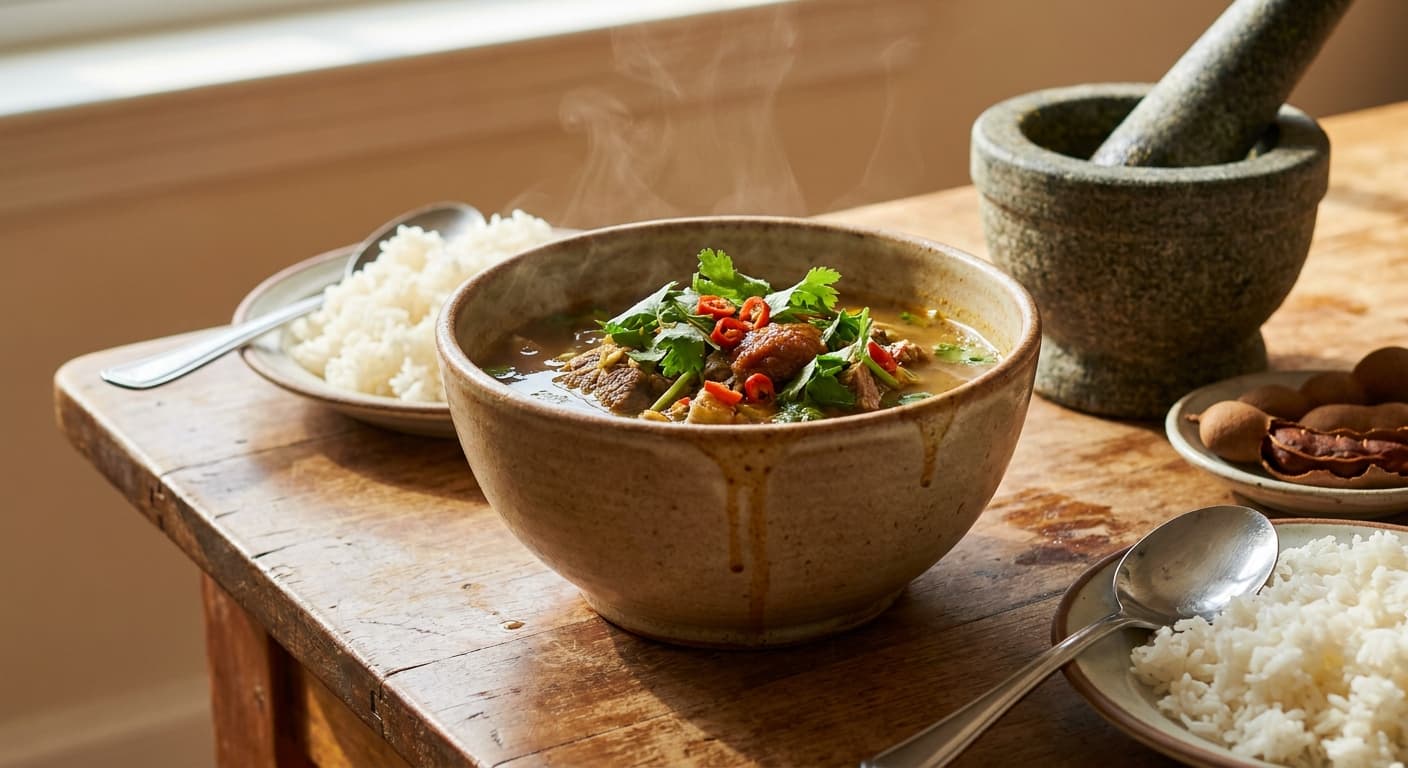
Samlor Machu Kroeung (សម្លម្ជូរគ្រឿង) — Cambodian Sour Kroeung Beef Soup
Cambodian · Soups · 130 min
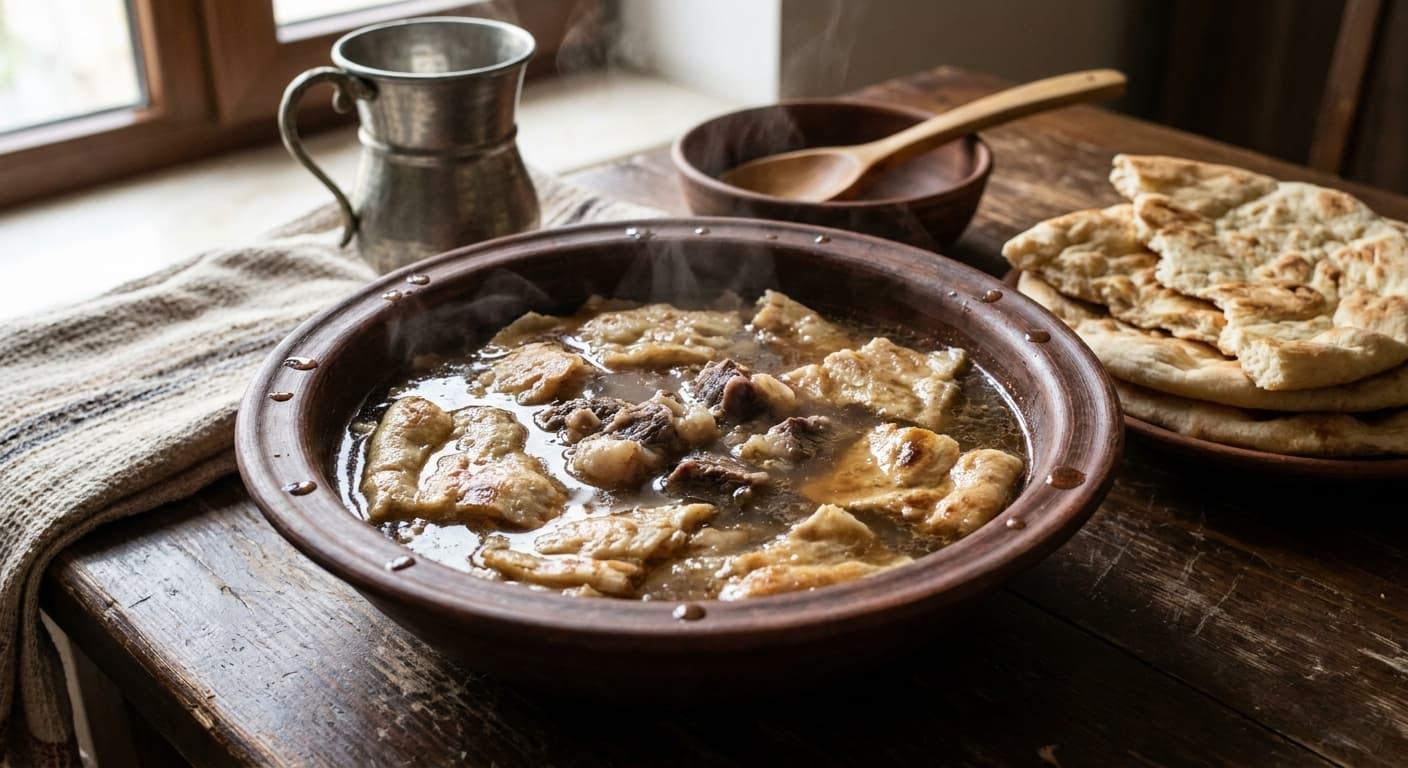
Dogroma (Dograma) — Turkmen Mutton and Bread Broth
Turkmen · Soups · 175 min
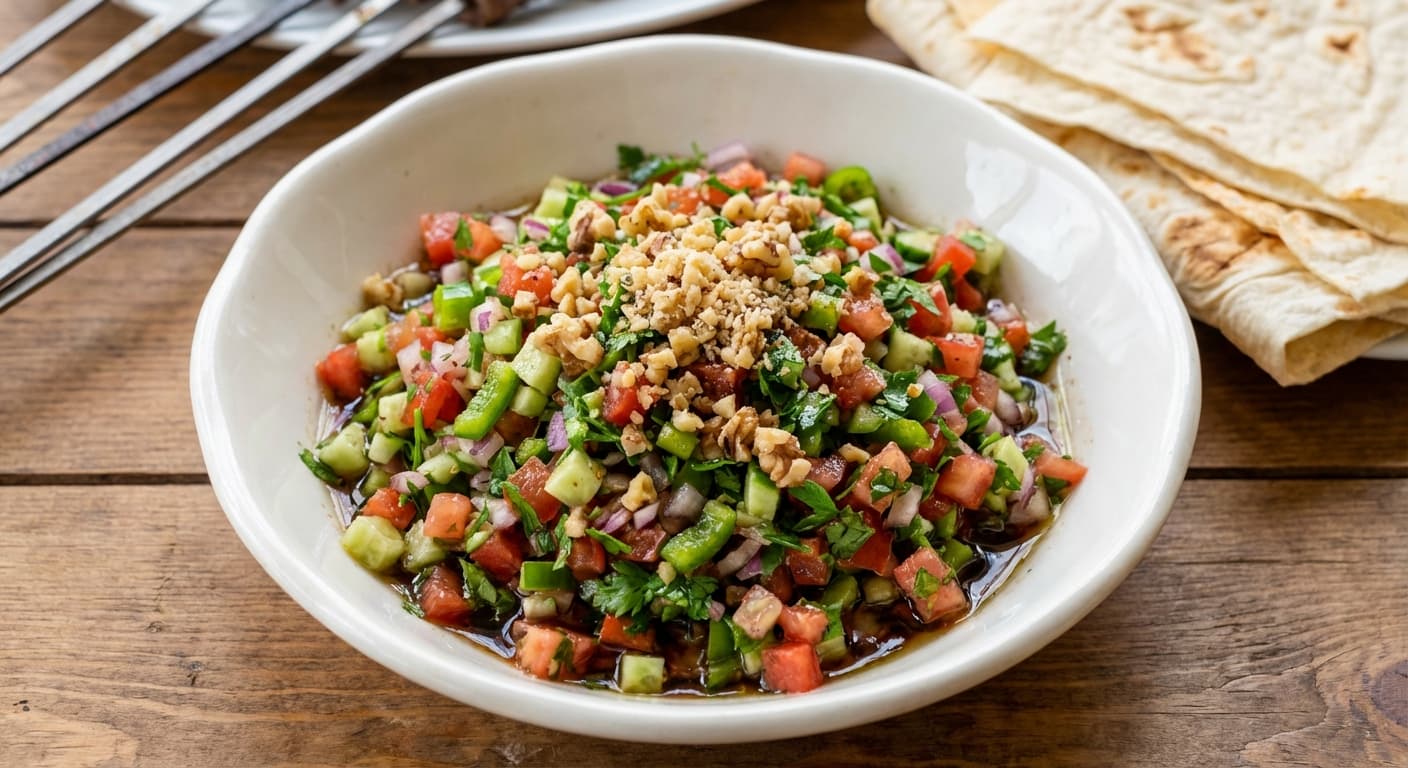
Gavurdağı Salad (Gavurdağı Salatası) — Finely Chopped Walnut & Pomegranate Salad
Turkish · Salads · 20 min
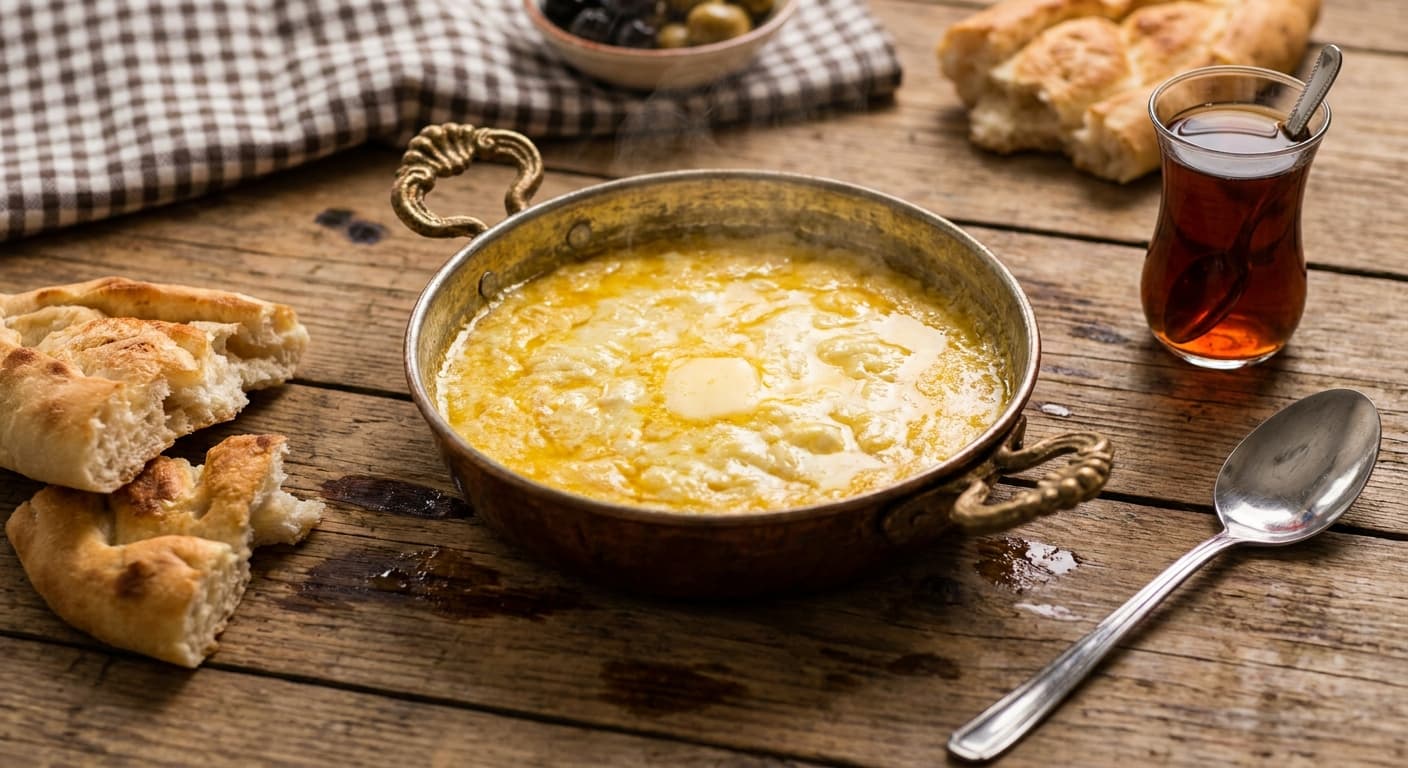
Mıhlama (Mıhlama) — Black Sea Cornmeal and Cheese Skillet
Turkish · Main Courses · 25 min
Andean Milk-and-Egg Soup (Pisca andina) — Venezuelan Breakfast Comfort
Venezuelan · Soups · 45 min
Reviews
Cooked this recipe?
Tap the stars to rate it — that's all it takes. A few words are welcome but optional.
No ratings yet. Cooked this one? Be the first to rate it — it takes one tap.