Patatnik (Пататник) — Rhodope Potato Skillet Cake
Patatnik is a beloved Rhodope Mountain potato cake, cooked until crisp outside and tender within. This version uses chubritsa, mint-like djodjen, eggs, and sirene, and is excellent with shopska salad.
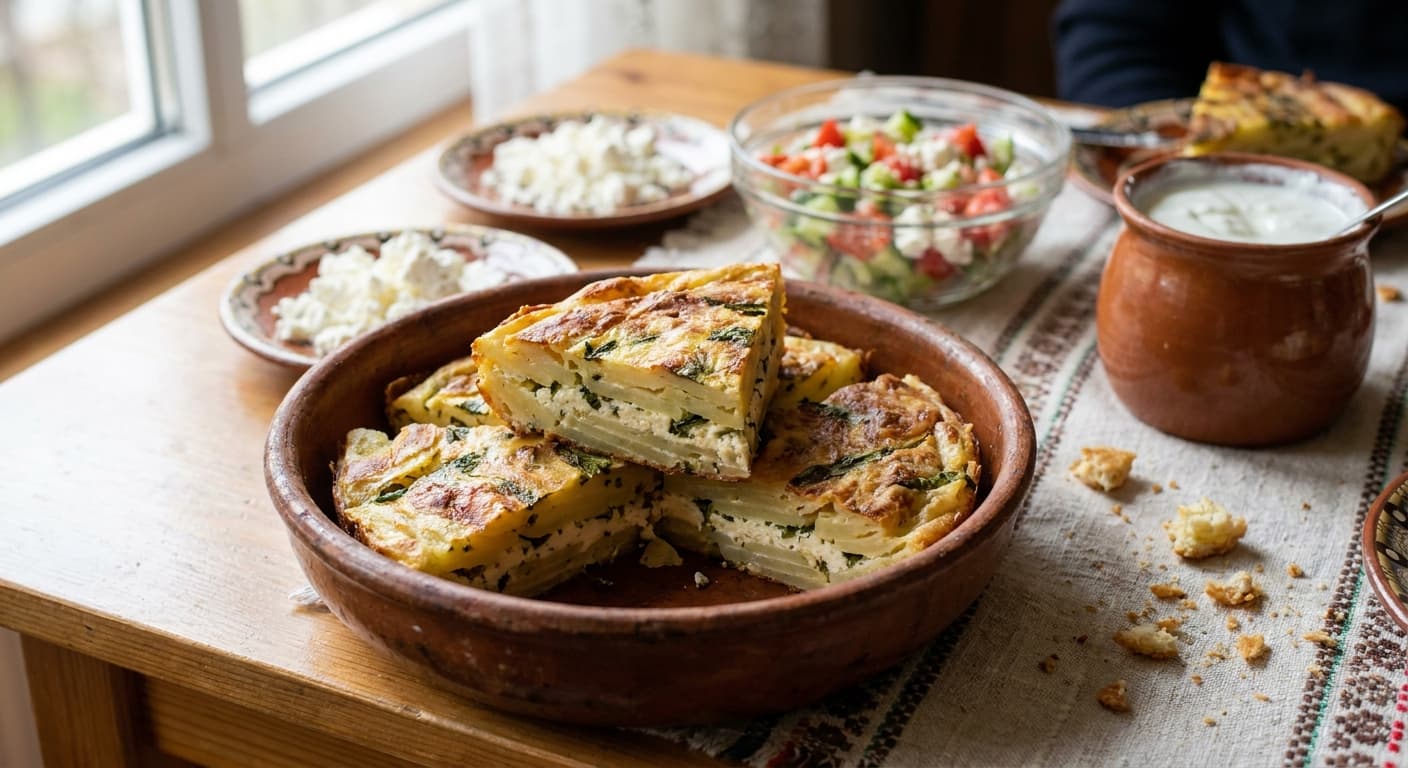
Printable Recipe Card
Servings: 6 · Total: 60 min · Difficulty: medium
Ingredients (quick list)
- 1200 g starchy potatoes (peeled after weighing)
- 2 yellow onions (medium, about 220 g total)
- 3 eggs
- 120 g sirene (Bulgarian white brined cheese, crumbled)
- 45 ml sunflower oil
- 30 g unsalted butter
- 1 tsp dried chubritsa (Bulgarian summer savory)
- 2 tsp dried spearmint (djodjen-style mint flavor)
- 7 g fine sea salt
- 0.5 tsp ground black pepper
- 180 g plain yogurt (optional but traditional alongside hot potato dishes)
Steps (summary)
- Grate the peeled potatoes on the large holes of a box grater, then transfer them to a clean kitchen towel. Gather the towel tig…
- Grate the onions into a large bowl and add the squeezed potatoes immediately. Stir in the eggs, crumbled sirene, chubritsa, dri…
- Heat a heavy 26 cm skillet over medium heat and add 30 ml sunflower oil with 15 g butter. When the butter foams, spread the pot…
- Cook the patatnik for 18 minutes over medium-low heat, rotating the pan every 5 minutes for even browning. Cover the skillet fo…
- Place a large flat plate or lid over the skillet and carefully invert the patatnik onto it in one confident motion. Add the rem…
- Cook the second side for 14 to 16 minutes, adjusting the heat if the edges brown too quickly. The patatnik is ready when both s…
+ 1 more steps in the full instructions section below.
Cultural Background
Patatnik is strongly tied to the Rhodope Mountains, where potatoes, herbs, and dairy define rustic home cooking. Katerina Seraphimova’s Bulgarian Rhapsody helps frame it as part of Bulgaria’s regional, village-based table.
Equipment
💡 Tips
- Use starchy potatoes and squeeze them thoroughly; watery potatoes make the cake heavy instead of crisp.
- Keep the heat at medium-low after the initial sizzle so the center cooks before the crust darkens.
- A well-seasoned cast-iron or heavy nonstick skillet makes flipping safer and gives the best browned crust.
⚠️ Common Mistakes
❌ Leaving too much liquid in the grated potatoes.
✅ Fix: Squeeze the potatoes in a towel until they feel damp but no longer drip, then mix and cook them promptly.
❌ Cooking over heat that is too high.
✅ Fix: Use medium-low heat after the pan is hot so the interior cooks through while the crust browns slowly.
❌ Flipping before the first side has set.
✅ Fix: Wait until the edges look browned and the cake moves as one piece when gently shaken.
🧊 How to Store
Cool leftovers completely, wrap tightly, and refrigerate for up to 3 days. Reheat wedges in a 190°C oven for 10 to 12 minutes or in a lightly oiled skillet for 4 minutes per side to restore the crust.
📅 Make Ahead
Grate and squeeze the potatoes up to 1 hour ahead, then keep them covered in the refrigerator. Mix in the eggs and sirene only just before cooking so the mixture does not become watery.
🍽️ Pairs Well With
- Plain yogurt
- extra sirene
- shopska salad
- roasted peppers
- Bulgarian pickles.
Regional Variations
- In some Rhodope villages, patatnik is baked between two pans or under a covered hearth instead of cooked entirely in a skillet.
- Some households omit sirene for a leaner potato-and-onion version, especially when serving the cake beside yogurt.
- Fresh mint or parsley may replace dried spearmint in summer, while winter versions often lean more heavily on chubritsa.
Ingredients
- 1200 gstarchy potatoes (peeled after weighing)
- 2yellow onions (medium, about 220 g total)
- 3eggs
- 120 gsirene (Bulgarian white brined cheese, crumbled)
- 45 mlsunflower oil
- 30 gunsalted butter
- 1 tspdried chubritsa (Bulgarian summer savory)
- 2 tspdried spearmint (djodjen-style mint flavor)
- 7 gfine sea salt
- 0.5 tspground black pepper
- 180 gplain yogurt (optional but traditional alongside hot potato dishes)
🔄 Substitutions
- sirene→ Bulgarian-style feta or Greek feta
- dried chubritsa→ dried summer savory
- dried spearmint→ fresh spearmint
Instructions
- 1
Grate the peeled potatoes on the large holes of a box grater, then transfer them to a clean kitchen towel. Gather the towel tightly and squeeze firmly over the sink for 2 minutes to remove as much liquid as possible, because excess moisture prevents a crisp patatnik crust.
- 2
Grate the onions into a large bowl and add the squeezed potatoes immediately. Stir in the eggs, crumbled sirene, chubritsa, dried spearmint, salt, and black pepper until the mixture is evenly seasoned and lightly bound.
- 3
Heat a heavy 26 cm skillet over medium heat and add 30 ml sunflower oil with 15 g butter. When the butter foams, spread the potato mixture into the pan and press it firmly into an even cake about 3 cm thick.
- 4
Cook the patatnik for 18 minutes over medium-low heat, rotating the pan every 5 minutes for even browning. Cover the skillet for the first 10 minutes so the interior steams gently, then uncover it so the underside develops a deep golden crust.
- 5
Place a large flat plate or lid over the skillet and carefully invert the patatnik onto it in one confident motion. Add the remaining 15 ml sunflower oil and 15 g butter to the skillet, then slide the patatnik back in with the browned side facing up.
- 6
Cook the second side for 14 to 16 minutes, adjusting the heat if the edges brown too quickly. The patatnik is ready when both sides are crisp, the center is tender rather than wet, and a knife inserted into the middle meets soft cooked potato.
- 7
Rest the patatnik in the skillet for 8 minutes before cutting it into wedges, which helps the cake hold its shape. Serve warm with plain yogurt, extra crumbled sirene if desired, and shopska salad for a clearly Bulgarian table.
🪪 Recipe Passport
Cultural Background
Patatnik is strongly tied to the Rhodope Mountains, where potatoes, herbs, and dairy define rustic home cooking. Katerina Seraphimova’s Bulgarian Rhapsody helps frame it as part of Bulgaria’s regional, village-based table.
Regional Variations
Researched from multiple sources and validated by the Zaffaron editorial team. Every recipe is tested for accuracy, measurements, and cultural authenticity.
📚 Sources & Cultural References
- Katerina Seraphimova — Bulgarian Rhapsody
- Dimitar Mantov — Traditional Bulgarian Cooking
Sources cited by the Zaffaron editorial team during recipe research. Cultural and culinary references supporting authenticity claims.
Nutrition per serving
Pairs well with
If you enjoyed this recipe, here are a few related Zaffaron recipes to try next.
Does your family make this differently?
Every family has their own version. Maybe your grandmother adds a secret ingredient, or your aunt has a completely different technique. Preserve your family's version — with their name on it, forever.
You Might Also Like
Bulgarian Pork Kavarma (Каварма) — Clay-Pot Pepper and Pork Stew
Bulgarian · Stews · 115 min
Bulgarian Banitsa (Баница) — Flaky Sirene-Filled Phyllo Pie
Bulgarian · Breads · 68 min
Kebapche (Кебапче) — Bulgarian Grilled Spiced Meat Sausages
Bulgarian · Kebabs · 42 min
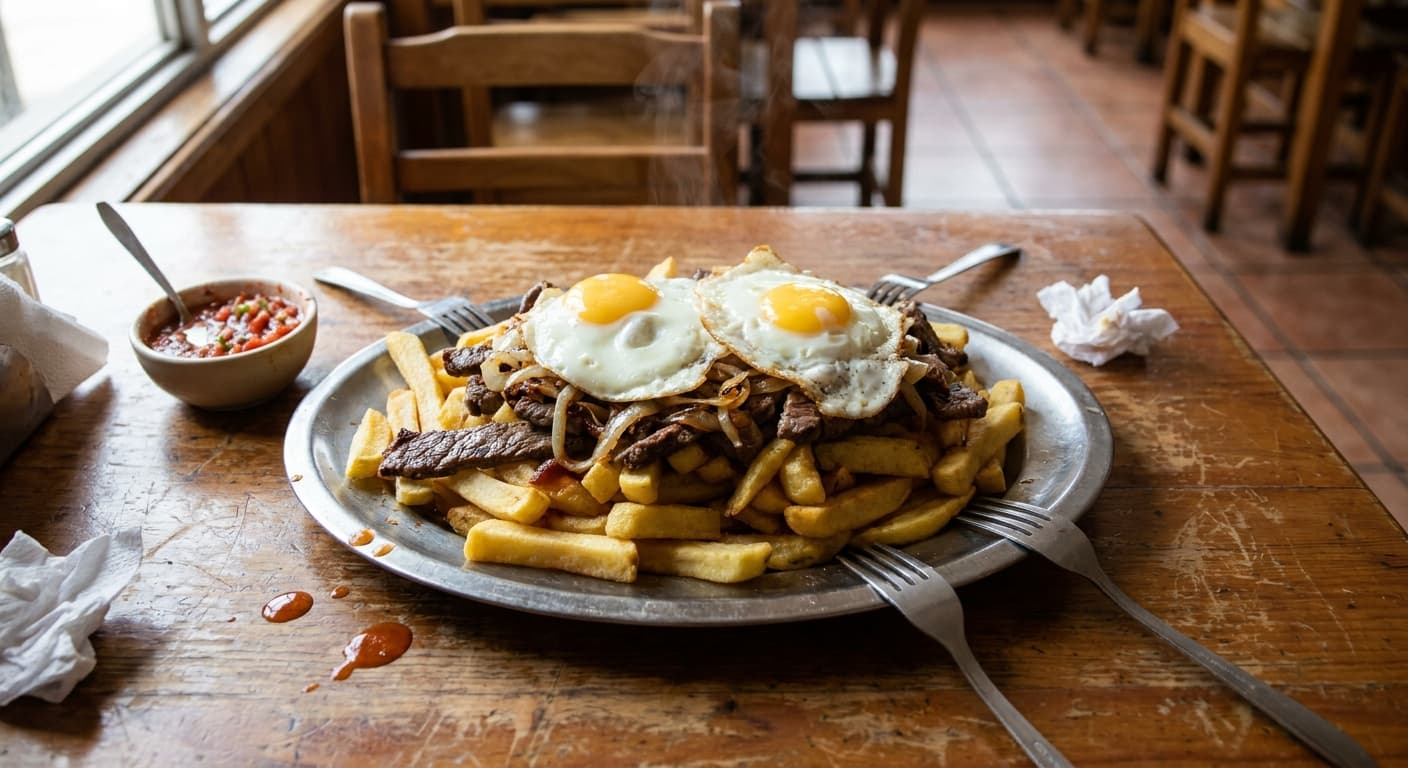
Chorrillana (Chorrillana) — Chilean Loaded Fries with Beef and Eggs
Chilean · Main Courses · 60 min

Chilean Humitas (Humitas) — Fresh Corn Parcels with Basil
Chilean · Main Courses · 90 min
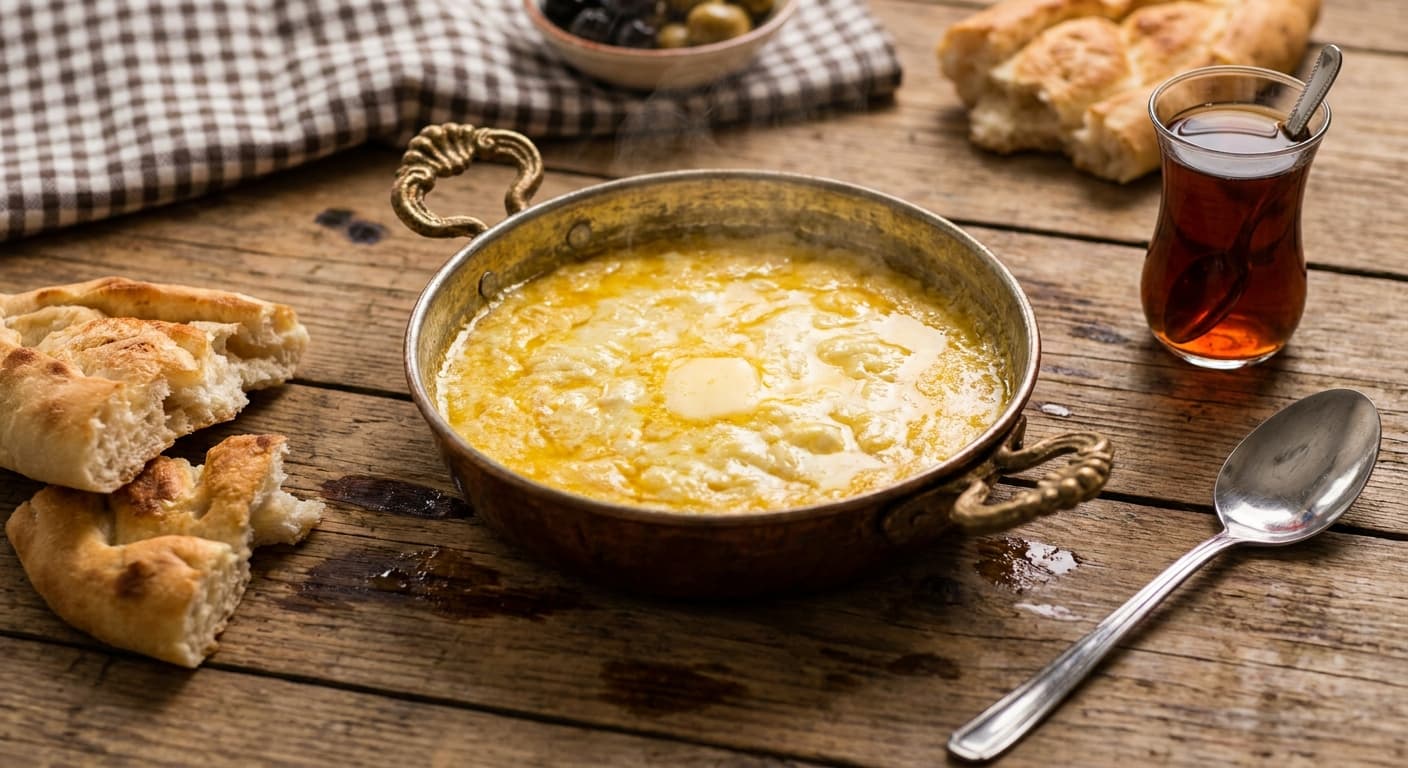
Mıhlama (Mıhlama) — Black Sea Cornmeal and Cheese Skillet
Turkish · Main Courses · 25 min
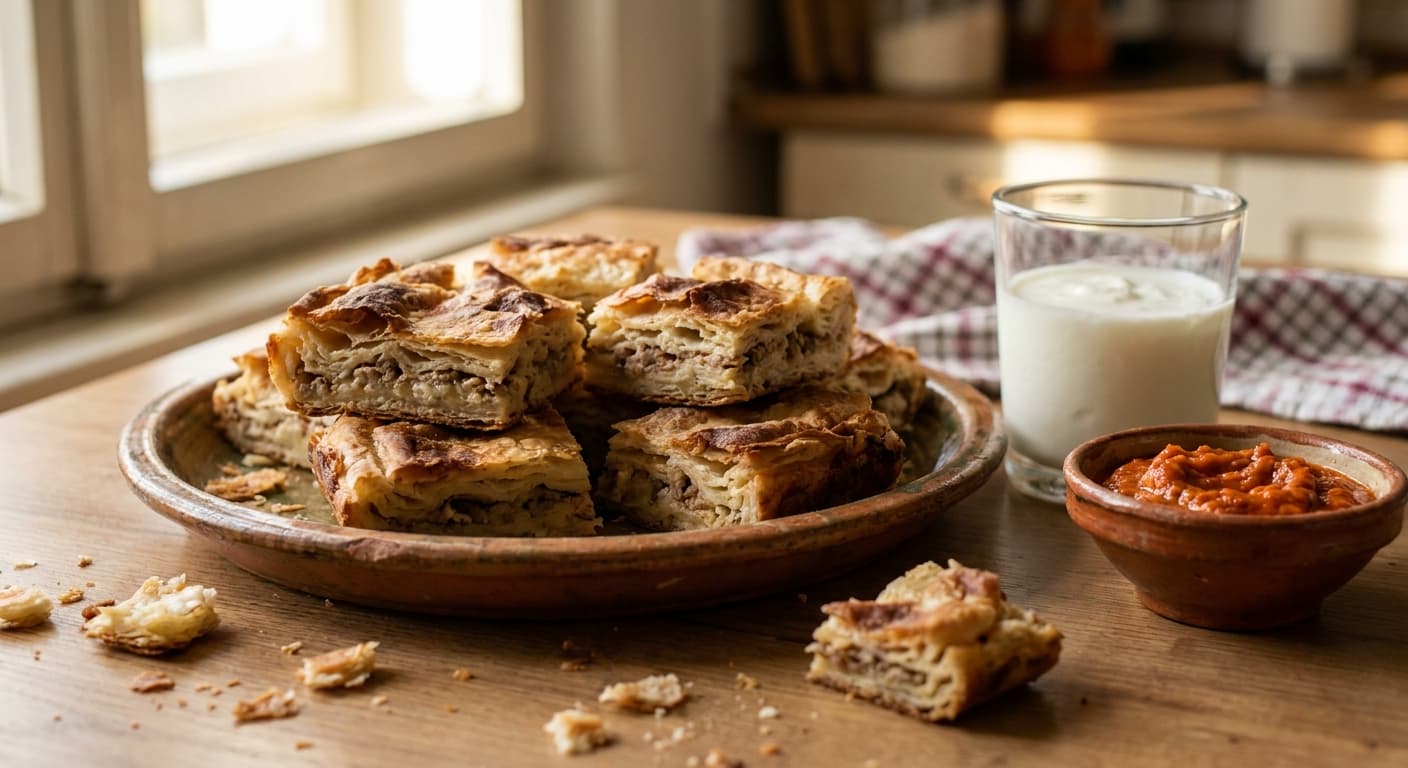
Serbian Cheese Gibanica (Гибаница) — Crumpled Filo Pie with White Cheese
Serbian · Appetizers · 65 min
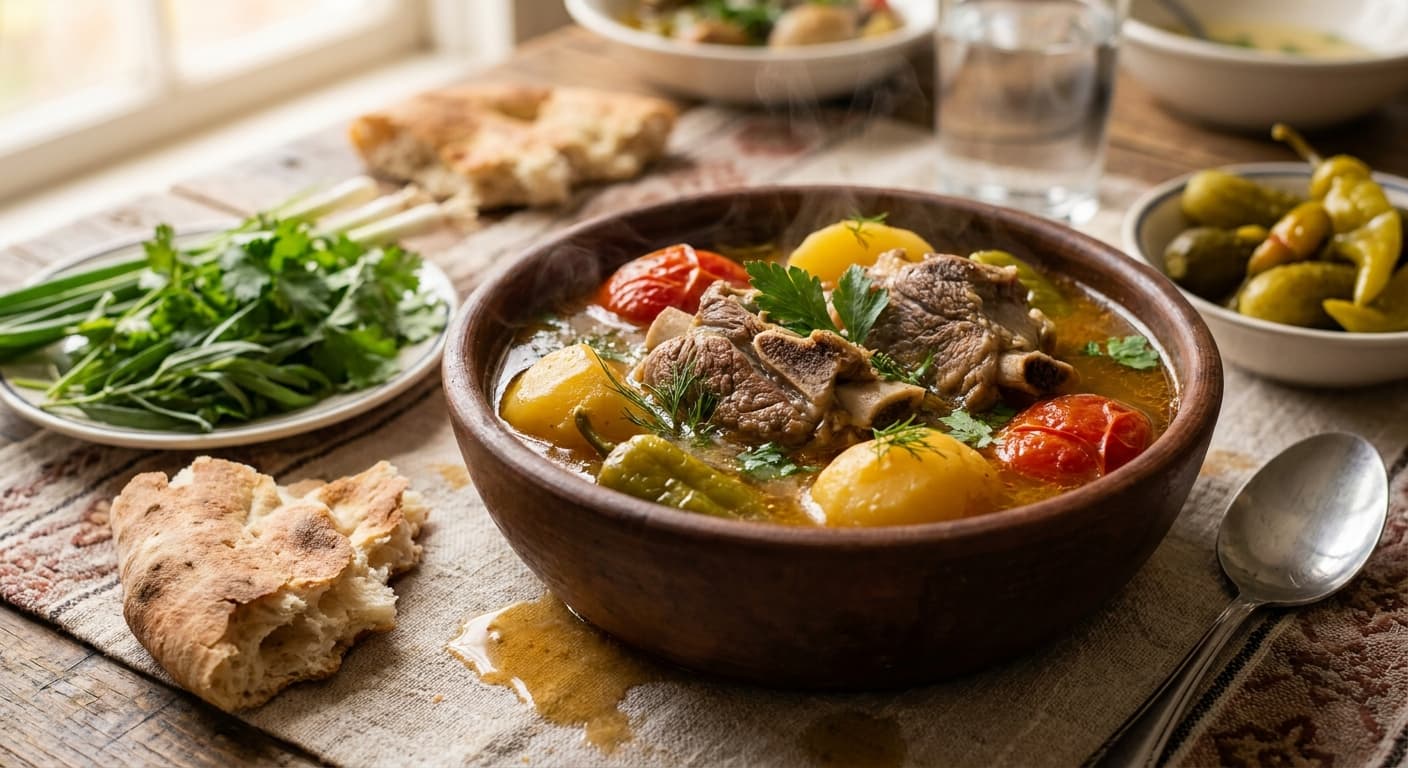
Khashlama (Խաշլամա) — Armenian Lamb and Vegetable Stew
Armenian · Stews · 160 min
Reviews
Cooked this recipe?
Tap the stars to rate it — that's all it takes. A few words are welcome but optional.
No ratings yet. Cooked this one? Be the first to rate it — it takes one tap.