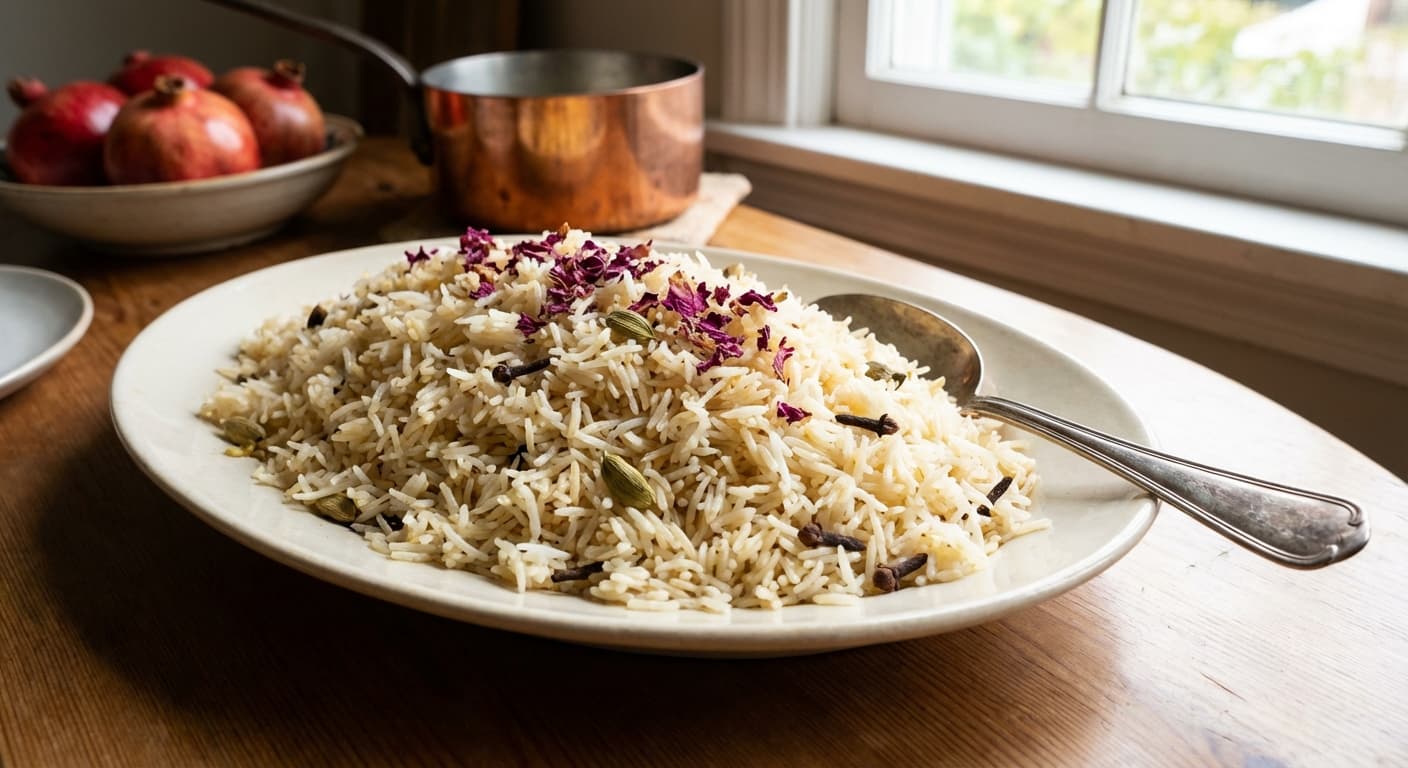
Polo-ye Sadeh ba Ta'm-e Helo Mikhak (پلو ساده با طعم هل و میخک) — Persian Aromatic Cardamom and Clove Rice
Fluffy Persian-style basmati rice perfumed with cardamom, cloves, and a whisper of rose water. This elegant polo uses the classic parboil-and-steam method for separate grains and a warm, aromatic finish.
Printable Recipe Card
Servings: 6 · Total: 105 min · Difficulty: medium
Ingredients (quick list)
- 450 g Basmati rice (aged preferred; rinsed until water runs mostly clear)
- 3000 ml Water (for soaking and parboiling (plus more as needed))
- 24 g Fine sea salt (about 4 teaspoons; divided for soaking and boiling)
- 45 ml Vegetable oil (3 tablespoons; for the pot and finishing (or use ghee per substitution))
- 10 pod Cardamom pods (green pods, lightly crushed to open)
- 8 Whole cloves (whole)
- 10 ml Rose water (2 teaspoons; food-grade, not perfume)
Steps (summary)
- Rinse the basmati rice in several changes of cool water until the water is mostly clear. Dissolve 12 g (about 2 teaspoons) of t…
- Bring 1500 ml water to a rolling boil in a large pot. Add the remaining 12 g salt, then drain the soaked rice and add it to the…
- Drain the rice in a fine-mesh sieve and rinse quickly with 250 ml cool water to stop cooking and wash off excess surface starch…
- Return the rice to the pot in a loose mound, without packing it down. Using the handle of a spoon, poke 5–6 holes down to the b…
- Reduce heat to low and continue steaming 35–40 minutes. Keep the lid closed; avoid lifting it, which drops temperature and can…
- Turn off the heat. In a small bowl, mix rose water with the remaining 15 ml vegetable oil. Drizzle over the rice, then gently f…
Cultural Background
Fragrant steamed rice is central to Persian dining and is commonly served to honor guests at family meals and gatherings. Aromatics such as cardamom, clove, and rose water reflect long-standing Persian preferences for perfumed flavors and the historical availability of spices through regional trade routes.
Equipment
💡 Tips
- For the most distinct fragrance, use fresh green cardamom pods and whole cloves; old spices taste woody rather than aromatic.
- Do not over-boil during parboiling; a firm center is essential so the grains finish cooking by steaming without turning mushy.
- If your pot runs hot, place a heat diffuser under it during the low-heat steaming phase to prevent scorching.
- Prefer a stronger rose note? Increase rose water to 15 ml (1 tablespoon), but keep it subtle so it does not taste soapy.
⚠️ Common Mistakes
❌ Skipping the soak
💡 Why: Unsoaked basmati cooks unevenly and can break during parboiling, leading to clumpy rice.
✅ Fix: Soak 30 minutes in salted water; if short on time, soak 15 minutes and reduce parboil time slightly.
❌ Overcooking during parboil
💡 Why: If the center is already soft, steaming turns grains mushy and they stick together.
✅ Fix: Taste a grain at 6 minutes; it should be tender outside with a firm core. Drain immediately once you reach that stage.
❌ Lifting the lid repeatedly while steaming
💡 Why: Heat and steam escape, extending cook time and making the rice dense and unevenly cooked.
✅ Fix: Use a towel-wrapped lid for a tight seal and only check once near the end of steaming.
❌ Using too much rose water
💡 Why: Excess rose water can taste perfumey and overpower the cardamom and clove.
✅ Fix: Keep to 10 ml for balance; if increasing, do so in 2–3 ml increments and mix with oil before drizzling.
🧊 How to Store
Cool rice to room temperature within 1 hour, then refrigerate in an airtight container up to 4 days. Reheat covered with 1–2 tablespoons water in a saucepan over low heat for 10–12 minutes, or microwave covered in 60-second bursts, fluffing between bursts. Freeze up to 2 months; thaw overnight in the refrigerator before reheating.
📅 Make Ahead
Rinse and soak the rice up to 1 hour ahead. You can also parboil, drain thoroughly, and hold the rice covered at room temperature up to 2 hours before steaming; add 2 tablespoons water to the pot before starting the steam to compensate for cooling.
🍽️ Pairs Well With
- Persian herb stew
- Tomato-based eggplant stew
- Grilled koobideh-style kebabs
- Yogurt with cucumber and herbs
- Pickled vegetables and fresh herbs
Regional Variations
- Tehran and central IranOften kept very lightly perfumed, with rose water used sparingly and spices removed before serving for a clean, elegant aroma.
- Southern Iran (Gulf-influenced kitchens)May be made more aromatic, sometimes adding a small cinnamon stick during steaming or using ghee for a deeper, rounder fragrance.
Ingredients
- 450 gBasmati rice (aged preferred; rinsed until water runs mostly clear)
- 3000 mlWater (for soaking and parboiling (plus more as needed))
- 24 gFine sea salt (about 4 teaspoons; divided for soaking and boiling)
- 45 mlVegetable oil (3 tablespoons; for the pot and finishing (or use ghee per substitution))
- 10 podCardamom pods (green pods, lightly crushed to open)
- 8Whole cloves (whole)
- 10 mlRose water (2 teaspoons; food-grade, not perfume)
🔄 Substitutions
- Vegetable oil→ Ghee (clarified butter)
- Rose water→ Orange blossom water
- Basmati rice→ Jasmine rice
Instructions
- 1
Rinse the basmati rice in several changes of cool water until the water is mostly clear. Dissolve 12 g (about 2 teaspoons) of the salt in 1500 ml water, add the rice, and soak 30 minutes at room temperature. Meanwhile, lightly crush the cardamom pods with the flat of a knife to open them.
- 2
Bring 1500 ml water to a rolling boil in a large pot. Add the remaining 12 g salt, then drain the soaked rice and add it to the boiling water. Boil 6–8 minutes, stirring gently once or twice to prevent sticking, until grains are elongated and tender on the outside but still firm in the center.
- 3
Drain the rice in a fine-mesh sieve and rinse quickly with 250 ml cool water to stop cooking and wash off excess surface starch. Let it drain 3 minutes. In the same pot, add 30 ml vegetable oil and 60 ml water, then scatter in the crushed cardamom pods and whole cloves to perfume the steam.
- 4
Return the rice to the pot in a loose mound, without packing it down. Using the handle of a spoon, poke 5–6 holes down to the bottom to help steam circulate. Wrap the lid in a clean kitchen towel, cover tightly, and steam 10 minutes over medium heat until you see strong steam.
- 5
Reduce heat to low and continue steaming 35–40 minutes. Keep the lid closed; avoid lifting it, which drops temperature and can make the rice heavy. The rice is ready when the grains are fully tender and separate, and the aroma of cardamom and clove is noticeable when you briefly crack the lid.
- 6
Turn off the heat. In a small bowl, mix rose water with the remaining 15 ml vegetable oil. Drizzle over the rice, then gently fluff with a fork, lifting from the edges toward the center. For a cleaner flavor, remove and discard the cardamom pods and cloves before serving.
🪪 Recipe Passport
Cultural Background
Fragrant steamed rice is central to Persian dining and is commonly served to honor guests at family meals and gatherings. Aromatics such as cardamom, clove, and rose water reflect long-standing Persian preferences for perfumed flavors and the historical availability of spices through regional trade routes.
Regional Variations
Researched from multiple sources and validated by the Zaffaron editorial team. Every recipe is tested for accuracy, measurements, and cultural authenticity.
Nutrition per serving
Pairs well with
If you enjoyed this recipe, here are a few related Zaffaron recipes to try next.
- Makaron-e Sir va Sabzi Khordani (ماکارونی سیر و سبزی خوردنی) — Persian Garlic & Fresh Herb Macaroni
- Jujeh Kebab (جوجه کباب) — Persian Saffron Lemon Chicken Skewers
- Potage-e Morgh o Brokoli (پوتاژ مرغ و بروکلی) — Persian-Style Velvety Chicken & Broccoli Soup
- Soup-e Broccoli (سوپ بروکلی) — Persian-Style Creamy Broccoli Soup
Does your family make this differently?
Every family has their own version. Maybe your grandmother adds a secret ingredient, or your aunt has a completely different technique. Preserve your family's version — with their name on it, forever.
You Might Also Like
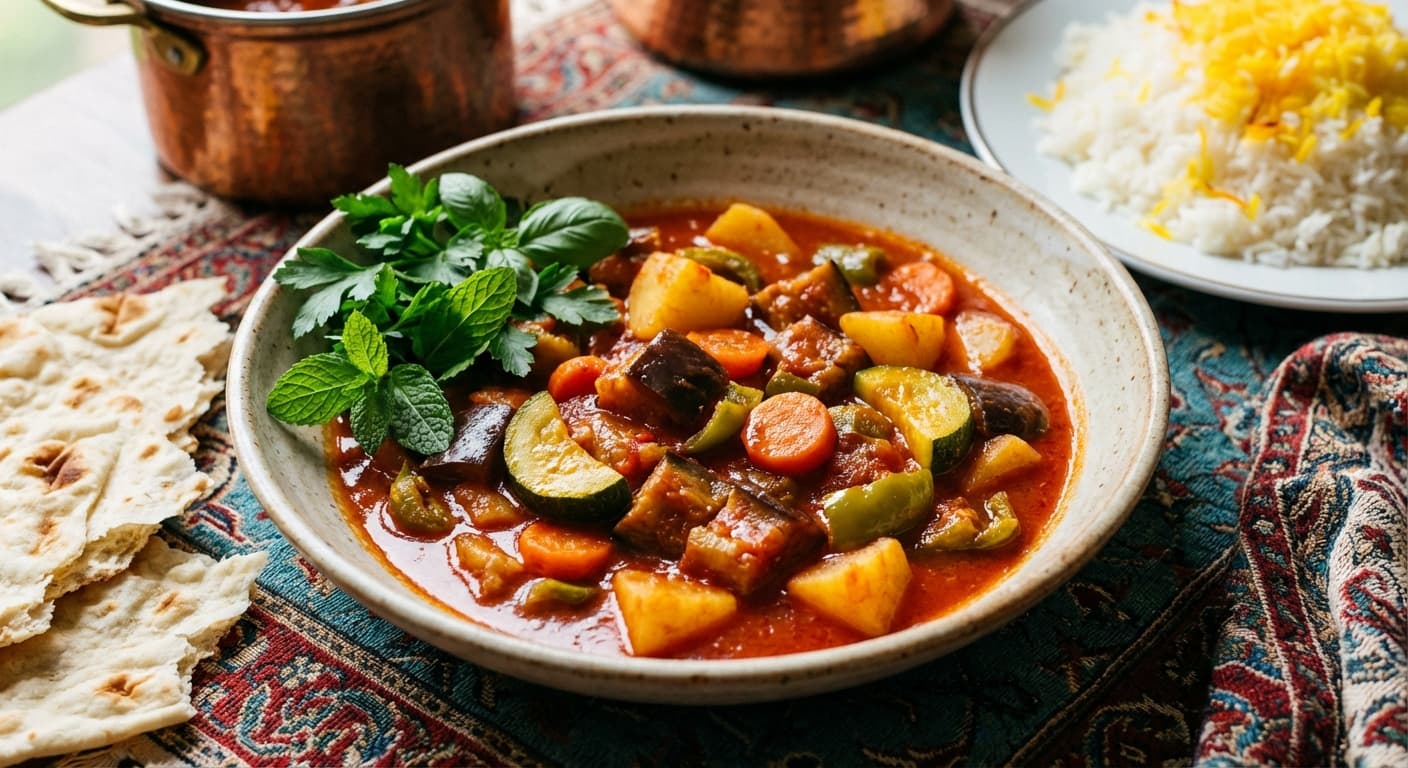
Yatimcheh (یتیمچه) — Persian Slow-Cooked Summer Vegetable Stew
Persian · Stews · 100 min
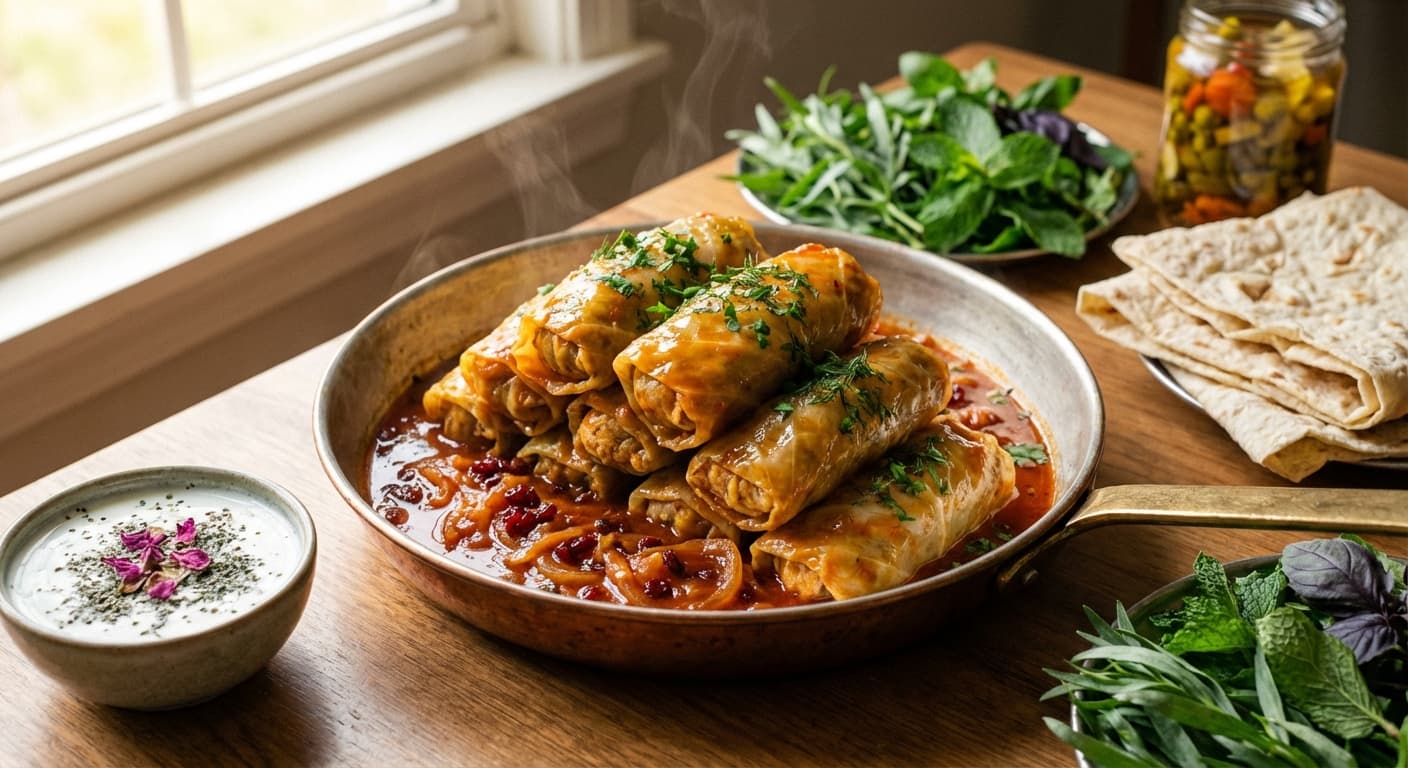
Chicken Stuffed Cabbage Rolls (دلمه کلم با مرغ) — Herb-Scented Persian Dolmeh in Tomato Saffron Sauce
Persian · Main Courses · 90 min
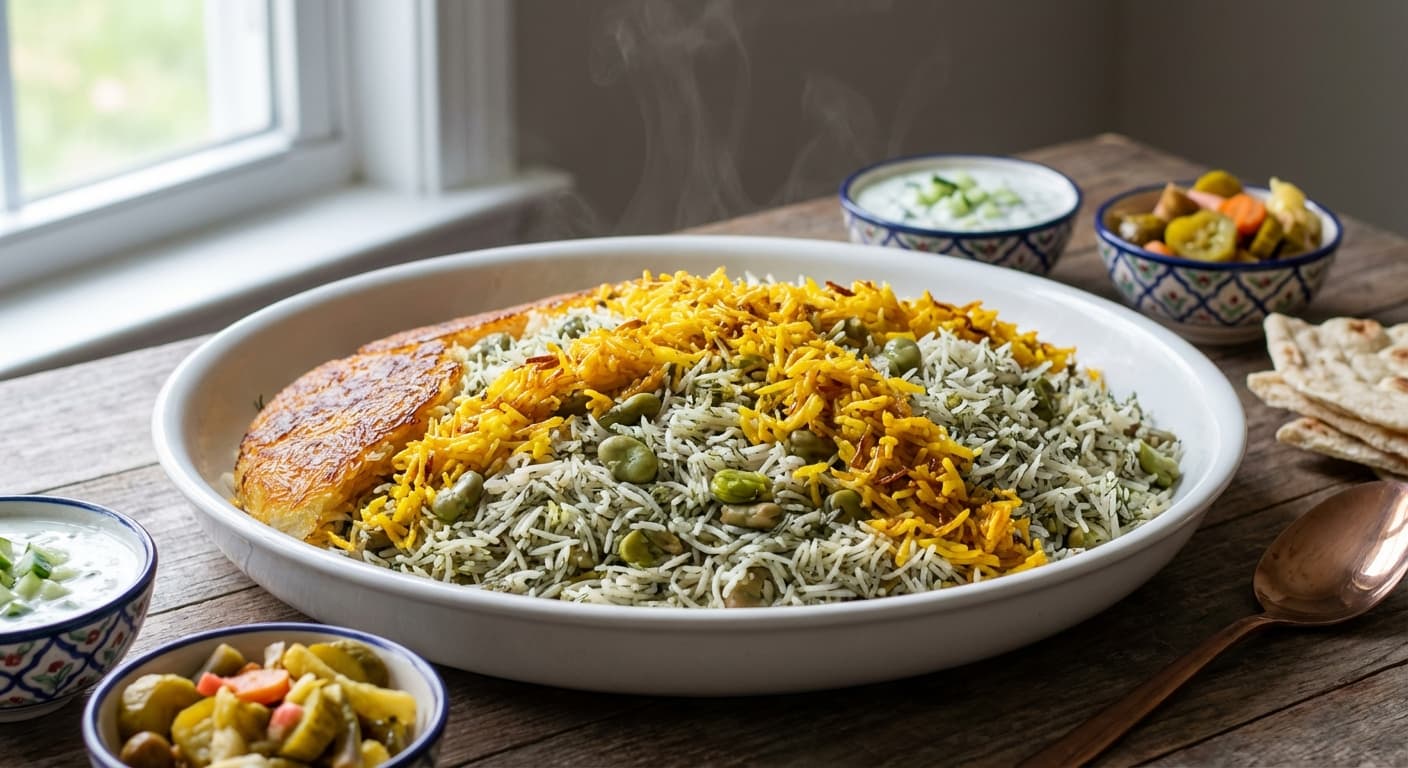
Baghali Polo (باقالی پلو) — Persian Dill and Fava Bean Rice with Saffron
Persian · Rice Dishes · 95 min
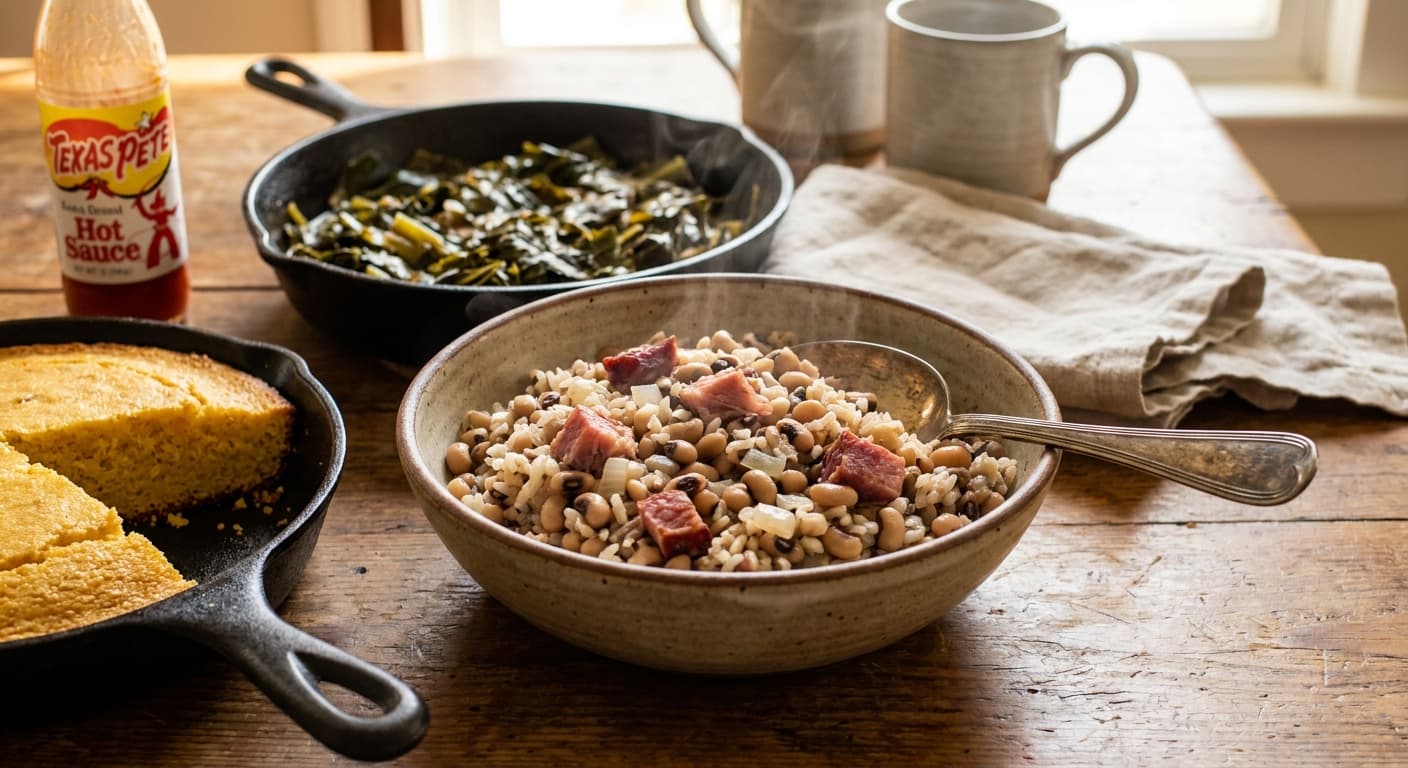
Hoppin' John (Hoppin' John) — Southern Black-Eyed Peas and Rice
American · Rice Dishes · 115 min
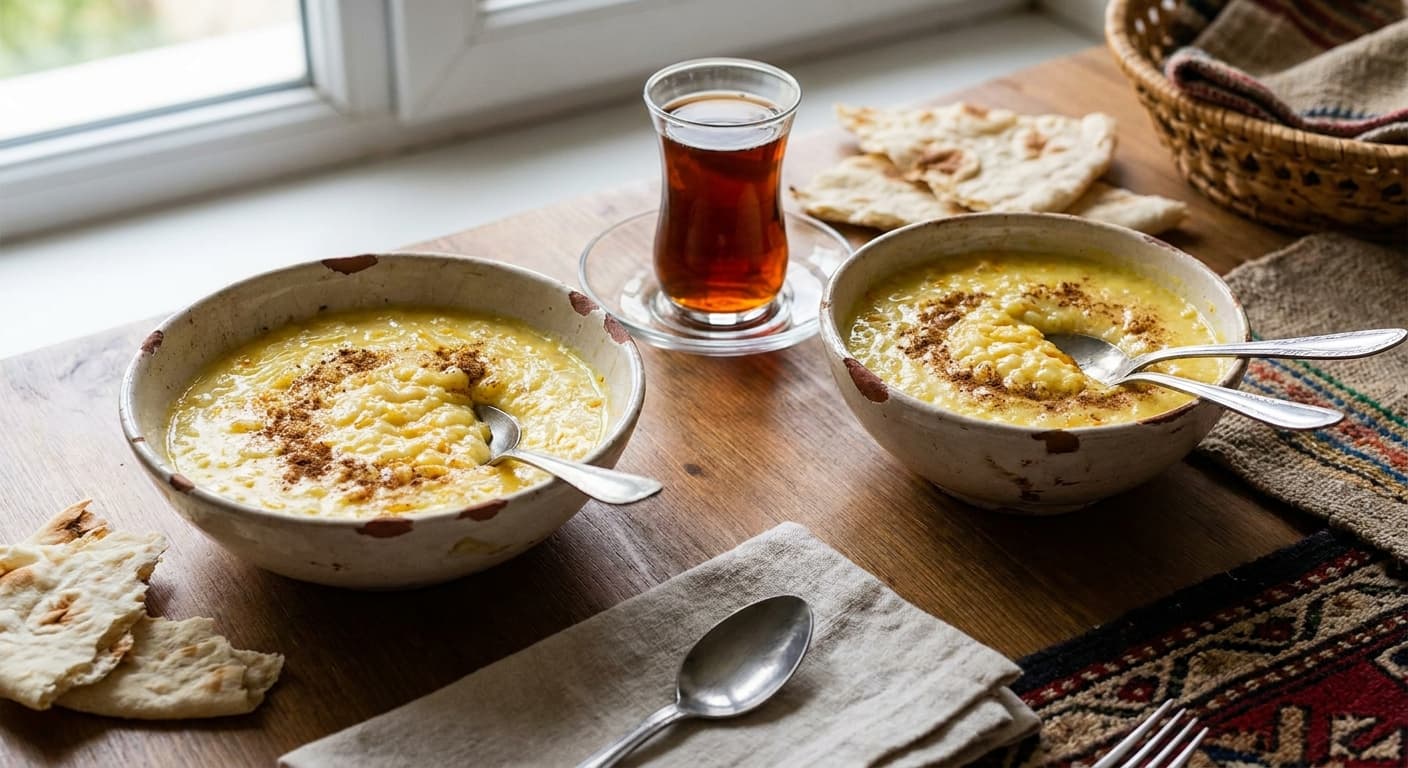
Azerbaijani Milk-Rice Porridge (Südlü Sıyıq) — Creamy Breakfast Rice with Saffron
Azerbaijani · Rice Dishes · 50 min
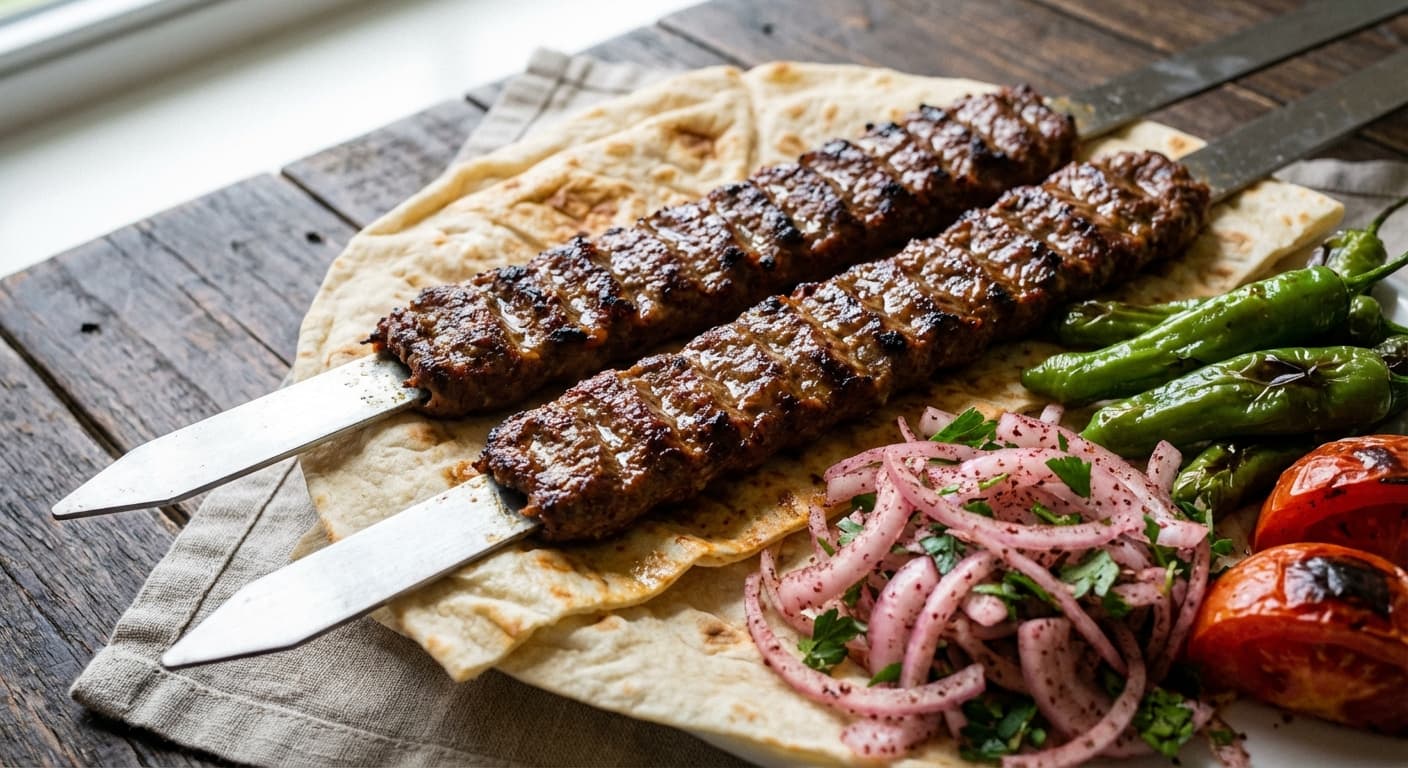
Urfa Kebab (اورفا کباب) — Mild Turkish minced skewer with sumac onions
Turkish · Kebabs · 37 min
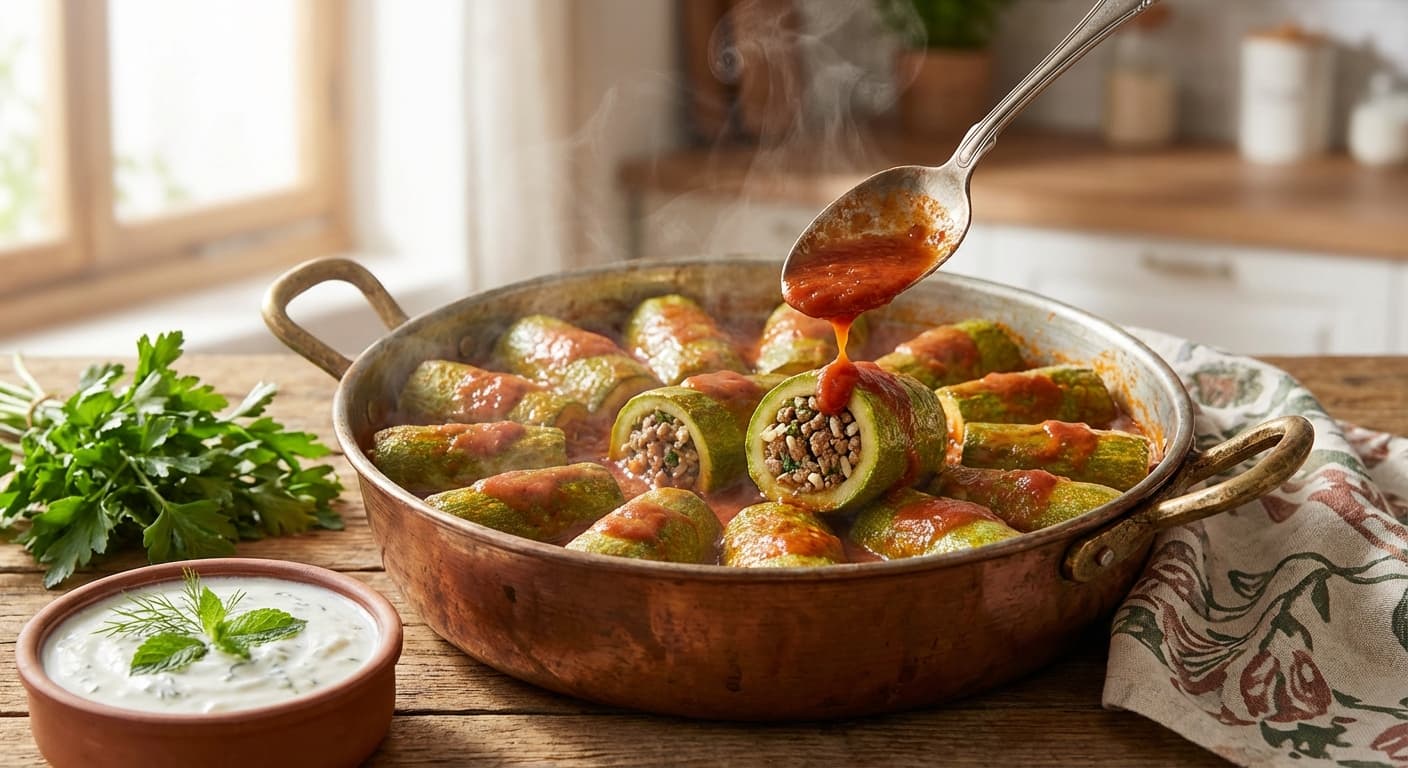
Stuffed Zucchini (Kabak Dolması) — Hollowed zucchini filled with spiced minced meat and rice
Turkish · Main Courses · 90 min
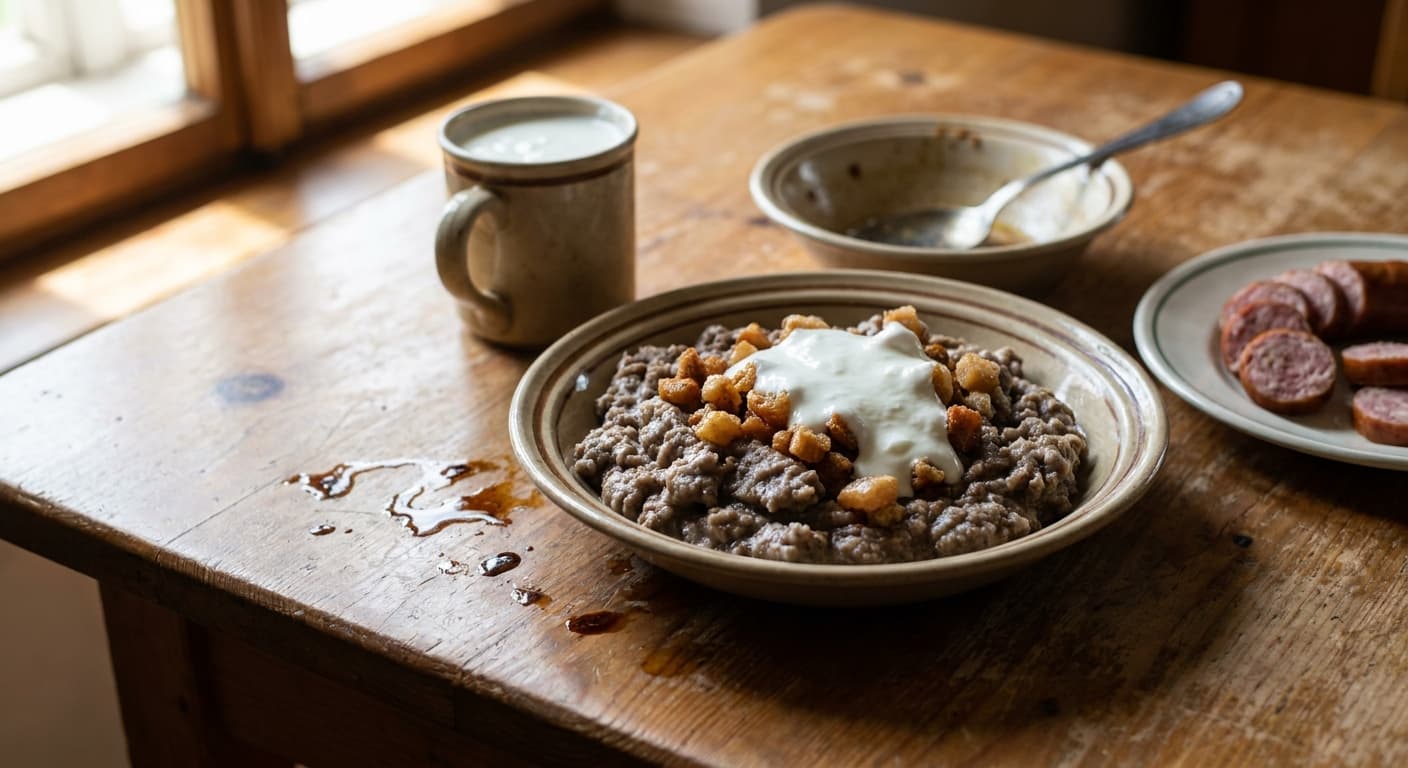
Buckwheat Žganci (Ajdovi žganci) — Slovenian Buckwheat Crumbs with Cracklings
Slovenian · Side Dishes · 45 min
Reviews
Cooked this recipe?
Tap the stars to rate it — that's all it takes. A few words are welcome but optional.
No ratings yet. Cooked this one? Be the first to rate it — it takes one tap.