Dolmeh Barg-e Mo (دلمه برگ مو) — Persian Stuffed Grape Leaves & Kuku Sabzi Platter
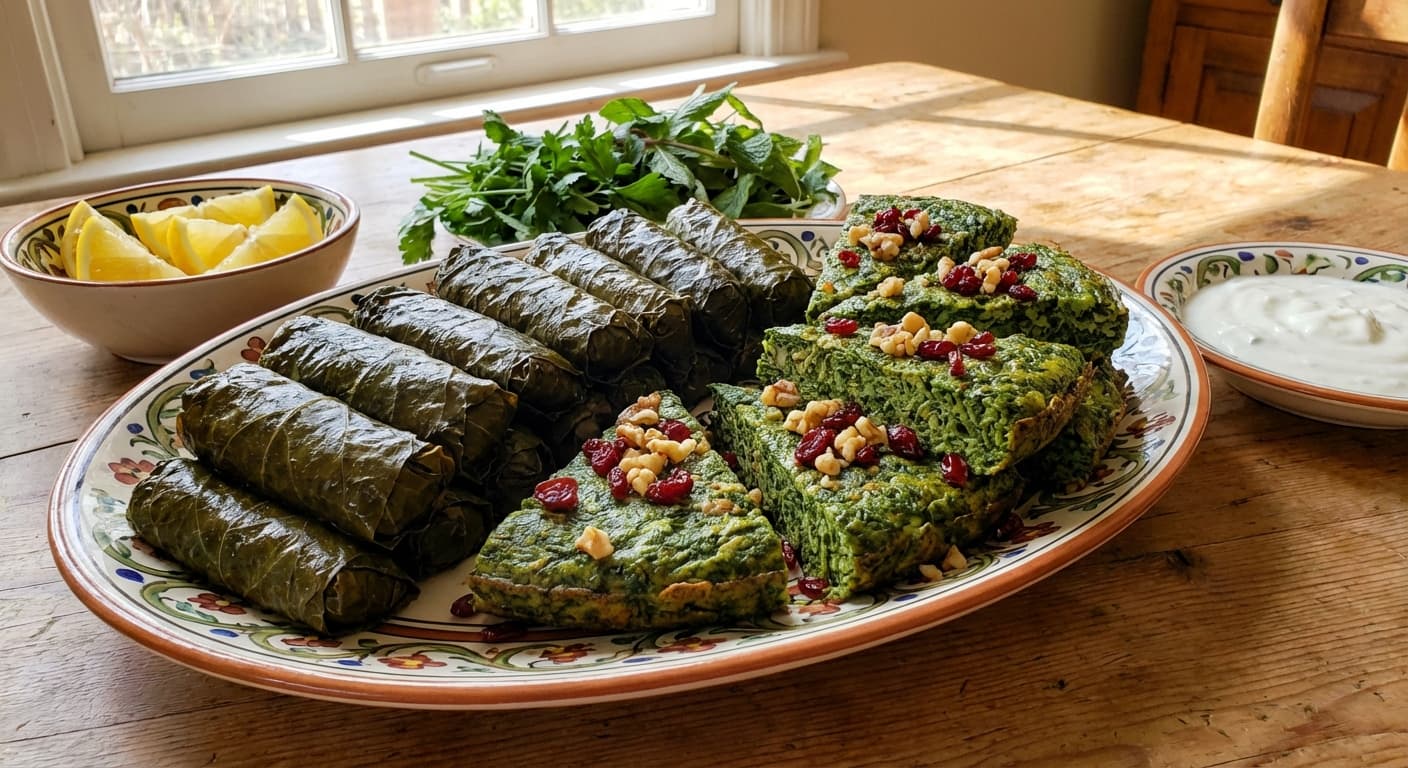
A festive Persian platter pairing lemony stuffed grape leaves with an herb-packed frittata studded with walnuts and barberries. Bright, aromatic, and celebratory, it’s a classic for Nowruz and family gatherings.
Printable Recipe Card
Servings: 6 · Total: 175 min · Difficulty: medium
Ingredients (quick list)
- 50 leaves Jarred grape leaves, drained (whole leaves, stems removed if present)
- 2000 ml Water (for blanching and simmering)
- 180 g Basmati rice, rinsed (about 1 cup)
- 100 g Yellow split peas (rinsed; about 1/2 cup)
- 200 g Onion (1 large, finely diced)
- 30 ml Olive oil (2 tablespoons)
- 2 g Ground turmeric (1 teaspoon)
- 60 g Fresh parsley leaves (finely chopped (about 2 cups loosely packed))
- 25 g Fresh dill (finely chopped (about 1 cup loosely packed))
- 15 g Fresh mint leaves (finely chopped (about 1 cup loosely packed))
- 80 g Scallions (finely sliced (about 6 scallions))
- 30 g Dried barberries (rinsed and drained (about 3 tablespoons))
+ 7 more in the full ingredients section below.
Steps (summary)
- Prepare the grape leaves: bring 1500 ml water to a boil in a wide pot. Add drained grape leaves and blanch 2 minutes to soften…
- Par-cook the fillings: simmer yellow split peas in lightly salted water (about 800 ml) for 18–22 minutes until tender but intac…
- Cook the aromatic base: heat 30 ml olive oil in a skillet over medium heat. Add diced onion and cook 8–10 minutes until golden.…
- Mix dolmeh stuffing: in a bowl combine parboiled rice, cooked split peas, sautéed onion, chopped parsley, dill, mint, and scall…
- Roll the dolmeh: place one grape leaf shiny-side down, stem end facing you. Add 1 heaped tablespoon (about 18–22 g) filling nea…
- Arrange and simmer: grease the pot bottom with 15 g butter and line with reserved torn leaves. Pack dolmeh seam-side down in ti…
+ 4 more steps in the full instructions section below.
Cultural Background
Herb-centered dishes like stuffed grape leaves and kuku sabzi are commonly served at Nowruz and other gatherings, reflecting seasonal greens and celebratory abundance. These foods are often prepared in advance for hosting, and variations appear across many Persian-speaking communities and neighboring regions.
Equipment
💡 Tips
- If using very salty jarred grape leaves, extend the blanching to 3 minutes and taste one leaf before rolling.
- Keep dolmeh rolls uniform so they cook evenly; a heaped tablespoon of filling per leaf is a reliable standard size.
- Rinse barberries quickly and drain well; soaking too long can wash away their bright tartness.
- For clean kuku slices, rest the frittata 10 minutes and use a thin, sharp knife wiped between cuts.
⚠️ Common Mistakes
❌ Overfilling the grape leaves
💡 Why: Rice expands and can burst the leaves, causing filling to leak and rolls to unravel.
✅ Fix: Use 18–22 g filling per leaf and roll snugly; pack rolls tightly in the pot seam-side down.
❌ Skipping the plate weight during simmering
💡 Why: Dolmeh can float and open, leading to uneven cooking and torn leaves.
✅ Fix: Place an inverted plate directly on the rolls before covering with the lid to keep them compact.
❌ Cooking kuku entirely on high heat
💡 Why: The bottom overbrowns before the center sets, leaving a dry crust and undercooked middle.
✅ Fix: Set the edges on medium heat, then finish in the oven at 190°C (375°F) for gentle, even cooking.
❌ Adding wet herbs and onion to kuku
💡 Why: Excess moisture makes the frittata weep and prevents proper setting.
✅ Fix: Spin or pat herbs dry and squeeze grated onion firmly before mixing into eggs.
🧊 How to Store
Refrigerate dolmeh and kuku separately in airtight containers for up to 4 days. Reheat dolmeh gently with a splash of water, covered, over low heat 8–10 minutes. Reheat kuku at 160°C (320°F) for 8–10 minutes or enjoy at room temperature. Freeze dolmeh up to 2 months; freeze kuku up to 1 month.
📅 Make Ahead
Dolmeh improves after resting: cook up to 2 days ahead and refrigerate in its pot liquid; reheat gently before serving. Kuku sabzi can be baked 1 day ahead, cooled, and refrigerated; bring to room temperature 30 minutes or rewarm in a low oven before plating.
🍽️ Pairs Well With
- Plain yogurt or thick strained yogurt
- Pickled vegetables
- Fresh herbs and radishes
- Thin flatbread or lavash-style bread
- Extra lemon wedges
Regional Variations
- Tehran and Central IranDolmeh fillings often lean herb-forward with rice and legumes, and may include a slightly tangy simmering liquid; kuku sabzi is commonly baked or pan-fried with walnuts and barberries for contrast.
- Northwestern Iran (Azerbaijan region)Stuffed grape leaves may be rolled smaller and packed very tightly; some cooks increase the sour note with more lemon and add extra herbs for a greener filling.
- Persian Gulf regionHerb mixtures can shift toward stronger aromatics; kuku may be cooked thinner and crisper at the edges for a more snack-like texture.
Ingredients
- 50 leavesJarred grape leaves, drained (whole leaves, stems removed if present)
- 2000 mlWater (for blanching and simmering)
- 180 gBasmati rice, rinsed (about 1 cup)
- 100 gYellow split peas (rinsed; about 1/2 cup)
- 200 gOnion (1 large, finely diced)
- 30 mlOlive oil (2 tablespoons)
- 2 gGround turmeric (1 teaspoon)
- 60 gFresh parsley leaves (finely chopped (about 2 cups loosely packed))
- 25 gFresh dill (finely chopped (about 1 cup loosely packed))
- 15 gFresh mint leaves (finely chopped (about 1 cup loosely packed))
- 80 gScallions (finely sliced (about 6 scallions))
- 30 gDried barberries (rinsed and drained (about 3 tablespoons))
- 40 gWalnuts (finely chopped (about 1/3 cup))
- 60 mlLemon juice (4 tablespoons, divided)
- 8 gFine sea salt (about 1 1/2 teaspoons, divided)
- 1 gBlack pepper (1/2 teaspoon)
- 15 gUnsalted butter (for greasing the pan base)
- 8 largeEggs (room temperature)
- 4 gBaking powder (1 teaspoon)
🔄 Substitutions
- Dried barberries→ Dried cranberries, chopped
- Yellow split peas→ Brown lentils
- Fresh mint→ Fresh basil
Instructions
- 1
Prepare the grape leaves: bring 1500 ml water to a boil in a wide pot. Add drained grape leaves and blanch 2 minutes to soften and reduce brine. Drain, rinse under cool water, and pat dry. Set aside 8–10 torn leaves for lining the pot to prevent sticking and tearing.
- 2
Par-cook the fillings: simmer yellow split peas in lightly salted water (about 800 ml) for 18–22 minutes until tender but intact. Drain well. In a separate pot, parboil rinsed basmati rice in boiling water for 6 minutes; drain and cool 5 minutes so grains stay separate when mixed.
- 3
Cook the aromatic base: heat 30 ml olive oil in a skillet over medium heat. Add diced onion and cook 8–10 minutes until golden. Stir in 2 g turmeric and cook 30 seconds. Remove from heat and cool 5 minutes so it won’t wilt the herbs excessively when combined.
- 4
Mix dolmeh stuffing: in a bowl combine parboiled rice, cooked split peas, sautéed onion, chopped parsley, dill, mint, and scallions. Fold in 30 g barberries and 40 g walnuts. Season with 6 g salt and 1 g black pepper. Add 30 ml lemon juice and mix gently.
- 5
Roll the dolmeh: place one grape leaf shiny-side down, stem end facing you. Add 1 heaped tablespoon (about 18–22 g) filling near the stem. Fold bottom up, fold sides in, then roll snugly into a small cigar. Repeat, keeping rolls tight but not bursting; rice will expand slightly.
- 6
Arrange and simmer: grease the pot bottom with 15 g butter and line with reserved torn leaves. Pack dolmeh seam-side down in tight concentric circles. Mix 500 ml water with remaining 30 ml lemon juice and 2 g salt; pour over. Cover with an inverted plate, lid, and simmer on low 55–65 minutes.
- 7
Rest and set dolmeh: turn off heat and rest, covered, 15 minutes so rolls firm up and absorb liquid evenly. Uncover and check tenderness; leaves should be silky and filling cooked through. If needed, simmer 10 more minutes with 60–120 ml additional water.
- 8
Make kuku mixture: heat oven to 190°C (375°F). In a large bowl whisk 8 eggs for 45 seconds until uniform. Add chopped parsley, dill, mint, and scallions, plus grated onion. Stir in 70 g walnuts and 25 g barberries. Season with 5 g salt, 1 g pepper, 1 g turmeric, and 4 g baking powder.
- 9
Cook kuku on stovetop: heat a 25–28 cm oven-safe nonstick or cast-iron skillet over medium. Add 30 ml olive oil and swirl to coat. Pour in herb-egg mixture, level the top, and cook 6–8 minutes until edges set and the center is still slightly loose. Reduce heat to medium-low if browning too fast.
- 10
Finish kuku in oven and serve: transfer skillet to oven and bake 10–14 minutes until the center reaches 71°C (160°F) and springs back. Rest 10 minutes, then slice into wedges. Plate with warm or room-temperature dolmeh; drizzle remaining 15 ml olive oil over kuku and finish with 15 ml lemon juice.
🪪 Recipe Passport
Cultural Background
Herb-centered dishes like stuffed grape leaves and kuku sabzi are commonly served at Nowruz and other gatherings, reflecting seasonal greens and celebratory abundance. These foods are often prepared in advance for hosting, and variations appear across many Persian-speaking communities and neighboring regions.
Regional Variations
Researched from multiple sources and validated by the Zaffaron editorial team. Every recipe is tested for accuracy, measurements, and cultural authenticity.
Nutrition per serving
Pairs well with
If you enjoyed this recipe, here are a few related Zaffaron recipes to try next.
Does your family make this differently?
Every family has their own version. Maybe your grandmother adds a secret ingredient, or your aunt has a completely different technique. Preserve your family's version — with their name on it, forever.
You Might Also Like
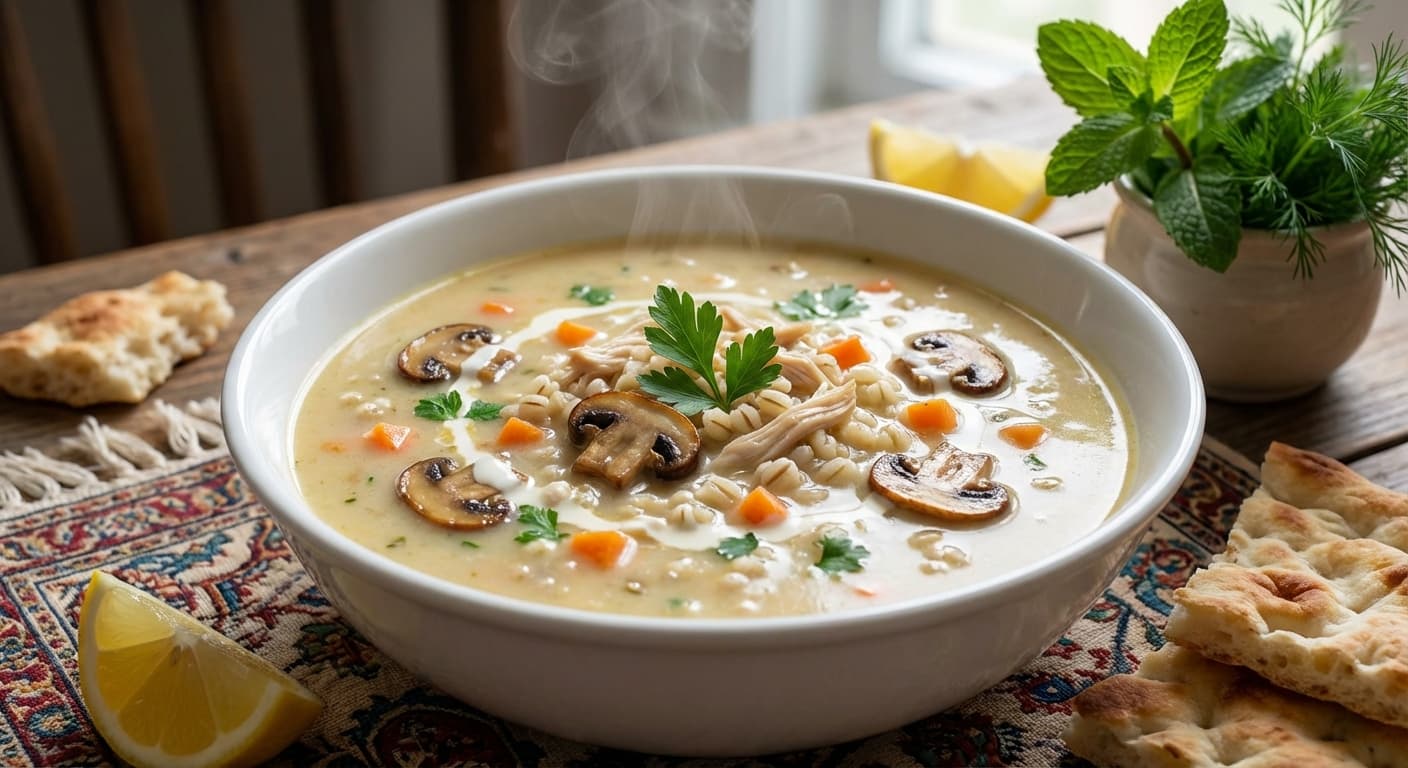
Soup-e Jo (سوپ جو) — Persian Creamy Barley Soup
Persian · Soups · 90 min
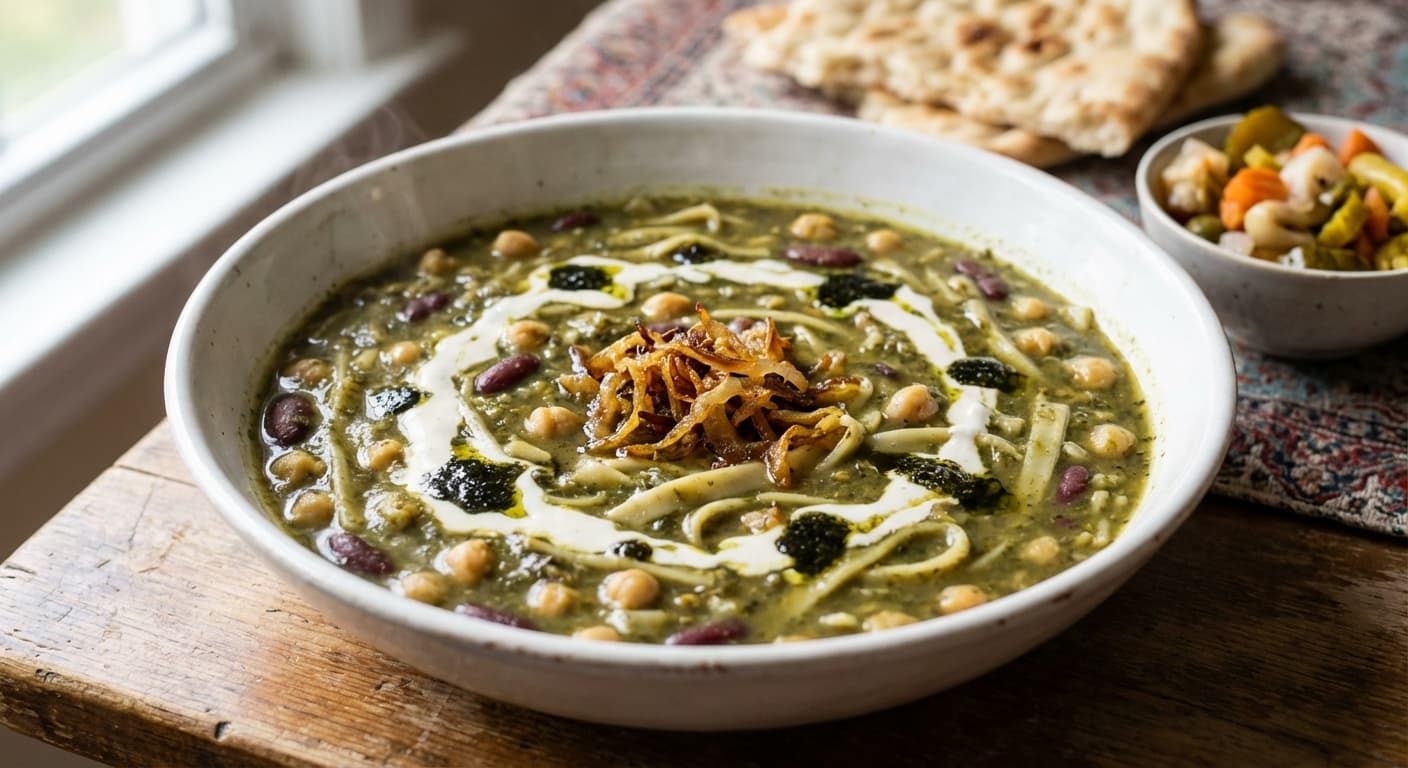
Ash Reshteh (آش رشته) — Persian Herb, Bean, and Noodle Soup
Persian · Soups · 145 min
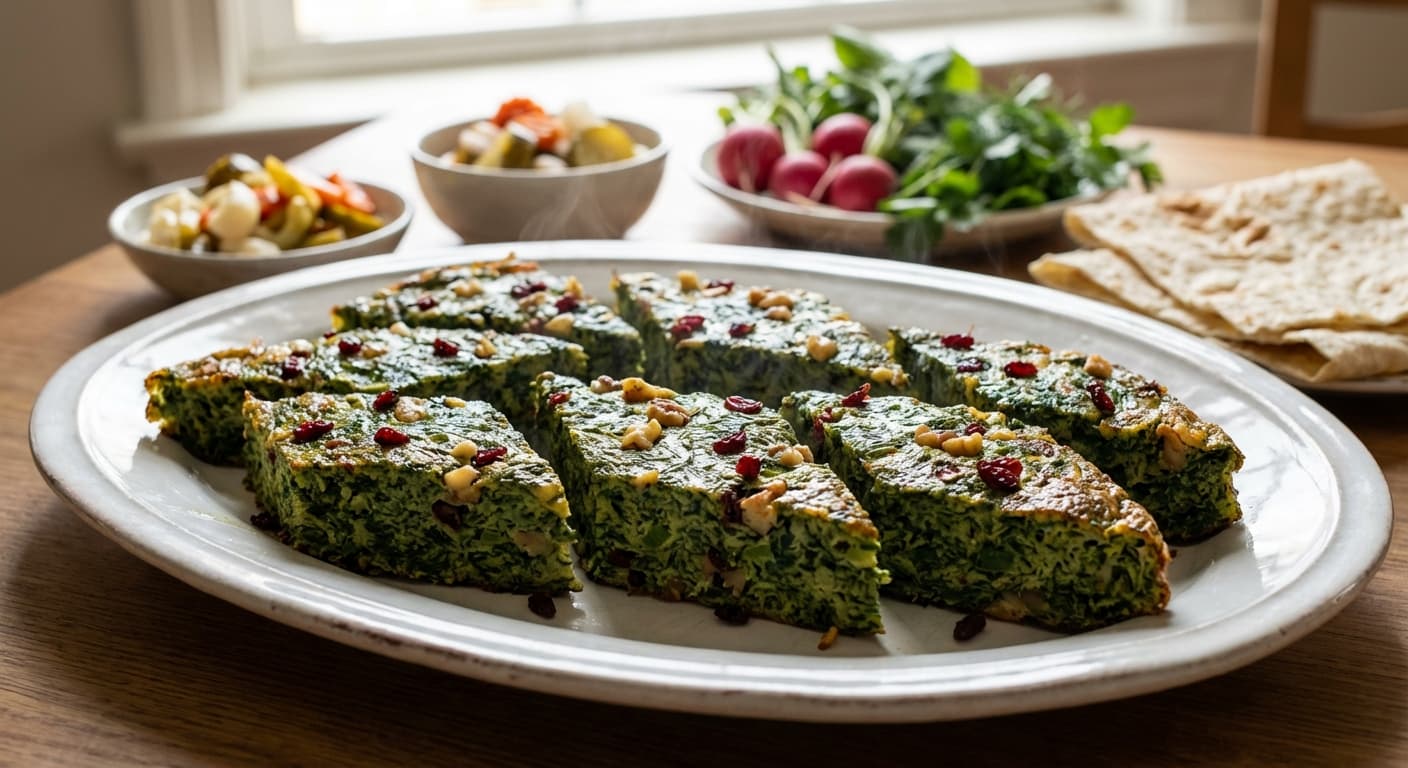
Kuku Sabzi (کوکو سبزی) — Emerald Persian Herb Frittata
Persian · Main Courses · 38 min
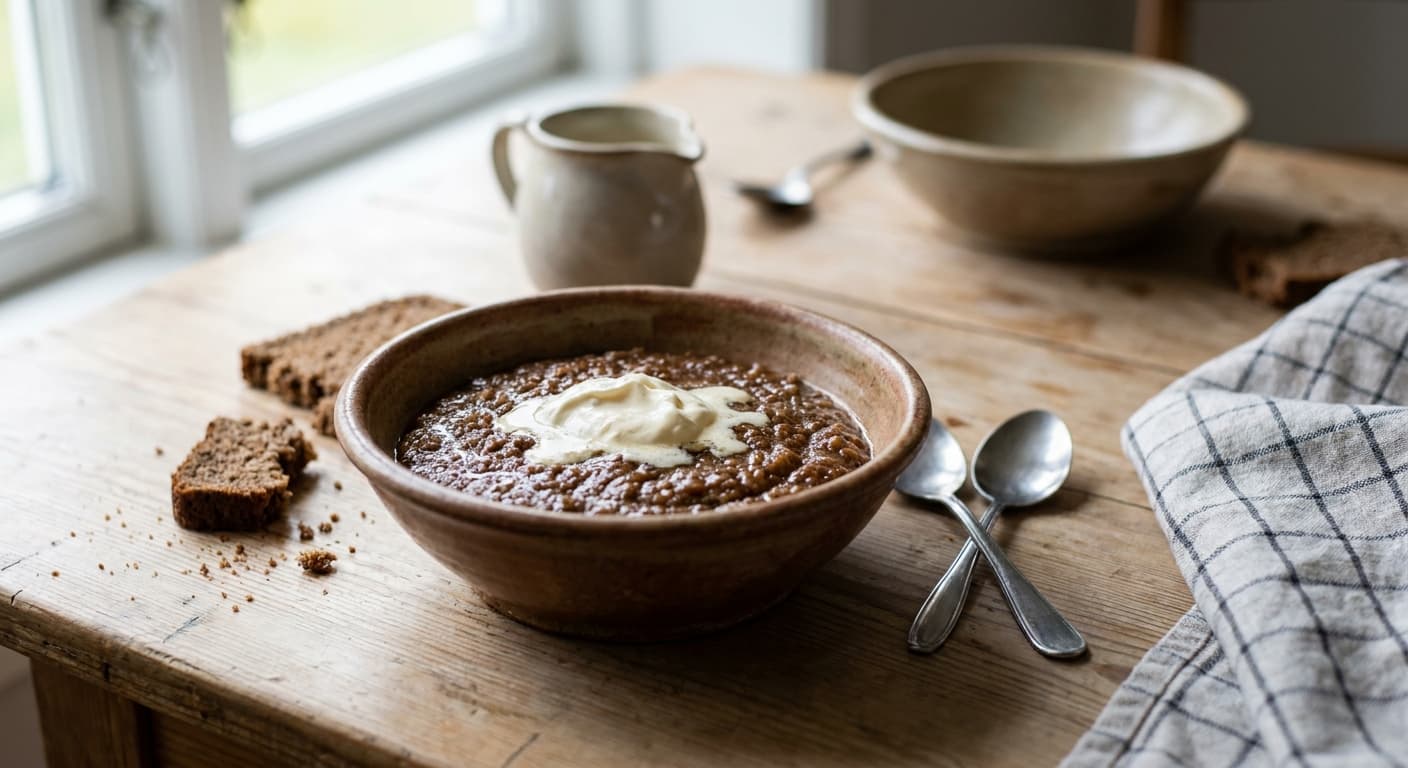
Rye Bread and Beer Porridge (Øllebrød) — Traditional Danish Breakfast
Danish · Main Courses · 65 min
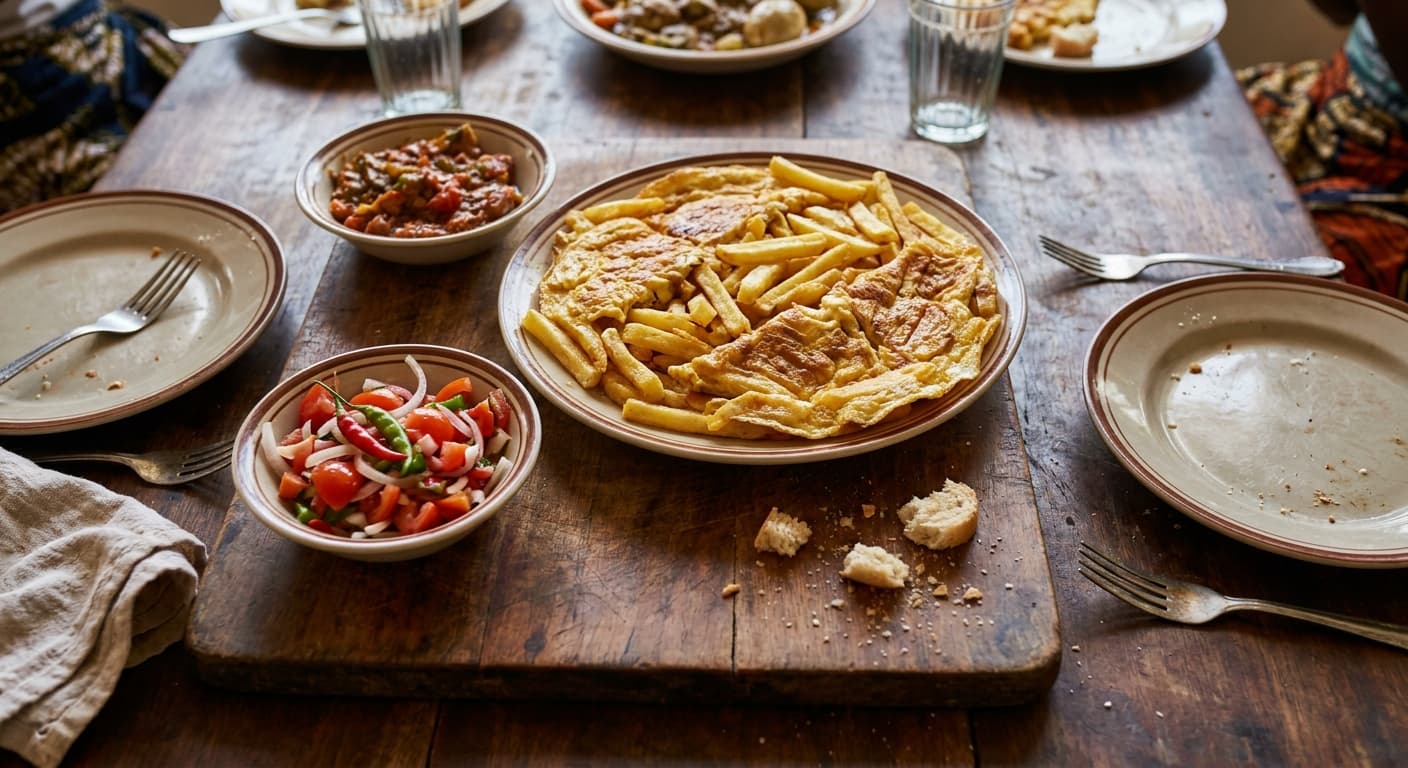
Chips and Egg Omelet (Chipsi Mayai) — Tanzanian Street-Food Classic
Tanzanian · Main Courses · 50 min
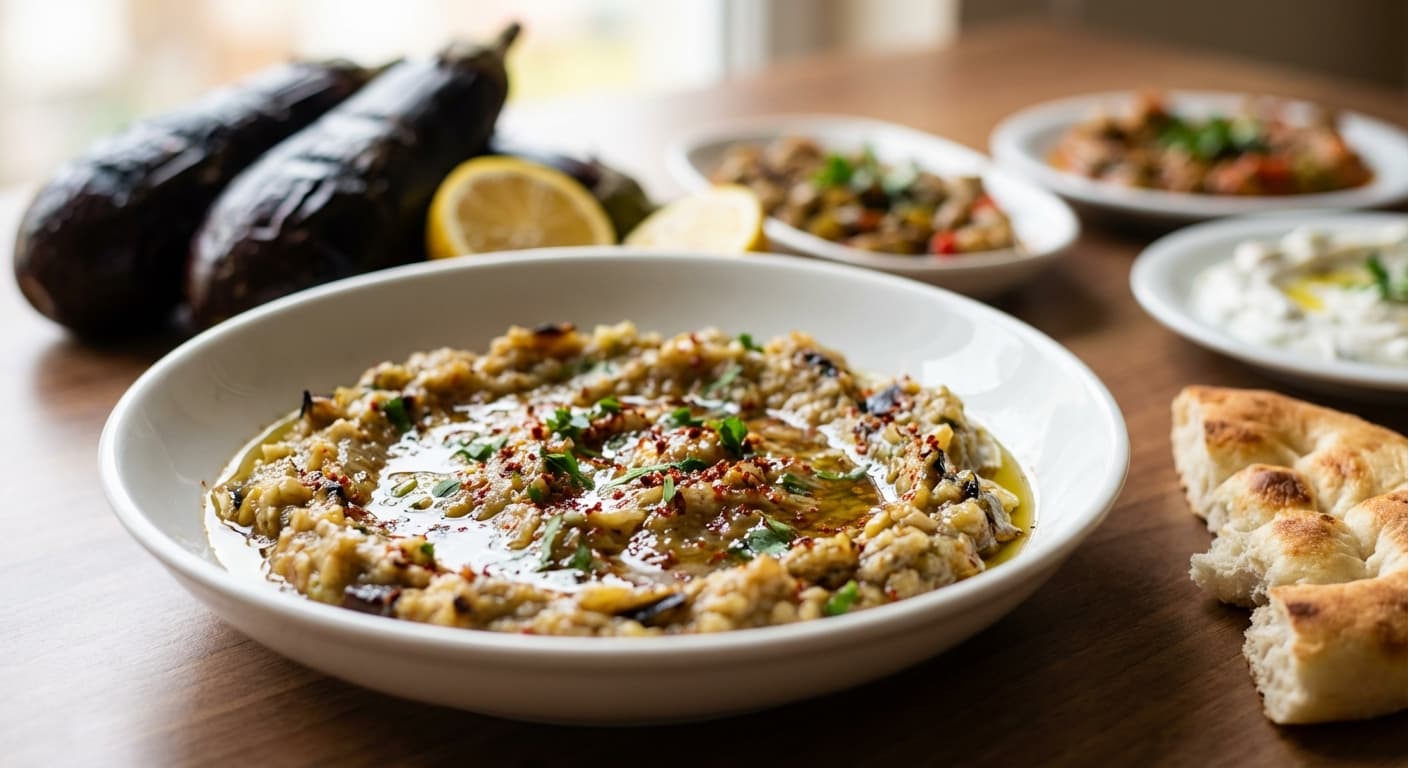
Smoky Eggplant Salad (Patlıcan Salatası) — Turkish charred eggplant with garlic and olive oil
Turkish · Salads · 40 min
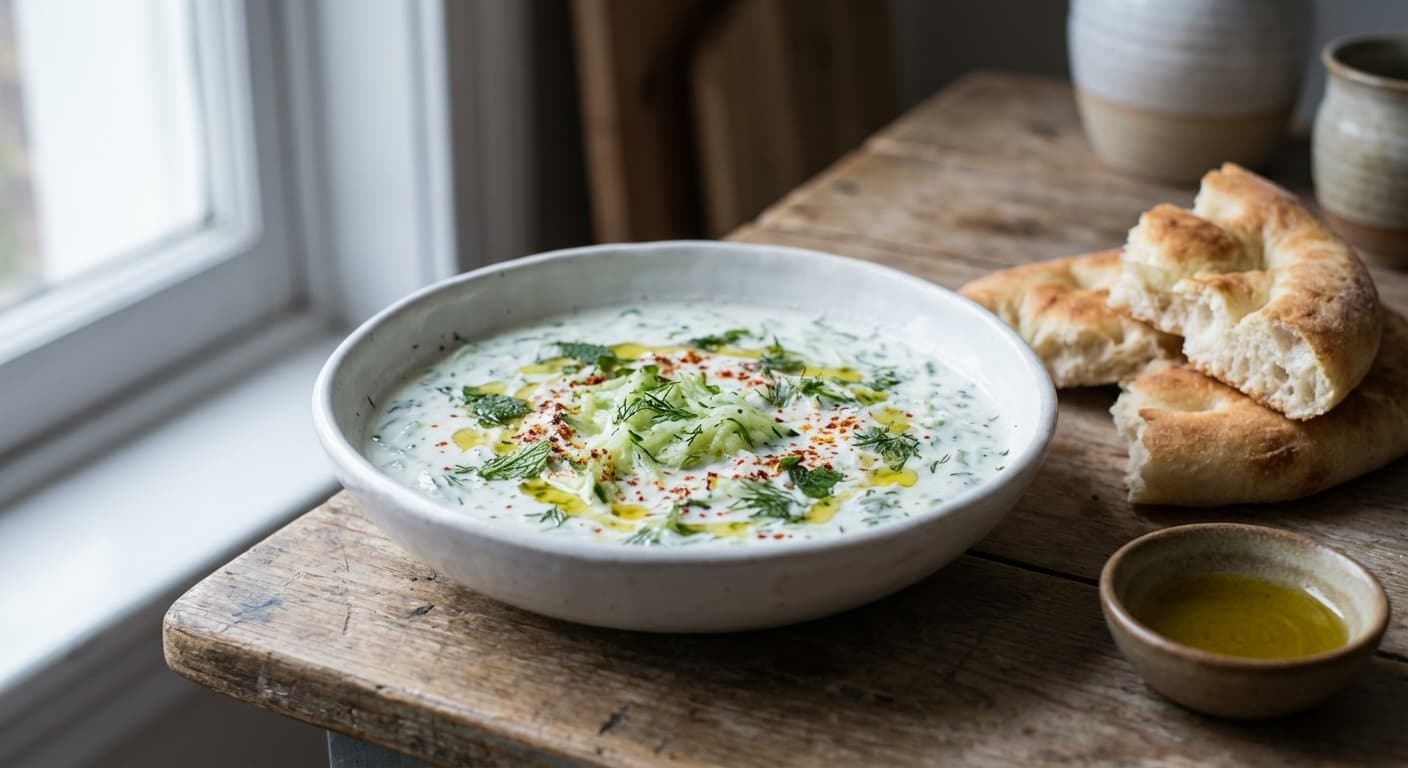
Cacık (Yoğurtlu Salatalık Mezesi) — Chilled Turkish Yogurt, Cucumber & Mint Dip
Turkish · Appetizers · 15 min
Moroccan Sardine Balls (كفتة السردين) — Spiced sardine kefta simmered in tomato sauce
Moroccan · Main Courses · 55 min
Reviews
Cooked this recipe?
Tap the stars to rate it — that's all it takes. A few words are welcome but optional.
No ratings yet. Cooked this one? Be the first to rate it — it takes one tap.