Potato and Cheese Pierogi (Pierogi ruskie) — Polish Dumplings with Farmer Cheese
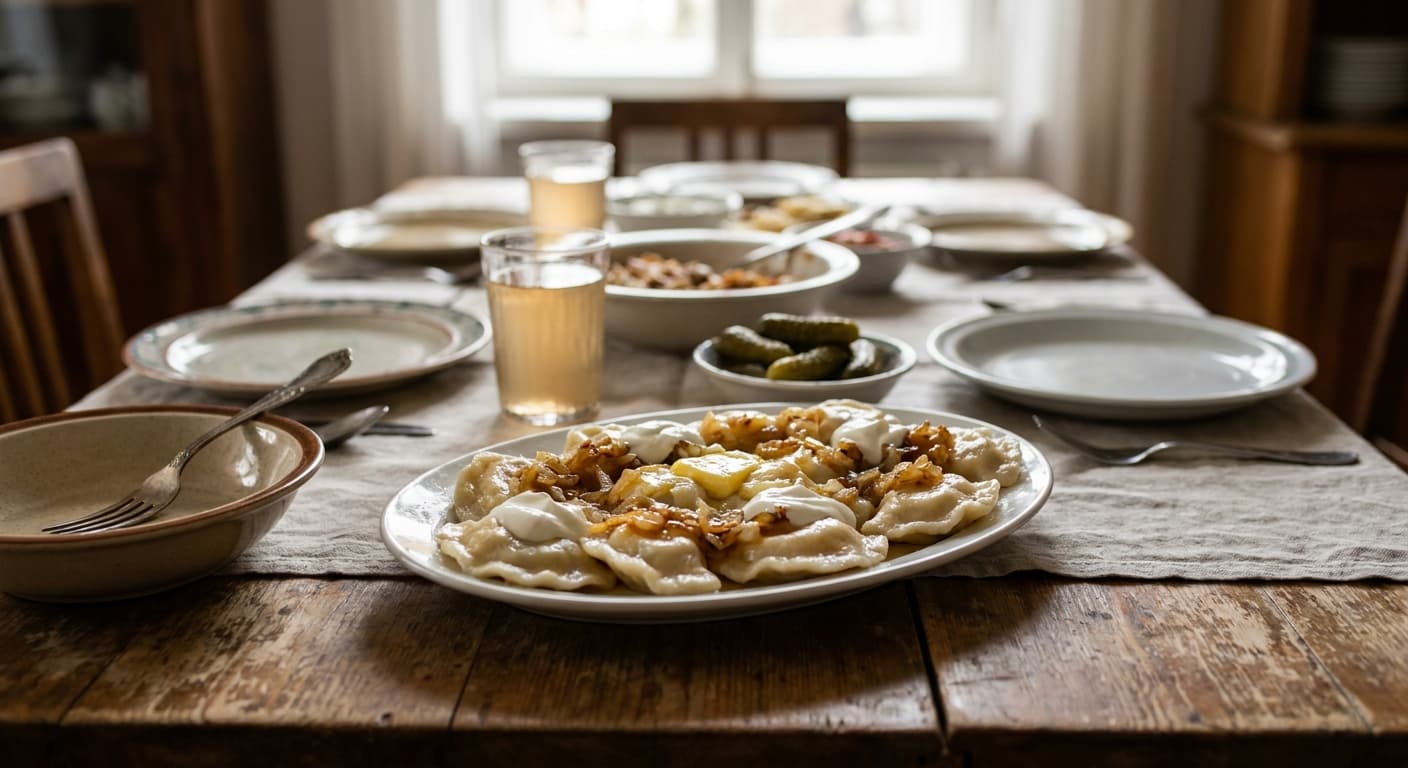
Pierogi Ruskie are classic Polish dumplings filled with mashed potatoes, farmer cheese, and browned onion. The name refers to old Ruthenian borderlands, not modern Russia, and the dish remains a beloved home-cooked staple.
Printable Recipe Card
Servings: 4 · Total: 95 min · Difficulty: medium
Ingredients (quick list)
- 360 g all-purpose flour
- 6 g fine sea salt
- 1 large egg
- 180 ml warm water (about 40°C)
- 15 ml neutral vegetable oil
- 500 g russet potatoes (peeled and cut into 3 cm chunks)
- 250 g farmer cheese (well-drained, crumbly Polish-style curd cheese)
- 250 g yellow onion (finely diced)
- 45 g unsalted butter
- 2 g black pepper (freshly ground)
- 3 l water
- 120 g sour cream
Steps (summary)
- Put the potatoes in a saucepan, cover with cold water by 3 cm, and bring to a steady boil. Cook for 15 to 18 minutes, until a k…
- While the potatoes cook, melt 45 g butter in a skillet over medium-low heat and add the diced onion. Cook for 12 to 15 minutes,…
- Mash the hot drained potatoes until smooth, then fold in the farmer cheese, browned onion with its butter, 5 g salt, and 2 g bl…
- For the dough, combine 360 g flour and 6 g salt in a wide bowl, then add the egg, warm water, and oil. Stir until shaggy, then…
- Cover the dough with an overturned bowl or clean towel and rest it for 30 minutes at room temperature. This rest relaxes the gl…
- Divide the dough into 2 equal pieces and keep one covered while you work with the other. Roll the first piece to about 2 mm thi…
+ 3 more steps in the full instructions section below.
Cultural Background
Pierogi Ruskie reflect the foodways of Poland’s eastern borderlands, where potatoes, curd cheese, and onions became a practical and cherished filling. They are now central to Polish home cooking and milk-bar menus.
Equipment
💡 Tips
- Use dry, crumbly farmer cheese rather than wet cottage cheese so the filling stays firm and savory.
- Do not over-flour the rolling surface, because excess flour prevents the edges from sealing cleanly.
- For a traditional home-style finish, pan-fry boiled pierogi in butter until lightly blistered on both sides.
⚠️ Common Mistakes
❌ Using wet cheese or watery potatoes makes the filling loose.
✅ Fix: Drain the cheese well and let boiled potatoes steam dry before mashing.
❌ Rolling the dough too thick creates heavy, bready pierogi.
✅ Fix: Roll to about 2 mm thick and keep unused dough covered so it stays supple.
❌ Pierogi burst open during boiling.
✅ Fix: Keep filling away from the rim, press out trapped air, and seal each edge twice.
🧊 How to Store
Store cooked pierogi in a covered container for up to 3 days, lightly coated with butter so they do not stick. Reheat by pan-frying in butter over medium heat for 3 to 4 minutes per side, or freeze uncooked pierogi on a tray before bagging.
📅 Make Ahead
Prepare the filling up to 2 days ahead and keep it refrigerated in a covered container. Uncooked shaped pierogi can be frozen on a floured tray, then transferred to bags for up to 2 months.
🍽️ Pairs Well With
- Sour cream
- browned onions
- cucumber salad
- beet salad
- clear beet soup.
Regional Variations
- In some eastern Polish homes, the filling is more peppery and includes a higher proportion of farmer cheese.
- A common home variation serves boiled pierogi pan-fried the next day until golden in butter.
- Some families top the finished pierogi with crisp bacon or pork cracklings, though the vegetarian onion-and-butter version is very traditional.
Ingredients
- 360 gall-purpose flour
- 6 gfine sea salt
- 1large egg
- 180 mlwarm water (about 40°C)
- 15 mlneutral vegetable oil
- 500 grusset potatoes (peeled and cut into 3 cm chunks)
- 250 gfarmer cheese (well-drained, crumbly Polish-style curd cheese)
- 250 gyellow onion (finely diced)
- 45 gunsalted butter
- 2 gblack pepper (freshly ground)
- 3 lwater
- 120 gsour cream
🔄 Substitutions
- farmer cheese→ dry-curd cottage cheese
- russet potatoes→ Yukon Gold potatoes
- sour cream→ plain Greek yogurt
Instructions
- 1
Put the potatoes in a saucepan, cover with cold water by 3 cm, and bring to a steady boil. Cook for 15 to 18 minutes, until a knife slides through the pieces without resistance, then drain thoroughly and let the steam escape for 5 minutes.
- 2
While the potatoes cook, melt 45 g butter in a skillet over medium-low heat and add the diced onion. Cook for 12 to 15 minutes, stirring often, until the onion is soft, sweet, and lightly golden rather than crisp.
- 3
Mash the hot drained potatoes until smooth, then fold in the farmer cheese, browned onion with its butter, 5 g salt, and 2 g black pepper. Mix until the filling is cohesive but still slightly textured, then cool it to room temperature so it does not soften the dough.
- 4
For the dough, combine 360 g flour and 6 g salt in a wide bowl, then add the egg, warm water, and oil. Stir until shaggy, then knead on a lightly floured surface for 7 to 9 minutes until the dough is smooth, elastic, and no longer sticky.
- 5
Cover the dough with an overturned bowl or clean towel and rest it for 30 minutes at room temperature. This rest relaxes the gluten, making the dough easier to roll thinly without springing back.
- 6
Divide the dough into 2 equal pieces and keep one covered while you work with the other. Roll the first piece to about 2 mm thick, dusting sparingly with the 30 g flour, then cut 8 cm rounds with a cutter or glass.
- 7
Place 18 g filling in the center of each round, fold the dough into a half-moon, and press the edges firmly to seal. Pinch a second time along the seam to prevent leaks, making sure no filling is caught between the edges.
- 8
Bring 3 l water to a boil in a wide pot and add 12 g salt. Boil the pierogi in batches for 3 to 4 minutes after they float, stirring gently at the start so they do not stick to the bottom.
- 9
Lift the cooked pierogi with a slotted spoon and transfer them to a warm platter. Toss with 30 g melted butter and serve with sour cream, adding extra browned onion if you have prepared it.
🪪 Recipe Passport
Cultural Background
Pierogi Ruskie reflect the foodways of Poland’s eastern borderlands, where potatoes, curd cheese, and onions became a practical and cherished filling. They are now central to Polish home cooking and milk-bar menus.
Regional Variations
Researched from multiple sources and validated by the Zaffaron editorial team. Every recipe is tested for accuracy, measurements, and cultural authenticity.
📚 Sources & Cultural References
- Robert Strybel and Maria Strybel — Polish Heritage Cookery — (1993)
- Anne Applebaum and Danielle Crittenden — From a Polish Country House Kitchen — (2012)
Sources cited by the Zaffaron editorial team during recipe research. Cultural and culinary references supporting authenticity claims.
Nutrition per serving
Pairs well with
If you enjoyed this recipe, here are a few related Zaffaron recipes to try next.
Does your family make this differently?
Every family has their own version. Maybe your grandmother adds a secret ingredient, or your aunt has a completely different technique. Preserve your family's version — with their name on it, forever.
You Might Also Like
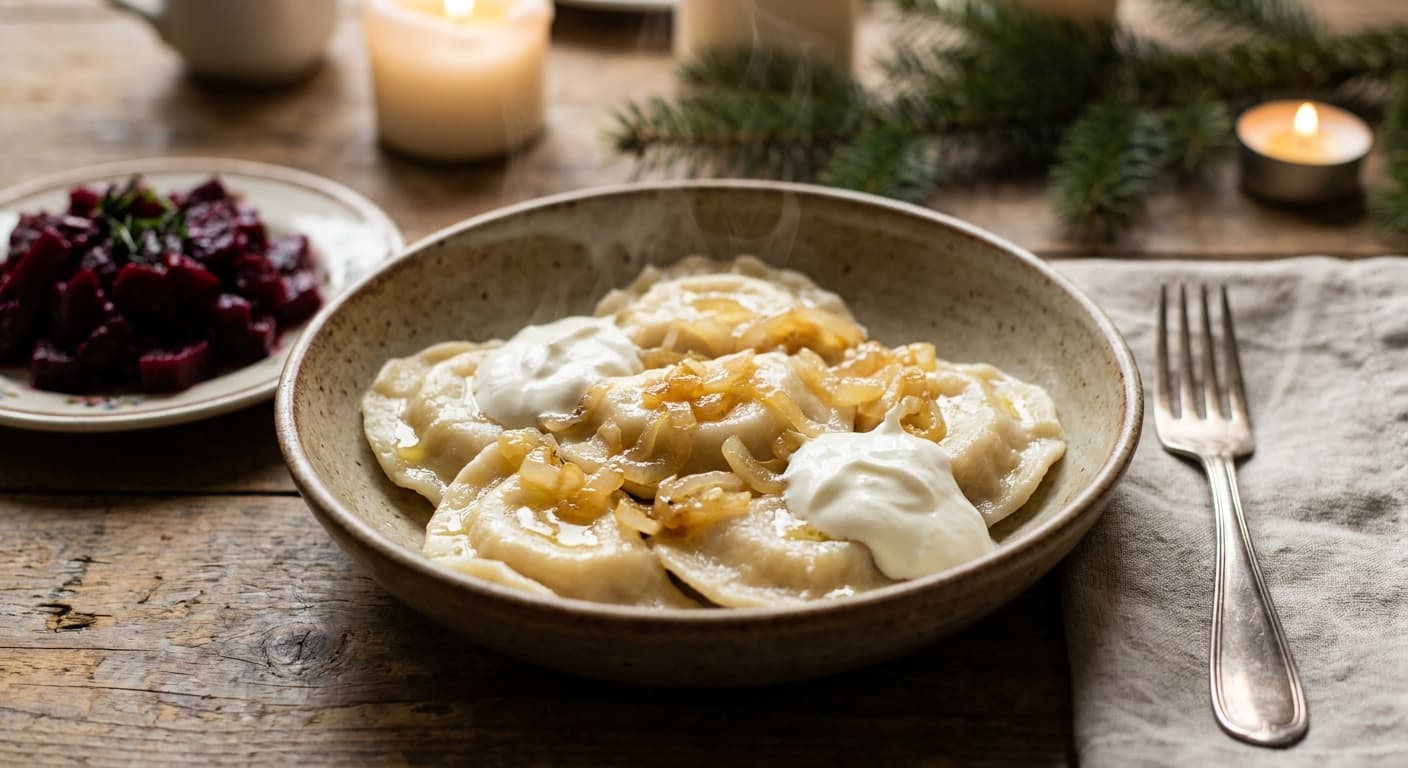
Polish Pierogi Ruskie (Pierogi ruskie) — Potato-Cheese Dumplings
Polish · Main Courses · 100 min
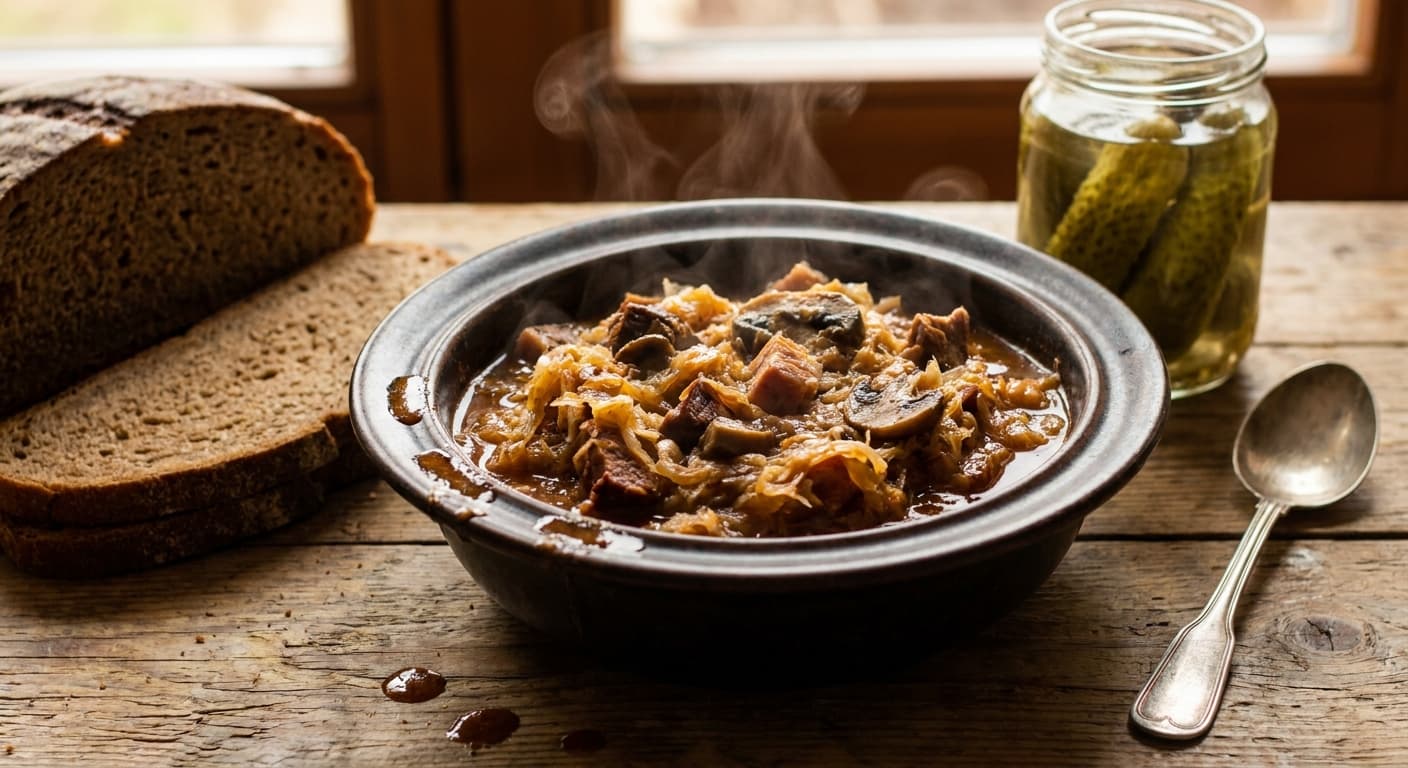
Polish Bigos (Bigos) — Hunter's Stew with Sauerkraut, Cabbage, and Smoked Meats
Polish · Stews · 215 min
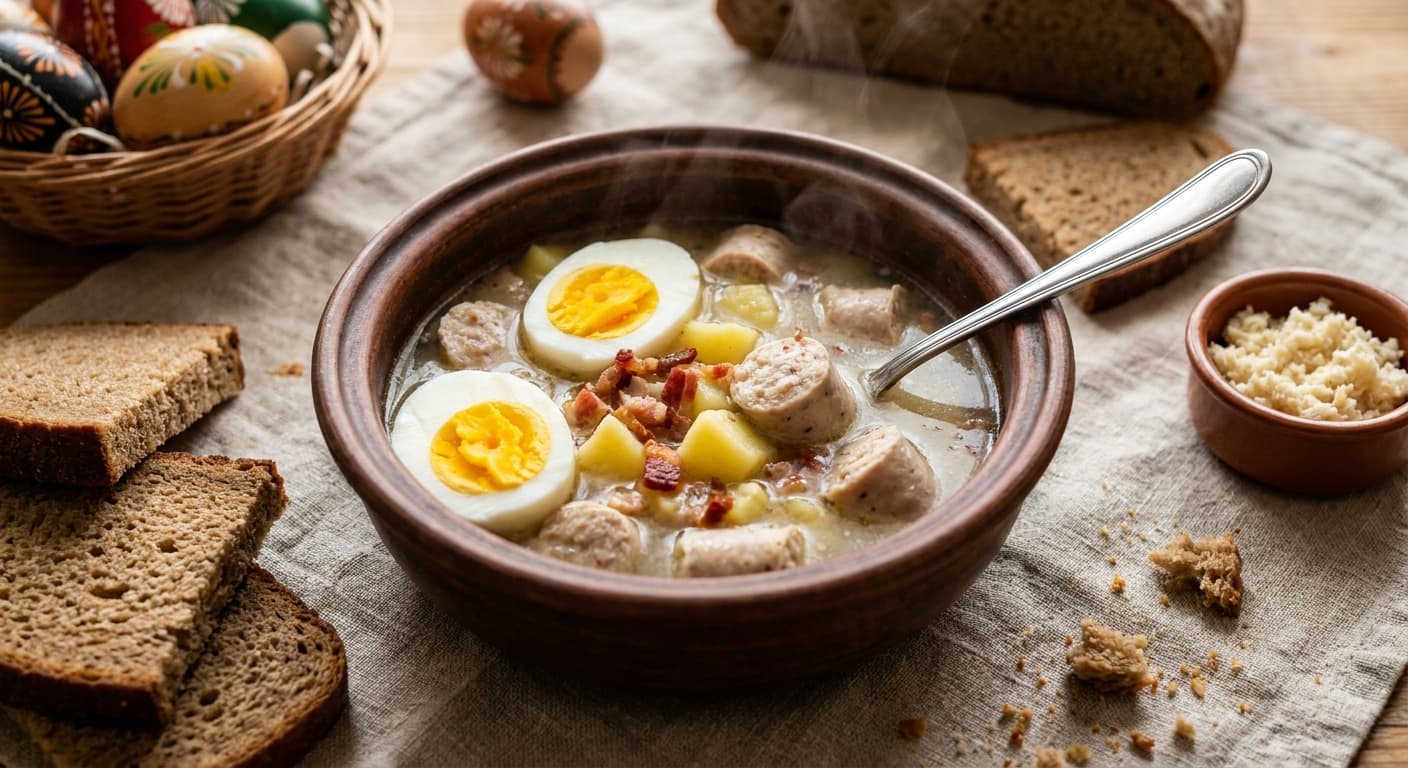
Polish Sour Rye Soup (Żurek) — Tangy Easter Sausage Soup
Polish · Soups · 80 min
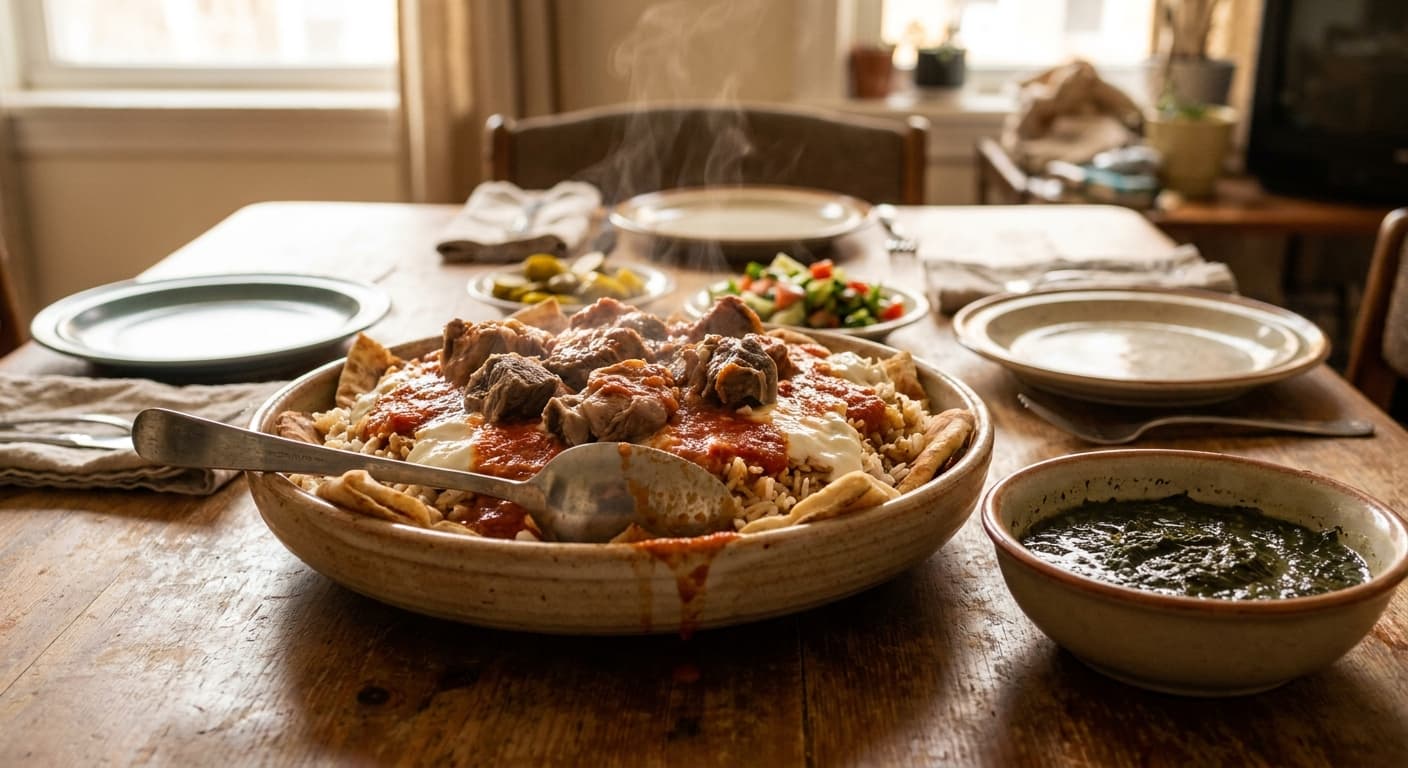
Egyptian Fatta (فتة) — Layered Meat, Rice, and Crisp Bread
Egyptian · Main Courses · 145 min
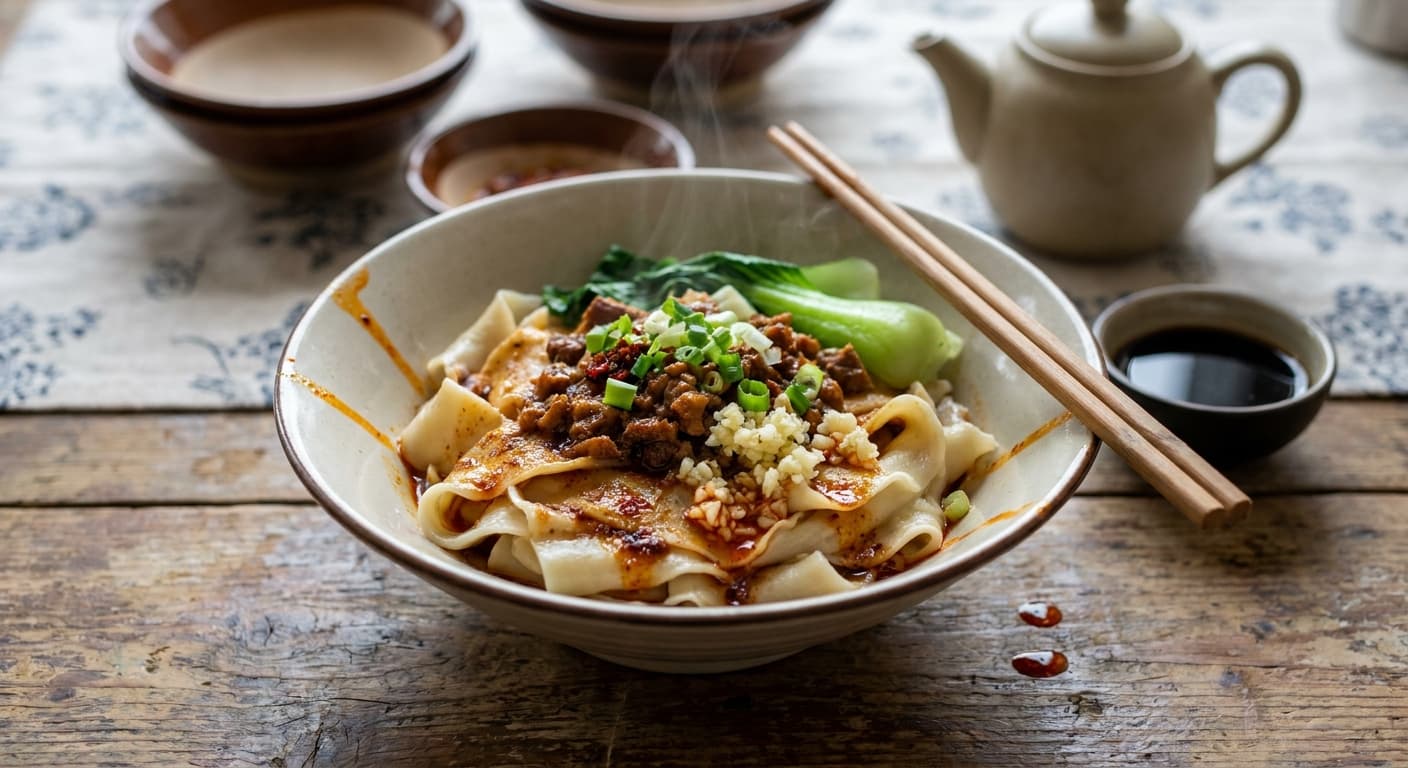
Biangbiang Noodles (油泼扯面) — Xi'an Hand-Pulled Belt Noodles
Chinese · Main Courses · 65 min

Chicken Kyiv (Котлета по-київськи) — Butter-Stuffed Breaded Chicken
Ukrainian · Main Courses · 115 min
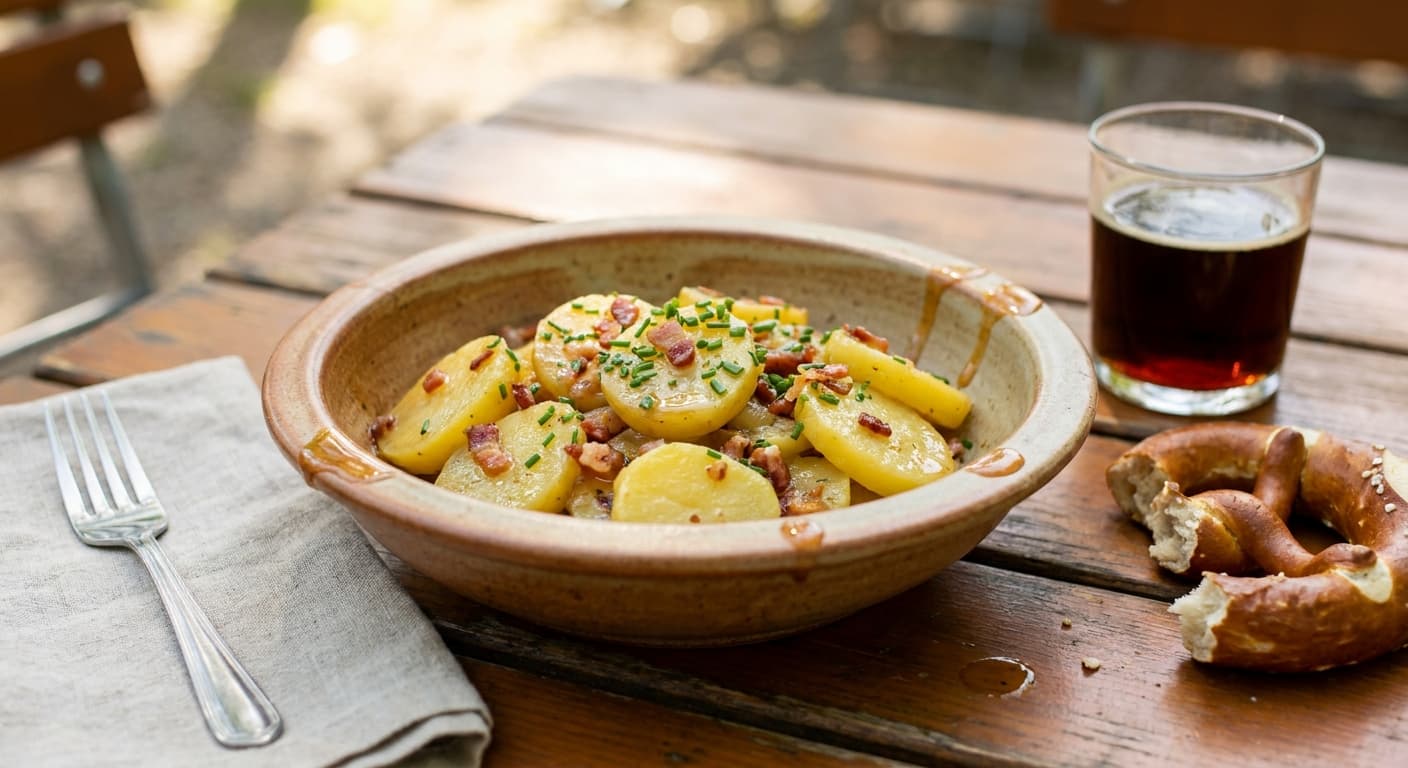
German Potato Salad (Kartoffelsalat) — Warm Vinegar-Broth Potato Salad
German · Salads · 50 min
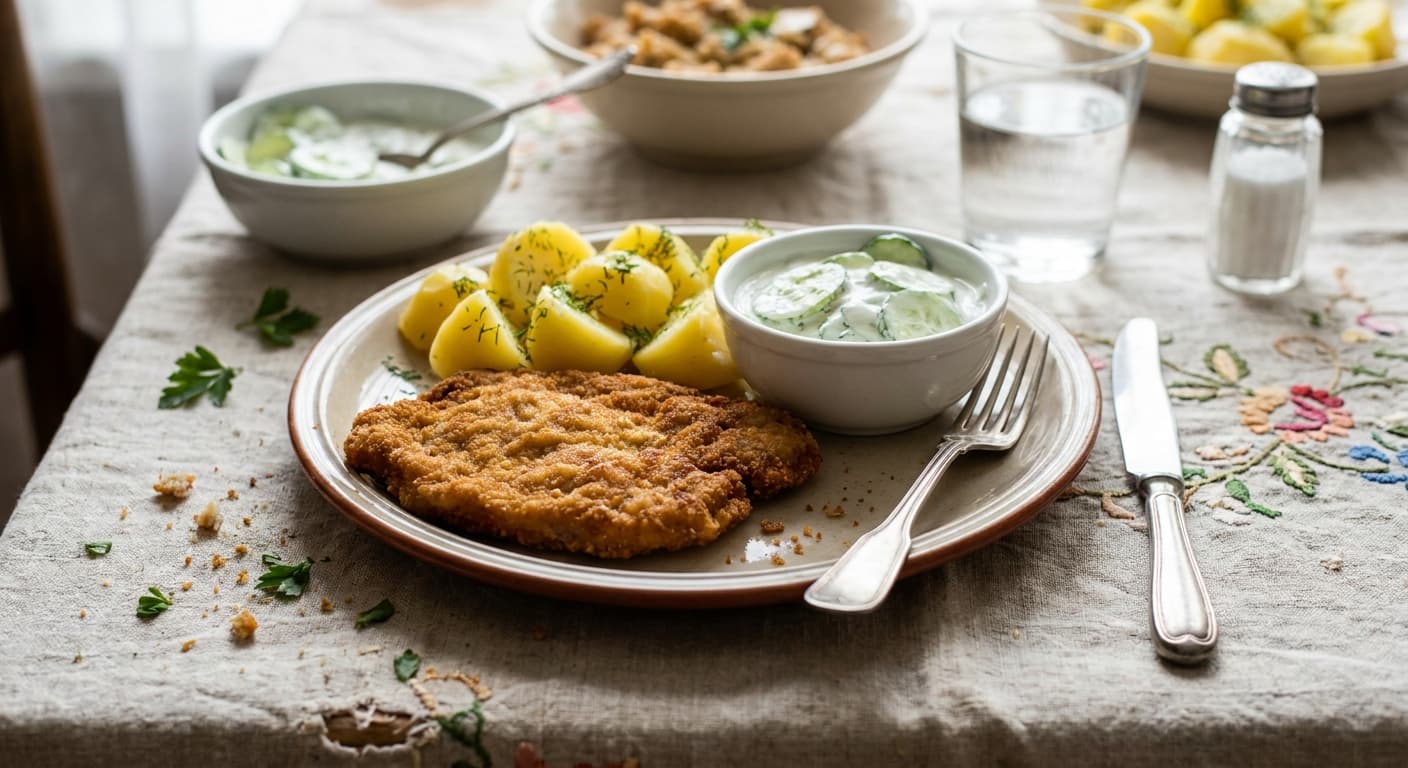
Polish Pork Cutlet (Kotlet schabowy) — Crisp Breaded Sunday Pork Chop
Polish · Main Courses · 43 min
Reviews
Cooked this recipe?
Tap the stars to rate it — that's all it takes. A few words are welcome but optional.
No ratings yet. Cooked this one? Be the first to rate it — it takes one tap.