Pirashki Paniri (پیراشکی پنیری) — Persian Fried Cheese and Parsley Turnovers
Crisp, golden Persian-style pirashki filled with tangy white cheese, fresh parsley, and a hint of cumin or fennel. Made with easy pizza dough and fried until shatteringly crunchy—ideal for tea-time and street-food cravings.
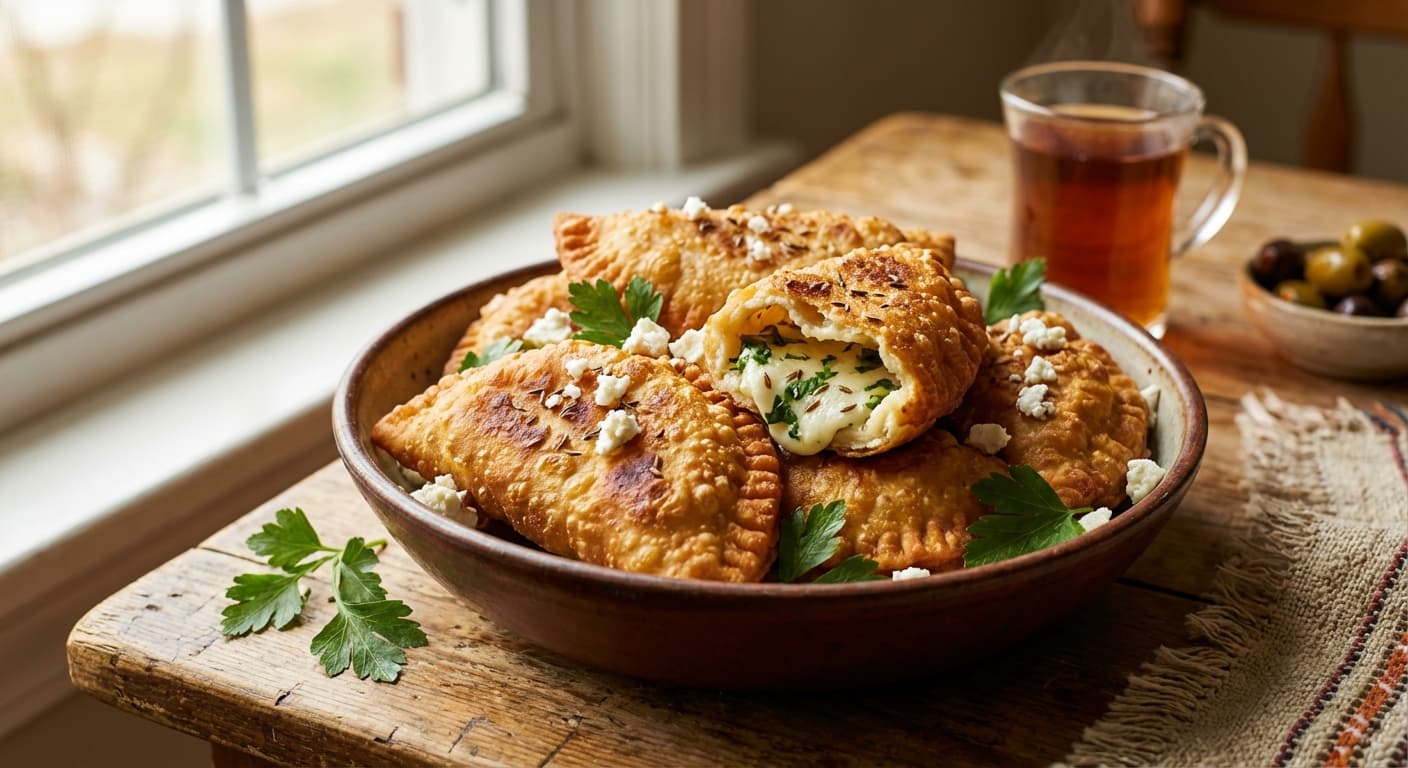
Printable Recipe Card
Servings: 8 · Total: 80 min · Difficulty: medium
Ingredients (quick list)
- 500 g Pizza dough (store-bought or homemade) (Cold dough; let sit at room temperature 30 minutes before shaping)
- 30 g All-purpose flour (For dusting the work surface)
- 250 g White brined cheese (feta-style) (Crumbled; if very salty, soak in cold water 10 minutes then drain well)
- 60 g Fresh parsley (Finely chopped (about 2 packed cups leaves))
- 35 g Egg white (From 1 large egg; for sealing the edges)
- 2 g Cumin seeds (About 1 teaspoon; or use fennel seeds (same amount))
- 1 g Black pepper (About 1/2 teaspoon, freshly ground)
- 900 ml Neutral frying oil (sunflower, canola, or grapeseed) (For deep-frying; keep oil at 175–180°C / 347–356°F)
Steps (summary)
- Bring the pizza dough to room temperature for 30 minutes so it stretches without tearing. Meanwhile, crumble the white cheese a…
- Make the filling: in a bowl, combine crumbled white cheese (250 g), chopped parsley (60 g), cumin seeds (1 teaspoon) and black…
- Divide and shape: lightly flour the counter with the measured flour. Cut the dough into 8 equal pieces (about 60–65 g each). Ro…
- Fill and seal: place about 45 g (roughly 3 tablespoons) of filling on one half of each circle, leaving a 1.5 cm border. Brush t…
- Heat the oil: pour frying oil into a heavy pot to a depth of 5–6 cm. Heat to 175–180°C (347–356°F). If you do not have a thermo…
- Fry in batches: carefully lower 2–3 pirashki into the hot oil, seam-side down first. Fry for 2 to 3 minutes per side (about 5 t…
+ 1 more steps in the full instructions section below.
Cultural Background
Pirashki are widely enjoyed in Iran as a convenient snack sold at bakeries and small shops, often served alongside tea. The fillings vary by household and region, with cheese-and-herb versions especially popular for quick gatherings and casual entertaining.
Equipment
💡 Tips
- For extra crunch, let the sealed pirashki rest 10 minutes before frying; the dough relaxes and seals set more firmly.
- If using fennel seeds, lightly crush them with the back of a spoon for a sweeter, more aromatic flavor.
- A wire rack drains better than paper towels and keeps the crust shatteringly crisp.
- If your cheese is mild, increase black pepper to 3/4 teaspoon for a more street-style bite.
⚠️ Common Mistakes
❌ Overfilling the dough rounds
💡 Why: Too much filling forces the seam open and cheese leaks into the oil, causing splatter and uneven frying.
✅ Fix: Use about 45 g filling per piece and leave a 1.5 cm border; press out trapped air before sealing.
❌ Oil temperature too low
💡 Why: The dough absorbs oil before it sets, making the pirashki greasy and pale.
✅ Fix: Hold oil at 175–180°C (347–356°F) and fry in small batches so the temperature does not drop.
❌ Weak sealing or dry edges
💡 Why: Dry dough edges do not bond, so the turnover opens during frying.
✅ Fix: Brush the border with egg white, press firmly, then crimp with a fork; cover dough pieces with a towel while working.
❌ Using very wet parsley or watery cheese
💡 Why: Excess moisture creates steam pockets that can rupture the dough and soften the crust.
✅ Fix: Dry washed herbs thoroughly and drain/press soaked cheese until crumbly and not dripping.
🧊 How to Store
Cool completely, then refrigerate in an airtight container up to 3 days. Re-crisp in a 200°C / 392°F oven for 8–10 minutes (do not microwave, which softens the crust). For longer storage, freeze up to 2 months and reheat from frozen at 200°C / 392°F for 15–18 minutes.
📅 Make Ahead
Assemble and seal the pirashki up to 8 hours ahead; arrange in a single layer on a tray, cover tightly, and refrigerate. Fry directly from cold, adding 30–60 seconds to the first side. Alternatively, freeze assembled pieces on a tray, then bag and fry from frozen at 175°C / 347°F for 7–9 minutes total.
🍽️ Pairs Well With
- Strong black tea
- Pickled vegetables
- Tomato and cucumber salad with lemon
- Plain yogurt or a yogurt-cucumber dip
Regional Variations
- Tehran-style snack shopsOften made smaller for grab-and-go eating, with a higher herb-to-cheese ratio and a slightly darker fry for extra crunch.
- Northern Iran (Caspian-influenced)Commonly includes more fresh herbs and sometimes a touch of aromatic seeds like fennel, emphasizing a greener, more fragrant filling.
Ingredients
- 500 gPizza dough (store-bought or homemade) (Cold dough; let sit at room temperature 30 minutes before shaping)
- 30 gAll-purpose flour (For dusting the work surface)
- 250 gWhite brined cheese (feta-style) (Crumbled; if very salty, soak in cold water 10 minutes then drain well)
- 60 gFresh parsley (Finely chopped (about 2 packed cups leaves))
- 35 gEgg white (From 1 large egg; for sealing the edges)
- 2 gCumin seeds (About 1 teaspoon; or use fennel seeds (same amount))
- 1 gBlack pepper (About 1/2 teaspoon, freshly ground)
- 900 mlNeutral frying oil (sunflower, canola, or grapeseed) (For deep-frying; keep oil at 175–180°C / 347–356°F)
🔄 Substitutions
- White brined cheese (feta-style)→ Farmer cheese mixed with 1/2 teaspoon salt
- Cumin seeds→ Fennel seeds
- Deep-frying→ Shallow-frying in 1.5 cm oil
Instructions
- 1
Bring the pizza dough to room temperature for 30 minutes so it stretches without tearing. Meanwhile, crumble the white cheese and, if it is very salty, soak it in cold water for 10 minutes, then drain and press dry. Finely chop the parsley and set everything aside.
- 2
Make the filling: in a bowl, combine crumbled white cheese (250 g), chopped parsley (60 g), cumin seeds (1 teaspoon) and black pepper (1/2 teaspoon). Mix until evenly distributed. Keep the egg white in a separate small bowl for sealing; do not add it into the filling.
- 3
Divide and shape: lightly flour the counter with the measured flour. Cut the dough into 8 equal pieces (about 60–65 g each). Roll each piece into a 14–16 cm (5.5–6.5 in) circle, keeping the center slightly thicker than the edges to prevent blowouts during frying.
- 4
Fill and seal: place about 45 g (roughly 3 tablespoons) of filling on one half of each circle, leaving a 1.5 cm border. Brush the border with egg white, fold into a half-moon, and press firmly to seal. Crimp with a fork, then check for gaps; a tight seal prevents cheese leakage.
- 5
Heat the oil: pour frying oil into a heavy pot to a depth of 5–6 cm. Heat to 175–180°C (347–356°F). If you do not have a thermometer, test with a small dough scrap: it should bubble vigorously and rise within 5 seconds without browning instantly.
- 6
Fry in batches: carefully lower 2–3 pirashki into the hot oil, seam-side down first. Fry for 2 to 3 minutes per side (about 5 to 6 minutes total), turning once, until deep golden and crisp. Maintain temperature by adjusting heat between batches to avoid greasy results.
- 7
Drain and serve: transfer fried pirashki to a rack set over a tray (or paper towels) and rest 3 minutes so steam escapes and the crust stays crisp. Serve warm while the cheese is creamy inside. Repeat frying with remaining pieces, letting oil return to temperature each time.
🪪 Recipe Passport
Cultural Background
Pirashki are widely enjoyed in Iran as a convenient snack sold at bakeries and small shops, often served alongside tea. The fillings vary by household and region, with cheese-and-herb versions especially popular for quick gatherings and casual entertaining.
Regional Variations
Researched from multiple sources and validated by the Zaffaron editorial team. Every recipe is tested for accuracy, measurements, and cultural authenticity.
Nutrition per serving
Pairs well with
If you enjoyed this recipe, here are a few related Zaffaron recipes to try next.
Does your family make this differently?
Every family has their own version. Maybe your grandmother adds a secret ingredient, or your aunt has a completely different technique. Preserve your family's version — with their name on it, forever.
You Might Also Like
Chicken Stuffed Cabbage Rolls (دلمه کلم با مرغ) — Herb-Scented Persian Dolmeh in Tomato Saffron Sauce
Persian · Main Courses · 90 min
Baghali Polo (باقالی پلو) — Persian Dill and Fava Bean Rice with Saffron
Persian · Rice Dishes · 95 min
Pasta with Walnut Sauce (پاستا با سس گردو) — Creamy Persian Walnut-Yogurt Pasta
Persian · Main Courses · 35 min
Haemul Pajeon (해물파전) — Korean Seafood Scallion Pancake
Korean · Appetizers · 41 min
Spanish Ham Croquettes (Croquetas de Jamón) — Crisp Tapas with Creamy Ham Béchamel
Spanish · Appetizers · 70 min
Urfa Kebab (اورفا کباب) — Mild Turkish minced skewer with sumac onions
Turkish · Kebabs · 37 min
Stuffed Zucchini (Kabak Dolması) — Hollowed zucchini filled with spiced minced meat and rice
Turkish · Main Courses · 90 min
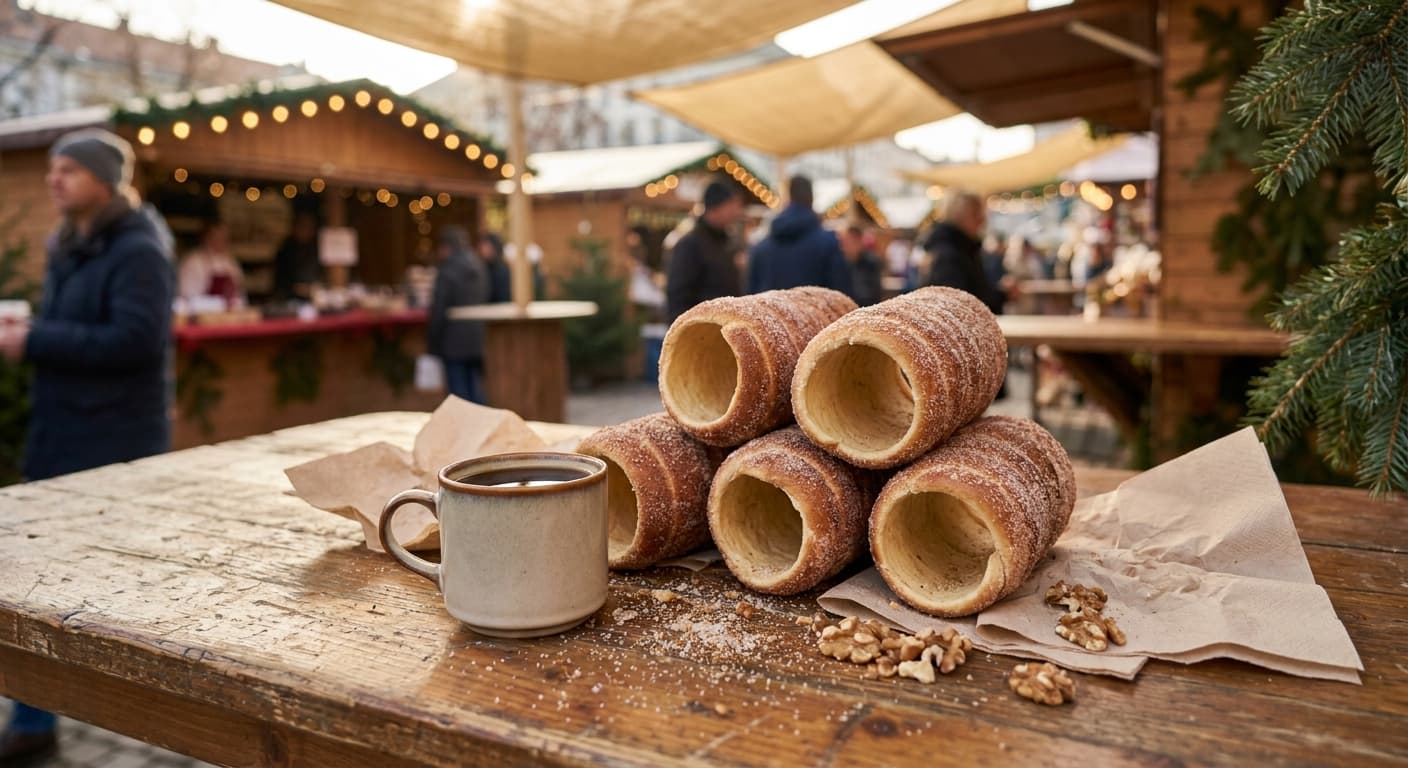
Chimney Cake (Kürtőskalács) — Hungarian Spiral Pastry with Cinnamon Sugar
Hungarian · Desserts · 59 min
Reviews
Cooked this recipe?
Tap the stars to rate it — that's all it takes. A few words are welcome but optional.
No ratings yet. Cooked this one? Be the first to rate it — it takes one tap.