Shirin Polow (شیرین پلو) — Persian Saffron Sweet Rice
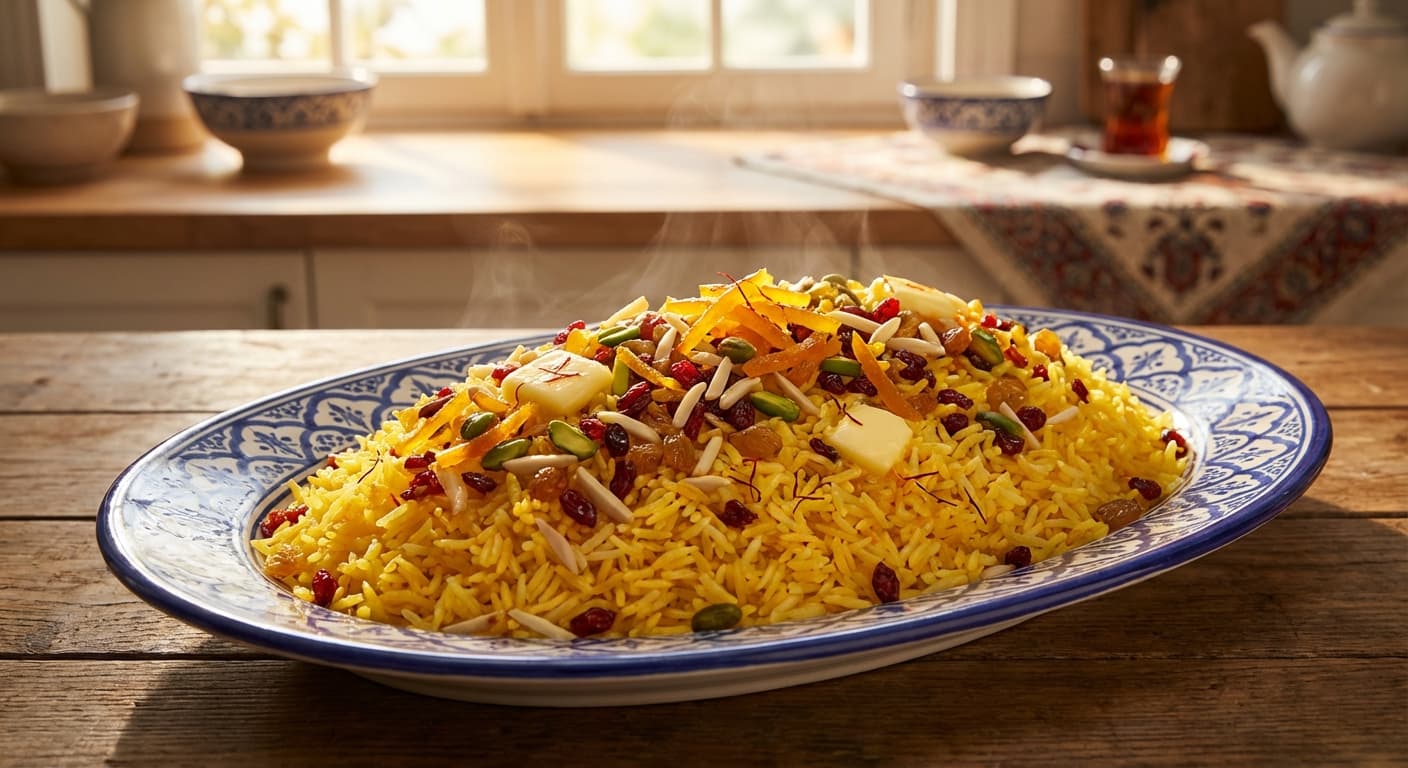
Shirin Polow is a celebratory Persian saffron sweet rice made with fragrant basmati, milk, butter, and saffron. Gently steamed for a golden, creamy texture, it balances floral aroma with a rich, buttery finish.
Printable Recipe Card
Servings: 6 · Total: 120 min · Difficulty: medium
Ingredients (quick list)
- 450 g Basmati rice (aged basmati preferred; rinsed until water runs mostly clear)
- 18 g Fine sea salt (for parboiling water)
- 2000 ml Water (for parboiling)
- 600 ml Whole milk (room temperature)
- 85 g Unsalted butter (cut into small cubes)
- 0.3 g Saffron threads (finely ground, then bloomed)
- 45 ml Hot water (about 3 tablespoons, for blooming saffron)
- 120 g Granulated sugar (adjust to taste; this makes a gently sweet rice)
- 10 ml Rose water (optional but traditional; about 2 teaspoons)
- 4 g Orange zest (finely grated; optional)
- 40 g Slivered almonds (toasted lightly)
- 30 g Pistachios (shelled, finely chopped)
Steps (summary)
- Rinse the basmati rice in several changes of cool water until the water is mostly clear. Cover with fresh water and soak 30 min…
- Bring 2000 ml water to a rolling boil in a large pot, then stir in 18 g salt. Add the drained rice and boil 6–8 minutes, stirri…
- In a wide, heavy pot with a tight lid, melt 30 g of the butter over medium heat. Add 120 ml of the steaming water and 150 ml of…
- Layer the remaining rice in the pot, forming a gentle mound to help steam circulate. Between layers, drizzle small amounts of t…
- Wrap the lid with a clean kitchen towel (to catch condensation) and cover the pot tightly. Steam on medium heat for 10 minutes…
- Mix the bloomed saffron with rose water (if using) and the remaining milk. After 45 minutes total steaming, quickly open the li…
+ 1 more steps in the full instructions section below.
Cultural Background
Shirin Polow is commonly prepared for festive occasions such as weddings and New Year gatherings, where its golden saffron color symbolizes celebration and hospitality. Sweet rice dishes like this appear across West and Central Asia in various forms, reflecting shared traditions of pairing rice with aromatics and gentle sweetness.
Equipment
💡 Tips
- Use aged basmati for the longest, most separate grains; very fresh basmati can turn softer with milk steaming.
- Keep the milk at room temperature to reduce curdling risk; avoid high heat once milk is in the pot.
- If you want a deeper golden color, reserve 1/2 cup rice, mix it with extra saffron liquid, then use it as a decorative topping.
- Toast nuts in a dry pan over medium heat for 2–4 minutes, stirring constantly, then cool before garnishing to keep them crisp.
- For a richer finish, brush the serving platter with 10 g melted butter before mounding the rice.
⚠️ Common Mistakes
❌ Overboiling the rice during parboil
💡 Why: Milk steaming continues cooking; overboiled rice turns mushy and loses separate grains.
✅ Fix: Boil only until the grain is flexible but still firm in the center (6–8 minutes for basmati), then drain immediately.
❌ Using high heat after adding milk
💡 Why: Milk can scorch at the bottom and may split, giving a grainy flavor.
✅ Fix: After initial steaming begins, reduce to low heat and keep a steady, gentle steam; use a heavy pot and a towel-wrapped lid.
❌ Pouring all the milk at once
💡 Why: Too much liquid prevents proper steaming and can make the rice heavy and sticky.
✅ Fix: Drizzle milk and water gradually between layers; the goal is moist steam, not boiling liquid.
❌ Weak saffron color and aroma
💡 Why: Saffron needs grinding and blooming to release pigments and fragrance.
✅ Fix: Grind threads finely, bloom in hot water 10 minutes, and add near the end so the aroma does not dissipate.
🧊 How to Store
Cool leftovers within 2 hours, then refrigerate airtight up to 3 days. Reheat gently with 2–3 tablespoons water or milk, covered, in a saucepan over low heat 8–12 minutes or microwave covered in 60-second bursts. Not ideal for freezing due to milk affecting texture.
📅 Make Ahead
Parboil and drain the rice up to 6 hours ahead; cool completely, cover, and refrigerate. Bring to room temperature 30 minutes before layering and steaming. Bloom saffron up to 24 hours ahead and refrigerate covered; warm slightly before drizzling for best dispersion.
🍽️ Pairs Well With
- Saffron chicken
- Roasted lamb
- Cucumber-yogurt salad
- Fresh herbs and radishes
Regional Variations
- Tehran and central IranOften served with saffron chicken and garnished with slivered almonds and pistachios; sweetness is usually moderate and balanced with a pronounced saffron aroma.
- Southern IranMay be made slightly sweeter and more aromatic with rose water and citrus notes, sometimes emphasizing orange zest for a brighter fragrance.
Ingredients
- 450 gBasmati rice (aged basmati preferred; rinsed until water runs mostly clear)
- 18 gFine sea salt (for parboiling water)
- 2000 mlWater (for parboiling)
- 600 mlWhole milk (room temperature)
- 85 gUnsalted butter (cut into small cubes)
- 0.3 gSaffron threads (finely ground, then bloomed)
- 45 mlHot water (about 3 tablespoons, for blooming saffron)
- 120 gGranulated sugar (adjust to taste; this makes a gently sweet rice)
- 10 mlRose water (optional but traditional; about 2 teaspoons)
- 4 gOrange zest (finely grated; optional)
- 40 gSlivered almonds (toasted lightly)
- 30 gPistachios (shelled, finely chopped)
🔄 Substitutions
- Whole milk→ Evaporated milk diluted 1:1 with water
- Unsalted butter→ Ghee
- Basmati rice→ Jasmine rice
Instructions
- 1
Rinse the basmati rice in several changes of cool water until the water is mostly clear. Cover with fresh water and soak 30 minutes at room temperature, then drain well. Meanwhile, grind saffron to a fine powder and bloom it with 45 ml hot water; cover and set aside 10 minutes for full color and aroma.
- 2
Bring 2000 ml water to a rolling boil in a large pot, then stir in 18 g salt. Add the drained rice and boil 6–8 minutes, stirring gently once or twice to prevent sticking. The grains should be longer and flexible but still firm in the center. Drain immediately in a fine colander and rinse briefly with 250 ml cool water to stop cooking.
- 3
In a wide, heavy pot with a tight lid, melt 30 g of the butter over medium heat. Add 120 ml of the steaming water and 150 ml of the milk. Spoon in 2–3 ladles of rice to form a base layer. Sprinkle 1–2 tablespoons sugar over the layer to distribute sweetness evenly without clumping.
- 4
Layer the remaining rice in the pot, forming a gentle mound to help steam circulate. Between layers, drizzle small amounts of the remaining milk and water (do not flood), dot with some butter cubes, and scatter a little sugar. Finish with a few butter cubes on top. Use the handle of a spoon to poke 5–6 steam holes down to the bottom.
- 5
Wrap the lid with a clean kitchen towel (to catch condensation) and cover the pot tightly. Steam on medium heat for 10 minutes until you see steady steam, then reduce to low heat and continue steaming 35 minutes. Avoid lifting the lid during this time; steady low heat helps the rice absorb milk gently without scorching.
- 6
Mix the bloomed saffron with rose water (if using) and the remaining milk. After 45 minutes total steaming, quickly open the lid and drizzle the saffron mixture over the top in thin streams. Cover again and steam 10–12 minutes on low to set the color and perfume the rice without overcooking.
- 7
Turn off the heat and rest the rice, covered, for 10 minutes. Fluff gently with a wide spatula, lifting from the sides to keep grains intact. Taste and, if desired, sprinkle up to 20 g additional sugar over hot rice and fold once. Serve on a platter, topping with toasted almonds and pistachios for contrast.
🪪 Recipe Passport
Cultural Background
Shirin Polow is commonly prepared for festive occasions such as weddings and New Year gatherings, where its golden saffron color symbolizes celebration and hospitality. Sweet rice dishes like this appear across West and Central Asia in various forms, reflecting shared traditions of pairing rice with aromatics and gentle sweetness.
Regional Variations
Researched from multiple sources and validated by the Zaffaron editorial team. Every recipe is tested for accuracy, measurements, and cultural authenticity.
Nutrition per serving
Pairs well with
If you enjoyed this recipe, here are a few related Zaffaron recipes to try next.
Does your family make this differently?
Every family has their own version. Maybe your grandmother adds a secret ingredient, or your aunt has a completely different technique. Preserve your family's version — with their name on it, forever.
You Might Also Like
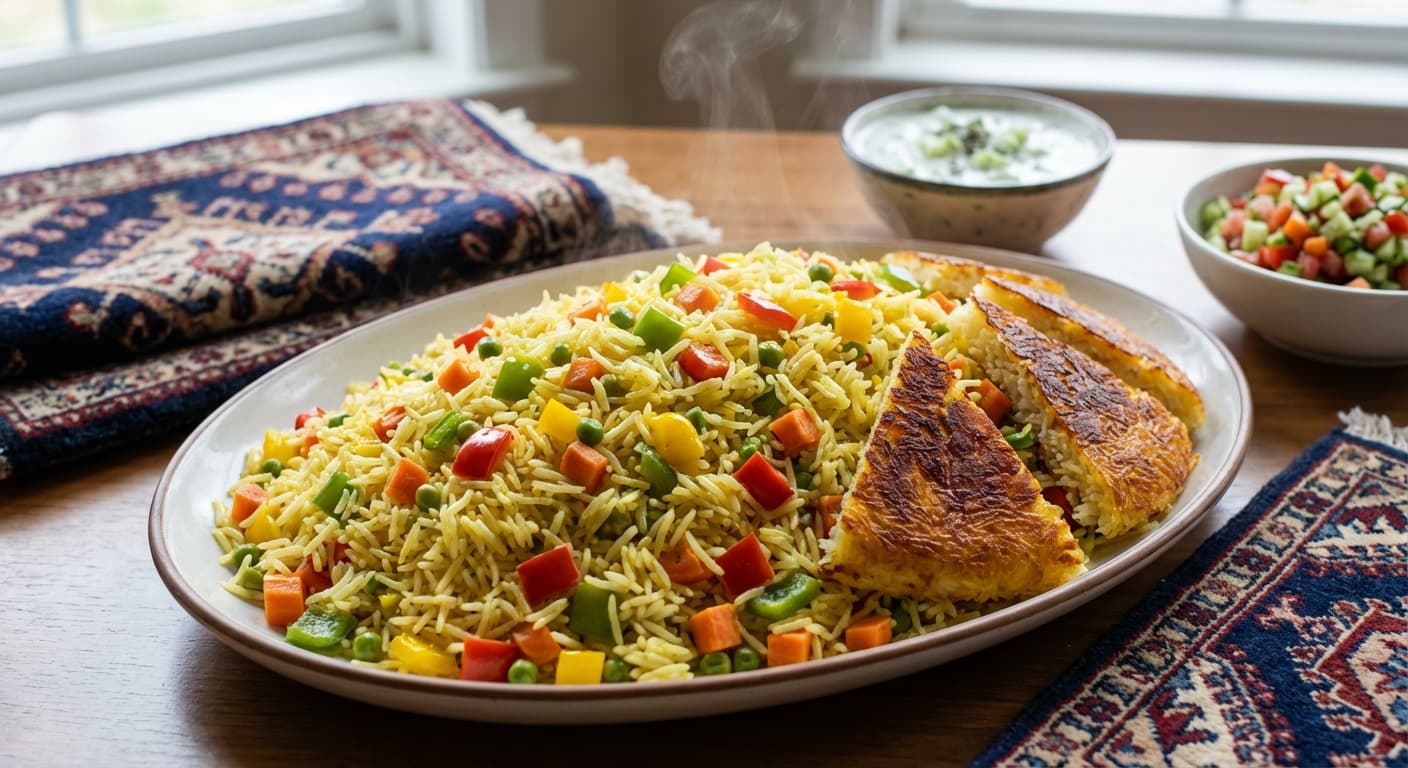
Mixed Vegetable Rice (برنج با مخلوط سبزیجات) — Persian-Style Aromatic Pilaf
Persian · Rice Dishes · 75 min
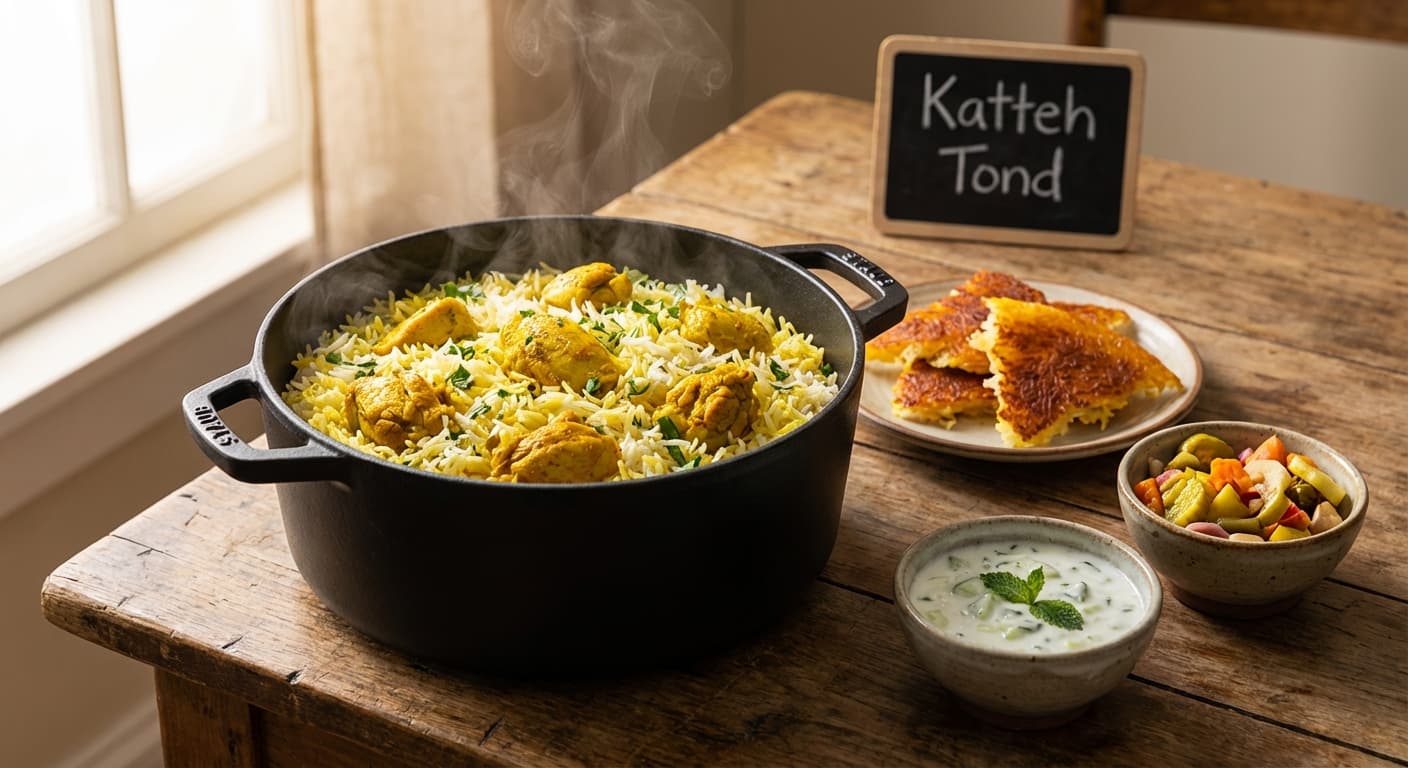
Katteh Tond (کته تند) — Spicy Caspian-Style One-Pot Chicken Rice
Persian · Rice Dishes · 85 min
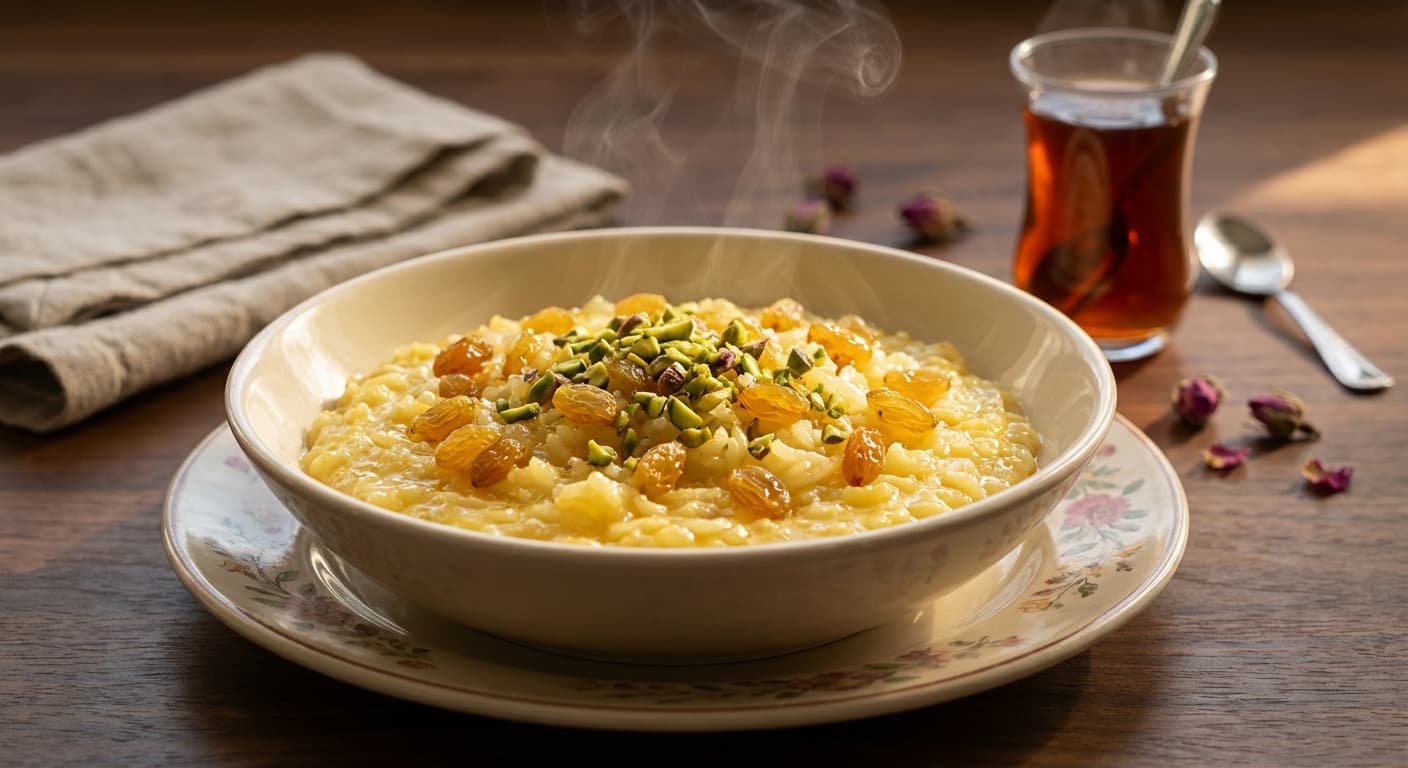
Saffron Sweet Rice (پلو شیرینی زعفرانی) — Festive Persian milk-saffron rice with nuts
Persian · Rice Dishes · 75 min
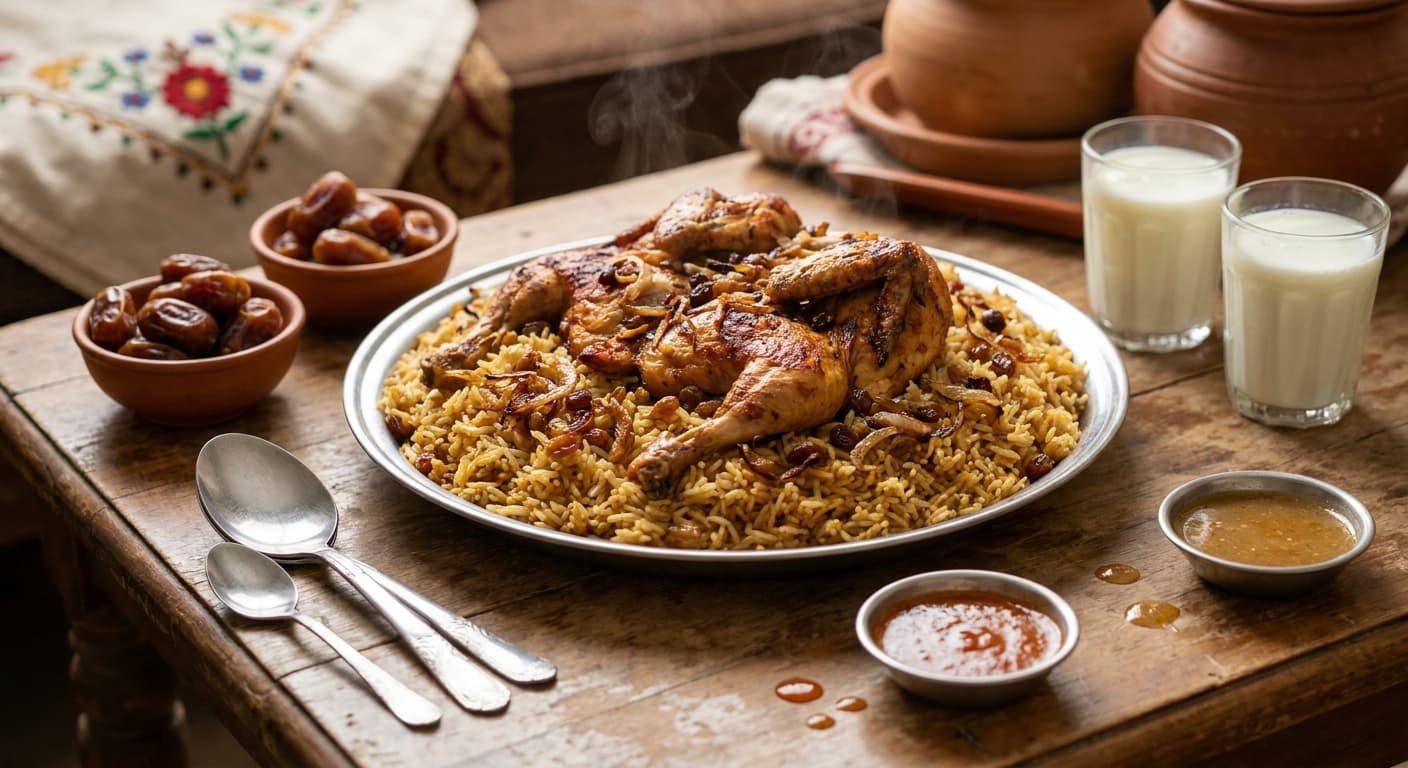
Emirati Machboos (مكبوس إماراتي) — Spiced Chicken Rice with Dried Lime
Gulf arabian · Rice Dishes · 110 min
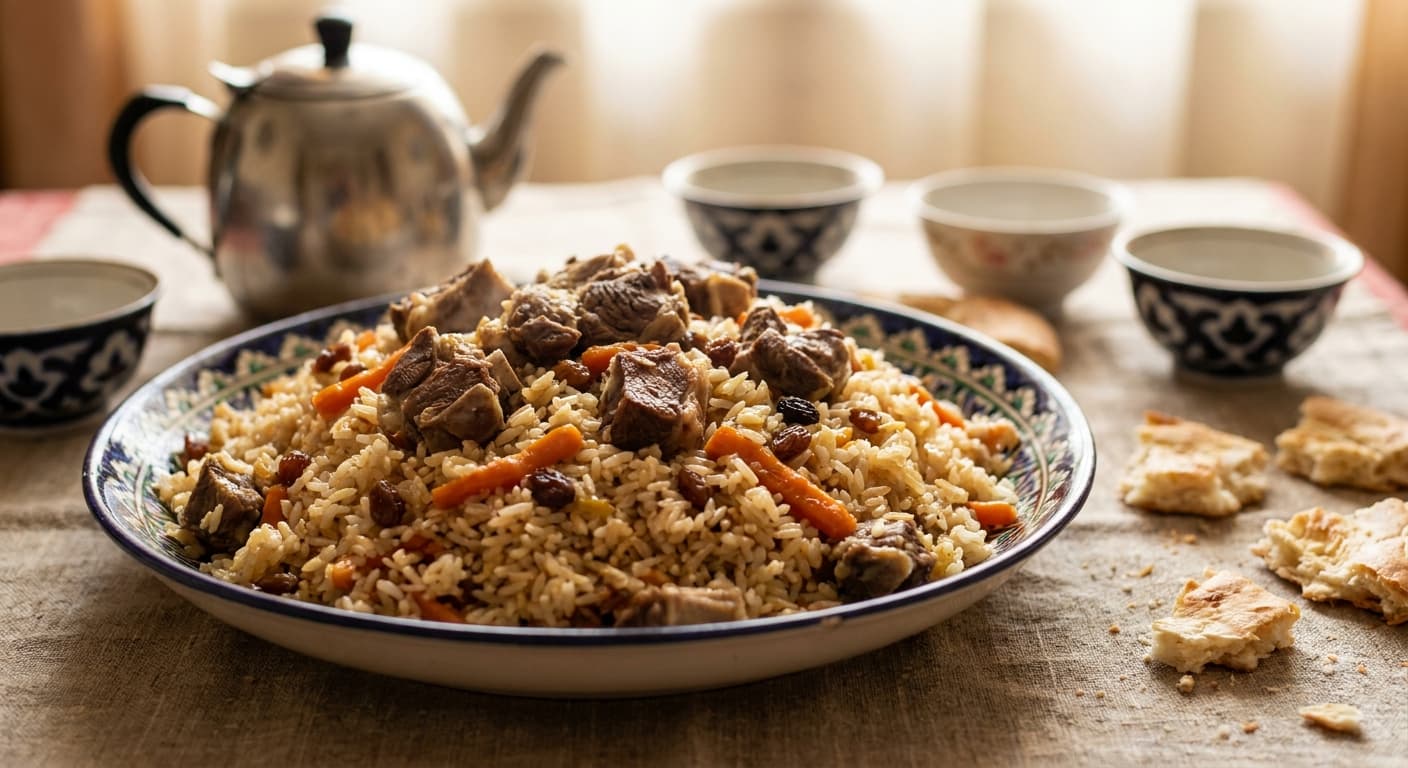
Uzbek Plov (Oʻzbek palovi) — Lamb, Rice, Carrots, and Cumin Pilaf
Uzbek · Rice Dishes · 130 min
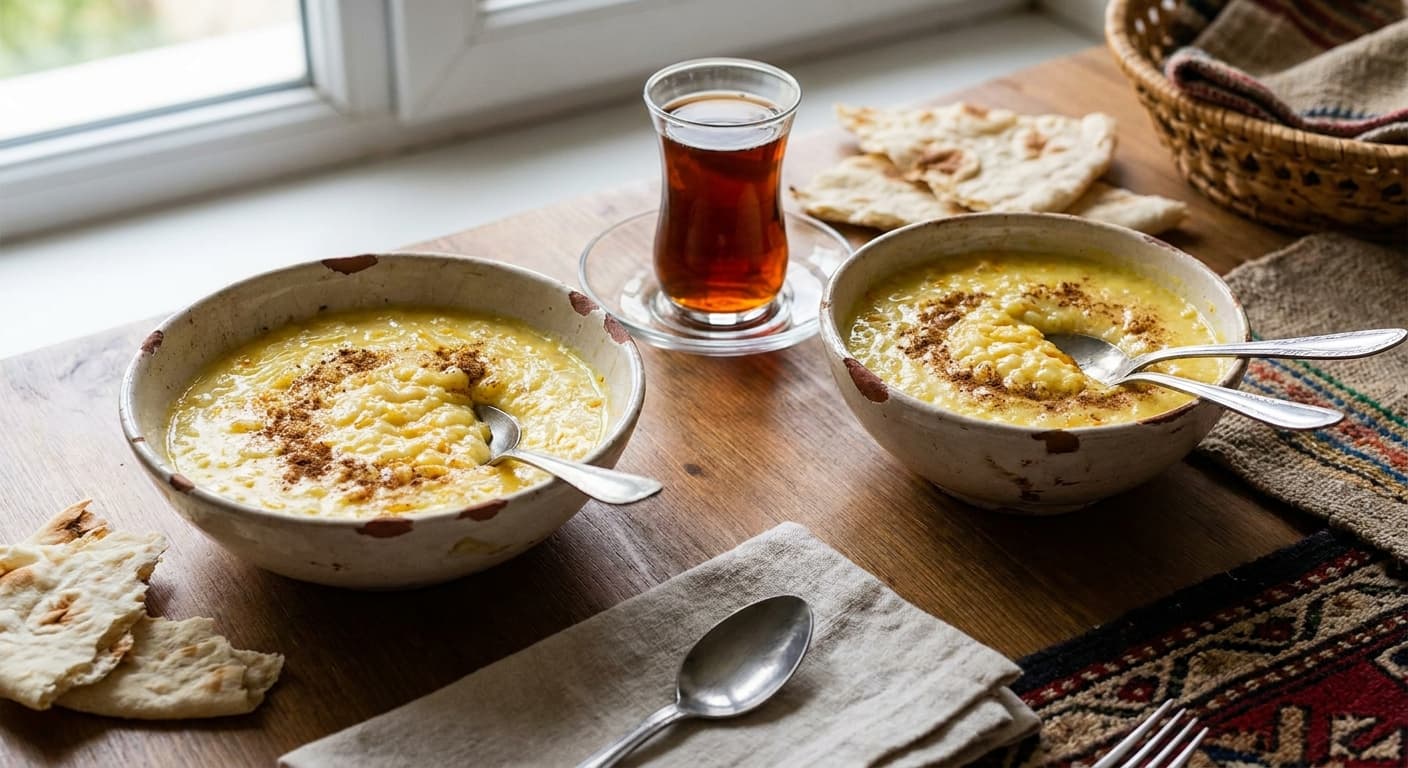
Azerbaijani Milk-Rice Porridge (Südlü Sıyıq) — Creamy Breakfast Rice with Saffron
Azerbaijani · Rice Dishes · 50 min
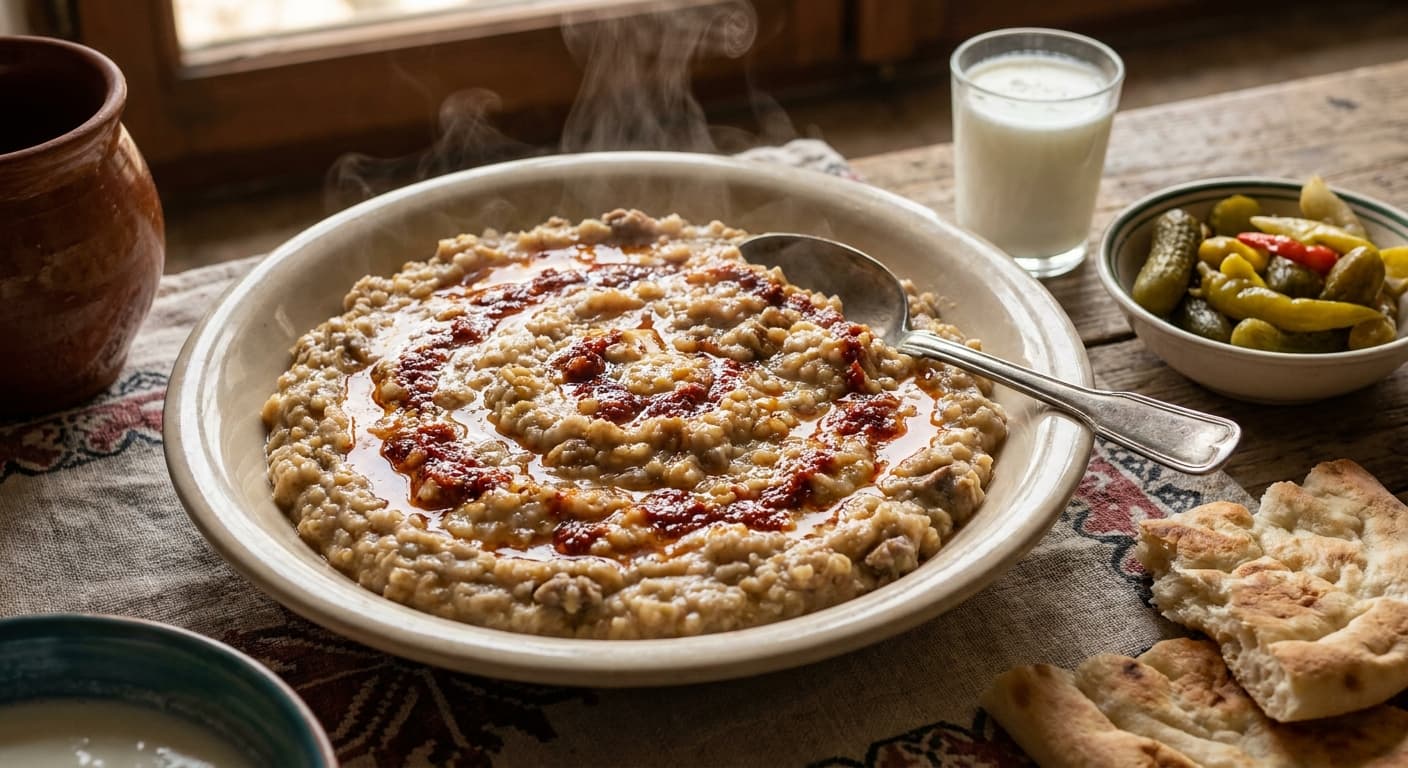
Keshkek (Keşkek) — Creamy Ceremonial Wheat and Lamb Stew
Turkish · Stews · 240 min
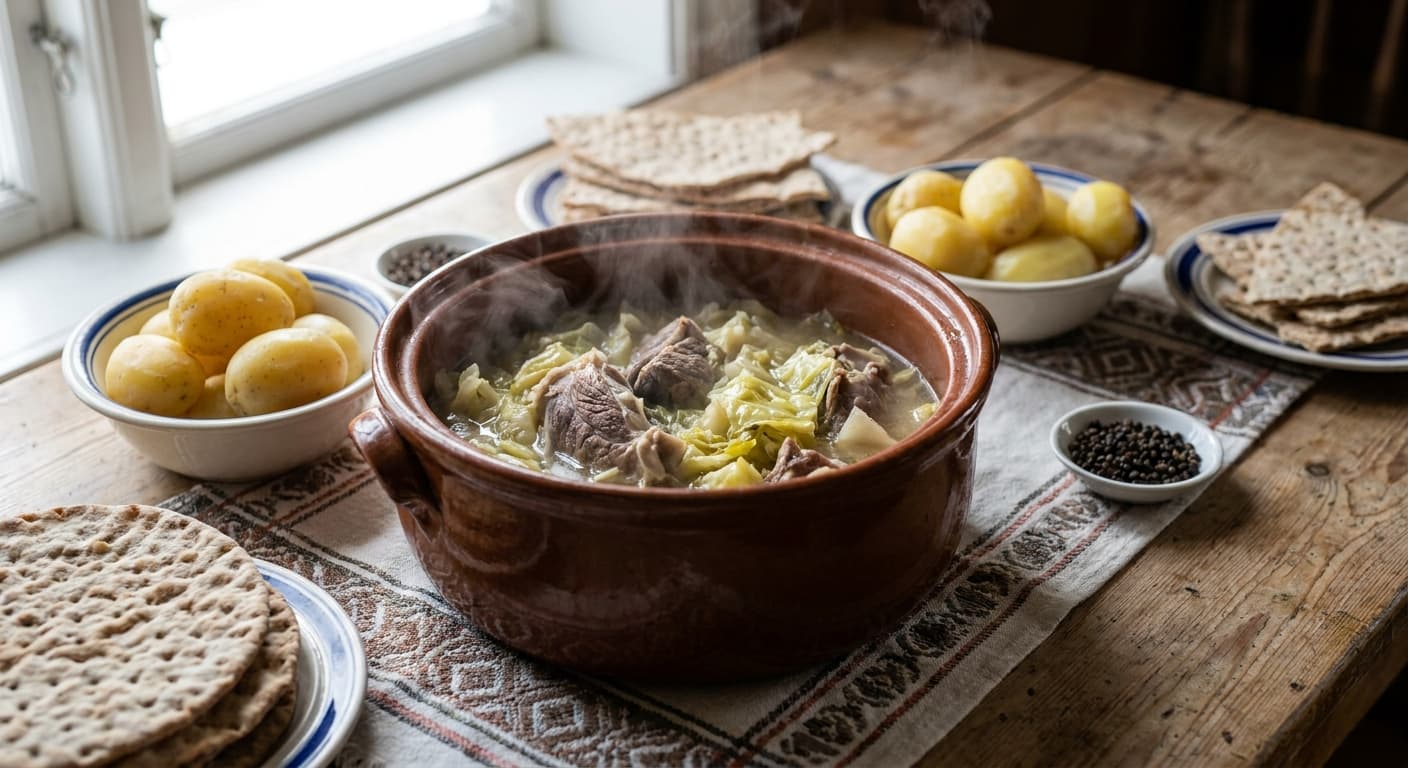
Norwegian Lamb and Cabbage Stew (Fårikål) — Peppery Autumn National Dish
Norwegian · Stews · 170 min
Reviews
Cooked this recipe?
Tap the stars to rate it — that's all it takes. A few words are welcome but optional.
No ratings yet. Cooked this one? Be the first to rate it — it takes one tap.