Danish Fried Pork Belly (Stegt flæsk med persillesovs) — Crisp Pork with Parsley Sauce
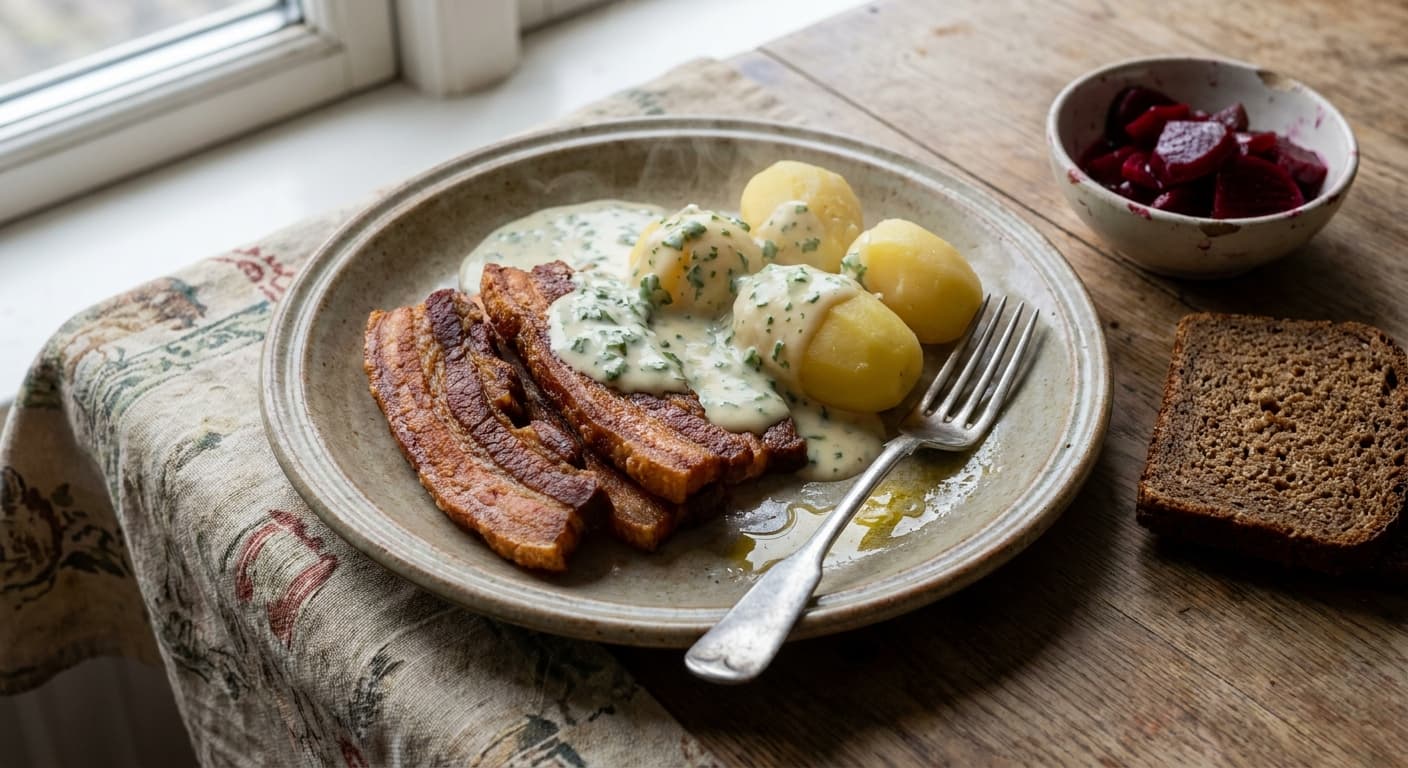
Stegt flæsk med persillesovs is a beloved Danish home dish of crisp pork belly, boiled potatoes, and creamy parsley sauce. It sits proudly among classics like frikadeller and flæskesteg, with leftovers often enjoyed on rugbrød as smørrebrød.
Printable Recipe Card
Servings: 4 · Total: 60 min · Difficulty: easy
Ingredients (quick list)
- 800 g sliced pork belly (skin removed, cut into 5-7 mm thick slices)
- 8 g fine sea salt
- 1 kg large waxy potatoes (peeled or well scrubbed)
- 2 l water
- 40 g unsalted butter
- 40 g all-purpose flour
- 630 ml whole milk (600 ml for the sauce plus 30 ml reserved for loosening if needed)
- 100 ml reserved potato cooking water
- 1 bunch flat-leaf parsley (about 40 g leaves and tender stems, finely chopped)
- 0.5 tsp ground white pepper
- 0.12 tsp freshly grated nutmeg
Steps (summary)
- Heat the oven to 220°C and place a wire rack over a rimmed baking sheet lined with foil. Pat the pork belly slices completely d…
- Put the potatoes in a large pot with 2 l water and 8 g fine sea salt. Bring to a boil, then simmer for 18 to 22 minutes until a…
- Reserve 100 ml of the potato cooking water before draining the potatoes. Return the potatoes to the warm pot for 2 minutes with…
- Arrange the salted pork belly slices on the rack in a single layer with at least 1 cm between slices. Roast for 20 minutes, tur…
- While the pork finishes, melt the butter in a saucepan over medium heat and whisk in the flour. Cook the roux for 2 minutes, wh…
- Whisk in 600 ml whole milk gradually, adding it in 4 additions to keep the sauce smooth. Add the reserved 100 ml potato cooking…
+ 2 more steps in the full instructions section below.
Cultural Background
Often called Denmark’s national dish, stegt flæsk reflects the plain, satisfying farmhouse cooking described by Magnus Nilsson in The Nordic Cookbook. It belongs to the same pork-loving table as flæskesteg, with persillesovs softening the crisp richness.
Equipment
💡 Tips
- Use pork belly slices of even thickness so the lean and fat crisp at the same rate.
- For a more old-fashioned pan-fried version, cook the pork in a heavy skillet over medium heat for 5 to 7 minutes per side, pouring off rendered fat as needed.
- Do not boil the parsley sauce after adding the parsley, because prolonged heat turns the herb dull and grassy.
⚠️ Common Mistakes
❌ Crowding the pork slices on the rack.
✅ Fix: Leave at least 1 cm between slices so hot air can circulate and the pork crisps instead of steaming.
❌ Browning the roux for the parsley sauce.
✅ Fix: Cook the flour and butter only until pale and fragrant, because Danish persillesovs should be white to light cream in color.
❌ Pouring sauce over the pork before serving.
✅ Fix: Spoon the sauce over the potatoes and keep the pork uncovered so the crisp surface stays intact.
🧊 How to Store
Store pork, potatoes, and parsley sauce in separate airtight containers for up to 3 days. Reheat pork on a rack at 200°C for 8 to 10 minutes, warm potatoes gently, and loosen the sauce with 30 ml milk per serving.
📅 Make Ahead
The potatoes can be peeled and held in cold water for up to 6 hours. The parsley can be chopped 2 hours ahead, but the pork and sauce are best finished just before serving.
🍽️ Pairs Well With
- Boiled potatoes
- pickled beets
- cucumber salad
- Danish beer
- rugbrød for leftovers as smørrebrød.
Regional Variations
- Some Danish homes pan-fry the pork belly in batches rather than roasting it, especially when making a smaller portion.
- A few cooks add 5 ml mild vinegar or lemon juice to the sauce, though the classic version relies mainly on parsley, milk, and potato water.
- In modern canteens and inns, the dish may be served with pickled beets or cucumber salad to cut the richness.
Ingredients
- 800 gsliced pork belly (skin removed, cut into 5-7 mm thick slices)
- 8 gfine sea salt
- 1 kglarge waxy potatoes (peeled or well scrubbed)
- 2 lwater
- 40 gunsalted butter
- 40 gall-purpose flour
- 630 mlwhole milk (600 ml for the sauce plus 30 ml reserved for loosening if needed)
- 100 mlreserved potato cooking water
- 1 bunchflat-leaf parsley (about 40 g leaves and tender stems, finely chopped)
- 0.5 tspground white pepper
- 0.12 tspfreshly grated nutmeg
🔄 Substitutions
- whole milk→ 2% milk
- all-purpose flour→ white rice flour
- flat-leaf parsley→ curly parsley
Instructions
- 1
Heat the oven to 220°C and place a wire rack over a rimmed baking sheet lined with foil. Pat the pork belly slices completely dry, rub them evenly with 8 g fine sea salt, and let them stand for 10 minutes while the oven heats.
- 2
Put the potatoes in a large pot with 2 l water and 8 g fine sea salt. Bring to a boil, then simmer for 18 to 22 minutes until a knife slides into the center of the largest potato without resistance.
- 3
Reserve 100 ml of the potato cooking water before draining the potatoes. Return the potatoes to the warm pot for 2 minutes with the lid slightly ajar so excess steam escapes and the potatoes stay firm rather than watery.
- 4
Arrange the salted pork belly slices on the rack in a single layer with at least 1 cm between slices. Roast for 20 minutes, turn each slice with tongs, and roast for another 15 to 20 minutes until the pork is deeply golden, crisp at the edges, and much of the fat has rendered into the tray.
- 5
While the pork finishes, melt the butter in a saucepan over medium heat and whisk in the flour. Cook the roux for 2 minutes, whisking constantly, so it loses its raw flour aroma but remains pale rather than browned.
- 6
Whisk in 600 ml whole milk gradually, adding it in 4 additions to keep the sauce smooth. Add the reserved 100 ml potato cooking water, then simmer for 6 to 8 minutes, whisking often, until the sauce coats the back of a spoon.
- 7
Stir in the chopped parsley, 4 g salt, white pepper, and nutmeg, then simmer for 1 minute to brighten the parsley aroma without dulling its color. If the sauce becomes thicker than a pourable cream sauce, whisk in the reserved 30 ml milk and warm it for 30 seconds.
- 8
Transfer the crisp pork to a warm plate lined with kitchen paper for 1 minute, then serve immediately with the potatoes. Spoon the persillesovs generously over the potatoes, leaving the stegt flæsk uncovered so it remains crisp.
🪪 Recipe Passport
Cultural Background
Often called Denmark’s national dish, stegt flæsk reflects the plain, satisfying farmhouse cooking described by Magnus Nilsson in The Nordic Cookbook. It belongs to the same pork-loving table as flæskesteg, with persillesovs softening the crisp richness.
Regional Variations
Researched from multiple sources and validated by the Zaffaron editorial team. Every recipe is tested for accuracy, measurements, and cultural authenticity.
📚 Sources & Cultural References
- Magnus Nilsson — The Nordic Cookbook — (2015)
- Trine Hahnemann — The Scandinavian Cookbook — (2008)
Sources cited by the Zaffaron editorial team during recipe research. Cultural and culinary references supporting authenticity claims.
Nutrition per serving
Pairs well with
If you enjoyed this recipe, here are a few related Zaffaron recipes to try next.
Does your family make this differently?
Every family has their own version. Maybe your grandmother adds a secret ingredient, or your aunt has a completely different technique. Preserve your family's version — with their name on it, forever.
You Might Also Like
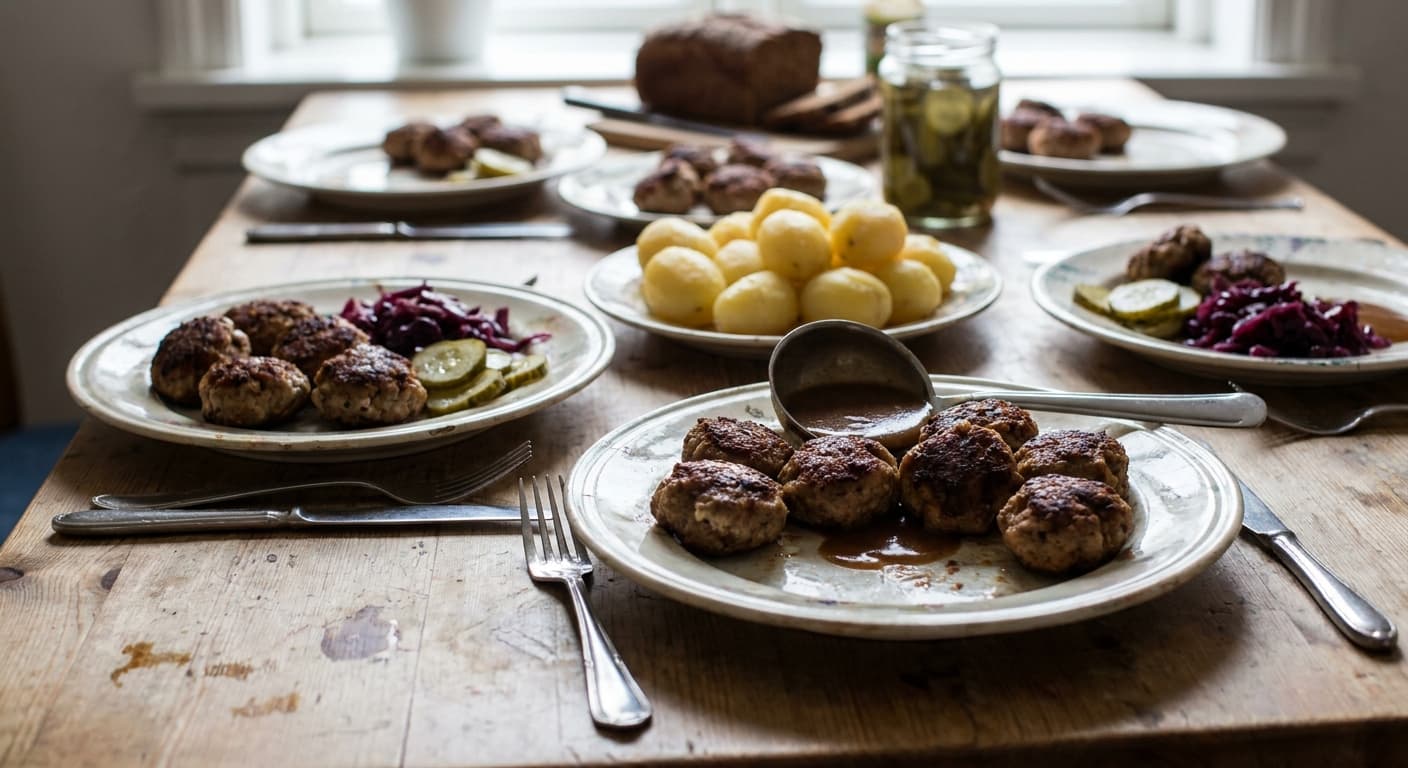
Danish Frikadeller (Frikadeller) — Pan-Fried Pork Meatballs
Danish · Main Courses · 50 min
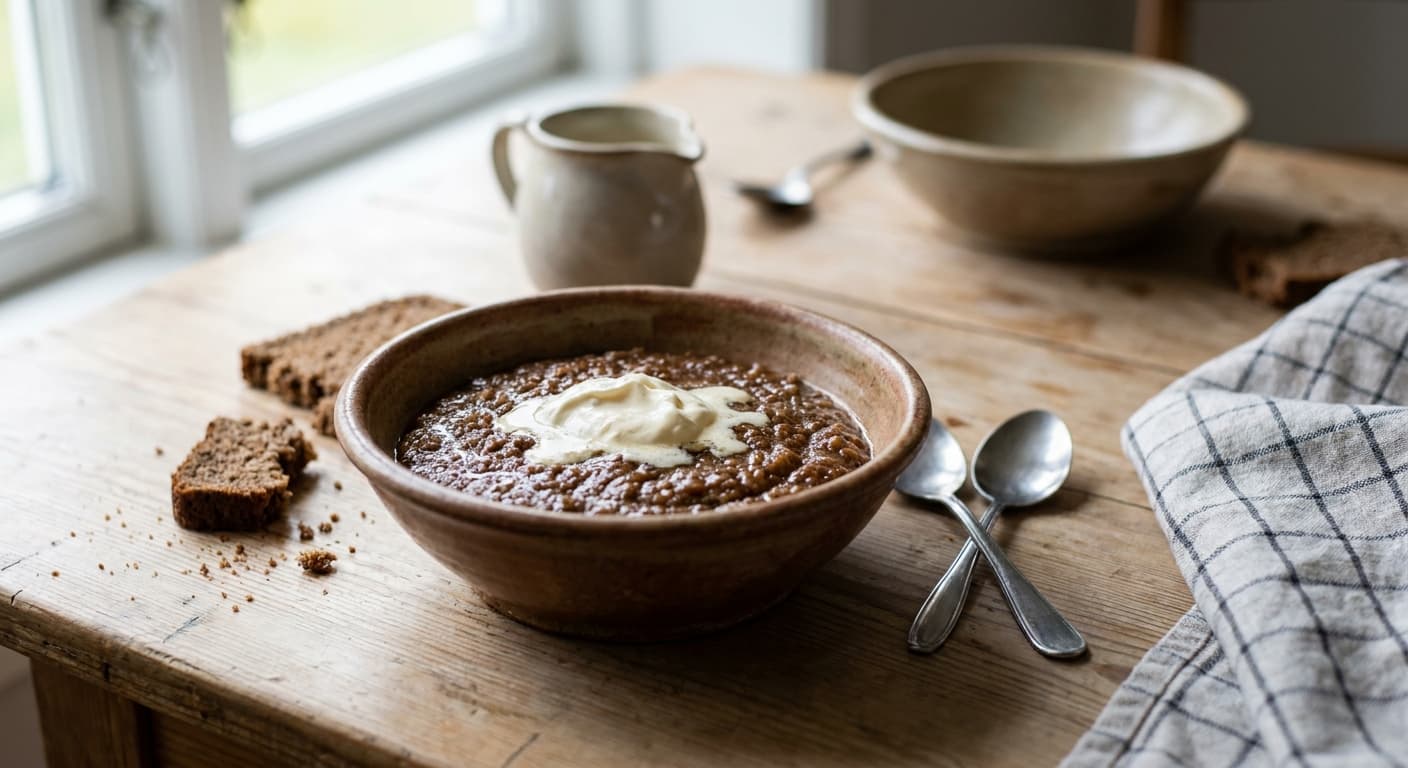
Rye Bread and Beer Porridge (Øllebrød) — Traditional Danish Breakfast
Danish · Main Courses · 65 min
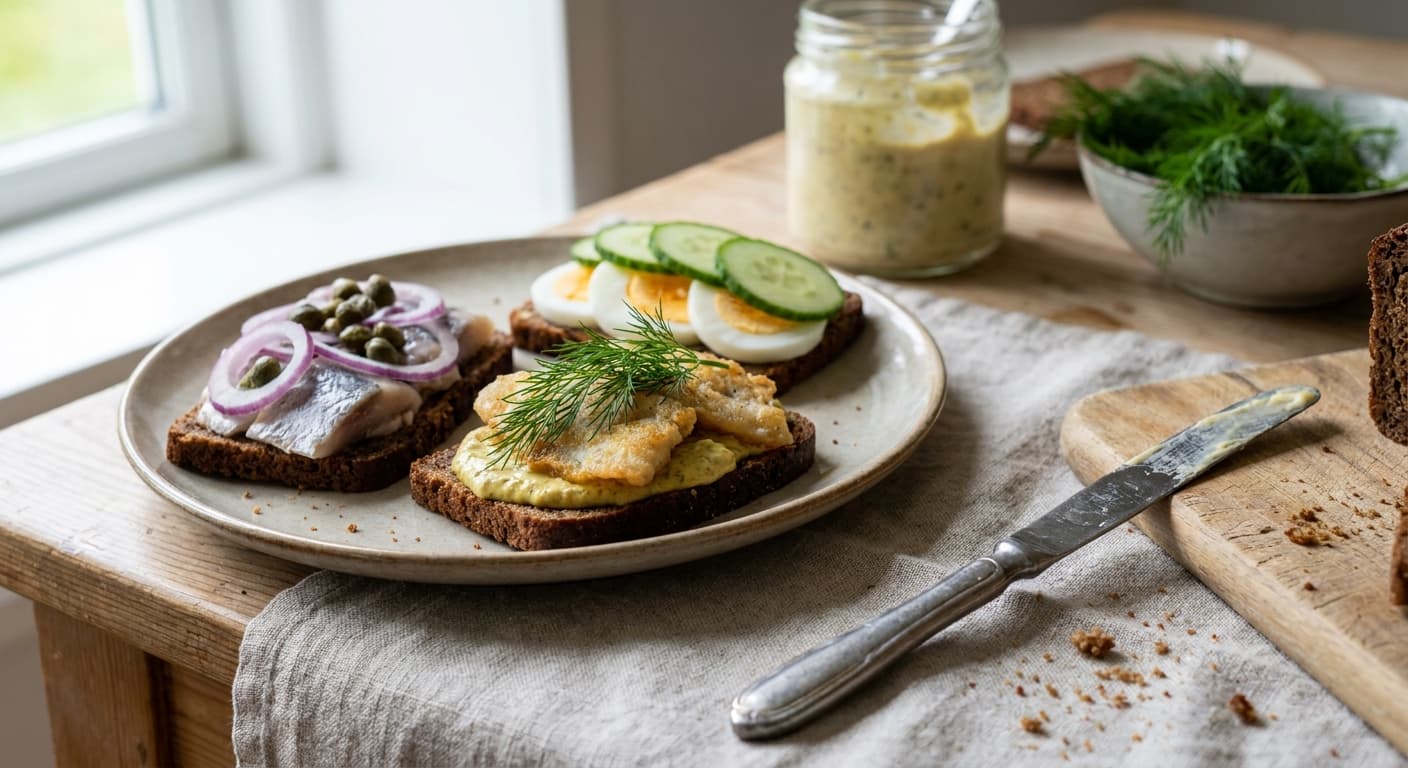
Smørrebrød (Smørrebrød) — Danish Open-Faced Rye Sandwiches
Danish · Main Courses · 47 min
Orromo (Оромо) — Kyrgyz Steamed Rolled Dumpling with Lamb and Pumpkin
Kyrgyz · Main Courses · 105 min
Swedish Smörgåsbord (Smörgåsbord) — Classic Buffet with Gravlax, Sill, and Köttbullar
Swedish · Main Courses · 115 min
Norwegian Fish Balls (Fiskeboller) — Tender whitefish dumplings in curry cream sauce
Norwegian · Main Courses · 70 min
Bratwurst with Sauerkraut (Bratwurst mit Sauerkraut) — German Sausages on Wine-Braised Cabbage
German · Main Courses · 80 min
Buckwheat Žganci (Ajdovi žganci) — Slovenian Buckwheat Crumbs with Cracklings
Slovenian · Side Dishes · 45 min
Reviews
Cooked this recipe?
Tap the stars to rate it — that's all it takes. A few words are welcome but optional.
No ratings yet. Cooked this one? Be the first to rate it — it takes one tap.