Shelpek (Шелпек) — Kazakh Fried Flatbread
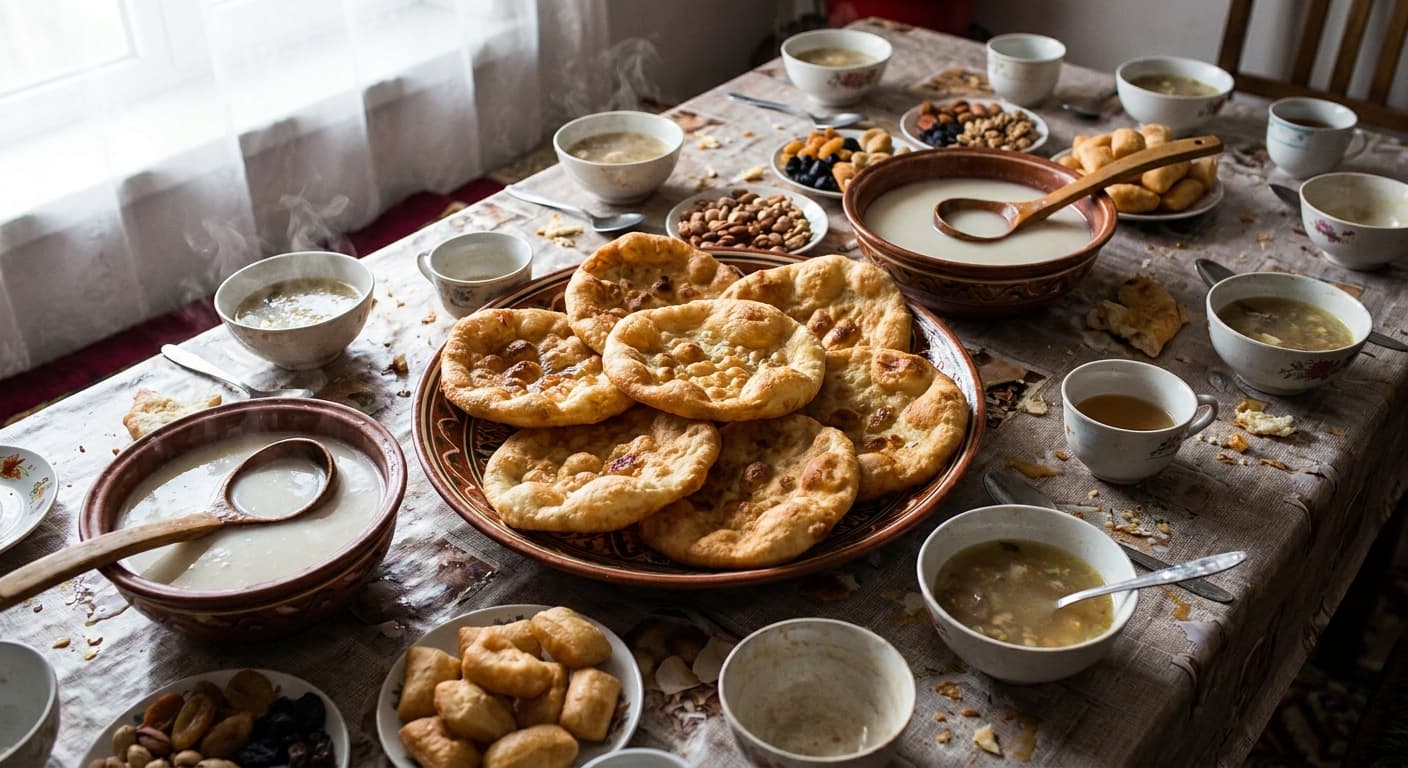
Shelpek is a thin Kazakh fried flatbread, rolled wide and cooked fast until blistered and tender. Unlike puffy baursak, it is often served in sevens for remembrance, with tea, sorpa, or kymyz on a family table.
Printable Recipe Card
Servings: 7 · Total: 63 min · Difficulty: easy
Ingredients (quick list)
- 420 g all-purpose flour (plus 30 g for dusting the work surface)
- 200 ml plain kefir (room temperature)
- 80 ml warm water (about 38°C)
- 8 g fine sea salt
- 6 g granulated sugar
- 15 ml sunflower oil
Steps (summary)
- Whisk the kefir, warm water, salt, sugar, and 15 ml sunflower oil in a large bowl until the salt dissolves. This mild sour-dair…
- Add 420 g flour and mix with a wooden spoon until a shaggy dough forms. Knead in the bowl for 2 minutes, then turn it onto a li…
- Shape the dough into a ball, cover it with an overturned bowl, and rest it for 30 minutes at room temperature. Resting relaxes…
- Divide the dough into 7 equal pieces of about 100 g each and roll each piece into a ball. Keep the balls covered with a clean t…
- Dust the work surface lightly and roll one ball into a round about 22 cm wide and 2 mm thick. Roll from the center outward and…
- Pour 700 ml sunflower oil into a wide heavy pan and heat it to 180°C. Slide in one dough round carefully, fry for 45 to 60 seco…
+ 2 more steps in the full instructions section below.
Cultural Background
As Glenn Mack and Asele Surina describe in their work on Central Asian food culture, bread holds deep hospitality value in Kazakh life. Shelpek is especially meaningful when fried in seven rounds for remembrance and shared at family tables.
Equipment
💡 Tips
- Keep the oil hot enough; low oil temperature makes shelpek greasy and heavy.
- Roll each round just before frying so the dough stays supple and does not stick.
- For a softer stack, cover the fried shelpek with a clean towel for 5 minutes before serving.
⚠️ Common Mistakes
❌ Rolling the dough too thick
✅ Fix: Roll each round to about 2 mm thick and 22 cm wide so it fries quickly without becoming bready.
❌ Frying in oil that is too cool
✅ Fix: Use a thermometer and keep the oil between 175°C and 185°C to prevent greasy, pale flatbreads.
❌ Skipping the dough rest
✅ Fix: Rest the dough for 30 minutes so the gluten relaxes and the rounds do not spring back while rolling.
🧊 How to Store
Store cooled shelpek in an airtight bag at room temperature for 1 day or refrigerate for 3 days. Rewarm in a dry skillet over medium heat for 45 seconds per side, or in a 160°C oven for 6 minutes.
📅 Make Ahead
Mix and knead the dough up to 8 hours ahead, then cover tightly and refrigerate. Bring it to room temperature for 45 minutes before dividing, rolling, and frying.
🍽️ Pairs Well With
- Hot black tea
- sorpa
- kymyz
- shubat
- honey
- kaymak
- beshbarmak broth.
Regional Variations
- Some Kazakh households make a lean water-only dough for memorial shelpek, omitting kefir and sugar.
- In richer home versions, warm milk replaces part of the water for a softer flatbread.
- For everyday tea, the rounds may be fried slightly darker and served with honey or kaymak.
Ingredients
- 420 gall-purpose flour (plus 30 g for dusting the work surface)
- 200 mlplain kefir (room temperature)
- 80 mlwarm water (about 38°C)
- 8 gfine sea salt
- 6 ggranulated sugar
- 15 mlsunflower oil
🔄 Substitutions
- plain kefir→ 200 ml whole milk mixed with 10 ml white vinegar and rested for 10 minutes
- sunflower oil→ 700 ml refined grapeseed oil
- all-purpose flour→ 420 g bread flour
Instructions
- 1
Whisk the kefir, warm water, salt, sugar, and 15 ml sunflower oil in a large bowl until the salt dissolves. This mild sour-dairy base gives shelpek tenderness without making it puffy like baursak.
- 2
Add 420 g flour and mix with a wooden spoon until a shaggy dough forms. Knead in the bowl for 2 minutes, then turn it onto a lightly floured surface and knead for 6 minutes until smooth, soft, and only slightly tacky.
- 3
Shape the dough into a ball, cover it with an overturned bowl, and rest it for 30 minutes at room temperature. Resting relaxes the gluten so the flatbreads roll thinly and fry with small blisters instead of shrinking.
- 4
Divide the dough into 7 equal pieces of about 100 g each and roll each piece into a ball. Keep the balls covered with a clean towel while you work so the surface does not dry or crack.
- 5
Dust the work surface lightly and roll one ball into a round about 22 cm wide and 2 mm thick. Roll from the center outward and turn the dough often, because an even thickness helps the shelpek cook quickly and remain flexible.
- 6
Pour 700 ml sunflower oil into a wide heavy pan and heat it to 180°C. Slide in one dough round carefully, fry for 45 to 60 seconds, then turn it and fry for another 35 to 50 seconds until pale golden with darker blisters.
- 7
Lift the shelpek with tongs and let excess oil drip back into the pan for 10 seconds. Transfer it to a wire rack set over a tray, then repeat rolling and frying the remaining dough rounds while keeping the oil between 175°C and 185°C.
- 8
Serve the shelpek warm in a stack of seven, the customary number for remembrance meals in many Kazakh homes. It is also excellent at a family table with hot tea, sorpa, kymyz, or shubat.
🪪 Recipe Passport
Cultural Background
As Glenn Mack and Asele Surina describe in their work on Central Asian food culture, bread holds deep hospitality value in Kazakh life. Shelpek is especially meaningful when fried in seven rounds for remembrance and shared at family tables.
Regional Variations
Researched from multiple sources and validated by the Zaffaron editorial team. Every recipe is tested for accuracy, measurements, and cultural authenticity.
📚 Sources & Cultural References
- Glenn Mack and Asele Surina — Food Culture in Russia and Central Asia — (2005)
Sources cited by the Zaffaron editorial team during recipe research. Cultural and culinary references supporting authenticity claims.
Nutrition per serving
Pairs well with
If you enjoyed this recipe, here are a few related Zaffaron recipes to try next.
Does your family make this differently?
Every family has their own version. Maybe your grandmother adds a secret ingredient, or your aunt has a completely different technique. Preserve your family's version — with their name on it, forever.
You Might Also Like
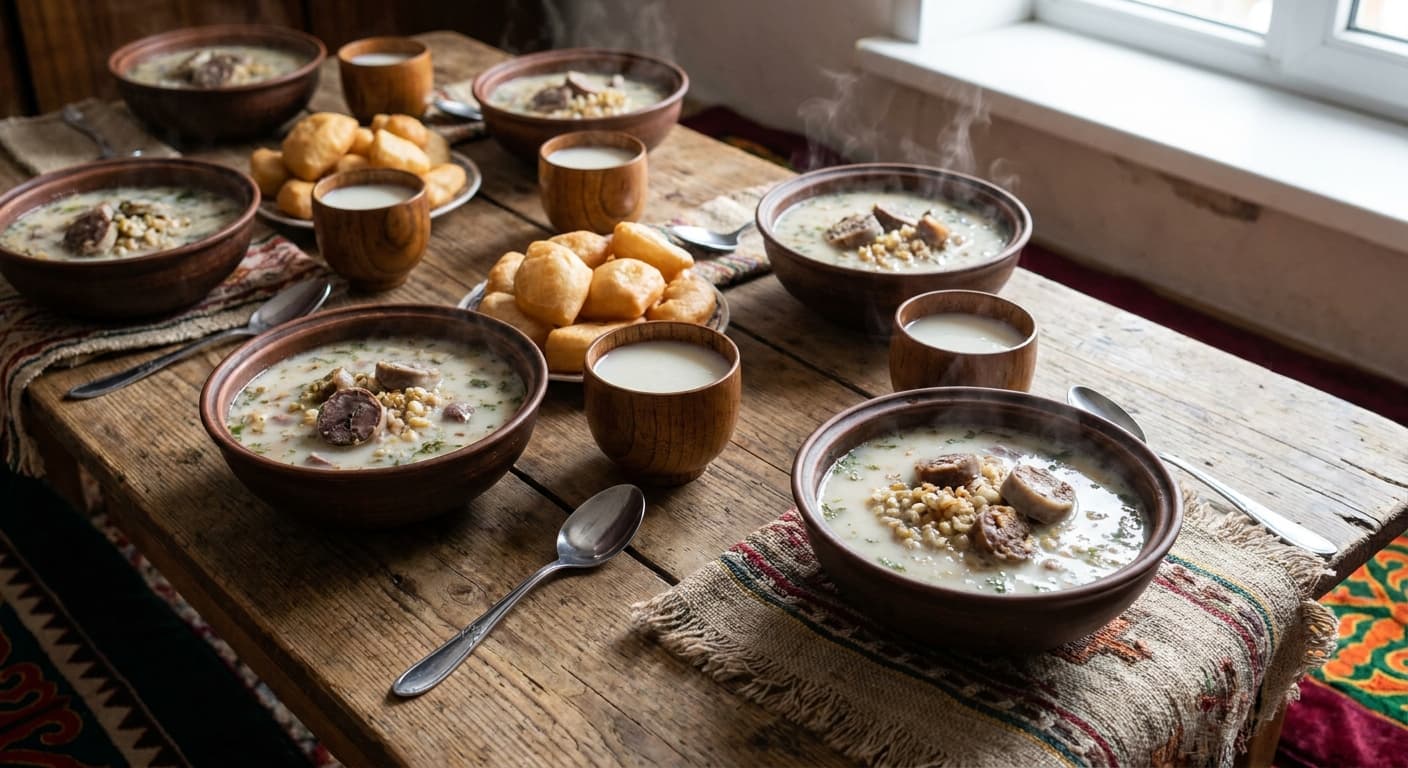
Nauryz Kozhe (Наурыз көже) — Seven-Ingredient Kazakh Spring Soup
Kazakh · Soups · 175 min
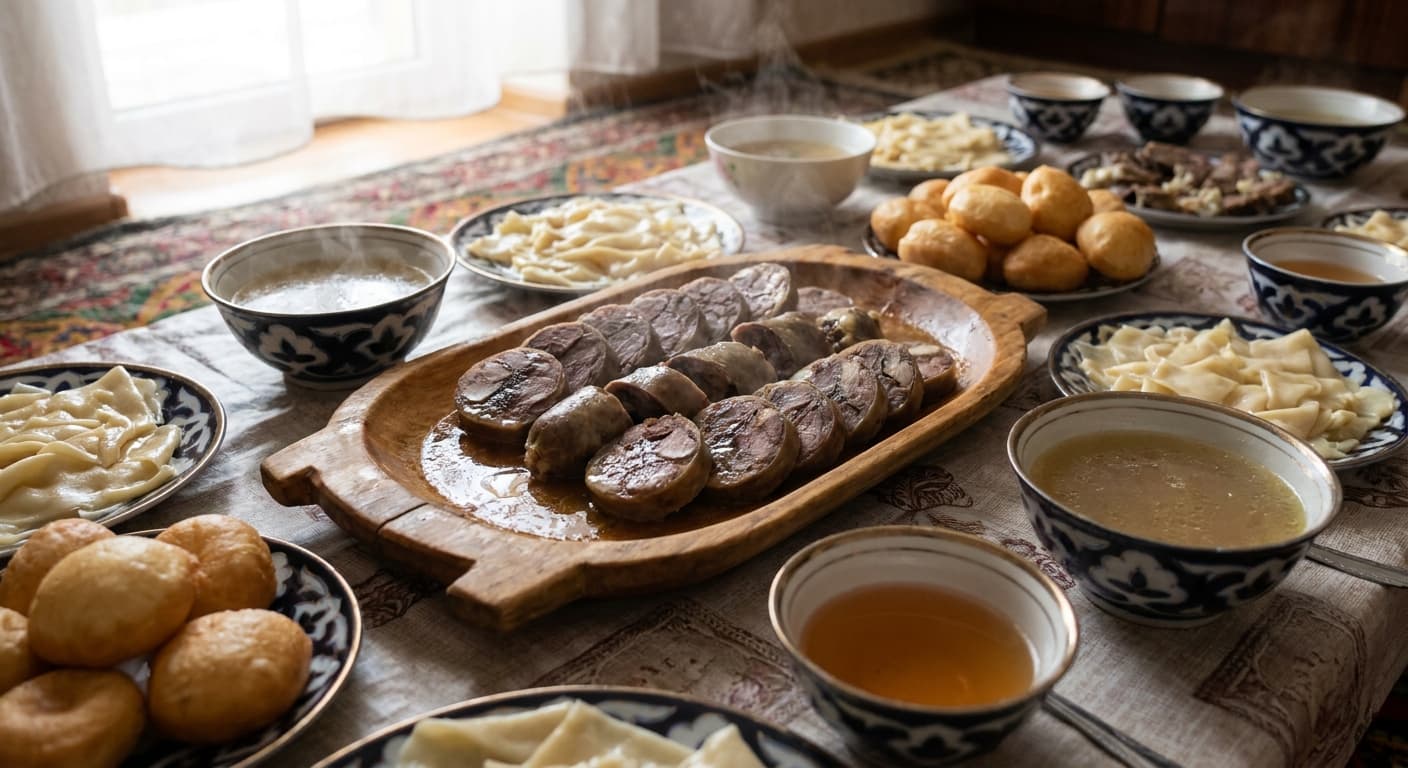
Kazy (Қазы) — Kazakh Horsemeat Rib Sausage
Kazakh · Appetizers · 240 min
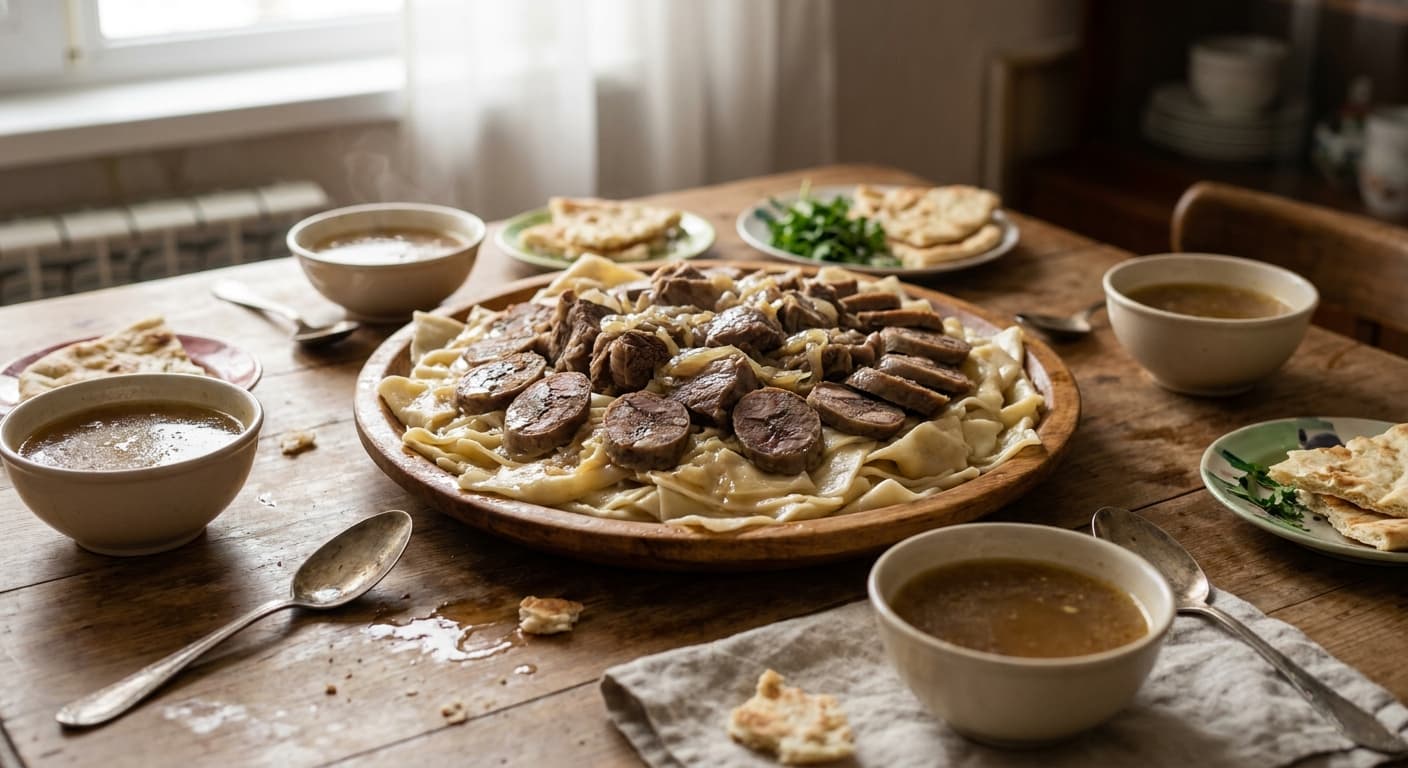
Kazakh Beshbarmak (Бешбармақ) — Boiled Meat and Noodles in Onion Broth
Kazakh · Main Courses · 210 min
Bulgarian Banitsa (Баница) — Flaky Sirene-Filled Phyllo Pie
Bulgarian · Breads · 68 min
Karelian Pasties (Karjalanpiirakka) — Rye Crusts Filled with Rice Porridge
Finnish · Breads · 115 min
Kyrgyz Lagman (Лагман) — Hand-Pulled Noodles with Lamb and Vegetables
Kyrgyz · Main Courses · 125 min
Oshi Siyoh (Оши сиёҳ) — Bukhara-Style Dark Pilaf
Tajik · Rice Dishes · 125 min
Besso (በሶ) — Ethiopian Roasted Barley Bites
Ethiopian · Appetizers · 20 min
Reviews
Cooked this recipe?
Tap the stars to rate it — that's all it takes. A few words are welcome but optional.
No ratings yet. Cooked this one? Be the first to rate it — it takes one tap.