Yatimcheh (یتیمچه) — Persian Slow-Cooked Summer Vegetable Stew
Yatimcheh is a rustic Persian vegetable stew built on slow-simmered eggplant and tomatoes, often made when summer produce is abundant. It’s comfort food from home kitchens across Iran, served with rice or flatbread.
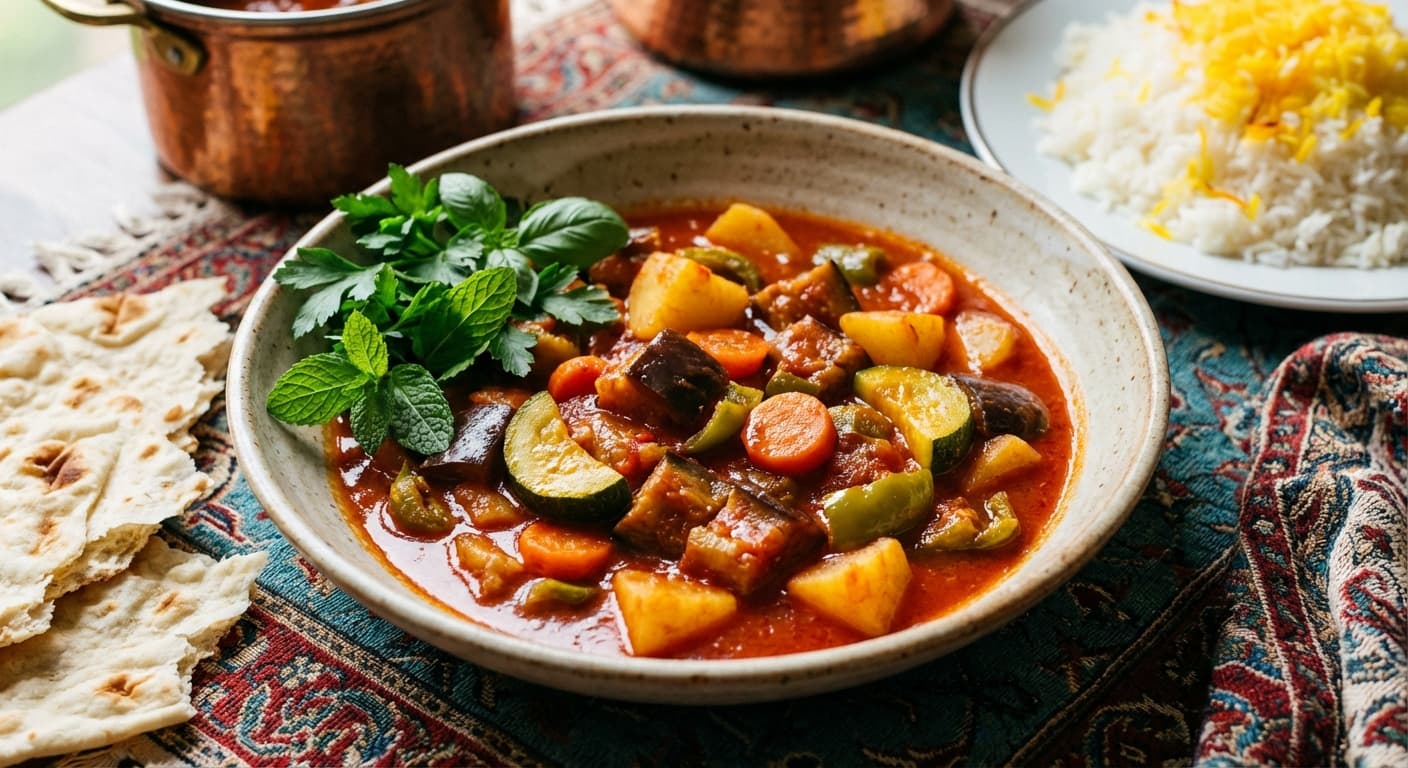
Printable Recipe Card
Servings: 4 · Total: 100 min · Difficulty: easy
Ingredients (quick list)
- 450 g eggplant, peeled in stripes and cut into 3 cm cubes (about 2 medium)
- 250 g zucchini, cut into 2 cm half-moons (about 2 small)
- 250 g potato, peeled and cut into 2.5 cm cubes (about 1 large)
- 200 g onion, thinly sliced (about 1 large)
- 120 g carrot, cut into 5 mm coins (about 1 large)
- 150 g green bell pepper, cut into 2 cm pieces (about 1 medium)
- 500 g tomatoes, grated or finely chopped (about 3 medium)
- 30 g tomato paste (about 2 tbsp)
- 30 ml neutral oil (such as sunflower or grapeseed)
- 2 tsp ground turmeric
- 8 g fine sea salt (about 1 1/4 tsp)
- 250 ml water (add only if needed to prevent sticking)
Steps (summary)
- Heat a heavy pot over medium heat and add the oil, then add the sliced onion. Cook for 10–12 minutes, stirring often, until the…
- Add the turmeric and stir for 30 seconds to bloom it in the oil. Add the tomato paste and cook for 2 minutes, stirring constant…
- Stir in the grated tomatoes and 4 g of the salt, then bring the mixture to a gentle simmer. Cook uncovered for 8–10 minutes so…
- Add the carrots and potatoes first, mixing them into the tomato base so they are well coated. Pour in 150 ml of the water, cove…
- Add the eggplant and green bell pepper, then gently fold to avoid breaking the eggplant pieces. Cover and simmer on low for 20…
- Add the zucchini and the remaining 4 g salt, then cover and simmer for 15–20 minutes until the potatoes are fully tender and th…
+ 1 more steps in the full instructions section below.
Cultural Background
Often associated with humble, meatless home cooking, Yatimcheh highlights Iran’s love of slow-simmered vegetable stews. It’s especially common in summer, when eggplant, zucchini, and tomatoes are at their peak and can cook down into a rich, naturally sweet sauce.
Equipment
💡 Tips
- Keep the simmer very low; a gentle bubble prevents the vegetables from turning watery and helps the stew concentrate.
- If your eggplant is very seedy or bitter, salt the cubes with 6 g salt for 20 minutes, then rinse and pat dry before cooking.
- For a thicker, more traditional texture, grate the tomatoes rather than chopping them, and reduce them until glossy before adding vegetables.
⚠️ Common Mistakes
❌ Adding all vegetables at once so potatoes stay firm while zucchini turns mushy.
✅ Fix: Stagger the additions: start with carrots and potatoes, then eggplant and pepper, and add zucchini near the end.
❌ Using high heat and frequent stirring, which breaks the vegetables and scorches the tomato base.
✅ Fix: Keep a low simmer and stir gently every 7–8 minutes; add measured water only if the pot is drying out.
❌ Not cooking the tomato paste, leaving a raw, metallic taste.
✅ Fix: Fry the paste for 2 minutes in oil until it darkens slightly and smells sweet and roasted.
🧊 How to Store
Cool completely, then refrigerate in a sealed container for up to 4 days. Reheat gently in a saucepan over low heat with 30–60 ml water to loosen, stirring carefully to keep the vegetables intact; it also freezes well for up to 2 months.
📅 Make Ahead
Chop all vegetables up to 24 hours ahead and refrigerate in separate containers so they cook in stages. The stew itself tastes even better the next day; cook fully, chill, then reheat slowly to serve.
🍽️ Pairs Well With
- Chelow
- tahdig
- lavash
- torshi
- fresh herbs (sabzi khordan).
Regional Variations
- Northern-style: slightly more tomato-forward and sometimes finished thicker to scoop with bread.
- Tehran home-style: potatoes are more prominent, and the stew is often mashed a bit for a jammy consistency.
- Garden version: uses whatever summer vegetables are on hand, keeping the same onion-tomato-turmeric base.
Ingredients
- 450 geggplant, peeled in stripes and cut into 3 cm cubes (about 2 medium)
- 250 gzucchini, cut into 2 cm half-moons (about 2 small)
- 250 gpotato, peeled and cut into 2.5 cm cubes (about 1 large)
- 200 gonion, thinly sliced (about 1 large)
- 120 gcarrot, cut into 5 mm coins (about 1 large)
- 150 ggreen bell pepper, cut into 2 cm pieces (about 1 medium)
- 500 gtomatoes, grated or finely chopped (about 3 medium)
- 30 gtomato paste (about 2 tbsp)
- 30 mlneutral oil (such as sunflower or grapeseed)
- 2 tspground turmeric
- 8 gfine sea salt (about 1 1/4 tsp)
- 250 mlwater (add only if needed to prevent sticking)
🔄 Substitutions
- neutral oil→ olive oil
- green bell pepper→ sweet red bell pepper
- tomatoes, grated or finely chopped→ canned crushed tomatoes
Instructions
- 1
Heat a heavy pot over medium heat and add the oil, then add the sliced onion. Cook for 10–12 minutes, stirring often, until the onion is soft and lightly golden, because this sweetness is the backbone of the stew.
- 2
Add the turmeric and stir for 30 seconds to bloom it in the oil. Add the tomato paste and cook for 2 minutes, stirring constantly, until it darkens slightly and smells roasted rather than raw.
- 3
Stir in the grated tomatoes and 4 g of the salt, then bring the mixture to a gentle simmer. Cook uncovered for 8–10 minutes so the tomatoes reduce and the oil begins to separate at the edges.
- 4
Add the carrots and potatoes first, mixing them into the tomato base so they are well coated. Pour in 150 ml of the water, cover, and simmer on low for 15 minutes, because these vegetables need a head start to become tender.
- 5
Add the eggplant and green bell pepper, then gently fold to avoid breaking the eggplant pieces. Cover and simmer on low for 20 minutes, stirring carefully every 7–8 minutes and adding up to 100 ml more water only if the pot looks dry.
- 6
Add the zucchini and the remaining 4 g salt, then cover and simmer for 15–20 minutes until the potatoes are fully tender and the eggplant is silky. Uncover for the last 5 minutes to thicken the stew, and lightly mash a few potato cubes against the side of the pot to enrich the texture.
- 7
Turn off the heat and let the Yatimcheh rest, covered, for 10 minutes so the flavors meld and the vegetables settle. Taste and adjust with an additional 1 g salt only if needed, then serve warm with rice or bread.
🪪 Recipe Passport
Cultural Background
Often associated with humble, meatless home cooking, Yatimcheh highlights Iran’s love of slow-simmered vegetable stews. It’s especially common in summer, when eggplant, zucchini, and tomatoes are at their peak and can cook down into a rich, naturally sweet sauce.
Regional Variations
Researched from multiple sources and validated by the Zaffaron editorial team. Every recipe is tested for accuracy, measurements, and cultural authenticity.
Nutrition per serving
Pairs well with
If you enjoyed this recipe, here are a few related Zaffaron recipes to try next.
Does your family make this differently?
Every family has their own version. Maybe your grandmother adds a secret ingredient, or your aunt has a completely different technique. Preserve your family's version — with their name on it, forever.
You Might Also Like

Persian Kotlet (کتلت) — Saffron-Infused Meat & Potato Patties
Persian · Main Courses · 55 min

Soup-e Jo (سوپ جو) — Persian Creamy Barley Soup
Persian · Soups · 90 min
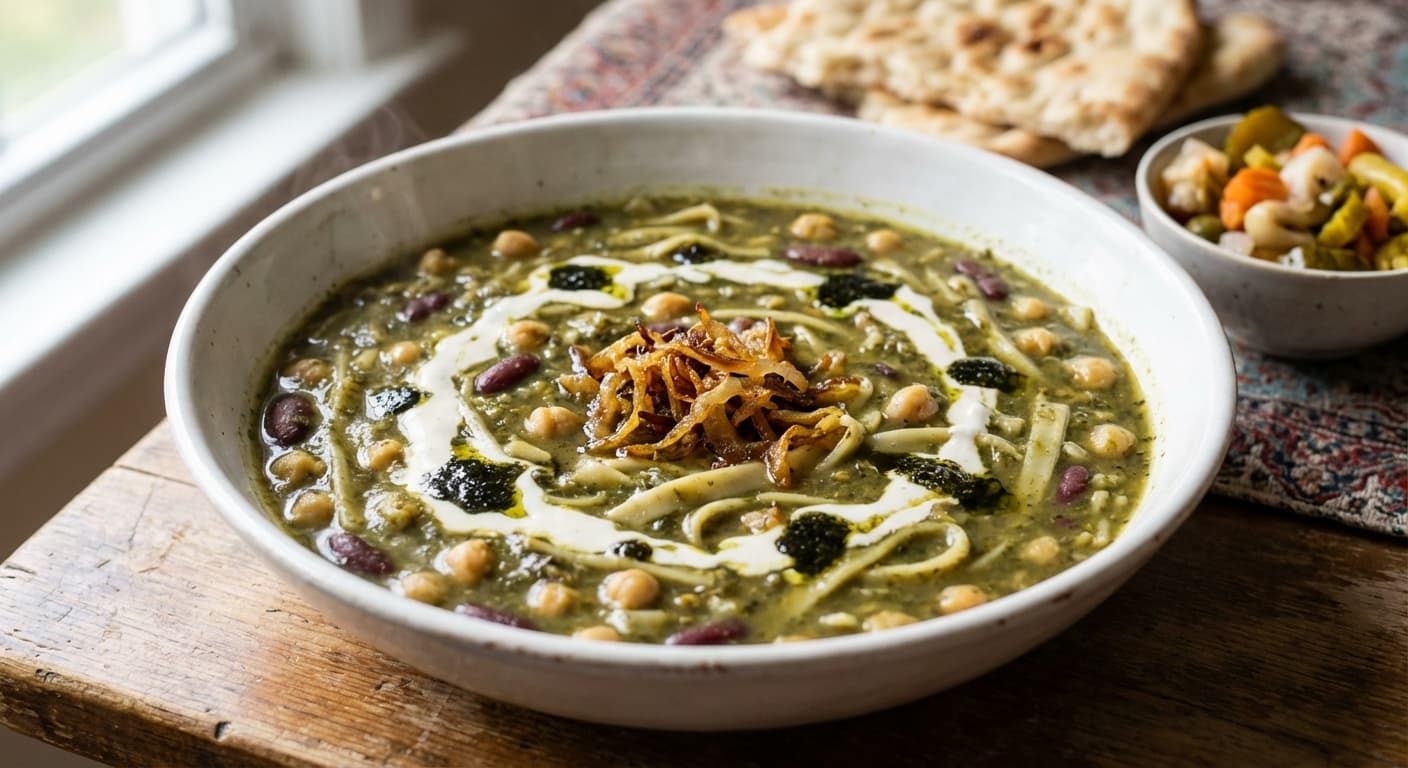
Ash Reshteh (آش رشته) — Persian Herb, Bean, and Noodle Soup
Persian · Soups · 145 min
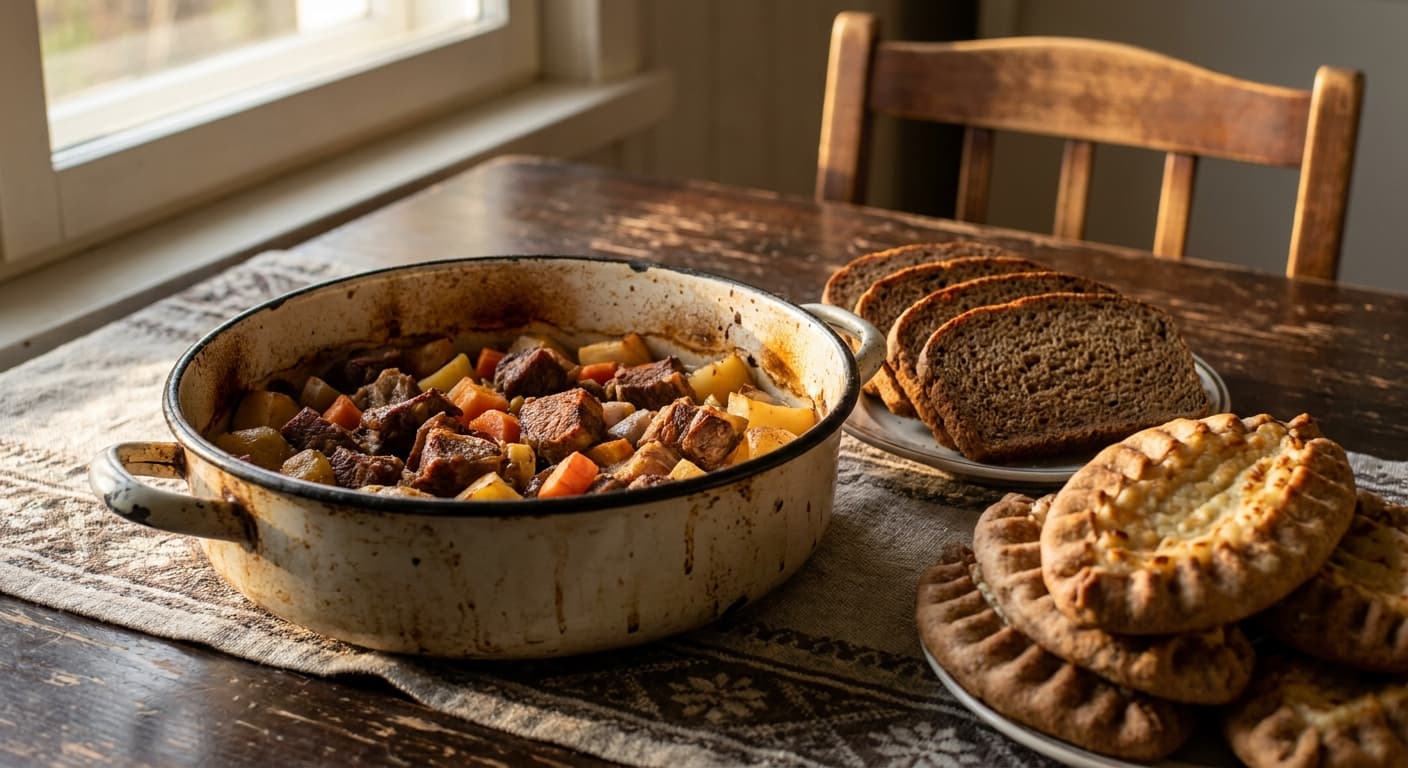
Karelian Hot Pot (Karjalanpaisti) — Finnish Oven-Braised Meat Stew
Finnish · Stews · 230 min
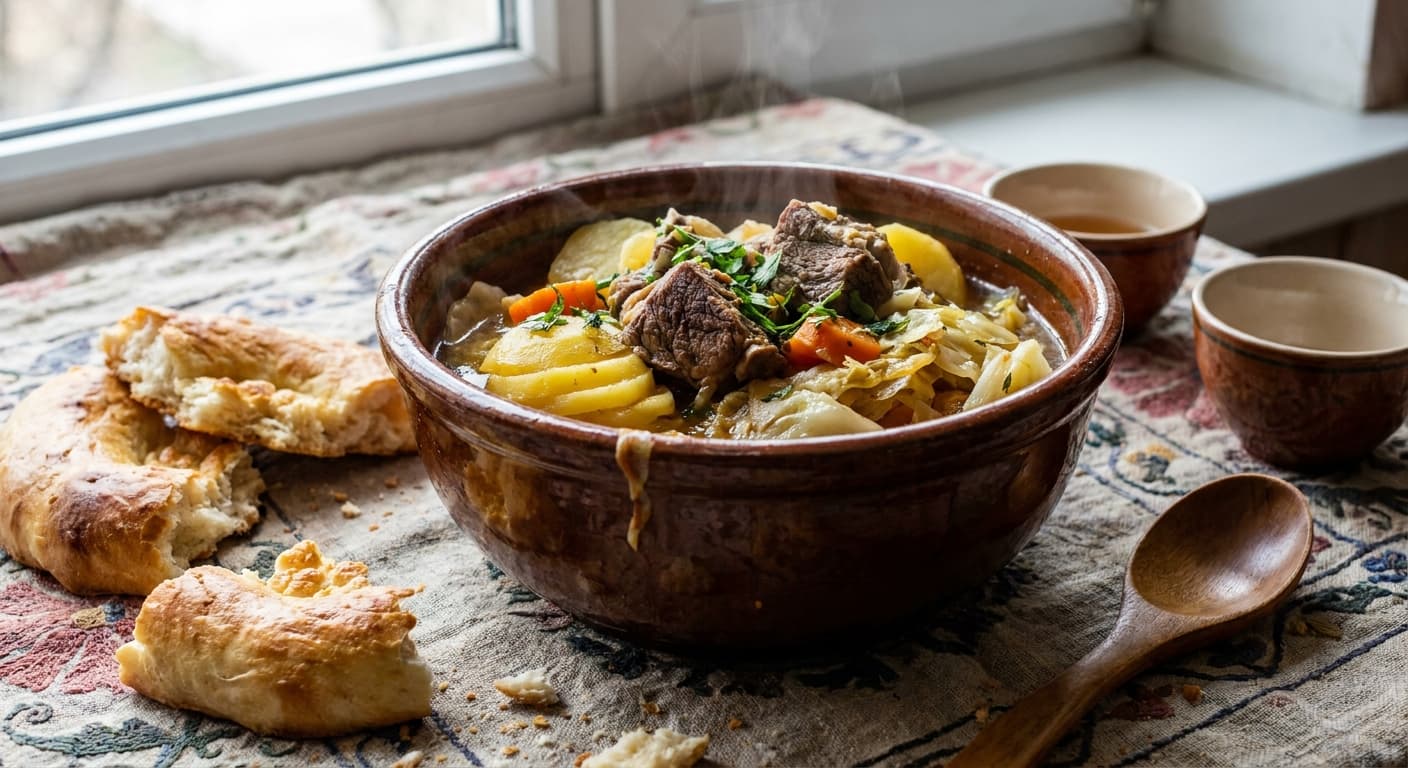
Uzbek Dimlama (Dimlama) — Layered Lamb and Vegetable Stew
Uzbek · Stews · 125 min
Azerbaijani Milk Rice Porridge (Südlü Sıyıq) — Creamy Breakfast Bowl
Azerbaijani · Rice Dishes · 40 min

Keshkek (Keşkek) — Creamy Ceremonial Wheat and Lamb Stew
Turkish · Stews · 240 min

Golden Turmeric Potato and Spinach Casserole (غراتان سیبزمینی و اسفناج) — Mediterranean-Inspired Layered Gratin
Persian · Main Courses · 70 min
Reviews
Cooked this recipe?
Tap the stars to rate it — that's all it takes. A few words are welcome but optional.
No ratings yet. Cooked this one? Be the first to rate it — it takes one tap.