10 Essential Persian Stews (Khoresh) Every Home Cook Should Know
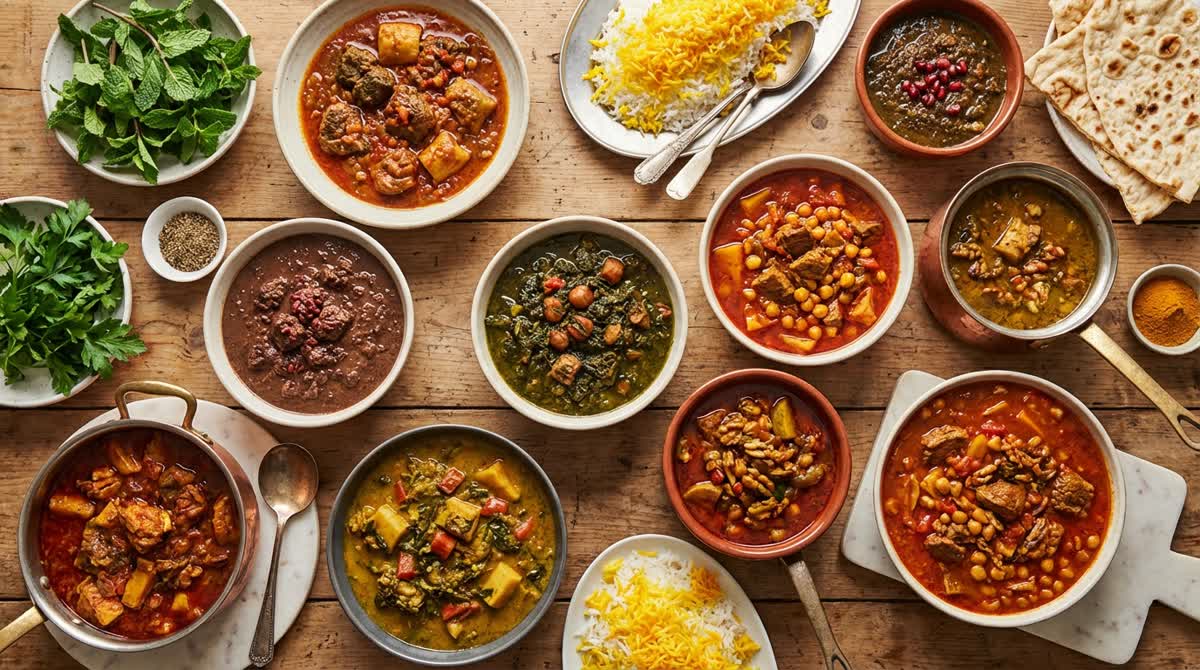
Persian cooking has a special kind of magic: it’s patient, perfume-like, and deeply practical. And nowhere is that more obvious than in khoresh—the family of slow-simmered dishes that many people simply call the quintessential Persian stew. If you’ve ever eaten at an Iranian home, chances are you were served a khoresh alongside fluffy rice, a bowl of yogurt, and a plate of herbs—then urged (lovingly) to take more.
This guide is your home-cook roadmap: 10 essential Persian stews (khoresh) to know, why they matter, what makes each one distinctive, and how to get them right without stress. I’ll also point you to a few Zaffaron favorites that pair beautifully with stews—because a great Iranian stew deserves the right supporting cast.
What Makes a Persian Stew (Khoresh) Different?
A Persian stew isn’t just “meat + liquid.” Khoresh is built around balance: sour and sweet, herbs and aromatics, slow-cooked depth and bright finishing notes. Most khoresh recipes share a few fundamentals:
- A flavorful base: onions sautéed until golden, often with turmeric.
- A defining “signature” ingredient: herbs, eggplant, walnut-pomegranate, quince, celery, sour cherries, etc.
- A controlled simmer: low heat, time, and just enough liquid to develop a glossy sauce.
- A final adjustment: a squeeze of lemon, a spoon of brewed saffron, a touch of sugar—tiny changes that make a khoresh taste “finished.”
And yes—many Iranian families have very strong opinions about what the “correct” balance should be.
Khoresh Success 101: Practical Tips Before You Start
Use the right pot and the right heat
A heavy pot (Dutch oven or thick-bottomed saucepan) helps prevent scorching and encourages even reduction—key for a properly thickened Iranian stew.
Brown and sauté for depth (but don’t rush)
Khoresh flavor is often built early: well-sautéed onions, lightly browned meat, and properly cooked herbs.
Don’t drown it
Most khoresh recipes should simmer in just enough liquid to cook the meat and reduce into sauce. If it looks like soup, it’s usually too much water.
Taste at the end, not the beginning
Sour ingredients (dried limes, pomegranate molasses, lemon) intensify as they simmer. Start conservative; adjust near the end.
Serve it like Iranians do
Khoresh is typically served with rice. If you want a few rice ideas on Zaffaron, these are excellent pairings:
- Sabzi Polo ba Tahchin-e Morgh-e Torsh (سبزی پلو با تهچین مرغ ترش) — Tart Herb Rice with Saffron Chicken Tahchin
- Shushtari Polo (شوشترى پلو) — Black-Eyed Pea and Dill Layered Rice with Chicken
- Eslamboli Polo (اسلامبولی پلو) — Persian Tomato Rice with Tender Beef
- Valak Polo (والک پلو) — Spring Wild Garlic Saffron Rice
- Polo va Sabzijat (پلو و سبزیجات) — Persian Saffron Vegetable Rice
10 Essential Persian Stews (Khoresh) Every Home Cook Should Know
Below are the classics you’ll see again and again across Iranian tables—plus the small technique notes that make each one shine.
1) Khoresh-e Ghormeh Sabzi (Herb Stew with Beans & Dried Limes)
If there’s a single dish that earns the title “national comfort food,” it’s ghormeh sabzi. This Persian stew is built on a powerhouse mix of herbs (typically parsley, cilantro, chives/scallions, fenugreek), plus red kidney beans and dried limes (limoo amani).
What makes it essential
- The aroma is unmistakable: herbaceous, tangy, and rich.
- It teaches you the most important khoresh technique: properly frying herbs to deepen flavor.
Home-cook tips
- Fry herbs until darker and fragrant—this is where the “stew soul” comes from.
- Pierce dried limes so they infuse without exploding; remove seeds if bitterness is a concern.
- Let it rest 10–15 minutes off heat before serving—flavors settle beautifully.
2) Khoresh-e Fesenjan (Walnut & Pomegranate Stew)
Fesenjan is the dramatic, glossy one: ground walnuts simmered until they release oil, then balanced with pomegranate molasses for a sweet-sour finish. Often made with chicken, duck, or meatballs.
What makes it essential
- It’s one of the most iconic khoresh recipes and a favorite for guests.
- It’s a masterclass in slow reduction and flavor balancing.
Home-cook tips
- Grind walnuts finely; simmer long enough for the sauce to thicken and darken.
- Add pomegranate molasses gradually and taste—every brand differs in sweetness and tartness.
- A pinch of sugar is not “cheating” if it brings harmony.
Serve with A simple saffron rice—or a more festive rice dish like Reshteh Polo Gheysi (رشته پلو قیسی) — Persian Noodle Rice with Apricots.
3) Khoresh-e Bademjan (Eggplant Stew)
Eggplant khoresh is a weeknight hero and a restaurant staple: tender eggplant, tomato, and saffron-leaning aromatics paired with beef or lamb.
What makes it essential
- It’s one of the most widely cooked forms of Iranian stew.
- It’s forgiving and adaptable (meat or no meat).
Home-cook tips
- Salt eggplant briefly, then pat dry to reduce bitterness.
- Fry or roast eggplant until golden before adding—otherwise it can collapse into the sauce.
- Use ripe tomatoes or a good tomato paste for a deep, brick-red base.
If you love eggplant You’ll also enjoy the oven-baked eggplant comfort of Khorak Roz-e Bademjan (خوراک رز بادمجان) — Persian Eggplant Rose Bake with Spiced Meat Filling as a side dish or alternative dinner.
4) Khoresh-e Gheymeh (Split Pea & Tomato Stew)
Gheymeh is the cozy red stew you’ll see at religious gatherings, family events, and everyday lunches. It typically features small cubes of beef/lamb, split peas, tomato, and warm spices—often topped with crispy potato sticks.
What makes it essential
- It’s foundational: once you can make gheymeh, you understand the Persian tomato-onion base.
- It’s one of the most “crowd-pleasing” khoresh recipes.
Home-cook tips
- Par-cook split peas if you want them intact rather than mushy.
- Add a little brewed saffron near the end for a restaurant-style aroma.
- Fry potato sticks separately and add at serving so they stay crisp.
5) Khoresh-e Karafs (Celery & Herb Stew)
Karafs is a sleeper hit: celery becomes sweet and silky after simmering, while herbs (mint and parsley are common) keep it bright. The result is delicate, not heavy.
What makes it essential
- It shows the lighter side of a Persian stew—fresh, green, and lemony.
- It’s perfect for people who think stews are always dense.
Home-cook tips
- Sauté celery first to develop sweetness and prevent a “raw” taste.
- Keep mint measured; too much can turn the stew bitter.
- Finish with lemon juice or dried limes for lift.
6) Khoresh-e Alu (Prune Stew)
Khoresh alu is that beautiful Persian trick of putting fruit into savory cooking—prunes (and sometimes apricots) simmered with meat to create a sweet-tart gravy.
What makes it essential
- It captures the Persian love of sweet-sour balance.
- It’s a gateway stew for cooks who enjoy Moroccan tagines or French fruit-and-meat pairings.
Home-cook tips
- Soak prunes briefly so they plump evenly.
- Add prunes midway through cooking so they don’t disintegrate.
- Balance sweetness with a squeeze of lemon or a touch of sour grape juice if you have it.
Pair it with A rice that plays well with fruit notes, like Reshteh Polo Gheysi (رشته پلو قیسی) — Persian Noodle Rice with Apricots.
7) Khoresh-e Beh (Quince Stew)
Quince is floral, perfumed, and uniquely Persian in how it’s used. Khoresh beh often includes quince wedges, sometimes split peas, and usually a gentle sweet-sour seasoning.
What makes it essential
- It’s seasonal and special—exactly the kind of dish that makes Iranian home cooking memorable.
- It teaches you to protect delicate fruit texture while building a stew.
Home-cook tips
- Sear quince slices lightly before simmering to keep them intact.
- Use a small amount of sugar only if the quince is very tart.
- Don’t over-stir—treat it like a braise.
8) Khoresh-e Baghala Ghatogh (Fava Beans, Dill & Eggs) — Northern Classic
This beloved stew from northern Iran (especially Gilan) is typically made with fava beans, lots of dill, garlic, and eggs cracked in near the end. It’s comfort food with a bold garlic-dill identity.
What makes it essential
- It’s a classic Iranian stew that can be meatless yet deeply satisfying.
- It’s fast compared to many stews—great for busy cooks.
Home-cook tips
- Use dried or frozen fava beans; if using dried, soak and cook until tender.
- Add eggs at the end; cover so whites set while yolks stay jammy (if you like).
- Serve with rice and a side of fresh herbs.
If you want a cozy starter Try Soup Tokhm Morgh (سوپ تخم مرغ) — Persian-Style Silky Egg Drop Soup before your stew-and-rice meal.
9) Khoresh-e Mast (Yogurt Stew) — Isfahan’s Sweet-Savory Specialty
This one surprises people: khoresh mast is thick, rich, and often slightly sweet, traditionally made with cooked meat (often lamb), yogurt, saffron, and sometimes rosewater. It’s served more like a luxurious, spoonable dish than a typical stew.
What makes it essential
- It highlights Persian culinary elegance—saffron, dairy, and gentle aromatics.
- It’s a conversation-starter and a fantastic special-occasion dish.
Home-cook tips
- Use thick yogurt; keep heat low to prevent splitting.
- Saffron is not optional here—it’s the identity.
- Go easy on rosewater; you want perfume, not soap.
Serve with A simple rice dish, or something celebratory like Kabk Polo (کبک پلو) — Royal Persian Quail Pilaf for a feast-style table.
10) Khoresh-e Meygoo (Spiced Shrimp Stew) — Southern Iranian Flavor
Southern Iran is famous for bolder spice profiles and seafood. Shrimp khoresh often features tomato, aromatics, and warm spices—sometimes with a subtle tang.
What makes it essential
- It expands your idea of khoresh recipes beyond lamb and chicken.
- It’s quick: shrimp cooks fast, so you get stew satisfaction without hours of simmering.
Home-cook tips
- Build the sauce first; add shrimp near the end to avoid rubbery texture.
- Taste for salt and acid—seafood stews love a bright finish.
- Serve with plain rice to let the sauce shine.
On Zaffaron Explore Khorak Meygoo (خوراک میگو) — Persian Spiced Shrimp Stew from Southern Iran for a delicious southern-inspired dinner.
How to Build a Complete Persian Stew Dinner (Without Overthinking It)
A great Persian stew meal is about contrast: something rich, something fresh, something crunchy, something soothing. Here are easy ways to round out your table using Zaffaron recipes.
Add a dip or appetizer
Add a comforting side or alternative main
- Khorak Mahicheh va Morgh (خوراک ماهیچه و مرغ) — Saffron-Infused Lamb and Chicken Stew (not a classic khoresh category, but a stew lovers’ dream)
Add a rice dish that matches your stew’s personality
- For herb-forward stews: Valak Polo (والک پلو) — Spring Wild Garlic Saffron Rice
- For tomato-based stews: Eslamboli Polo (اسلامبولی پلو) — Persian Tomato Rice with Tender Beef
- For a layered, special-occasion feel: Shushtari Polo (شوشترى پلو) — Black-Eyed Pea and Dill Layered Rice with Chicken
- For a bright, veggie-friendly plate: Polo va Sabzijat (پلو و سبزیجات) — Persian Saffron Vegetable Rice
Add a stuffed dish for a feast table
Stuffed dishes aren’t khoresh, but they’re often served at the same gatherings:
- Dolmeh Kalam Ba Goosht (دلمه کلم با گوشت) — Persian Stuffed Cabbage Rolls in Tomato-Herb Sauce
- Dolmeh-ye Barg-e Mo (دلمه برگ مو) — Persian Stuffed Grape Leaves with Chicken
Cultural Notes: Why Khoresh Matters in Iranian Home Cooking
Khoresh is more than an Iranian stew—it’s a rhythm of life. Many families rotate stews through the week: one herb-based, one tomato-based, one sweet-sour, one eggplant. It’s also a way cooks express personality. Two people can follow the same general idea and still make a stew that tastes unmistakably like their home.
And there’s a special kind of pride in getting the details right:
- The herbs fried “just enough”
- The dried lime tang that hits at the back of your palate
- The sauce reduced to the perfect sheen
- The rice steamed so each grain stands separate
Once you learn a few core techniques, the world of khoresh recipes opens up—and you’ll start improvising with confidence.
Troubleshooting Common Persian Stew Problems
“My stew tastes flat.”
Add salt, then acid (lemon juice, dried lime, pomegranate), then a tiny touch of sweetness if needed. Many khoresh recipes come alive at the final adjustment.
“It’s too sour/bitter.”
Dried limes can be bitter if overcooked or if seeds leak. Use fewer, pierce them, and remove before serving. Balance with a pinch of sugar.
“The sauce is watery.”
Simmer uncovered for part of the cooking time to reduce. Also, avoid adding too much water early—most stews create their own liquid.
“The herbs taste raw.”
Fry them longer at the start (especially for ghormeh sabzi). That step is non-negotiable for a truly great Persian stew.
Your Next Step: Start with One Stew, Then Build Your Repertoire
If you’re new, start with gheymeh or bademjan—they’re approachable and teach the fundamentals. If you want something unforgettable, go for fesenjan. And if you’re craving something different, try a southern seafood twist like Khorak Meygoo (خوراک میگو) — Persian Spiced Shrimp Stew from Southern Iran.
When you’re ready to plan a full Persian-style meal, explore more on Zaffaron—begin with rice pairings like Sabzi Polo ba Tahchin-e Morgh-e Torsh, sides like Persian Moutabal with Kashk, and feast favorites like Dolmeh Kalam Ba Goosht. Your khoresh era is about to get very delicious.