Isra and Miʿraj / Night Journey
الإسراء والمعراج
About Isra and Miʿraj / Night Journey
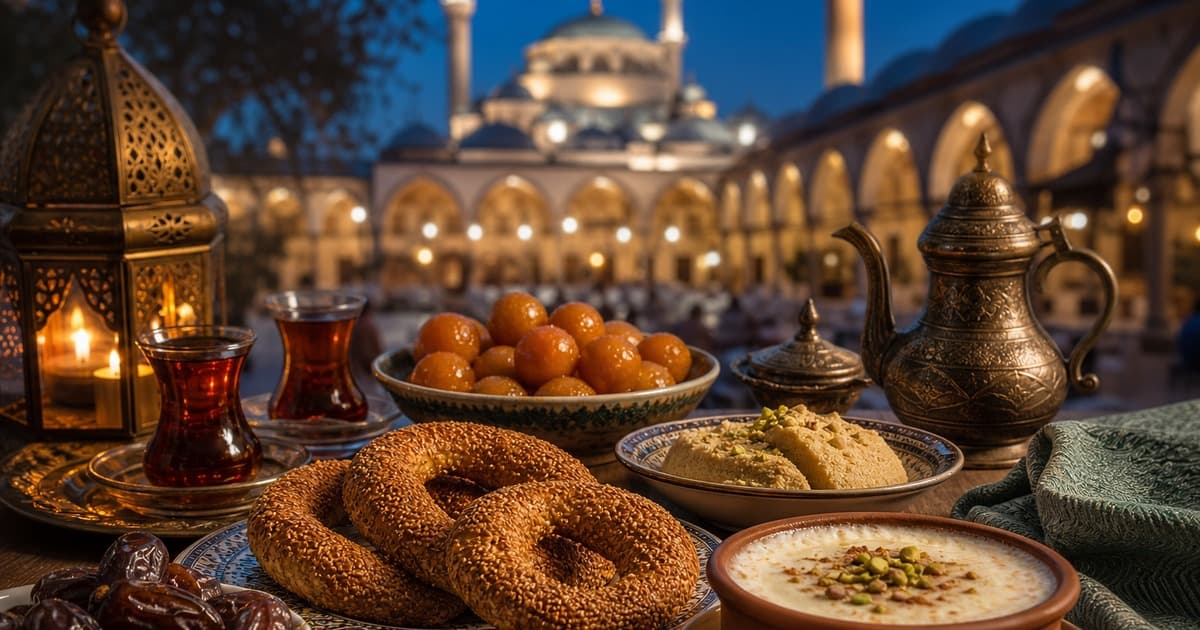
Isra and Miʿraj, observed on the 27th night of Rajab, commemorates the Prophet Muhammad's Night Journey from Mecca to Jerusalem and ascension through the seven heavens. In Turkey, this Mi'raj Kandili night is commonly marked with kandil simidi, fragrant sesame-studded rings shared after mosque prayers, alongside trays of helva passed between neighbors. Across the Levant, families gather over maamoul and sweet tea, while South Asian households traditionally prepare sheer-khurma and warm halwa, often distributed as niyaz to neighbors and the needy. Persian Shia communities may serve lokma-style fried sweets and seasonal soups, and Sufi gatherings from North Africa to West Africa pair dhikr with communal meals. Dates and tea remain a quiet, near-universal companion to the night's reflection. Observance varies by community and school — some mark it with devotional gatherings, others observe more privately — and the foods reflect that gentle regional plurality rather than a single shared table.
Signature Dishes
Kandil simidi
Helva
حلوا
Lokma
Dates and tea
Sütlaç
Regional Variations
Turkey
Mi'raj Kandili, one of the Five Holy Nights (Beş Kandil); kandil simidi (sesame bread), lokum, and helva shared; mosque illuminations and devotional gatherings.
Levant (Lebanon, Syria, Jordan, Palestine)
Home gatherings with mezze, maamoul, knafeh, and mughrabieh; strong Al-Aqsa-connection prayers given Jerusalem's centrality to the Isra narrative.
South Asia (Pakistan, India, Bangladesh)
Shab-e-Mi'raj observed with sheer-khurma, suji/kaddu halwa, niyaz (charitable food distribution); Barelvi Sufi Milad-style gatherings common.
Iran (Twelver Shia)
Special Mi'raj-night prayers and recitation of Du'a Mi'raj and Mi'raj Nameh; Persian sweets such as gosh-e fil and bamiyeh; aash-e Mi'raj in some families.
Iraq, Bahrain, Lebanese Shia
Twelver Shia observance with Du'a Mi'raj recitation and community meals; commemorative lectures on the Night Journey narrative.
Indonesia and Malaysia
Maulid-style Mi'raj (Isra Mi'raj) gatherings at mosques and homes; bubur and communal rice-and-side dishes; lectures on the Night Journey.
North Africa (Morocco, Tunisia, Algeria)
Sufi-leaning observance with chebakia, sellou and other regional sweets shared at devotional gatherings; dhikr circles common.
Sub-Saharan West Africa (Senegal, Nigeria, Mali)
Tijani Sufi observance with community dhikr, recitation of Qasidat al-Burda, and shared communal meals.
Egypt
Sunni and Sufi observance with mosque gatherings, recitation of Mi'raj narratives, and traditional sweets; Sufi tariqas hold dhikr circles.
Saudi Arabia / Salafi communities
Generally do not mark Isra and Mi'raj as a religious holiday; legitimate non-observance position parallel to Mawlid stance; honored neutrally.
Diaspora (UK, US, Canada, Germany, France, Australia)
Sunni, Shia, and Sufi diaspora communities hold home meals, mosque lectures, and devotional gatherings reflecting their regions of origin.
Observance Practices
Voluntary night prayer (Salat al-Tasbih or Tahajjud) on the night of 27 Rajab
Recitation of Surah Al-Isra (Qur'an 17) and Hadith narratives of the Night Journey
Family and community meal featuring regional sweets and savory dishes
Lectures and study circles on Mi'raj theology and the gift of the five daily prayers
Charitable food distribution (niyaz/sadaqah)
South Asia and broader Muslim world
Sufi dhikr gatherings with Qasidat al-Burda and Mawlid Sharif recitation
Sufi communities (Turkish, North African, West African Tijani, South Asian Barelvi, Levantine)
Mosque illumination and Kandil observance with kandil simidi distribution
Turkey
Recitation of Du'a Mi'raj and Mi'raj Nameh
Twelver Shia communities (Iran, Iraq, Lebanon, Bahrain)
Prayers for Al-Aqsa and Palestine reflecting the Jerusalem leg of the Isra
Levant and broader Muslim world (varies by community)
Non-observance as a legitimate theological position
Salafi/Wahhabi-influenced communities
Regions
Cuisines
Related Recipes
Ashure (Aşure) — Turkish Noah’s Pudding with Dried Fruits and Nuts
commonly served·Turkey
Greek Semolina Halva (Χαλβάς σιμιγδαλένιος) — Toasted semolina pudding with cinnamon and raisins
commonly served·Turkey/Levant
Atayef (قطايف) — Lebanese Stuffed Pancakes with Ashta Cream and Pistachio
commonly served·Levant
Ashta (قشطة) — Lebanese Clotted Cream with Rose & Orange Blossom
commonly served·Levant
Azerbaijani Saffron Flour Halva (حلوای آذربایجانی) — Toasted flour halva scented with saffron
regional variant·Azerbaijan/Turkic regions